15 Backyard Ideas for Kids That Grow With Your Family
Make a backyard kids will use with 15 ideas for movement, nature play, quiet corners, growing, and family time—plus realistic safety and setup advice.
A backyard children return to does not need a towering playset or a miniature theme park. It needs a few invitations to do something: follow a path, make a mess, watch a bee, hide with a book, or invent a game with whatever is nearby. The most useful features often fit ordinary family life as well as play, so the garden still works for adults and can change as children grow.
Before building, ask children what they actually do outside and give them a choice between a couple of ideas. Then notice what the yard already offers: a patch of shade, a level paved area, a slope, a mature tree, or a view from the kitchen window. The ideas below range from no-build activities to fixed play equipment, so you can begin with one manageable corner and see whether it gets used.
Start with the child, the yard, and the adults who use it
Start with a short list of play moods rather than equipment: active, imaginative, messy, social, and quiet. A toddler who likes filling and pouring needs different details from a school-age child who wants a ball game or a private den, while a teenager may want seating that does not look designed for a preschooler. Ask each child to name one thing they would try, and treat the answer as a prototype: can you test it with a chalk mark, a cardboard box, or a temporary tent before buying materials?
Walk the yard at the hours children are likely to use it. Mark the hot afternoon areas, wet or sloped spots, views from the house, gates, pools, sheds, and paths adults need to keep clear. A good play corner should be easy to supervise for the child’s age and ability, but not cut off the route to laundry, bins, or garden beds. The RHS recommends making room to move, hide, share, learn, and discover; that mix can fit in a compact yard without a dedicated structure. The RHS child-friendly garden guide offers a useful way to think beyond buying equipment.
Garden designer Lee Burkhill’s child-friendly garden project keeps an open area for games and uses raised beds to define its edge, a practical model for a compact yard that needs to serve more than one purpose. His child-friendly garden design guide shows how to balance play, planting, and adult use.
1. Build a looping path with small destinations
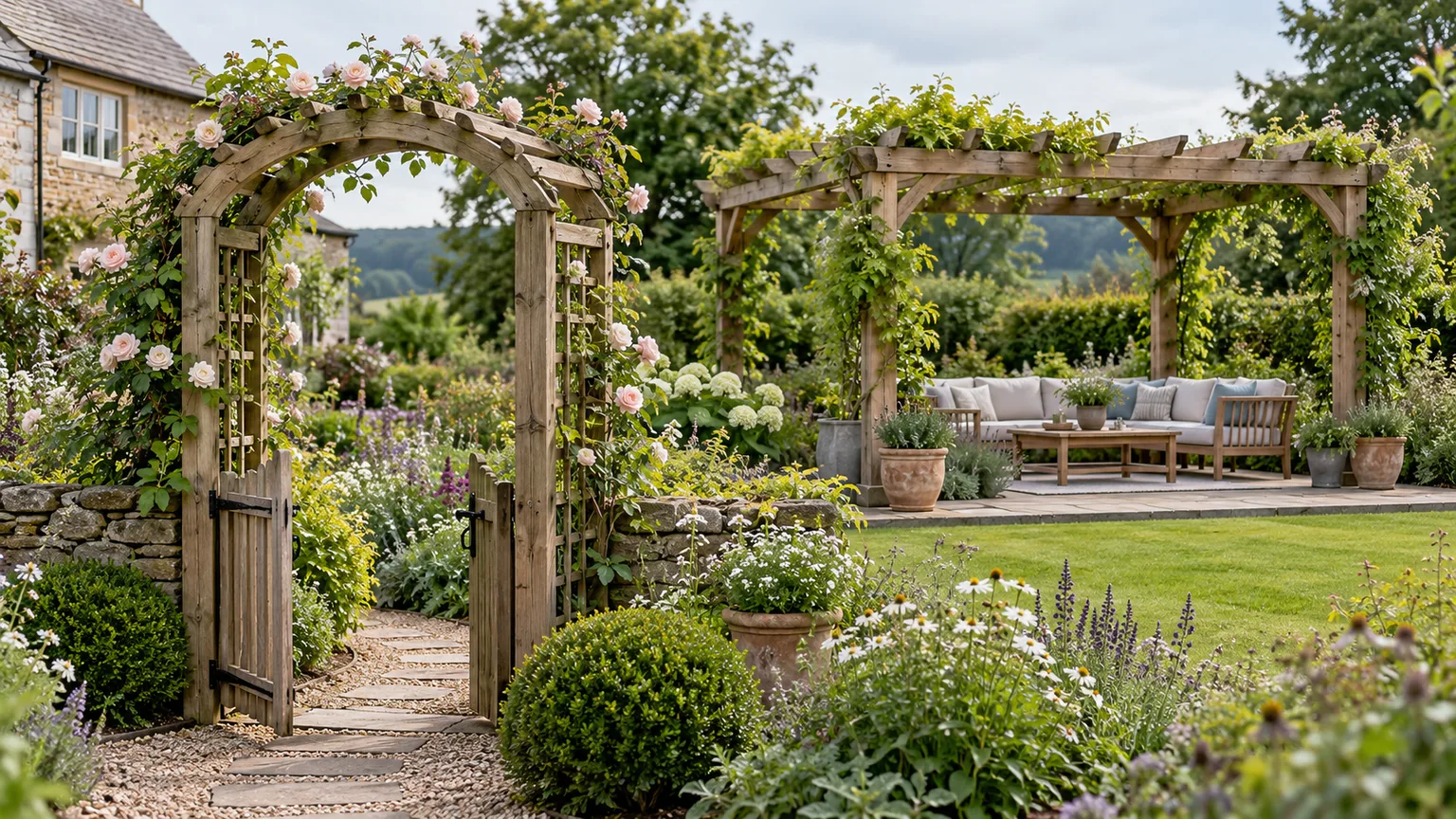
A path turns an ordinary yard into a route with a beginning, middle, and end. It can wind between a planter, a bench, a chalk spot, and a small hideaway, giving children reasons to go around again instead of racing across one open patch. In a narrow side yard, a simple out-and-back route works; in a larger yard, branches can lead to different “missions,” such as finding a leaf, delivering a pretend parcel, or checking the vegetable bed.
Keep the path broad, stable, and smooth enough for the wheels or mobility devices used by your family. Avoid loose round stones where running or scooters are expected, and use a contrasting edge or planting to show where the path ends. A mown track through grass, stepping slabs set flush with the ground, or a firm permeable surface can all work if they drain well. The point is a playful destination, not a fast track beside fragile pots.
2. Create a low balance route from sturdy natural materials
Children can turn a few broad, low logs or stable stepping stones into an imaginary bridge, river crossing, or balance challenge. Start with pieces that sit securely on the ground, spaced for the youngest child who will use them. A grown-up can set out a simple sequence first, then let children rearrange safe pieces to invent a route, which keeps the activity interesting without adding a tall structure.
Use sound, rot-resistant wood with no splinters, exposed screws, or sharp edges; secure anything that could roll. Do not use loose boulders or tree stumps as obstacle-course pieces if they rock underfoot, create a trip hazard on a main route, or hide sharp roots. For children who need a level route, place the same materials beside a smooth path and treat them as optional stepping points. Natural materials can make a play area feel like part of the garden, but they still need checking after rain, freeze-thaw cycles, or shifting soil.
3. Give outdoor drawing a place of its own
A washable chalkboard on a fence or a smooth paving patch invites drawing, hopscotch, scorekeeping, pretend menus, and outdoor lessons. Mount a board at a height children can comfortably reach, leave a small bucket for chalk, and keep a sponge nearby if the surface needs regular cleaning. If a permanent board is not practical, reserve one section of paving for chalk and let children redraw the games whenever the weather washes them away.
Place the art surface near, but not inside, the busiest route so children are not sitting in a path used by bikes or a ball game. Choose exterior-rated paint and a surface appropriate for outdoor use; do not coat a fence or paving with leftover interior chalk paint and assume it will hold up to sun and rain. A clip-on paper roll or washable outdoor easel gives younger children another option, while a board can be used by the whole family for doodles, plant labels, or a changing garden scavenger list.
4. Make a mud kitchen with an easy cleanup routine
A mud kitchen can be as simple as a low bench, a basin, a few old metal bowls, and a safe digging patch nearby. Add a water jug or a hose with an adult-controlled shutoff, sturdy wooden spoons, and containers that can be washed. The fun is in mixing soil, leaves, petals, and water into pretend recipes, so a polished sink and branded play set are unnecessary.
Make cleanup part of the layout: put the play station near a hose, outdoor tap, or utility sink, with a tray for muddy tools and a place for boots. Keep real food and drink separate from “mud pies,” and set a clear rule about not eating plants, berries, or soil. If the yard has no bare earth, use a removable tub of clean potting mix or sand, but store it covered and dry between sessions. Avoid placing the kitchen beside delicate planting or at the bottom of a slope where dirty runoff collects.
5. Add a child-height growing bed or a row of containers
One small growing area lets children water, sow, harvest, and notice what changes from week to week. A low raised bed can work for a child who likes digging; containers are easier to rearrange and are a good choice on a patio, balcony, or rental property. Leave space for a watering can and a place to put tools down. Choose quick, reliable crops suited to the local season, so there is something to observe before a child loses interest.
RHS advice for gardening with children recommends colorful flowers, scented and tactile plants, and quick-growing edible choices as ways to draw interest. Start with a manageable number of pots rather than a full vegetable plot, label the plants in the child’s words, and let the child choose what to grow. The RHS guide to getting children interested in gardening has activity and planting suggestions. Check the identity and safety of plants before inviting children to taste them, and keep fertilizers and sharp tools stored out of reach.
6. Plant a sensory patch for touching, smelling, and tasting
A sensory bed can be a single pot, a narrow border, or a collection of containers at different heights. Combine leaf shapes, gentle textures, fragrance, seasonal color, and edible plants that are easy to identify. The child can compare leaves, notice scent after rain, or watch flowers change through the season. Keep the patch near an accessible path so it feels like a destination rather than a bed children must step into.
Choose robust plants suited to your sun, soil, and climate, then leave enough room for them to grow without brushing across the path. Avoid thorny plants, plants known to be highly irritating or poisonous, and species with tempting berries if young children are likely to taste things. Teach a simple rule: touch only the plants you have named together, and ask an adult before tasting anything. A sensory garden does not need a large collection of unusual varieties; repetition and changes through the year are more useful than a crowded assortment.
7. Set up a drainable sand-and-water station
A shallow water-and-sand table supports pouring, floating, building, and small-world play in a tight footprint. Put it on a firm, shaded patio or other level surface where a spill will drain away from the house. Choose a basin that can be emptied and cleaned easily, and keep sand or water play separate from the main walkway so wet feet do not turn a smooth path slick.
Use only a small amount of water, keep an adult close enough to supervise, and empty the basin as soon as the activity ends. Do not leave buckets, tubs, or filled containers standing in the yard, particularly where toddlers can reach them. The CDC advises close, constant supervision whenever children are in or around water, even after swimming lessons; shallow play still needs an attentive adult. Review CDC drowning-prevention guidance. If drainage is poor, a removable tray can be emptied onto a planted area that can absorb the water without becoming muddy. Children who do not enjoy wet or gritty textures can use scoops, toy boats, or a dry sensory tray instead; the feature should be inviting, not compulsory.
8. Keep loose parts ready for building and pretend play
Loose parts—large cardboard boxes, fabric, smooth sticks, pinecones, buckets, and washable play scarves—can become a shop, a spaceship, a puppet stage, or a fort. Unlike a fixed piece of equipment, a box of open-ended materials changes with the game and costs little to refresh. Store the kit in a dry, lidded tub or a low shed shelf, and rotate just a few items at a time so the yard does not become a storage pile.
Match the materials to children’s age and put small objects, cords, sharp pieces, and anything that could splinter away from young children. Do not use treated scrap timber, broken pallets, or found objects with unknown coatings as play materials. A few large, light objects are easier to lift and less likely to create clutter or trip hazards. Make a “return box” part of the activity so children can reset the space before the next game.
9. Make a den that can move as the game changes
A den gives children a place to disappear from view without actually being out of sight. A pop-up tent, a bedsheet held over a low frame, or a simple canopy by the fence can make a useful temporary hideout. Put it where an adult can see the entrance, keep it away from barbecue grills and equipment with moving parts, and provide a mat or outdoor cushion that can be brought inside when wet.
The best version can move. A toddler may want a little tent near the back door; an older child may prefer a willow-style nook or a corner screened by safe, sturdy planting. The RHS highlights hiding places as a valuable part of a child-friendly garden, from a simple canopy to a more private teen retreat. Avoid tying sheets or ropes around trees, fences, or play equipment in ways that could tighten, snag, or pull down a structure. Pack away improvised fabric before strong winds or storms.
10. Create a shaded nook for stories and quiet time
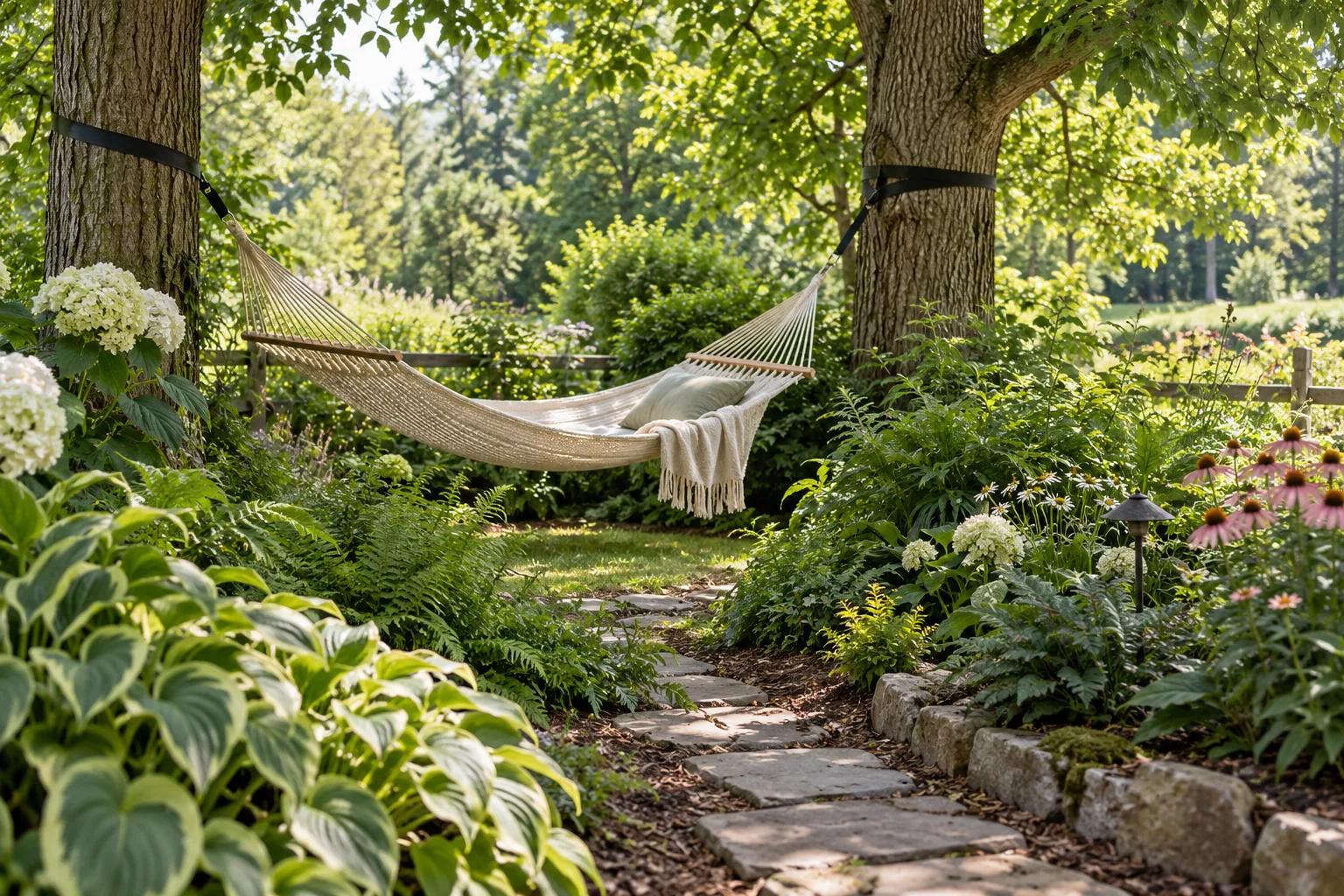
Active play is not the only reason to go outside. A low bench under a mature tree, a weather-resistant cushion on a porch, or a hammock with safe supports can create a place to read, watch clouds, or take a break from a noisy game. Locate the seat where an adult can still supervise younger children and where shade is available during the hottest part of the day. Gardens Illustrated’s family garden design feature shows how quiet corners, shared seating, and active play can coexist as children grow.
If the only sunny spot is paved, consider a stable umbrella or shade sail installed according to its maker’s directions, and make sure its supports do not create trip points. Keep fabrics dry and clean, and take them inside when not in use. The seat can also serve adults, which makes it more likely to stay in the garden after childhood games change. Gardens Illustrated’s family-garden features show how shared seating and play can sit within one landscape rather than forcing a hard divide between “children’s space” and “adult space.”
11. Make one small playhouse or shed do double duty
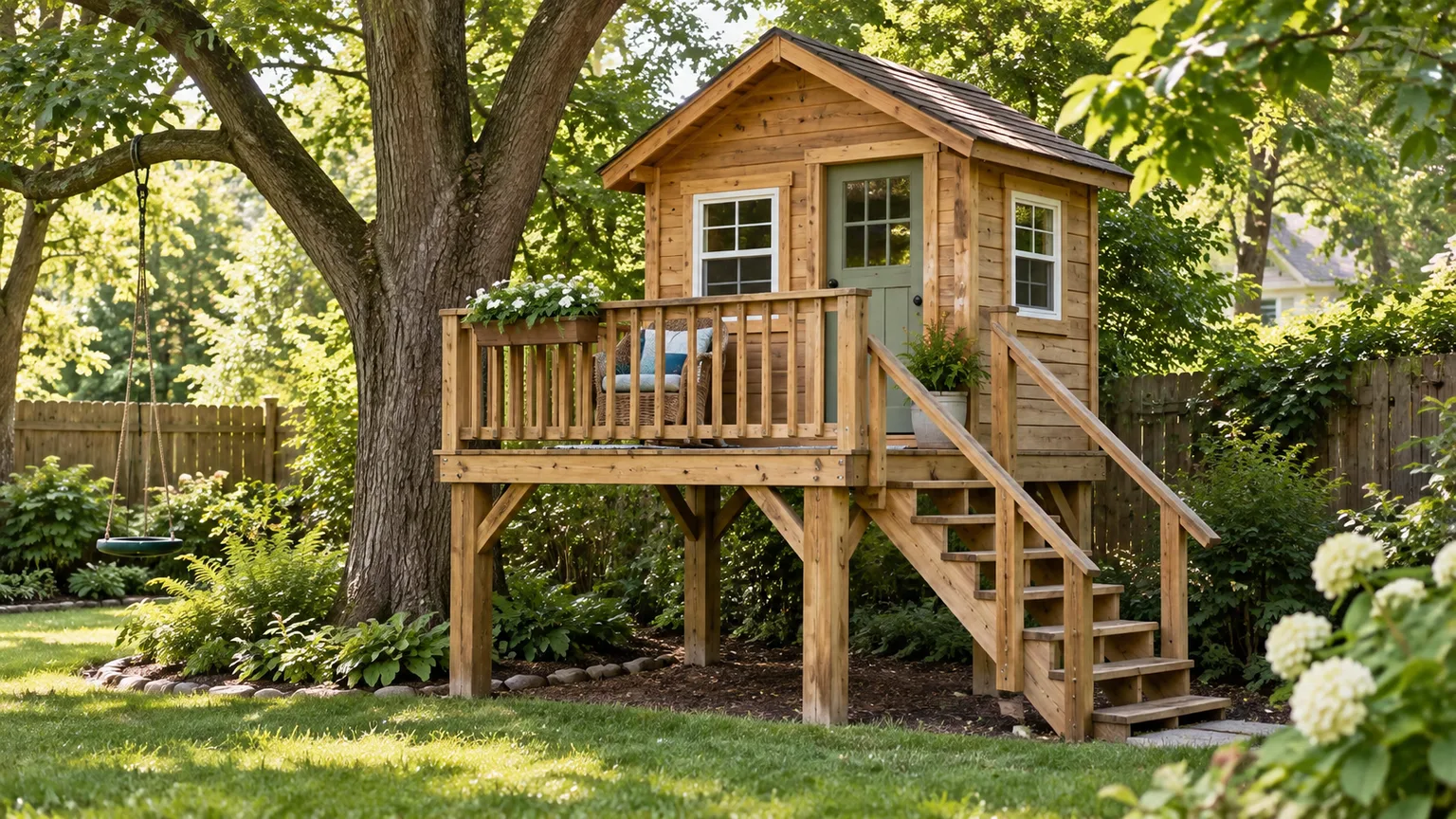
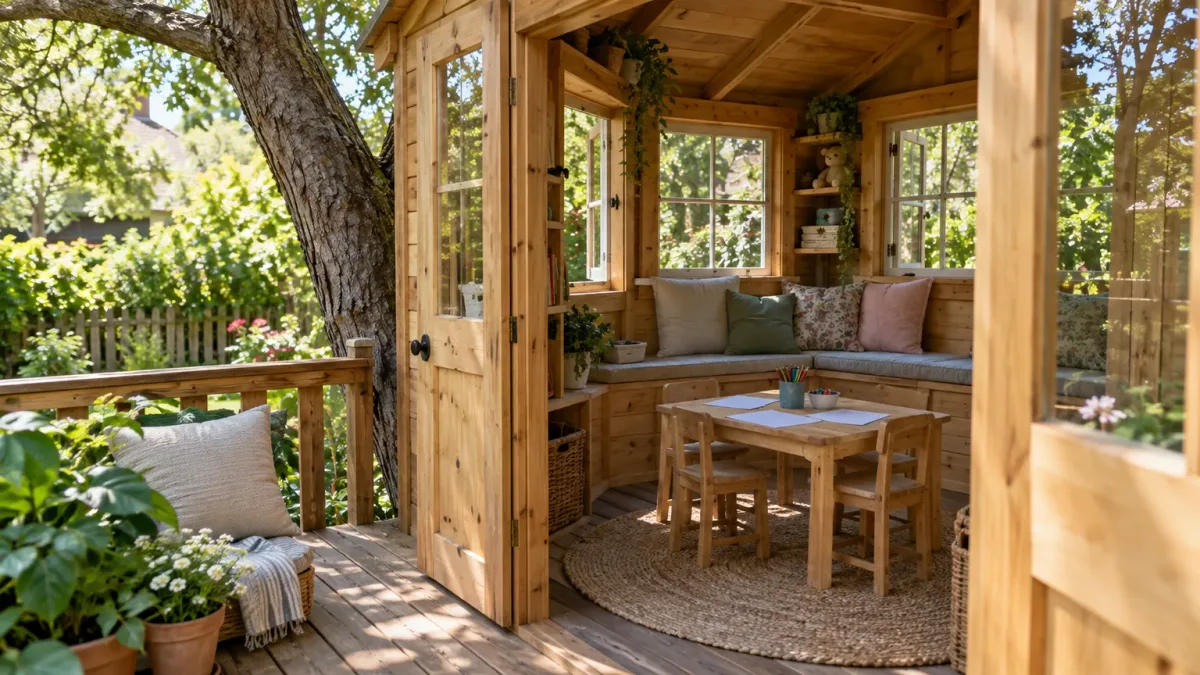
A playhouse can support pretend play, a reading corner, or a place for toys, but it occupies more space than a chalkboard or a few movable materials. Before buying one, mark its footprint on the lawn with string and check door clearance, access for an adult, drainage, and the path to the rest of the yard. A ground-level structure is easier to supervise and adapt than a tall treehouse; if the house will be elevated, use a design built for that purpose and follow the maker’s assembly and anchoring instructions.
For a lower-cost version, a small garden shed can hold toys on open shelves and become a pretend shop or clubhouse when an adult is present. Keep tools, fuel, fertilizers, and chemicals in a locked section, not within reach behind the playhouse door. Use smooth, weather-resistant materials and avoid tight, hidden spaces that make supervision difficult. A playhouse that later becomes a potting shed or quiet garden room has a longer useful life than a feature built only for one age.
12. Plan a movement zone before adding swings or climbers
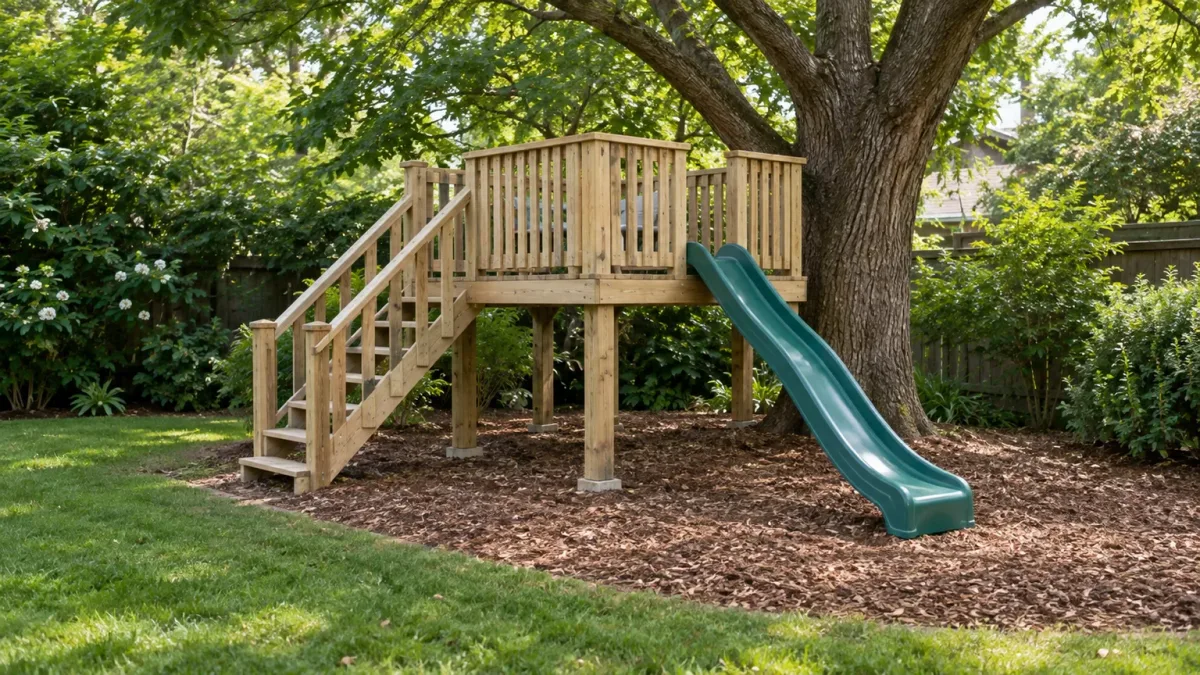
If your child asks for a swing, slide, or climbing frame, choose a level location first and check how much surrounding space the particular equipment requires. Movement creates travel paths: a swing needs a clear arc, a slide needs a safe exit, and climbers need an unobstructed fall area. A structure should not sit over paving, next to a retaining wall, under low branches, or where a running child could collide with a fence or garden edge.
The CPSC’s playground guidance highlights impact-attenuating surfacing, clear use zones, secure hardware, entrapment hazards, guardrails, supervision, and regular inspections. Its checklist addresses public playgrounds, so use the specific home-equipment manual for residential spacing, fall height, anchoring, and surface recommendations rather than copying public dimensions. CPSC also lists voluntary standards for impact attenuation and accessibility in playground surfacing. Review the CPSC playground checklist and its playground-surfacing standards page, then check your own equipment manufacturer’s guidance.
13. Turn a patio or paved strip into a game court
A paved area can host hopscotch, a chalk maze, a small basketball hoop, or target games using soft beanbags. In a narrow yard, mark a play zone with removable chalk rather than paint, and choose activities that can be put away when the space is used for dining or carrying garden tools. A simple clear wall can also hold a rotating game board or outdoor dart target designed for the children’s age.
Hard paving is easy to sweep and useful for scooters, crafts, and snack time, but it is unforgiving when a child falls. Keep ball games away from windows, parked cars, ponds, and garden beds that cannot take impact. If you plan a fixed hoop or climbing feature, check the surface and clearances for that activity instead of assuming a patio is safe because it is flat. A game area should have a visible end point and a place to store the balls, chalk, or targets when play is over.
14. Set up a wildlife watching spot that rewards patience
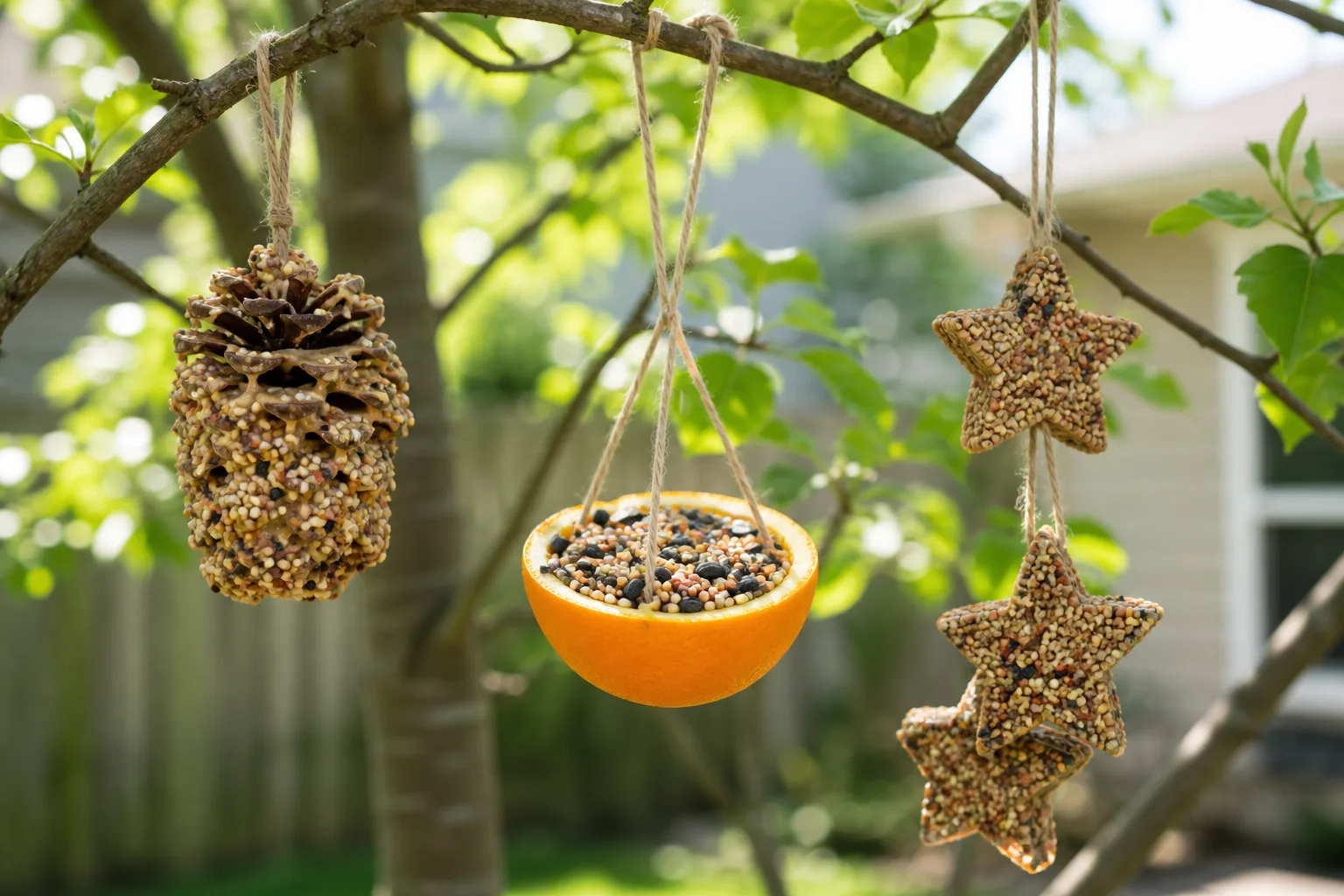
Children can watch pollinators, birds, and seasonal changes without needing to catch anything. Put a bird feeder or a simple observation seat where it can be seen from the house, add a magnifying glass to a small outdoor kit, and keep a notebook or picture guide nearby. Plant a few nectar-bearing flowers appropriate to the region, but leave a safe gap so children can observe insects without disturbing nests or reaching into dense shrubs.
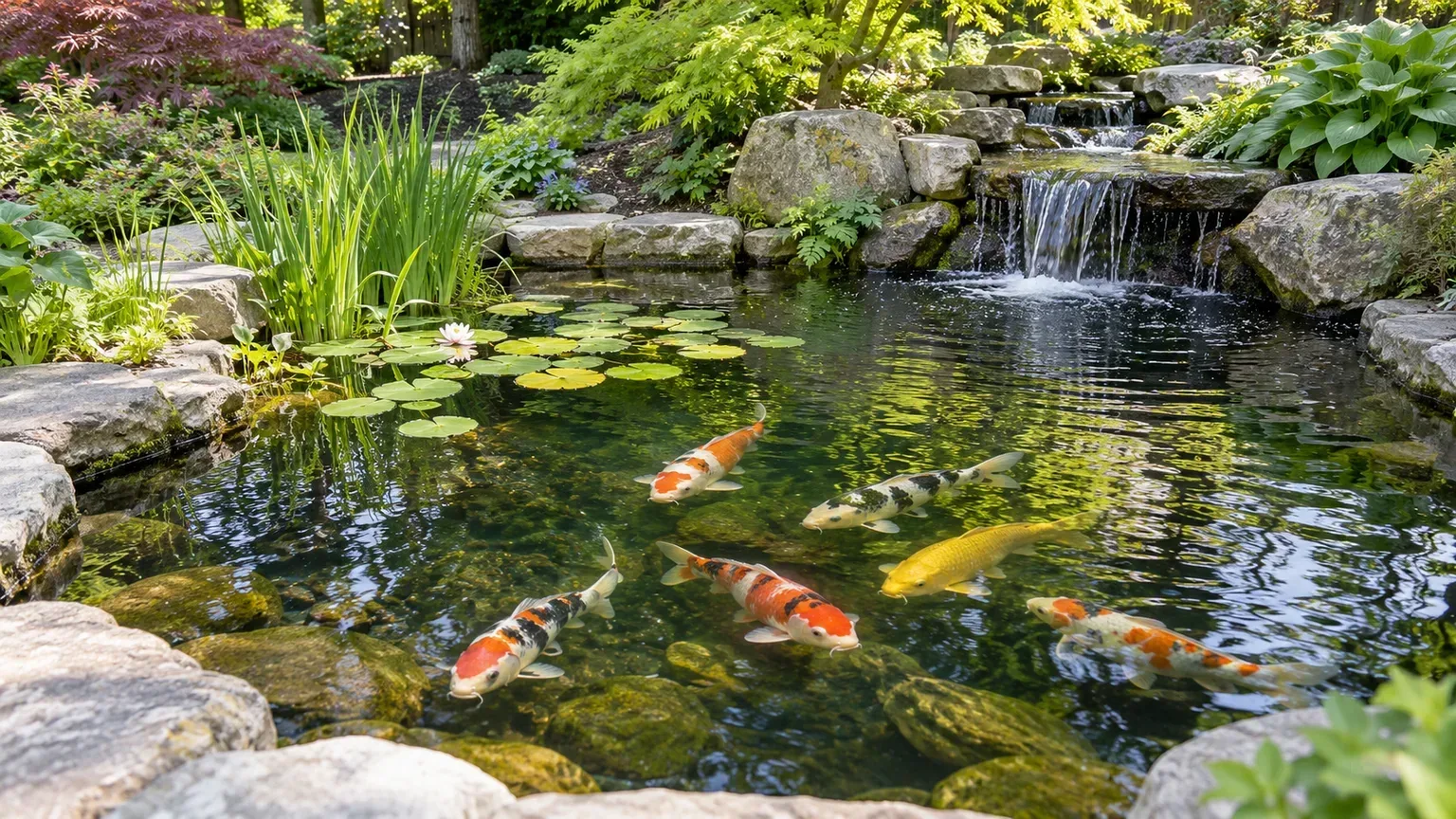
Make the activity a question rather than a lesson: Which flower did a bee visit first? What changed since yesterday? Where do birds perch before using the feeder? A tray of shallow water for birds needs regular cleaning, and any pond or deeper water feature requires a much more careful safety plan around young children. If the yard includes open water, supervise closely and use barriers or covers appropriate to the site and local rules. A wildlife corner works best when it offers a clear view and a calm place to pause rather than a promise that animals will appear on demand.
15. Put a shared craft and snack table at the center
A family table can do more for everyday outdoor use than a large play structure. Use a sturdy, easy-clean surface for painting, planting seedlings, building with blocks, serving snacks, or fixing a toy. Place it near a hose or utility sink if messy crafts are likely, and leave enough room for chairs, a wheelchair, or a child who needs support getting close to the table.
The table can connect adult and child activities: an adult tends nearby pots while a child draws, or the family sorts seed packets after lunch. A durable bench, wide step, or low stone seat can also double as a place to sit and a feature for a game, as long as its position and edges are safe for the children using it. Gardens Illustrated’s family-garden reporting describes shared work surfaces, drainage, storage, and flexible spaces alongside play features; the practical lesson is to design the chores and cleanup into the fun instead of treating them as an afterthought.
Make the play space safe, visible, and easy to maintain
Before children use the area, do a slow walk-through from their height. Look for exposed concrete, loose pavers, sharp edges, protruding screws, low branches, unstable logs, trip points, blind corners, and things a child can climb to reach a fence or pool. Secure gates and keep tools, lawn products, fuel, and garden chemicals locked away. Avoid assuming that grass alone protects a fall from elevated equipment; select surfacing based on the equipment’s use zone, fall height, and manufacturer’s instructions, and keep it maintained where wear exposes a hard base.
Supervision should match each child’s age, ability, and the activity. A shallow water tray needs an adult nearby and must be emptied after play; if the yard has a pool, follow CDC pool-barrier guidance and local codes. Ponds, trampolines, swings, and elevated structures also need site-specific protections and rules. Provide shade and drinking water during hot weather, and plan where wet or muddy play will drain. The CPSC checklist recommends regular inspection and attention to surfacing and equipment hazards on public playgrounds, while the RHS encourages gardens that can evolve as children grow. These are complementary habits: inspect frequently, then adjust the space when a child’s reach, speed, or interests change.
To keep upkeep realistic, decide who will reset each feature before adding it. A covered sand box, a lidded loose-parts tub, a hose-side mud kitchen, and a clear path are easier to keep usable than elaborate installations with no storage. If you are not sure which idea will last, trial the low-cost version for a month. Keep the features children return to, repair or remove what they ignore, and leave enough open room for spontaneous games.
Conclusion
The best backyard ideas for kids are the ones that invite them back outside and still fit the family’s ordinary routines. A looping path, a growing pot, a movable den, or a shared table can be more useful than a costly structure if it matches what your child likes to do and the space you have.
Choose one small project, involve the children in setting it up, and observe how they use it. Then add the next feature only if the yard needs it. With clear routes, suitable safety measures, and room for play to change, even a plain patch of lawn or a paved courtyard can become a memorable place to spend time together.