How to Grow and Care for Lace Aloe (Aristaloe aristata)
Learn lace aloe care with practical guidance on light, watering, gritty soil, winter protection, pups, flowering, and how to tell stress from sun scorch.
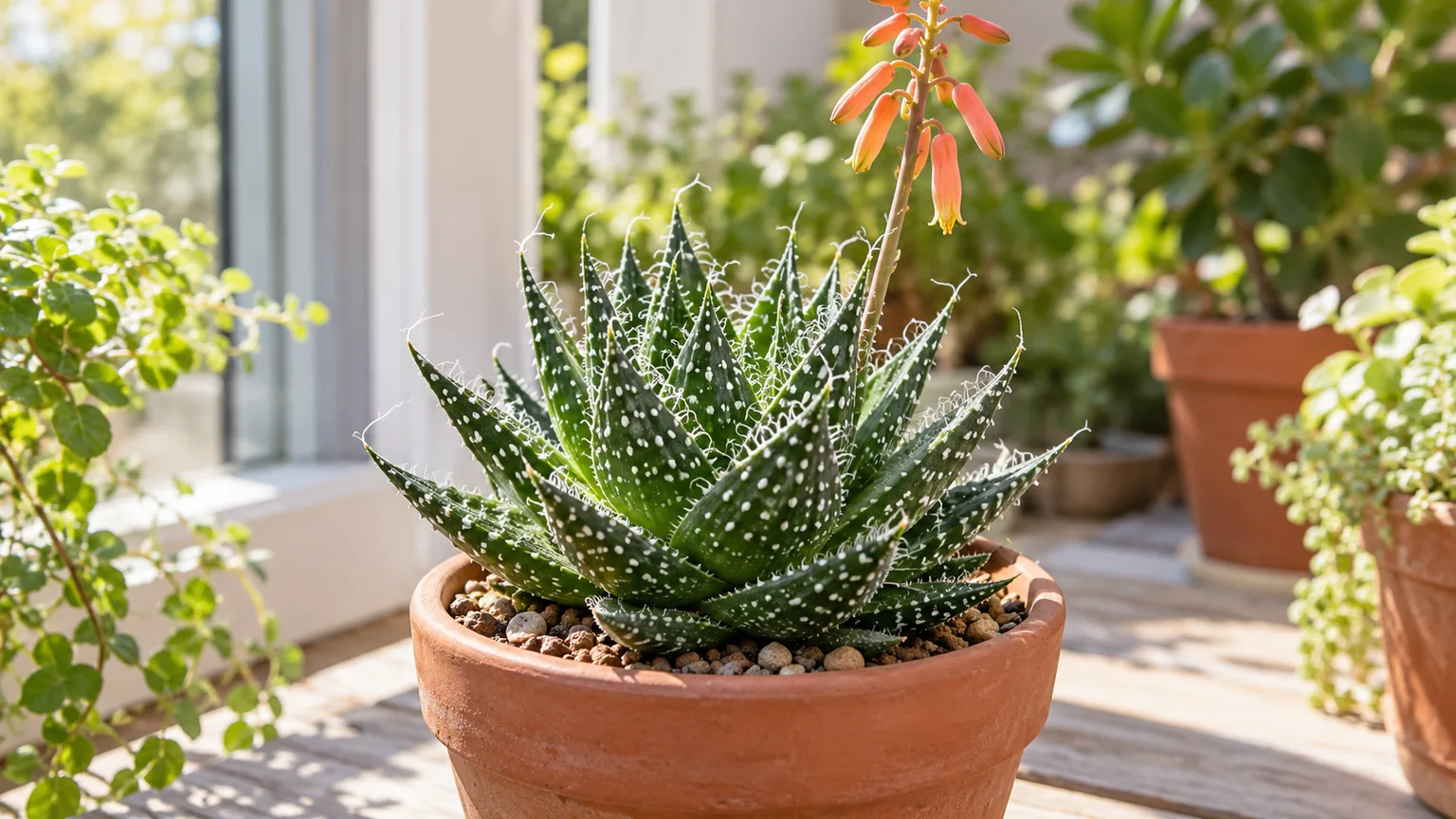
Lace aloe is easiest to keep healthy when its roots dry between thorough waterings, its pot drains freely, and its leaves receive bright light. Give it more direct sun gradually, reduce watering when growth slows in winter, and treat a soft or yellowing crown as a reason to inspect the roots before adding more water.
This compact succulent works well on a sunny sill, in a sheltered patio pot, or in a dry rock garden where winters are mild. The main care mistake is not neglect; it is keeping the root ball damp for too long. The plant stores water in its fleshy leaves, so soil texture, pot size, temperature, and light matter more than following a weekly watering schedule.
Lace Aloe at a Glance
| Feature | What to expect |
|---|---|
| Botanical name | Aristaloe aristata; older labels may say Aloe aristata |
| Common names | Lace aloe, torch plant |
| Native range | Southern Africa, including parts of South Africa and Lesotho |
| Form | Low, evergreen rosette with offsets |
| Typical display size | Roughly 6–9 inches tall; clumps can spread wider |
| Flowers | Coral to orange-red tubes on a taller stalk, usually in warm months |
| Best setup | Bright light, fast-draining mix, pot with a drainage hole |
Those dimensions describe a mature rosette more than a whole clump. Established plants make offsets around the base, so a specimen that begins as one small rosette can gradually become a low mound. A flowering stalk also rises well above the leaves; that seasonal stem is not the same as the stretched, leaning growth caused by inadequate light.
Know Which Plant You Have
The current Royal Horticultural Society profile uses Aristaloe aristata and lists Aloe aristata as a synonym. That explains why nursery labels, older care references, and plant databases may use different genus names for the same species. Lace aloe is not Aloe vera, and it should not be treated as a source of edible or medicinal gel.
Look for a compact rosette of dark green to gray-green, pointed leaves with raised white spots and fine pale bristles along the edges and tips. The foliage is plump and arranged tightly from the center. Its white markings can resemble some Haworthia, but the lace-like marginal bristles and taller orange-red flower stalk are useful clues; inspect the leaf edges rather than deciding from the white dots alone. The Missouri Botanical Garden describes the rosette form, white spotting, soft hairs, and coral-orange blooms, though its profile uses the older Aloe aristata name.
Lace aloe is native to southern Africa, where plants occur in a range of settings, including dry rocky ground. That background helps explain why a mineral, airy root zone is more important than rich soil and why the plant can tolerate a dry interval once established. It does not mean a potted specimen should be left bone-dry indefinitely: roots still need water during active growth.
Decide Where to Grow It: Indoors, Outdoors, or Both?
Indoors is the safer choice if your winters are cold, rainy, or unpredictable, or if you do not have a sheltered outdoor spot. A container lets you move the plant to stronger light in summer and protect it when temperatures fall or prolonged rain is forecast. Choose a sill or patio where light is strong but the pot does not sit in runoff or in a cold, wet corner.
In a mild climate with a dry, well-drained bed, lace aloe can grow outside as a rock-garden or border succulent. Missouri Botanical Garden lists the plant under older taxonomy as suitable for USDA Zones 7–11, while the RHS treats it as tender under its UK rating system; those systems and site conditions are not directly interchangeable. Gardeners’ Path also advises caution at the cold edge of its range. Think of a zone number as a planning clue, not a guarantee: winter wetness, wind, soil drainage, and freeze duration all influence survival. If you are near the cold limit, use a movable pot or give the plant a dry, frost-protected place rather than testing its hardiness in an exposed bed.
For an outdoor container, use a pot with open drainage holes and keep it off a saucer that holds rainwater. In the ground, a raised, sloping, or rocky position is safer than a low pocket where water collects. If your area has wet winters, growing it in a pot and bringing it under cover is usually easier than trying to amend a heavy bed enough to keep the crown and roots dry.
Give It Bright Light and Acclimate It Gradually
A bright window is the best starting point indoors. East- or west-facing exposures can provide strong morning or late-day light; a bright south-facing window may also work if you acclimate the plant and watch for heat buildup against the glass. Rotate the pot occasionally so the rosette does not lean toward one light source. In a dim room, a grow light can supplement natural light; Penn State Extension and Epic Gardening both identify supplemental lighting as an option when a bright window is unavailable. Place a fixture according to its instructions rather than guessing by brightness to your eyes.
Outdoors, lace aloe handles full sun to part shade, with some protection from harsh afternoon sun in very hot climates. The Missouri Botanical Garden’s culture notes recommend light shade in hot-summer locations, while Penn State Extension’s general aloe guidance emphasizes bright light and gradual movement outdoors for container aloes. After a winter indoors, do not move a plant straight from a window to all-day sun. Start it in bright shade, add a short period of gentle morning sun, then increase exposure over about a week or two if the leaves remain firm and evenly colored.
A plant that has been sunburned may show bleached, tan, or dry brown patches on the side facing the strongest light. Those damaged areas will not turn green again, but the plant can continue growing if the crown and roots remain firm. Move it to bright shade and reintroduce direct sun gradually; do not respond to sun scorch by watering more.
Choose a Drainage-First Pot and Mix
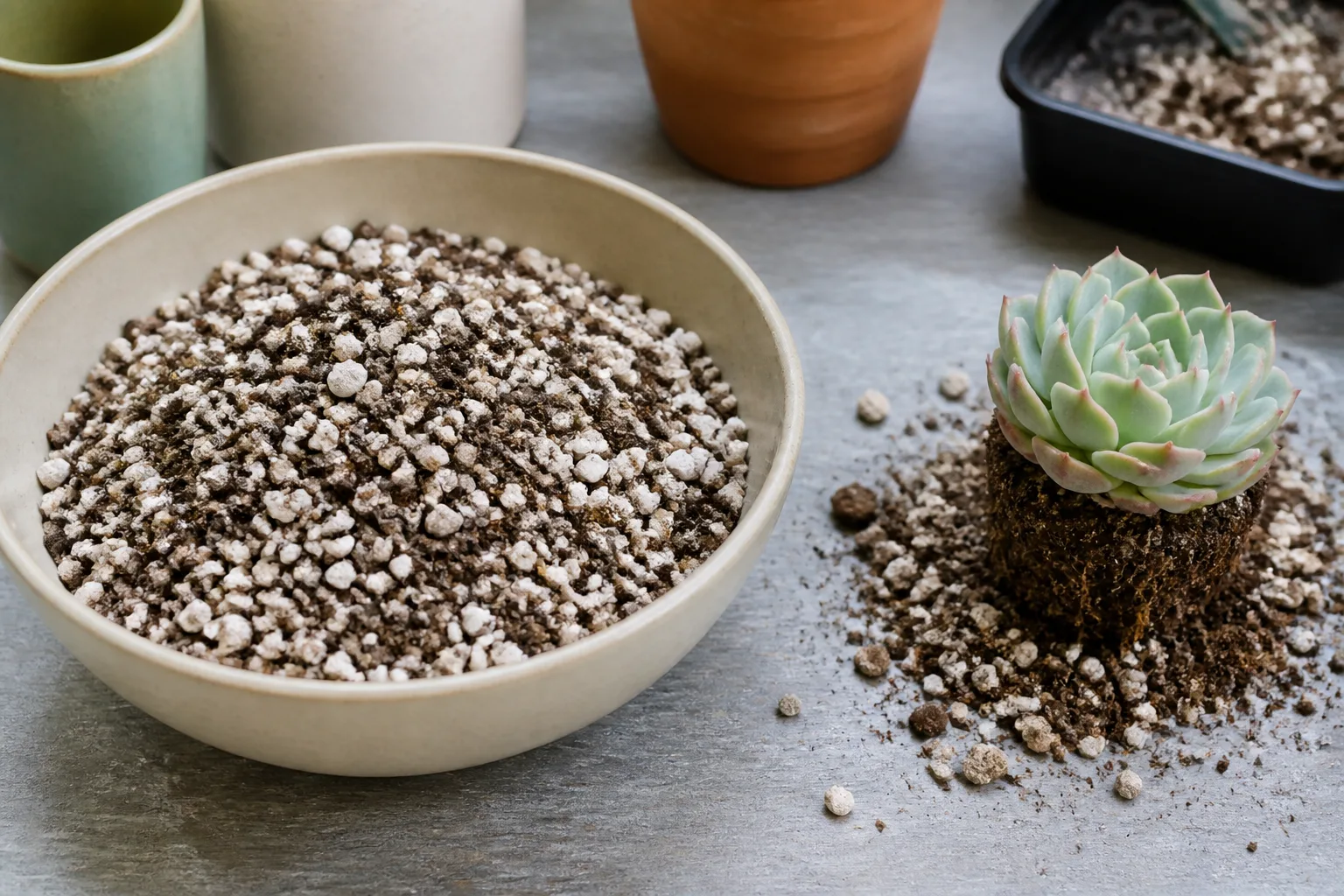
Use a pot with at least one unobstructed drainage hole. Unglazed terracotta is helpful because it lets the mix dry faster, especially in a cool or humid home, but it is not essential if you water carefully. The container should be only a little wider than the root ball; a large pot holds excess mix around the roots and may stay wet long after the plant has used the water it can store.
A commercial cactus or succulent mix is a reasonable starting point. If it remains dense or damp for several days after watering, blend in a mineral amendment such as pumice, perlite, or horticultural grit until water passes through and the mix dries at a sensible pace. Penn State Extension describes a coarse mix for aloes, and the RHS recommends cactus compost or a loam-based mix with horticultural grit. There is no single ideal ratio for every home: a cool north-facing room may need a grittier blend than a hot, bright patio.
Avoid garden soil in a pot, fine sand that packs down, and mixes heavy in peat or compost that remain wet. A gravel layer at the bottom does not replace a drainage hole or a porous root mix. Keep the crown—the point where the leaves meet—slightly above the soil line, and brush stray mix out of the leaf joints so it does not trap moisture.
Water When the Root Zone Is Dry
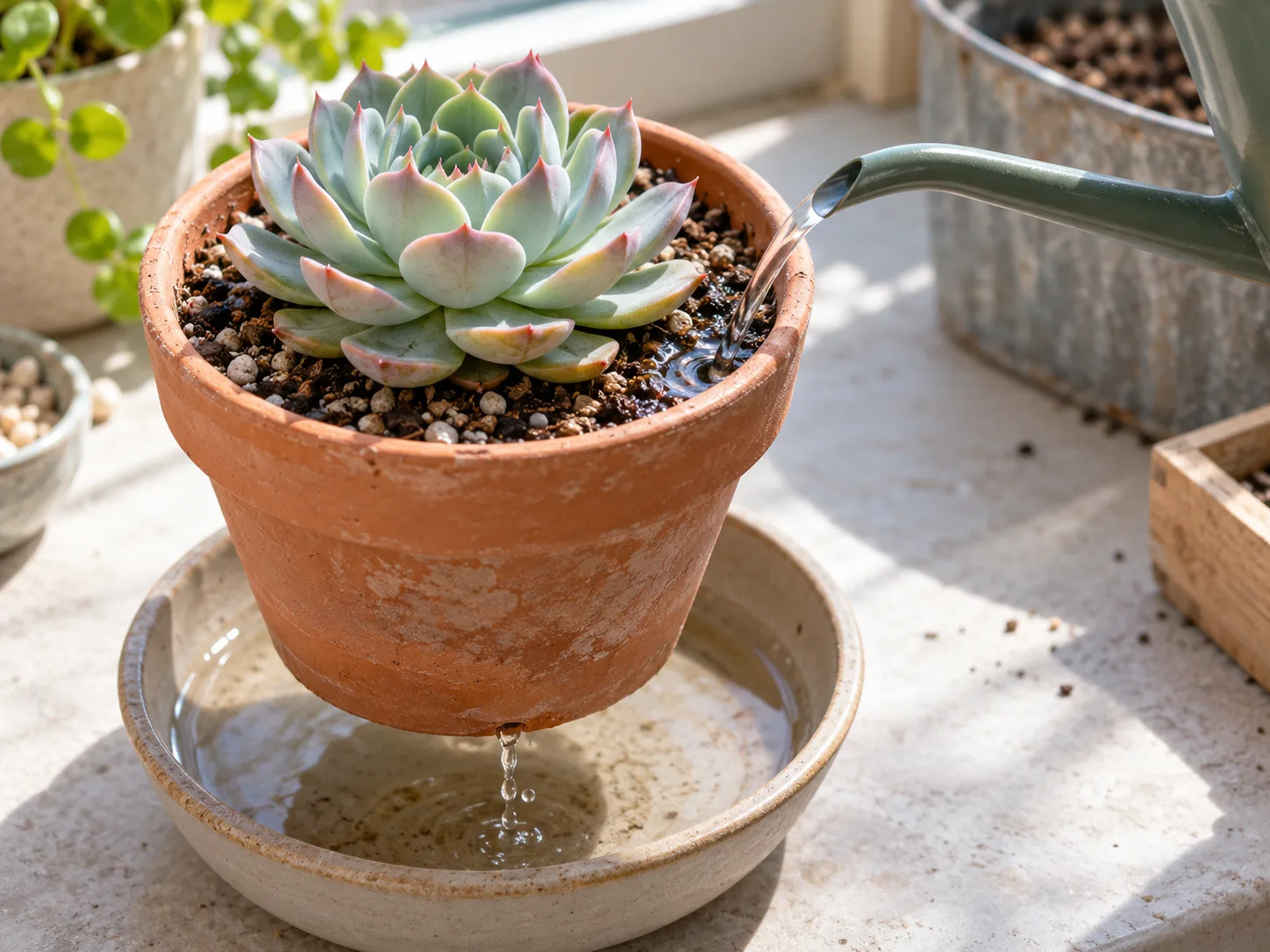
Water lace aloe thoroughly, then let the entire root zone dry before watering again. Do not choose a weekly interval first and try to make the plant fit it: a small terracotta pot in bright summer sun may dry quickly, while a larger plastic pot in a cool room can stay damp much longer. The Missouri Botanical Garden notes drought tolerance once established and advises reducing water in winter; Penn State Extension likewise recommends thorough growing-season watering followed by reduced winter watering.
Check below the surface before you pour. Push a clean wooden skewer toward the lower part of the root ball; if it comes out cool or damp, wait and check again later. If the pot is lightweight, the mix is dry through, and the leaves are beginning to lose some firmness, water slowly at the soil line until water runs from the drainage hole. Empty the cachepot or saucer after it drains. For an outdoor bed, water deeply during a prolonged dry spell only after the soil has dried well; rainfall can be enough in some climates.
Keep water out of the central rosette when practical. Moisture sitting between the leaves is slow to evaporate in a cool, still room and may contribute to crown rot. Top watering at the soil surface is fine if you pour carefully; bottom watering can also work, but remove the pot from the water once the root ball has absorbed moisture and let it drain. Neither method makes a persistently wet mix safe.
In winter, reduce watering because shorter days and cooler temperatures slow growth and evaporation. “Less” does not mean leaving a warm, actively growing plant dry for months; it means waiting longer for the root ball to dry and using the plant’s firmness and the pot’s weight as clues. If leaves wrinkle while the soil is still damp, investigate damaged roots or poor drainage before adding water.
Keep It Warm, Dry, and Well Ventilated
Ordinary indoor temperatures suit lace aloe if light is adequate and the potting mix dries between waterings. Keep it away from cold drafts, heating vents, and windows where leaves touch icy glass. Dry indoor air is usually preferable to a humid bathroom; the plant does not need misting or a humidity tray.
Outside, the combination of cold and wet is more dangerous than a single dry spell. Protect potted plants from repeated winter rain, and move them before frost risk where your local conditions are uncertain. Avoid abrupt transitions: a plant that moves from a warm room to a chilly patio can be stressed even if the outdoor minimum is brief.
Good airflow around the rosette helps the leaves dry after watering and makes pest checks easier. Leave space between plants if the mother rosette has produced many pups. If a dense clump traps dead leaves or damp debris at its base, remove only the loose material you can reach without pulling or cutting healthy leaves.
Feed Sparingly in the Growing Season
Lace aloe can grow in lean soil, so fertilizer is optional rather than a rescue treatment. If it is actively growing in spring or summer, you can use a balanced liquid fertilizer at a diluted strength; the RHS profile suggests monthly feeding from May through August in its cultivation guidance. In a small pot, one or two light applications during active growth may be sufficient for a plant that is already growing well.
Do not fertilize a dry, newly repotted, sunburned, or root-damaged plant. Fertilizer cannot correct dim light or a mix that stays wet, and excess salts can stress roots. Skip feeding when growth slows in winter, and flush the mix with plain water occasionally only if it drains freely and you suspect fertilizer salts have accumulated.
What to Expect From Lace Aloe Flowers
A mature, well-lit plant may send up a narrow flower stalk carrying tubular coral, orange, or red-orange blooms. The exact season varies with climate and growing conditions: botanical profiles place flowering in the warm part of the year, with the RHS describing autumn blooms and Missouri Botanical Garden noting summer flowering. Treat the timing as a range rather than a promise for a particular month.
Flowering is more likely when a plant has enough light, a stable root system, and a real seasonal growth cycle. Young offsets may stay vegetative for some time, and indoor plants may not bloom if light is weak or winter conditions never provide a natural slowdown. Do not force flowering by withholding water to the point that leaves shrivel or by overfeeding; a firm, compact plant is a better measure of good care than a flower stalk.
After flowers fade, cut the spent stalk near its base with clean shears if you prefer a tidier plant. The rosette itself does not need pruning. If it continues to form pups, you can leave them attached for a broader mound or separate some to keep the plant compact.
Propagate It by Separating Offsets
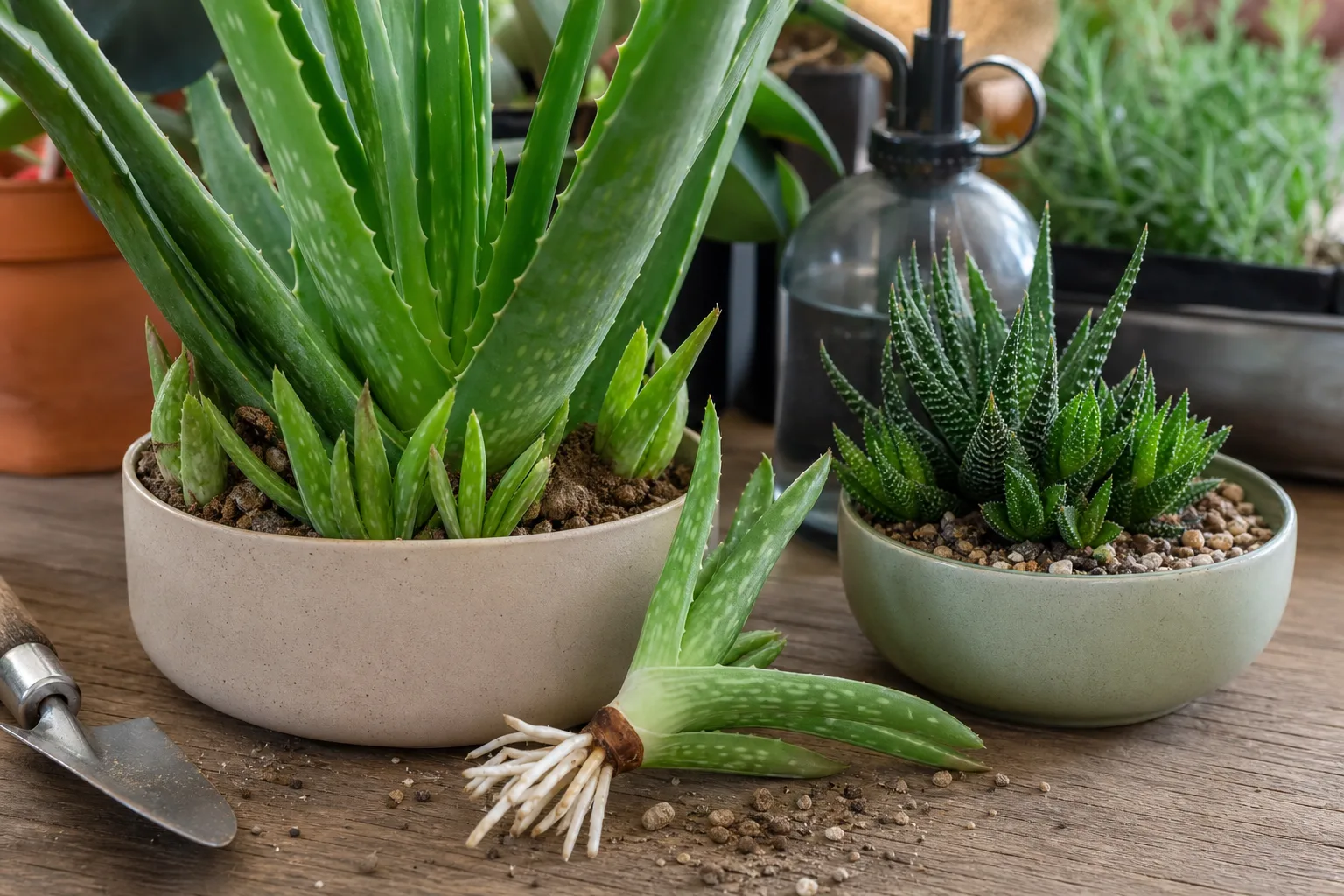
Offsets, often called pups, are the most dependable way to make new lace aloe plants. They form beside the parent rosette and may already have their own roots. The RHS recommends separating offsets in spring or early summer, when the plant can resume active growth; Gardeners’ Path also describes pups as the simplest propagation route for this species.
Wait for a Rooted Pup
Choose an offset that is large enough to handle and has several leaves of its own. If possible, wait until you can see roots or feel that the pup resists a very gentle tug. A tiny, rootless pup can survive, but it has fewer reserves and may take longer to establish, so leaving it attached for another growth cycle is usually the lower-risk choice.
Remove the whole plant from its pot if the attachment point is hidden. Brush away enough mix to see where the pup joins the parent, then separate it with a clean, sharp knife if it does not pull free with gentle pressure. Keep as many roots as you can, but do not tear repeatedly at the parent plant. If a cut or root breaks, let the wound dry in a shaded, airy place until the surface is no longer wet.
Pot the Offset for Establishment
Set the pup into a small pot with a drainage hole and fresh, dry cactus mix. Spread its roots downward, cover the roots, and keep the leaves and crown above the soil. A pot that is only slightly wider than the roots dries more evenly and keeps the small plant from sitting in a large reservoir of damp mix.
Place the new offset in bright indirect light while it settles, then introduce stronger sun once it is growing. Wait several days before its first thorough watering if roots were cut, and thereafter use the same dry-root-zone rule as for an established plant. A leaf cutting is less reliable than an offset because a detached leaf may shrivel or rot without producing a new crown; if a leaf is your only material, treat success as uncertain rather than assuming it will root.
Repot Only When Crowding or Mix Condition Calls for It
Repot when roots fill the container, pups are pressing against the pot, the plant has become unstable, or the old mix is compacted and no longer drains or dries normally. Roots at the drainage hole are one clue, but they do not mean you must pot up immediately if the plant is otherwise healthy. Lace aloe is compact, so it often needs less frequent repotting than a fast-growing foliage plant.
Move it in spring if possible. Choose a container only slightly larger than the root ball, replace the old mix with a fresh draining blend, and keep the crown at the same height or a little above the surface. If the roots look healthy and the old pot is the right size, refreshing the mix without a larger container may be enough. If you cut away rotted roots, let the damaged areas dry before settling the plant in dry mix; wait several days to water so fresh cuts are not held wet.
Do not bury lower leaves to make a loose plant feel more stable. Instead, set the root system correctly, firm the mix gently, and use a snug pot. A shallow pebble top dressing is optional outdoors, but keep it away from the leaf bases and do not use it to hide a persistently damp crown.
Read Leaf Changes Before Changing Care
A single brown tip does not identify one cause. Look at where the damage starts, whether the tissue is firm or soft, how recently you watered, how fast the pot dries, and whether light changed suddenly. The fastest useful check is often the root zone: moisture and root condition help separate drought from rot more reliably than leaf color alone.
| What you see | First check | Safer first response |
|---|---|---|
| Wrinkled, firm leaves; dry mix | Root ball and pot weight | Water thoroughly, then let it drain |
| Yellow, soft leaves; damp mix | Crown and roots | Stop watering and inspect for rot |
| Bleached or crispy patches on the lit side | Recent move into stronger sun | Return to bright shade and acclimate more slowly |
| Long, loose leaves leaning toward a window | Light direction and strength | Increase light gradually; rotate occasionally |
Brown, Yellow, Soft, or Wrinkled Leaves
Wrinkling can mean the plant has used stored water, but it can also appear when roots have been damaged and cannot take up water. If the mix is bone-dry and the leaves remain firm but slightly puckered, give it a full drink and allow excess water to drain. If the leaves are translucent, mushy, or yellowing near the center while the pot stays wet, do not water again to “perk it up”; unpot the plant and inspect for black, soft roots or a sour smell.
For root rot, remove saturated mix and trim only roots that are clearly mushy or black with clean shears. Let the root system dry in airy shade before repotting into fresh, fast-draining mix. Keep the plant in bright indirect light while it recovers, and wait until the mix has dried before watering again. If the crown itself has turned soft and collapsed, the main rosette may not recover; firm offsets are the best material to save.
Brown edges are not always drought. Dry, papery tips can follow a long dry period, while bleached tan patches more often point to sudden intense sun. Brown, soft tissue at the base points back to wet roots or crown damage. Correct the condition that matches the pattern; changing water, light, and fertilizer all at once makes it harder to see what helped.
Stretching, Flattening, or Sun Scorch
When the rosette opens, leans, or produces longer, paler leaves, inadequate light is a likely cause. Move it closer to a bright window or add a grow light, but do it gradually so weak leaves are not suddenly exposed to harsh sun. Existing stretched leaves do not shorten; look for the next leaves to emerge tighter and more compact.
A healthy plant can flatten slightly as it produces offsets, and an upright flower stalk is normal. Sun scorch looks different: it creates pale or dry patches on the side facing strong direct light, particularly after an abrupt move outdoors. Return the plant to bright shade, protect it from harsh afternoon exposure, and increase morning sun in small steps only after the damaged tissue stops expanding.
Catch Mealybugs and Scale Early
Check between the lower leaves and around the base of the rosette, where mealybugs can hide from a quick glance. Mealybugs look like small white cottony clusters; scale may appear as fixed brown or pale bumps. The RHS lists both mealybugs and scale among possible pests, and Missouri Botanical Garden also notes them on indoor specimens.
Isolate an affected pot and inspect neighboring plants. For a small infestation, remove visible insects with a damp cotton swab or cloth, then recheck the plant every few days because hidden insects and eggs can be missed. Do not flood the rosette while cleaning. For a persistent infestation, use only a product labeled for the plant and indoor setting, follow its directions, and test a small area first; succulent leaves may react poorly to some oils or sprays.
Handle and Place Lace Aloe Safely
Treat lace aloe as an ornamental, not an edible plant. The RHS classifies it as potentially harmful if eaten and advises wearing gloves and washing hands after handling. Do not use its leaves as a substitute for Aloe vera gel, and keep the pot where small children or pets cannot chew it. If someone or an animal ingests the plant, contact a qualified medical or veterinary professional for specific advice rather than trying a home remedy.
The leaf margins have soft bristles rather than large rigid spines, but the tips can still be uncomfortable against sensitive skin. Use gloves when separating pups or removing damaged leaves, and wash tools after trimming. Place the pot on a stable surface where it cannot be knocked onto a walkway or a curious animal.
Conclusion
Lace aloe care comes down to three repeatable choices: give the rosette strong light, use a small pot and airy mix, and water only after the root zone has dried. A plant that grows outdoors needs the same drainage discipline, plus protection from prolonged winter wet and an honest assessment of your local freeze conditions.
When leaves change, check their texture and the soil before you change the routine. A firm, wrinkled plant in dry mix may need water; soft yellow tissue over damp roots calls for an inspection, not another drink. Leave healthy pups attached until they can be handled, then root them in a small draining pot. With those decisions in place, the lace aloe can stay compact, build a clump over time, and flower when its light and maturity allow.