Lawn Mower Smoking: Causes, Checks, and Safe Fixes
Learn why a lawn mower smokes, what white, blue, or black smoke can mean, and how to check oil and filters safely before deciding whether to call a repair shop.
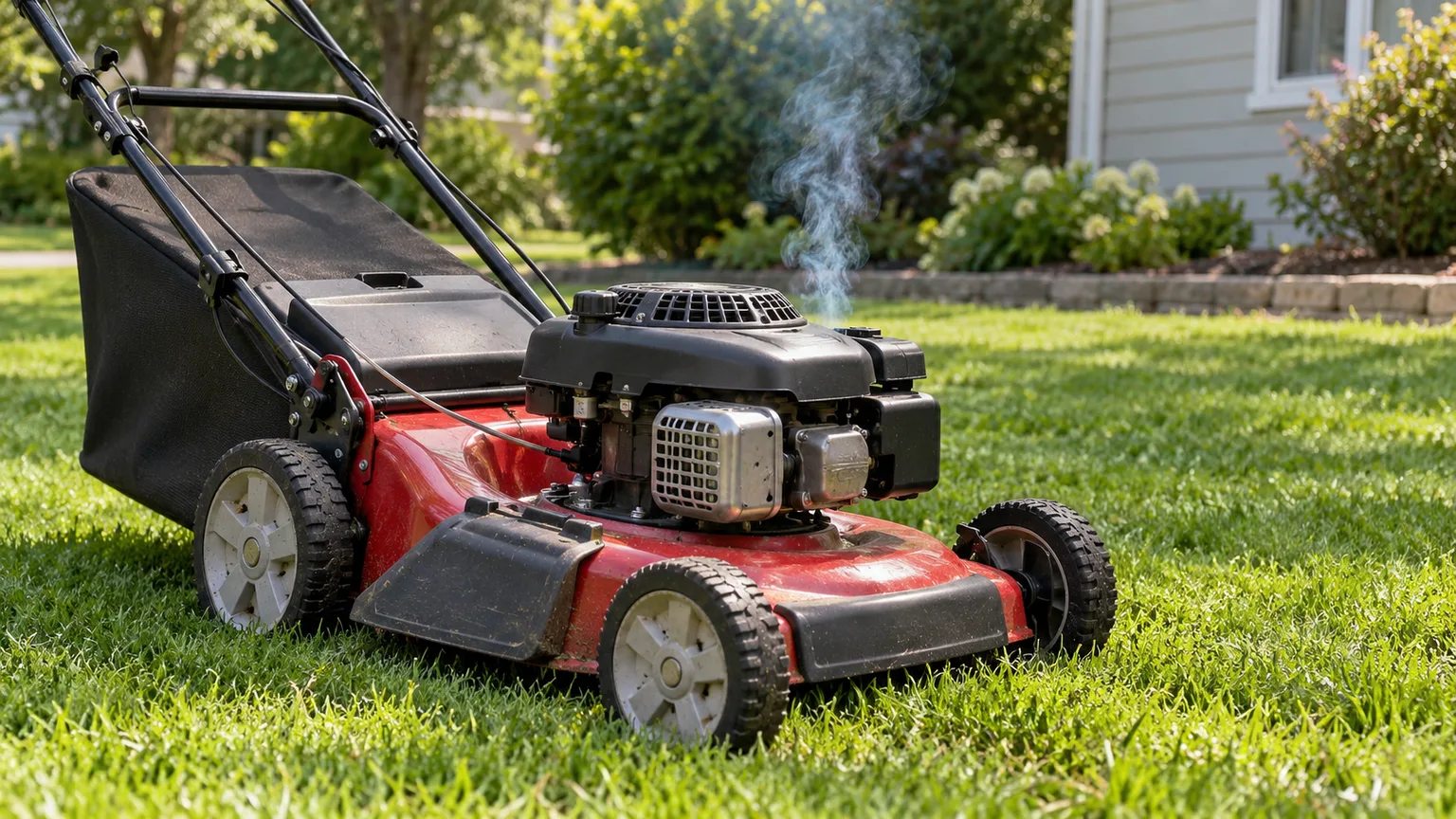
If your lawn mower starts smoking while you are mowing, stop the machine and disengage the blade. Do not keep cutting to see whether the smoke clears: smoke can come from spilled oil, an overfilled crankcase, a restricted air intake, a fuel problem, a hot electric motor, or a more serious failure. Let the mower cool before you inspect it, and keep people, pets, dry grass, and fuel containers away from the machine.
A brief puff after a recent oil change or an accidental tilt may have a simple explanation, but color alone cannot prove that. The useful clues are where the smoke comes from, whether it continues after shutdown, what the mower was doing, what maintenance happened just before it started, and whether you smell fuel or hear knocking. Use those details to decide whether a basic check is safe or the mower should go straight to a repair shop.
First response: stop mowing and let the machine cool
Move the mower onto a clear, level outdoor area if it is safe to do so, release the operator-presence control, and switch it off using its normal stop control. Keep clear of the exhaust and deck; metal parts can stay hot after the engine stops. If smoke is heavy, flames appear, fuel is leaking, or the machine continues to heat or smolder, do not restart it or move it through dry vegetation. Back away and get appropriate emergency help if there is a fire.
Wait until the engine and muffler are cool before checking oil, removing a filter cover, or touching anything near the deck. A gas walk-behind mower can start unexpectedly if its spark plug is connected, and a sharp blade can rotate even when the engine is off if the machine is handled carelessly. For an inspection near the blade or any repair, disconnect the spark-plug boot and secure it away from the plug; for an electric mower, remove the safety key and battery only as its manual directs and only when the battery is not hot, swollen, hissing, or smoking.
Do not pour water onto a smoking engine, battery, or electrical component, and do not spray cleaner onto a hot muffler. If you see wet fuel, a strong gasoline smell, oil running onto the exhaust, melted insulation, or a battery that is unusually hot, stop at the visual check. Those signs raise fire or shock risk and call for professional help rather than a test run.
Read the smoke’s color and location as clues, not a diagnosis
The smoke’s appearance can narrow the possibilities, but sunlight, oil residue, engine design, and where the smoke exits can make colors hard to judge. Briggs & Stratton’s guidance identifies blue or white engine smoke as commonly related to oil burning, while its troubleshooting page also connects black smoke with restricted airflow, stale fuel, excess oil, or a flooded carburetor (Briggs & Stratton engine smoke guidance, Briggs & Stratton engine troubleshooting).
| What you notice | Common first possibilities | What to do next |
|---|---|---|
| Pale white or blue-gray smoke from the exhaust | Oil entering the combustion chamber after overfill, wrong oil, tipping, or wear | Shut down, cool the mower, and check the oil level and recent handling against the manual |
| Smoke rising from the outside of the engine or muffler | Oil or grass debris touching a hot surface; a leak is also possible | Wait for full cooling, then look for residue or an active leak without restarting |
| Black smoke from the exhaust | Rich fuel-and-air mixture, often restricted by a dirty filter or related fuel issue | Inspect the filter cold and follow the engine manual; do not adjust a carburetor by guesswork |
| Smoke from a motor housing, wiring, or battery area | Electrical overheating, motor damage, or battery fault | Switch off; do not restart, open the motor, or continue mowing |
A small amount that stops quickly after a known oil spill is different from smoke that continues, returns, or comes with rough running. Smoke from the muffler suggests material is burning inside the engine, while smoke from the top or side of the engine can be oil or debris on a hot exterior. If you cannot tell where it is coming from, treat it as persistent until a cool visual inspection or technician clarifies the source.
Identify the mower before opening or tilting it
Start by confirming whether you have a four-stroke gas mower, a two-stroke machine that uses a fuel-oil mixture, a corded electric mower, or a battery mower. Most residential walk-behind mowers use four-stroke engines with separate crankcase oil and gasoline, but do not assume that your model does. A procedure that is appropriate for one design can damage another, so locate the model number and consult its engine and mower manuals before draining fluids, tipping the chassis, cleaning a filter, or opening an electrical housing.
Think about what happened immediately before the smoke began. Did you top off oil, change oil, clean under the deck, transport the mower on its side, mow a steep slope, hit a branch, use old fuel, or hear the engine bog in tall wet grass? A recent event is often more diagnostic than the color: smoke after tipping points first toward oil migration, while smoke after a clogged deck bogged down suggests excess load or overheating.
If the source is a corded mower, disconnect it from the outlet before any visual inspection, and keep the plug and extension cord away from wet surfaces. With a battery mower, use the manual’s shutdown procedure and remove the battery only after the equipment is off and it is safe to handle. When a battery or motor itself emitted smoke, skip homeowner disassembly entirely.
White or blue smoke usually points to oil
On a gas mower, pale white or blue smoke often means oil is being burned inside the engine or has reached a hot part. Briggs & Stratton lists overfilling, the wrong oil grade, operating at an excessive angle, tilting the mower, a blocked breather, and worn engine parts among possible causes. Those are possibilities to check in order, not proof that every pale plume means a failed engine.
Recent oil change, spill, or mower tilt
If the smoke began right after an oil change, first ask whether oil splashed onto the muffler or engine exterior. A small residue on the outside can smoke briefly as it heats, but an external oil spill should not be mistaken for a harmless exhaust plume. Let the mower cool, wipe accessible residue with a cloth, and check whether oil is still seeping from a drain plug, fill cap, dipstick seal, or damaged surface.
A mower that was laid on its side can send crankcase oil into the air-filter housing, carburetor, cylinder, or exhaust, depending on its design and orientation. The correct direction for tipping varies by model; follow the engine manual’s diagram instead of relying on a universal rule. Briggs & Stratton cautions about angles above 15 degrees for its engines and gives model-specific tilt guidance, so a long hillside cut may matter even if the mower was never fully turned over.
If the level is correct, there is no active leak, and a known small external spill caused a brief wisp that stopped, a cautious observation after cooling may be reasonable. If smoke comes from the exhaust, persists, or reappears when the engine runs, stop and have the mower inspected rather than repeatedly starting it to burn oil away.
Overfilled oil, wrong grade, or internal wear
Check oil only with the mower level and the engine cool, using the exact dipstick procedure in the manual. Some dipsticks are threaded in to measure; others rest on the opening. Wipe and reinsert as directed, then compare the reading with the full marks. Do not fill to the top of the neck, estimate by bottle size, or use a generic oil grade because another mower takes it.
If the level is above the specified range, do not keep operating the mower. Drain or extract a small amount with the engine cool, following the maker’s procedure, then recheck; overfill can push oil into the intake or breather and create continued smoke. On a four-stroke mower, oil belongs in the crankcase, not mixed into the gasoline. If the oil level has risen unexpectedly or smells strongly of gasoline, leave the machine off and ask a technician to diagnose possible fuel dilution or carburetor leakage.
Correct oil level does not rule out a blocked breather, failed seal, head-gasket problem, or worn cylinder and rings. Persistent blue smoke, low oil that keeps returning, oily deposits, hard starting, loss of power, or a knocking sound points beyond a simple spill. A shop can check compression and internal components without the guesswork of replacing filters or carburetor parts at random.
Black smoke calls for an air and fuel check
Black exhaust smoke often indicates that the engine is burning a fuel-rich mixture, meaning there may be too much fuel for the air available. A clogged air filter is a common first check; dirty fuel, a stuck choke, carburetor flooding, or a carburetor fault can also contribute. Briggs & Stratton recommends starting with the air filter and then checking oil, fuel, and carburetor causes if the smoke continues (Briggs & Stratton small-engine troubleshooting).
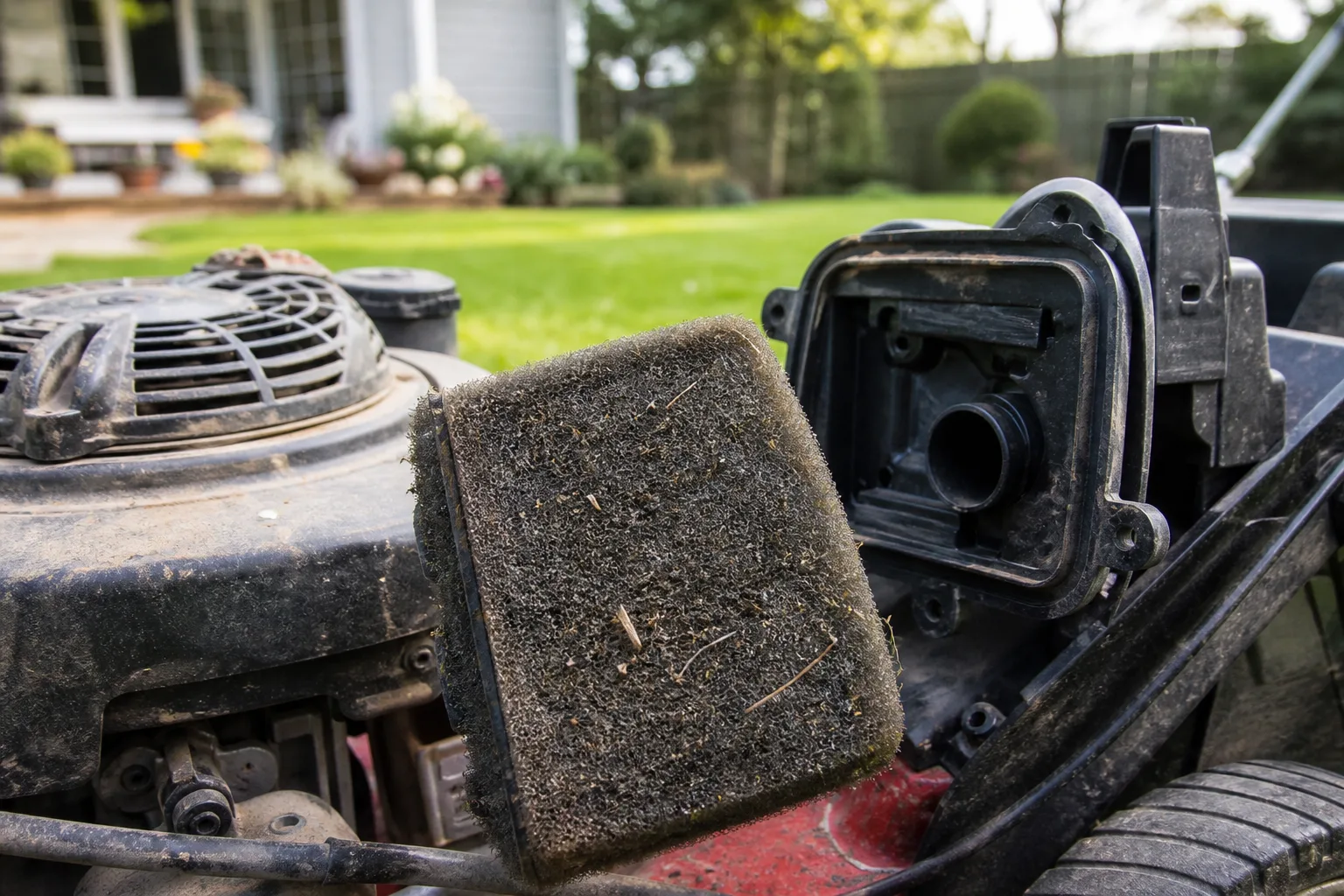
Once the engine is cool and the spark-plug boot is disconnected, remove the cover and inspect the filter. Replace a damaged or oil-soaked element. Foam, paper, and dual-element filters do not all get cleaned the same way: wash or oil a filter only if the manual specifically calls for it, and let any washable component dry fully before reinstalling it. Never run the mower with the filter removed as a workaround; dirt can enter the engine and the missing filter may alter the air-fuel mixture.
If the filter is clean and smoke persists, check whether the choke is stuck in the start position and whether fuel looks contaminated, but do not open a hot carburetor or adjust mixture screws without the correct procedure. A carburetor that is flooding, a damaged fuel line, or a fuel leak can create a fire risk, not just a smoky exhaust. If gas is dripping, pooling, or strongly smelled around the mower, keep ignition sources away and arrange repair before starting it again.
Check for grass buildup or a blade that is working too hard
A mower may smoke or smell hot when thick, wet grass, twine, leaves, or another obstruction makes the blade and engine work harder than normal. The deck can also collect clippings around the discharge area or engine cooling openings. That sort of load can make an electric motor overheat or cause a gas engine to bog, but it should not be diagnosed from smoke alone: oil, fuel, and electrical faults remain possible.
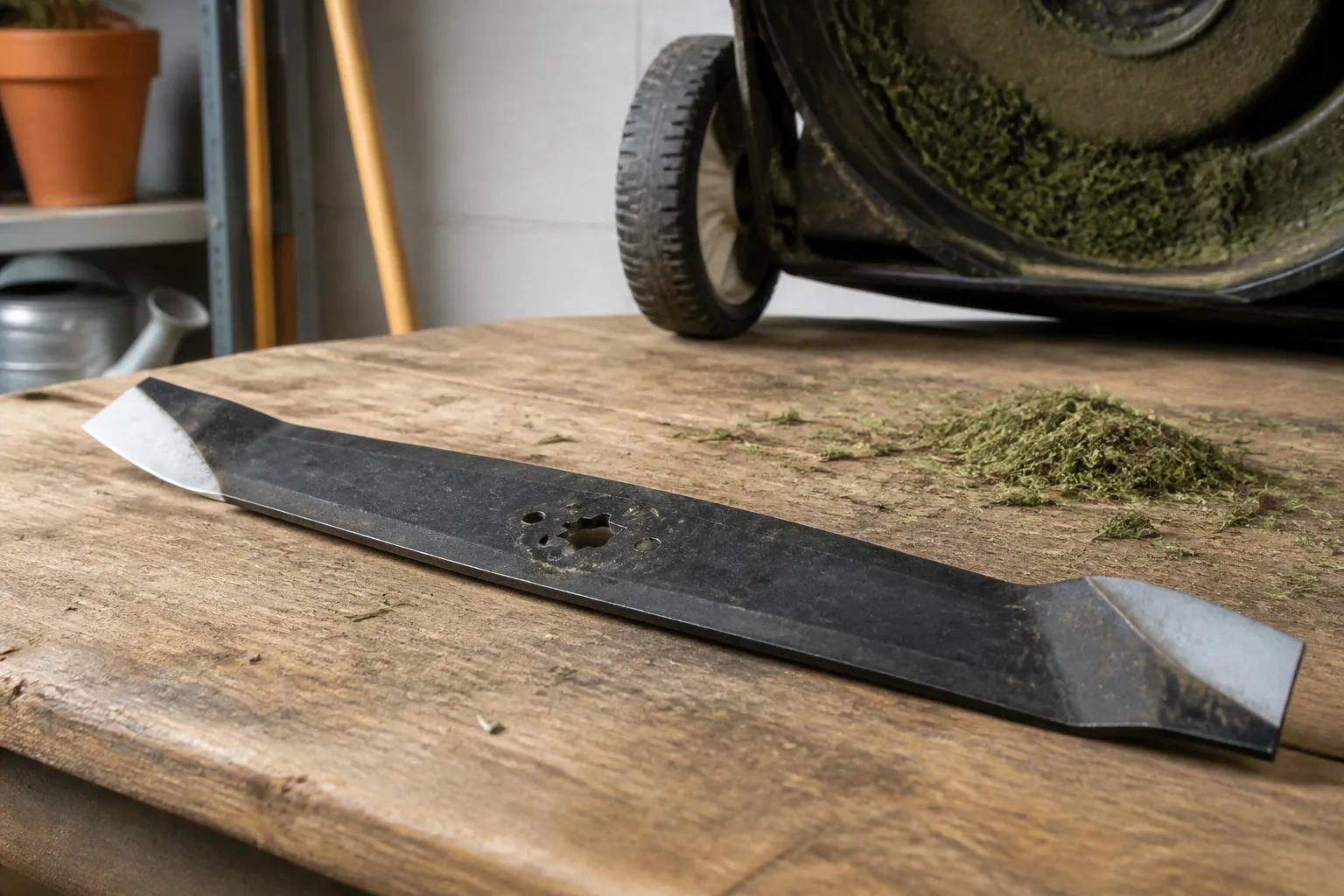
After the mower is cool and its power source is isolated, inspect from the outside for packed grass, a bent blade, or a foreign object. Do not reach under the deck with your hands, even with gloves; use the manual’s cleaning method and a tool designed for the job. If you need to tip a gas walk-behind mower, follow its specified orientation so oil does not drain into the intake. Riding mowers and many electric models have different service positions and should not be tipped casually.
If you find a deck obstruction, clear it only after ensuring the blade cannot start. Let a hot motor cool fully, remove debris without pulling on wires or belts, and check that the blade turns freely only if the manual says this is safe. A damaged or bent blade, a seized spindle, repeated bogging, or a burning smell after debris is cleared needs a technician; continuing to mow can worsen the fault.
Treat smoke from an electric mower as a stop-use fault
Electric mowers do not have an oil crankcase or carburetor, so the gas-engine smoke-color chart does not diagnose them. Smoke from the motor housing, wiring, a cord, or a battery pack may mean an overheating component, motor failure, belt friction, or another electrical problem. Practical mower guidance from Family Handyman similarly treats a smoking electric mower as a reason to switch it off and consult a repair specialist.
Turn off the mower immediately. If it is corded, unplug it only if the plug and cord are cool, dry, intact, and safely accessible; do not touch melted insulation or exposed wire. If battery-powered, remove the key and disconnect the pack only when the mower and battery are safe to handle and the manual allows it. The U.S. Fire Administration advises stopping use of a lithium-ion battery that becomes too hot, changes shape, leaks, or makes unusual noises (battery fire safety). A hot, swollen, hissing, or smoking pack should not be handled or opened; move away from it and seek emergency help if there is fire or continuing heat.
Do not try to “clear a clog” and restart an electric mower that produced smoke until its source has been established. Clearing grass from the deck is a normal maintenance task after power is removed, but it will not fix damaged windings, wiring, a belt, or a battery pack. Have a qualified service center inspect any electric mower that smoked, even if it seems to run again after cooling.
Inspect a gas mower safely after it is cool
A homeowner can make a few useful observations without pulling apart the engine. Park on firm, level ground outdoors, remove the ignition key if present, let the mower cool, and isolate the spark plug before maintenance. Wear eye protection and gloves for sharp or oily components, keep cigarettes and flames away from gasoline, and follow the exact manual for the model.
Check oil on level ground
Look around the fill tube, dipstick, drain plug, crankcase, and underside for wet oil. A film left after maintenance is different from a fresh drop forming while the mower sits. Do not wipe or tighten a hot part, and do not start the mower simply to locate a leak; if oil is reaching the muffler or exhaust, the machine needs repair before it is run.
Read the oil level by the manufacturer’s method, then confirm the specified oil type and capacity from the manual or engine model. If the oil is overfull, drain a measured amount with the mower level and cool. If it is low, look for the cause before topping up: low oil plus smoke, leaks, or engine noise can signal a problem that an extra pour will not solve.
Inspect the air filter without bypassing it
Remove the filter cover only after the mower is cool and electrically isolated. A dark, dust-packed, torn, or oil-wet filter deserves cleaning or replacement according to its material and the engine manual. Gardening Know How’s mower-maintenance checklist also stresses checking filters, blades, and the deck with the spark plug disconnected on gas equipment or the key/battery removed on electric models (Gardening Know How seasonal mower checks).
Look behind the filter only for visible oil or debris; do not probe the carburetor with wire or spray cleaner into it as a first step. A filter soaked with oil after the mower was tipped should be replaced if cleaning cannot restore it, and the source of the oil should be corrected before the next start. If the filter is clean and the exhaust still smokes black, the next diagnostic step may require carburetor service.
Look for external leaks and debris
Inspect the fuel tank, fuel line, carburetor area, and oil seals from above without touching wet fuel. Do not drain gasoline in a warm garage or into an unapproved container. If fuel has leaked, ventilate the outdoor area, keep away from ignition sources, and use a qualified repair shop to replace damaged lines or fittings.
Look for grass around the muffler, cooling fins, and deck. Dry clippings near a hot exhaust can scorch or ignite, so clear them only after the equipment has cooled and the spark plug is disconnected. If cleaning exposes melted plastic, a loose wire, cracked housing, or a strong burnt smell, leave it off and get the machine inspected.
Decide which repairs are reasonable to do at home
A simple spill, a visibly dirty filter, or a measured oil overfill may be within reach if the machine is cool, the manual gives a clear procedure, and no leak or electrical damage is present. Work outdoors, use the correct replacement part, catch used oil or fuel safely, and change one thing at a time. That way, if the smoke returns, you have not added an unrelated carburetor adjustment or improvised cleaner that complicates the diagnosis.
Keep the repair narrow: correct the oil level, replace a filter with the right model, or remove dry grass after isolating power. Avoid dismantling the carburetor, adjusting internal mixture settings, opening motor housings, or repairing battery packs unless you are trained and have the service documentation. If the mower is under warranty, check with the manufacturer or dealer before disassembly; unauthorized repair may affect warranty coverage.
A quick visual check is not a substitute for service if the engine loses power, runs roughly, knocks, vibrates abnormally, or burns oil. Likewise, do not keep changing filters when the same smoke returns after each mowing session. Repeated smoke means the underlying cause is still there.
Know when the mower needs a qualified technician
Take the mower out of service if smoke is dense, lasts beyond a brief known residue event, returns after a basic correction, or comes from wiring or a motor housing. Repair is also the right next step if you find fuel or oil leaking onto hot parts, the oil level keeps falling, the engine is unusually noisy, the blade or spindle binds, or the mower stalls whenever it is under load. These symptoms can indicate an internal engine, fuel-system, or electrical fault that a driveway inspection cannot safely resolve.
Call a service provider that works on your mower’s engine or battery platform, and give them the useful timeline: smoke color and location, whether it occurred at startup or during mowing, what maintenance you last performed, whether the mower was tilted or used on a slope, and any smell, sound, or loss of power. Those details are more useful than saying only that it “smoked.” If you are unsure which engine model you have, take a photo of the identification label rather than removing parts to find it.
Do not continue using a machine just because the smoke went away after cooling. Oil leaks and electrical faults can be intermittent, and a damaged engine may smoke only under load. If the problem repeats once, stop using it and get a diagnosis before the next mow.
Restart only after the cause is understood
A brief, controlled restart is reasonable only in a narrow situation: the engine is fully cool, you found and removed a small external oil spill or corrected a minor overfill, the oil level is now within spec, there is no active leak, and the manual does not prohibit the check. Run it outdoors on level ground, away from dry clippings and fuel containers, without engaging the blade at first. Stand clear of the exhaust and stop it immediately if smoke returns, the engine sounds wrong, or a fresh leak appears.
Do not use repeated start attempts to burn off unknown oil, test a suspected carburetor, or see whether an electric mower “recovers.” Smoke that continues from the exhaust after correcting an obvious, verified cause requires service; smoke from a battery or motor should never be test-run at home. Briggs & Stratton’s manufacturer guidance notes that some smoke after an engine has been tilted may clear on level ground, but it also lists failed breathers, gaskets, rings, and cylinders as possible causes and directs users to the manual or authorized service when unsure (Briggs & Stratton smoke troubleshooting steps).
Prevent smoke with a short seasonal routine
Before each mowing session, park on level ground and check the oil as the manual recommends. Keep the correct oil and fuel separate, measure oil in small additions, and wipe up drips before the engine starts. After an oil change, double-check the dipstick and drain plug rather than relying on the quantity printed on an old bottle; engine capacities vary.
Keep the air filter clean and replace it on the schedule and conditions specified for the engine. Dusty or dry yards can load a filter faster than occasional mowing, while a wet or oil-saturated element may need replacement rather than washing. Check for grass around cooling openings and under the deck after mowing, but disconnect power before clearing anything near the blade.
Avoid cutting very tall, wet grass in one heavy pass. Raise the cutting height and make two lighter passes if the grass is overgrown, keep the blade sharp, and stop if the mower bogs down or emits smoke. Store fuel and the machine as the manufacturer specifies, and use the recommended service interval; Briggs & Stratton’s maintenance guidance likewise emphasizes fresh fuel, oil checks, and clean filters as basic small-engine care (Briggs & Stratton mower troubleshooting tips).
Conclusion
When a lawn mower starts smoking, the safest first move is to stop mowing, let it cool, and find out whether smoke came from the exhaust, hot exterior, deck, or electrical parts. Pale exhaust smoke often points to oil; black exhaust smoke can signal restricted air or a fuel-mixture problem; smoke from an electric mower needs a stop-use response. Check only what the manual makes safe, and leave persistent smoke, leaks, unusual noise, power loss, and electrical faults to a qualified technician.



