How to Create a Low-Maintenance Lazy Lawn in Your Yard
A lazy lawn still needs a plan. Choose a low-input mix, convert one area at a time and reduce mowing and irrigation without expecting zero care in year one.
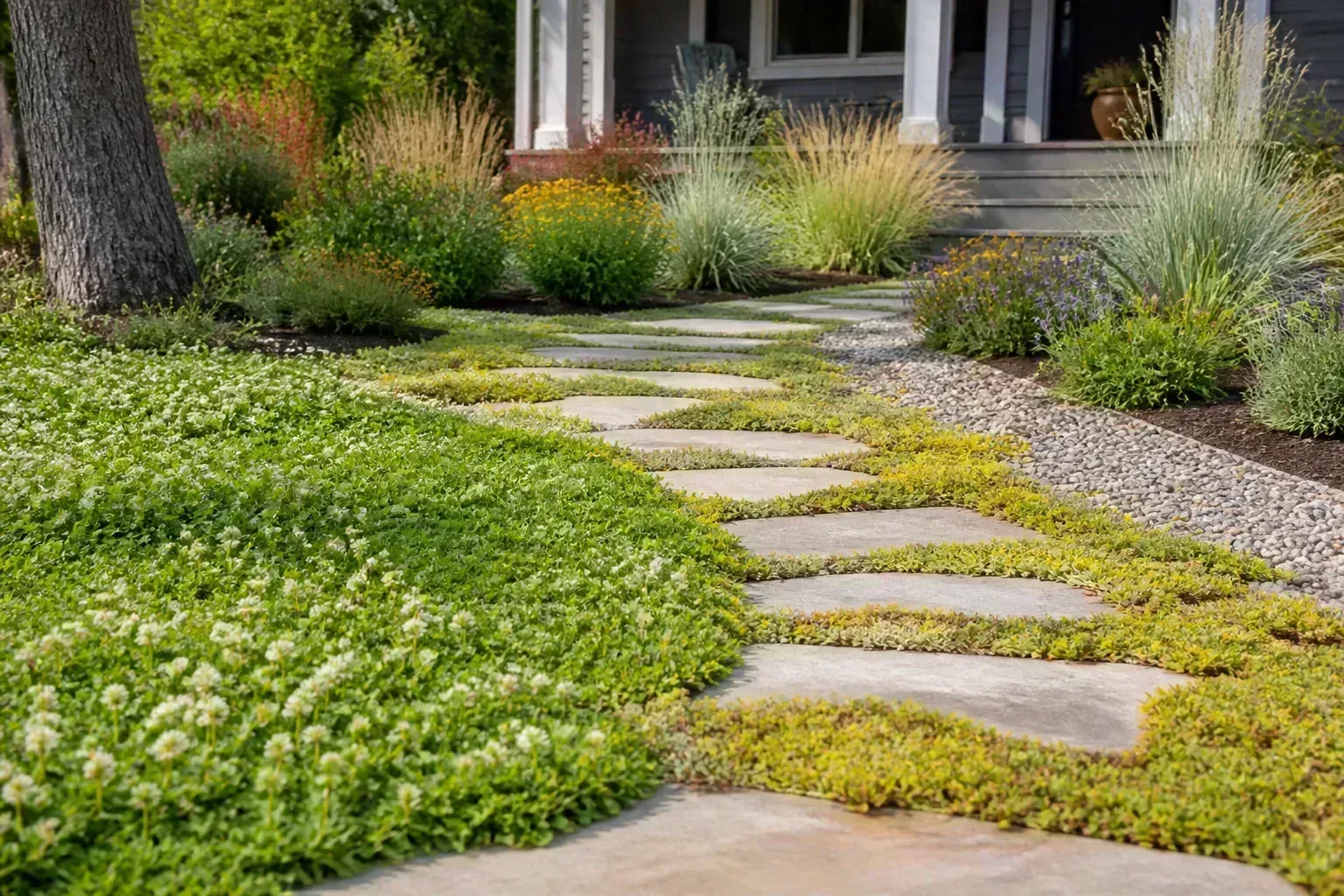
A lawn can be useful without being the yard’s main project. Keep a patch for a dog, a game of catch, or a chair in the sun; let the sloped strip, dry corner, or unused side yard do something that needs less mowing and irrigation. That is the practical idea behind a lazy lawn: a deliberately designed landscape that asks for fewer repetitive inputs once it is established.
There is no single seed mix called “lazy lawn,” and no living groundcover is maintenance-free. Match plants and surfaces to your climate, soil, water, and how you use the space; then decide which parts stay turf and which become groundcover, meadow, or path.
What a lazy lawn actually means
“Lazy lawn” is an informal name for a lower-input landscape, not a precise horticultural category. It might still contain turfgrass, but with less area to mow; it might mix grass with clover or other flowering plants; or it might replace the rarely used edges with native groundcovers, shrubs, or a managed meadow. In each version, the goal is to reduce the work you do repeatedly, not to stop caring for the yard altogether.
The biggest workload reduction often comes from shrinking the area that must behave like a conventional lawn. A strip you never walk on does not need the same surface as a play area. Converting that strip to a mulched bed or groundcover may save more mowing than buying a new mower or trying a novel grass seed. Extension guides describe a similar spectrum, from low-mow turf to flowering lawns and meadows, rather than one universal replacement.
Expect a front-loaded phase. Removing or suppressing existing turf, preparing the soil, planting, watering new plants, and controlling weeds can take more effort in the first season than continuing to mow. The payoff comes later, as plants fill in and the new layout needs fewer cuts, less irrigation, or less fertilizer. Oregon State Extension notes that its regional ecolawn mixes still need regular watering while seedlings establish, even though an established mix can use substantially less water than a conventional lawn under those conditions. (Oregon State University Extension, “Ecolawn: Less work and water”)
Decide what the lawn must do
Before choosing seed or plants, walk the yard and identify what you actually use. Mark paths between doors, play areas, dog routes, places to sit, spots where snow piles up, and stretches you rarely enter. Keep resilient turf or another walkable surface where it earns its footprint; start conversion in places that are decorative, difficult to mow, or consistently fail because the site and grass do not match.
Think in zones rather than one all-or-nothing project. A compact lawn can remain open in the center while a wide perimeter border becomes a native planting, a sunny slope becomes a low-growing mix, and a shady corner becomes a woodland groundcover. This gives the yard clear purpose and reduces the amount of land that needs frequent mowing or uniform irrigation.
Map sun, soil, slope, and water
Record how many hours of direct sun each area receives in summer, then notice what happens after rain. Is the soil sandy and quick-drying, heavy and slow to drain, or compacted from construction? Does water run downhill, stand in a low spot, or spill off a roof? Is the ground under a mature tree dry because roots compete for water, or damp and shaded? Those details determine whether a grass, sedge, clover, or flowering groundcover can establish there.
Use a soil test before buying fertilizer or making broad amendments. A regional Extension test can identify pH and nutrient needs and prevent unnecessary additions. Texture and drainage matter too: a dry-soil plant can fail in wet clay, while a moist-shade plant can scorch on a hot curb strip. The University of Minnesota recommends testing when converting lawn to a garden bed; Penn State explains how results guide lime and fertilizer decisions. (UMN Extension soil testing, Penn State Extension soil testing)
Hardiness zones help with winter survival but do not account for local rainfall, summer heat, soil, or first-year watering. Ask a regional Extension office or native-plant society which choices are adapted and noninvasive locally.
Check local rules before raising the canopy
Look up your city or county’s nuisance-vegetation rules, tree and drainage requirements, and water-utility restrictions before letting an area grow taller or installing irrigation. Search the municipal code for terms such as “grass height,” “weeds,” “natural landscaping,” “native garden,” and “right of way”; then check whether your homeowners’ association has a separate design-approval process. A planting can be ecologically useful and still need defined edges, a planting plan, or routine cutbacks to comply with local standards.
The rules vary. The City of Holland, Michigan, describes an 8-inch height limit and distinguishes a planted natural lawn from simply leaving grass uncut; Sun Prairie, Wisconsin, offers registration for natural lawn areas that exceed 8 inches while noting that lower clover cover does not require that registration. Those examples are not rules for other municipalities; they show why you should check the current code for your address before converting a visible front yard. (City of Holland natural lawns, City of Sun Prairie natural lawn registration)
Also verify drought-stage limits before you install or schedule irrigation. Some utilities restrict which days or methods residents can water, and restrictions may change with local conditions. EPA WaterSense advises residents to ask their utility about local watering schedules and adhere to restrictions in effect. (EPA WaterSense watering tips)
Choose a lower-maintenance lawn strategy
Match the option to the job, not to a trend photo. A good choice will tolerate your actual foot traffic and climate, fit the amount of time you can spend establishing it, and look acceptable through its seasonal changes. The table gives a starting point; confirm species and timing with your local Extension office or a knowledgeable native-plant supplier.
| Yard condition or goal | Starting option | Main trade-off |
|---|---|---|
| Kids, dogs, frequent walking | Keep a smaller area of regionally adapted turf; consider fine fescue or an appropriate local mix | Still needs mowing; no grass tolerates unlimited wear |
| Sunny, lightly used patch | Flowering lawn mix or clover-and-grass mix | Flowers attract bees; clover can spread into beds and may not suit every region |
| Dry, low-traffic area | Locally adapted native grass, sedge, or drought-tolerant groundcover | Establishment watering and weed control remain; appearance may be less uniform |
| Deep shade | Regionally suitable sedges or woodland groundcovers | Usually less tolerant of play and repeated foot traffic |
| Unused slope or yard edge | Managed meadow, native bed, or shrubs with mulch | Requires thoughtful establishment, seasonal cutback, and clearly defined edges |
Keep turf only where it earns its place
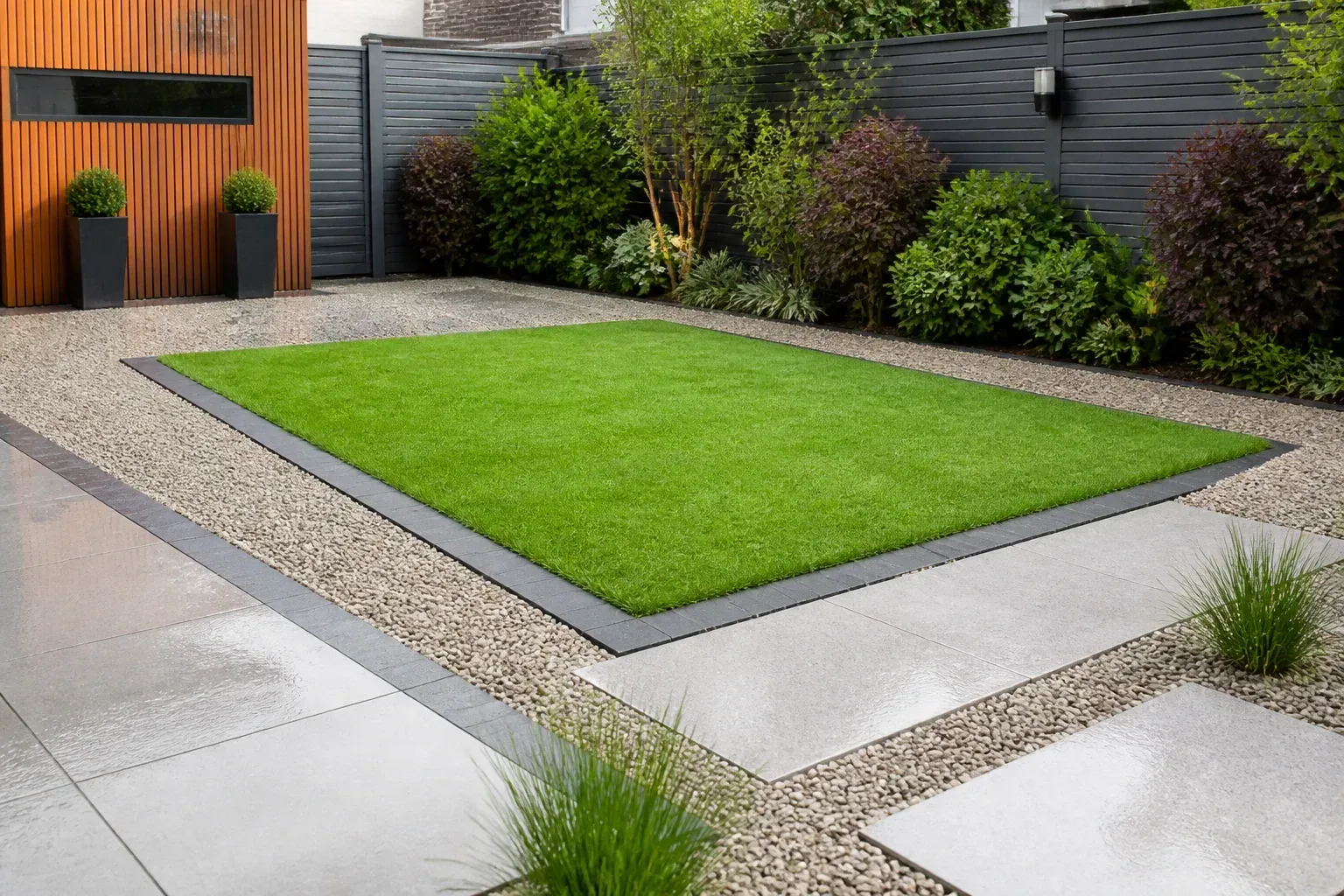
If you need a soft, durable surface for active play or dogs, keeping some grass may be the lowest-maintenance answer. The labor-saving move is to make the turf area only as large as needed and select a grass suited to your region and site instead of trying to maintain an unsuitable species through constant reseeding, watering, or chemical treatment.
Fine fescues are often considered for lower-input lawns in cooler regions and lighter-use or partly shaded areas, but they are not a universal solution for heavy traffic or hot, humid sites. In warm climates, warm-season grasses such as bermudagrass or zoysiagrass may fit better where they are adapted; they can still need frequent mowing when fertilized or irrigated for rapid growth. In Georgia, University Extension notes that cool-season species may struggle in summer heat while warm-season species grow during the warmer months and go dormant in winter. Ask a local turf specialist which cultivar is suited to your climate, soil, shade, and intended use. (UGA Extension turfgrass selection, Iowa State Extension lawn alternatives)
If the grass browns during a dry spell, first find out whether it is entering normal dormancy or suffering damage. Some cool-season lawns can turn brown in drought and green up when rain returns, but severe stress or repeated foot traffic can prevent recovery. If you can tolerate seasonal color change, allowing an adapted lawn to go dormant can reduce irrigation; do not add fertilizer to dormant grass in hopes of making it green. (University of Minnesota Extension, conserving water on drought-affected lawns)
Try a flowering or clover lawn
A flowering lawn keeps the short, walkable character of turf while allowing low plants such as clover, violets, or self-heal to bloom between grass blades. White clover can add flowers for pollinators and may contribute nitrogen to the soil, but it can also spread into ornamental beds, brown or thin in some conditions, and make the lawn less uniform. It is not necessarily native to your region, and a clover-only surface is generally less suitable for rough play than sturdy turfgrass.
Choose a locally appropriate mix that suits your traffic. Some “bee lawn” blends combine fine fescue with clover or other mow-tolerant plants; a meadow mix can grow much taller. Iowa State and Penn State Extension describe flowering plants that can remain in a mowed lawn, while the Xerces Society recommends reducing mow frequency or converting unused areas to pollinator planting. You do not have to remove every square foot of turf to improve habitat. (Iowa State Extension pollinator lawns, Penn State Extension turfgrass alternatives, Xerces Society bee-friendly lawn care)
Flowering plants bring a trade-off: bees may forage low in the lawn while flowers are open. That is beneficial for pollinators but may not fit barefoot play, allergy concerns, or a dog’s favorite route. You can keep a mown path and play patch, mow the area before a gathering, or use a nonflowering groundcover in the busiest spots. Oregon State Extension also cautions that an ecolawn’s pollinator value depends on its actual mix and context; if habitat is the main goal, a dedicated native bed or meadow may provide more useful forage than a tightly mown lawn. (Oregon State University Extension, finding the right balance for eco-lawns and pollinators)
Use native grasses, sedges, or low groundcovers
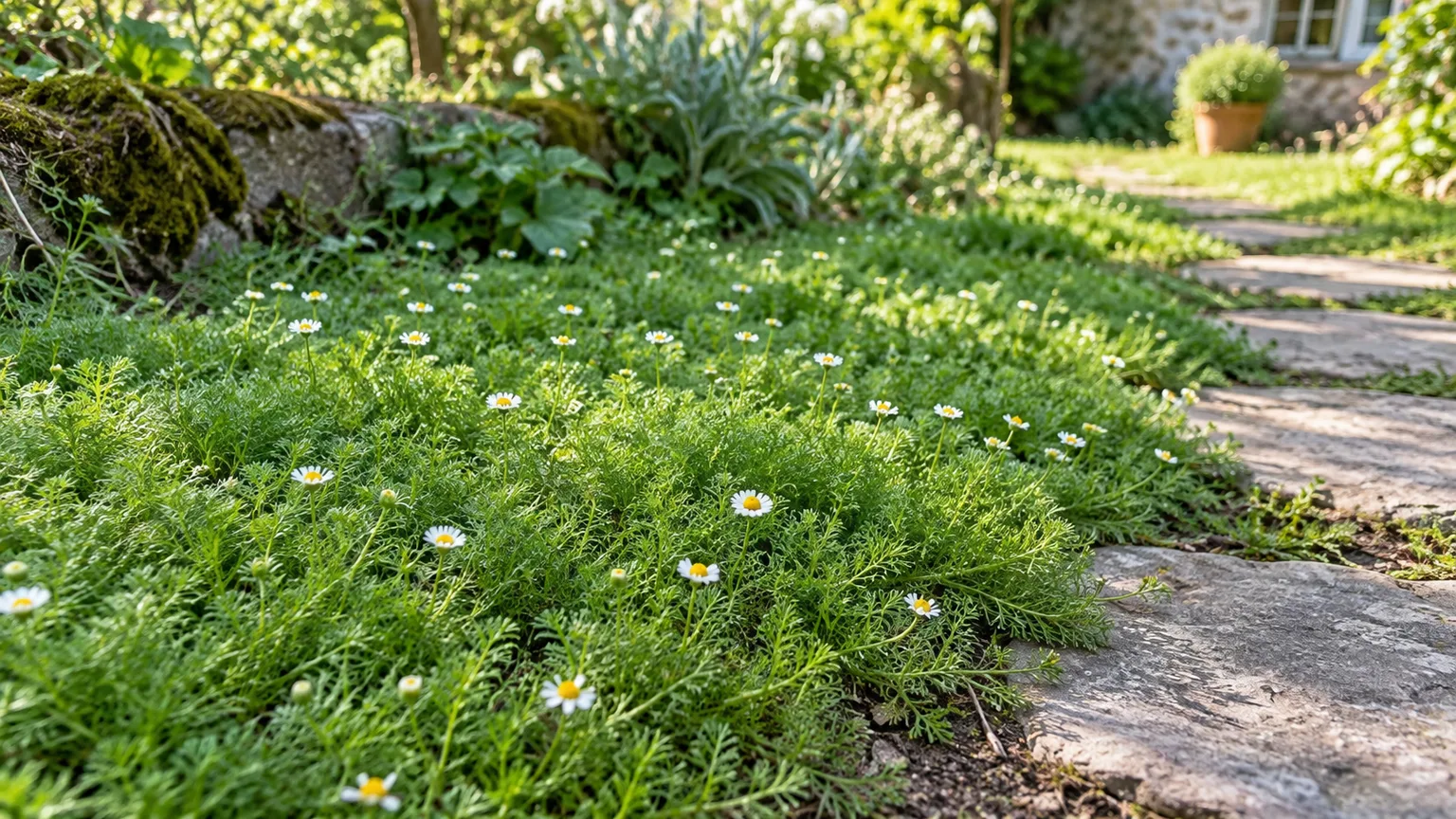
For a more lawn-like look with fewer cuts, consider low-growing native grasses or grasslike sedges recommended for your ecoregion. Some fine fescue blends need less frequent mowing than fast-growing turf, while certain native meadow grasses are meant to grow taller and be cut once or twice a year. “No-mow” on a seed packet often means “mow rarely after establishment,” not “never manage.” The plants still need the right soil, weed control during establishment, and an occasional cutback.
Sedges can work particularly well in shade where turf stays thin, but most are better for visual cover or light walking than for a soccer field. Pennsylvania sedge is one example used as a low-maintenance groundcover in parts of the eastern United States; the exact species matters, and a plant with the same common name may not be adapted across the country. In sunnier, drier areas, creeping thyme or other low groundcovers may handle occasional steps, but they can be slower or more expensive to establish from plugs and may attract pollinators when blooming. (Penn State Extension native groundcovers, Fine Gardening, low-maintenance alternatives to lawns)
Moss fits damp shade, not a sunny, drought-prone play area. Succulents and cacti can anchor a dry bed where hardy but are not a walkable carpet. Avoid generic “wildflower lawn” packets unless you have checked the listed species against regional invasive-plant lists.
Turn unused zones into beds, paths, or meadow
The most reliable way to cut mowing time is often to remove mowing from areas that do not need to be mowed. Expand a tree bed, add a shrub-and-perennial border, plant a rain garden where runoff collects, or make a path to the shed instead of mowing a narrow strip around it. A generous, mulched tree ring reduces trimming around trunks; keep mulch away from the trunk flare and use a depth that does not bury crowns of nearby perennials.
A meadow suits broad sunny areas that are rarely walked across. It needs site preparation, regionally appropriate seed, early weed control, and planned cutbacks. Simply stopping mowing leaves whatever is already there, not a stable native meadow. A mown edge or path helps it look intentional. (Penn State Extension turfgrass alternatives, City of Holland natural lawns)
Patios and pavers eliminate mowing where they are useful, but replacing a large area of soil with conventional hardscape can increase runoff. EPA explains that rain runs off hard surfaces instead of soaking into soil; permeable paving, a rain garden, or planted edges can help keep water on-site. Check local drainage rules before changing grades, directing downspouts, or adding a large paved area. (EPA stormwater solutions)
How to convert a lawn without making a bigger job
You do not have to renovate the whole property at once. A phased conversion limits costs, tests what works on your soil, and keeps a usable lawn while new areas establish. Start where mowing is awkward or turf already struggles; leave the main play or dog area intact until you know what a replacement can tolerate.
Start with a small test area
Choose a contained section you can maintain through the first growing season, such as a sunny corner or narrow side yard. Before disturbing it, measure the area and note sun, drainage, slope, utilities, and plants that removal could damage. A test patch shows whether the choice germinates, spreads, flowers, and handles the expected traffic.
Decide what “successful” means: a carpet cut only a few times a year, a meadow for pollinators, or a border that saves edging time. Consider how much seasonal browning you can accept and who will maintain the area before buying seed for the whole yard.
Prepare soil and time installation
Planting time depends on species and climate. Cool-season grasses establish in cooler weather; warm-season species need warmer soil, and many perennials root more easily in spring or fall before extreme heat. Follow regional Extension and seed-supplier timing.
Remove or suppress existing turf before sowing a meadow or planting small plugs. For a planting bed, sheet-mulching with overlapping cardboard and a thick organic mulch can smother grass, although it takes time and is not appropriate for every site. For seed establishment, covering the ground with cardboard will block seed-to-soil contact; use a method recommended for the specific seed mix. Digging, sod cutting, or repeated shallow removal may be needed for persistent rhizomes or weeds. Avoid tilling if it will chop and spread invasive perennial roots or bring a large seed bank to the surface.
Do not automatically haul in rich topsoil or fertilize native plants: over-amending can favor weeds or hurt locally adapted species. Use test results to decide whether amendments are needed. Correct construction compaction and drainage before planting; mulch will not fix a site that holds water against plant crowns.
Plant densely, mulch well, and water to establish
Follow seed rates and plug spacing from a locally appropriate planting plan. Sparse planting leaves room for weeds; overly dense planting wastes money. Seed-to-soil contact, correct depth, and steady germination moisture matter more than a promise that a mix will “take over.” Check every species in a meadow mix.
In garden beds, mulch can conserve moisture and suppress weeds while plants fill in. Keep the material in an even layer, leave breathing room around stems and trunks, and refresh it as it decomposes rather than piling it higher each year. A groundcover planting can still need hand-weeding until it knits together. For a lawn-like seeded mix, follow its germination guidance instead of burying seed under a thick mulch layer.
New seeds and plugs need moisture while roots are shallow, so establishment watering differs from routine irrigation. As plants root and fill in, lengthen intervals where conditions allow. Drip irrigation may help in a new bed, but a timer does not replace checking soil or following utility restrictions.
Budget at least one season of monitoring and weed removal. Perennials may take a year or two to fill in, and a meadow can look sparse while roots develop. A mown edge or simple path helps it look maintained as plants mature.
Cut routine inputs after establishment
Once new plantings are rooted and the layout is doing its job, simplify the routine. Remove unnecessary weekly tasks first: repeated shallow watering, automatic fertilizer applications, herbicides applied on a calendar, edging long strips that have no function, and mowing too short just to make the lawn appear uniform. Keep observing the site so that you catch problems early and only intervene when there is a reason.
Mow high and less often
For remaining turf, set the mower to a height recommended for the grass species and avoid scalping. Taller leaves shade soil, while mowing too short stresses plants and exposes ground to weed seeds. Follow the one-third rule: remove no more than one-third of the leaf blade at a time. If grass gets too tall, raise the deck and cut in stages. (University of Minnesota Extension mowing practices, Illinois Extension mowing your lawn)
Leave short, evenly spread clippings when they are not clumped and product labels permit reuse. They return nutrients and reduce bagging. Collect clumps from very long or wet grass; follow the label if herbicide-treated clippings have reuse restrictions. (Illinois Extension mowing your lawn)
Less frequent mowing can help flowers bloom, but allow the vegetation height your city permits and keep visibility clear around sidewalks, driveways, intersections, and street corners. For a meadow, schedule one or two cuts at the time advised for the species rather than mowing every time the lawn looks shaggy. A low-mow planting can still require a cutback to remove seed stalks or keep paths clear; the work becomes less frequent and better timed, not nonexistent.
Water by site needs, not the calendar
There is no weekly watering amount that fits every region. Soil, slope, heat, shade, species, and drought stage change water demand. Check utility rules, then adjust irrigation so water reaches roots without pooling or running onto pavement. EPA WaterSense recommends local utility or Extension advice and measuring sprinkler output rather than trusting a timer alone. (EPA WaterSense watering tips)
When established turf needs irrigation, wet the root zone and let the surface begin to dry before watering again. Avoid daily sprinkling that encourages shallow roots and loses water to evaporation. A new seedbed is different: follow seed instructions for moisture until germination, then shift gradually to deeper, less frequent watering.
In dry-summer climates, brown can be a reasonable seasonal color for cool-season grass that recovers after rain. In the Southeast, a heat-adapted warm-season grass may fit better; in wet regions, drainage can matter more than drought tolerance. Oregon State’s estimate that established ecolawns may use roughly one-quarter to one-third the water of conventional turf is regional guidance, not a nationwide or first-year promise. (Oregon State University Extension, “Ecolawn: Less work and water”, UGA Extension turfgrass selection)
Feed and treat only when needed
Do not fertilize by habit. Test soil and follow recommendations for the grass or plants that occupy the area; avoid applying fertilizer when turf is dormant, during heavy rain, or where runoff may carry nutrients into a storm drain. More nitrogen can mean faster leaf growth and more mowing, which works against a low-input goal. Over-application can also contribute nutrients to waterways. A soil test is a practical way to avoid spending money on nutrients your yard does not need. (UMN Extension soil testing, EPA stormwater solutions)
Leave some clover in a grass lawn if it is healthy and useful rather than applying a broadleaf herbicide simply because it is not grass. If you do have a serious weed, insect, or disease problem, identify the cause before treating it; stress from shade, compacted soil, drought, or an unsuitable grass is not fixed by pesticide. Use only products labeled for the target and site, follow the label exactly, and respect local rules. The lower-input strategy is prevention through a fitting plant and resilient coverage, not a promise that weeds or pests will never appear.
Maintenance expectations by lawn type
Use this comparison to set a realistic baseline. Actual maintenance varies by climate and site; ask a local Extension office about species that are proven for your area.
| Type | Work after establishment | Best fit | Watch-outs |
|---|---|---|---|
| Reduced-area turf | Mow during active growth; occasional watering and soil-based feeding | Play, pets, regular walking | Traffic damage; species-specific mowing height; seasonal dormancy |
| Grass-and-clover or flowering lawn | Mow to desired height; manage flowering and occasional spread | Light-to-moderate use with pollinator interest | Bees in bloom; less uniform look; clover can spread; not every mix is regionally suitable |
| Low-mow grass or sedge | Periodic cutback, edge maintenance, early weed control | Lower-traffic sunny or shady areas, depending on species | Slower establishment; not equivalent to sports turf |
| Native bed or groundcover | Weed while establishing; prune or divide as needed; mulch may need renewal | Unused edges, tree understory, slopes, or site-specific planting | Plant choice must match local climate; some groundcovers spread aggressively |
| Meadow | One or two planned cuts; remove problem weeds; keep edges and access clear | Sunny, low-traffic open area | Needs preparation and patience; poor seed mixes can introduce unwanted species |
| Patio, path, or permeable hardscape | Sweep or clear debris; maintain joints and drainage | Seating, access, or frequently used routes | Up-front cost; heat and runoff concerns; permits may apply |
None is “set it and forget it.” A lazy lawn trades frequent turf work for planning and seasonal care. If establishment feels like too much, keep the turf and stop chasing a flawless green surface: mow at a suitable height, leave healthy clippings, water only when needed and permitted, and skip routine chemicals.
Conclusion
Create a lazy lawn by designing around the work you want to stop doing. Keep a right-sized play or dog area, match grasses and groundcovers to local conditions, and convert one underused section at a time. Check your city, HOA, and water utility before making visible or irrigation changes, and expect some extra work while new plantings establish.
Once the landscape has settled in, mow only what needs mowing, irrigate according to the site and local rules, and feed or treat plants only when a real need is clear. The result can still be green and cared for, but it should make better use of your time, water, and yard.