Moonshine Snake Plant Care for Silver Leaves and Strong Roots
Learn Moonshine snake plant care with practical light, watering, soil, and propagation advice, plus ways to keep silver leaves and prevent root rot.
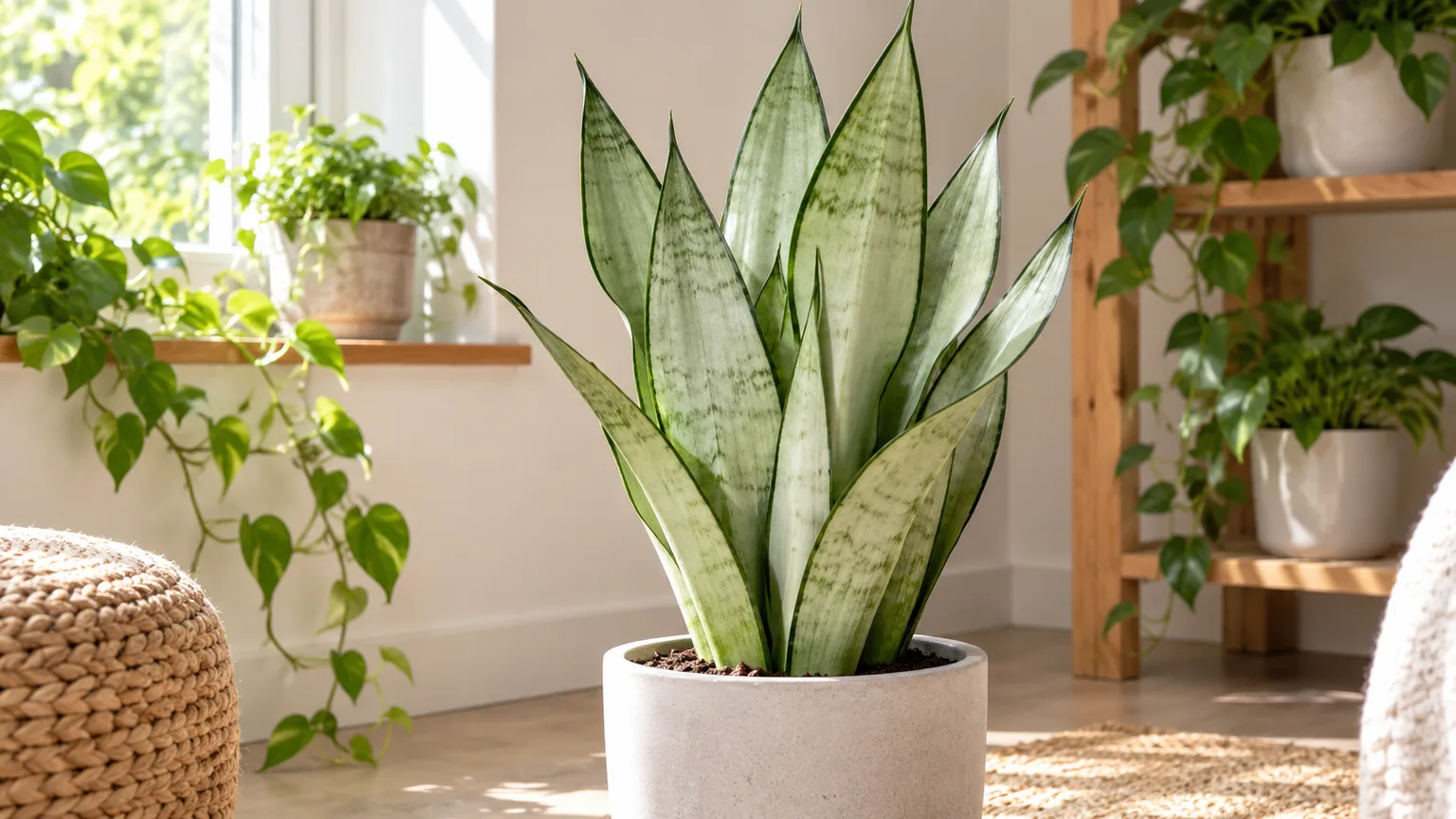
Moonshine snake plant is prized for upright, sword-shaped leaves that look almost brushed with silver. It is a cultivar of the familiar snake plant, but its pale foliage shows its best color when it receives steady bright, indirect light. Care is straightforward once you get two habits right: let the potting mix dry through before watering, and give excess water a clear route out of the pot.
This plant grows slowly, tolerates ordinary indoor humidity, and does not need frequent repotting or feeding. It is also easy to overwater when treated like a thirsty tropical houseplant. The guide below explains how to identify Moonshine, where to place it, what to do when leaves change color, and how to propagate it while preserving the cultivar’s silvery look.
Identify Moonshine Before You Buy
Moonshine is sold under both its familiar former genus name, Sansevieria trifasciata ‘Moonshine,’ and its current botanical name, Dracaena trifasciata ‘Moonshine.’ The change in genus does not mean it is a different houseplant. Look for stiff, upright leaves with a broad, pale silver-green surface, faint horizontal green markings, and a narrow dark-green edge. North Carolina State Extension describes the cultivar as silvery gray with light-green blotches and dark margins; the Royal Horticultural Society likewise notes the pale silver-green color and fine dark edge. These features help distinguish it from common Laurentii, whose darker green leaves have pronounced yellow margins. NC State Extension RHS Moonshine profile
A young Moonshine may look greener than a mature plant, and a plant grown in dim light can produce darker new growth. That does not necessarily mean the label is wrong. Compare several leaves, especially their margins and overall shape, instead of judging a single leaf. New leaves emerge from the base and gradually join a clump of upright fans. Mature plants are slow to gain height; RHS gives a mature range of roughly 0.5 to 1 meter and 5 to 10 years to maturity, so do not expect a small nursery plant to become a towering specimen in one season.
When choosing a plant, check the leaf bases and soil as well as the color. Leaves should feel firm, with no soft, dark area where they meet the mix. Avoid a pot that smells sour or has water standing in its cover pot. A few small blemishes are usually cosmetic, but a cluster of yellowing leaves and a wet, collapsing base can signal damage below the soil line. Moonshine does not need to be perfectly symmetrical: it is a rhizomatous, clumping plant, so leaves can emerge at slightly different angles as new growth develops.
Moonshine Snake Plant Care at a Glance
| Care need | Practical starting point |
|---|---|
| Light | Bright, indirect light for the palest, most compact growth; acclimate gradually to gentle morning sun |
| Water | Water thoroughly only after the potting mix has dried throughout the root zone |
| Soil | Loose, fast-draining houseplant or cactus mix in a pot with an open drainage hole |
| Temperature | A normal warm room is suitable; protect the plant from frost and cold, wet conditions |
| Humidity | Average household humidity is fine; misting is unnecessary |
| Feeding | Use a diluted houseplant fertilizer during active spring and summer growth, sparingly |
| Repotting | Repot when crowded rhizomes or roots make the pot unstable or tightly bound |
| Propagation | Divide a rooted offset to keep the Moonshine leaf color true |
Treat this table as a starting point, not a calendar. A sunny room, a small plastic nursery pot, and a cool winter windowsill all change how quickly the soil dries. The plant itself gives a more useful signal than a fixed weekday: inspect the mix and the leaves before changing care.
Place It in Bright, Indirect Light to Keep the Silver
Choose a position close to a bright window where light is filtered by a sheer curtain or reaches the plant from the side. An east-facing window often provides gentle morning sun, while a spot several feet from a brighter south- or west-facing window may work well if direct afternoon rays do not strike the leaves for hours. Bright indirect light helps Moonshine keep a lighter, more defined appearance and supports steady growth without exposing the leaves to harsh heat.
The plant can survive in low light, but survival and best color are not the same thing. In a dim corner, growth slows, the pale surfaces can look greener, and new leaves may stretch or lean toward the nearest window. If the room is dark enough that you would not comfortably read there during the day, move the plant nearer a window or use a grow light on a regular timer. Keep a grow light at the distance recommended by its maker; a lamp placed very close can warm or bleach the leaf surface.
Light changes should be gradual. A plant moved directly from a shaded shelf into several hours of intense outdoor sun can develop tan or pale scorch patches that do not turn green again. Start with short periods of gentle morning light, then increase exposure over a week or two while checking the leaves. Rotate the pot a quarter turn every few weeks if one side is leaning toward the window. Wipe dust from broad leaves with a damp, soft cloth so light reaches the surface evenly; avoid leaf-shine products that leave a coating.
Low light is survivable; harsh sun needs acclimation
NC State Extension says snake plants tolerate very low light and may receive direct sun for part of the day, while Penn State Extension cautions that direct sunlight can burn leaves. These recommendations can be reconciled by considering intensity, duration, and acclimation: a little mild morning sun can be fine for a plant introduced gradually, but hot midday or afternoon sun through glass can scorch it. If a bright room has no suitable window ledge, distance the plant from the glass or diffuse the rays rather than keeping it in a dark hallway. Penn State Extension
Water When the Root Zone Is Dry
Moonshine stores moisture in its thick leaves and underground rhizomes, so it handles a dry spell better than a pot that stays wet. Let the potting mix dry throughout the root zone before watering again. When it is time, water slowly over the soil until water flows from the drainage hole, then empty the saucer or outer pot. This wets the root ball evenly and flushes excess salts without leaving roots submerged.
The interval will vary. A warm, bright room and a small unglazed pot may dry in a couple of weeks; a large plastic pot in winter can stay damp much longer. NC State Extension gives a winter interval of one to two months as a broad guide, but checking the soil is more reliable than following a schedule. Penn State Extension describes snake plants as forgiving of dry soil, while both sources warn that overwatering can rot roots. NC State Extension Penn State Extension
Check the whole pot before soaking
Push a wooden skewer several inches into the mix near the pot’s edge. If it comes out cool or with damp soil clinging to it, wait and check again later. If it is clean and dry, test a second spot closer to the middle when the pot is wide. You can also lift the pot before and after watering to learn how much lighter it feels once dry. A moisture meter can add context, but readings vary with the mix and probe placement; do not use one shallow reading as the only reason to water a deep pot.
When you water, aim for the soil rather than pouring into the center of the leaf rosette. If the mix has become so dry that water runs down the gap between the root ball and pot, apply a little water, pause for several minutes, and water again until the whole mix is moist and the drainage hole runs freely. Never leave the plant sitting in a full cachepot. If the pot has no drainage hole, move the plant to one that does instead of relying on a layer of stones at the bottom; that layer cannot remove water from the soil above it.
Use a Gritty Mix and a Drainage-Hole Pot
A loose mix lets water pass through without leaving the rhizomes in a soggy pocket. A commercial cactus and succulent mix is a convenient choice. If it feels dense or stays wet for many days in your home, amend it with pumice or perlite. A practical starting blend is about two parts potting mix to one part pumice or perlite; in a humid home or a cool room, use a little more mineral material. There is no single formula for every climate, so judge the result by how evenly the mix wets and how quickly it dries after a thorough watering.
Avoid garden soil and fine, compacted mixes. They can collapse around the roots, reducing air space as the potting mix ages. RHS advises a well-drained medium for Moonshine and its growing guide recommends free-draining compost for snake plants. RHS Moonshine profile RHS growing guide
Build a mix that dries evenly
The pot matters as much as the recipe. Use a container with at least one unobstructed drainage hole. Choose a pot only a little wider than the root mass; a very large volume of fresh soil can remain wet around a small plant for too long. Snake plants tolerate being snug, and Penn State Extension notes they do not need a roomy container. Penn State Extension
Unglazed terracotta loses moisture through its sides and can be helpful for someone who tends to water too often. Plastic and glazed ceramic hold moisture longer and may be a better fit in a hot, dry room if you monitor the soil carefully. Whichever material you choose, keep the drainage hole open and lift the nursery pot out of a decorative cover pot before watering. Let it drain before returning it. Do not put a layer of gravel at the bottom as a substitute for drainage; it reduces the depth of usable soil and does not prevent waterlogged mix.
Keep Temperatures Warm and Humidity Ordinary
A typical comfortable room is warm enough for Moonshine. Avoid placing it beside a drafty exterior door, an air-conditioning vent, or a heater that blows hot, dry air directly onto the leaves. It tolerates lower humidity and does not need a humidifier in an average home. NC State Extension notes that snake plants tolerate low humidity and cool temperatures around 50°F, but that is a tolerance point, not an ideal target for active growth. Keep the plant warmer when possible and avoid sudden cold exposure, especially when the soil is wet. NC State Extension
You can move Moonshine outdoors in warm weather if you have a sheltered spot. First place it in bright shade for several days, then introduce gentle morning sun little by little. A patio that gets hot afternoon sun can scorch leaves even if the plant is drought tolerant. Bring it indoors before nighttime temperatures approach 50°F, and never leave it outdoors where frost is possible. Protect it from prolonged rain as well: a plant that is comfortable with dry soil indoors can rot when its pot stays wet outside.
Misting is not needed. It briefly wets the leaves without meaningfully changing room humidity, and water trapped in the crown or leaf joints is not helpful. If the leaves are dusty, wipe them instead. Air movement around the plant is useful, but it should not come from a strong cold or hot draft.
Feed Lightly and Expect Slow Growth
Moonshine is not a heavy feeder. During spring and summer, when it is actively making leaves, you can apply a balanced liquid houseplant fertilizer diluted to half the label strength about once a month or less often. Water the plant first if the mix is dry, and do not fertilize a stressed plant with soft, yellowing leaves. Stop feeding in fall and winter when light and growth slow down. Follow the product label, because formulas differ in strength.
More fertilizer will not make this naturally slow plant grow faster in a healthy way. Excess salts can damage roots and cause brown tips or a crust on the soil. If growth seems stalled, check whether the plant is receiving adequate light, whether it is cold, and whether its roots are healthy before adding nutrients. A plant that makes only a few new leaves in a year may still be doing well.
Indoor flowering is possible but uncommon. The species can produce a stalk of small, fragrant, pale flowers, often when mature or somewhat root bound, but there is no dependable way to force a bloom. Do not withhold water or crowd roots to provoke one. Give the plant steady light and appropriate care, and consider an occasional bloom a bonus rather than a measure of success. NC State Extension notes that snake plants rarely flower indoors. NC State Extension
Repot When the Rhizomes Need Room
Repot only when there is a clear reason: roots or rhizomes have filled the container, the clump has become unstable, an offset is pressing against the pot, or water is passing through without wetting the root ball because there is almost no mix left. Roots emerging from a drainage hole are one clue, but a few roots at the opening do not automatically mean the plant needs a larger pot. RHS recommends potting Moonshine on only when it is pot bound. RHS Moonshine profile
Spring or early summer is a convenient time to repot because the plant can resume growth in brighter conditions. Slide the root ball out and look for firm, pale roots and solid rhizomes. If everything is healthy, place it in a pot one size larger with fresh, well-draining mix. Loosen only a small amount of the old soil; unnecessary root disturbance can delay an already slow plant. Set the rhizomes at about their former depth and keep the leaf bases above the mix. Water once to settle the new soil, allow it to drain, then wait until the mix dries before watering again.
If you find dark, mushy roots or a foul smell, remove the affected material with a clean blade and discard the wet mix. Repot the remaining firm sections into a clean pot with drainage and dry, airy mix. Do not reuse the contaminated soil. Wait to fertilize until new growth shows that the plant has recovered.
Propagate Moonshine Without Losing Its Color
The most reliable way to make another Moonshine is to divide a clump so the new plant keeps a piece of rhizome and its own roots. This method is usually simpler than starting from a leaf and preserves the cultivar’s characteristic pale foliage. Propagate during the active growing season if possible, when warmth and longer days help the division reestablish.
Divide a pup to make a true Moonshine copy
Look for an offset, or pup, that has at least a few leaves and a firm connection to the parent rhizome. Water the plant a few days beforehand only if the mix is dry; working with a slightly hydrated root ball can reduce breakage, but do not make it wet. Remove the plant from its pot and brush away enough soil to see where the offset joins the main rhizome.
Separate the pup with a clean, sharp knife, keeping some roots and a section of rhizome attached to it. If it comes away with a natural joint, you may be able to pull it apart gently. Let any cut surface dry for a few hours in a shaded, airy place. Then pot the division in a small container with a drainage hole and the same fast-draining mix used for the parent. Plant it at its original depth so the leaf bases are not buried.
Place the new division in bright, indirect light and keep the soil on the dry side for the first several days. Afterward, water when the mix has dried through. Do not immediately move it into a huge pot or feed it heavily. A small division may pause while roots establish; firm leaves and gradual new growth are better signs of success than rapid change. RHS recommends propagating Moonshine by suckers or division, and Savvy Gardening describes separating rooted pups as a practical method for snake plants. RHS Moonshine profile Savvy Gardening: Dividing Snake Plant
Leaf cuttings root, but may return green
A leaf cutting can be an experiment if your plant has no offsets, but it is a less dependable way to preserve Moonshine’s silver color. A new plant grown from a leaf section may revert to plain green because leaf cuttings do not reliably retain the cultivar’s variegation pattern. RHS warns that leaf-cutting propagation of variegated sansevierias can produce green growth. If keeping the Moonshine appearance matters, divide a pup instead. RHS leaf-cutting guide
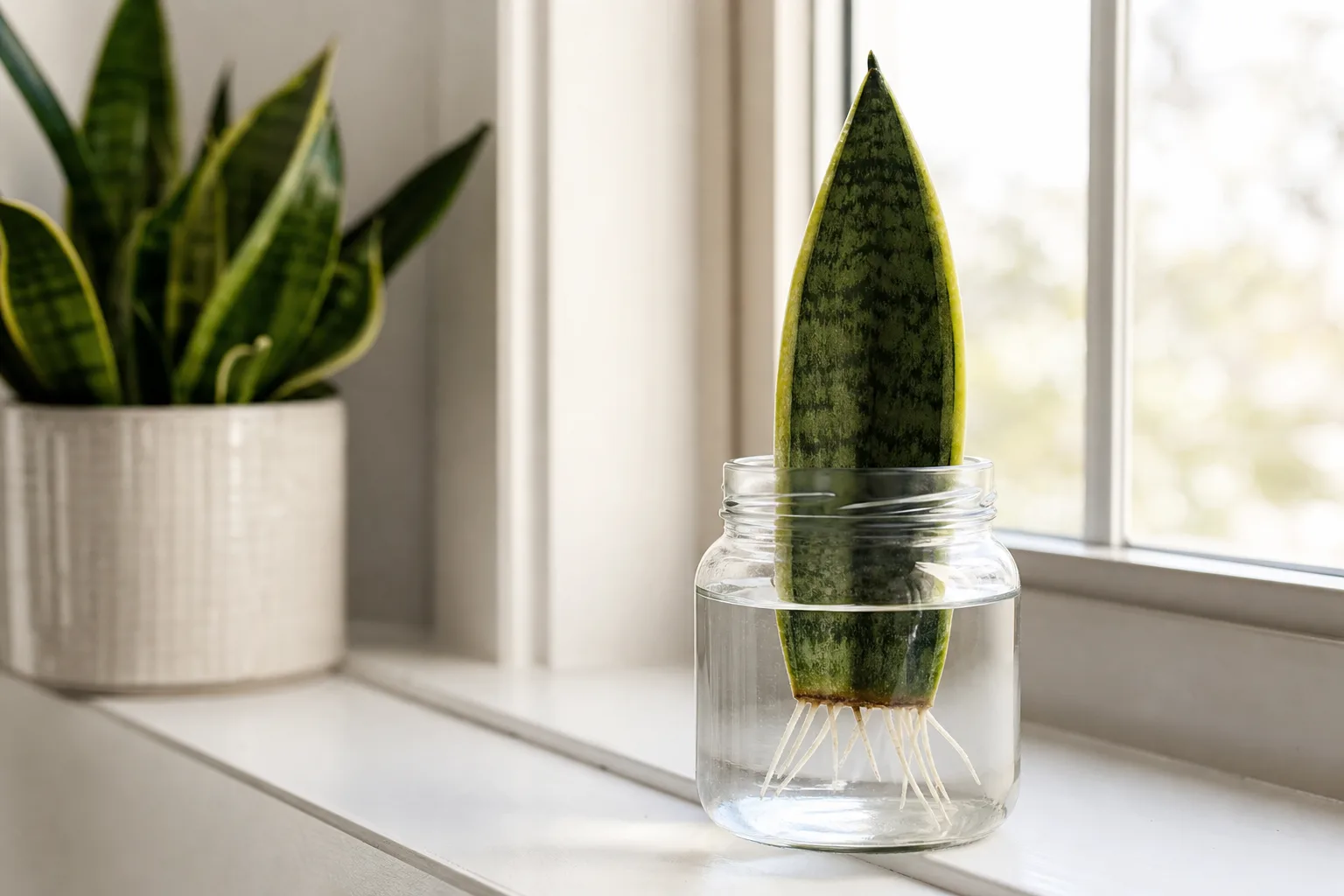
The photo shows water rooting; the steps below use potting mix instead. Either way, leaf cuttings may produce green growth rather than a true-to-type Moonshine.
To try a cutting, select a firm, healthy leaf and use a clean blade to cut it into sections about 3 to 4 inches long. Keep track of which end was nearer the base: each piece must be planted with the basal end down, or it may fail to root. Let the sections dry for a day so the cut ends callus, then insert the lower end about an inch into lightly moist, free-draining propagation mix. A clear container or humidity cover is not essential; if you use one, ventilate it and keep condensation from collecting.
Set the pot in warm, bright indirect light. Keep the mix only slightly moist, never waterlogged, and be patient: rooting can take several weeks or longer. A gentle tug can tell you when roots have formed, but do not repeatedly disturb the cutting to check progress. Once it has rooted and begins producing a pup, gradually follow normal snake-plant watering, allowing the mix to dry between waterings. Gardening Know How also recommends leaf sections as one propagation option, while division remains the better route for a true-to-type Moonshine. Gardening Know How: Snake Plant Propagation
Diagnose Color Loss, Yellowing, and Soft Leaves
A change in one leaf is not always a crisis. Older outer leaves can fade as the plant grows, and a scraped or sun-marked area will not recover its former color. Look for a pattern across several leaves, feel the base, and check the soil before making a change. Changing light, water, soil, and fertilizer all at once makes it harder to learn what the plant needed.
Read the pattern before changing care
| What you see | Likely cause | What to do first |
|---|---|---|
| New leaves look darker green or lean toward a window | Light is too low for the palest color or compact form | Move the plant gradually to a brighter indirect-light spot |
| Several leaves yellow and the base feels soft | Mix may be staying wet; roots or rhizomes may be rotting | Stop watering, inspect the root ball, and remove mushy tissue |
| One side has tan, bleached, or papery patches | Sudden strong direct sun or heat | Move it out of harsh rays and acclimate slowly if reintroducing sun |
| Tips are dry and brown, but leaf bases are firm | Repeated drought, salt buildup, or physical damage | Review watering and fertilizer; trim only the dead tip if desired |
| Leaves wrinkle or curl and the mix is bone dry | Long-term drought or roots unable to take up water | Rehydrate the mix gradually and check whether roots are sound |
| The clump leans or leaves split at the base | Pot is unstable, growth is crowded, or leaves were bumped | Stabilize the pot and repot or divide only if the clump is genuinely crowded |
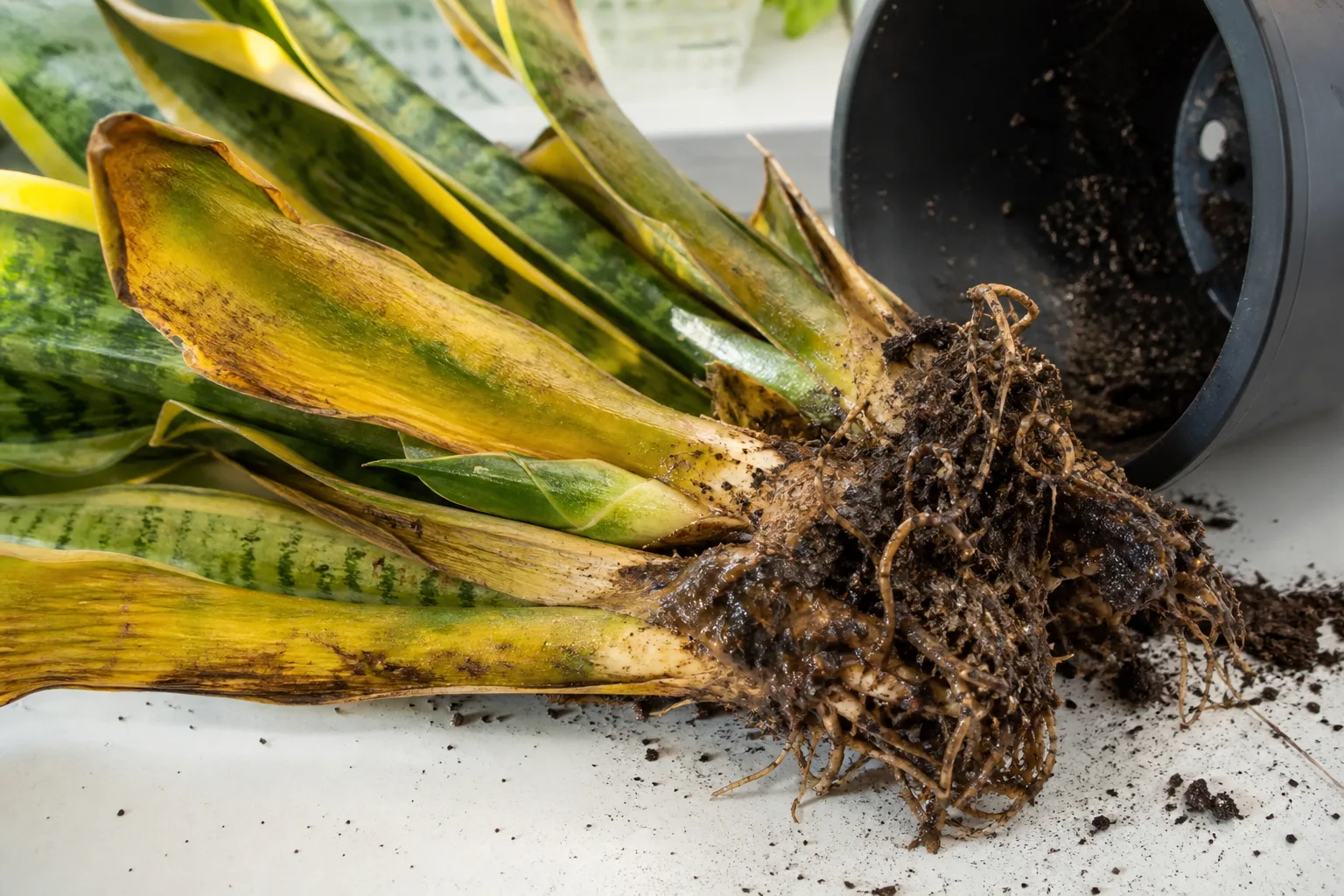
Root rot is the urgent problem to rule out when multiple leaves turn yellow, soften, or collapse. Lift the root ball from its pot. Healthy roots and rhizomes should feel firm; remove mushy, dark tissue with a clean blade and discard the old saturated mix. If any firm rhizome remains, replant it in fresh, dry, fast-draining medium and wait several days before watering. A leaf that is already badly damaged will not turn green again, so judge recovery by the firmness of remaining leaves and whether new growth appears.
Brown tips alone do not prove that the plant needs more water. They can result from salts, an inconsistent dry-wet cycle, a damaged tip, or roots compromised by excess water. If you trim the brown part for appearance, use clean scissors and follow the natural leaf shape; the cut edge will remain visible. Avoid cutting healthy foliage merely to make the plant shorter, since trimmed snake-plant leaves do not grow back from the cut end.
Watch for Pests, Outdoor Cold, and Pet Exposure
Snake plants are generally trouble-free, but mealybugs and spider mites can appear, especially on plants kept in dry, stagnant conditions or brought home from a greenhouse. Inspect leaf undersides, tight leaf bases, and new growth when you water. Mealybugs look like small white cottony patches; mites can leave fine webbing and pale speckling. Isolate an infested plant, wipe visible pests from the leaves, and use a product labeled for houseplants if the problem persists. Follow the label directions and repeat only as directed. NC State Extension recommends monitoring snake plants for mealybugs and spider mites. NC State Extension
Moonshine can spend summer outdoors only when temperatures stay warm and the plant is protected from hard sun and persistent rain. Bring it inside before cold nights and check carefully for insects before placing it near other houseplants. Its drought tolerance does not make it frost hardy; cold, wet soil is especially risky.
Keep the plant away from pets that chew houseplants. The ASPCA lists snake plant as toxic to dogs and cats because of saponins and reports nausea, vomiting, and diarrhea as possible signs after ingestion. Moonshine is a snake-plant cultivar, so treat it with the same precaution: place it where a curious animal cannot reach it. If a pet eats any part, contact a veterinarian or animal poison service for instructions. ASPCA: Snake Plant
You may see claims that snake plants clean indoor air. Laboratory studies of plants and volatile organic compounds use sealed chambers, and a review of those results found that the number of potted plants needed to match normal building ventilation would be impractical. Enjoy Moonshine for its foliage and as a living part of your room, but do not rely on it to replace ventilation or an air cleaner. Cummings and Waring, 2020
Conclusion
Give Moonshine bright, indirect light if you want its silvery foliage to stay prominent, and water only after the potting mix has dried through. A drainage hole, airy soil, and a pot sized close to the root ball prevent most avoidable problems. Keep it warm, feed lightly during active growth, and repot only when the rhizomes actually fill the container.
If you want to make another plant with the same pale foliage, divide a rooted pup. Leaf sections can root, but may produce green plants instead. Inspect leaves and soil together when something changes, and act quickly if the base turns soft. With those simple checks, Moonshine is a slow-growing, low-fuss houseplant that can keep its sculptural leaves for years.



