Natural vs. Colored Mulch: Pros, Cons, and Uses
Compare natural and colored mulch by appearance, wood source, heat, soil benefits, and upkeep. Learn what to check before buying and how to apply it.
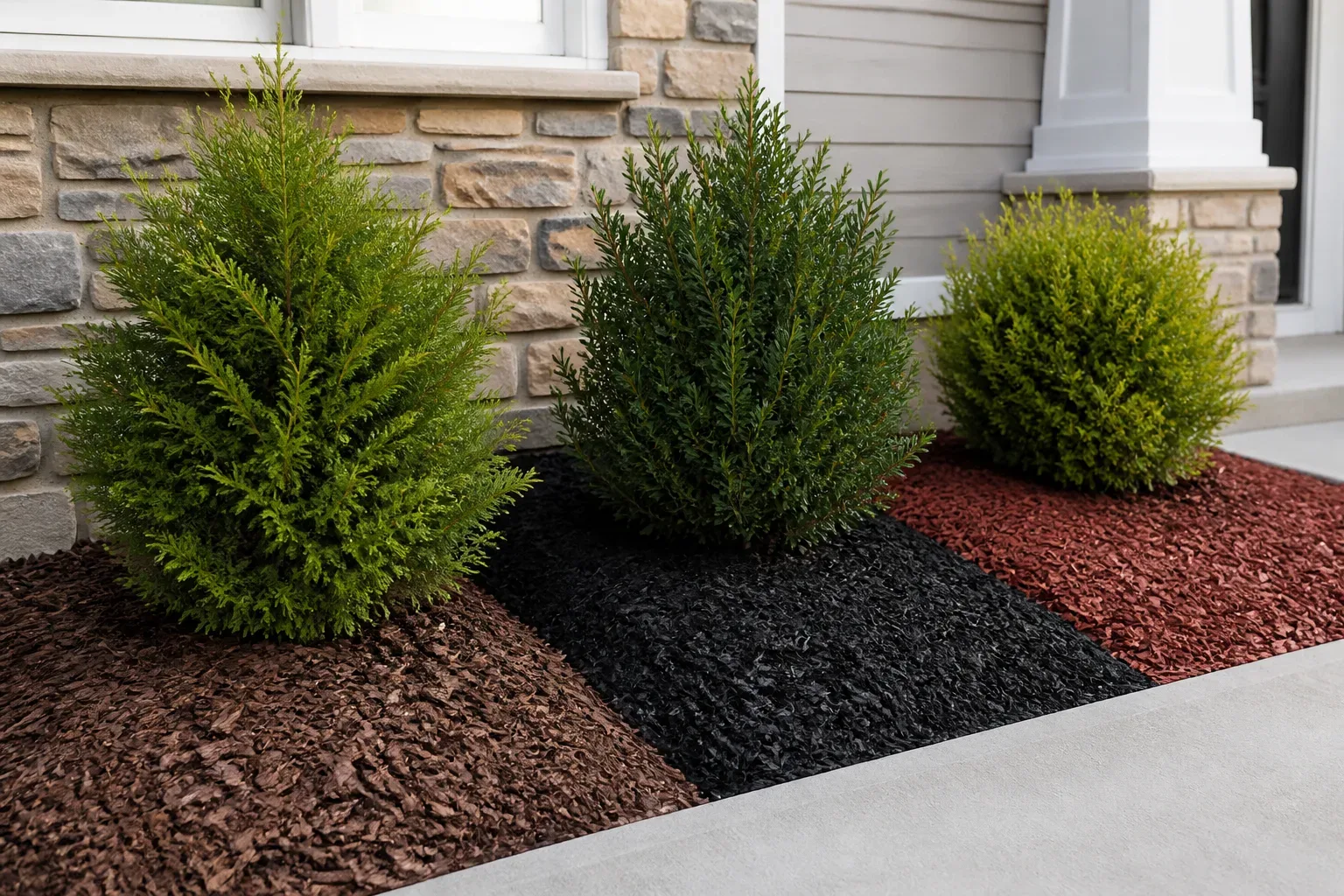
If you are choosing between natural and colored mulch, start with the job the bed needs to do. For most established shrubs and ornamental borders, either can work; the color itself does not make wood mulch better at suppressing weeds, holding moisture, or protecting soil. The useful differences are appearance, how the surface weathers, the material under the pigment, and whether the product fits the plants and site.
Choose undyed bark or wood chips if you want a quieter, changing landscape and easy access to organic material. Choose a dyed product when a steady brown, black, red, or gold finish is important—but check the wood source and label instead of assuming the color tells you what is inside. In vegetable beds, around new plantings, or close to a fire-prone home, material and placement deserve more weight than color.
Natural or colored mulch: which should you choose?
Neither option wins for every garden. A well-made, appropriately sized dyed mulch can cover soil and look consistent; a clean undyed mulch can do the same job while aging into muted brown or gray. Both are still wood-based organic mulches if the underlying material is wood, so they can help shade the soil and will eventually break down. Their functional value depends more on the material, particle size, layer depth, and condition of the bed than on whether the chips are tinted.
Use this quick rule: choose undyed mulch when you value a natural, lower-contrast look, want the surface to weather without a strong color shift, or can source clean chips locally. Choose dyed mulch when you want a deliberate color relationship with siding, brick, stone, or foliage and are willing to inspect the source and refresh the appearance when it fades. If you cannot find out what the product is made from, choose a clearly labeled alternative rather than treating a color name as a quality guarantee.
| If your priority is… | Start with… | Check before deciding |
|---|---|---|
| A soft, understated bed | Undyed bark or wood chips | How the material will age in sun and rain |
| A uniform foundation-bed color | Dyed brown or black mulch | Wood source, pigment information, and fade pattern |
| Food-growing soil | Clean compost, straw, leaf mulch, or known untreated wood | Whether the material is suitable for edible beds |
| A fire-conscious strip beside a home | A noncombustible surface where local guidance calls for it | Your local defensible-space rules |
The table is a starting point, not a guarantee. A sunny slope, a small pollinator border, a vegetable bed, and a foundation planting each place different demands on mulch; choose the material for the site first, then settle on a color.
What colored mulch actually changes
“Colored mulch” usually means that wood or bark chips have been tinted to create a more consistent surface color. It is not a separate category of soil treatment, and color does not automatically tell you the tree species, particle size, age, cleanliness, or suitability of the wood. A dark brown product might be dyed or naturally dark; a natural load can also include a wide mix of light and dark pieces.
That distinction prevents two common mistakes. First, a vivid-looking bag does not prove that its feedstock is high quality or low quality. Second, an undyed label is not proof that the wood is suitable for every use. Read the product details for both the wood material and the colorant; if the label gives little information, ask the supplier who produced it and what source material was used.
Mulch can help with weed suppression, moisture conservation, erosion, and soil temperature when it forms a suitable surface layer. Organic materials also add organic matter as they decompose. The Royal Horticultural Society describes organic mulches as a way to reduce water loss, suppress weeds, and add organic matter; the benefits come from the material covering the soil, not from its shade (RHS guidance on organic mulch).
The wood source matters more than the pigment
Before buying dyed mulch, look for a clear statement about the material: bark, hardwood, clean recycled wood, or a blend. “Colored,” “premium,” or “all natural” alone does not answer the sourcing question. A supplier should be able to say what wood goes into the product and whether it contains treated or painted lumber; if they cannot, do not use that uncertain product in an edible bed or around young plants.
This is a precaution, not a claim that every dyed mulch is contaminated. Some colored products are made from clean wood and colorants intended for landscaping, while some mulch products of any color may be poorly described. The practical choice is to compare the product information you can verify. For food gardens, use a material with a known, suitable source—such as clean compost, straw, shredded leaves, or clearly identified untreated wood—so you are not relying on an unknown feedstock.
Also keep “natural” separate from “untreated” and from “safe for every plant.” A naturally colored wood can contain compounds that affect sensitive seedlings, and fresh chips can behave differently from aged or composted material. The RHS notes that fresh woody mulch may be a poor fit around newly established plants in some situations, while aged material is a more conservative choice (RHS guidance to woody waste as mulch). Established shrubs generally tolerate woody mulch better than germinating seeds or newly planted seedlings.
Why undyed mulch fades—and why that is not a flaw
Fresh bark and wood chips begin with their own mix of tan, brown, reddish, and gray tones. Sunlight, rain, and weather gradually soften those tones, and the surface can end up lighter or grayer than it looked on delivery day. That is normal weathering rather than a sign that the mulch has stopped working.
Dyed mulch begins with a more uniform color, so it often gives a stronger first impression and a tidier-looking bed from a distance. Its surface color also changes over time as it is exposed to weather and new chips mix with older material. If a stable color matters, expect to judge the bed periodically rather than assume one application will keep the same saturation indefinitely.
The mistake is to reapply mulch every time the color looks tired. A faded surface can still cover soil effectively; first check whether the layer is thin, washed away, compacted, or exposing bare patches. If it is still deep enough, raking the upper layer lightly may improve the appearance without adding more material. Add only enough mulch to restore coverage, because annual top-ups can slowly build a layer too deep for bulbs, groundcovers, or woody stems.
Choose a color that fits your house and planting
Mulch is a large, continuous visual field. On a small test patch, compare the color beside the house, path, and plants in both morning and afternoon light; a bag photo or a dry sample may look different once the material is spread and dampened. Look at the underlying wood pieces too: particle size and variation often matter as much as the dye.
The best color usually supports one existing feature rather than competing with all of them. Tie it to brick, stone, siding, evergreen foliage, or a flower color, then keep the rest of the bed simple. A bold mulch can work in a small, defined area and feel overwhelming across a large yard.
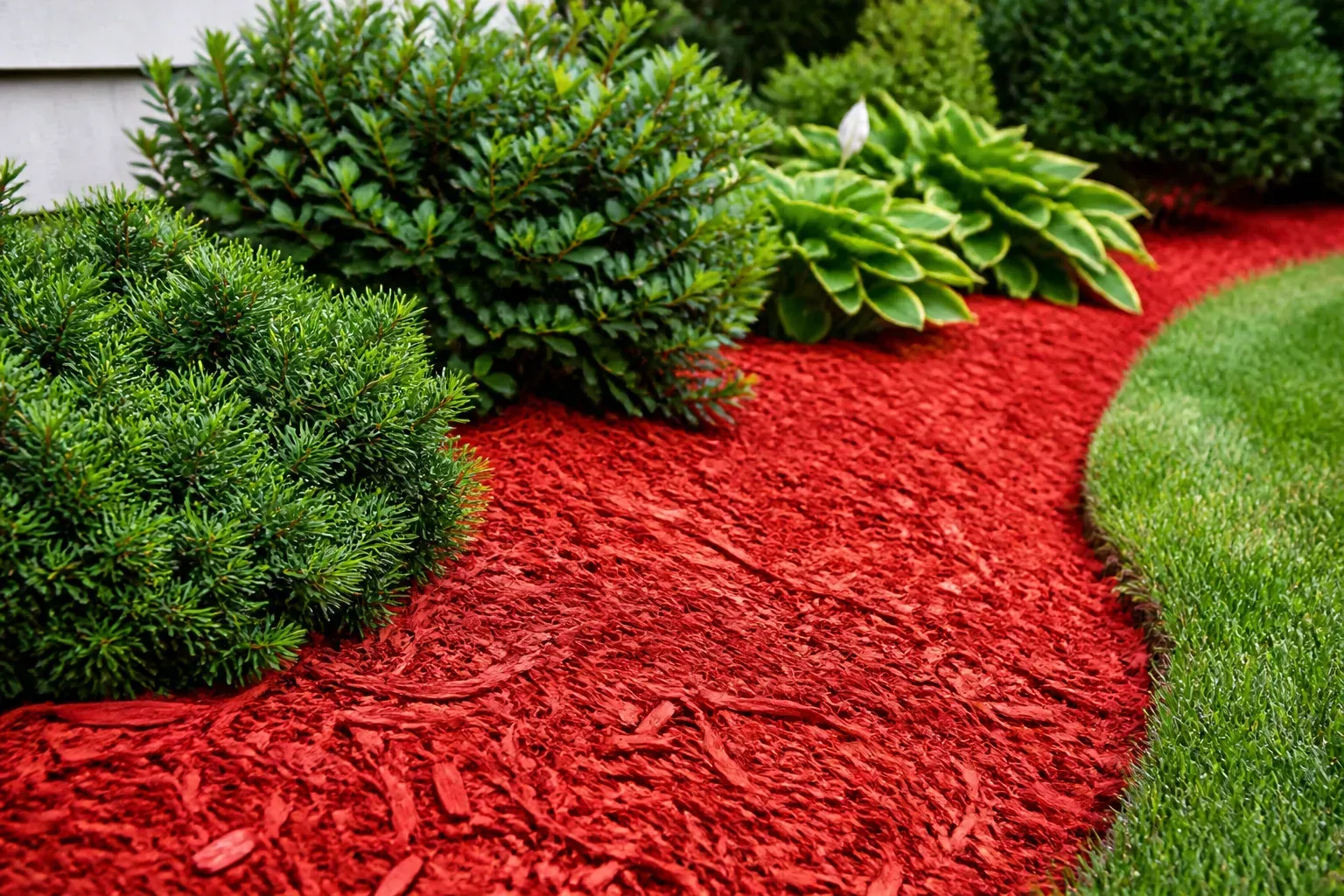
| Mulch appearance | Works well when… | Consider another option when… |
|---|---|---|
| Natural brown or weathered tan | You want low contrast and a woodland or informal feel | You need a consistently dark, even surface |
| Dyed brown | You want a clean, neutral foundation-bed finish | The product’s source is unclear or color upkeep is unwelcome |
| Black | You want green or bright flowers to stand out | The bed is large, hot, or already visually heavy |
| Red | It echoes brick, rust, or warm-toned details | It competes with flowers or becomes the dominant color |
| Gold | You want a lighter, warm accent among dark foliage | It clashes with cool-toned stone or restrained planting |
Natural brown
Undyed mulch is the easiest color to blend with many planting styles because it resembles soil, bark, leaf litter, and tree shade. It is a good fit for woodland edges, mixed shrub borders, cottage-style beds, and gardens where flowers—not the ground surface—should draw the eye. Natural variation can make a large bed look less like a single flat carpet.
Its appearance is less predictable over time. A fresh load may be golden or reddish, while weathered chips can turn gray; a pile from a different supplier may not match last year’s material. If a unified look matters, buy enough for the visible area in one order and accept that the finish will soften rather than trying to keep every bed the exact same shade.
Dyed brown
Dyed brown is the middle ground for gardeners who want a consistent, finished look without the high contrast of black or red. It pairs easily with many homes and makes foliage stand out while keeping attention on the plants. If you want color to read as a background, brown is usually less visually dominant than a strong primary shade.
The trade-off is that the color can become uneven as the top layer weathers and new material is added. Compare the dyed product against the house and hardscape at the actual site, and ask how the wood was sourced. If the product is a clean, documented fit for the bed, the fact that it is dyed alone is not a reason to reject it.
Black mulch
Black mulch creates the strongest contrast with green leaves, pale flowers, and light-colored stone. It can sharpen the lines of a contemporary foundation bed or make a small planting look crisp, especially when the bed has a clear edge and the surrounding surfaces are restrained.
That contrast also makes black a more visible design choice. It may show dust or pale debris and can look stark in a large unbroken bed; the dark surface may warm more in direct sun than a lighter surface. Those are reasons to test a sample and check the bed’s actual temperature—not proof that black mulch automatically injures roots. Keep enough depth for soil coverage, do not pile it against stems, and avoid assuming color alone is a substitute for water management.
Red mulch
Red mulch can echo brick, terracotta, or warm-colored stone, and it can make a green lawn edge visually clear. A small amount may tie together a red brick facade and a planted border; a broad red field can look artificial or pull attention away from flowers. The effect depends on the red’s intensity and the amount of area it covers.
If you like red, use a sample in the bed before ordering a full load. Compare it against the brick in direct sun and shade, and notice whether the mulch is a deep muted rust or a saturated bright red. If the planting itself already has many strong colors, a less intense brown may let the garden feel calmer.
Gold and other bright shades
Gold, orange, blue, and green mulch are specialty choices rather than universal landscape colors. A warm gold can lift a shaded bed or echo sandy stone, but it may look disconnected from cool gray paving. Highly saturated shades can work as a deliberate accent, though they are difficult to repeat naturally across large areas and may dominate small flowers or foliage.
For any unusual color, treat the test patch as essential. Check whether the pigment transfers when damp, whether the hue suits the nearby architecture, and whether the product label answers your sourcing questions. If you are unsure, keep novelty colors to a small feature bed instead of making them the base color for the entire landscape.
Match the mulch material to the bed
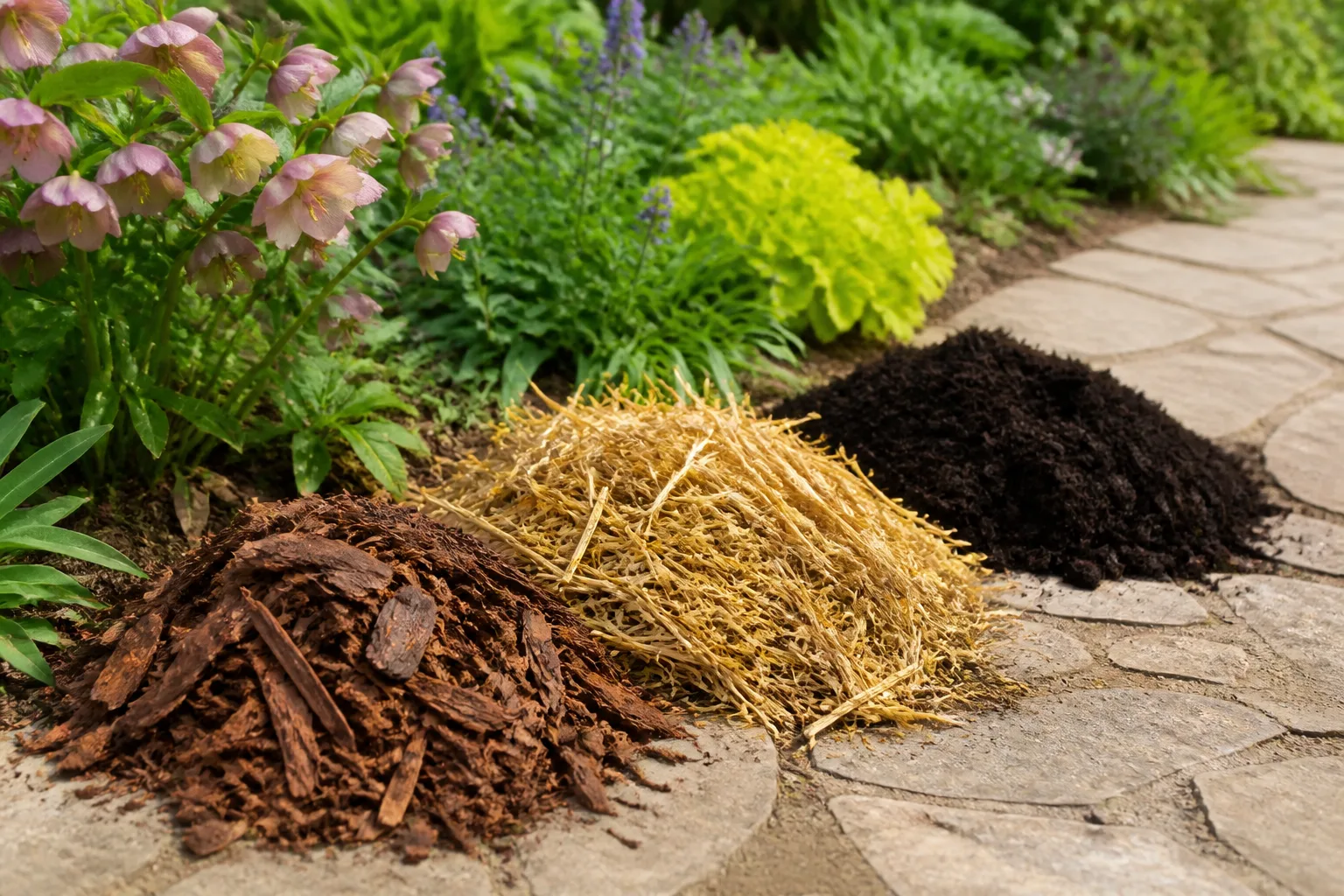
The color decision comes after the material decision. Shredded bark and bark nuggets are common for ornamental beds; the larger pieces tend to stay visible longer and break down more slowly. Wood chips vary in size and source, so compare how much fine material is mixed into the load and whether the bed needs a finer finish or a longer-lasting cover.
Pine straw is light and textured, useful where you want a natural look and a layer that settles around plants without becoming a heavy sheet. Compost, leaf mold, and straw are often more practical in intensively planted vegetable beds, where the gardener wants organic matter to blend into the soil or an easily renewed surface. Savvy Gardening’s guide likewise distinguishes frequently cultivated vegetable and flower beds from longer-lived shrub beds and paths when matching mulch material to use (guide to mulch types).
Particle size changes the experience of using mulch. Fine material makes a smoother surface but can compact more readily; coarse chips leave larger openings, can look less uniform, and may need a deeper layer to cover soil. On slopes, use a texture that stays put in heavy rain, and avoid relying on small loose bark nuggets where runoff routinely carries them away.
Sun, moisture, and plant roots: what color can affect
A dark mulch surface can absorb more solar energy than a pale one, but the amount of heat that reaches roots depends on the whole setup: sun exposure, soil moisture, mulch depth, particle size, and the plant’s rooting habit. A correctly applied organic layer generally buffers soil from temperature swings, which is one reason the RHS describes mulch as helping protect roots from heat and cold. The top surface can feel warm while the soil underneath remains more stable.
Treat color as a secondary factor in hot climates or very sunny beds. If a shallow-rooted or heat-sensitive plant already struggles in the afternoon, choose lighter material, provide appropriate shade or water, and verify the soil condition before blaming black mulch. In a cool, exposed bed, a darker visual finish may be less of a concern; there is no universal shade rule that applies across climates and plants.
Moisture handling is also more about the material and the layer than dye. Mulch reduces direct evaporation from the soil, but a compacted or excessively deep layer can keep crowns and stems damp. Check soil beneath the surface before watering—mulch can make the top look dry while the root zone is still moist—and keep irrigation directed through the mulch to the soil rather than spraying only the chips.
Safety: edible beds, pets, and wildfire-prone yards
For edible crops, be conservative about unknown feedstock. Choose compost, straw, leaf mulch, or clearly identified untreated wood from a supplier who can explain its source; leave an uncertain dyed product out of a vegetable or herb bed. This is a sourcing precaution, not a blanket statement that all colored mulch is poisonous. Color cannot identify whether a load contains clean bark, clean wood, or a material you would rather not put around food plants.
For pets and children, read the product label and avoid letting anyone chew or ingest mulch. Keep bags and loose material out of reach during application, and wash hands after handling; pigment may rub off onto gloves or hardscape, so test a damp sample if transfer would be a problem. Cocoa-shell mulch is a separate product from dyed wood: it contains theobromine and caffeine and can poison dogs if eaten, according to Poison Control. If a pet ingests cocoa-shell mulch, contact a veterinarian or animal poison service promptly with the product label available.
Fire risk is about combustible material and location, not whether the mulch is natural or dyed. In wildfire-prone areas, follow the local defensible-space guidance for the immediate zone around the home; FireSafe Marin advises noncombustible mulch near structures and distinguishes that area from garden beds where composted wood mulch may be used (fire-smart yard guidance). Requirements vary by jurisdiction and may change, so use your local fire authority’s current instructions. A black dye does not make wood mulch fire-resistant, and a natural color does not make it safer to place against a structure.
How to install, refresh, or switch mulch
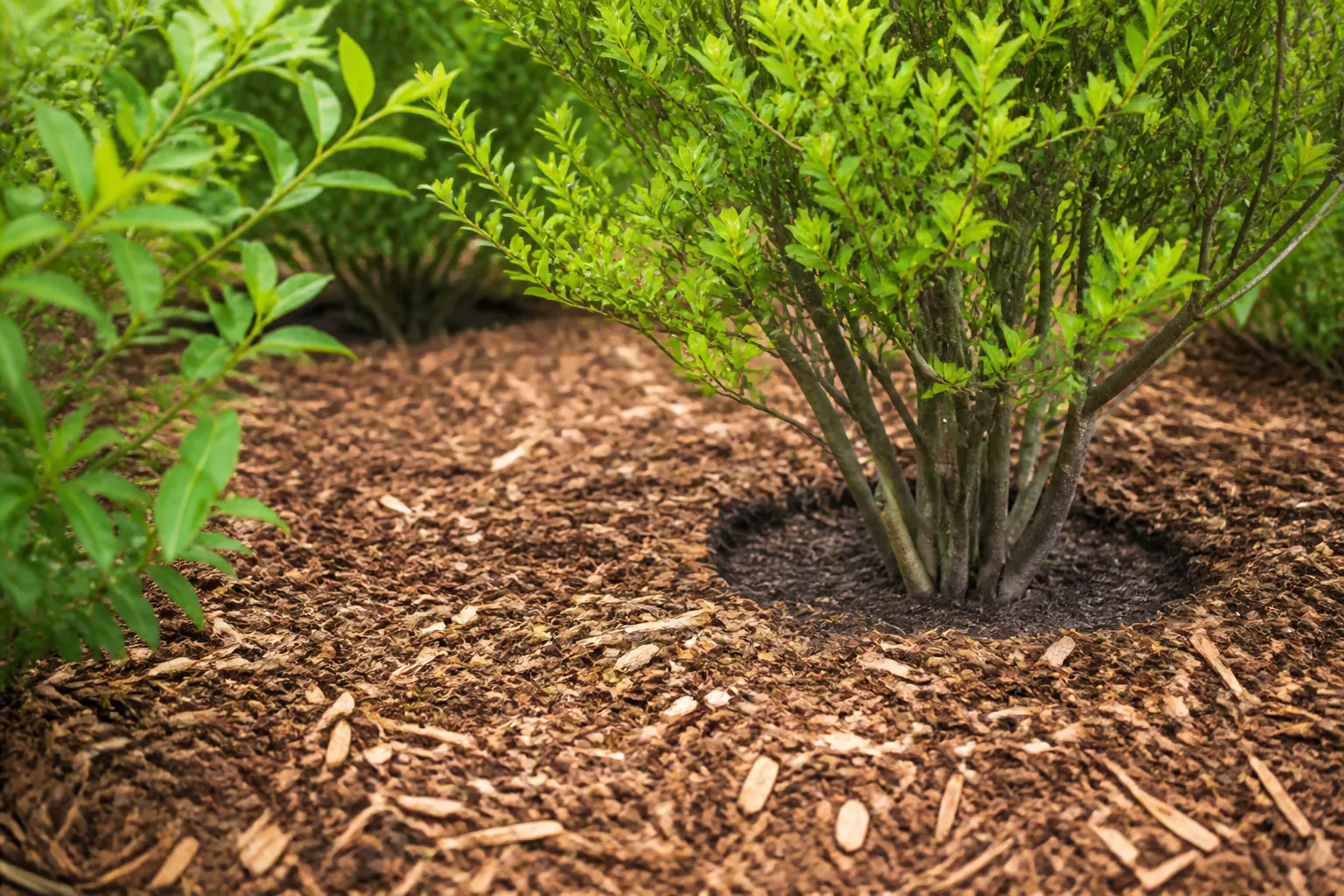
Prepare the bed before choosing the final color. Remove established weeds, even out hollows that collect water, and water dry soil before adding mulch; otherwise the new layer can preserve a dry root zone beneath an attractive surface. If you are planting soon, leave the planting holes and crowns clear instead of burying them under a deep layer.
Spread mulch evenly over the soil rather than pushing it against stems. Around trees, keep the root flare visible and leave a bare ring at the trunk; around shrubs, leave the base of the stems uncovered. The RHS recommends a gap around woody stems to avoid a persistently moist zone, and BBC Gardeners’ World Magazine cautions against smothering plants or damaging lower stems during application (RHS woody mulch guidance; Gardeners’ World mulching guide).
A single fresh layer will not stop every weed, especially if perennial weeds remain rooted below it. Weed the bed first, then maintain coverage as the material settles and decomposes. If a plant crown is buried or bulbs fail to emerge, pull the mulch back rather than adding fertilizer or assuming the plant is dead.
Check depth before adding more
For fine to medium organic mulch, roughly 2–3 inches is a useful starting range in many beds; use less where bulbs, groundcovers, or small seedlings need to emerge. Coarse wood chips can be applied deeper because larger particles leave more air space: the RHS gives about 3–5 inches for wood chippings and 2–3 inches for composted organic mulch. These are guides, not targets to hit blindly; existing mulch remains in the bed and should count toward total depth.
Before topping up, scrape aside a small patch and measure the loose layer. If it is already deep enough, do not add a new coat just because the color has faded. When refreshing dyed mulch, a thin, even addition can restore a consistent finish, but changing the material every year can create a dense layer that holds excess moisture and buries plants.
You can switch from colored to natural mulch without stripping every old chip. If the existing material is known and the bed is healthy, leave it in place, check its depth, and let weathering soften the color before topping up with the new material. If the source is unknown and the bed will grow food, remove the questionable material rather than working it into the soil, and follow local disposal guidance.
When gravel or another mulch makes more sense
Gravel and stone keep their appearance longer than wood and do not need replenishing as they decompose. They can suit paths, dry gardens, or the immediate area around a structure when local fire guidance favors noncombustible material. But stone does not add organic matter, can be difficult to move once installed, and may heat the planting area in sunny sites; it is not an automatic upgrade for an ordinary flower bed.
For vegetables, straw, compost, or leaf material may suit the growing cycle better than a permanent landscape finish. For a shaded woodland border, leaf litter or undyed chips often blend naturally. For a small high-contrast foundation bed, documented dyed bark can give the exact look you want. The best alternative is the one that works with the bed’s long-term use, not simply the one that keeps its color longest.
Conclusion
Choose mulch color for the landscape effect you want, but choose the product for its material and the bed for its growing needs. Undyed mulch is a strong default for naturalistic planting and soil-focused beds; colored mulch is a reasonable option when its source is clear and the finish is part of the design. Decide the material and layer depth first, sample the color in place, and keep any mulch away from plant stems and tree trunks. That sequence gives you the look you want without letting a shade choice create a maintenance or plant-care problem.