How to Prune Raspberries and Blackberries: Which Canes?
Prune raspberry and blackberry canes with confidence: identify fruiting types, remove spent stems, thin crowded growth, and protect next year’s crop each year.
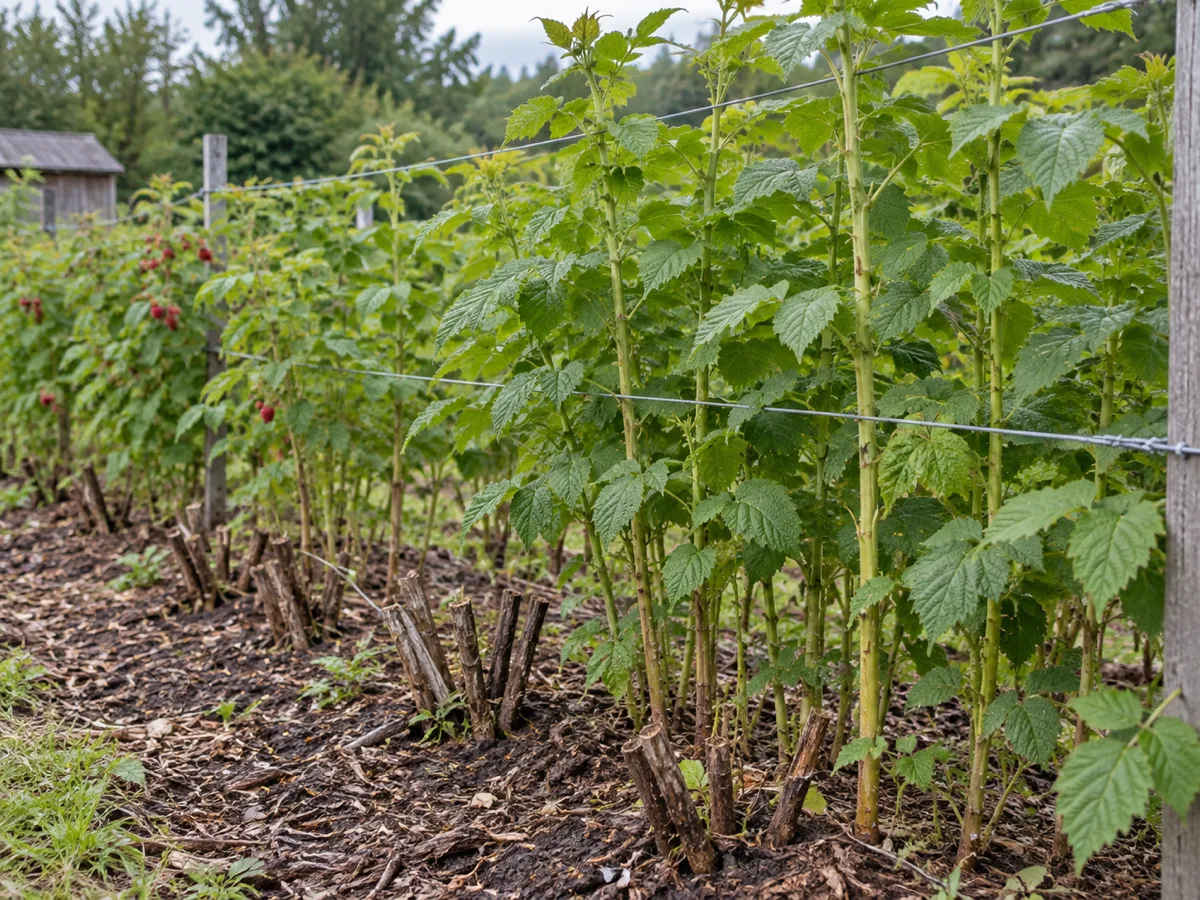
The safest way to prune a berry patch is to identify which canes will fruit next before you cut. Summer raspberries and traditional blackberries usually fruit on canes that grew the previous year, while fall-bearing raspberries and some blackberries can fruit on current-season growth. If you cut every cane to the ground without knowing which pattern you have, you may remove next season’s crop.
Start with the harvest you want, then remove only the canes that have finished their job. A few identifying clues—green versus peeling brown bark, whether a cane fruited, and where the berries formed—are more reliable than a fixed month on the calendar.
Start with the fruiting cycle, not the calendar
Raspberry and blackberry roots and crowns are perennial, but most individual canes follow a two-year cycle. First-year growth is called a primocane; in the second year, that same cane is a floricane, which flowers and fruits before dying. The new green canes emerging beside it are usually the next generation, so the goal is to remove spent wood without removing the young canes that will carry the next crop.
Primocanes and floricanes are different ages of the same cane
On raspberries, young primocanes are generally green and flexible during their first growing season. Floricanes are older, often brown or gray with peeling bark and old fruiting laterals; after their crop, they dry down and die. Bark color is helpful, but do not use it alone: winter injury, cultivar, and weather can make cane color less obvious, so also look for old fruit stems and whether that cane produced berries.
Blackberries follow a similar cycle when they are floricane-fruiting, though cane form varies: erect plants grow upright, semi-erect plants form a broader clump, and trailing types send long arching canes that need support. A fruiting blackberry cane is not automatically dead immediately after picking; remove the whole cane after it has finished fruiting, but protect the fresh primocanes next to it. The University of Maine Cooperative Extension raspberry and blackberry growing guide explains the two-year raspberry cycle and shows the green primocane versus brown floricane distinction.
Summer-bearing and fall-bearing varieties need different cuts
The crop label changes the pruning plan. Summer-bearing raspberries usually have one main crop on second-year canes; fall-bearing raspberries can make a late crop on first-year cane tips, and some varieties can also give an earlier crop from those canes the following summer. Primocane-fruiting blackberries are another distinct group and may be grown for one late crop or two crops, depending on the cultivar and management.
| Plant and crop goal | What usually bears fruit | Main pruning choice |
|---|---|---|
| Summer-bearing raspberry | Second-year floricanes | Remove each spent floricane; keep and thin new primocanes |
| Fall-bearing raspberry, one fall crop | First-year primocanes | Cut all canes to the ground during dormancy |
| Fall-bearing raspberry, two crops | Primocane tips in fall, lower cane next summer | Keep lower cane portions, then remove the cane after its second-year crop |
| Traditional blackberry | Second-year floricanes | Remove fruited floricanes after harvest; train new primocanes |
| Primocane-fruiting blackberry | First-year growth, with optional second-year crop | Choose a one-crop ground-cut system or preserve canes for a second crop |
If the variety name is missing, do not start with a ground-level cut. Use old harvest records, plant tags, or the nursery’s variety description if you can find them; otherwise, keep healthy new canes through the next season and note where the fruit appears. That one observation tells you more than a guess based on a cane’s height.
When to prune raspberries and blackberries
Think in terms of plant stage and crop goal. Dormant pruning is done in late winter or early spring before buds break, when the structure is easier to see; summer maintenance removes damaged canes or controls growth as it happens. For summer-bearing raspberries and floricane blackberries, the old fruiting cane can be removed after harvest or during dormancy, but leaving it until the plant is dormant can be preferable in cold areas because the patch still has its foliage-free structure to identify and late-season canes may continue moving stored carbohydrates into the crown.
The University of Maine recommends removing fruited raspberry canes before spring growth resumes and narrowing the row during summer as suckers appear. Fine Gardening’s raspberry guidance likewise uses late-winter thinning and notes that the climate and plant system determine how the row is managed. Use a local extension calendar for your region: a month that is late winter in a mild coastal garden may still be a severe-freeze period inland.
For blackberries, NC State Extension’s calendar separates dormant pruning from summer tipping and post-harvest removal, which is useful because each pass has a different job. The practical cue for dormant pruning is that the plant is resting and buds have not opened; the cue for soft tipping is that new canes have reached the wire or height you are training them to. In hot climates, avoid making unnecessary cuts during heat or drought stress, and do not delay removal of clearly diseased tissue just to match a seasonal schedule.
Gather safe tools and identify what you are cutting
Use sharp bypass pruners for smaller canes and loppers for thick, woody bases. Put on sturdy gloves, long sleeves, eye protection, and closed shoes before reaching into a thorny patch; even thornless cultivars can have rough stems and stiff side shoots. Work with the cane angled away from your face, and cut long tangled stems into manageable sections instead of yanking them through neighboring growth.
Before cutting, walk the row once and sort what you see into four groups: old canes that already fruited, new canes that will fruit later, damaged or diseased growth, and suckers outside the space you want to maintain. That quick inspection prevents the most expensive mistake—removing a healthy cane simply because it looks crowded. If several plants show suspicious lesions, cankers, or galls, remove affected canes separately and clean the tool before moving to the next healthy plant.
The Savvy Gardening raspberry-pruning guide also recommends protective clothing and separate tools for lighter and heavier cuts. Keep pruners sharp so they make clean cuts rather than crushing the cane; clean soil and plant sap from the blades, and sanitize them when moving away from visibly diseased material. Always use a sanitizer according to its label and allow the blades to dry before storing them.
Prune summer-bearing raspberries after the crop
For a summer-bearing red raspberry, the repeatable rule is simple: once a cane has fruited, it will not fruit again. Remove that spent floricane at the soil line, then retain the vigorous new primocanes that will overwinter and fruit next summer. If you are pruning during dormancy, the old canes are easier to recognize by their gray, peeling bark and the side branches where berries grew.
After removing spent canes, narrow the raspberry row to a manageable hedgerow and thin out weak, spindly, damaged, or crowded canes. A useful starting range for a home row is about 12 to 24 inches wide with roughly three to five strong canes per linear foot, but the exact target varies by cultivar, trellis, and local extension advice.
The University of Maine guide recommends a 12- to 18-inch base and four to five canes per foot; Fine Gardening describes a row around 18 to 24 inches wide and three to five canes per foot. Treat those as a practical range, not a universal quota: open the row more when canes shade each other or disease has been a problem.
Remove new suckers that grow well outside the row boundary, but do not strip out every green cane that appears in the middle. The new primocanes are next year’s fruiting wood, and they need enough room and light to mature. Keep the strongest, healthiest stems and tie them to the trellis so wind or fruit weight does not pull them into the aisle.
Choose one or two crops from fall-bearing raspberries
Fall-bearing, or primocane-fruiting, raspberries offer a choice rather than one mandatory pruning method. For a single late-season crop, cut every cane to ground level during dormancy, before the new shoots begin. Thin the new growth as it comes up, maintaining a narrow row and leaving the strongest canes with enough spacing to receive light and airflow.
That simple cut removes the possibility of an early summer crop, but it makes the annual pruning job straightforward and keeps the crop on current-season growth. It is often the better choice when the fall harvest reliably ripens in your climate or when simplicity matters more than extending the harvest. In a short growing season, a very late cultivar may not have enough warm time to ripen all its fruit; ask a local extension office whether your variety suits your region before choosing the one-crop system.
To try for two crops, leave healthy primocanes through winter. In late winter, remove only the dead or fruited upper portion of each cane, cutting back to a healthy bud or lateral below the fall-fruiting area; the lower portion can then bear an early summer crop as a floricane. After that second-year summer harvest, remove the cane at ground level because it has completed its cycle.
The trade-off is that the later fall crop may be lighter, and the extra identification work makes this system easier if you label or mark canes.
The University of Maine’s pruning recommendations describe both approaches: mowing all canes for one fall crop or preserving the lower cane for a second crop. Do not confuse “fall-bearing” with “cut everything down after every harvest”; the cut depends on whether you want one crop or two.
Give black raspberries a summer tip cut
Black raspberries grow in a more compact, clumping habit than the spreading hedgerow common with red raspberries. Their long primocanes can arch and root at the tips if left to reach the ground, and they produce side branches that will carry many of the following year’s berries. A summer tip cut keeps the canes within reach and encourages branching without sacrificing the next crop.
When a new black raspberry primocane reaches about 30 inches, remove the top two or three inches with clean pruners. Fine Gardening recommends this timing because the cut encourages laterals and helps prevent the cane tip from rooting; the exact height can shift with cultivar and the support system, so use it as a cue rather than a rigid measurement. Avoid tipping too early while the cane is still short, since you would simply shorten a plant that has not developed enough structure.
During dormancy, remove dead, diseased, or weak canes and keep a manageable set of the strongest canes in each clump. Shorten lateral branches enough to keep them from crossing or touching the ground, then tie the retained canes to a wire or stake. If you have only a few plants, prioritize an open center and accessible berries over hitting a specific cane count.
Prune floricane-fruiting blackberries in two passes
Traditional blackberries need both summer attention and dormant pruning. Once the main crop is finished, remove the floricanes that fruited, cutting them as close to the ground as practical; then keep the unfruited primocanes that will carry next year’s crop. These new canes may look vigorous and untidy, but they are the replacement fruiting wood, not waste.
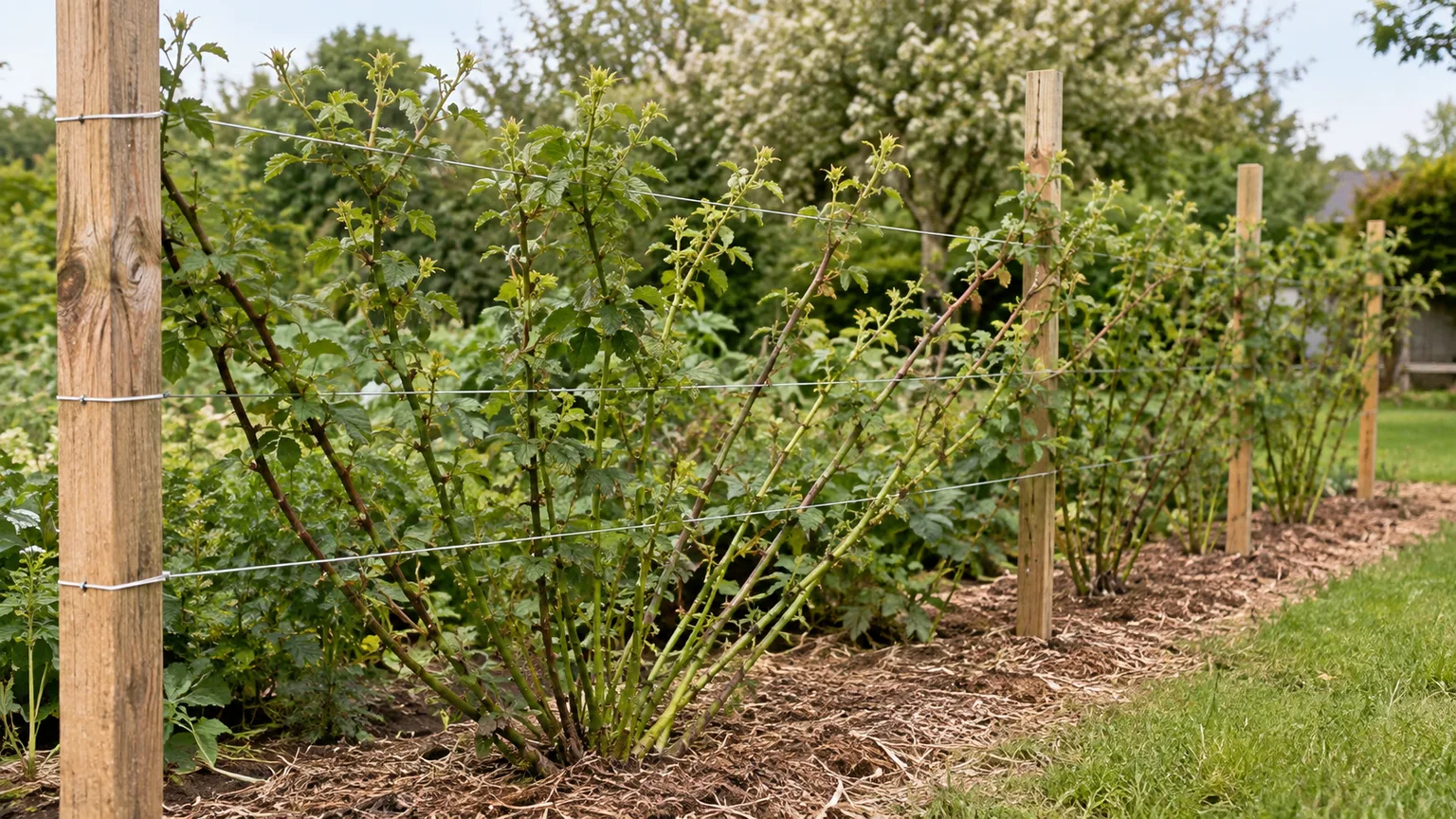
Soft-tip new canes at the trellis height
As the primocanes grow, train them toward the support system before they become thick and difficult to bend. When a cane reaches the top wire or the height you want, pinch or snip the tender tip; that soft tip encourages side branches, which can produce fruiting sites the following year. Repeat the check as new canes grow, rather than making one severe cut to every cane on the same date.
The NC State Extension blackberry pruning guide recommends soft tipping while the terminal portion can still be pinched off. If the cane has hardened and needs a cut with pruners, do not assume a casual hard cut is harmless: NC State notes a cane-blight risk after hard tipping and gives disease-specific fungicide guidance. For a home garden, plan ahead to soft-tip early; if you have already missed that window, keep tools clean and ask local extension for disease-control advice rather than applying a fungicide without checking the label and local need.
Thin the dormant plant and shorten laterals
In late winter or early spring, remove dead, damaged, diseased, weak, crossing, or downward-growing canes first. Then retain only the strongest main canes that fit the plant’s habit and trellis; NC State’s practical range is three to eight vigorous canes per plant, while Maine’s home-garden guidance suggests five to seven per hill. Erect, semi-erect, and trailing varieties do not all fill a support in the same way, so use the lower end when a clump is crowded and preserve enough canes to cover the trellis without overlap.
Shorten the lateral branches to a manageable length—often about 12 to 18 inches in the NC State guide—and tie main canes and laterals to the wire. Remove laterals that hang low or drag on the soil, but do not remove all side growth: those branches are where much of the fruit will form. For a small backyard plant without a trellis, use the support the cultivar needs and avoid leaving long canes that sweep across paths or neighboring plants.
Manage primocane-fruiting blackberries by crop goal
Some blackberry cultivars can fruit on first-year canes. If you want a single late crop and an uncomplicated winter routine, cut all canes to ground level after the crop or during dormancy, then remove the cut material. The plant grows a fresh set of primocanes the next season; check your cultivar’s label because not every blackberry can be managed this way.
If you want a summer crop as well as a later primocane crop, keep the overwintered canes instead. After harvest, remove the floricanes that have finished; during dormancy, cut back the tops of the primocanes to just below the portion that fruited the previous year, shorten long or crossing laterals, and tie the retained canes to their support. NC State Extension describes these single- and double-crop approaches for primocane-fruiting blackberries in its practical pruning guide.
Do not apply the raspberry recipe to a blackberry simply because both are brambles. The cultivar’s fruiting habit and cane structure determine whether ground-level mowing is sensible, while the trellis and regional climate determine how much fruit can mature. If the plant tag is missing, preserve healthy canes for one season and observe when the berries form before choosing a full cutback.
Train canes to make next year’s pruning easier
Support is not merely cosmetic: a trellis lets you separate old fruiting canes from new growth, keeps fruit accessible, and makes it easier to remove spent wood without cutting a neighboring cane by mistake. Raspberry rows are often supported between parallel wires; blackberries may need a stronger structure for longer, heavier canes. The University of Maine guide notes that trellising improves harvest access and simplifies pruning by encouraging new canes to grow toward the middle of a raspberry row.
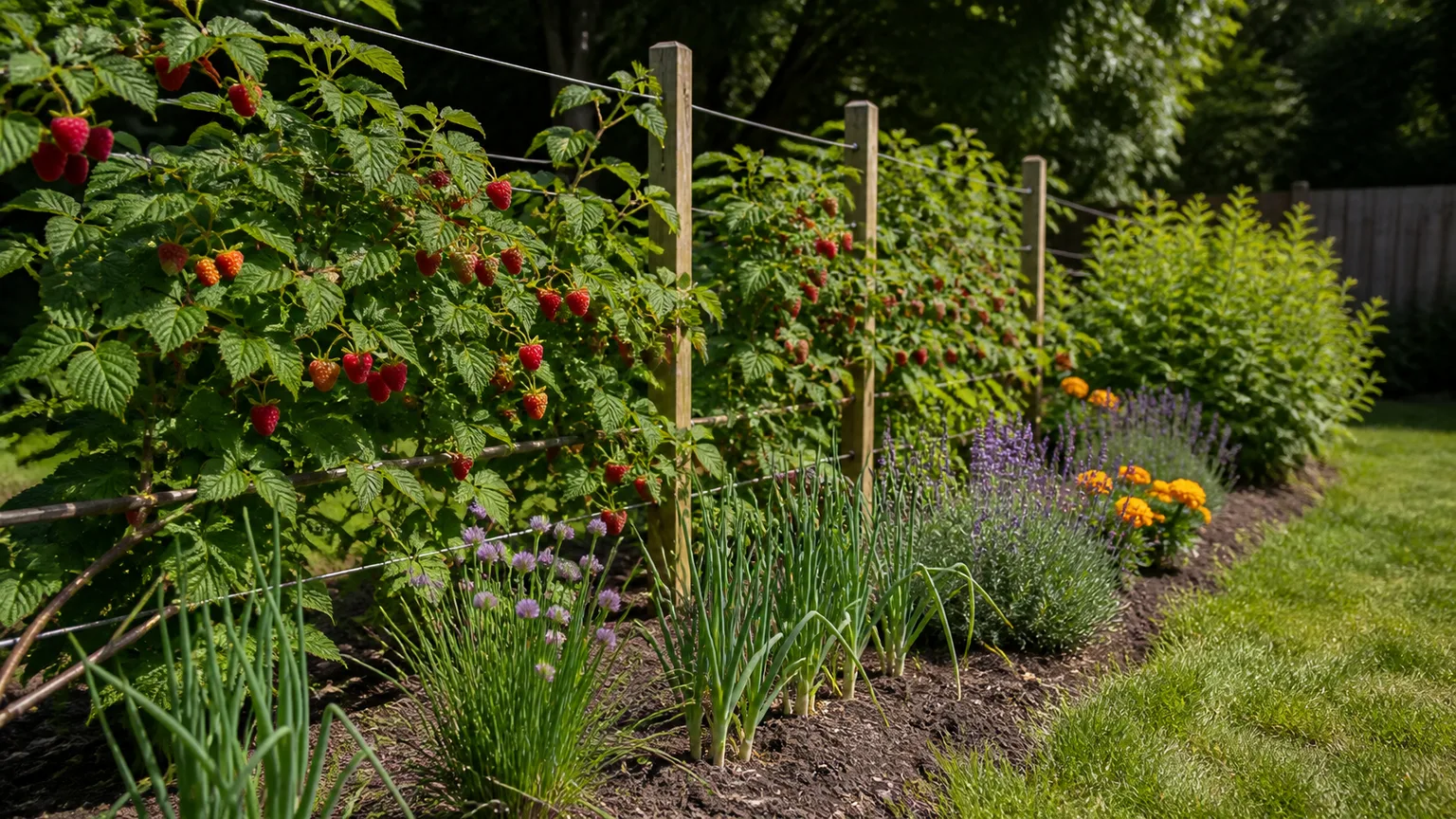
As canes grow, separate the generations: tie fruiting canes to one side of a V-trellis and leave the young canes nearer the center, or mark them with loose, removable ties on a single-wire system. Do not bind canes tightly around wire or use a tie that will constrict growth as stems thicken. A flexible tie should hold the cane in place while leaving a little room for movement.
Training also helps you make a better decision when pruning is overdue. If old and new canes are tangled together, identify fruiting stems by their dried side branches and keep the green, flexible canes that have not fruited. If you cannot tell, tie the likely new canes loosely before removing anything; the marker reduces the chance of cutting the wrong generation during a later pass.
Recover an overgrown or missed patch without guessing
If you missed one pruning season, you have not automatically lost the planting. Start by identifying and removing canes that clearly fruited and died, plus broken or diseased growth; then open the row by removing canes outside the desired boundary and thinning the weakest interior stems. The first cleanup may not produce a perfectly even row, but it will give you a readable structure for the next season.
Avoid leveling an unidentified patch just because it looks messy. A ground-level cut is a reasonable system for fall-bearing raspberries managed for one fall crop and for primocane-fruiting blackberries managed for one crop, but it can remove next year’s summer crop from summer-bearing raspberries and traditional blackberries. If you are unsure, make only the safe cuts now, mark the remaining canes, and watch where the next harvest appears.
For a thorny, mature patch, work one section at a time and keep a clear escape path; do not reach blindly into the center. Use loppers for canes too large for hand pruners, and cut old canes into short lengths before carrying them out. If you find extensive galling, cankers, or unusual dieback, take a clear photo and ask a local extension specialist to identify the problem before you spread debris or make a large set of cuts.
Avoid the cuts that cost a future harvest
The common pruning failures come from treating all canes as the same age. A quick check of the plant tag and one recent harvest can prevent the largest mistake: cutting healthy young canes that have not fruited yet. Use this short checklist before a major pruning pass.
| Mistake | Why it matters | Better choice |
|---|---|---|
| Mowing every raspberry to the ground without identifying its type | Removes floricanes that carry a summer crop | Cut to the ground only for a one-crop fall-bearing system |
| Removing all green canes after a summer harvest | Green primocanes usually become next year’s fruiting canes | Keep healthy new growth inside the row |
| Leaving spent canes tangled through the patch | Makes future cane-age identification harder and keeps debris in the planting | Remove fruited floricanes after harvest or during dormancy |
| Hard-tipping blackberry canes after they have become woody | Can create a fresh wound when cane-blight risk is a concern | Soft-tip tender growth at the support height |
| Using one fixed spacing number for every cultivar | Habit, vigor, trellis, and local disease pressure vary | Start with an open row, then follow local extension targets |
| Making a severe cut because the patch looks untidy | Can remove the next crop before you know the plant’s cycle | Prune in stages and observe one harvest if the type is unknown |
A light, correctly timed pruning pass is more useful than an aggressive cut made on the wrong cane. If the plant is weak, recently planted, or recovering from winter injury, focus on dead and damaged wood and avoid imposing a commercial cane count on a small or stressed plant. Local extension guidance should take precedence when it differs because of regional climate or the cultivar you grow.
Clean up and check the patch again
Carry cut canes out of the planting instead of leaving a mat beneath the plants. Dead wood and old laterals can make the row harder to work and may harbor pests or disease; the University of Maine and NC State Extension both advise removing pruning debris from the planting. Follow local guidance for disposal if the material shows disease, and do not put questionable canes into a home compost pile that may not heat consistently.
After pruning, re-tie any canes that have slipped, check that supports are stable, and note the date and cultivar if you know it. A short annual record—when each type ripened, which cane fruited, and when you removed it—turns next year’s pruning from guesswork into a repeatable routine. During the growing season, remove broken or clearly diseased canes promptly and keep suckers within the row or hill you intend to maintain.
Conclusion
Prune raspberries and blackberries by the age and fruiting pattern of their canes, not by a single calendar rule. Remove canes that have already fruited, retain healthy new growth for the next crop, and use ground-level cutting only when a one-crop fall system is your deliberate choice.
When the type is uncertain, preserve healthy canes until you can observe the harvest. Once you know which cane bears fruit and when, the seasonal cuts become simple: identify, remove, thin, tie, and clean up.