5 Reasons Why Your Hydrangea Is Wilting
Why is your hydrangea wilting? Check timing, soil moisture, sun, wind, fertilizer, and recent planting to choose a safe fix without overwatering.
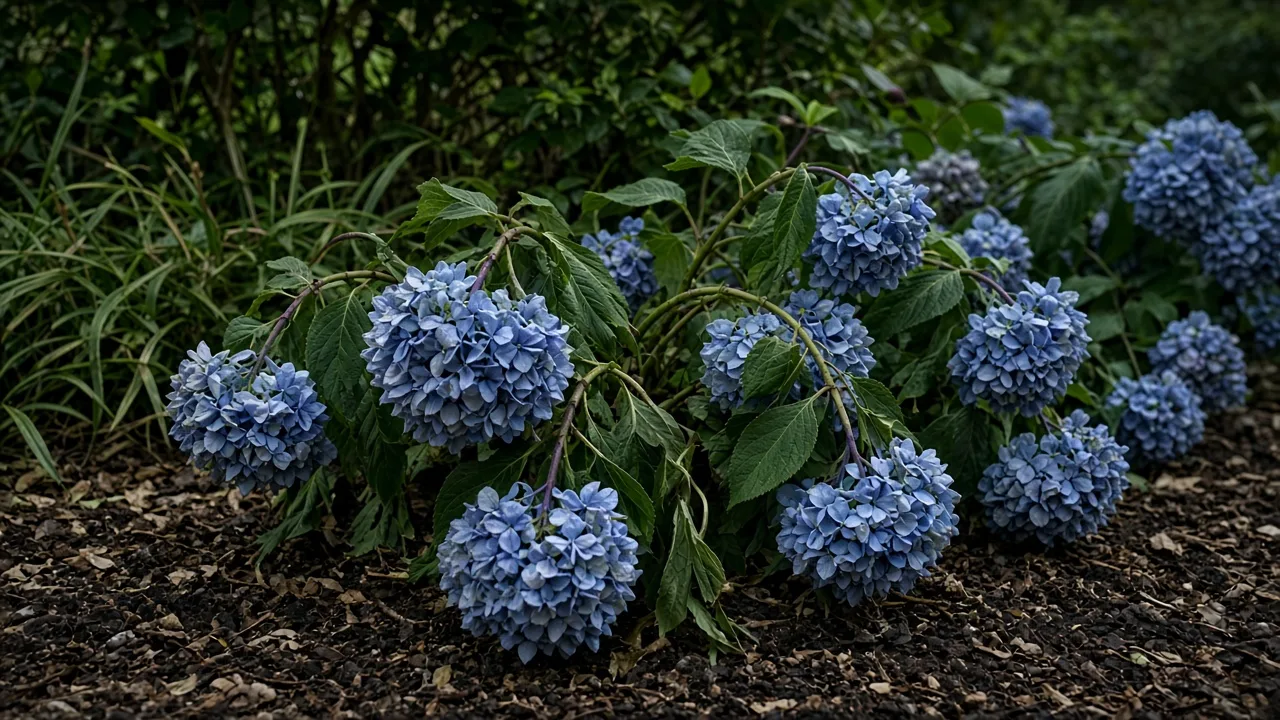
A hydrangea can droop because its roots are short of water, because hot leaves are losing moisture faster than roots can replace it, or because damaged roots cannot take up water from soil that is already wet. Those causes look similar from across the yard, but they call for different responses. Before watering, check when the wilt happens, feel the soil at root depth, and see whether leaves or only flower stems are affected.
That short check helps separate a thirsty shrub from one that is simply hot, newly transplanted, exposed to drying wind, or stressed by excess fertilizer. It also helps prevent a costly mistake: watering an already saturated root zone because the foliage looks limp.
Diagnose Before You Water: Three Clues
Take a quick look at the whole plant before reaching for a hose. A useful diagnosis comes from a pattern, not one drooping leaf: compare the shrub in the morning and late afternoon, test soil a few inches down, and check whether the leaves themselves are soft or the flower heads alone have bent.
When Does the Wilt Appear?
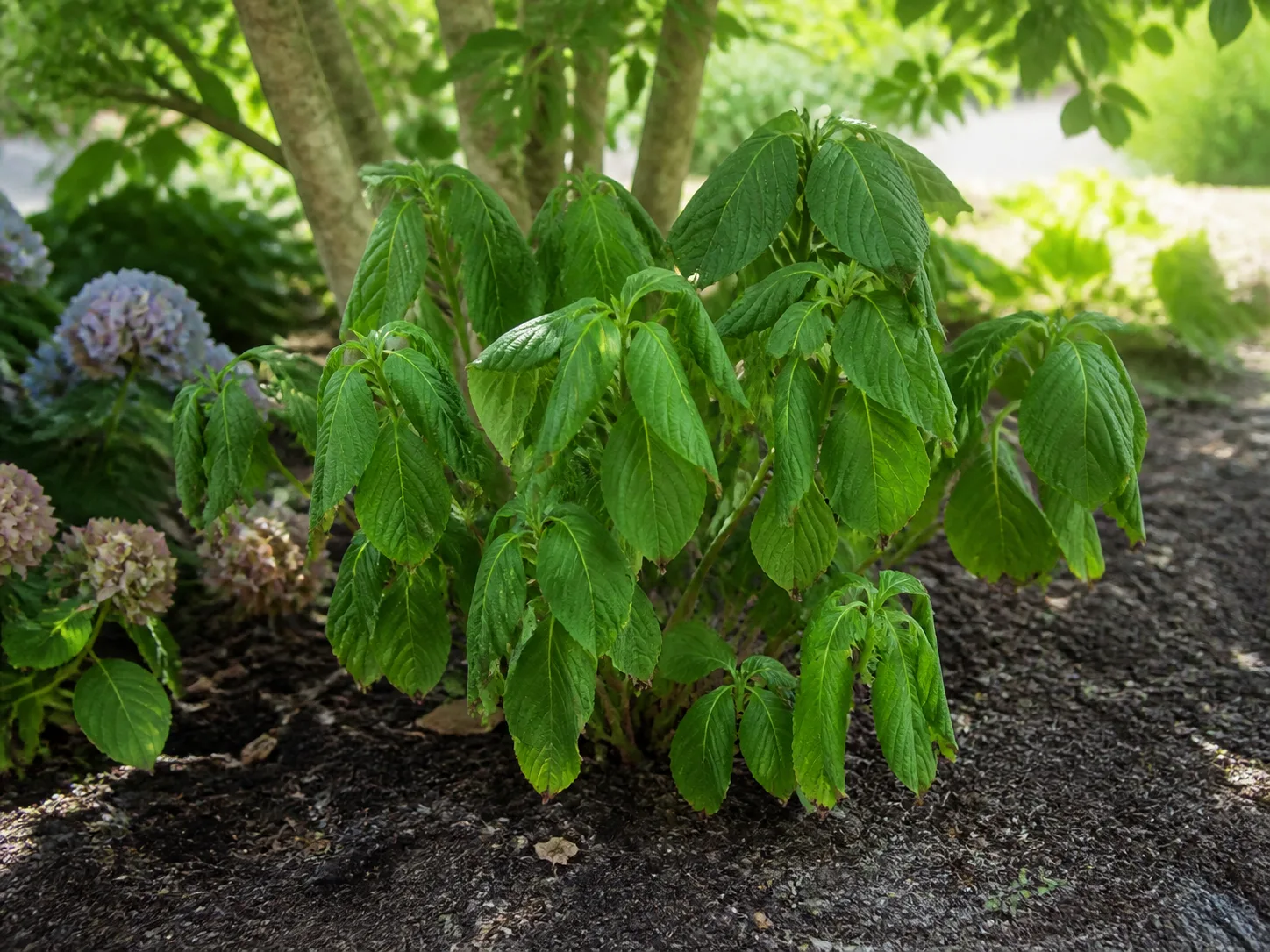
Wilt that begins in the hottest part of a sunny day and eases by evening or the next morning points toward temporary heat stress, especially when the root zone remains moist. By contrast, a plant that is still limp before the sun reaches it has not recovered overnight; check the soil and roots rather than assuming the afternoon pattern explains everything. The University of Georgia Extension explains that leaves can wilt at peak heat and recover by morning when they have enough soil moisture.
Note recent weather and care as well. Several dry, windy days, a fertilizer application, a move to a new bed, or a container left on hot paving can each change the likely cause. If the problem is confined to one shoot, look for a broken stem, localized root injury, or disease symptoms rather than treating the entire shrub as uniformly thirsty.
Is the Soil Dry, Damp, or Saturated?
Push a finger or narrow probe 2 to 3 inches into the soil under the canopy, a few inches away from the stems. If that layer is dry and crumbly, the plant may need water; if it feels cool and lightly damp, a brief afternoon droop is not enough evidence to irrigate. For a container, check both the center and near the pot wall because the mix may dry unevenly.
If the soil is shiny, sticky, sour-smelling, or persistently soggy, do not add water. Hydrangeas need moisture but not stagnant, airless soil. Poor drainage can impair roots and create the same limp foliage that drought does, so a wet reading changes the next step from “water” to “find out why the soil stays wet.”
Are Leaves Drooping, or Only Flower Heads?
Soft leaves across the shrub suggest that water delivery or water balance is under strain. If the leaves remain firm and green while a few large flower heads bend, the stems may simply be carrying rain-heavy blooms. That mechanical flop is especially common after a downpour and is not a reason to soak the roots.
Look for scorch, too. Crisp brown margins or patches on the sun-facing side can follow prolonged heat and water stress; spots with defined edges, stem lesions, or one-sided branch collapse suggest a different problem. Take a photo and note which symptoms are new so you can tell whether a change in care is helping.
1. The Root Zone Is Too Dry
A genuine water deficit is the most straightforward cause: the soil around the active roots dries faster than the shrub can replace moisture lost through its leaves. It can happen during a drought, but also in light sandy soil, a raised or sloping bed, under competing tree roots, or when short showers wet only the surface. Newly planted hydrangeas and container-grown shrubs are more vulnerable because their usable root zones are smaller.
A root ball can also remain dry even while the surrounding bed looks damp. Nursery potting mix and garden soil do not always absorb water at the same rate, and water may flow around a shrunken or compacted root ball. Check just inside and just outside the original root-ball area for a recent planting; for an established shrub, check below the mulch and beyond the stem cluster where feeder roots spread.
Use the soil test, not a calendar, to decide whether to water. The RHS recommends deep, thorough watering and mulch to help hydrangeas through hot, dry weather, while the University of Maryland Extension notes that persistent drought can lead to scorch, browning, and leaf drop. A shrub that recovers after one deep soak still benefits from checking the root zone again as weather and soil conditions change.
How to Rehydrate Without Runoff
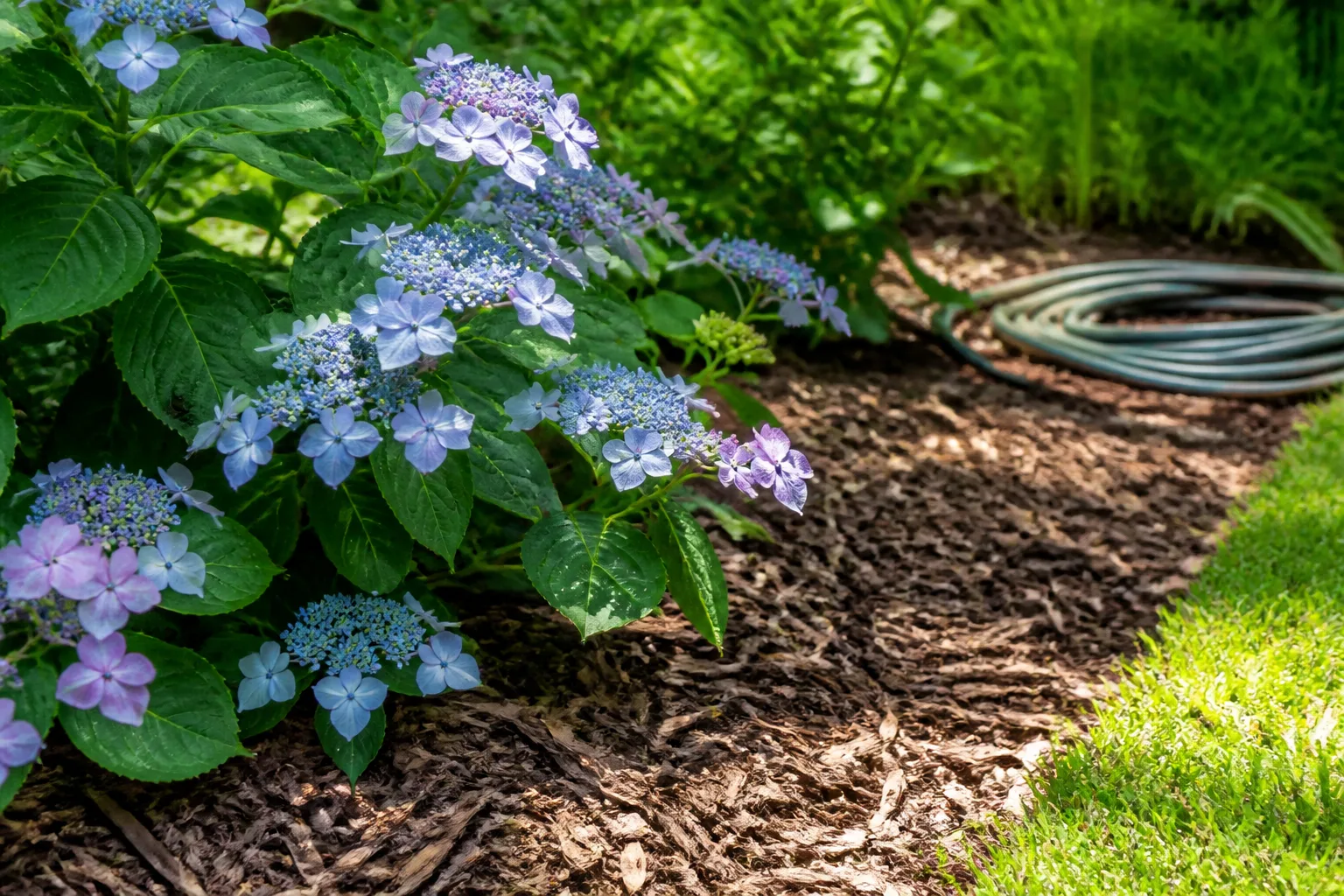
Apply water slowly at the soil line, covering the area under the canopy rather than pouring everything against the stems. A soaker hose or drip line is useful because it wets soil gradually; with a hose, use a gentle flow and move it around the root zone. If very dry soil sheds water, pause between applications so the first pass can soak in before you add more.
After watering, wait several minutes and probe again. The goal is evenly moist soil several inches down, not a puddle or a muddy crown. If a container is dry, water until it drains from the bottom, then empty the saucer; a pot should not sit in runoff.
Avoid frequent little splashes that wet only the top layer. They can make the surface look reassuring while deeper roots stay dry, and overhead sprinkling keeps foliage wet longer. Morning is convenient for routine irrigation, but a visibly dry plant should not be left thirsty simply to wait for a preferred time of day. Once it has been watered, let the soil tell you when the next soak is needed.
2. Heat, Sun, or Reflected Light Is Outpacing Water Uptake
Hydrangeas can wilt in warm weather even when soil moisture is adequate. In heat, leaves lose water through transpiration faster than roots can replace it, so leaf cells temporarily lose firmness. The University of Maryland Extension specifically notes that hydrangeas may wilt in high daytime temperatures despite sufficient soil moisture and recover at night.
Time and recovery are the key clues. If the shrub is upright in the morning, droops during a hot afternoon, and recovers by evening while the soil stays damp, extra irrigation may do little. If the same plant remains drooped on a cool morning, develops increasing scorch, or the soil is dry, heat may be combining with real water stress rather than acting alone.
Sun intensity depends on the site, not just the number of hours on a plant tag. Afternoon sun against a west-facing wall, bright light reflected from paving, or heat radiating from a driveway can be harsher than morning sun. The RHS reports that shadier hydrangeas coped better during prolonged hot, dry weather, and a Fine Gardening guide on hot, dry climates explains how stronger sun accelerates water loss from broad leaves.
Match the Fix to the Hydrangea Type
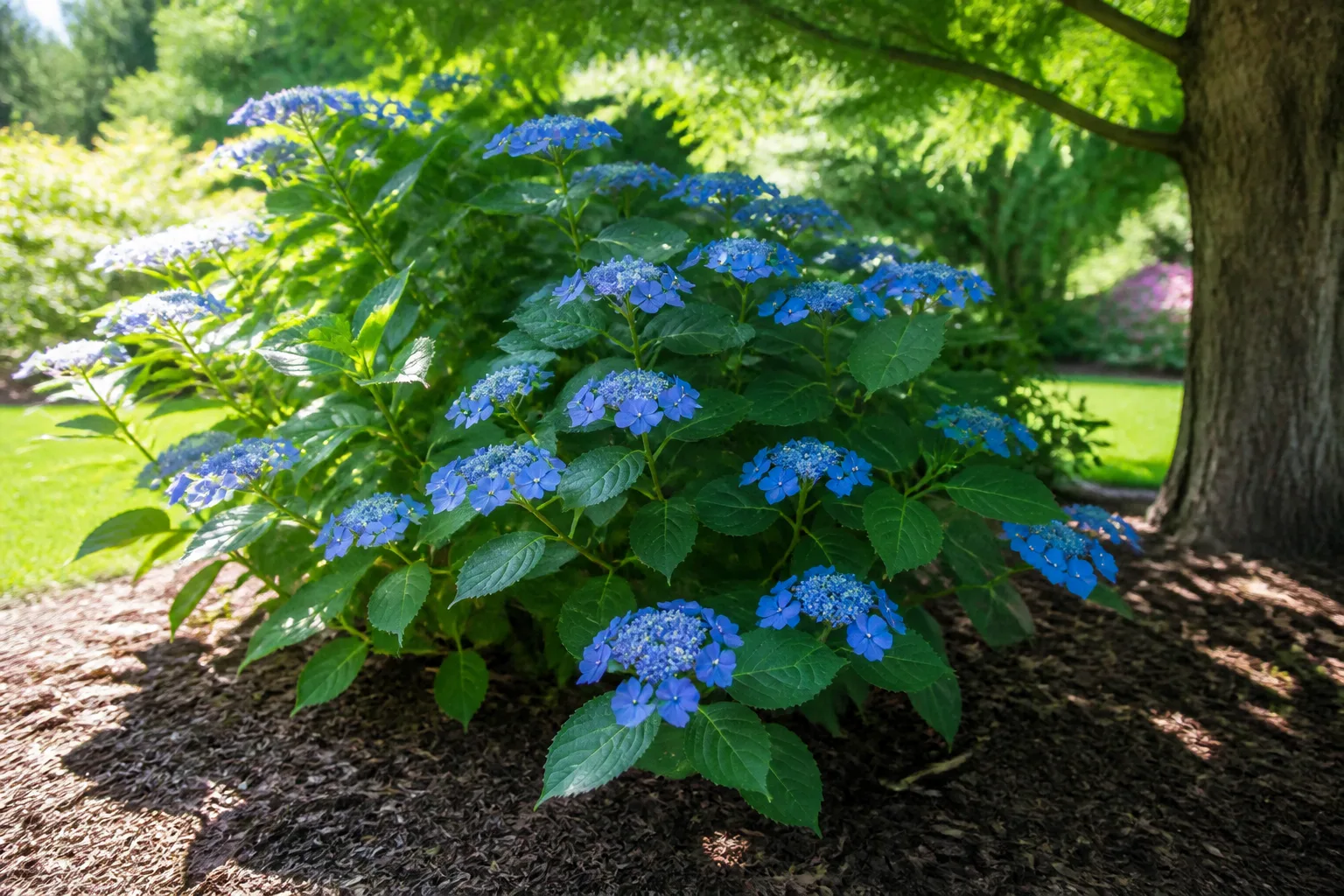
Bigleaf hydrangeas (Hydrangea macrophylla) and mountain hydrangeas (H. serrata) often show heat stress readily, particularly in hot climates or exposed afternoon sites. Smooth hydrangeas (H. arborescens) also need steady moisture, while panicle hydrangeas (H. paniculata) generally tolerate more sun when soil moisture and drainage are suitable. Oakleaf hydrangeas (H. quercifolia) can handle more shade and are often more forgiving of heat than bigleaf types, but none is immune to prolonged drought.
For a potted shrub, move the pot to bright dappled shade during a heat wave and keep it away from dark paving or a hot wall. For an in-ground plant, provide temporary shade during an exceptional heat spell, mulch the root zone, and plan a permanent site change only if the pattern repeats. Do not dig up a wilted shrub in peak heat unless it must be moved for an immediate safety or construction reason; transplanting adds root stress to heat stress.
A single afternoon wilt does not prove the site is wrong. If the plant rebounds overnight and has no progressive scorch, monitor before making a major change. Repeated wilt on the same exposed side, despite moist soil and reasonable irrigation, is stronger evidence that the microclimate needs afternoon protection.
3. Hot, Dry Wind Is Pulling Water from Leaves
Wind can intensify the same water imbalance as sun, even when the shrub receives some shade. Moving air strips away the humid boundary layer around leaves, increasing evaporation; a hot gust can therefore make a hydrangea droop faster than a sheltered plant in the same bed. Open corners, corridors between buildings, exposed decks, and sites beside a fan or air-conditioning exhaust can create this pattern.
The clues are exposure and direction. Wilt or scorch may be worst on the side facing prevailing wind, and nearby sheltered plants may look better despite similar soil. Feel the soil before increasing irrigation: wind can increase demand, but if the root zone remains wet, more water will not address the cause.
Reduce exposure without trapping the shrub in stagnant air. A permeable fence, hedge, or screen set back from the plant can break wind while allowing circulation; avoid tightly wrapping the foliage in plastic or crowding it against a wall. For containers, a more sheltered position is easy to test. If the plant improves after the wind eases, preserve that observation and adjust the site rather than watering blindly.
4. Too Much Fertilizer Is Damaging Roots or Pushing Weak Growth
Fertilizer is a less common explanation than dry soil or heat, so look for a recent application before blaming it. Excess nitrogen may drive long, soft shoots that bend under flower heads, while an overapplication of soluble fertilizer can injure roots with concentrated salts. Lawn fertilizer can also reach a hydrangea through runoff or spreader overlap.
Timing and symptoms matter. If wilt or leaf-edge burn began soon after feeding, if fertilizer granules collected near the shrub, or if the newest growth is unusually lush and weak, stop additional feeding and inspect the soil surface. Brown margins are not proof by themselves: drought, heat, wind, and root problems can produce similar damage. The University of Maryland Extension describes how excess fertilizer salts can injure roots and cause wilting or leaf scorch; it also notes that high nitrogen can produce long, succulent shoots.
A hydrangea that is already wilted should not be “boosted” with fertilizer. A stressed root system is not helped by extra nutrients unless a deficiency has been confirmed, and additional salts can deepen water-uptake problems. Healthy shrubs in ordinary garden soil often need less feeding than gardeners assume; use a soil test and the product label rather than applying more because leaves look tired.
What to Do After Fertilizer Runoff or Overapplication
First stop the source: do not fertilize again, and keep future lawn applications away from the hydrangea’s root area. If dry granules are still visible on leaves, gently rinse them off; avoid spraying the foliage during the hottest part of the day. If the soil is well drained and there was a clear soluble-fertilizer spill, a thorough soak may help dilute salts, but do not flood a poorly drained bed or a pot that is already waterlogged.
Do not attempt a drastic soil replacement around an established shrub based on a guess. If symptoms persist, contact a local extension service about testing soil pH or soluble salts and share the product, rate, and date used. A laboratory result is more useful than adding lime, sulfur, or another fertilizer without knowing what is wrong.
5. Transplant Shock Has Temporarily Reduced Water Uptake
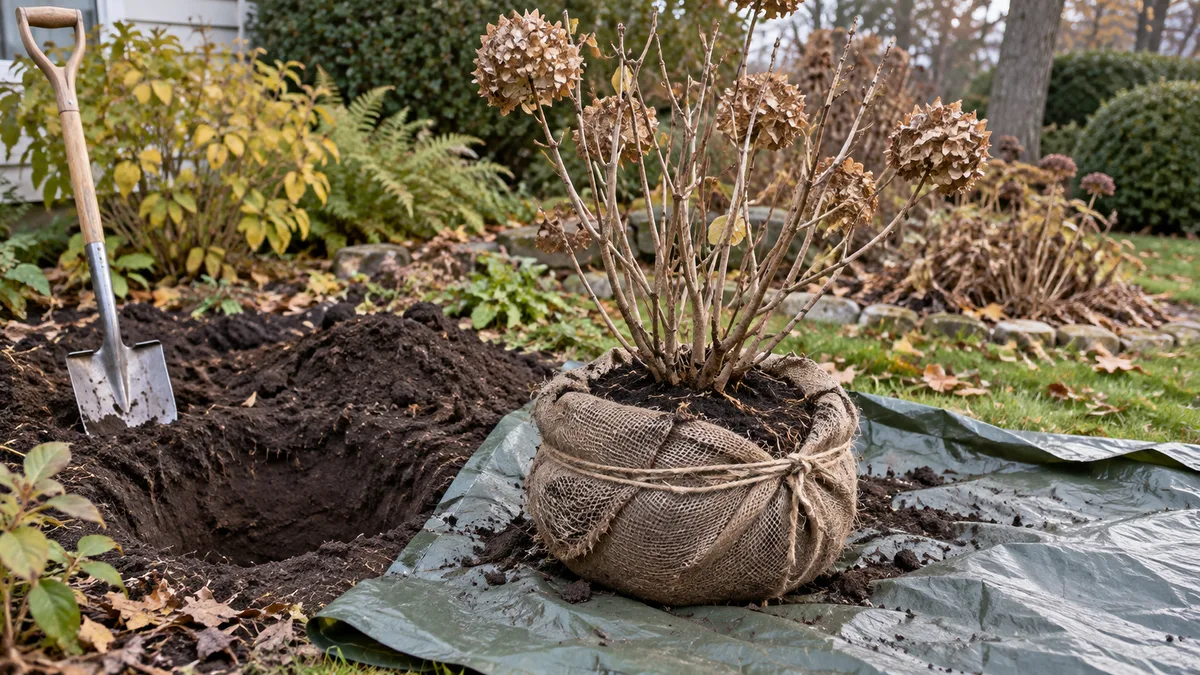
Wilting soon after planting or moving a hydrangea often reflects a temporary mismatch: the leaves are losing water, but the disturbed root ball has fewer working fine roots to replace it. Even careful planting can break some delicate roots. A nursery root ball may also dry more quickly than the surrounding soil, so one watering pattern does not necessarily keep both evenly moist.
The timing is a strong clue. If the shrub began drooping within days or weeks of planting, had roots disturbed, or was moved during warm weather, transplant stress rises on the list. It may show more in the afternoon and improve overnight, but persistent morning wilt still deserves a root-zone check; “transplant shock” should not become a reason to ignore drought or saturation.
A newly planted hydrangea is not established just because it has fresh leaves or flowers. It needs time to grow roots into surrounding soil, and a flowering plant from a nursery can be using energy on blooms while its root system adjusts. The University of Georgia’s bigleaf hydrangea guidance recommends watering thoroughly at planting, using mulch to conserve moisture, and waiting until the plant is established before fertilizing.
Help a New Hydrangea Establish
Water the root ball slowly after planting, then check both the root ball and adjacent soil before watering again. A dry root ball surrounded by moist bed soil needs water directed where the roots are; a wet, heavy root ball needs time to drain. Keep an organic mulch layer over the rooting area, but pull it back from the stems so the crown is not buried.
Do not fertilize a newly planted, wilted hydrangea to force it to recover. Do not prune healthy growth just to make the shrub look smaller, either: leaves supply energy while roots re-establish. Remove only clearly broken or dead material, and delay elective shaping until the plant has recovered and you know its flowering type.
If the plant has not yet been moved and the season is flexible, avoid transplanting during hot, dry weather. A cool, cloudy period or the plant’s dormant season usually reduces stress, though local climate, soil condition, and hydrangea type matter. After the move, watch for steady improvement over days rather than expecting every leaf to perk up immediately.
When Wet Soil Makes Wilt a Root Warning
A wilted hydrangea in wet soil is not automatically thirsty. Saturated soil has less air for roots, and prolonged waterlogging or root injury can reduce water uptake even though water surrounds the roots. If the shrub remains limp through a cool morning, soil stays wet for days, or leaves yellow and drop, pause routine watering and investigate drainage.
Check for a blocked container hole, a saucer holding water, a downspout, compacted soil, or a low spot that stays wet after rain. If the shrub is in a pot, make sure water exits freely and do not leave it standing in runoff. In a garden bed, avoid digging up the entire root system as a first response; observe how quickly water drains and inspect a small area near the root zone if decline continues.
Persistent wilt with wet soil, progressive branch dieback, dark mushy roots, or a sour smell warrants a more careful diagnosis. Root rot and other root injuries cannot be reliably identified from wilt alone, and treatments depend on the cause. Take photos and contact a local extension office if a valuable plant keeps declining after irrigation is corrected; avoid adding fungicide or fertilizer without evidence.
A Safe Rescue Plan for Today and Tomorrow
Use this sequence when the shrub is drooping now:
- Give it temporary shade if the afternoon sun is intense, especially if it is in a container.
- Check the soil 2 to 3 inches down near the root ball. Test more than one spot for a new planting or pot.
- Water slowly only if the root zone is dry. Soak the soil, not the leaves, until moisture reaches several inches down.
- If soil is already moist, wait through the cooler hours. Check whether the plant recovers by evening or morning instead of adding more water.
- If soil stays wet or wilt persists, stop routine irrigation and inspect drainage and roots. Look for recent fertilizer, wind exposure, root disturbance, or disease signs.
Do not prune a healthy-looking hydrangea simply because it is limp. A shrub under heat or transplant stress needs its remaining leaves, and pruning the wrong type at the wrong time can remove future flowers. Brown, dead tissue will not green up, but you can wait until the plant is stable to remove it and avoid confusing old injury with new damage.
Prevent the Same Wilt Next Week
Aim for a root zone that is consistently moist but not waterlogged. A 2- to 3-inch layer of organic mulch helps reduce evaporation and soil-temperature swings; keep it away from the crown and replenish it as it decomposes. In dry weather, irrigate deeply when the root-zone check calls for it rather than giving a small daily sprinkle or following a fixed schedule that ignores rain.
Match the site to the hydrangea. Many bigleaf types do best with morning light and afternoon protection, while panicle hydrangeas generally handle more sun if the soil can supply water. The Fine Gardening regional guide stresses that species differ in how well they perform in hot, dry conditions; its regional advice is not a universal rule, so use local extension guidance and cultivar information for your climate.
For containers, choose a pot with working drainage and enough volume to buffer rapid drying, and move it away from heat-reflecting surfaces when temperatures spike. For newly planted shrubs, give the root ball closer checks during establishment. For fertilizer, use the label and a soil test; more nitrogen is not a reliable fix for drooping foliage.
Conclusion: Treat the Clue, Not the Droop
A wilted hydrangea needs a diagnosis before it needs a watering can. Dry soil calls for a slow, deep soak; hot-afternoon wilt with moist soil calls for cooler conditions and observation; wet soil calls for drainage and root checks. Recent planting, wind exposure, or fertilizer injury can shift the answer, so note the timing and pattern instead of relying on appearance alone.
Once you know which clue fits, make one targeted change and watch the plant through the next cool period. That measured response protects roots, avoids unnecessary pruning or fertilizer, and gives the shrub a better chance to recover without trading one stress for another.



