How to Get Oil Stains Out of Clothes
Oil stains need grease-cutters, not more water. Step-by-step fixes for fresh splatters, set-in marks, and dryer-set cooking oil on cotton, synthetics, and delicates.
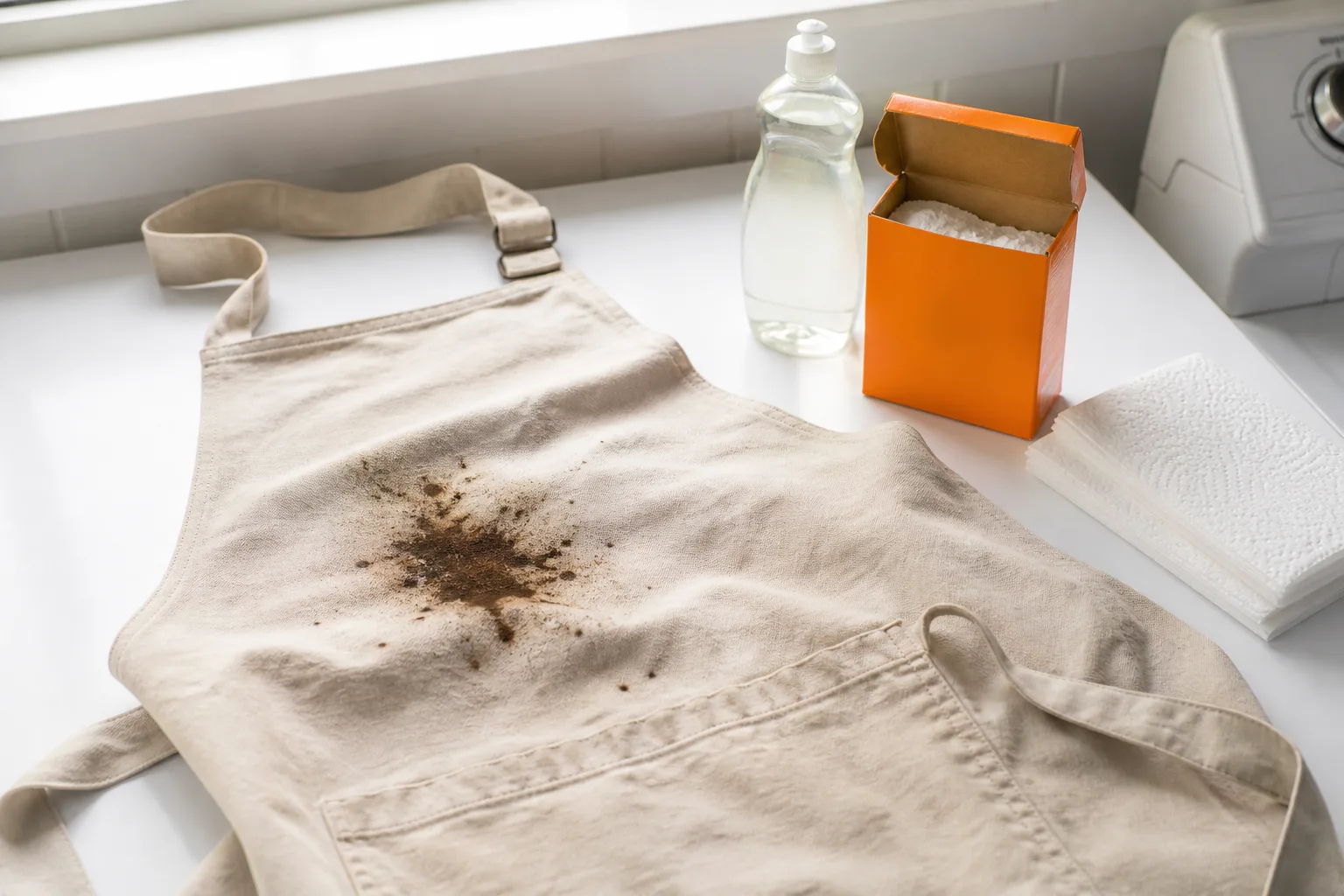
A splatter of olive oil across a cotton apron, a ring of canola grease on a kitchen towel, or a dark spot on your jeans from reaching over a sizzling pan — cooking and vegetable oil stains look small until laundry day proves they are not ordinary dirt. Water rolls right off them. Detergent alone often leaves a shadowy halo. Run the garment through a hot dryer while oil remains, and you may be looking at a permanent mark. The good news: most oil stains come out when you treat them as lipid soils that need absorption plus a grease-cutting surfactant, not as something you can rinse away.
This guide walks you through what to do in the first five minutes, the full fresh-stain protocol, rescue steps for stains that already went through the washer or dryer, and the fabric-specific rules that separate a saved shirt from a ruined one. If you garden, cook from harvest, or spend weekends canning and frying, these are the stains you will see most — and the ones worth learning to beat once.
Why Cooking Oil Stains Are Different From Regular Laundry Marks
Oil stains are hydrophobic. Cooking oils, vegetable shortening, butter fat, and salad-dressing oils do not dissolve in water. They cling to polyester and cotton fibers through surface tension and capillary wicking, spreading outward as you press or rub. Standard laundry detergent is excellent at lifting proteins and many water-soluble dyes, but oil needs either mechanical absorption to pull liquid out of the weave or a surfactant formulated to emulsify grease so rinse water can carry it away.
That is why the worst first instinct — scrubbing with a wet cloth — often drives oil deeper and widens the visible ring. It is also why a normal wash cycle can leave fabric smelling clean while a grease shadow still shows when the item dries.
The Science Behind Oil and Fabric
Think of fabric as thousands of tiny tubes. When liquid oil lands on cotton or a synthetic blend, it travels along fibers faster than it evaporates. Absorbent powders — baking soda, cornstarch, talcum powder, or baby powder — work by capillary action: fine particles wick oil out of the yarn so a surfactant can finish the job. UGA Extension’s textile stain guidance separates vegetable oils from heavier lubricating oils and recommends keeping the stained area damp with an appropriate cleaner while an absorbent pad pulls soil — the same principle as sprinkling powder under a fresh splatter at home.
Dish soap succeeds here because it is engineered to emulsify cooking grease on plates. A few drops worked into the stain break oil into droplets detergent molecules can surround and lift. Heavy-duty liquid laundry detergent plays a similar role in the wash, especially when you pretreat and give it several minutes of dwell time before starting the machine.
What Happens When Heat Sets the Stain
Heat is the enemy of oil-stain removal. Warm water during washing can help liquefy solid fats like coconut oil or cooled bacon grease so detergent reaches them — but dryer heat and iron heat are different. Once fabric goes through a hot tumble dry, lipids oxidize and bond more tightly to fibers. The stain may look slightly faded yet return as a yellow-brown ring after the next wash.
Treat every oil stain as not gone until you inspect it bone-dry in bright light. If you see any darkening at all, repeat pretreatment and air-dry again. One premature trip through the dryer can undo an hour of careful work.
First Moves in the First Five Minutes
Speed matters more with oil than with almost any other kitchen stain. Fresh oil sits on the surface; aged oil penetrates. Your opening moves should remove bulk, stop spread, and protect the rest of the garment.
Blot, Scrape, and Contain — Do Not Rub Yet
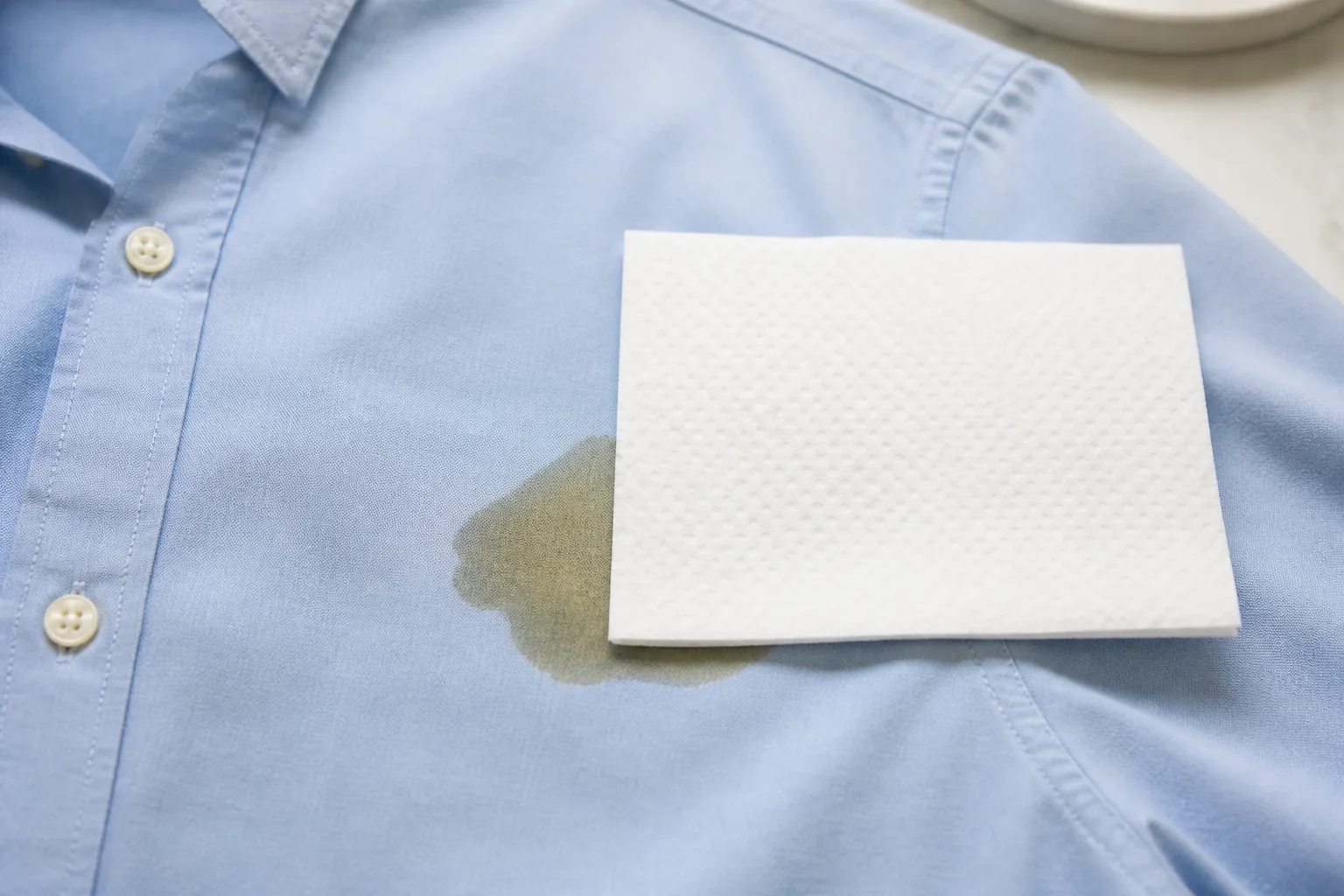
Scrape any semi-solid fat — butter, coconut oil, pesto oil — with the edge of a spoon or a dull knife, lifting away from the fabric. For liquid splatter, blot with a clean paper towel or white cloth, pressing straight down and lifting. Replace the towel as it saturates. Do not rub in circles; rubbing pushes oil through the face of the fabric and into the back layer.
If the stain is large or the fabric is thin, slide cardboard or an old towel inside the shirt or between front and back layers so oil cannot bleed through. This single step prevents a front-splatter from becoming a double-sided disaster.
Check the Care Label Before You Choose a Treatment
Read the care label before you reach for dish soap, vinegar, or anything from the garage. Symbols tell you maximum wash temperature, whether bleach is allowed, and whether the item is dry clean only. UGA Extension stresses pretesting any cleaner on a hidden seam and following label prohibitions — home experiments on silk linings or structured wool jackets are where good intentions go wrong.
For washable cotton, linen, and most everyday blends, the pantry-and-detergent route below is appropriate. For dry-clean-only, leather, suede, or beaded formalwear, blot only and get the piece to a professional with the stain clearly pointed out.
How to Remove Fresh Cooking and Vegetable Oil Stains
The core fresh-stain sequence is simple: absorb → degrease → wash → inspect dry. Adjust timing for stain size, but keep the order.
Dry Absorption With Baking Soda or Cornstarch
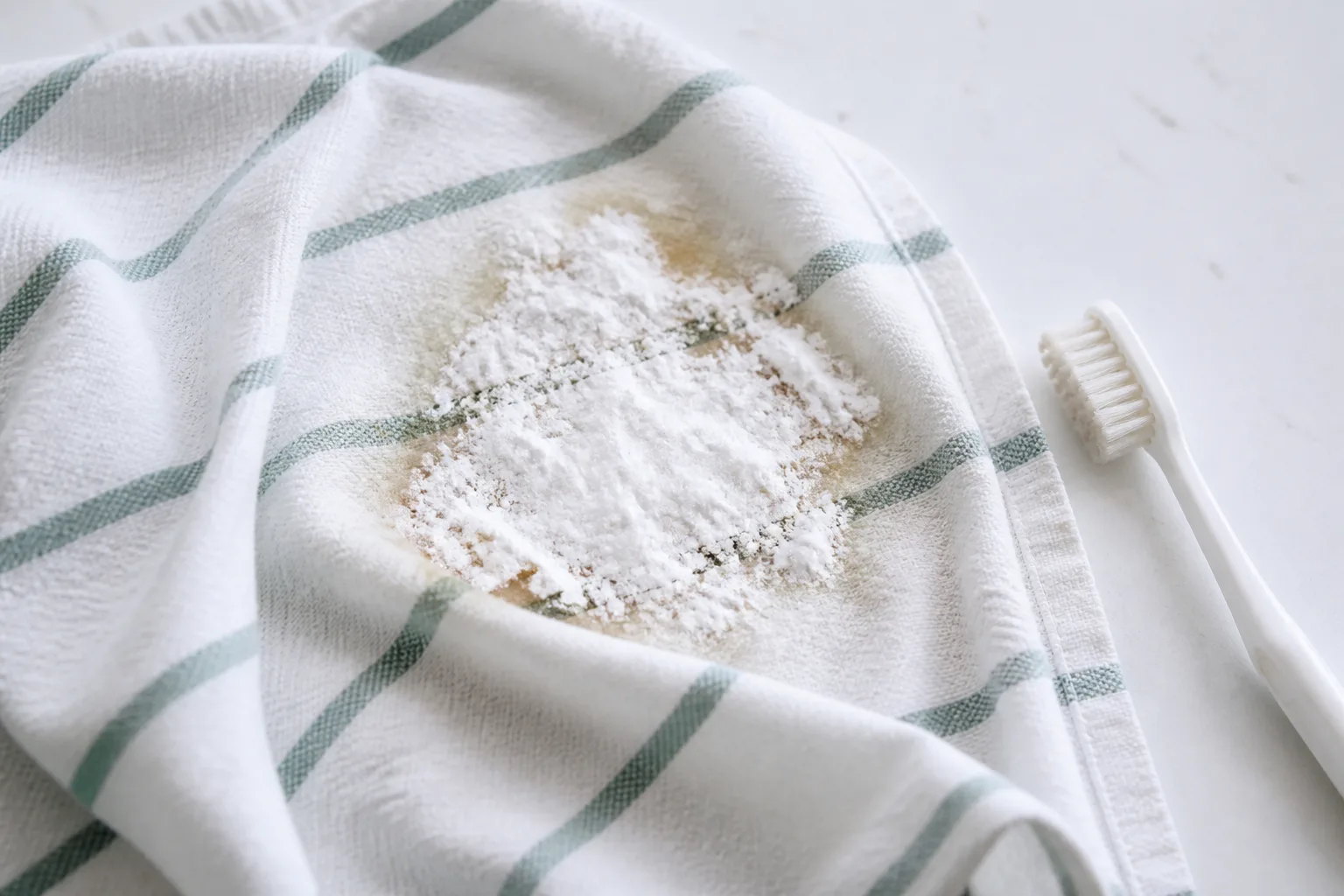
After blotting, cover the damp stain with a generous layer of baking soda or cornstarch. These dry powders pull remaining oil out of fibers. On a small fresh spot, 30 to 60 minutes is often enough. On a tablespoon-sized splatter, leave the powder overnight.
Brush or scrape off the powder with a soft toothbrush or credit-card edge. Fresh powder should look clean and dry when it has done its job; if it clumps yellow, sprinkle a new layer and wait again. Cornstarch and talcum powder are gentler on delicate knits; baking soda adds mild abrasion that helps on sturdy cotton.
Some guides add white distilled vinegar after powder removal. Vinegar is a mild acid and can help loosen residual grease film, but it is a secondary step, not a substitute for dish soap or detergent. Dab vinegar on, work gently with a soft brush, and move on to surfactant pretreatment.
Grease-Cutting Dish Soap or Laundry Detergent
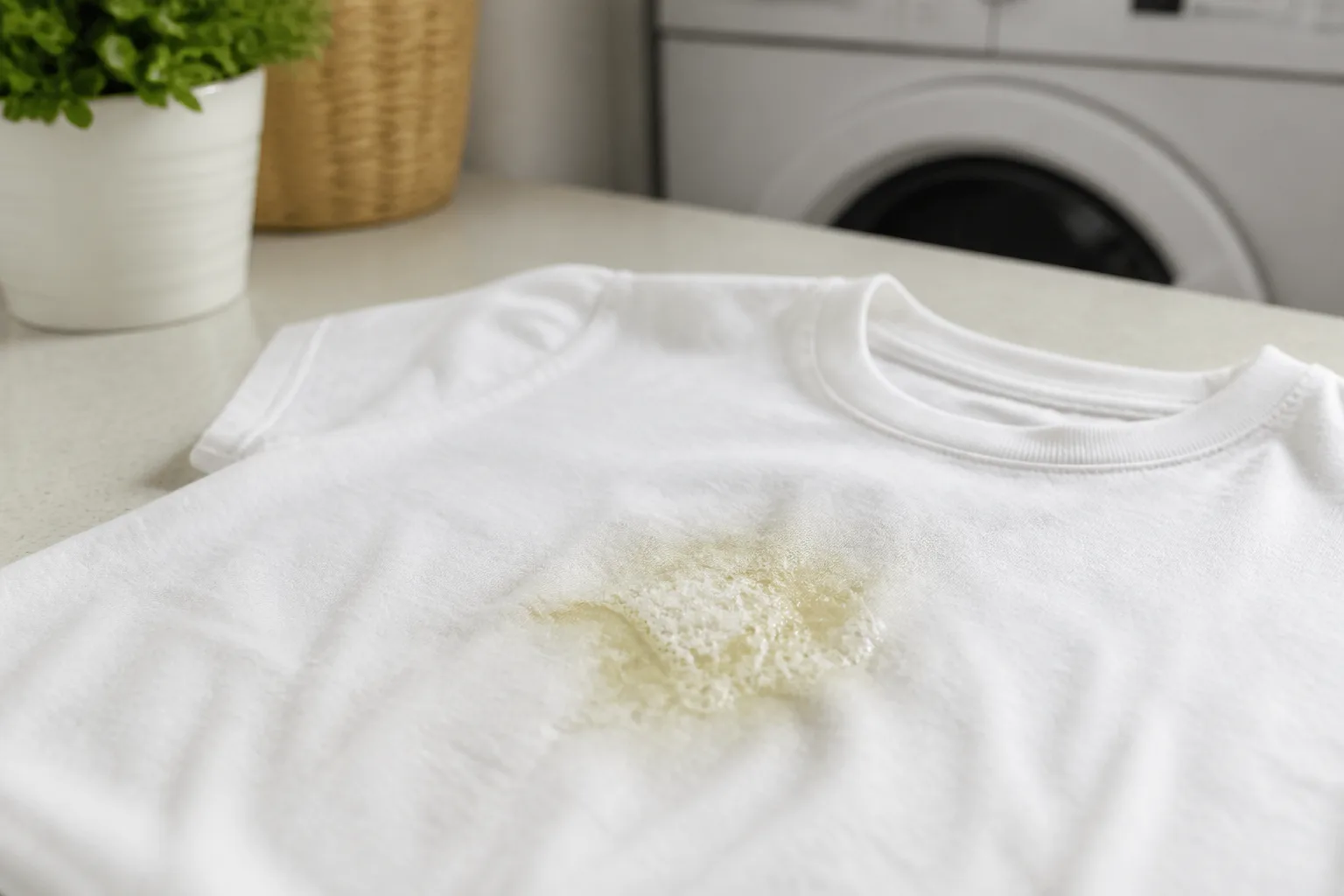
Apply grease-cutting dish soap — the plain liquid kind, not dishwasher machine gel — directly to the stain. Use enough to saturate both sides of the fabric if oil soaked through. A clear degreasing formula beats moisturizing dish soap with added oils.
Work the soap in with your fingers or a soft toothbrush for 30 to 60 seconds, then let it sit 3 to 10 minutes without letting it dry completely. If you lack dish soap, heavy-duty liquid laundry detergent or even clarifying shampoo (oily-hair formulas) can substitute.
Rinse the pretreated area with the hottest water the care label allows before loading the machine. Hot rinse helps liquefy remaining fat so detergent in the wash can emulsify it. On stains that include tomato, egg, or dairy along with oil, pretreat the oil first, then wash — mixed stains sometimes need a cool rinse on any protein portion, but pure vegetable-oil splatter responds to warmth.
Wash and Inspect Before Any Dryer
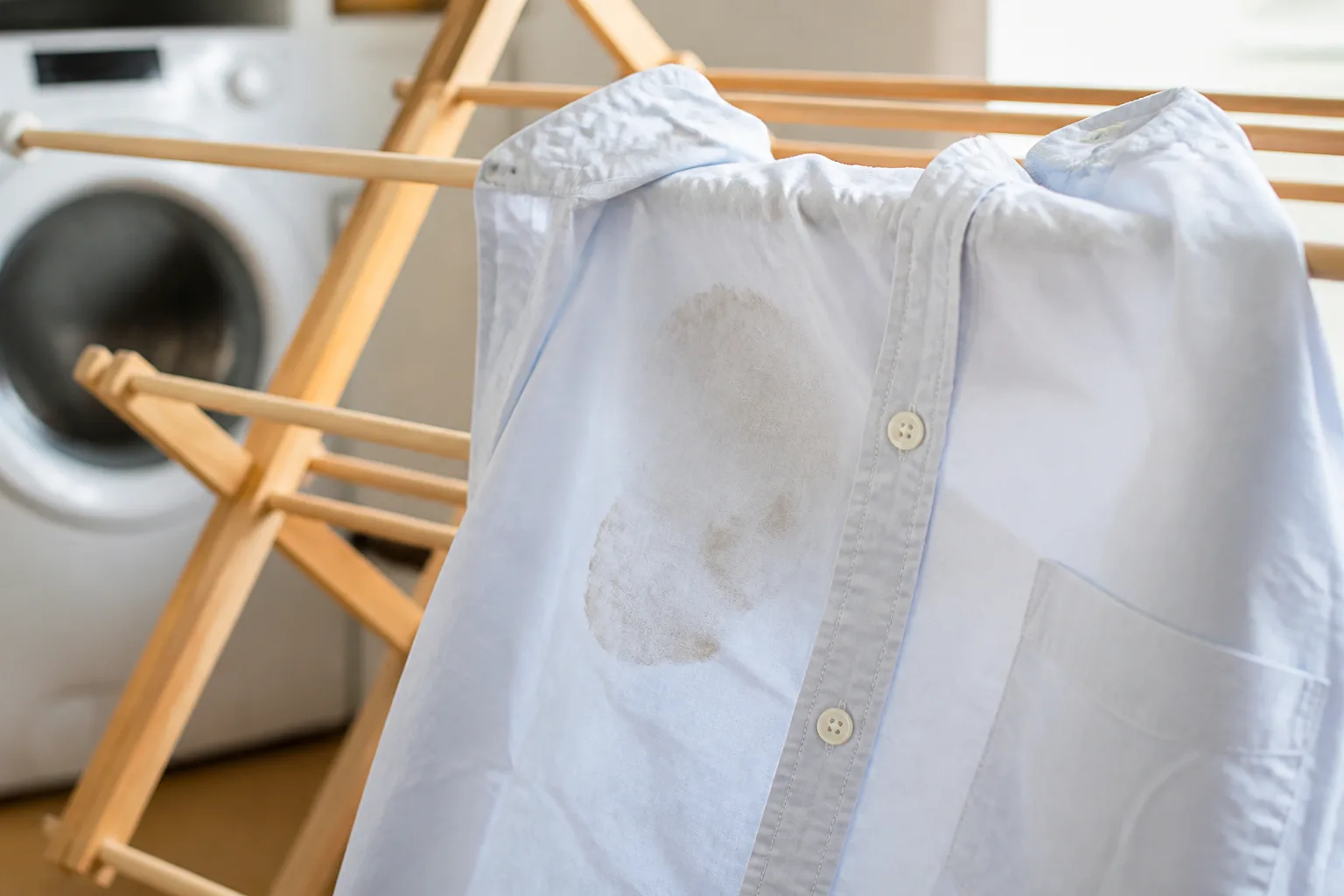
Wash on the hottest water safe for the fabric with your usual detergent. Add an extra rinse if the load was heavily soiled. When the cycle ends, inspect the stained area in natural light while the fabric is still damp. A faint grease mark is easier to catch now than after drying.
If any shadow remains, repeat absorption and dish-soap pretreatment before you consider the job done. Air-dry on a rack or line until you are certain. Only then is machine drying reasonable — and even then, one more air-dry cycle after a successful wash is cheap insurance on a favorite garment.
Removing Oil Stains That Survived a Wash or Dryer
Set-in oil — especially after a dryer cycle — is harder but not always hopeless. You are trying to re-liquefy bonded grease and pull it back out. Two reliable home paths exist: the WD-40 plus baking soda rescue popular for cooked-in kitchen oil, and a commercial enzyme or degreaser pretreat when you prefer to skip petroleum solvents.
The WD-40 and Baking Soda Rescue Method
This method targets oxidized, heat-set cooking oil on washable cotton and sturdy blends. Do not use it on dry-clean-only, silk, or acetate.
- Place cardboard under the stain inside the garment.
- Lightly spray or dab WD-40 on the mark — enough to wet the fibers, not soak the whole shirt.
- Cover with a thick layer of baking soda and scrub gently with an old toothbrush until the powder forms clumps as it absorbs oil and solvent.
- Brush off dirty powder and repeat fresh baking soda layers until the powder stays clean and dry-looking.
- Apply liquid laundry detergent or dish soap over the area, work in, and wash in warm or hot water per the label.
- Air-dry and inspect. Repeat the full sequence if needed.
Ventilate the room and wash hands after handling solvent. WD-40 is a petroleum-based penetrant; it works because it redissolves old grease, but it must be fully removed with detergent so residue does not attract new soil. Patch-test on an inside hem first — rare dye reactions happen on bright or printed fabrics.
When Enzyme Detergent or Degreaser Beats Pantry Fixes
If you dislike solvents or the stain is on synthetic activewear, reach for a commercial pretreat spray or gel labeled for grease and oil. Products with enzymes and surfactants (many “sport” or “heavy-duty” formulas) often outperform baking soda alone on polyester because they target oily residues in performance fabrics.
UGA Extension’s apparel guidance for grease recommends talcum powder absorption followed by a pre-wash spot remover and laundering in the hottest water safe for the fabric — a commercial parallel to the home sequence. Apply pretreater, wait 10 to 15 minutes, wash, and inspect dry. Two or three cycles with pretreatment between washes beat one long soak.
For stains that resist everything washable, a professional dry cleaner with the mark identified upfront is cheaper than replacing a coat or structured dress.
Fabric-Specific Rules That Change Your Results
The same olive-oil splatter behaves differently on a linen tea towel, a polyester running shirt, and a wool sweater. Match the method to the fiber.
Cotton, Linen, and Other Natural Fibers
Cotton and linen forgive heat and abrasion better than most fabrics. Use the full baking soda → dish soap → hot wash sequence. Line drying in sun can help fade any last yellowing on white cotton after the oil is gone, though sun is not a substitute for degreasing.
Heavy kitchen towels may need two absorption rounds before soap. Work stains from the back of the fabric when possible so you push oil out the way it entered.
Polyester, Nylon, and Performance Synthetics
Polyester and nylon are oil magnets: smooth fibers hold lipids tightly and can retain a gray shadow after a normal wash. Pretreat longer — 10 minutes minimum with dish soap — and favor warm rather than scalding water if the label caps temperature below cotton settings.
Avoid aggressive brushing that pills the surface. If a shadow persists, switch to an enzyme degreaser pretreat rather than more baking soda abrasion. Do not use WD-40 on thin athletic mesh unless you have patch-tested; solvents can damage heat-welded seams on some gear.
Dry-Clean-Only Silk, Wool, and Structured Garments
Silk, wool, cashmere, and garments with interfacing often carry dry-clean-only labels because water and agitation distort shape. For a fresh oil drop, blot gently and sprinkle cornstarch or talcum without rubbing. Brush off after an hour and take the item to a cleaner within a day or two, pointing at the exact spot.
Do not pour vinegar, WD-40, or high-alkaline dish soap on these fibers at home. If you must wear the piece once before cleaning, keep the powder on the stain and avoid heat. Professional cleaners use controlled solvents suited to the fiber — the UGA Extension oil stain page routes many heavy oils through commercial cleaners rather than home laundry for that reason.
Common Mistakes That Lock Oil Stains In
Rubbing before blotting spreads oil and grinds it into the weave — always lift first. Skipping the absorbent powder step on a large fresh stain leaves too much lipid for detergent alone in one pass. Machine-drying before inspection is the single fastest way to make a fixable splatter permanent.
Using moisturizing dish soap or hair conditioner adds oils instead of removing them. Pouring undiluted bleach on an oil stain does not dissolve grease and can damage color; bleach is only relevant after the oil is gone and only if the label allows it. Washing cold end-to-end on pure fat stains leaves solidified grease in the fibers — use the highest safe temperature once pretreatment is done.
Treating the front only misses oil that wicked to the back layer. Over-wetting silk or upholstery spreads the mark; kitchen chair cushions and aprons alike need blotting discipline. Finally, waiting until laundry day on a Friday-night stain gives oil all weekend to oxidize — a five-minute blot and powder on Saturday morning saves Sunday regret.
Conclusion
Cooking and vegetable oil stains are common, but they are not a death sentence for your clothes when you treat them as grease, not dirt. Blot and contain fresh splatters, pull remaining oil with baking soda or cornstarch, break down the residue with grease-cutting dish soap or heavy-duty detergent, and wash in the hottest water the label allows — then inspect dry before any dryer. If heat already set the stain, the WD-40 and baking soda sequence or a commercial degreaser pretreat can still recover many cotton and blend garments.
Match the method to the fiber: cotton and linen tolerate the full pantry toolkit; synthetics need longer pretreat and gentler mechanics; silk and wool belong with a professional cleaner after dry absorption. Avoid rubbing first, avoid the dryer until the mark is truly gone, and repeat treatment without discouragement — oil often takes two rounds, not one. Keep an apron in the kitchen, but keep dish soap and baking soda within reach too; the faster you start, the more likely that shirt comes back spotless.