How to Identify and Remove Tree of Heaven
Tree of heaven spreads by seed and suckers 50 feet out. Learn bark, leaf, and smell ID, sumac look-alikes, and late-summer herbicide timing that reaches the roots.
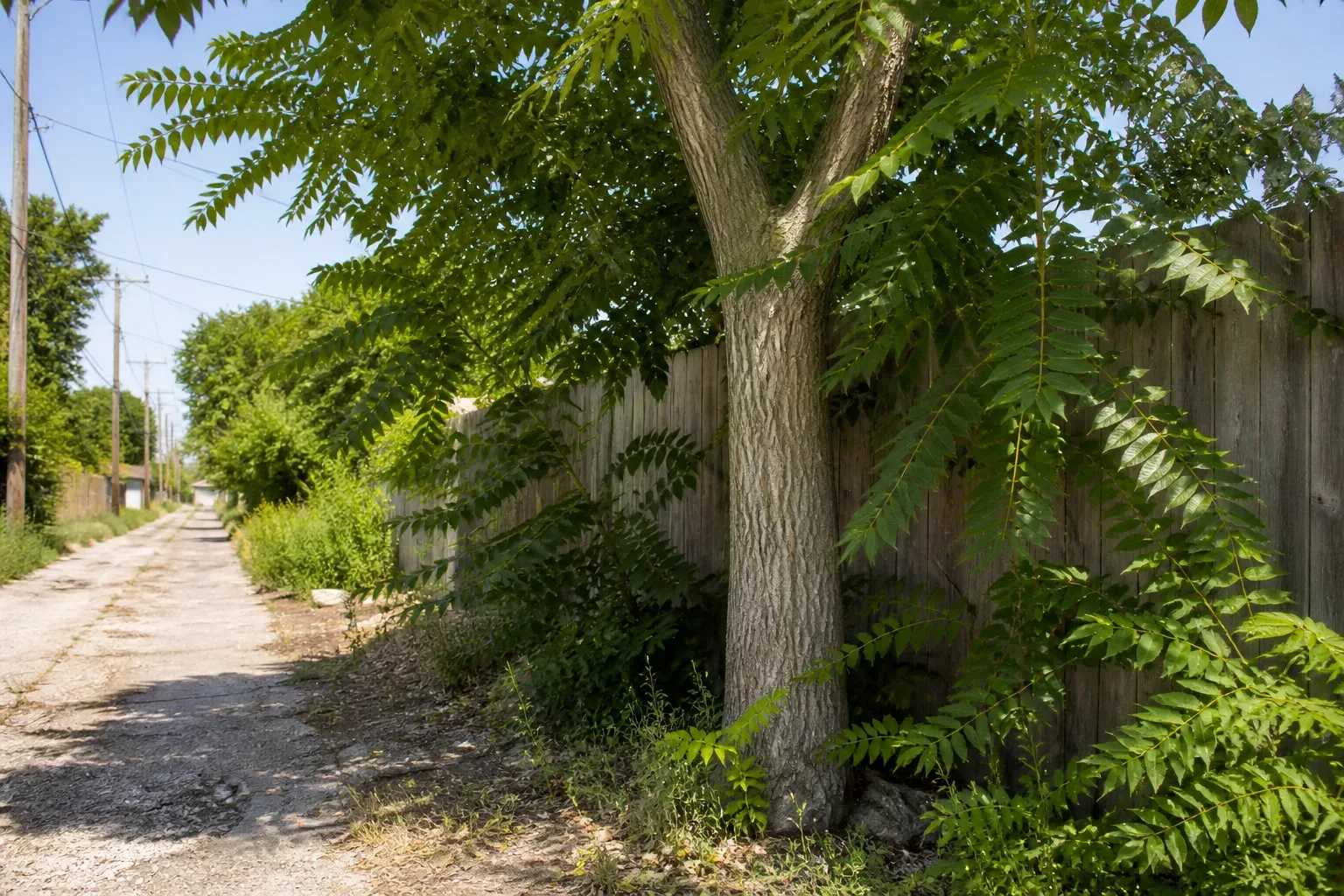
That seedling in the gravel alley looked harmless—until it hit 15 feet in a single season, smelled like burnt peanut butter when you brushed past it, and sprouted a ring of clones halfway across the driveway. Tree of heaven (Ailanthus altissima), also called ailanthus, is one of the most aggressive woody invaders in U.S. hardiness zones 5 through 8. It is not a tree you manage with one afternoon of chainsaw work. Identification comes first, because native sumacs and walnuts share compound leaves. Removal comes second, and the order of operations—when you cut, when you spray, and how long you keep patrolling—determines whether you win or trade one trunk for fifty suckers.
Penn State Extension classifies tree of heaven as a noxious weed in Pennsylvania and documents both wind-blown seed and root suckers emerging up to 50 feet from the parent stem. California Department of Fish and Wildlife reports female trees producing up to 325,000 seeds in a year while forming thickets that alter streamside habitat. If you are here because spotted lanternfly showed up in your county, you are also here because this tree is their preferred host. The sections below walk through field identification, look-alike comparisons, why allelopathy and lanternfly pressure matter, and the late-summer herbicide window extension services use to kill roots—not just leaves.
What Tree of Heaven Is and Why It Is Invasive
Tree of heaven is a fast-growing deciduous tree native to China and Taiwan. It tolerates drought, compacted soil, air pollution, and full sun on disturbed edges—think railroad rights-of-way, vacant lots, cracked pavement, and the sunny margin of a woods after storm damage. Mature specimens commonly reach 60 to 80 feet with spreading crowns, though yard volunteers often stay smaller until you stop cutting them back.
What makes ailanthus more than “just another weed tree” is the combination of reproduction strategies. Female trees drop enormous seed crops via twisted samaras. Established roots send up suckers far from the trunk. Cut or damaged stems respond with vigorous sprouting. Sprouts as young as two years can flower and set seed. On top of that, leaves, bark, and roots release allelopathic chemicals that suppress neighboring plants, helping ailanthus form dense monocultures that shade out natives.
How It Reached North America and Where It Grows Now
Tree of heaven was introduced to the Philadelphia area in the 1780s as a fast-growing ornamental shade tree and spread west with settlers; Chinese immigrants also brought it to California during the Gold Rush era. By the early 1900s its weedy suckering and foul odor had cooled nursery demand, but the genie was out of the bottle. Today it is reported invasive in more than 30 U.S. states and occurs coast to coast in suitable climates.
It colonizes urban corridors, agricultural edges, and forest openings. It is shade-intolerant under a closed canopy but explodes where sunlight hits bare ground—after logging, insect defoliation, or construction disturbance. If your lot backs to a highway embankment or utility corridor, assume samaras are already in the seed bank.
How to Identify Tree of Heaven in Any Season
Positive ID before you cut matters for two reasons. First, you avoid destroying native sumac, walnut, or hickory that support wildlife. Second, your control plan changes with stem size and site access. Use multiple traits; no single feature is enough in winter.
Bark, Twigs, and the Cantaloupe-Skin Test
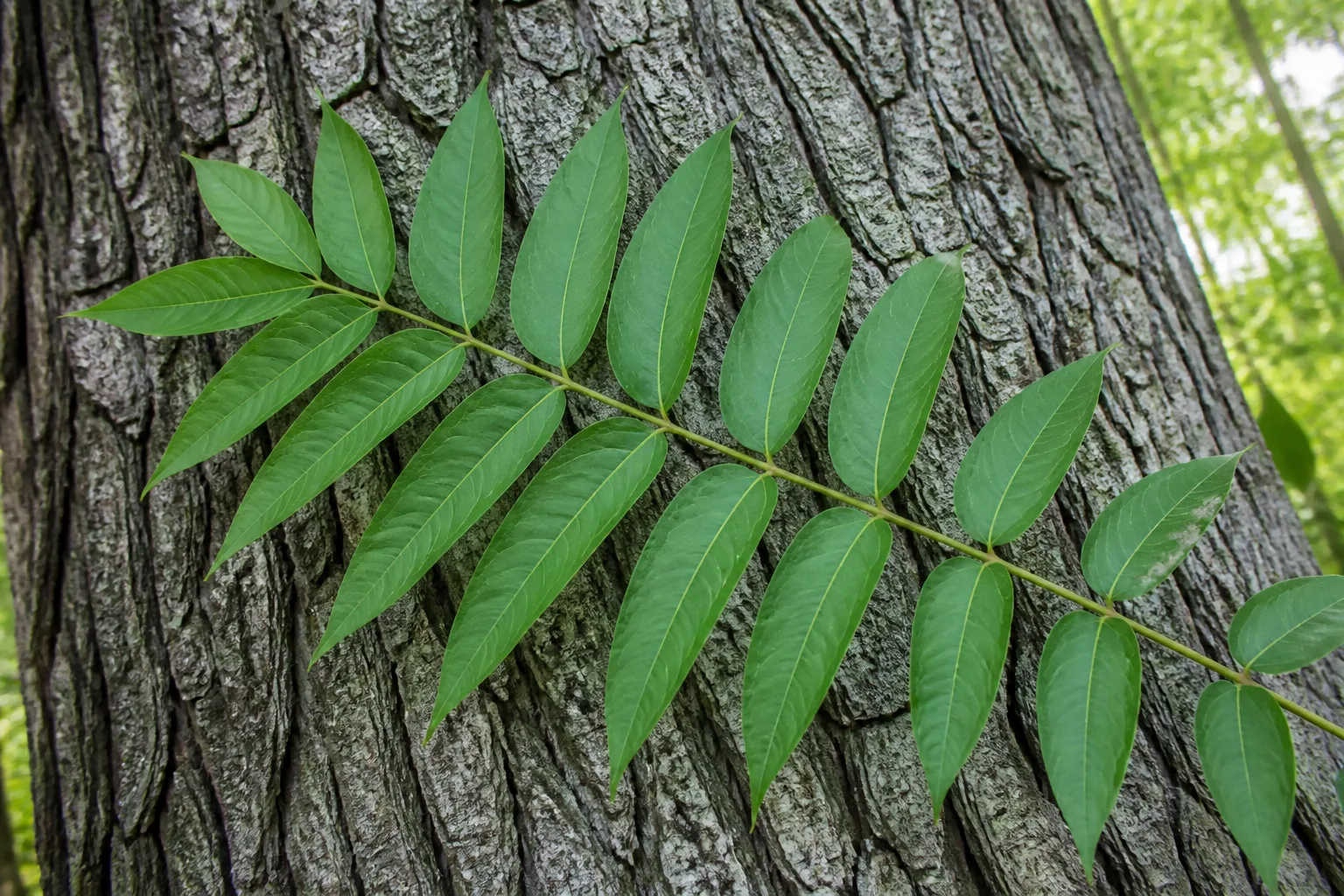
On mature trunks, bark is light gray to brown with deep ridges that resemble cantaloupe rind—one of the most reliable winter markers. Young bark starts smooth and greenish brown. Twigs are stout, alternate on the stem, and lack a true terminal bud. Break a twig: the pith is large, spongy, and brown, not solid white like many natives. Leaf scars are prominent, often heart- or V-shaped.
Leaves, Glandular Teeth, and the Crushing Smell
Leaves are pinnately compound: one long central rachis with 10 to 40 lance-shaped leaflets on each side, sometimes reaching one to four feet in total length. Leaflet margins are mostly smooth, with only one or two glandular teeth (small bumps) near the base of each leaflet—feel the underside with a fingernail. Crush a leaflet or snap a twig and smell immediately. Tree of heaven produces a sharp, unpleasant odor variously described as burnt peanut butter, wet gym socks, or cat urine. That smell is diagnostic; native look-alikes do not stink the same way.
Samaras, Flowers, and Male vs. Female Trees
Tree of heaven is dioecious: individual trees are male or female. In late spring to early summer, yellow-green flowers appear in large panicles at branch tips. Male flowers shed after bloom and produce heavy, skunk-like pollen that attracts pollinators to female trees nearby. Female flowers develop into papery, twisted samaras about one to two inches long, often hanging in clusters into winter. Each samara carries one seed and spins on the wind. Seeing samaras on a mature tree confirms female seed production—and a long-term seed rain you must plan around even after the trunk is gone.
Tree of Heaven vs. Sumac, Walnut, and Hickory
Misidentification is common because all share long compound leaves. Run this field checklist before cutting:
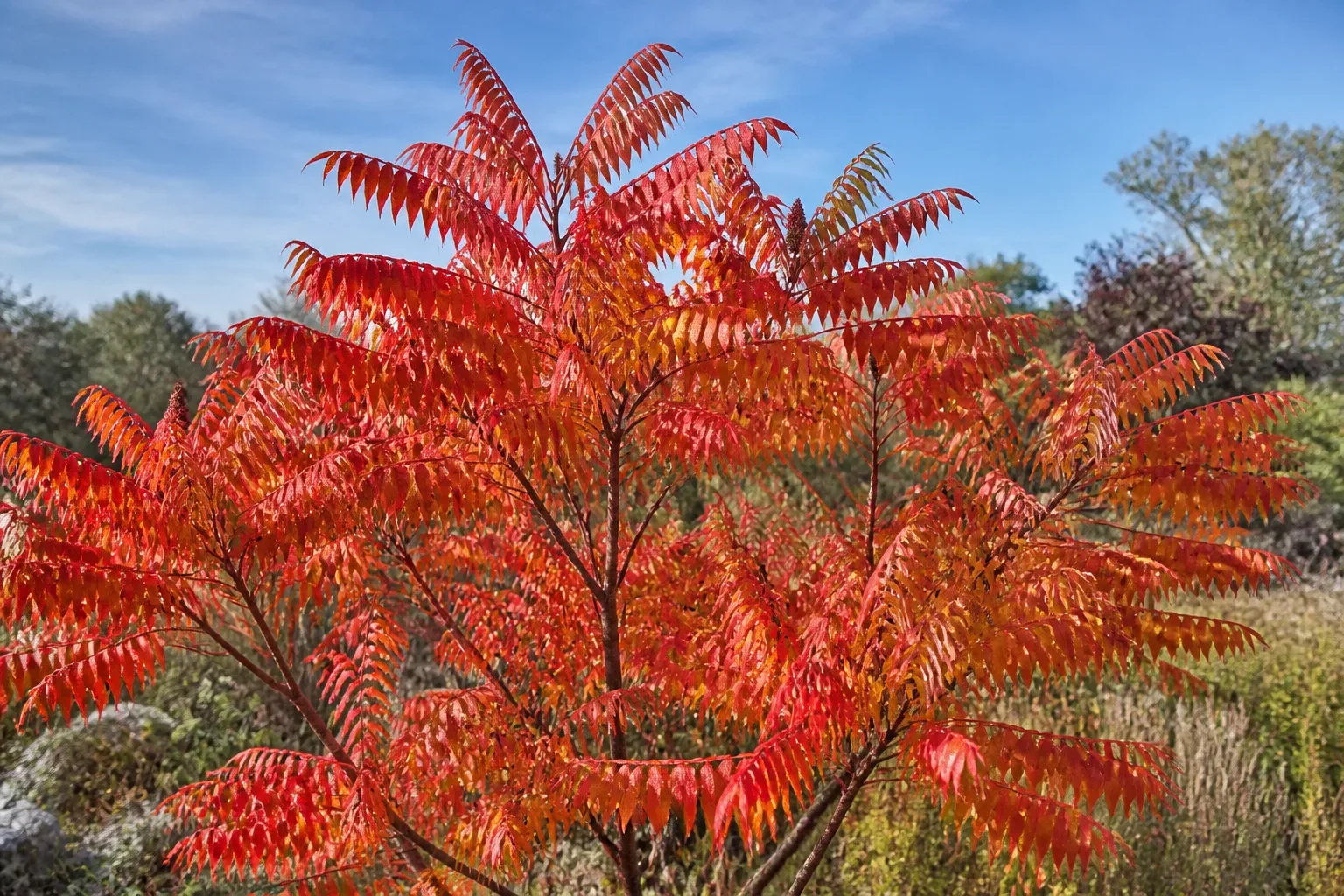
Sumac (Rhus species): Leaflets have toothed (serrated) margins all the way around. Sumac leaves lack a distinct single terminal leaflet at the tip. Flowers and fruit are upright red drupe clusters—not papery samaras. Native sumac does not produce the crushed-leaf stench of ailanthus. Our sumac trees and shrubs guide covers the native species worth keeping.
Black walnut and butternut: Leaflets are finely serrated. Terminal leaflet is absent or very small. Fall fruit is a large green husked nut, not a winged samara. Walnut also has allelopathic roots, but bark and twig smell differ—crush-test before condemning a valuable nut tree.
Hickory: Serrated leaflets, often five to nine per leaf. Hickory bark may be shaggy on mature trees; twig pith is solid, not spongy. Our hickory identification guide helps if you are unsure.
When in doubt, photograph leaves (upper and lower surface), bark, any fruit, and a crushed twig note about odor, then confirm with your county extension office before applying herbicide.
Ecological Damage, Allelopathy, and Spotted Lanternfly
Beyond crowding, tree of heaven changes the site chemistry. Allelopathic compounds in roots and leaf litter inhibit germination of other species, which is why you often see pure ailanthus thickets with bare understory. Along riparian corridors, those thickets alter light, litter input, and bank stability. Large root systems can also damage sewer lines and foundations when trees mature in tight urban plantings.
Spotted lanternfly is the urgent regional reason many homeowners finally act. This Asian planthopper, first detected in Pennsylvania in 2014, strongly prefers tree of heaven as a host for feeding and reproduction. Removing ailanthus on your property does not single-handedly eradicate lanternfly—adults feed on many plants—but reducing preferred hosts lowers local populations and supports broader integrated pest management. Treat ailanthus control as part of a lanternfly plan, not a substitute for scraping egg masses and reporting sightings to your state agriculture department.
For broader context on mechanical invasive control when herbicides are off the table, see our guide to natural ways to remove invasive plants—but understand that tree of heaven is one of the species where mechanical-only methods routinely fail without years of repeated cutting.
Why Cutting Alone Backfires
This is the mistake that turns one tree into a colony. Ailanthus stores energy in an extensive root system. Chainsawing the trunk without transferring herbicide to those roots triggers root suckering and stump sprouting—sometimes dozens of stems within weeks.
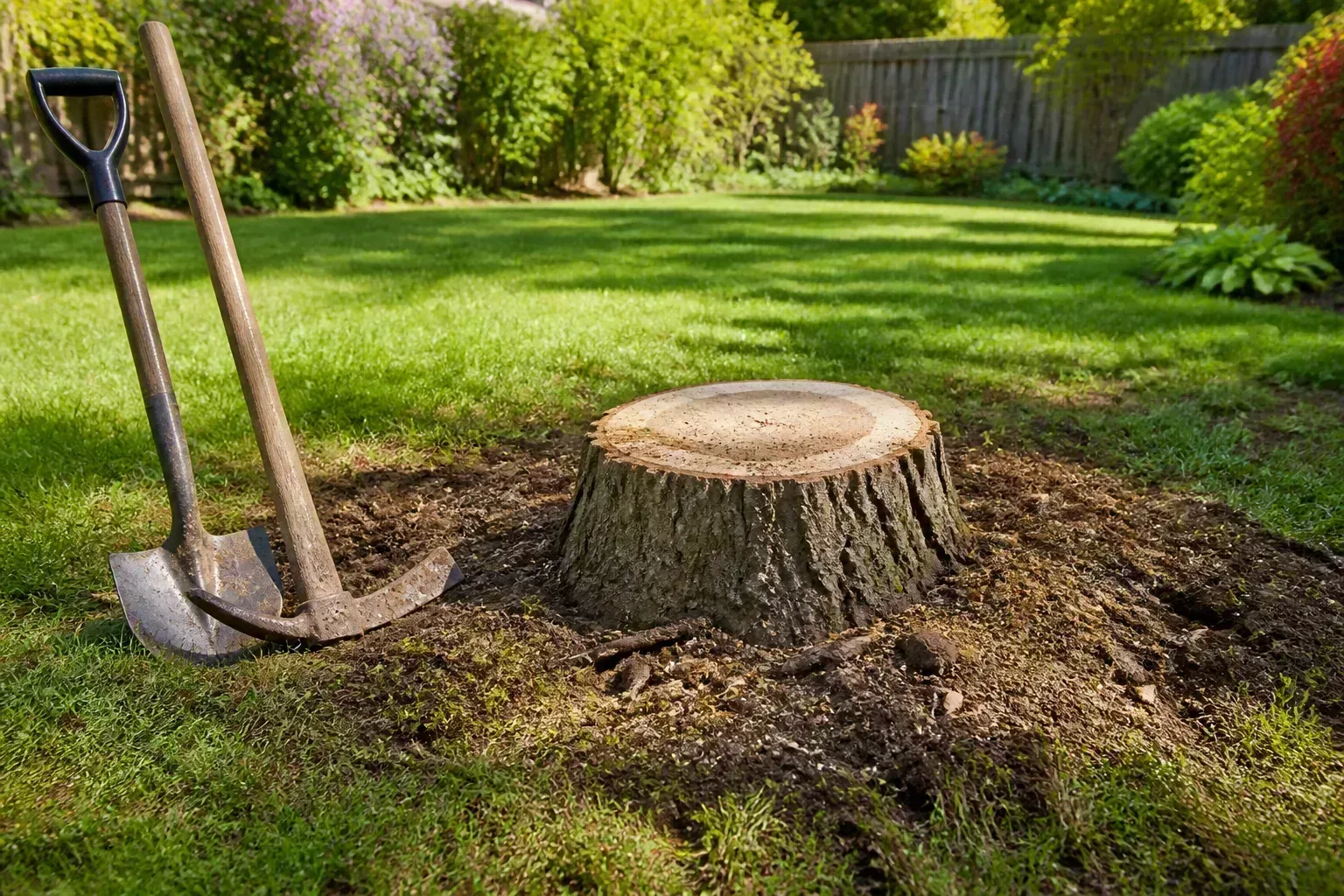 Penn State Extension states plainly that mechanical cutting and mowing are ineffective as standalone tactics and that cut-stump herbicide treatments do not prevent root suckering even when they keep the stump face clean.
If a tree is hazardous and must come down immediately, remove it—but expect a sucker ring and budget for follow-up foliar or hack-and-squirt treatments on every sprout. The winning sequence for planned removal is usually herbicide first, wait for decline, then cut—not the reverse.
Step-by-Step Removal Plan for Homeowners
Scale your approach to infestation size, stem diameter, and proximity to desirable plants. Always read and follow the herbicide product label; rates and permitted uses vary by state.
Pull Seedlings and Target Suckers Early
Hand-pull seedlings after rain when soil is moist and you can extract the entire taproot. Even small root fragments can resprout, so digging beats yanking when roots resist. Seedlings are easiest to confuse with root suckers; suckers connected to a living parent network are nearly impossible to pull without leaving fragments. Flag every sprout cluster within 50 feet of a known parent and map the site—you will revisit it monthly.
For a handful of stems under one inch diameter with no sensitive plants nearby, late-summer foliar spray with glyphosate or triclopyr plus surfactant per label directions can clear the patch. Cover all leaf surfaces without drift onto garden beds.
Systemic Herbicides: Foliar, Basal Bark, and Hack-and-Squirt
Foliar application suits dense thickets of small stems where you can spray without hitting ornamentals. Extension prescriptions often combine glyphosate and triclopyr for broad-spectrum woody control. Expect initial top kill; survivors need a second pass.
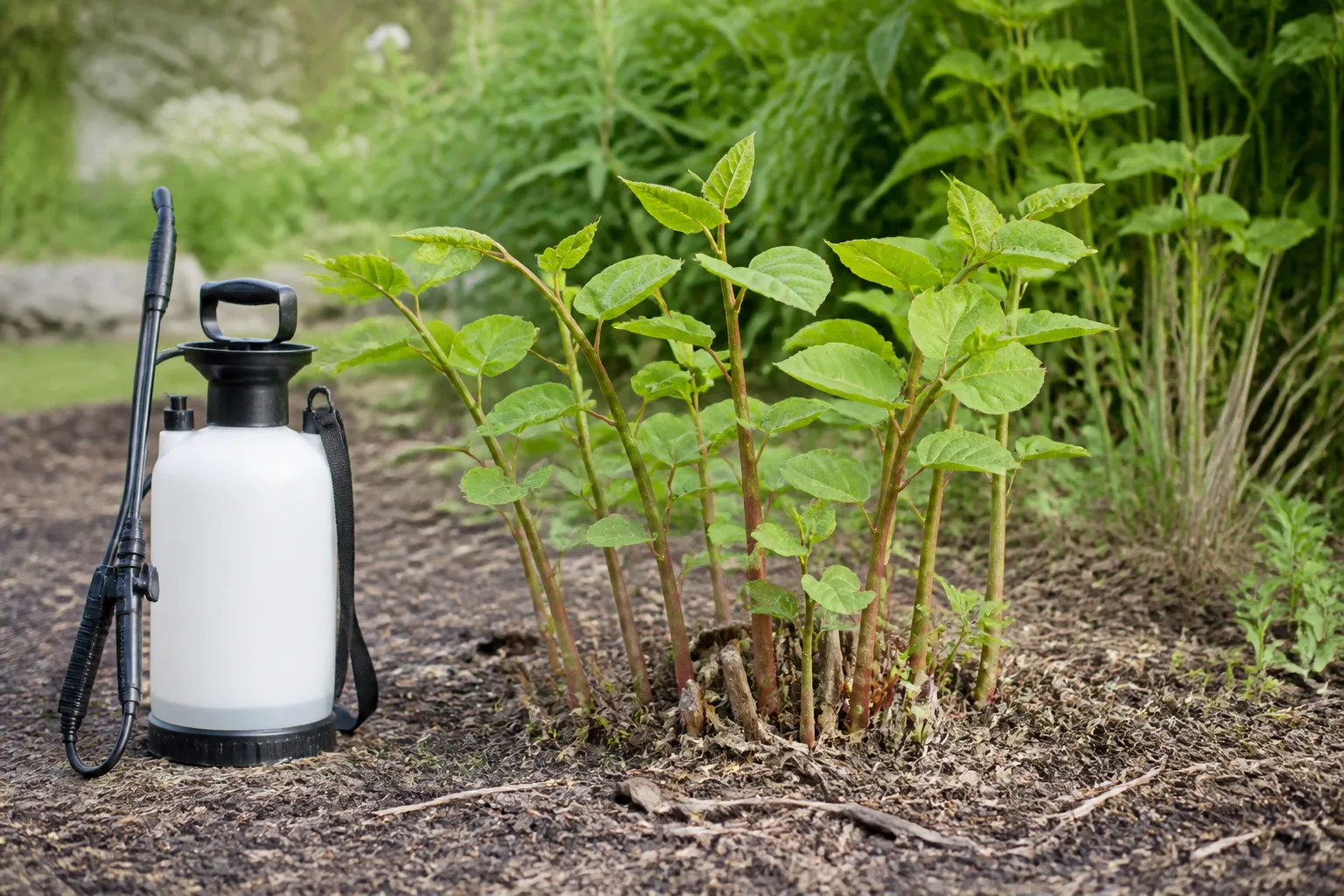
Basal bark treatment targets individual stems generally under six inches basal diameter. Apply an oil-based triclopyr ester formulation from ground line to 12–18 inches up the trunk, wetting the entire circumference without runoff. It is selective in crowded settings where overspray is risky.
Hack-and-squirt fits larger stems or follow-up on missed trunks. Make downward-angled cuts through the bark spaced around the stem—about one hack per inch of diameter, minimum two. Leave uncut living bark between hacks so herbicide can translocate; girdling completely stops movement. Immediately fill each cut with undiluted or half-strength glyphosate or triclopyr solution. Auburn University forestry guidance echoes this spacing rule: a continuous ring kills too fast for chemical uptake into roots.
Active ingredients with documented efficacy include glyphosate, triclopyr, imazapyr, metsulfuron methyl, and dicamba. Penn State recommends prioritizing glyphosate or triclopyr for many homeowners because they have limited soil activity and lower risk to nearby plants via root uptake—still use caution on slopes and near water per label restrictions.
For large hazardous trees, consider hiring a certified arborist or licensed applicator who can combine ground-based hack-and-squirt with safe felling once decline is visible—typically about 30 days after treatment.
Treatment Timing Calendar and Follow-Up Patrols
Timing separates root kill from expensive top kill. Apply systemic herbicides from July 1 through the onset of fall color when the tree moves carbohydrates into roots. Spring sprays may brown leaves yet leave roots alive to resprout next year.
Use this simplified calendar:
| Season | Action |
|---|---|
| Late winter | ID trees and map sucker zones before leaves obscure bark |
| Spring | Pull tiny seedlings; do not rely on foliar herbicide alone yet |
| July–September | Primary foliar, basal bark, or hack-and-squirt window |
| Fall | Cut declining treated stems; bag samaras if female trees remain |
| Next spring–fall | Scout monthly; treat every sprout while small |
Persistence is non-negotiable. Well-established stands often need two or more growing seasons and multiple methods—initial foliar pass to knock back sprouts, then stem treatments on survivors. Walk the site at least monthly during the growing season for 12 to 24 months. One missed sucker becomes a seed-producing tree in two years.
Dispose of cut material responsibly. Do not chip female seed-bearing branches into mulch you spread elsewhere. Our tree stump removal guide covers grinding alternatives if you leave a large stump after treatment, but remember stump grinding alone does not stop ailanthus root suckers.
Safety, Allergies, and When to Hire Help
Tree of heaven is a high pollen producer; sensitive individuals may react during male flowering. Contact with leaves, bark, seeds, or sap has caused skin irritation and dermatitis in documented cases. Penn State Extension advises gloves, long sleeves, and eye protection when working extensively around the tree, especially if you have open cuts.
Herbicide safety is equally important: read labels for personal protective equipment, wind speed limits, aquatic buffers, and re-entry intervals. Never hack-and-squirt uphill from a well or stream. If the tree overhangs structures, lines, or public right-of-way, hire insured professionals.
Call an arborist when stems exceed your comfort zone for felling, when power lines are involved, or when the stand is too large for backpack sprayer coverage. Call extension or a Master Gardener clinic when identification is uncertain—destroying a native walnut is an expensive error.
Native Trees to Plant Instead
Once control is underway, replant the gap with species that fill the ecological role without suckering like ailanthus. Match the site: dry slope, riparian buffer, or urban shade courtyard.
Eastern U.S. options to discuss with a local native nursery include black gum (Nyssa sylvatica) for fall color, serviceberry (Amelanchier) for early flowers and fruit, tulip tree (Liriodendron tulipifera) for height in large yards, and bigleaf maple (Acer macrophyllum) in its native Pacific range per California Fish and Wildlife replacement guidance. Avoid planting another aggressive non-native “fast shade” tree just to fill space. Our guides to invasive plants to avoid planting and worst invasive plants help you screen nursery offerings before checkout.
Conclusion
Tree of heaven wins when homeowners treat it like a one-cut nuisance. It loses when you identify it correctly—cantaloupe bark, glandular teeth, stinking crushed leaves—separate it from sumac and walnut, and hit the root system with systemic herbicide during the late-summer translocation window. Pull seedlings early, expect suckers up to 50 feet out, and patrol the site for at least two growing seasons. If lanternfly is in your region, every mature ailanthus you remove is one less preferred host in the neighborhood. Mark your calendar for July-through-fall treatments, gear up for safe chemical and saw work, and replant with natives once the sprout rain slows. The tree is beatable; the mistake is stopping after day one.