How to Prune Cucumber Plants: Step-by-Step Guide
Learn when to prune cucumber vines, how to remove suckers without hurting fruit, and three expert tips for trellised plants that stay healthy all season.
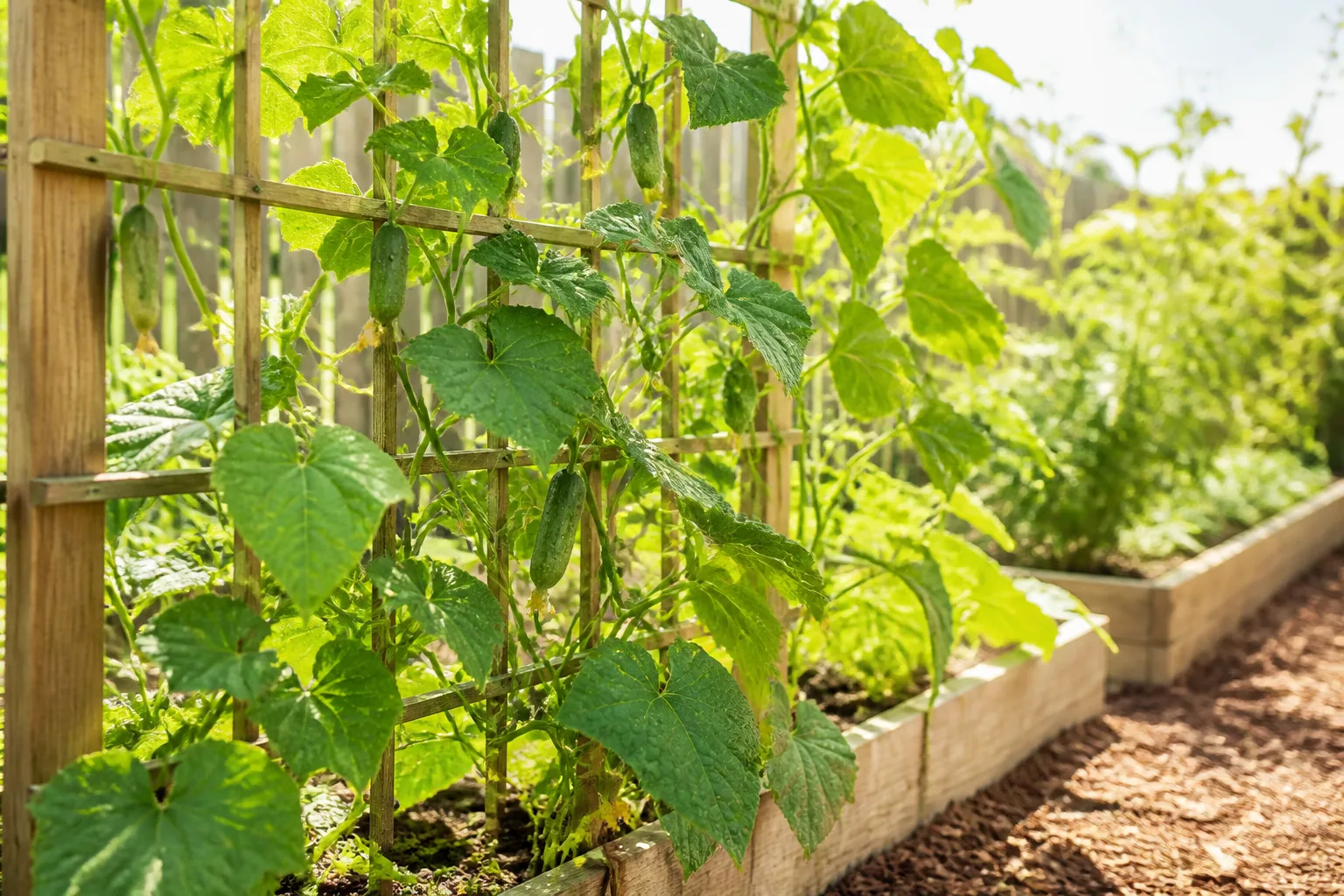
Cucumber vines can cover a raised bed in two weeks flat—then hide fruit until it turns yellow, invite powdery mildew into a damp leaf canopy, and turn harvest day into a thorny wrestling match. Pruning cucumber plants is optional for a lone container bush type, but for trellised vining cucumbers in a real vegetable row, it is one of the highest-return ten-minute jobs you can do all summer. The goal is not a bare plant. It is a readable structure: one to three primary vines climbing cleanly, side shoots (suckers) removed on schedule, and enough foliage left to feed the fruit you actually want to pick.
Should You Prune Cucumber Plants?
Pruning is a choice, not a requirement. If you grow a single bush cucumber in a patio pot and it stays under two feet, you can usually skip sucker management entirely. The plant does not have room—or need—to build a multi-leader canopy. Vining slicers and picklers are a different story. Left alone, they sprawl, tangle, and pour energy into leaves and secondary vines instead of the cucumbers you planned to eat.
The payoff shows up in three places extension and breeding research keep returning to: airflow (less mildew and bacterial splash), fruit quality (fewer oversize, bitter, or hidden cukes), and harvest speed (fruit at eye level on a trellis instead of buried under foliage). Cornell vegetable breeder Dr. Michael Mazourek notes that cucumbers left too long on the vine set fewer new fruits as seeds mature—so opening the canopy helps you pick on time, not just grow prettier leaves (Better Homes & Gardens).
Pruning may lower total fruit count slightly while raising the share you actually eat. That trade is usually worth it when cucumbers are famously prolific anyway.
When One Plant Can Stay Unpruned
One well-fed bush variety—Spacemaster, Bush Champion, Patio Snacker—in a large container often produces fine without sucker work. These types top out around 18–24 inches and do not build the layered lateral architecture vining types do. Pruning them aggressively can remove flowers you needed.
Even one vining plant in a small space can stay unpruned if you accept ground sprawl and check daily for hidden fruit. Just know you are trading vertical efficiency and disease margin for zero maintenance.
When Multi-Plant Beds Benefit Most
When you grow two or more vining cucumbers—or any trellised row—pruning shifts from optional to practical. Overlapping vines block sun from lower leaves, hold moisture against stems, and create cover for cucumber beetles that spread bacterial wilt. NDSU Extension horticulture agent Carrie Knutson recommends trellising vining cucurbits because tendrils actively wrap supports within hours, keeping fruit off damp soil and saving your back at harvest (NDSU Extension).
If your bed is tight, pruning plus vertical training is how you fit more plants without turning the row into a monoculture jungle.

Know the Vine Before You Cut
Pruning cucumbers works like tomato sucker removal because the anatomy rhymes—but cucumbers set fruit differently depending on variety, so copy tomato rules blindly and you will cut off your harvest.
Primary Vines, Sun Leaves, and Suckers
Follow one main stem—the primary vine—from the soil upward. At each node you will usually find four things: a large sun leaf (the big photosynthetic leaf), a tendril that grabs the trellis, a flower or young fruit, and a sucker (also called a side shoot or growth point) in the leaf axil. The sucker is the branch that wants to become a secondary vine with its own suckers, tertiary vines, and another layer of chaos.
Sun leaves matter. They shade developing fruit against sunscald and feed the plant. Keep them unless they are damaged, diseased, or blocking air at the soil line. Suckers are what you remove—pinching when pencil-thin, shearing when you missed a week.
Bush vs Vining Types Change the Rules
| Type | Typical height | Pruning priority | Trellis |
|---|---|---|---|
| Vining (Marketmore 76, Straight Eight) | 5–8+ ft | High—manage suckers & leaders | Strongly recommended |
| Semi-vining (Diva, Sweet Success) | 3–5 ft | Moderate—light sucker control | Helpful |
| Bush (Spacemaster, Bush Champion) | 1–2 ft | Low—optional | Usually unnecessary |
Mazourek points out that bush cucumbers “never make it more than waist high” and will not trellis like true climbers (BHG). Pruning advice written for greenhouse or tunnel varieties—where fruit sets mainly on the main vine—does not always transfer to field types that fruit heavily on lateral branches. That is why the next section starts with watching where fruit forms before you commit to a one-vine purge.
How to Prune Cucumber Plants Step by Step
Work on a dry morning when leaves are not wet. Disinfect shears between plants if you saw mildew last year.
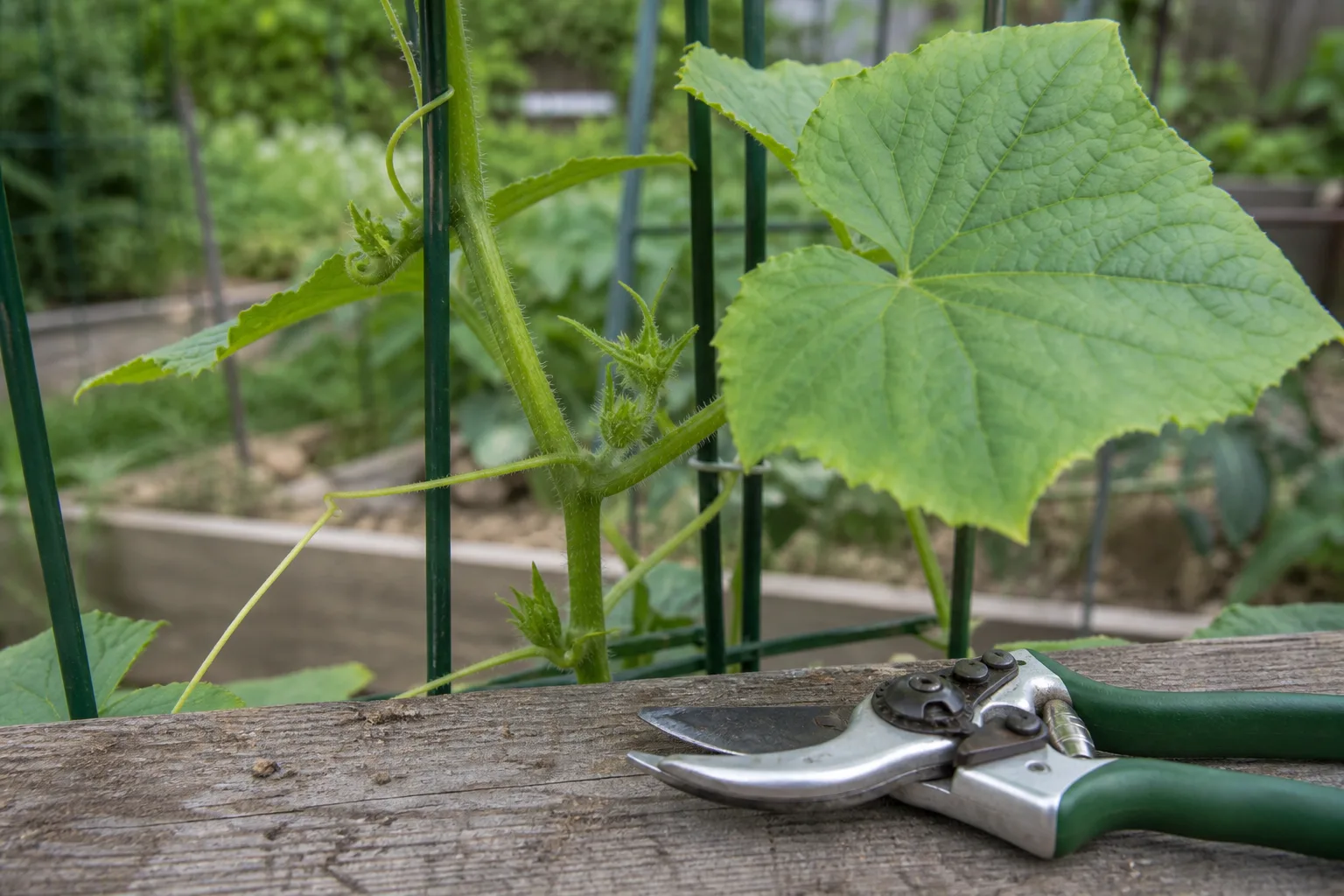
Step 1: Locate the Sun Leaf Junction
Start at the base and move upward. At each node, identify the sun leaf attached to the primary vine. Trace the axil between leaf stem and main vine—that is where the sucker emerges. Confirm you are not pinching the tendril, flower, or fruit behind the leaf. If the node already carries a fruit you want, leave the supporting leaf and remove only the sucker beside it.
Step 2: Pinch Suckers While They Are Small
Remove suckers under two inches by pinching between thumb and finger. A clean snap heals fast. Larger suckers need sharp pruners; tear ragged stubs and you invite disease entry. Check the plant every three to five days during peak growth—suckers that were pinhead-sized on Monday can be forked branches by Sunday.
Missed a week? Start at the top of the vine and work down, removing the newest suckers first so you do not strip the plant in one traumatic pass. Lower monster laterals can be shortened in stages over two visits if they already have fruit attached.
Step 3: Pick a One-, Two-, or Three-Vine System
Choose how many primary vines each plant may keep:
One-vine (single leader): Remove every sucker all season. Best for greenhouse or high-tunnel types bred to fruit on the main stem, and for small trellis footprints where one vertical line is enough.
Two-vine system: Let the first sucker below the trellis grow into a second primary vine. Remove all other suckers on both leaders weekly. This is the sweet spot many home gardeners use on a 6-foot trellis—enough foliage for photosynthesis, still manageable.
Three-leader system: Allow the first two suckers on the main vine to become secondary leaders trained along the trellis (Mazourek’s field-garden approach when laterals bear fruit). You will prune suckers off all three leaders for the rest of the season.
Whichever system you pick, start early—about one to two weeks after transplant or true-leaf stage, as soon as sun leaves and tendrils appear. Changing from four wild vines to one leader mid-July wastes fruit and shocks the plant.
When to Prune Cucumber Plants Through the Season
Think in three phases aligned with your frost-free window, not a single calendar month:
Establishment (first 3–4 weeks): Pinch early suckers, optionally remove the first one to three flowers (see Tip 3), and tie the main vine loosely to the trellis every few days. Mazourek warns that vining cucumbers hit a “tipping” stage where stems flop sideways and can snap if you stand them up late—supervise orientation every couple of days (BHG).
Peak vine growth (mid-season): Weekly sucker passes, plus lower-leaf removal once plants are waist high. This is when mildew pressure and beetle hiding spots peak—open the skirt of the plant before disease does it for you.
Late season (6–8 weeks before first frost): Ease off heavy pruning on cold-short days. Keep removing new suckers that will not fruit before frost, but retain enough leaf area to ripen existing cukes. In hot, dry spells, skip aggressive midday pruning that exposes fruit to scalding.
If you are in a long-season zone and the vine hits the top of the trellis, some growers switch to umbrella trellising: train the main stem over the top and let three or four branch tips cascade downward, still removing competing suckers on the way up (Helpful Gal).
Three Expert Tips That Make Pruning Worth It
These three practices separate tidy, productive trellis rows from “I pruned once and gave up.”
Tip 1: Install the Trellis Before You Train Leaders
Pruning without vertical support is half the job. Install stakes or panels before planting, anchor them at least 12 inches deep, and use mesh or twine the tendrils can grip—NDSU Extension notes that wind-loaded vines plus fruit weight will topple flimsy panels (NDSU Extension). Mazourek favors an arch of sturdy posts with cotton butcher’s twine hung to the ground; the twine composts with the vine at season’s end (BHG).
Space vining plants about one per foot in full sun, widening to 18 inches in shorter northern seasons. Each plant needs its own vertical plane—crowding two roots against one string guarantees a sucker knot you cannot untangle.
Tip 2: Strip the Bottom Foot Once Vines Are Waist High
When the main vine reaches hip height, remove the lowest 12 inches of leaves—especially any touching soil or showing yellow speckles. Mazourek recommends this specifically to improve airflow at the base and reduce splash-borne leaf diseases (BHG). This is not sucker removal; it is canopy thinning. Leave healthy upper sun leaves intact.
Pair this with mulch and base watering (soaker hose or drip, not overhead sprinklers) so stripped stems stay dry. If mildew already spotted lower leaves, bag and trash them—do not compost infected tissue in the home pile.
Tip 3: Read Where Fruit Sets Before You Cut Flowers
Two flower decisions confuse growers every year:
Early flower pinch: Removing the first two to four flowers after transplant can help a young vine build roots and leaves before fruit load. Stop once the plant has six to eight true leaves and a stable trellis tie—every flower after that is a potential cucumber.
Variety-specific lateral fruit: On field slicers, fruit often sets on lateral branches you might mistake for “extra” suckers. Mazourek’s rule: “Don’t start cutting until you see a clear pattern of where fruits are setting.” If cucumbers appear only on the main vine, prune laterals short. If fruit keeps forming on a healthy lateral, train it as a second or third leader instead of pinching it off (BHG).
Remember that cucumbers carry separate male and female flowers on most varieties; removing all blooms to “reduce stress” kills pollination unless you hand-pollinate or grow parthenocarpic greenhouse types.
Pruning Mistakes That Hurt More Than They Help
Over-pruning in one session. Stripping more than a third of the leaf area at once stalls growth and sunburns fruit. Spread hard cuts across two visits.
Wrong system for the variety. Single-leader greenhouse logic on a lateral-fruiting slicer deletes the branches that would have borne picklers.
Pruning wet plants. Cuts on soggy tissue spread powdery mildew and bacterial pathogens. Wait for dry mornings.
Ignoring beetles while opening the canopy. Pruning improves visibility—use it to scout striped and spotted cucumber beetles early, but netting young plants beats chasing beetles with shears alone.
Letting fruit hide after you trellis. Vertical growing makes cukes easier to see, but only if you harvest every two to three days. Overripe fruit on the vine signals the plant to slow production—exactly what pruning is meant to prevent.
Forgetting bush types. Shearing a bush cucumber like a greenhouse vine removes the short lateral branches that were going to flower next.
Conclusion
Should you prune cucumber plants? For trellised vining cucumbers in a multi-plant bed, yes—weekly sucker control, a chosen one- to three-vine system, and bottom-leaf thinning will give you cleaner fruit and fewer disease headaches than an unpruned sprawl. For a lone bush pot, probably not. Install support first, watch where your variety sets fruit, pinch suckers while they are tiny, and strip the bottom foot once vines are waist high. Those habits take less time than hunting oversized cucumbers in a thicket—and they are the difference between growing leaves and growing lunch.