Repotting Houseplants in Winter: When Is It Safe?
Repotting houseplants in winter is sometimes necessary. Use this triage guide for root rot, pests, potbound roots, pot size, and safe aftercare.
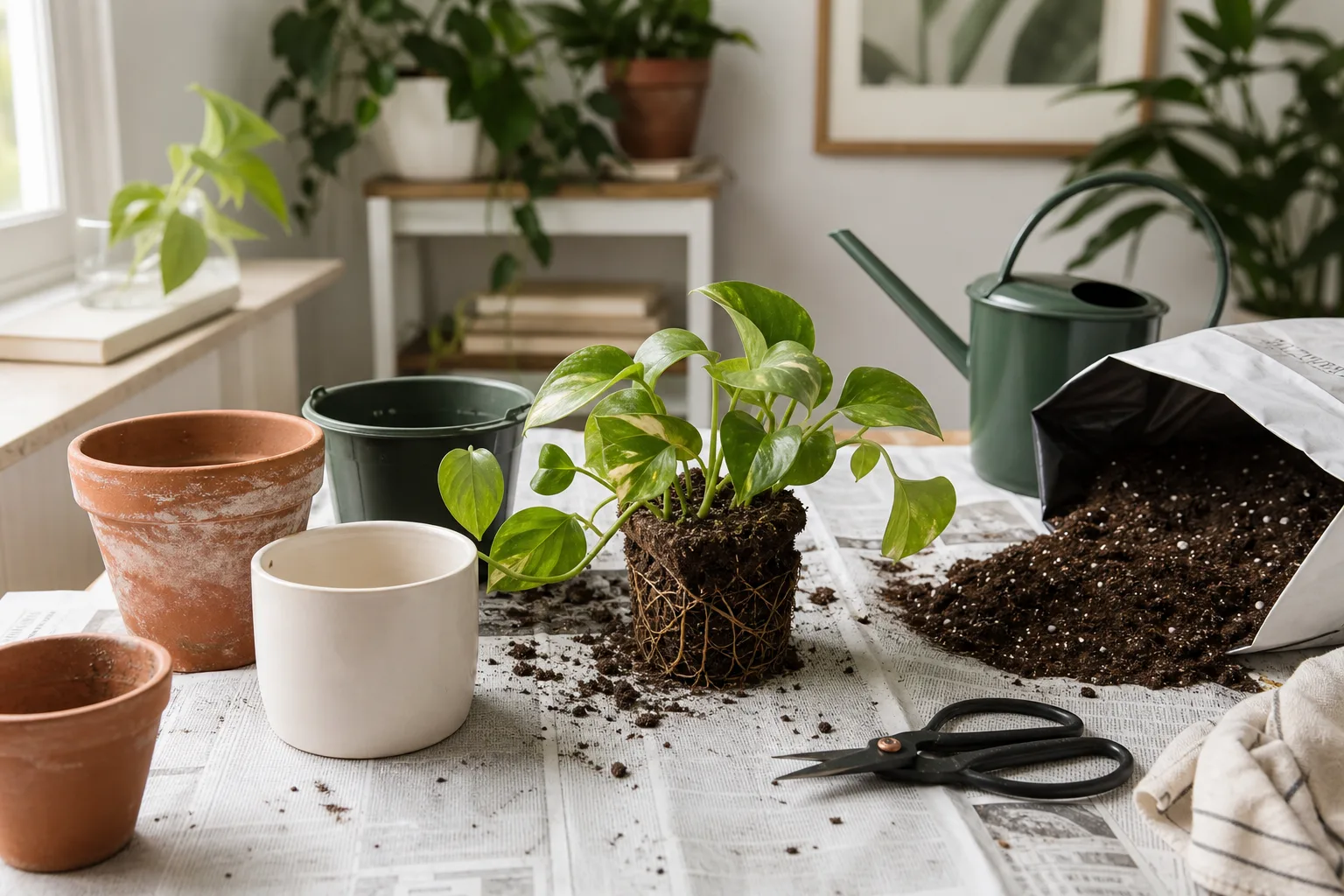
Repotting a houseplant in winter is not automatically wrong. It is simply less forgiving when the plant is growing slowly, light is weak, and a fresh pot of soil stays wet longer than expected. For a healthy plant, spring is usually the better appointment; for a broken pot, active root rot, or a root system that is genuinely failing, waiting can do more harm than disturbing it now.
The useful question is not “Is it winter?” It is “What problem will repotting solve, and can this plant recover in its current room?” That shift keeps you from repotting a yellowing plant that only needs better light, while still giving an endangered root ball prompt attention.
The short answer: use plant condition, not the calendar
Yes, you can repot houseplants in winter, but reserve a full repot for a clear need. Most healthy indoor plants are best repotted as they begin active growth in spring, when increasing light and new foliage support root establishment. Purdue University’s consumer horticulture guidance makes the same distinction: winter can be a useful time to work with houseplants, but not every plant needs or benefits from a new pot. (Purdue University)
Use this quick decision table before you buy soil:
| What you observe | Best winter move |
|---|---|
| Healthy foliage, stable pot, roots not congested | Wait for spring or visible new growth |
| White crust or tired surface mix, but the root ball has room | Top-dress or make a small surface refresh |
| Roots circle tightly, water runs through, or the pot tips repeatedly | Repot if the crowding is limiting the plant or creating a safety problem |
| Sour smell, mushy roots, collapsing stems, or a broken pot | Repot now and correct the cause |
| Yellow leaves, droop, or brown tips without root evidence | Diagnose light, water, drafts, humidity, and pests first |
“Repot now” does not always mean “move into a much bigger pot.” An emergency may call for the same pot after cleaning, a smaller pot after root loss, or a modest upgrade that gives the existing roots only a little more room. The goal is a safer root environment, not a dramatic makeover.
Why winter repotting can backfire
Repotting removes some of the plant’s familiar root-to-soil contact. Even a careful job can break fine roots, loosen the root ball, or leave the plant temporarily less efficient at taking up water. During a strong growing period, new roots can colonize the fresh mix quickly; during a dim, cool winter, the same mix may remain largely unoccupied and wet.
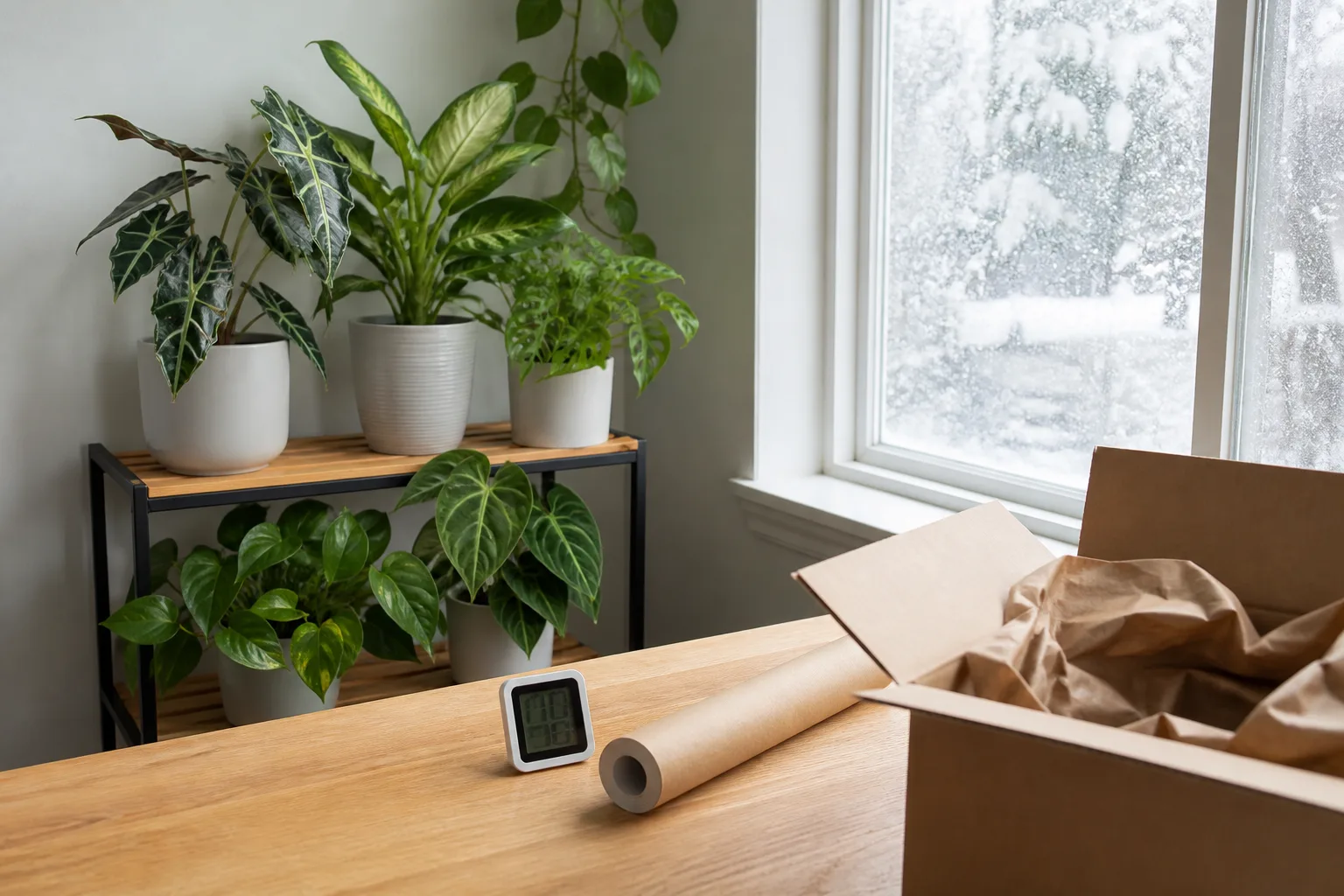
Light controls recovery
Light is the often-missed half of winter repotting. A plant needs enough light to make the carbohydrates that support new growth and repair. A south-facing window in one home may be bright enough for active growth, while a shaded north-facing room, heavily curtained window, or distant shelf may put the same species into a seasonal pause.
Wisconsin Horticulture notes that houseplants use less water during slow winter growth and that fertilizing is mainly useful during active growth. Its guidance also warns that cold drafts around windows and doors can be hard on plants. (Wisconsin Horticulture) That makes a newly disturbed root ball especially vulnerable if it is placed back beside cold glass, a frequently opened door, or a heat vent.
Winter is a calendar season, not a single indoor growing condition. A tropical plant under a strong grow light in a warm, stable room may keep producing leaves. A succulent in a cool, dim room may be using very little water. The plant’s current growth, moisture use, and placement tell you more than the month printed on the calendar.
Fresh mix stays wet longer
New potting mix usually has more open water-holding capacity than a depleted, compacted root ball. That is helpful when roots are ready to grow, but risky when the plant is using water slowly. If the new container is also too large, a large volume of unused wet mix surrounds a small root system. Persistently wet, poorly aerated conditions encourage root-rot problems.
The Royal Horticultural Society advises avoiding autumn and winter repotting for many container plants because growth slows and fresh compost can remain too wet. It also identifies spring, as plants start into growth, as the general best time to repot and prune roots. (Royal Horticultural Society: How to repot a plant) This is a strong default, not a command to leave a rotting plant in a saturated pot.
A three-question winter triage
Before you pull the plant out, answer three questions in order. The sequence matters because a visible symptom is not the same as a root problem, and a root problem is not the same as a need for a larger pot.
1. Is the root system in immediate danger?
Look for evidence that the current root environment is damaging the plant: soil that stays wet for an unusually long time and smells sour, a pot with no effective drainage, a broken container that exposes or crushes the root ball, or roots that are already brown, soft, and collapsing. A plant that is actively losing its root system cannot wait for a more convenient season.
If the issue is only one yellow lower leaf, a few dry tips, or a pause in winter growth, do not jump to an emergency conclusion. Those signs can come from low light, inconsistent watering, dry heated air, cold drafts, or natural aging. The RHS recommends checking the growing environment before resorting to routine treatments; its houseplant guidance specifically flags overwatering, poor light, and dry air as common winter troublemakers. (RHS: How to help a poorly houseplant)
2. Is the plant actually root-bound?
Root-bound means the roots have filled much of the container and are circling densely instead of occupying a healthy mix-and-air balance. Roots protruding from drainage holes are a clue, not a diagnosis by themselves. Slide the plant out gently and inspect the root ball: if you can still see plenty of loose potting mix and the roots are not forming a tight outer shell, the plant may not need a larger pot.
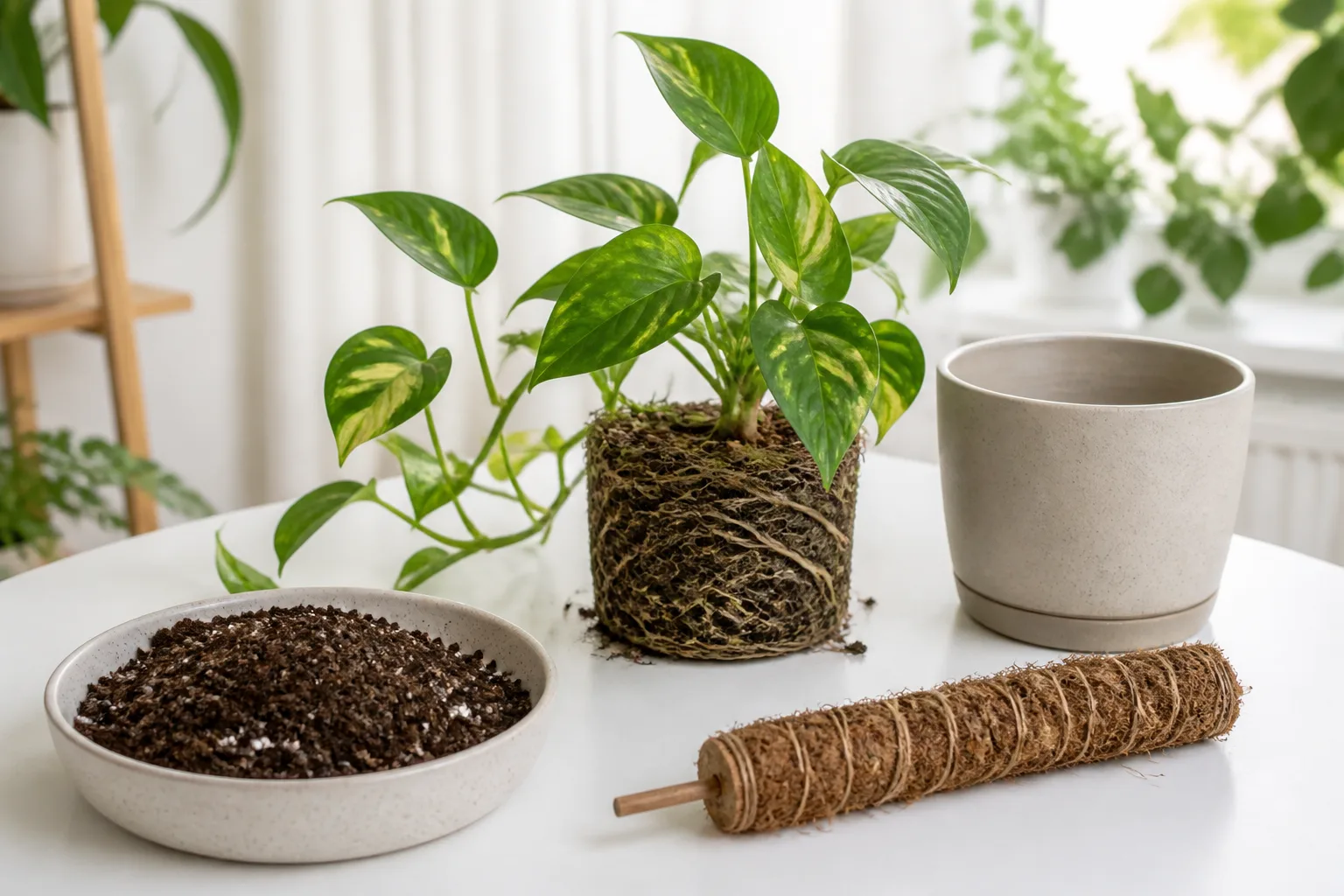
Penn State Extension lists roots growing through drainage holes, very rapid drying, and slowed growth as signs worth checking, then recommends inspecting the root ball. When roots circle the outside and little mix remains in the lower portion, a larger container may be appropriate. (Penn State Extension) Purdue gives the same practical test: if roots are not visible around the outside of the soil ball, repotting is usually not needed. (Purdue University)
Do not inspect a dry, brittle root ball by yanking the stem. Tip the pot sideways, support the soil with your hand, and let the plant slide out. If it resists because roots are packed or the pot narrows inward, loosen the container rather than pulling harder. A root inspection should answer a question, not create a stem injury.
3. Can the room support recovery?
An otherwise reasonable winter repot becomes a poor bet when the plant will return to the same stressful location. Ask whether you can provide bright indirect light or a suitable grow light, stable room conditions, and a place where water can drain completely. Keep the plant away from cold drafts, hot radiators, and the cold pocket between a window and a closed curtain.
You do not need a laboratory to make this decision. Watch whether the plant is producing new leaves, how quickly its mix dries, and whether the room is consistently comfortable for that species. If the plant is not in danger and you cannot improve the recovery setup, waiting is usually kinder than adding fresh wet soil to the problem.
When it is okay to repot in winter
Winter repotting is justified when the current container or root zone is causing active harm. In each case, choose the least disruptive fix that solves the problem.
Broken or unstable pot
A cracked pot can pinch roots, leak, or collapse when you lift it. An unstable plant can also fall repeatedly, damaging stems and exposing roots. Move it into a clean container with drainage as soon as you can, even if the replacement is the same size.
If the root ball is intact and the soil is healthy, do not automatically increase the pot size. Set the plant at its original depth and use fresh mix only to fill gaps created by the move. A same-size rescue is often a smaller physiological change than a large upgrade.
For a decorative container without a drainage hole, use it as a cachepot rather than planting directly into it. Keep the plant in a draining nursery pot, and empty water from the outer pot after irrigation. Penn State Extension emphasizes that water must be able to drain freely between the inner pot and cachepot; a pretty outer vessel does not make standing water safe. (Penn State Extension)
Root rot or a collapsing root ball
Root rot is a reason to act in winter because the damaged tissue will not become healthy by waiting. Common clues include a sour odor, wet mix that never seems to dry, mushy dark roots, a soft stem base, and wilting that continues even though the soil is wet. These clues need to be read together; root color alone can be misleading because some healthy roots are naturally tan or brown.
Take the plant out, remove loose saturated mix, and identify which roots are firm and which are soft. Cut only diseased tissue back to firm tissue with clean, sharp tools. If a large part of the root system is gone, the old pot may now be too large: use a clean container that fits the remaining roots instead of surrounding them with a deep reservoir of wet mix.
Use fresh, appropriate indoor potting mix and address the cause that created saturation. A new pot cannot compensate for a container without drainage, a cachepot that stays full, a waterlogged mix, or a winter watering schedule that ignores slower drying. Wisconsin Horticulture identifies poor drainage and wet soil as conditions that favor root-rot pathogens and recommends adequate drainage and suitable container mix. (Wisconsin Horticulture)
Root pests, contaminated mix, or severe crowding
Repot when you find pests living in the root zone, such as cottony root mealybugs, or when a damaged plant has a contaminated, foul, or unusable mix. Isolate the plant before working so pests and spilled soil do not move through the collection. Replacing soil may be part of control, but it is not a complete treatment for every pest; inspect leaves, stems, and nearby plants too.
Severe root crowding can also justify winter action when the plant is drying almost immediately after watering, falling over because the top growth is too large, or losing access to usable mix. The RHS notes that dense roots can prevent water from draining properly and raise the risk of root rot. (Royal Horticultural Society: How to repot a plant) If the plant is merely snug but otherwise stable, mark it for spring rather than tearing apart a root ball during its slowest season.
Do not repot a plant with spider mites or scale solely because the pests are on the foliage. Leaf pests need a diagnosis and a treatment plan for the above-ground plant; changing soil may add stress without removing the insects.
When to wait until spring
Wait when the plant is healthy, the pot is sound, the root ball still contains loose mix, and the only motivation is a desire to use a prettier container. Spring is also the better choice for routine root pruning, division, major upsizing, or repotting an entire collection. Gardening Know How’s practical timing guidance calls early spring the strongest general window because plants are moving into active growth and increasing light helps them recover. (Gardening Know How)
Wait as well when a plant has just arrived home and is acclimating, unless the nursery pot is broken, the mix is dangerously wet, or pests are clearly present. A move from greenhouse or shop conditions into a home is already a change in light, humidity, and watering. Let a healthy newcomer settle before adding root disturbance.
Flowering is another reason to pause a cosmetic repot. If the plant is blooming well and not in danger, keep the root ball intact and wait until flowering finishes or new growth begins. The exception is a container that is physically failing or a root-zone problem that threatens the plant; flowers are not worth preserving at the expense of rotting roots.
What to do instead of a full repot
Many winter complaints need better care, not a new pot. Move a low-light plant closer to a suitable window while avoiding cold glass, clean dust from broad leaves, and check soil moisture below the surface before watering. Water by the plant’s drying pattern, not by the summer calendar. Wisconsin Horticulture likewise recommends matching watering to the plant and its growth stage, with less water generally needed during slow winter growth. (Wisconsin Horticulture)
If the top layer is crusted with fertilizer salts but the root ball is not crowded or rotten, remove a shallow layer and replace it with fresh potting mix. This top-dressing improves the surface without breaking the entire root system. It is useful for large floor plants that are difficult to lift, but it cannot solve roots that have filled the pot or a rotten core.
If water is running down a gap between the mix and pot, the soil may be dry and hydrophobic rather than poorly drained. Rehydrate it slowly when the plant’s normal moisture check says it needs water, then observe how long it takes to dry. If the mix has collapsed, repels water repeatedly, or remains saturated, schedule a proper spring repot unless the roots are already in danger.
Hold routine fertilizer when the plant is not actively growing. Fresh mix may already contain nutrients, and feeding a stressed winter plant does not make damaged roots recover faster. Save the larger refresh, root pruning, division, and growth push for the season when the plant can use them.
How to repot a houseplant safely in winter
When the triage says “act,” make the operation controlled and small. Gather the new pot, pre-moistened indoor potting mix, clean shears, a work surface, and a saucer. Do not leave a bare-root tropical plant sitting in a cold room while you search for supplies.
Prepare the pot, mix, and root ball
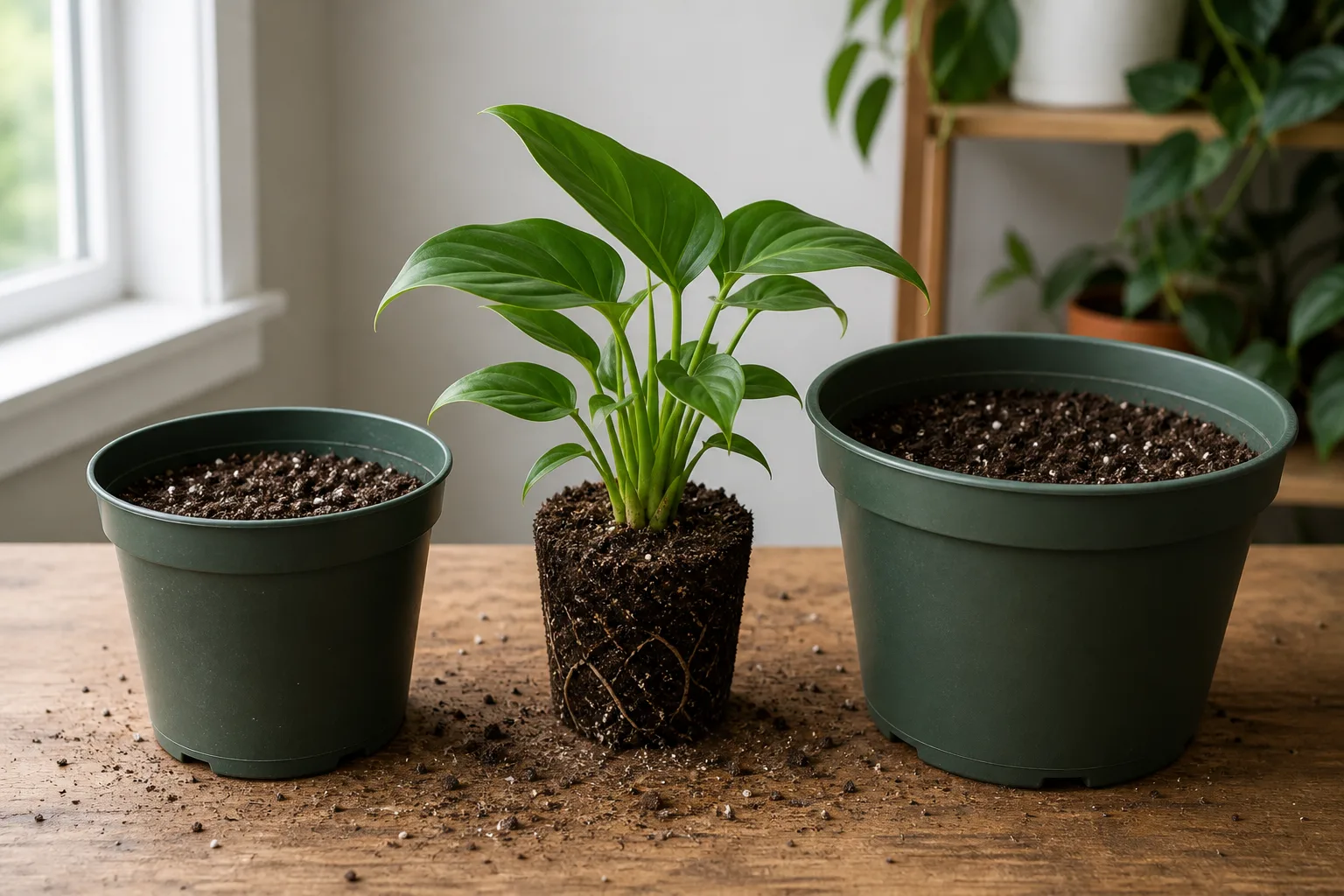
Choose a container with a drainage hole. If upsizing, go only one step larger, usually about 1–2 inches wider for a small or medium houseplant. The University of Arkansas System Division of Agriculture advises that the new pot should be no more than 2 inches larger in diameter, while the RHS recommends no more than one third larger; both rules prevent a small root ball from being lost in excess wet mix. (University of Arkansas System Division of Agriculture)
Match the mix to the plant. Most foliage plants need a porous indoor mix that holds some moisture while leaving air space; cacti and succulents need a faster-draining blend; orchids need an orchid medium rather than ordinary potting soil. Do not bring garden soil indoors as a shortcut. Penn State Extension explains that quality soilless mixes may contain materials such as perlite, vermiculite, peat or coir, bark, and other components selected for container growing. (Penn State Extension)
Bring cold stored mix indoors ahead of time so it reaches room temperature, and moisten it evenly without turning it into mud. If the plant is healthy and dry, watering the original pot about an hour before the job can make the root ball easier to handle. If you are treating rot, do not pre-soak a root ball that is already saturated; let excess water drain and work with the roots as they are.
Clean a reused pot before use, especially after pests or rot. Penn State and Arkansas Extension both describe sanitizing reused containers with a dilute bleach solution; follow the source guidance, rinse thoroughly, and keep the solution away from children, pets, fabrics, and plant tissue. Never combine bleach with other cleaners.
Slide the plant out while supporting the root ball. Keep firm, healthy roots. Tease apart only the outer circling roots that need redirecting, and remove dead or mushy tissue in a rescue. A winter repot is not the moment for aggressive root pruning just because the roots look untidy.
Set depth, water once, and let it drain
Add enough mix to the bottom so the root ball sits at its original soil line, with the top about an inch below the rim. The University of Arkansas System Division of Agriculture specifically cautions against adding mix above the original level unless exposed roots require it. (University of Arkansas System Division of Agriculture) Burying a crown or stem deeper can keep that tissue too wet and create a new problem.
Fill the space around the root ball with mix, tapping the container lightly to settle it. Firm the surface just enough to remove large voids; do not pack it hard. Leave headspace so watering does not spill over the rim, and do not build a gravel layer at the bottom as a substitute for a drainage hole.
Water according to the rescue’s needs. For a healthy plant moved into a well-draining mix, one thorough watering can settle the soil; let excess run from the drainage hole and empty the saucer. For a root-rot rescue with a very small remaining root system, use enough moisture to contact the mix without keeping the container saturated, then follow the plant’s moisture requirements. “Water lightly” is not a universal measurement, so watch the actual drying rate after the move.
Winter aftercare: support the new root zone
Place the plant in bright, stable light rather than a dark corner. Bright indirect light is a safe default for many foliage plants immediately after repotting, but a species that needs stronger light may require a grow light or a carefully chosen window. Keep it away from drafts, radiators, and rapid temperature swings. Bath Garden Center’s winter repotting guidance similarly emphasizes a warm, well-lit recovery spot and gentle handling. (Bath Garden Center)
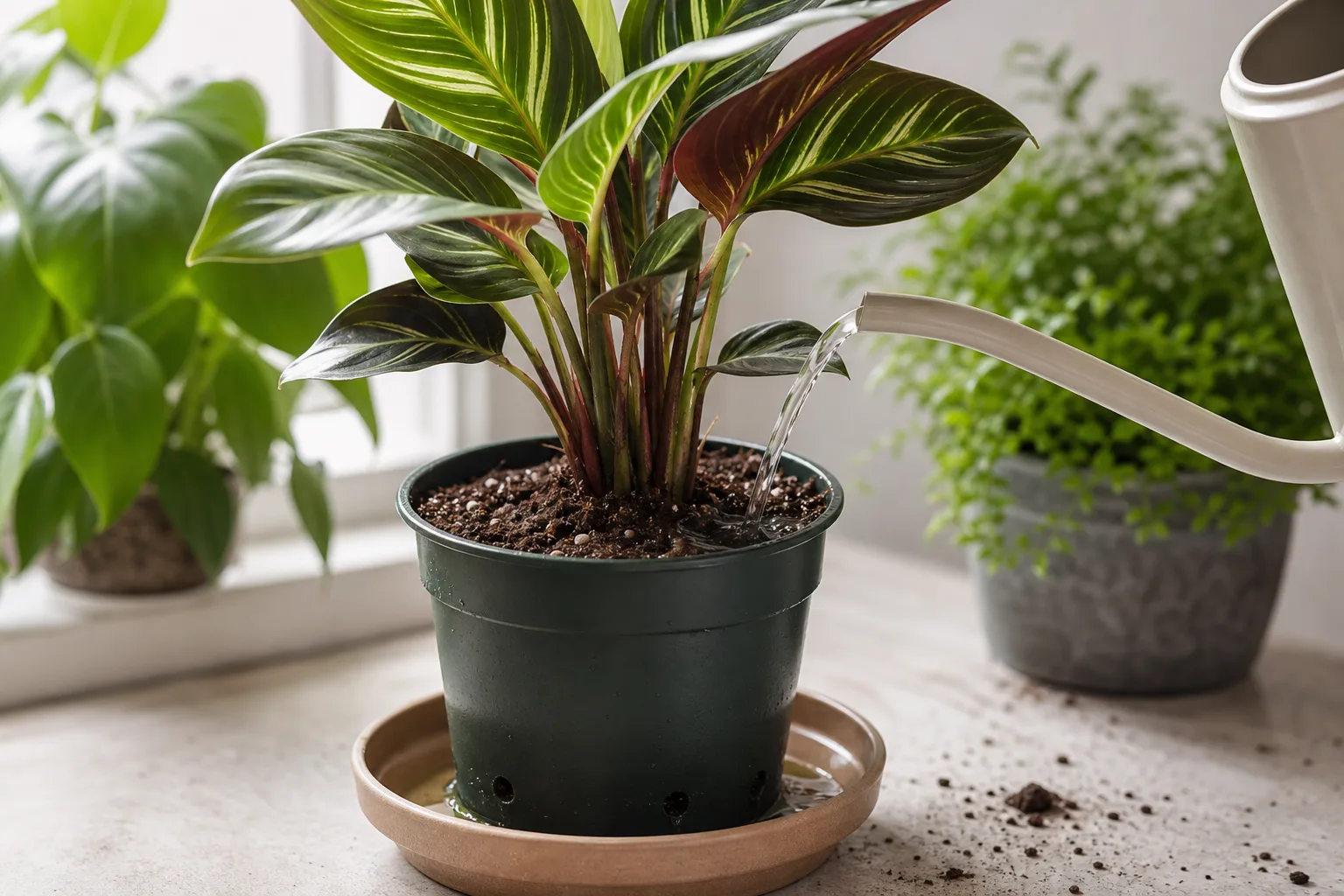
Do not water on a fixed daily schedule to “help it settle.” Check the mix at the depth appropriate for the plant, lift the pot when useful, and wait until it has dried to the plant’s normal threshold. The new pot and mix may change the drying time for weeks. Never leave a draining pot standing in saucer water.
Mild drooping or a short pause in growth can follow root disturbance. Worsening yellowing, a sour smell, a soft stem base, or mix that stays wet should trigger another root-zone inspection rather than another dose of fertilizer. Avoid routine feeding until the plant resumes stable growth; the priority is functioning roots, adequate light, and an appropriate moisture cycle.
The most common winter-repotting mistakes are predictable: choosing a pot several sizes larger, burying the stem, watering again before the new mix dries, placing the plant against cold glass, pruning healthy roots heavily, and changing the soil when the actual problem is low light. A quiet recovery is a success. You do not need to see a burst of new leaves immediately after the work.
Conclusion
Repotting houseplants in winter is okay when the current pot or root zone is actively putting the plant at risk. Broken containers, root rot, root pests, contaminated mix, and severe crowding can justify action now; a healthy plant with room in its pot usually benefits more from better light and moisture judgment until spring.
Inspect before intervening, choose the smallest container change that solves the problem, keep roots at their original depth, and provide stable light and drainage afterward. If the plant is safe, let winter be a season of observation, then repot as new growth begins and the plant can use the fresh space.



