Family Organization Tips for Smoother School Days
Family organization tips for school days: build a landing zone, sort papers, assign age-right jobs, and simplify mornings without buying more bins or furniture.
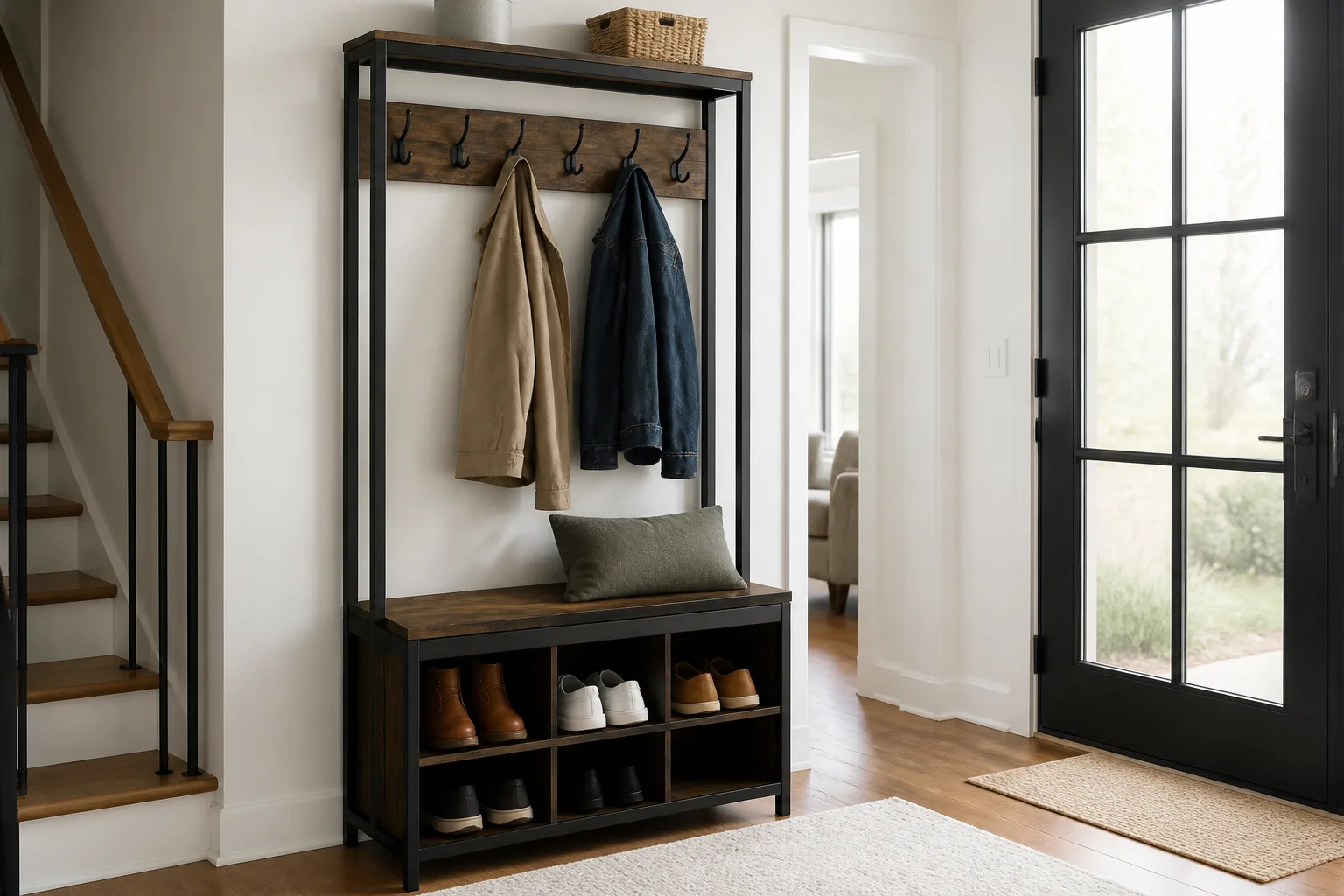
A backpack on the floor is not always a sign that a family needs another organizer. It may mean the hook is too high, the child enters through a different door, or nobody knows whether the bag should be unpacked before dinner. The most useful family organization tips start with that small repeat problem and change the setup around it.
A working system makes the next action obvious: where shoes go, which papers need a signature, and what should be ready before bedtime. It does not require a dedicated mudroom, matching bins, or a perfectly calm morning. Start with the places and moments that cause friction, then build a routine the people in your home can actually repeat.
Start With the Repeat Mess, Not the Shopping List
Before buying hooks, cubbies, or a label maker, identify what keeps landing in the wrong place. For one school week, notice the items that are left behind, carried from room to room, or repeatedly searched for: shoes, lunch containers, library books, permission slips, chargers, or sports gear. Also notice when the pile forms. An item that appears at the kitchen counter after school needs a different home from one that gets dropped beside the front door at night.
This observation prevents a common organizing mistake: designing the system around a room photo instead of the household’s actual traffic. Write down the three items that create the most delay or mess, then solve those first. If backpacks are the issue, make the bag easy to hang; if papers disappear, create a handoff spot; if shoes spread across the hall, define a small shoe limit close to the entrance.
Keep a one-week friction log
The log can be as simple as a note on your phone: “Tuesday—forgot library book; backpack stayed upstairs,” or “Thursday—couldn’t find soccer socks.” You are looking for repeated patterns, not evidence that anyone is careless. A child who forgets a folder may need a visual cue near the door, while a parent who signs forms late may need an inbox at the place where school papers are first opened.
At the end of the week, choose one change with a clear result. If you change five things at once, you will not know which one helped, and the extra containers may become another layer to maintain. Try the smallest useful adjustment for several school days before expanding the setup.
Put the Landing Zone Where Things Really Enter
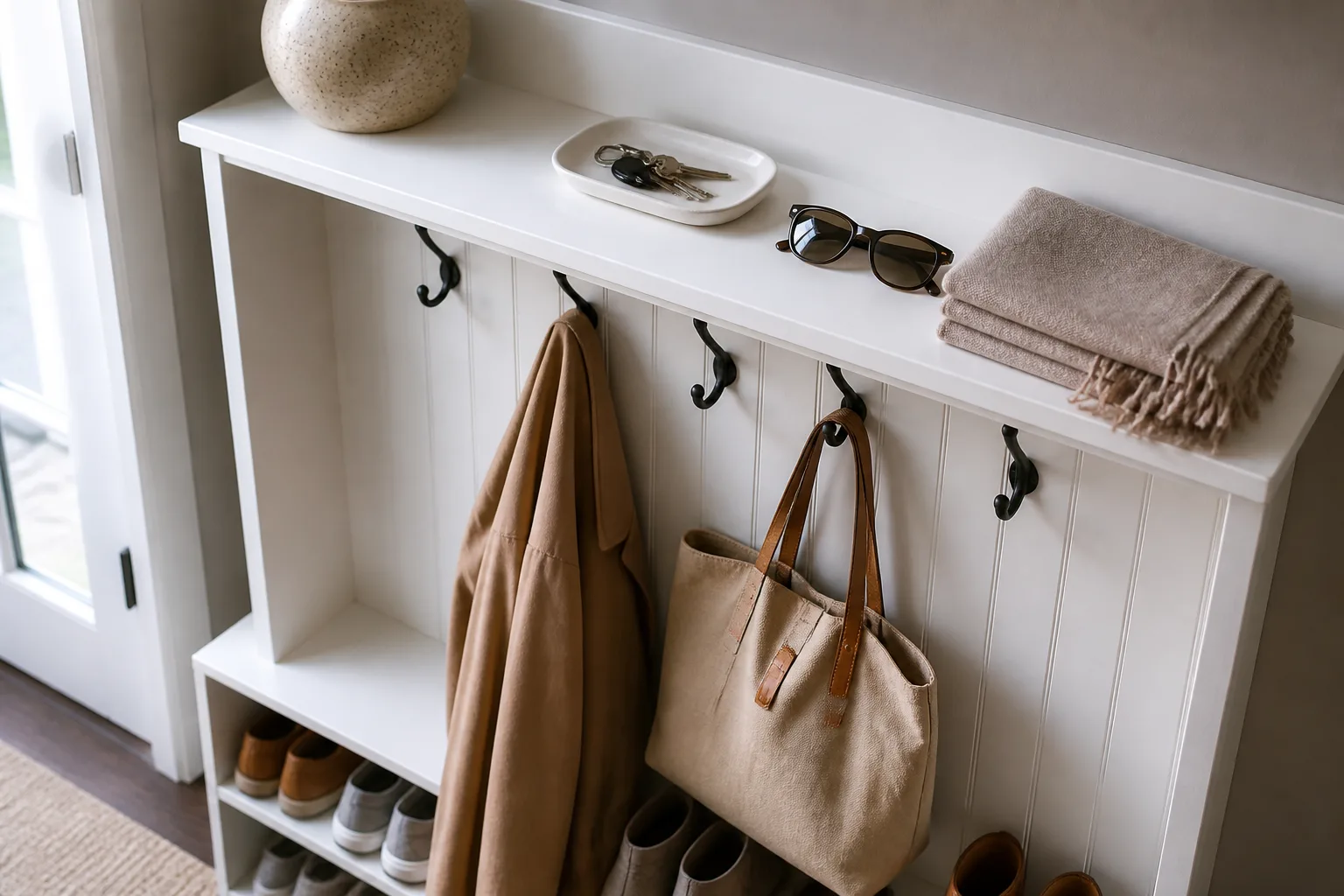
The best landing zone sits along the route people already take, not in the room that seems most suited to storage. If everyone comes through the garage, a front-hall system will be ignored; if there is no mudroom, a wall beside the kitchen may be the practical choice. Keep everyday items close to the door, while things used only occasionally can live elsewhere.
A basic setup needs only a few jobs: a place to hang outerwear, a defined spot for shoes, a basket or hook for each person’s bag, and a small surface or wall pocket for items that must leave again. Better Homes & Gardens describes personal spaces, shoe storage, paper sorting, and a homework station as useful mudroom functions; the useful principle is assigning each frequent item a clear destination, not copying a particular room layout. (Better Homes & Gardens’ mudroom organization guide)
Give each person a reachable home
A child’s hook should be low enough to use without help, and a basket should be easy to pull out and return. If siblings share one cubby, use a simple divider or separate baskets so a missing glove does not become a search through everyone’s things. Picture labels or a first name can help younger children recognize a location; older children may prefer a short category such as “school,” “sports,” or “return to school.”
Keep the personal space small enough to reset quickly. A basket that can swallow every object in the house hides the problem rather than organizing it, so set a boundary: one backpack, one pair of everyday shoes, and the coat or jacket currently in use. A seasonal overflow basket can live elsewhere and be reviewed when weather changes.
Turn a Drop Zone Into a School-Day Launch Pad
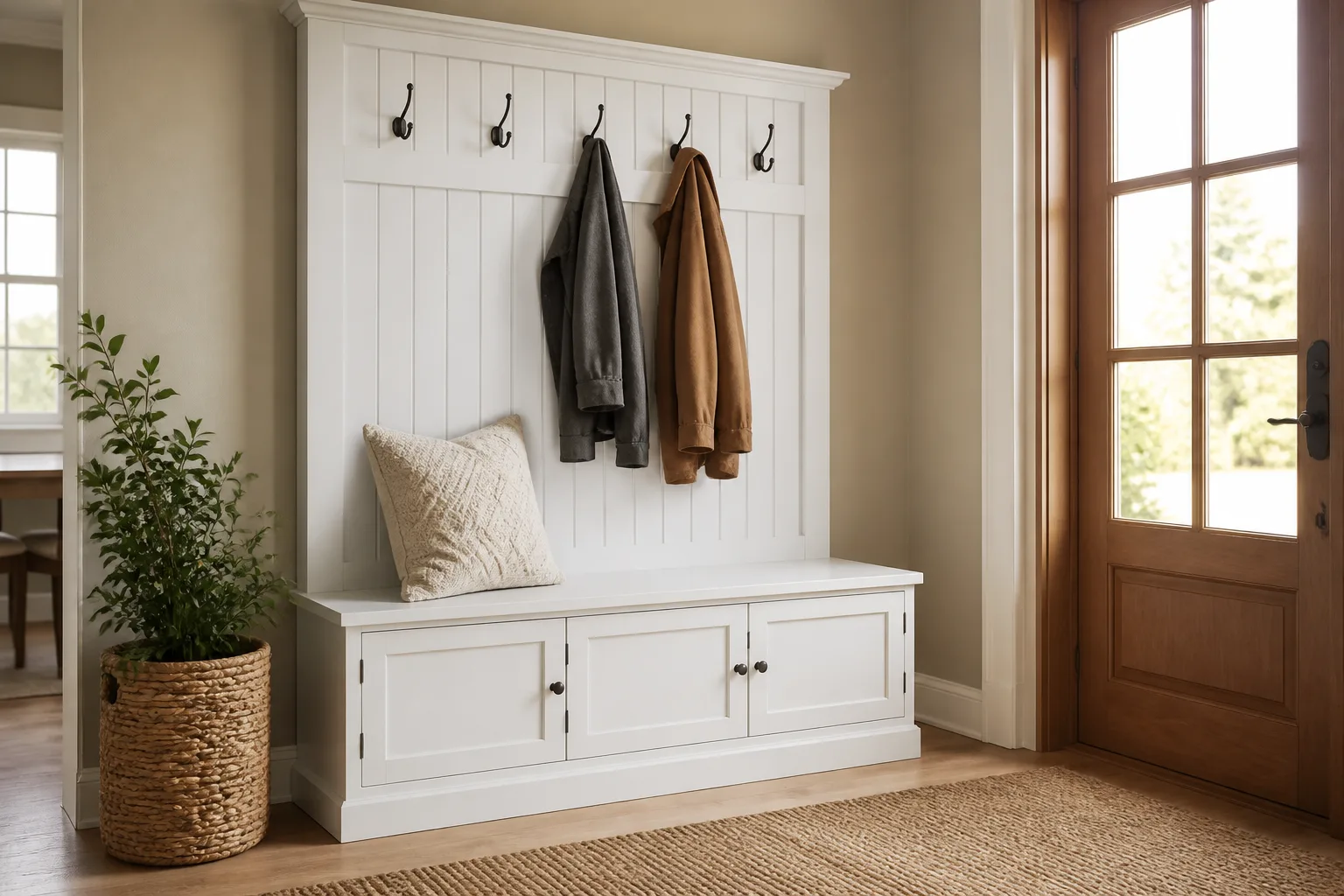
An entryway becomes a launch pad when it supports both directions of the day. Coming home, a child can hang the backpack, remove a lunch container, and place papers in the right folder; leaving, the family can collect the bag, shoes, outerwear, and any item that must go to school. These actions should take a few steps, not a trip through several rooms.
Separate “take tomorrow” from “keep at home.” A small outbox, wall pocket, or clipboard can hold permission slips, library books, and items that must be returned. Charge school devices in one agreed location if the child uses them, but keep cables and power strips arranged safely and away from younger children. For sports, put the gear for the next activity together in one labeled bag rather than creating a new bin for every piece of equipment.
Use a surface only if the household can keep it clear. A narrow shelf can hold a sign-out item or water bottle, but avoid turning it into a mail table or a place for objects without a destination. Real Simple’s interview with professional organizer Tricia Hearn emphasizes giving common drop-zone items a home and setting limits on how much a space can hold; that boundary makes it easier to put things away instead of stacking them. (Real Simple’s organizing advice)
Make Paperwork and Homework a Separate Flow
School papers often become clutter because they mix several decisions: read this, sign that, save this artwork, and recycle the rest. Create a simple route near the place where the backpack is unpacked. One folder or tray can be for papers that require a parent’s action, another for items the child needs to return, and a small keep folder for work the family has decided to save.
Set a predictable time to check the action folder, such as after dinner or before the evening reset. If a form must be signed, return it to the child’s backpack immediately after handling it rather than putting it back in the general paper pile. For artwork and projects, choose a small container with a limit; photograph pieces the family wants to remember but cannot store indefinitely.
Use an in-and-out paper system
A workable system needs only a few categories: “parent needs to act,” “child takes back,” and “keep or recycle.” A color-coded wall sorter can help a family with multiple children, but plain folders work just as well if they have a consistent home. The goal is not to preserve every sheet; it is to prevent an urgent notice from disappearing under a stack of drawings and weekly flyers.
Homework needs its own decision. The American Academy of Pediatrics recommends a consistent, quiet study space and notes that checklists, timers, and parental supervision can help some children organize homework. That space can be a desk, a clear section of a kitchen table, or a portable caddy that is put away after use; it does not need to be a separate room. (AAP back-to-school guidance)
Choose Labels and Storage Kids Can Use
Choose storage by the action it supports. Open baskets make it fast to drop in a hat or pair of gloves, while a cabinet can hide visual clutter in a shared living area. Hooks are easier than hangers for a fast return; a shoe tray is useful when the household can keep pairs within its boundary. The right choice depends on the person using it, the available floor and wall space, and how often the item is needed.
Labels should describe flexible groups, not every possible object. “School papers” can stay useful even when a class changes, while a label such as “Tuesday spelling sheet” becomes obsolete immediately. For children who are not reading confidently, a photo or simple picture paired with a word can make the location easier to recognize. Labels are prompts, though; they cannot fix a basket that is too high, too full, or placed out of reach.
Avoid organizing by a complicated color code unless everyone remembers it without effort. One color per person may be enough; assigning separate colors to shoes, folders, sports, and changing daily tasks quickly creates a new system to decode. Better Homes & Gardens recommends labeled spaces and even picture labels for younger children, while Real Simple’s organizer interview cautions that storage categories need room to adapt as needs change. Use those ideas as options, then keep only the ones your family naturally follows.
Build an Evening Reset and a Realistic Morning
The evening reset is a short handoff from today to tomorrow, not a second full cleaning routine. Choose a consistent time and run through a handful of actions: return school papers to their folder, put the backpack in its launch spot, check the calendar for a special item, and set out clothes or equipment if doing so helps the morning. If the family has a very early start, move only the steps that reduce genuine morning decisions to the night before.
The American Academy of Pediatrics recommends helping children move toward earlier bedtimes before the school year begins, keeping bedtime consistent, and using a predictable wind-down routine. That advice matters for organization because a checklist cannot compensate for a child who is exhausted or a bedtime that shifts unpredictably. Treat sleep, preparation, and the departure time as connected parts of the household schedule. (HealthyChildren.org’s back-to-school tips)
Stage tomorrow’s essentials
Use one reminder for the day’s exception rather than rewriting the whole routine. If a child needs a library book, place it with the backpack; if there is a sports practice, put the packed bag by the exit. A shared calendar can show special events, but the item itself should still have a physical home. A note on a whiteboard is easy to overlook when it is several feet away from the object that must leave.
Do not prepare everything so far in advance that the system creates more work. Lunch ingredients that need refrigeration should stay cold, and devices should be charged where they are safe and easy to check. The aim is to reduce the number of choices at the last minute, not to turn the previous evening into a rigid assembly line.
Keep the morning cue short
A morning cue works best when it names the next action, not every action a child could possibly take. A short visual checklist might include getting dressed, eating breakfast, brushing teeth, and checking the launch spot; adjust it to the child’s age and what the family actually needs. Keep it where the routine happens, such as near the bathroom or the exit, instead of expecting a child to remember a list posted elsewhere.
Build a small buffer before departure for the inevitable slow shoe, missing glove, or last-minute question. If the household is consistently rushing, move the wake-up time or prepare more the night before rather than adding more reminders. For young children, a checklist is a cue for the family, not a substitute for adult supervision; pediatric guidance notes that children in early and middle childhood still need an adult available to help them get ready and leave safely. (AAP back-to-school guidance)
Give Children Age-Right Ownership
A system lasts longer when children can use it and have some say in how it works. Invite them to choose between two practical options: a hook or a basket for a backpack, a picture label or a word, or one of two places that are both easy to reach. This gives a child ownership without asking them to design the whole household system or make decisions about every object.
Children do not need to organize perfectly to participate. The American Academy of Pediatrics recommends matching chores to age and ability, introducing one new task at a time when needed, and recognizing effort rather than expecting a flawless result. For school-age children, an appropriate starting contribution might be putting toys or books away, placing dirty clothes in a hamper, or helping pack a school lunch with an adult’s guidance; the exact task depends on the child and the household. (AAP’s age-appropriate chores guidance)
Teach one task before adding another
Show the action once, do it together, and then let the child try while the expectation is still small. “Put your backpack on the low hook after school” is easier to learn than “keep the whole entryway organized.” If the child forgets, point to the cue and practice again; if the hook is consistently missed, check its height or location before assuming the child is resisting.
Use a family check-in to ask what is confusing or annoying. A child may say a basket is hard to pull out, a sibling takes the only hook, or a reminder board is not visible from the door. Make one agreed change and revisit it after a week. Participation means the people who use a system can influence it, not that children have to carry responsibility for maintaining the entire home.
Adapt the System to Small Homes and Shared Care
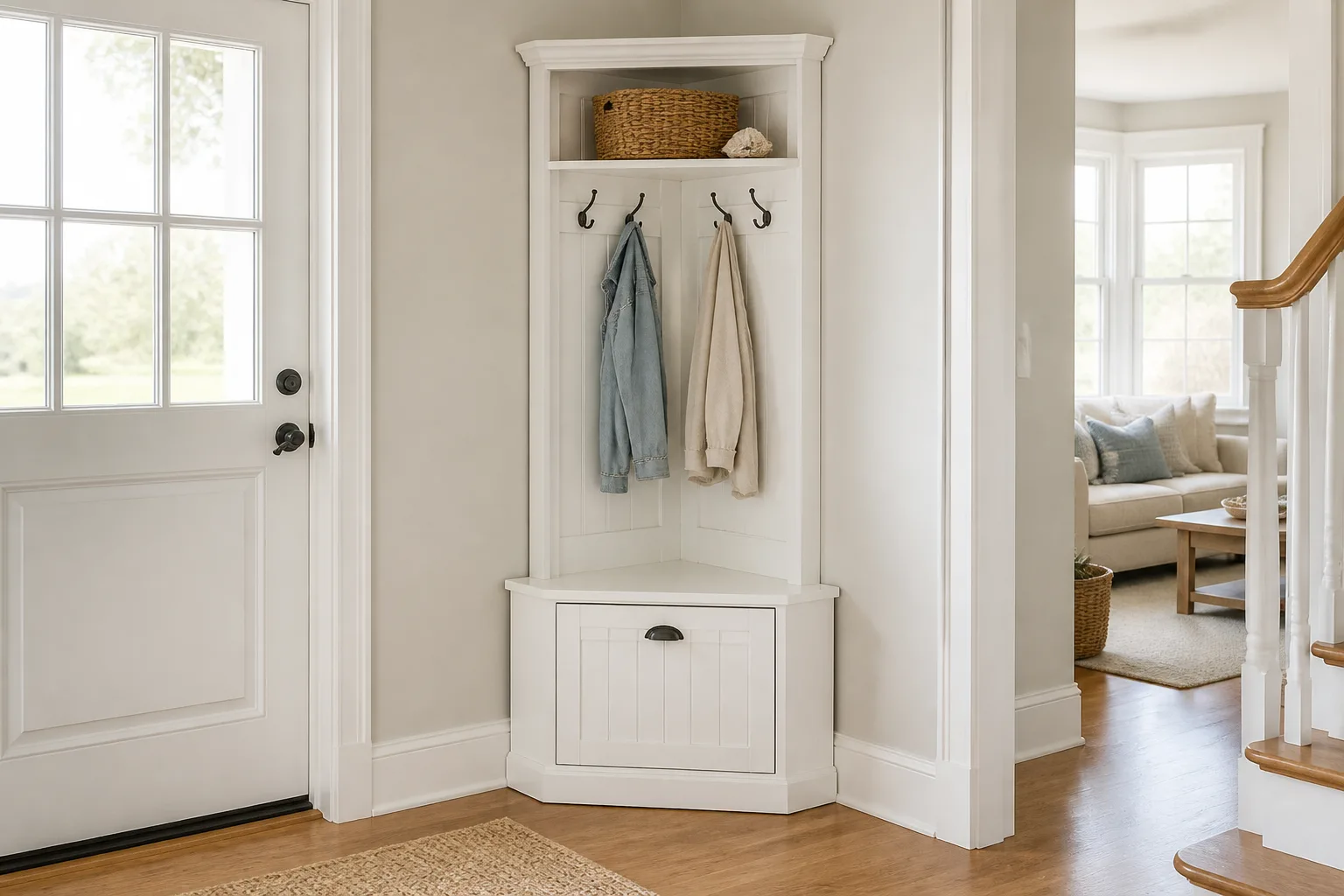
A family without a mudroom can create a small landing zone with a wall hook, a shoe tray, and one basket near the entrance. Renters can use freestanding furniture or removable hardware that suits the lease and wall surface; do not install a heavy shelf or hook without checking how it must be anchored. In a narrow hall, keep the walkway clear and use vertical storage only where bags and coats will not block a door or stair.
For a very small home, split the system by use rather than trying to place everything at the entrance. Keep shoes and outerwear at the door, papers in a folder by the table where they are opened, and homework supplies in a portable caddy. If there is no spare surface, a folder attached to a refrigerator or a hanging organizer can keep the paper flow visible without occupying a counter.
Shared caregiving schedules need one source of truth. A paper calendar on the wall or a shared digital calendar can record pickup changes, practice, and special items, but caregivers also need to agree on where the physical bag and paperwork go. If grandparents, a babysitter, or another household helps with school routines, write down the few steps that must happen and keep supplies in the same place across handoffs.
Fix the Failure Before Buying More Storage
When clutter returns, identify which part failed. If items land beside a basket, the basket may be too small or inconvenient; if a child never uses a high hook, lower it; if papers pile up unopened, the action folder may be in the wrong room or have no assigned check time. A quick weekly review can reveal whether the problem is location, capacity, unclear ownership, or a routine that no longer matches the schedule.
Better storage can help when the existing space is genuinely too small, but measure first and decide what each new container will hold. A storage bench may combine seating and shoes; a wall pocket may solve paper flow without using floor area. Real Simple’s interviewed organizer recommends setting limits for drop zones and keeping a designated donation collection point, but a donation bin should not become a permanent overflow box. Empty it on a planned schedule and ask the family before discarding someone else’s belongings. (Real Simple’s organizing advice)
If baskets become mystery boxes
A basket that catches random items needs a clearer job or a smaller capacity. Empty it once, sort the contents into keep, return, and discard, then put only the items that belong in that zone back inside. If the category is too broad, split it into two simple groups; if nobody can name what belongs there, remove the basket and use a hook or tray with a more specific purpose.
If a routine works for a month and then fades, make it easier to restart instead of replacing it with a more elaborate board. Keep the daily checklist visible, remove steps that no longer matter, and ask which part feels unnecessary. School seasons, activities, and children’s abilities change; a system should be reviewed and adjusted, not treated as a permanent verdict on how organized a family is.
Conclusion
A family organization system starts with one recurring mess and a home that is easy to use. Put the landing zone on the path people already take, separate school papers by their next action, prepare only what makes tomorrow easier, and teach children small responsibilities they can manage with support.
Try one change for a week before adding more bins or rules. When the system slips, check the location, capacity, and clarity first; then adjust it with the people who use it. A few obvious destinations and a short reset are more durable than a perfect room no one can maintain.