30 Best Perennial Flowers for a Shade Garden
Find the best perennial flowers for a shade garden, from spring ephemerals to late blooms, and match each choice to light and soil moisture.
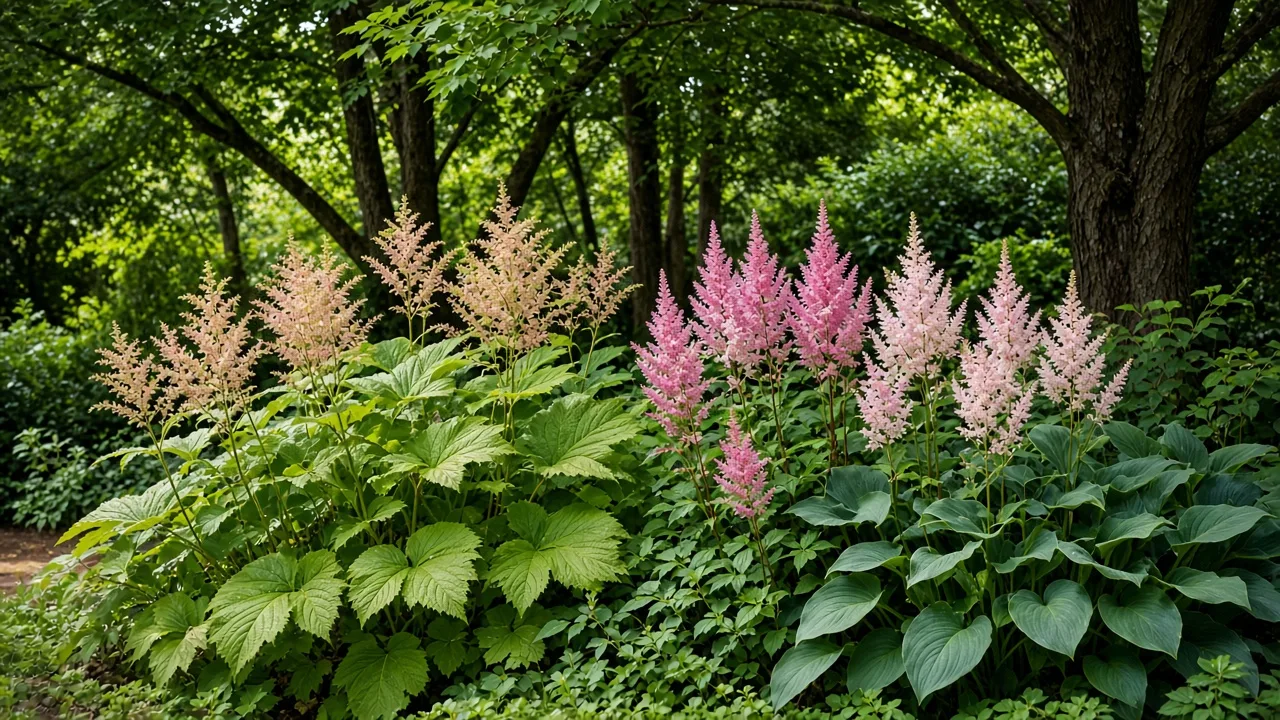
A shaded bed can flower from late winter into fall, but the plant label “shade” does not tell you whether a perennial will suit your soil. Dappled light beneath a high canopy, dry ground under a mature maple, and damp shade beside a downspout are different growing conditions. Start by watching the site, then choose plants for both the light and the moisture they will actually receive.
The 30 perennials below include early woodland bloomers, foliage plants, adaptable clumps, and late-season flowers. They are not interchangeable: astilbe is a poor bet for a thirsty tree root zone, while epimedium may manage that same dry shade once established. A useful shortlist starts with the section that matches your site, not with the brightest flower photo.
Understand the shade before choosing plants
Separate light level from soil moisture
“Part shade,” “dappled shade,” and “full shade” are useful shorthand, but labels are not perfectly standardized. A place that receives gentle morning sun and afternoon cover is usually easier for flowering than a dark corner beneath a low, dense evergreen canopy. Observe the bed at several times of day and through the growing season; a deciduous tree can allow spring sun before leaf-out, then cast deeper shade in summer. Country Living’s shade guide likewise advises watching the site rather than relying on a label alone (Country Living’s shade-perennials guide).
Moisture is a separate question. A shaded bed can be dry because a building blocks rain, a slope sheds water, or a tree’s roots compete for it; another shaded spot may remain cool and damp. Check soil after ordinary rain and during a dry spell. If it is dusty several inches below the surface while the rest of the garden is moist, choose plants described as tolerant of dry shade and plan to water new plantings as they establish.
Notice seasonal light and root competition
Under trees, root competition can matter as much as the canopy. North Carolina State Extension’s shade-garden guidance notes that some trees have such dense root systems that few plants grow beneath them, while other sites allow underplanting; it recommends choosing plants adapted to both the shade and the competition (NC State Extension’s sampling of shade gardens). That is why a plant thriving in an open north-facing border may struggle under a mature tree even if both sites receive little direct sun.
Treat hardiness-zone numbers as a starting point, not a guarantee. Species, named cultivars, drainage, winter wetness, summer heat, and local provenance all matter. For a wildlife-focused bed, favor species native to your region where they fit the site; a plant native to one part of North America is not automatically native or ecologically appropriate everywhere.
30 perennial flowers for shade, grouped by garden job
Eight spring and early-summer woodland choices
These plants make the most of spring light before many tree canopies close. Several are spring ephemerals: they flower, set seed, and then retreat underground or lose their leaves as summer begins. Pair them with later foliage rather than treating their disappearing leaves as a failure.
1. Primrose (Primula spp.) brings early color in yellow, pink, purple, red, and other shades. Most garden primroses prefer cool, moisture-retentive soil and partial to full shade; some tolerate spring sun better than hot afternoon exposure. They are a good front-of-border choice where the soil does not bake dry. The genus includes many species and cultivars, so check the plant label for the exact hardiness and moisture needs.
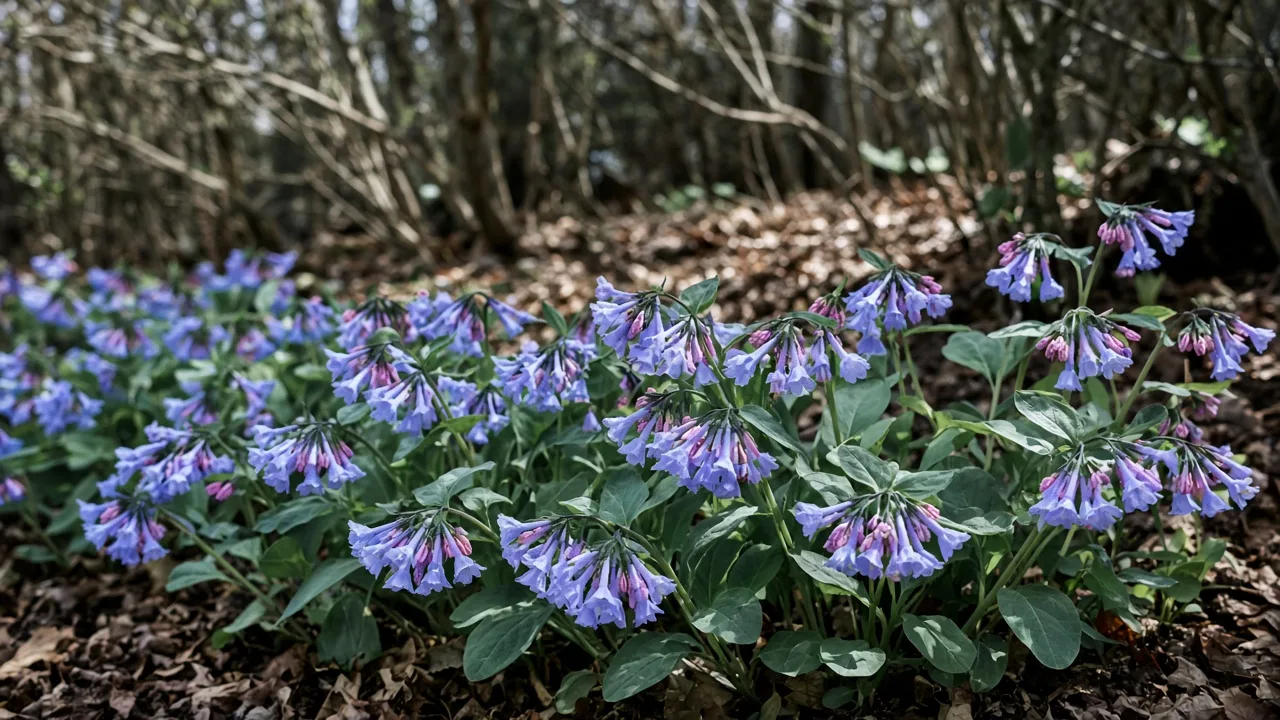
2. Virginia bluebells (Mertensia virginica) open clusters of pink buds into blue, bell-shaped flowers in spring. This eastern North American woodland native prefers humus-rich soil with steady spring moisture and usually goes dormant after flowering. Plant it where its summer gap will be hidden by hosta, fern, or another later-emerging neighbor, and avoid digging around it once established.
3. Dutchman’s breeches (Dicentra cucullaria) has finely divided leaves and distinctive white spring flowers. Like other woodland ephemerals, it performs best in a naturalistic bed with leaf litter and minimal disturbance rather than in a frequently cultivated border. Give it cool, well-drained soil and space to settle; its foliage naturally fades after its short spring display.
4. Wood poppy (Stylophorum diphyllum) offers bright yellow flowers above lobed leaves in a woodland setting. It is useful when you want spring color with more foliage presence than a tiny ephemeral, but it still appreciates moist, humus-rich soil and protection from harsh afternoon sun. Allow seed heads to mature if you want it to self-sow; remove them if you prefer a tidier, more contained patch.
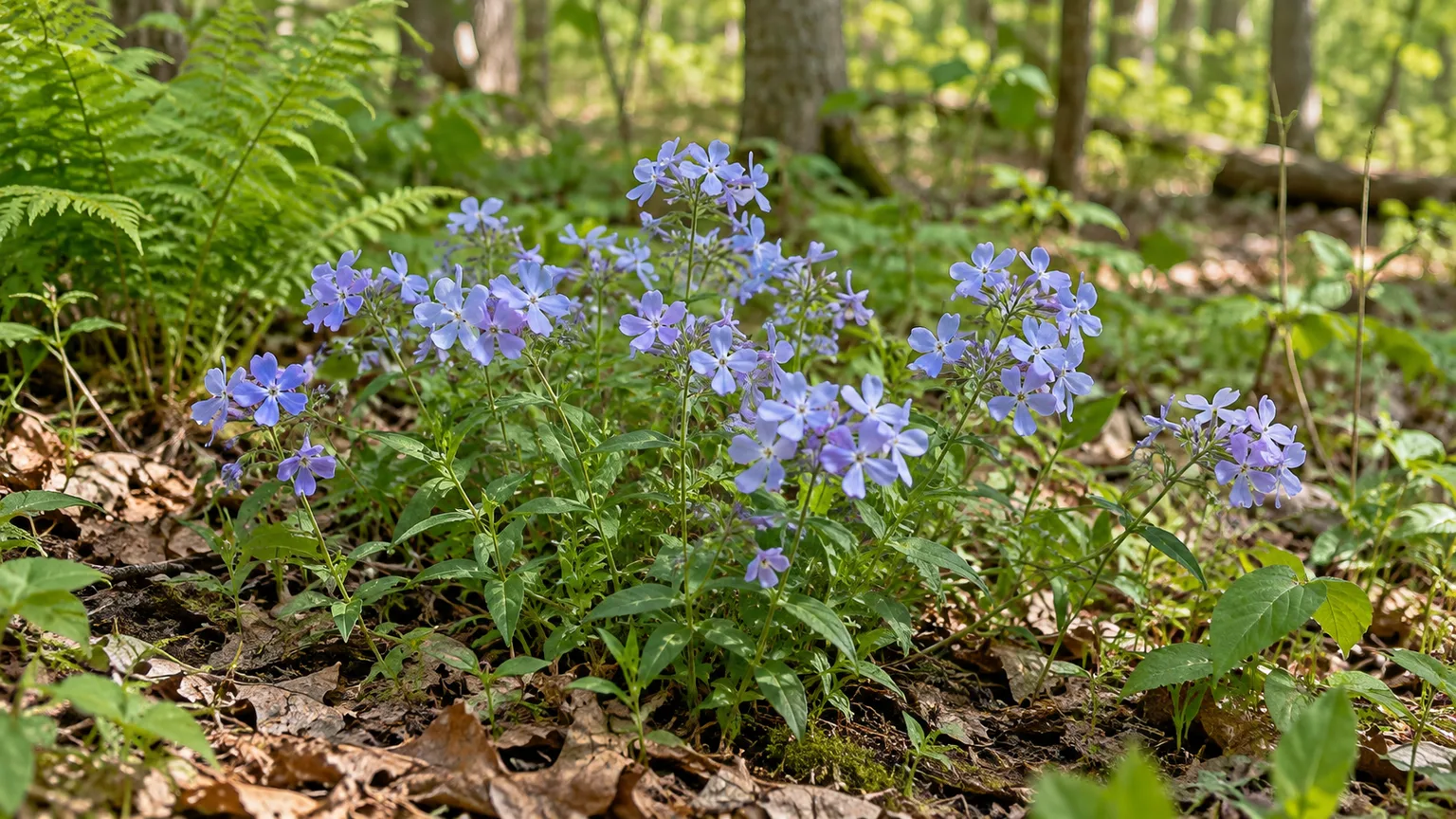
5. Woodland phlox (Phlox divaricata) forms a low flowering layer, with blue or lavender blooms in spring. It suits dappled light at a woodland edge, where neighboring plants will not smother its lower stems. Use it as a soft front layer under taller spring perennials, and keep the soil from becoming bone-dry while the plants establish.
6. Shooting star (Dodecatheon meadia) bears nodding flowers with swept-back petals on upright stems. It is a distinctive spring specimen for a well-drained woodland bed, not a filler for every dark corner; too much competition or persistent summer wet can limit it. Let the leaves complete their seasonal cycle before clearing the area, and avoid placing it where summer irrigation keeps the soil saturated.
7. Corydalis (Corydalis spp.) adds small, tubular flowers above finely cut foliage. The genus contains different species with different habits, so confirm whether a particular selection is a clumping perennial, a self-seeder, or a plant that goes dormant in summer. Use it in a shaded front or middle layer and give it room to naturalize only if the cultivar’s spread suits your plan.
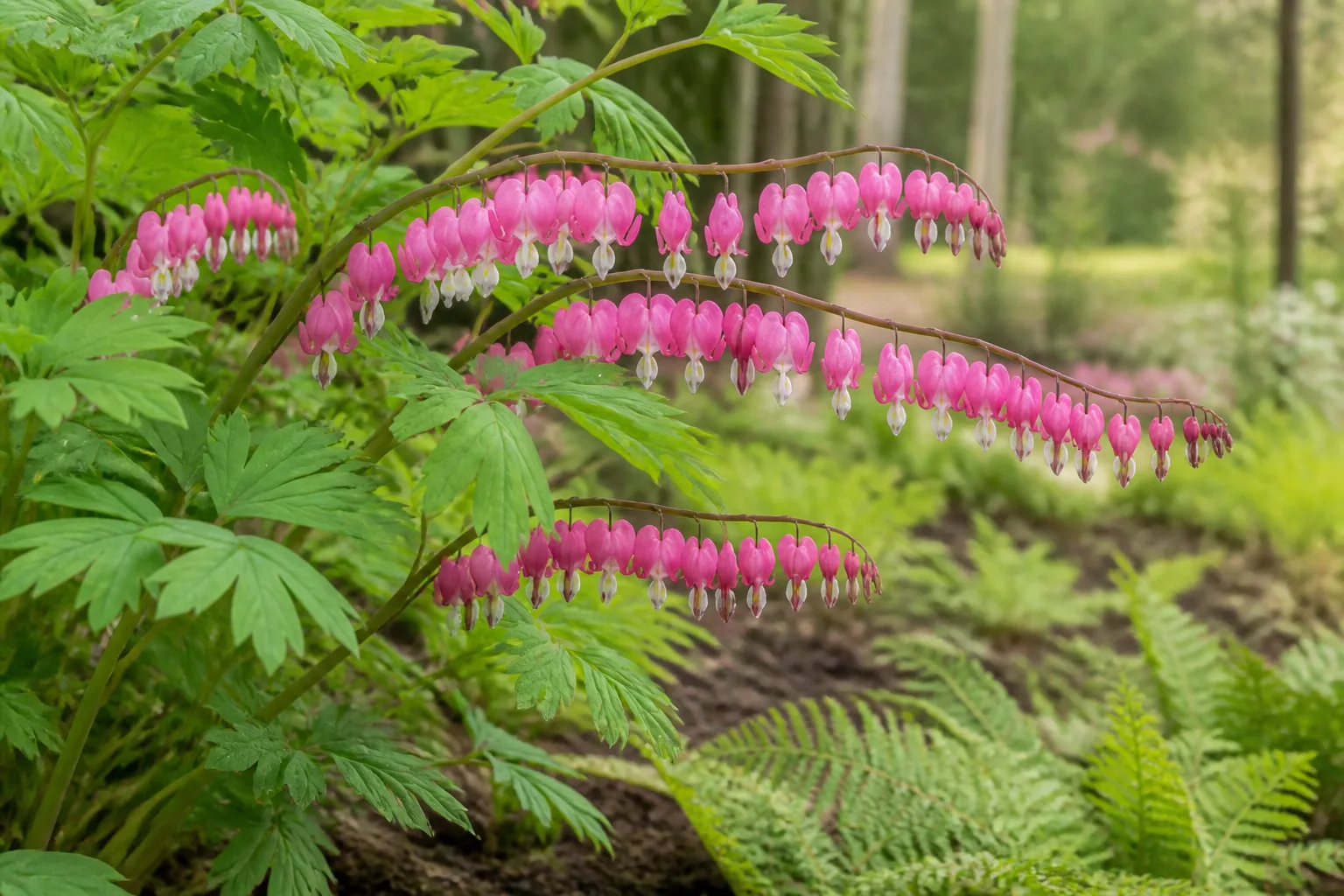
8. Bleeding heart (Lamprocapnos spectabilis) makes arching stems of heart-shaped flowers in spring. It likes cool, evenly moist, well-drained soil and often becomes less visible as summer heat arrives. Rather than filling the vacancy with another spring plant, set it behind a later-emerging perennial that can cover its fading foliage without crowding its crown.
Ten foliage plants and groundcovers
In deep shade, leaves often do more reliable design work than flowers. Choose contrast in leaf size, color, and shape, then use bloom as a seasonal accent. Companion combinations work best when light, soil moisture, drainage, and mature size are compatible; Gardenia’s hosta companion guide emphasizes matching those needs before choosing visual contrast (Gardenia’s hosta companion guide).
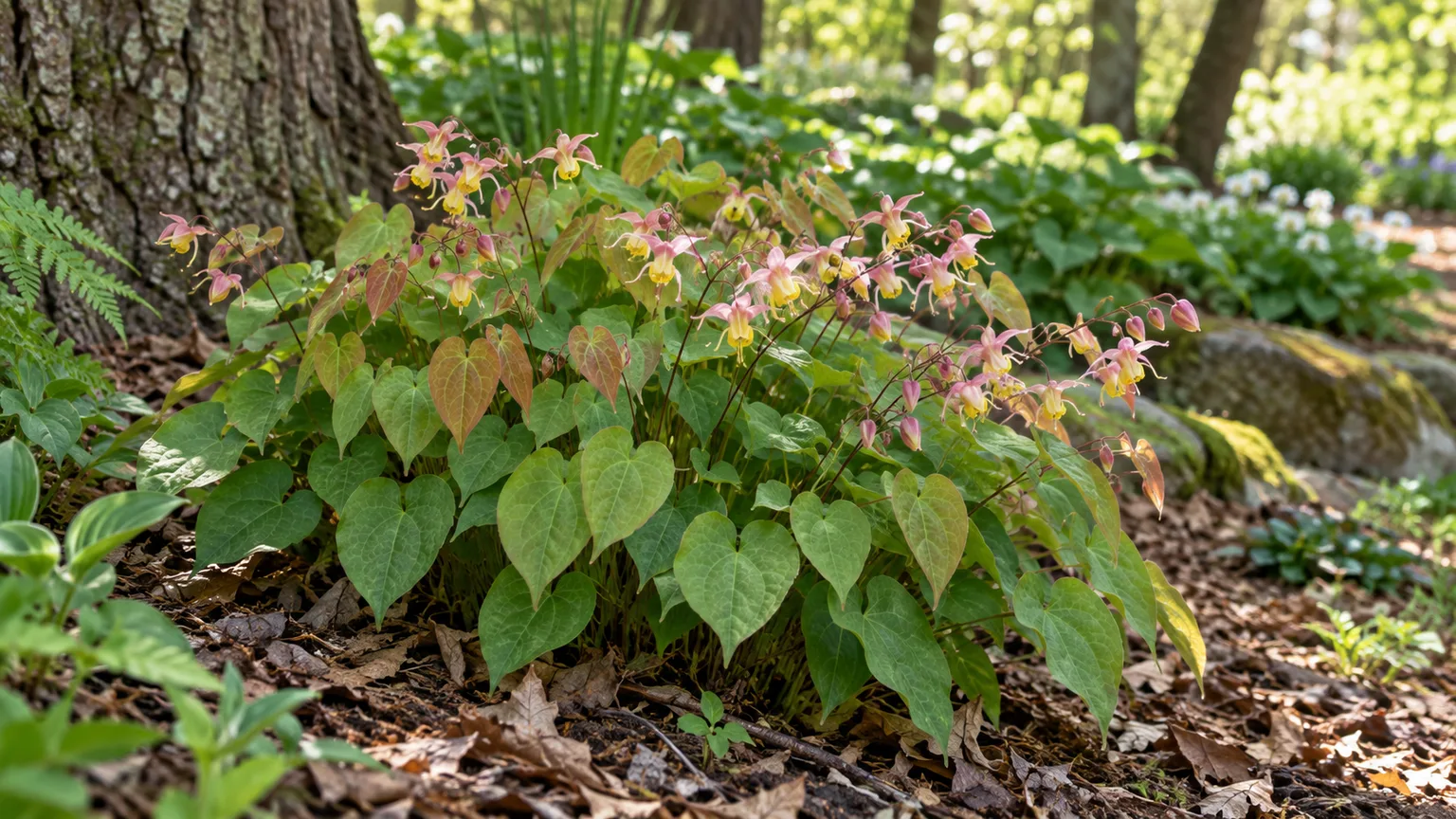
9. Barrenwort (Epimedium spp.) is one of the most useful choices for a dry, root-filled shade bed. Its spring flowers are delicate, while the heart-shaped leaves create a durable low layer after flowering. Many kinds tolerate comparatively dry shade once established, but establishment still takes time; water the first season and do not expect an instant carpet. Gardenia also identifies epimedium as a better fit for drier woodland conditions than thirstier companions.
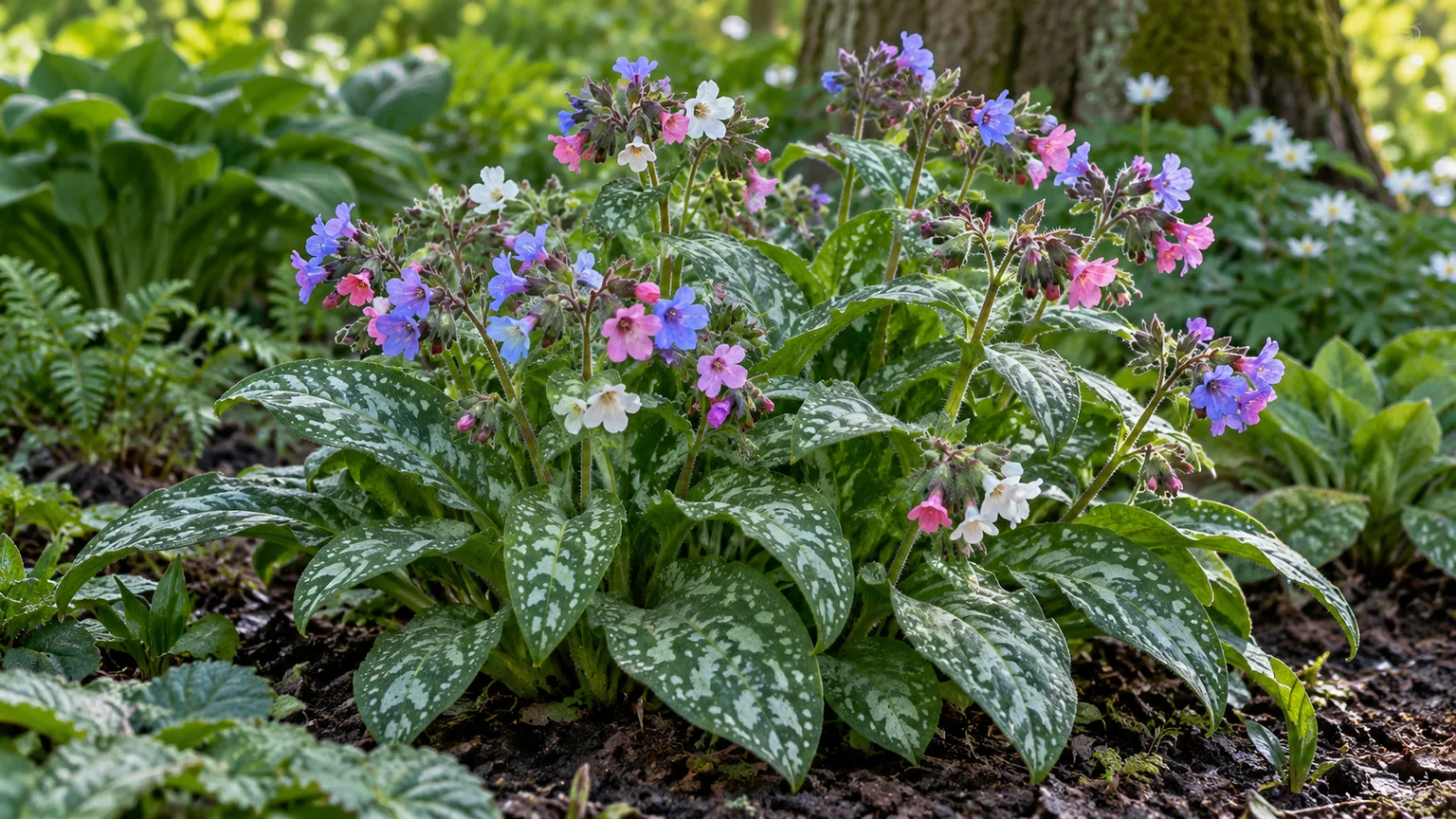
10. Lungwort (Pulmonaria spp.) earns its place through both spring flowers and patterned foliage, often with silver spots. It is best in cool, moist but well-drained shade; hot afternoon sun and dry soil can leave leaves looking tired. Set it at the front or middle of a bed, where its foliage remains visible after the brief flowers finish.
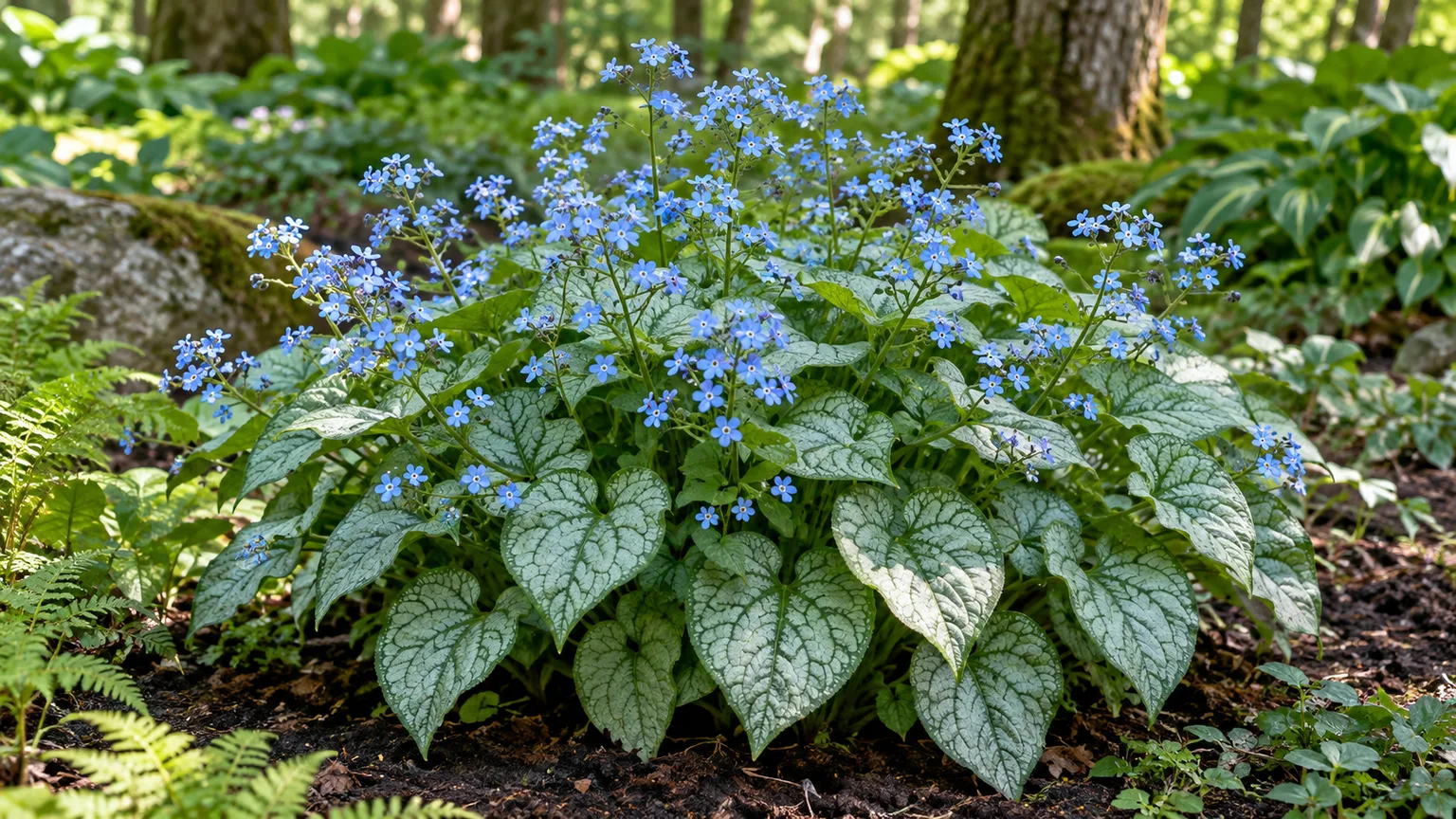
11. Siberian bugloss (Brunnera macrophylla) combines blue spring flowers with large leaves, and some cultivars have striking silver patterns. It prefers partial or dappled shade and soil that stays evenly moist without remaining waterlogged. Use it where you can see the foliage from a path or window, and do not place it in a hot, dry root zone just because its label says shade.
12. Solomon’s seal (Polygonatum spp.) adds graceful, arching stems and hanging spring flowers. It works well behind lower groundcovers, where its vertical shape can be seen without making the planting feel crowded. Give it average to moist soil and room to spread gradually by rhizomes; avoid repeatedly moving it, since established clumps are more useful as a stable structural layer.
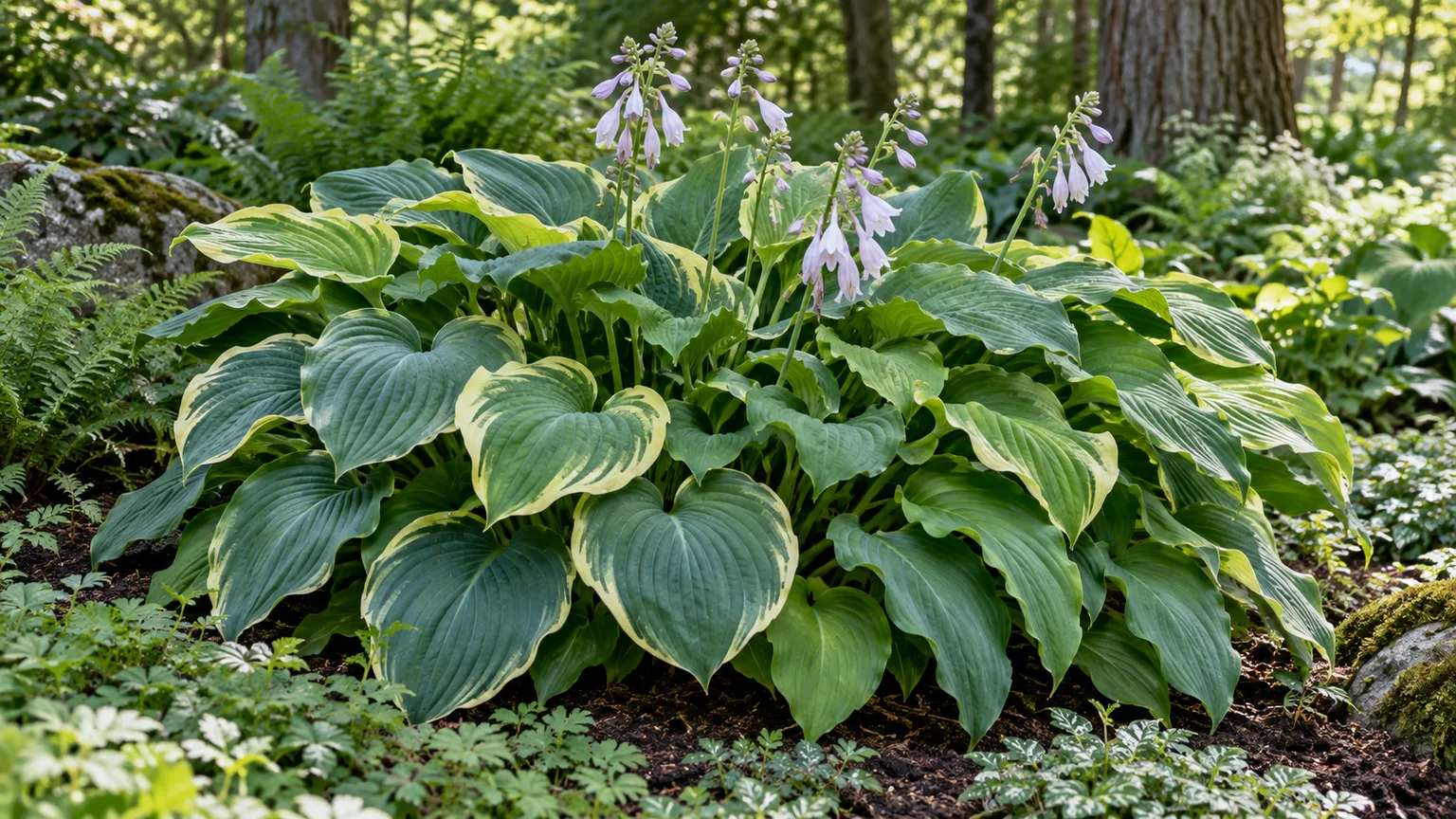
13. Hosta (Hosta spp.) is primarily a foliage perennial, but its summer flower stalks can also be attractive to pollinators. Cultivars range from small edging clumps to very large leaves, so check mature width before planting. Many hostas prefer dappled or partial shade and moisture-retentive, well-drained soil; slugs, deer, and drought can all affect the foliage. Blue-leaved cultivars usually hold their color best with protection from strong sun and heat (Gardenia’s hosta-growing guidance).
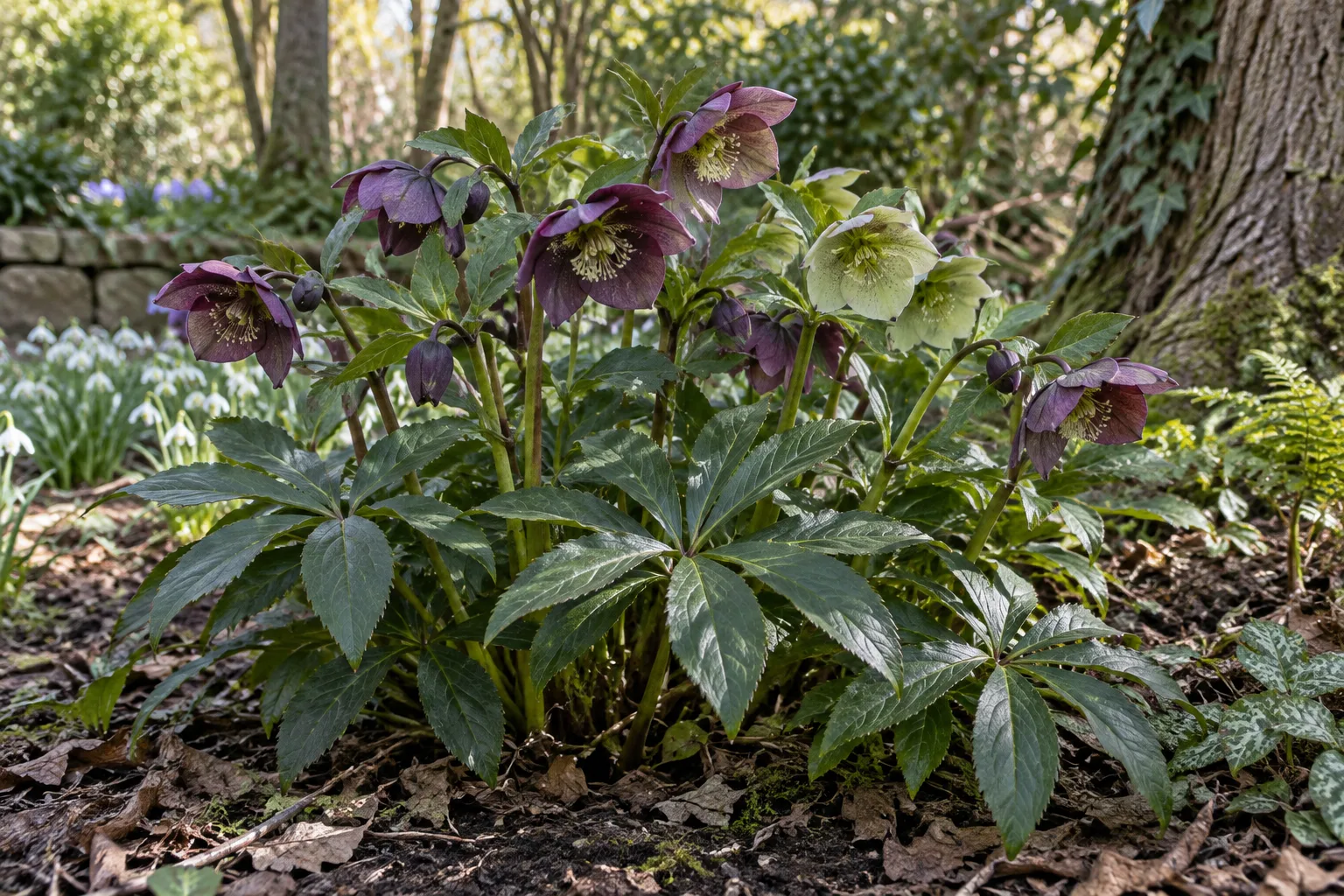
14. Hellebore (Helleborus spp.) can flower in late winter or early spring and keeps a substantial clump of foliage for much of the year. Give it well-drained soil and summer shade; water during establishment and extended dry periods. Hellebores are not an edible or pet-safe garden choice: ASPCA Poison Control lists hellebore as toxic to dogs, cats, and horses (ASPCA Poison Control’s hellebore profile).
15. Lily-of-the-valley (Convallaria majalis) is a fragrant spring groundcover that can fill a difficult shaded bed, but its rhizomes make it a committed spreader. Plant it only where a dense patch is welcome and where it can be contained away from natural areas. It is toxic to pets, so avoid it in a yard where animals may chew plants; ASPCA Poison Control flags it as toxic to dogs, cats, and horses (ASPCA Poison Control’s lily-of-the-valley profile).
16. Wild ginger (Asarum canadense) has broad, heart-shaped leaves that cover soil and small flowers hidden close to the ground. It makes more sense as a foliage groundcover than as a showy flower choice. It likes woodland conditions and can spread into a loose colony; allow room for it to knit together rather than planting it among delicate species that need open soil.
17. Spotted dead nettle (Lamium maculatum) provides low silver-marked foliage and small spring flowers, often with intermittent rebloom. It can be useful along the edge of a shade bed, but creeping stems may root as they spread. Keep it inside a defined planting area and check local guidance before using any fast-spreading nonnative groundcover near natural spaces.
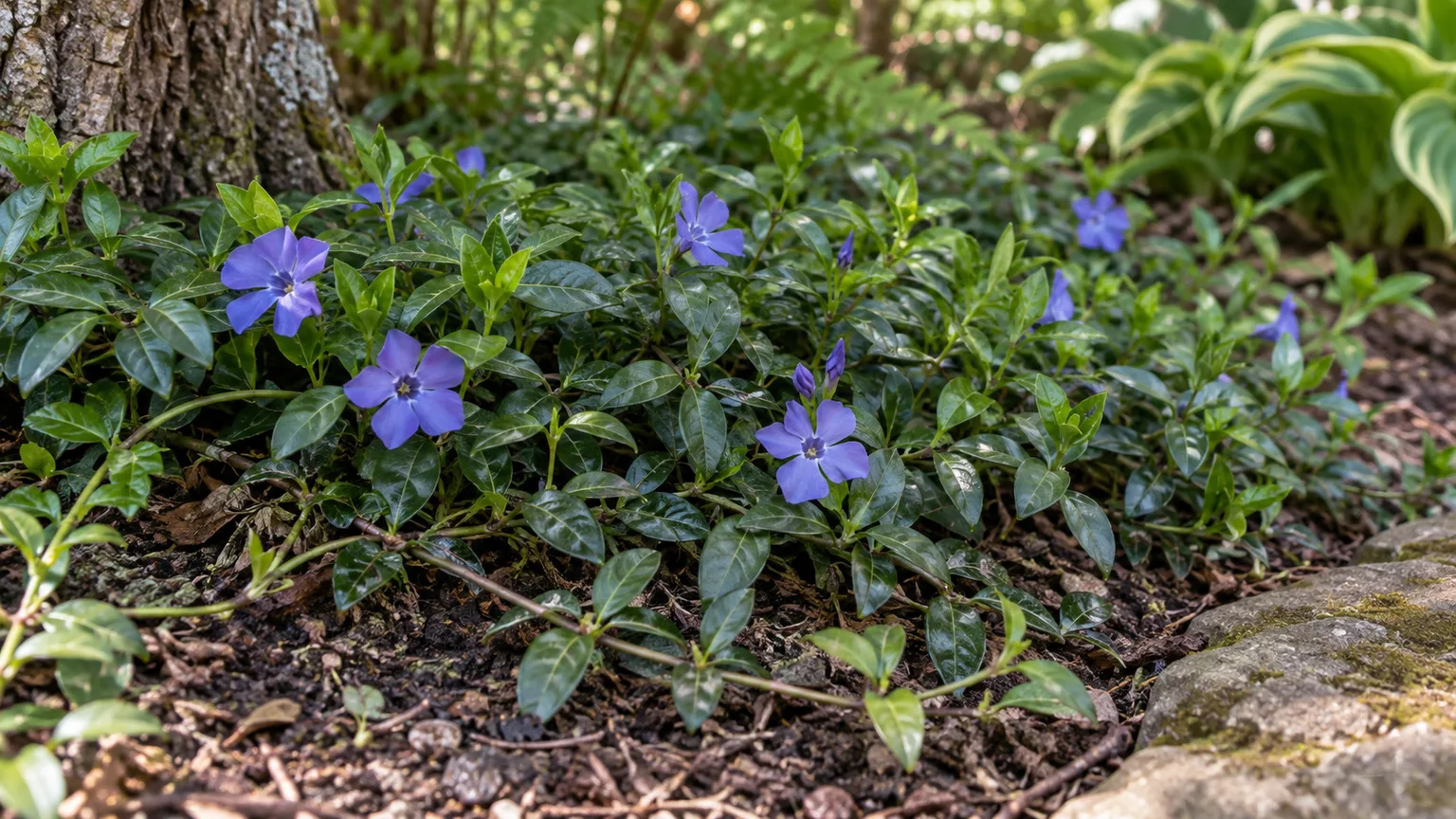
18. Periwinkle (Vinca minor) is evergreen and tolerates difficult shade, but it can form a dense mat by rooting where its stems touch soil. North Carolina State Extension describes it as a rapid spreader and notes that it is classified as invasive in North Carolina; status differs by region, so check local invasive-plant lists before planting (NC State Extension’s Vinca minor profile). In a contained bed, it may be manageable; beside woodland, a locally native groundcover is usually a safer choice.
Seven dependable flowers for dappled or partial shade
These plants generally flower more reliably when they receive some filtered or morning light. In very deep shade, expect foliage and plant structure to carry more of the display. For a layered border, repeat two or three compatible plants instead of giving every species a single isolated spot.
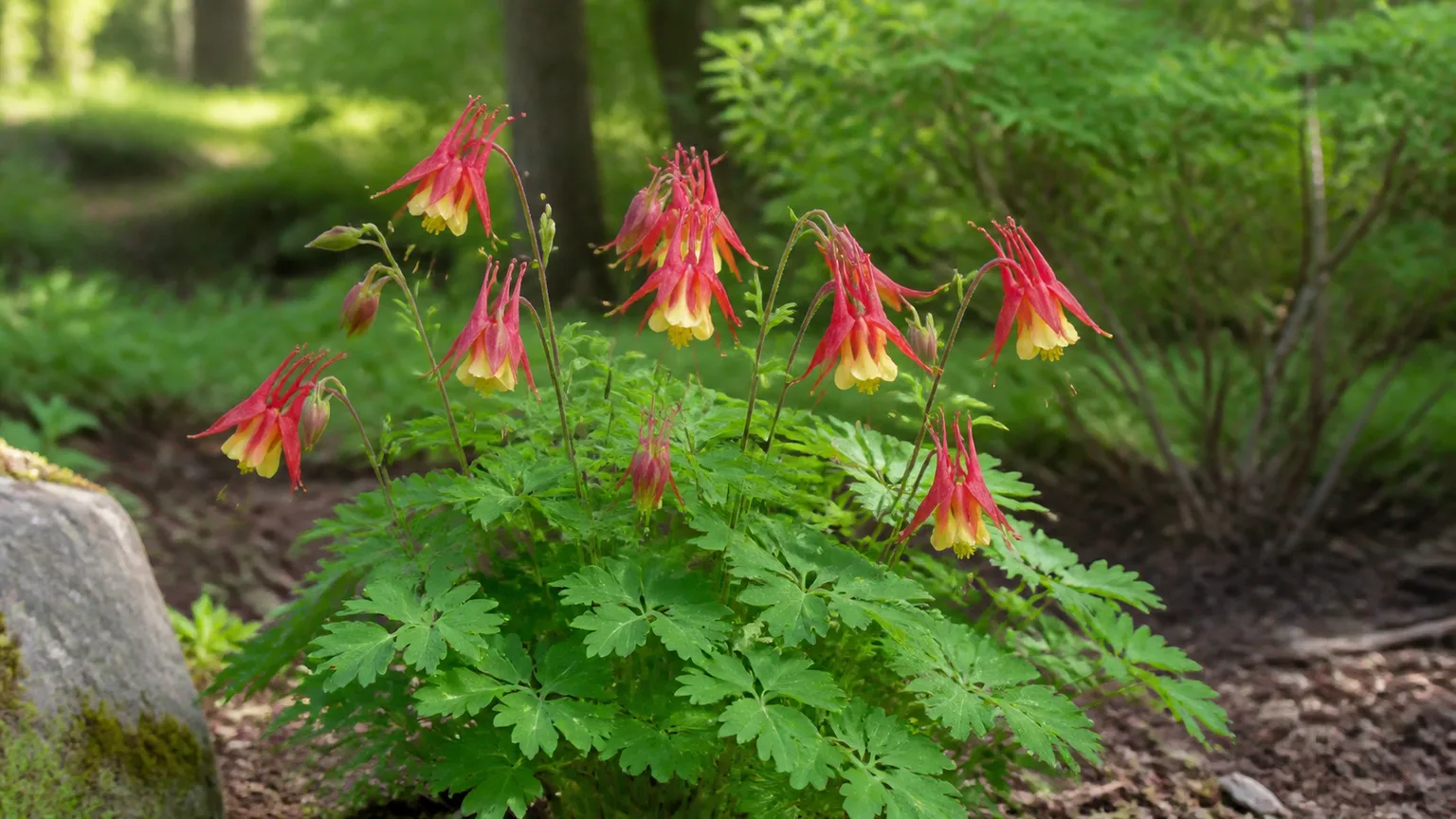
19. Columbine (Aquilegia spp.) offers nodding, spurred flowers in spring and early summer. Species and cultivars vary in color, height, and native range; choose a locally native columbine if supporting regional pollinators is a goal. It self-seeds readily in favorable sites, so leave a few seed heads for naturalizing or deadhead them to keep the planting more controlled.
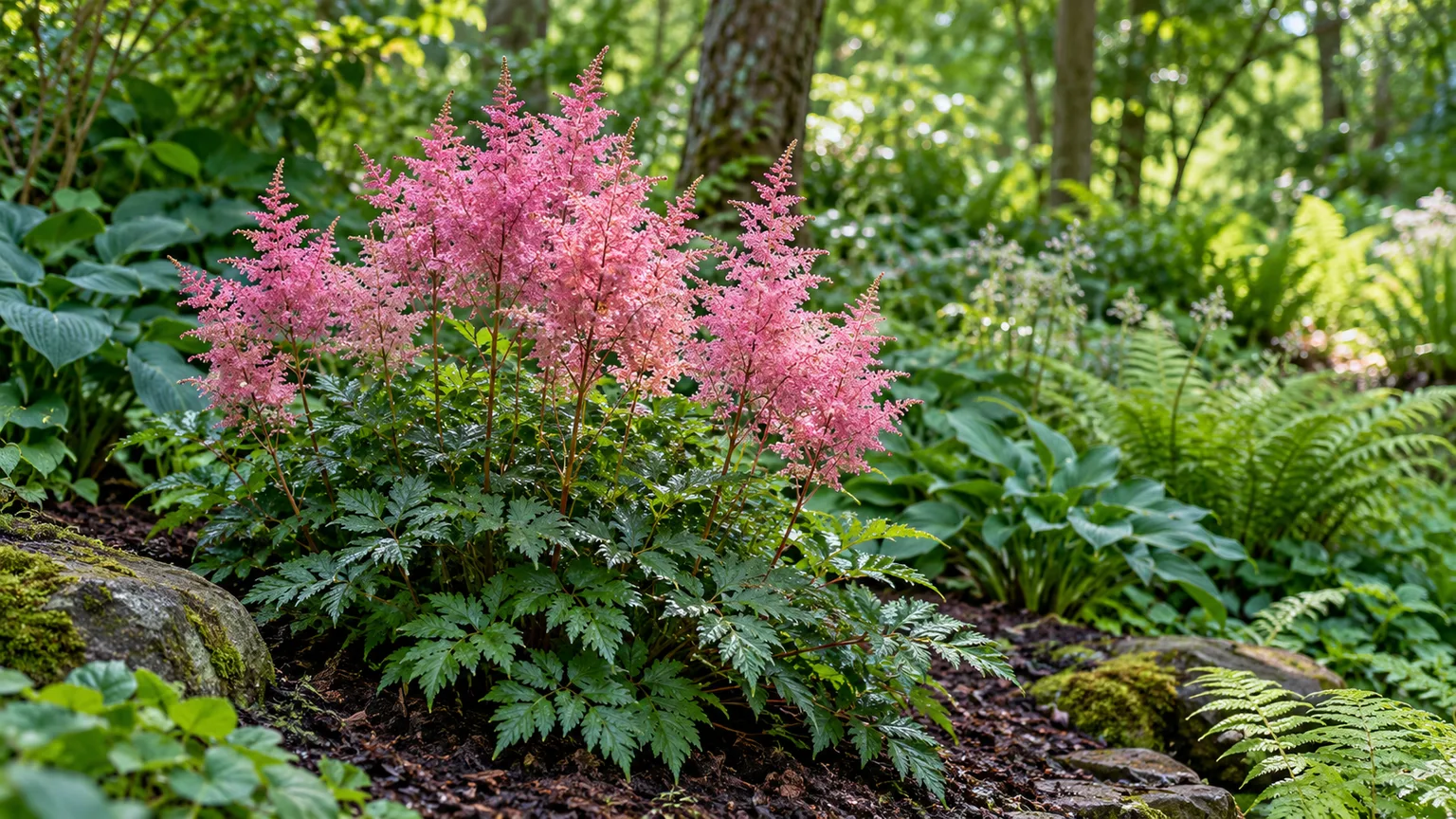
20. Astilbe (Astilbe spp.) lifts feathery summer plumes above divided foliage and is especially effective against broad hosta leaves. It needs reliable moisture and well-drained soil; shade alone will not rescue it from a dry tree-root bed. Choose it for a bed you can water during dry stretches, or select a different plant for a low-input, rain-fed site. Gardenia’s guide likewise treats astilbe as a flowering partner for moist shade, not a dry-shade substitute (Gardenia’s hosta companion guide).
21. Meadow rue (Thalictrum spp.) has airy foliage and soft flower clusters that add height without a heavy visual block. Give it partial shade, humus-rich soil, and enough room for the mature clump. Tall varieties may need shelter from strong wind or support, especially in rich soil. A species or cultivar suited to your region is more reliable than choosing solely by flower color.
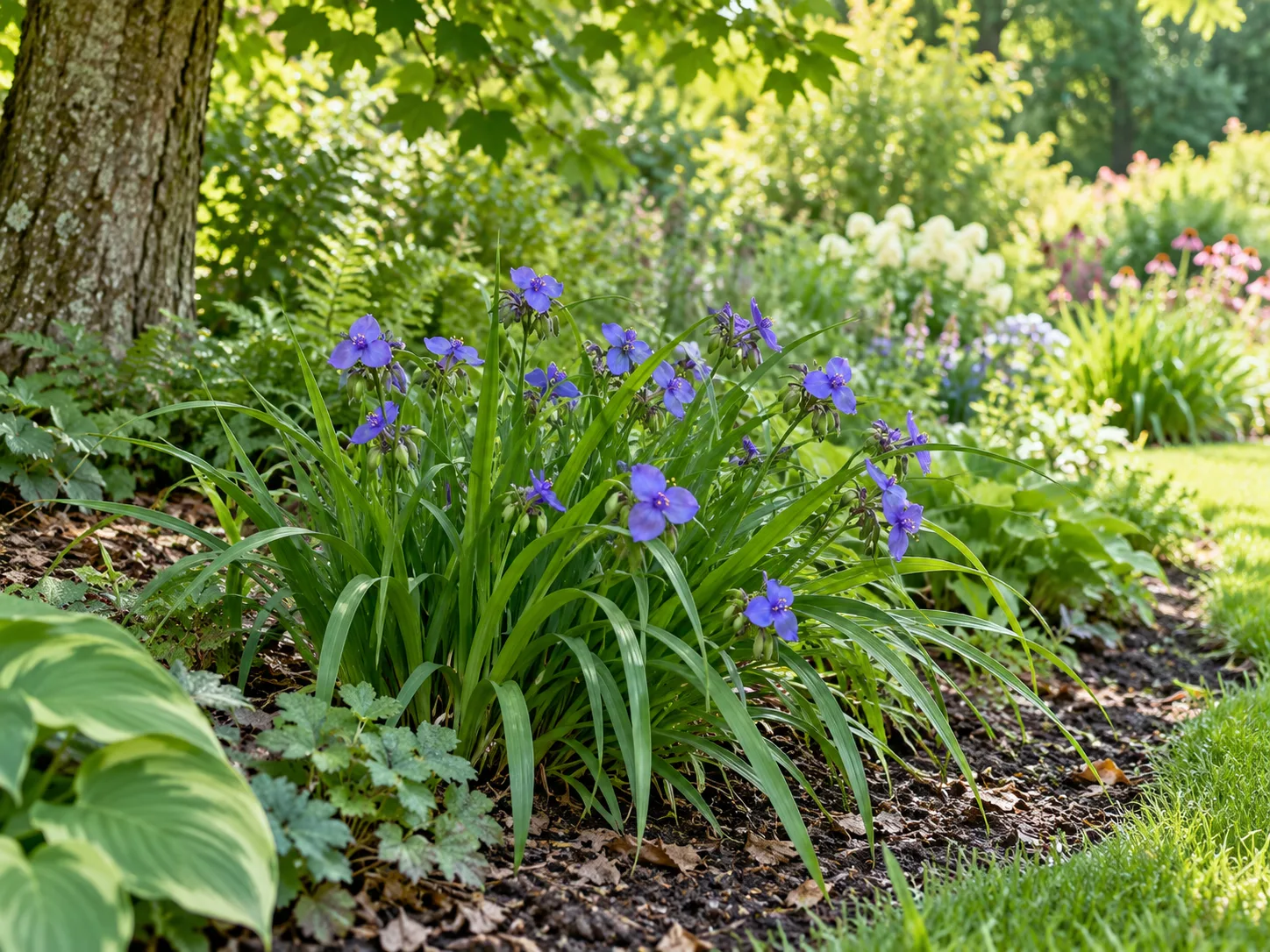
22. Spiderwort (Tradescantia spp.) produces repeated three-petaled flowers above grassy leaves from late spring into summer. Individual blooms are short-lived, but successive flowers extend the show. It can look untidy after blooming; cutting the clump back can encourage fresh foliage, though this also removes any developing seed. Use it in a naturalistic border where the arching leaves fit the surrounding plants.
23. Indian pink (Spigelia marilandica) brings unusual red tubular flowers with yellow tips to a partly shaded woodland border. It is a regional native in the southeastern United States, so check its native range and local nursery availability before treating it as a universal native choice. Give it rich, evenly moist soil and patience while it establishes; it is better as a small clump than as instant groundcover.
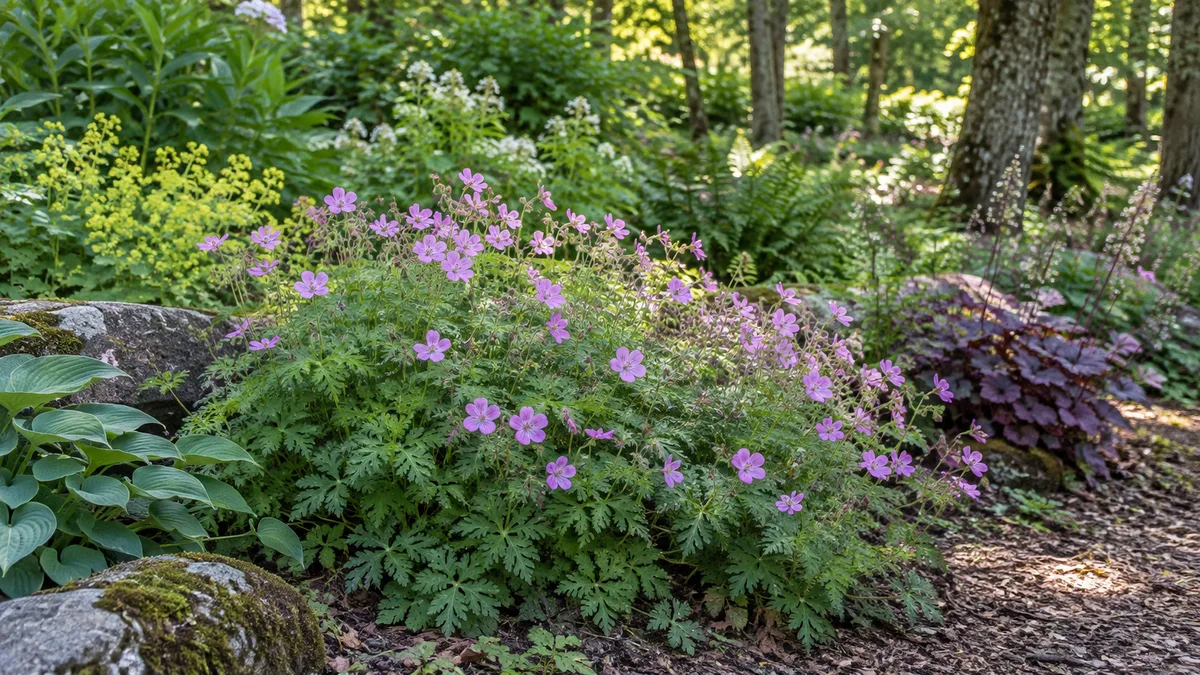
24. Wild geranium (Geranium maculatum) is a spring-flowering woodland perennial with rounded leaves that remain useful after the blooms fade. Unlike annual bedding geraniums, this cranesbill is a hardy perennial. It suits partial shade and average moisture, and can slowly form a low colony. Choose the species native to your region when possible, since “wild geranium” can also be used loosely for several perennial geraniums.
25. Jacob’s ladder (Polemonium spp.) brings fernlike leaves and clusters of blue, purple, or white flowers to late spring. It works best where the soil stays cool and does not repeatedly dry out. Check the species label because the genus includes plants with different ranges and hardiness. Plant it near a path or seating area, where the delicate foliage and flowers can be seen rather than lost behind larger leaves.
Five options for height, moisture, and late color
A shade bed needs plants with different heights and bloom windows, but the tallest choices need room. Put vertical plants toward the back or in repeating groups, and keep lower foliage at the front. The last two recommendations below are for specific moisture conditions, not general-purpose shade.
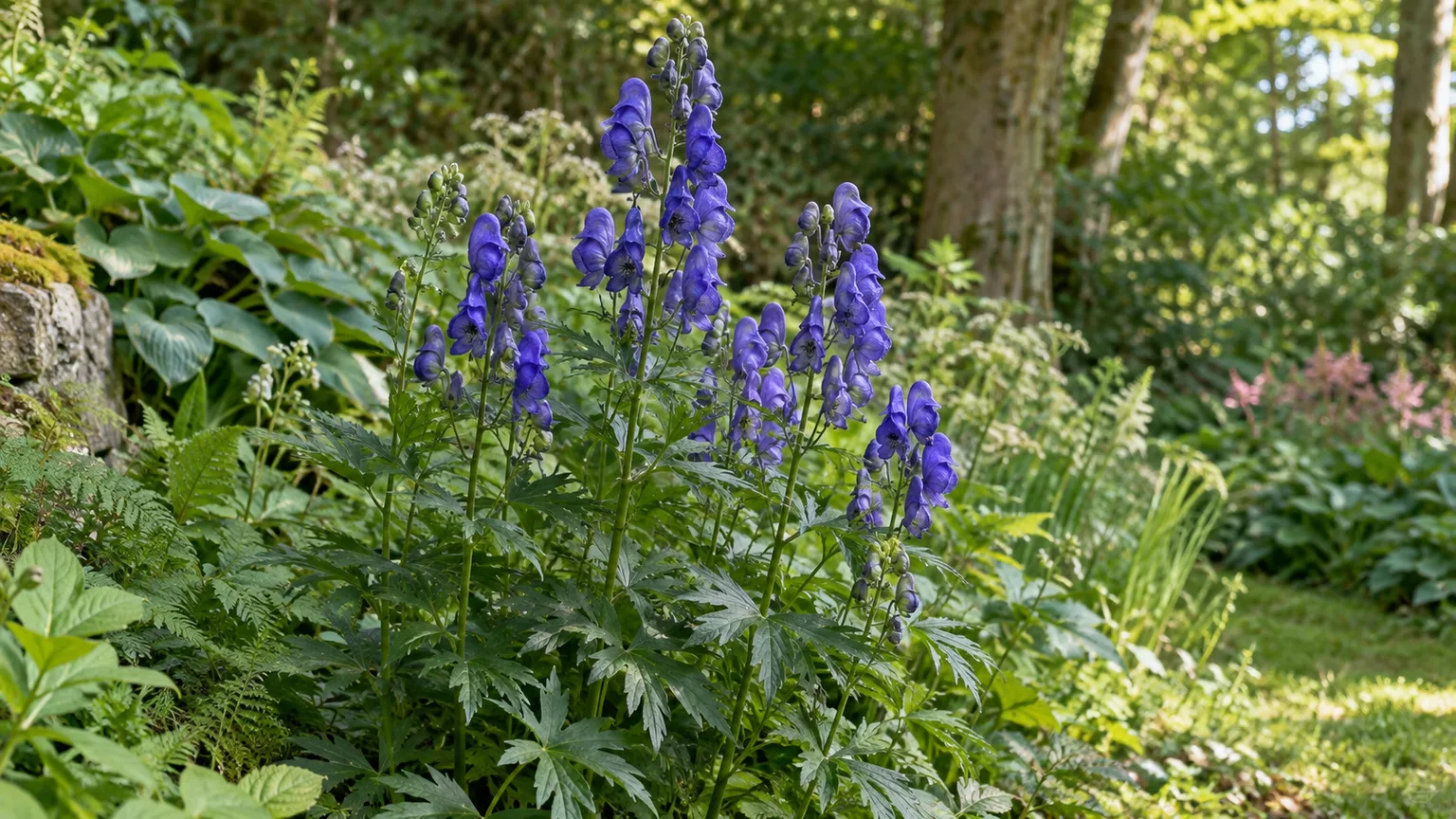
26. Monkshood (Aconitum spp.) produces tall spikes of blue or purple flowers in late summer and can bring color after many spring perennials are finished. It needs rich, evenly moist soil and may need staking in a sheltered border. This is a serious safety exception: Poison Control notes that all parts of Aconitum napellus, especially the roots, contain toxins and that swallowing it can be life-threatening (Poison Control’s monkshood safety article). Do not grow it where accidental ingestion is plausible, and never use it as an edible or medicinal plant.
27. Black cohosh (Actaea racemosa) is a tall woodland perennial with textured foliage and white flower wands in late summer. It makes a strong back-of-border plant in partial to full shade, particularly where the soil is not allowed to dry hard. Give it space, because its flowering stems rise above a broad leafy base, and avoid placing it where a nearby roof or fence will block its natural arching form.
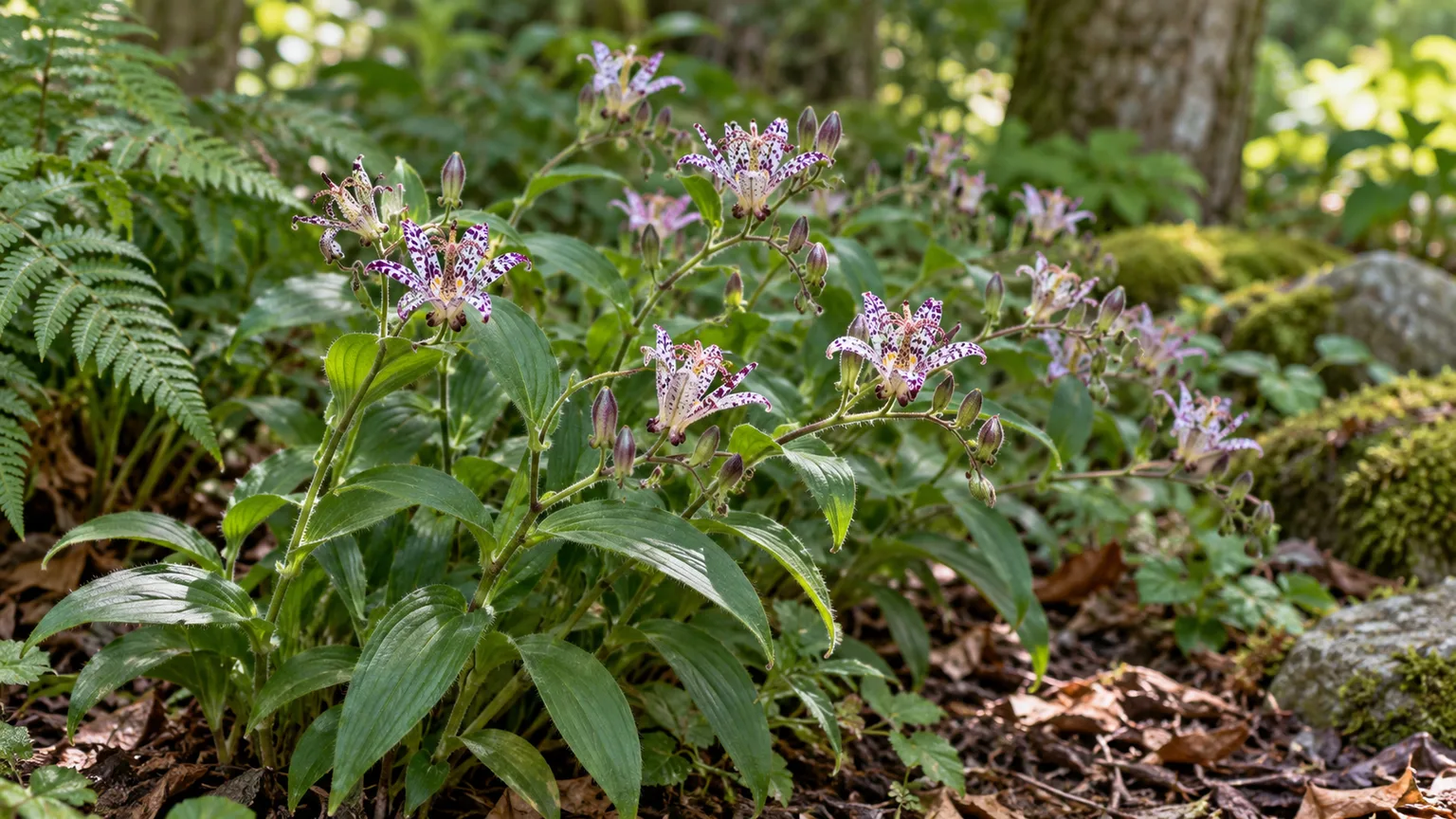
28. Toad lily (Tricyrtis spp.) extends the season with spotted flowers in late summer or fall, often when other shade plants are winding down. It prefers humus-rich, evenly moist soil and filtered shade, especially in warmer climates. Use it near the front of a bed or along a path so its intricate blooms can be seen; it is too subtle for a distant mass planting.
29. Goat’s beard (Aruncus dioicus) makes a large, shrub-like clump topped with cream-colored plumes in late spring or early summer. It is a good choice for the back of a moist woodland border, where its height will not shade smaller flowers. Check mature dimensions before planting; a full-size clump can overwhelm a narrow bed. In hot regions, afternoon shade and consistent moisture help it remain attractive.
30. Copper iris (Iris fulva) is a wet-site specialist for a moist border or rain-fed low spot that stays damp, not a plant for dry shade beneath a tree. Its copper-red flowers and upright leaves can add a strong color accent near water. Confirm that your local soil and winter conditions suit it, and do not set it in a spot that only becomes briefly wet after a storm.
Build a shade garden with flowers in sequence
Pair bloom time with useful foliage
A practical shade border has at least three layers of interest: early flowers, foliage that remains after those flowers fade, and later blooms or persistent leaves. Virginia bluebells, Dutchman’s breeches, and shooting star can start the season; hosta, Brunnera, Solomon’s seal, and barrenwort help carry the bed after the spring display; astilbe, black cohosh, monkshood, and toad lily extend color later. Actual timing shifts with climate, elevation, and spring temperatures, so use the sequence rather than a fixed calendar date.
Think in repeated groups rather than one of each plant. Three or five clumps of a compatible groundcover look intentional and make it easier to notice when a plant is struggling. Place large foliage behind small spring flowers, then reserve an open patch for plants that disappear into summer dormancy. Gardenia’s planting framework recommends using mature size and seasonal contribution alongside light and moisture compatibility when pairing hostas with companions (Gardenia’s shade-companion framework).
Choose plants by water needs, not color alone
A common failure is combining thirsty plants with a dry site because their flowers look good together. Astilbe and primrose usually need more dependable moisture than established epimedium or wild ginger. Put plants with similar water needs together so you can water a bed efficiently without keeping drought-tolerant plants soggy or letting moisture lovers wilt.
If the bed is deep shade, build the design around leaves: broad hostas, silver Brunnera, spotted lungwort, finely divided foliage, and a few brighter blooms. Pale flowers are easier to notice against dark foliage, while repeated leaf shapes keep the planting from becoming visually noisy. Reserve the highest flower spikes for places that receive enough light and where they will not hide the front layer.
Plant and care for perennials in shade
Plant with tree roots in mind
When planting under an established tree, use small plants or plugs and make planting holes only as large as needed. Move the hole if you meet a substantial root instead of cutting it. Do not pile a deep layer of soil over exposed roots or raise the bed around the trunk; preserve the tree’s root flare and work with the existing grade. North Carolina State Extension notes that tree-root competition can make some shade sites difficult and that pine-straw mulch helps retain moisture and suppress weeds in its shade-garden examples (NC State Extension’s shade-garden examples).
Planting through a lawn under a tree also means competing with grass. Remove a small planting pocket at a time, keep mulch off the trunk, and avoid digging broadly through the root zone. A woodland-style planting with leaf litter and repeated small plants can be less disruptive than turning the whole area over. If the tree is stressed or the ground is crowded with surface roots, use containers or a nearby border instead.
Water and mulch through establishment
Shade does not mean “never water.” Newly planted perennials need consistent moisture while roots expand, especially if the site is beneath trees, under an eave, or in sandy soil. Check at the root depth rather than judging by the dampness of the surface; water slowly enough to soak the rootball and surrounding soil. Once established, let the plant’s actual needs guide watering rather than using one schedule for every species.
A thin layer of leaf mold, compost, or suitable organic mulch can reduce evaporation and improve the look of a woodland bed. Keep it away from crowns and stems, and avoid piling material against a tree trunk. Leave spring ephemerals undisturbed as their leaves yellow naturally; those leaves are replenishing the underground plant for next year’s flowers. Divide clumps only when crowded or declining, and check species-specific timing before lifting woodland plants.
Check spread, toxicity, and household fit
Groundcovers can solve bare-soil problems, but their spread can become the next problem. Lily-of-the-valley and periwinkle can colonize beyond the space you intended, and creeping dead nettle also needs an edge or a regular check. NC State Extension describes Vinca minor as a rapid spreader that roots at nodes and identifies it as invasive in North Carolina; local status varies, so consult your state invasive-plant list before choosing it. Prefer a native groundcover where the bed borders woods, a stream, or unmanaged land.
Check toxicity before planting where children, dogs, cats, or horses may browse. Monkshood is dangerous if swallowed, while ASPCA Poison Control lists both hellebore and lily-of-the-valley as toxic to dogs, cats, and horses. These cautions do not mean every gardener must avoid them, but they are poor fits for a garden where ingestion is likely. If a person or pet may have eaten a plant, contact a poison-control service or veterinarian promptly rather than waiting for symptoms or relying on a photo alone.
Conclusion
The best perennial flowers for a shade garden are the ones matched to that bed’s light, moisture, root competition, and room to spread. Start with a few reliable plants for the conditions you can provide, then add spring ephemerals, foliage contrasts, and late-season bloomers to extend the display. Before buying, confirm the mature size, cultivar needs, local invasive status, and household safety; those checks matter more than a generic “shade-loving” label.



