Fly Infestation After Vacation: Find the Source and Stop Them
Find out why a long weekend can trigger a fly infestation, what to clean first, which traps work, and how to prevent flies before your next trip.
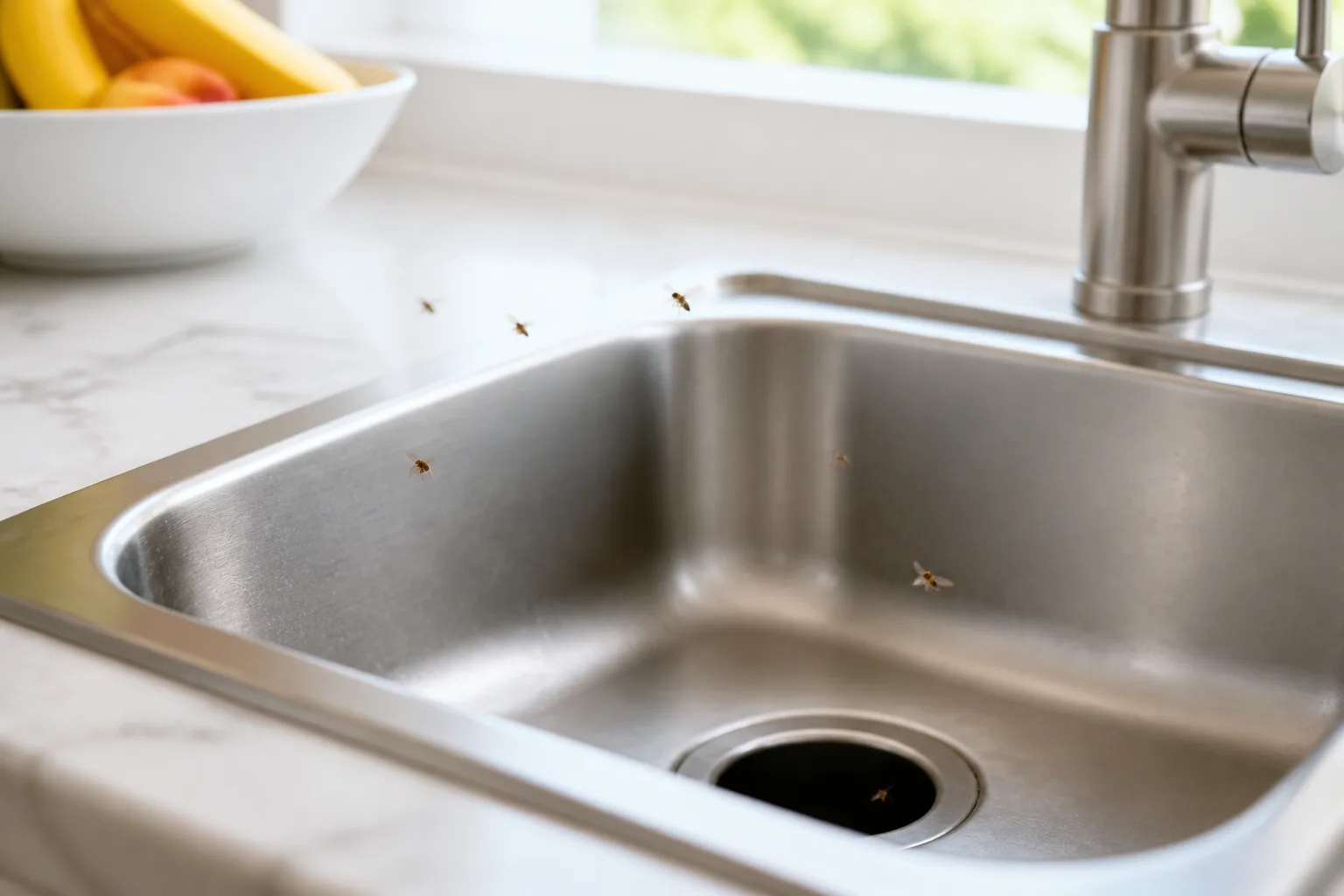
Coming home to a kitchen full of flies after a three-day trip feels like an invasion, but it usually has a short, traceable explanation: something edible or fermenting sat undisturbed, the home stayed warm, and the flies had an easy way in. The mistake is rarely one dramatic act. It is the combination of a dishwasher left open, a few unrinsed bottles, a leaking trash liner, a soft banana, or a damp drain that creates a tiny nursery.
The fix is also a sequence rather than a single hack. Identify the insect, remove the material where it can feed or reproduce, clean the wet areas, set a trap suited to the species, and close the route that let adults enter. A vinegar cup can reduce a cloud of tiny fruit flies, but it cannot compensate for a hidden food film or an outdoor trash source.
The first 15 minutes matter more than the first trap
Resist the urge to swat, spray, or set five traps before looking for the source. The first useful question is not “How do I kill these?” but “What could still be feeding them?” A trap catches adults you can see; a source audit prevents the next wave.
Start by closing interior doors so you can tell where activity is strongest. In the kitchen, photograph or note the busiest spot, then remove exposed food and drinks from the counter. Put ripe produce in the refrigerator temporarily, cover anything you keep, and discard fruit that is leaking, collapsing, or visibly fermenting.
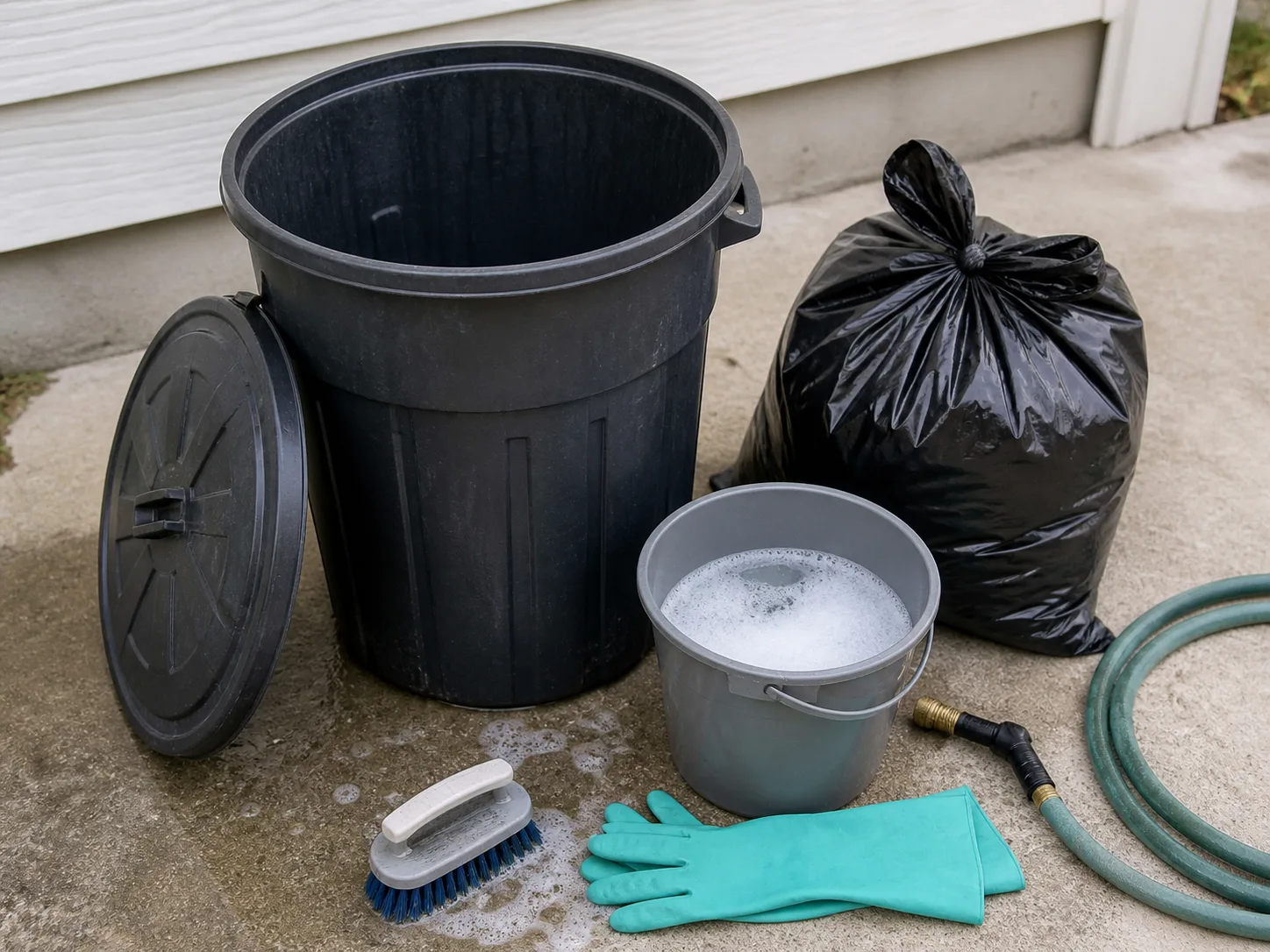
Next, tie off food waste and take it outside. Do not carry an open, dripping bag through the home if you can avoid it. Rinse or wash the inside and bottom of the bin, because the residue left behind can remain attractive after the bag is gone.
If the flies are large and loud, skip the fruit-fly trap for the moment and inspect screens, open doors, patio bins, pet waste, and any dead animal or decaying material outside. If they are tiny and hovering around produce, recycling, or the sink, continue with the fruit-fly source audit below. This split saves time because a vinegar lure is poorly matched to a large house-fly problem.
Identify the fly before choosing a fix
“Flies” is a useful household word but an imprecise treatment category. A tiny brown insect around wine is not managed the same way as a fuzzy moth-like insect around a drain or a large gray insect resting on a window. When the treatment fails, misidentification is often the reason.
Fruit or vinegar flies: tiny, tan, and kitchen-centered
Common fruit flies, also called vinegar flies, are usually about one-eighth of an inch long, tan to brown, and may have red eyes. They hover around overripe fruit, wine, beer, soda residue, recycling, garbage disposals, damp cloths, and other moist organic films. A single banana or beverage container can be enough because their food requirement is measured in tiny microhabitats, not in a full meal.
Gardening Know How describes ripe produce, drains, moist mop buckets, and salad remnants as potential sites and recommends sanitation before chemical control. That matches the practical clue: if most of the insects are near the fruit bowl, recycling, or sink and do not look much bigger than a grain of rice, begin with source removal and a contained vinegar trap (Gardening Know How).
House flies: larger, gray, and tied to waste or entry points
House flies are visibly larger than fruit flies and are commonly dull gray with four dark stripes on the thorax. They rest on walls, ceilings, windows, and other vertical surfaces, buzz more loudly, and may appear in several rooms because adults flew in through a door, screen, vent, or gap.
House flies are associated with garbage, pet waste, compost, manure, rotting plant material, and other decomposing organic matter. UC IPM notes that flies found indoors have entered from outdoors in almost all cases, so screens, door gaps, and outdoor sanitation matter as much as the kitchen counter (UC IPM). A small vinegar dish may catch an occasional small fly, but it is not a source-control plan for a large fly population.
Drain flies and other lookalikes need a different plan
Drain flies are tiny, dark, and fuzzy or moth-like. They tend to sit on the wall near a sink, shower, floor drain, or utility area rather than orbiting a fruit bowl. Their larvae live in the organic film inside plumbing, so a trap across the room can reduce adults without touching the breeding layer.
Fungus gnats are another lookalike if the insects rise from damp houseplant soil. Cluster flies may gather at sunny windows in cooler seasons, while blow flies can be metallic blue-green or green and may point to a stronger garbage or carcass source. If the appearance and location do not line up with fruit flies, treat identification as unresolved and avoid escalating to random sprays.
Why three days away can make the problem look sudden
A weekend did not necessarily create the entire population. It may simply have removed the daily interruptions—running the dishwasher, rinsing bottles, moving the fruit, emptying the bin, wiping the counter—that normally break up the breeding conditions. The flies mature out of sight, and the returning adult population becomes obvious all at once when you open the door.
Flies undergo complete metamorphosis: egg, larva, pupa, and adult. UC IPM reports that under favorable summertime conditions some pest flies can develop from egg to adult in as little as seven days, while females lay repeated batches of many eggs. That does not mean every household outbreak completes a full generation in three days, but it explains why warmth and undisturbed organic residue can produce a rapid jump in visible activity.
Fruit flies also exploit residues that look insignificant to people. An expert quoted by CNET described the breeding habitat as a tiny microhabitat such as soda left in a recycling can or scraps in a takeout container. The lesson is not that your home must be dirty; it is that a small amount of sugar, moisture, and warmth can be biologically significant (CNET).
This is why throwing away the obvious banana sometimes appears to do nothing. Adults may still be emerging from a damp bin seam, a dishwasher filter, a disposal splash guard, or a carton in the recycling. Find and remove those sites before judging the cleanup a failure.
Remove the breeding sources in the right order
Work from the wettest, richest source to the easiest visible source. This order is more efficient than wiping every surface equally because larvae need suitable organic material, and adult traps are less competitive once those materials are gone.
Dishwasher, sink, and garbage disposal residue
An open dishwasher can be a problem when dirty dishes, the filter, the door gasket, or the bottom well still contains food residue. Unload clean dishes, scrape and rinse the racks and filter according to the appliance manual, wipe the door edge and gasket, and run a normal cleaning cycle appropriate for your machine. Do not pour an improvised insecticide into the dishwasher.
Clean the sink basin, drain stopper, overflow opening, and the underside of any disposal splash guard. If you have a garbage disposal, turn it off at the switch and follow the manufacturer’s safe cleaning instructions; never put your hand into the opening. Remove the physical film you can reach safely, then flush with plenty of water. The aim is to remove organic residue, not to perfume the drain with a harsh mixture.
Dry the sink and wipe the counter edge once the cleaning is complete. A wet sponge, dish brush, mop head, or rug beside the sink can keep a small population going when the fruit bowl looks perfect. Wash these items and let them dry fully, or replace them if they hold a persistent sour odor.
Trash, recycling, compost, and pet-waste zones
Food waste and recycling deserve separate inspections. Tie and remove trash, then scrub the bin’s bottom, lid rim, handles, and any sticky sidewall. Rinse beer, wine, juice, soda, and syrup containers before recycling them; residue inside a bottle is easy to miss and can ferment for days.
A tight lid is a physical barrier, not merely a deodorizing feature. Keep the indoor recycling container closed if possible, empty it before a trip, and keep the outdoor garbage container away from doors and windows. Fruit-Flies.com’s focused bin guidance also emphasizes that the container itself becomes contaminated, so emptying the bag without washing the bin leaves the attractive film behind (Fruit-Flies.com).
Compost caddies need the same discipline, with even less tolerance for delay. Empty the caddy before leaving, wash it with hot soapy water, dry it, and use a sealed lid. If municipal collection is infrequent, freezing fast-fermenting scraps until collection day is a practical way to remove the warm, wet interval in which flies thrive.
Inspect pet-food bowls, treat crumbs, litter areas, and the floor beneath feeding stations. A small amount of wet food left in a warm room can be more important than a spotless dining table. Outside, remove pet waste and check around the bin enclosure, compost, and patio for decaying material.
Fruit bowls, pantry spills, and food left for pets
Sort every piece of produce, including items that looked fine when you left. Bananas, berries, tomatoes, melons, peaches, and cut vegetables can break down quickly. Discard leaking or moldy produce, wash the bowl, and refrigerate susceptible fruit for several days while the remaining adults die off.
Check the places you do not normally see: under the fruit bowl, beneath a small appliance, behind a toaster, under the refrigerator edge, in a pantry corner, and inside a reusable grocery bag. Wipe sugary spills with warm soapy water, then dry the surface. Do not assume that a dry-looking ring is harmless if it smells fermented.
Cardboard produce boxes, takeout containers, empty cans, and bottles can all retain enough residue to attract tiny flies. Rinse or remove them promptly. If food was left for a pet while you were away, wash the bowl and inspect the mat below it rather than focusing only on the fruit bowl.
Test overlooked drains and appliances
When fruit flies persist after obvious cleanup, test the drain instead of repeatedly buying a stronger trap. At night, cover a suspect drain with a clear bowl or a piece of transparent tape placed sticky-side down, leaving enough airflow for the test without sealing a fixture incorrectly. If flies appear on the underside or gather at that location by morning, the drain is worth cleaning; the test is a clue, not a species diagnosis.
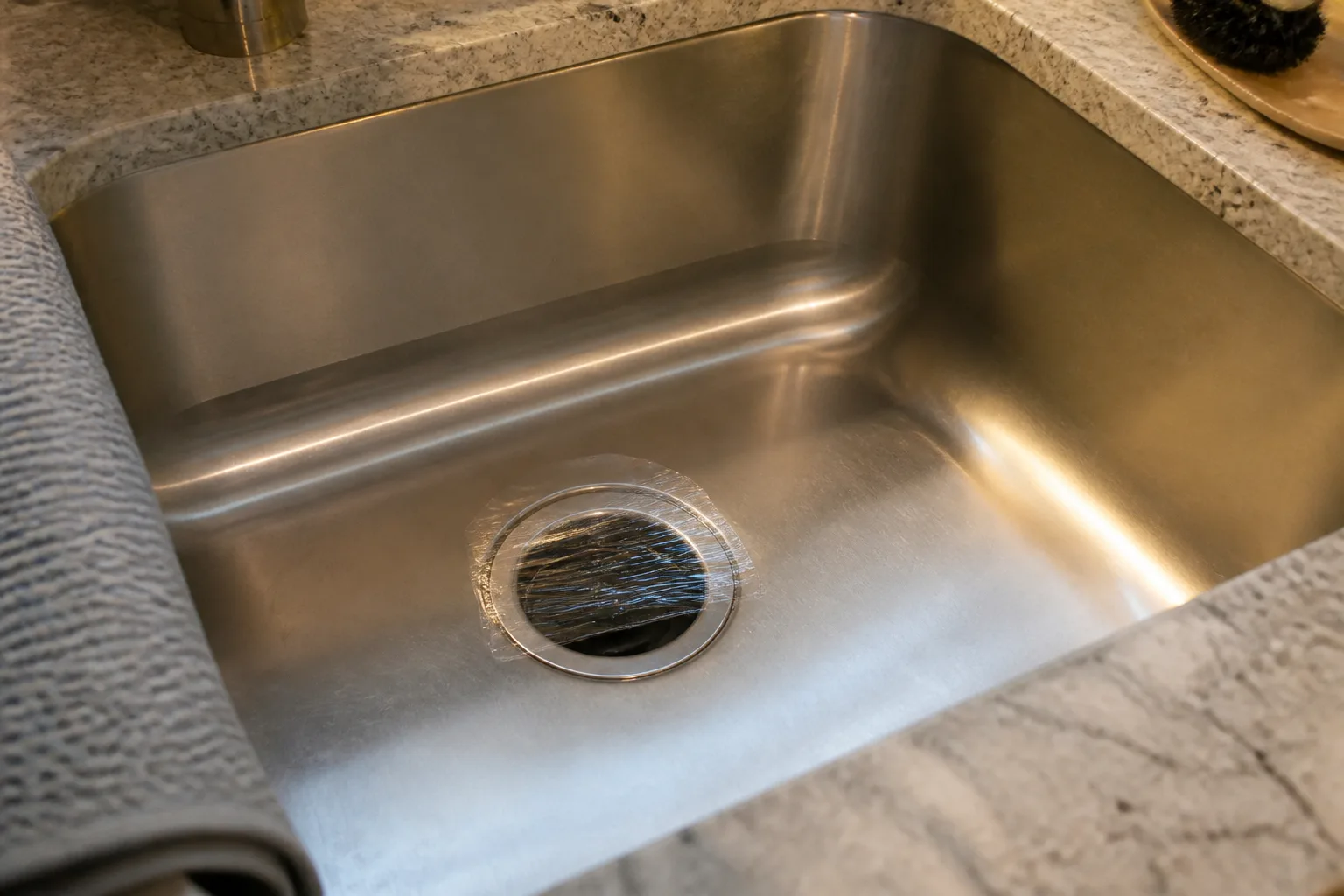
Scrub the stopper, drain rim, overflow passage, and accessible inner surfaces with a narrow brush and an appropriate cleaner, following the plumbing and product instructions. Repeat on several nights if activity remains. For a disposal, inspect the splash guard and underside, where food film can stay moist even when the basin is clean.
Do not mix bleach, ammonia, vinegar, drain opener, or other cleaners. A chemical reaction can injure you or damage plumbing, and it is not a substitute for removing the biofilm. If a drain remains slow, smells strongly of sewage, backs up, or continues to produce flies after careful cleaning, involve a plumber or pest professional rather than pouring increasingly aggressive products into it.
Use a vinegar trap for tiny fruit flies
Once the breeding sources are gone, an apple cider vinegar trap is a reasonable adult-control tool for common fruit flies. The fermented smell attracts them, while a small amount of liquid dish soap lowers the surface tension so flies that land on the bait are more likely to sink. This is a contained lure, not a spray and not a disinfectant.
Recipe, placement, and refresh schedule
Pour about one-half to one inch of apple cider vinegar into a small, stable bowl or jar. Add one or two drops of liquid dish soap and swirl gently; excessive soap creates foam without making the trap better. If you want fewer escapes, stretch plastic wrap over the top and poke several small holes.
Place the trap near the activity zone but away from cutting boards, open food, clean dishes, children, and pets. A counter corner near the recycling or fruit area is better than a spot beside food preparation. In a large kitchen, two small traps at separate activity points can be more useful than one oversized bowl that everyone can knock over.
Check the trap within a few hours, then refresh it when the bait becomes cloudy, dries out, smells foul, or stops catching. A daily change is sensible during a strong outbreak; every day or two may be enough as activity falls. Empty the liquid into a drain only if local disposal guidance and your plumbing allow it, or seal the used bait and discard it. Wash the container before reusing it.
You can use a funnel jar or covered container, but the geometry is secondary to the source cleanup. If the trap fills while new flies continue appearing, that is evidence of an active breeding site or a different fly—not proof that you need a more elaborate recipe.
What traps can and cannot accomplish
Vinegar traps reduce adult fruit flies in the air and help you monitor whether activity is falling. They do not reach eggs or larvae inside fruit, trash residue, drains, dishwasher parts, or compost. They also do not control house flies tied to outdoor waste, drain flies living in pipe film, or fungus gnats developing in potting soil.
Sticky cards can supplement a cleanup when flies rest near windows or appliances, but place them where people and pets cannot touch them. A fly swatter is suitable for a few large adults, but avoid using it around food-preparation areas because fragments can land on surfaces. UV traps may help in an indoor, non-food room when positioned according to their instructions; bright daylight and competing odors reduce the usefulness of many traps.
UC IPM’s general rule is the important one: removing larval habitat is preferred, while adult traps and insecticides are supporting tactics. Insecticides are rarely necessary in ordinary home situations, and a product label—not a viral recipe—controls where and how a pesticide can be used (UC IPM).
Handle large house flies with exclusion and sanitation
If you see large gray flies on walls, windows, or food, change the plan. Cover food, discard food that flies have repeatedly landed on, wipe food-contact surfaces with an appropriate cleaner, and concentrate on the route between the building and the outdoor source.
Block doors, windows, and patio routes
Repair torn screens, make sure screen doors close tightly, and check the bottom seal on exterior doors. A propped door can undo an otherwise excellent cleanup, especially when a trash area, pet-waste zone, or patio compost bin is close to the entrance. Seal obvious cracks around frames only after confirming you are not blocking required ventilation or drainage.
When a door must remain open, run a fan across the opening or across the seating area. Moving air makes a patio less comfortable for many flying insects and can reduce the number that crosses the threshold, but a fan is a short-term barrier, not a source treatment.

Place outdoor garbage and food-waste containers as far from entrances as practical, with tight-fitting lids. Inside, vacuum or remove flies resting on windows rather than using a fogger. Total-release foggers are a poor substitute for finding the source and can expose residents without solving the breeding site.
Remove outdoor sources near the home
Walk the route from the kitchen door to the trash area. Look for pet waste, a leaking garbage bag, a dirty bin base, rotting fruit under a tree, wet grass clippings, an unmanaged compost pile, or a dead animal. UC IPM identifies warm, moist organic material such as garbage, decaying produce, lawn clippings, and animal waste as potential development sites for house flies.
Remove small sources promptly, clean the bin, and keep compost covered and properly managed. If the source belongs to a shared apartment dumpster, neighboring property, building service area, or municipal collection point, document the pattern and report it to the property manager or service provider. Indoor sprays cannot compensate for a nearby source that is continuously producing adults.
Do not apply a residual outdoor pesticide to walls, plants, or bins casually. Such treatments can affect beneficial insects, may be restricted by the label, and usually provide only short-term relief if sanitation and exclusion are not fixed. A licensed professional can match treatment to the fly type and the site when nonchemical measures are not enough.
Follow a seven-day reset and know when to escalate
Treat the first week as a reset rather than a single cleaning day. On day one, remove food waste, rinse recycling, clean the bin, inspect produce, clean the sink and appliance residue, and set a species-appropriate trap. On days two through four, refresh the trap, check the drain and disposal area, and look for new activity in the same hotspots.
By days five through seven, the number should be trending down if the breeding site was removed. Keep fruit refrigerated or covered, empty food waste frequently in warm weather, dry sponges and cloths, and leave the dishwasher closed and free of dirty residue before bedtime. If you are leaving again, take out food waste and recycling rather than relying on an empty-looking bag.
The common mistakes that prolong an outbreak are predictable: using a vinegar trap for large house flies, cleaning the visible counter but not the bin, rinsing fruit but not bottles, pouring harsh mixtures into a drain, leaving a trap until it becomes a new dirty container, and declaring victory after one quiet evening. A falling catch count is encouraging, but a sudden rebound means something is still feeding the population or adults are entering from outside.
Call a pest professional when heavy activity continues after roughly seven to fourteen days of thorough sanitation, targeted trapping, and entry-point repair; when maggots keep appearing after the trash source is removed; when flies emerge from a wall, ceiling, vent, or inaccessible void; or when you suspect a dead animal, sewer issue, or building-wide source. In a rental, notify the landlord or property manager early when the source is shared or structural.
If flies have repeatedly contacted exposed ready-to-eat food, discard questionable food and clean the affected preparation area. People with unusual symptoms after consuming contaminated food should seek medical advice; this guide is household pest guidance, not a diagnosis. The goal is not to make the home chemically sterile—it is to remove the habitat, keep food protected, and stop the cycle from restarting.
Conclusion
The weekend itself was not the real mistake. The problem was leaving several small opportunities open at once: food residue in an idle appliance, liquid in recycling, ripening fruit, a damp drain, an open bin, or an unsealed doorway. Warmth and stillness gave those opportunities time to become visible.
The fastest reliable response is a sequence: identify the fly, remove the breeding material, clean wet residue, trap adults only when the bait matches the insect, and block the route back in. Before the next trip, run the dishwasher, empty and wash food-waste containers, rinse recycling, refrigerate vulnerable produce, dry the sink area, and close screens and doors. That checklist takes minutes, and it removes the exact conditions that turned a few overlooked scraps into a homecoming swarm.