How to Grow and Care for Bluebeard Shrubs in Your Garden
Learn how to grow bluebeard in sun and well-drained soil, water it while it establishes, prune it in spring, and choose the right cultivar for your climate.
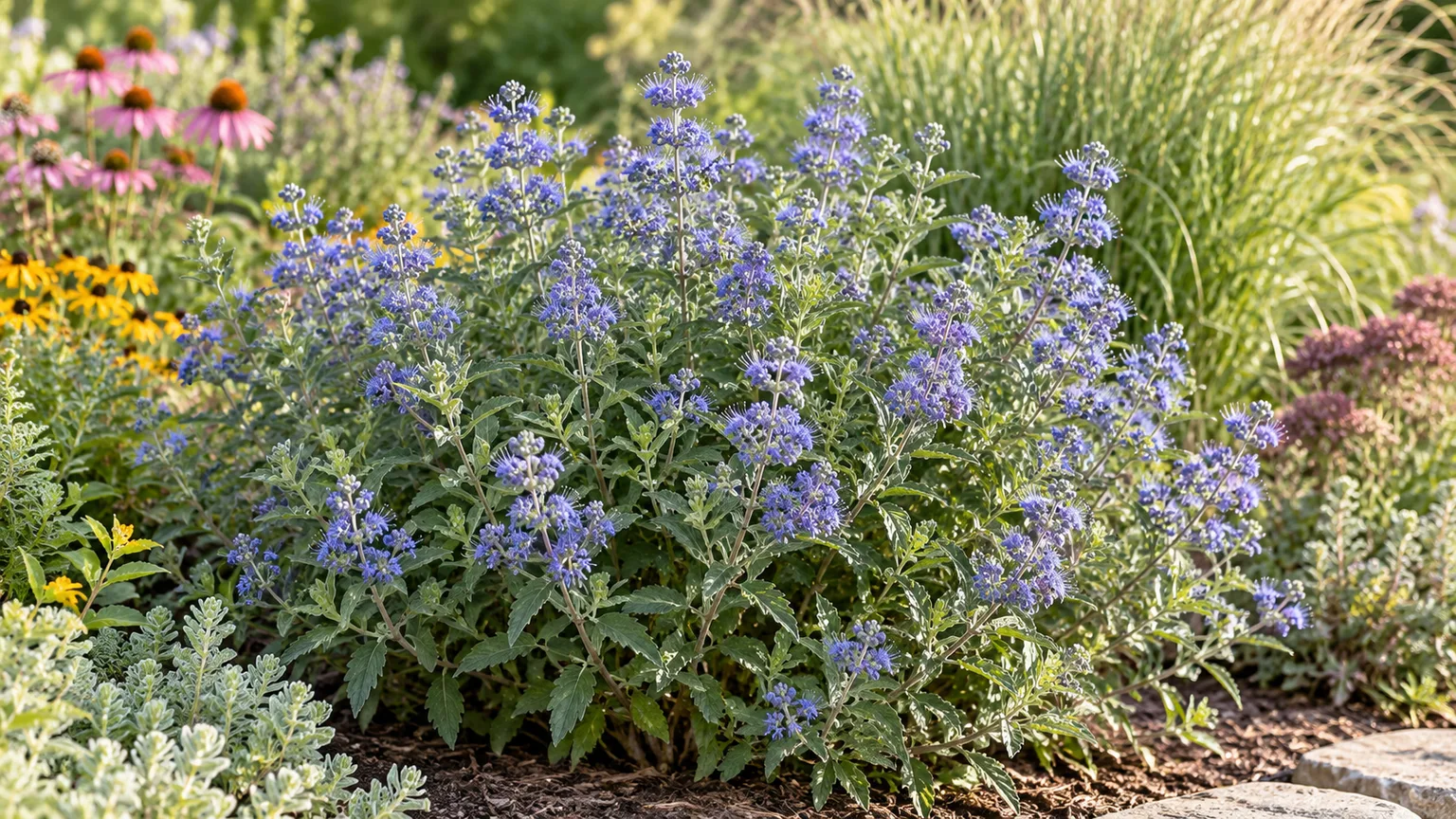
Bluebeard earns its place in a garden late in the season, when many spring shrubs have finished and summer color is thinning. Its small blue to violet flower clusters ring the stems above aromatic gray-green foliage, giving a compact shrub a hazy look from a few steps away; bees and butterflies often work the flowers too.
The plant most often sold as bluebeard or blue mist shrub is Caryopteris × clandonensis, a deciduous hybrid grown for late-summer bloom. It is easier to keep than its winter reputation suggests if you get two choices right: give it sun and let water drain away from its crown. Cold may kill the top growth in some gardens, but wet winter soil can kill the whole plant.
Bluebeard care at a glance
| Need | Practical target |
|---|---|
| Light | Full sun; aim for at least six hours of direct light for best flowering |
| Soil | Ordinary soil that drains freely; avoid waterlogged beds |
| Water | Keep a new plant’s root ball evenly moist while it establishes; water mature shrubs during prolonged dry spells |
| Mature size | Often about 2–4 feet tall and wide, depending on the cultivar |
| Bloom | Late summer into early autumn; timing shifts with climate and cultivar |
| Pruning | Cut back in late winter or early spring after severe cold, before the new season’s stems get tall |
| Winter | Top growth may die to the ground in colder locations even when the crown survives |
Treat the table as a starting point, not a guarantee for every plant sold under a common name. NC State Extension lists one Caryopteris × clandonensis profile at 2–3 feet and Zones 6a–9b, while Purdue’s ‘Blue Mist’ record notes Zone 5 and says stems can die to the ground in Zones 4–6; the RHS genus guide describes plants reaching around 1 meter. Those differences are a reminder to read the cultivar tag and judge winter drainage as well as the zone number (NC State Extension; Purdue Arboretum Explorer; RHS).
Identify the plant and choose a cultivar
Bluebeard is a low, branching deciduous shrub or subshrub with opposite leaves and clusters of small flowers arranged along the upper stems. Depending on the selection, foliage may be gray-green, silvery, gold, or variegated; flowers are commonly blue-violet, though pink forms are sold. The display usually arrives in late summer or early fall, so do not expect the shrub to carry the same flower show from spring through summer.
Choose a cultivar by mature footprint, flower shade, and cold tolerance—not by a photograph alone. ‘Blue Mist’ is a compact form often listed around 2–3 feet; ‘Longwood Blue’ can be taller, about 4 feet; and ‘Dark Knight’ is chosen for deeper blue flowers. Golden-leaved selections such as ‘Worcester Gold’ provide color before flowering, but cultivar names and hardiness claims can differ among sellers, so check the exact label and local nursery guidance. The Garden Design Caryopteris guide compares several cultivars and shows how much size and foliage color can vary; the Gardenia bluebeard overview also summarizes the genus’s range of habits and landscape uses.
If winter temperatures regularly reach the low edge of a cultivar’s rating, treat the zone as a risk estimate rather than an assurance. Choose a selection documented for your region, plant it early enough to root before winter, and prioritize a raised or naturally well-drained site. A sheltered wall can reduce exposure, but a warm nook that stays damp is not an improvement.
Bluebeard is not blue mistflower or a true spirea
Common names create two easy mix-ups. Blue mist shrub refers to Caryopteris, a woody shrub; blue mistflower is Conoclinium coelestinum, a different herbaceous perennial that spreads by rhizomes and prefers moist soil, according to NC State Extension. “Blue spirea” is another old common name for Caryopteris, but it is not a botanical Spiraea and should not be pruned or identified by assuming it behaves like one.
When shopping, read the Latin name on the plant label. This matters most for care and spacing: a true blue mistflower may spread into a colony, while a bluebeard cultivar forms a woody mound that is renewed with spring pruning. The flowers can look similar in a photo, but their growth habits and moisture needs are different.
Choose a site with sun and fast drainage
Pick a spot with at least six hours of direct sun if you want a dense shape and the strongest flowering. Caryopteris can tolerate some light shade, but too little sun commonly leaves it open or floppy and reduces the number of flower clusters. Full sun also helps the foliage dry after rain, which is useful where humid summers coincide with heavy soil.
Soil fertility matters less than drainage. Bluebeard accepts ordinary garden soil, including loam and some poorer soils, but the root zone should not remain saturated after rain or snowmelt. In a new bed, watch where water stands a few hours after a storm; if the planting spot stays wet into the next day, choose a different location or raise the bed before planting rather than hoping extra watering or fertilizer will compensate.
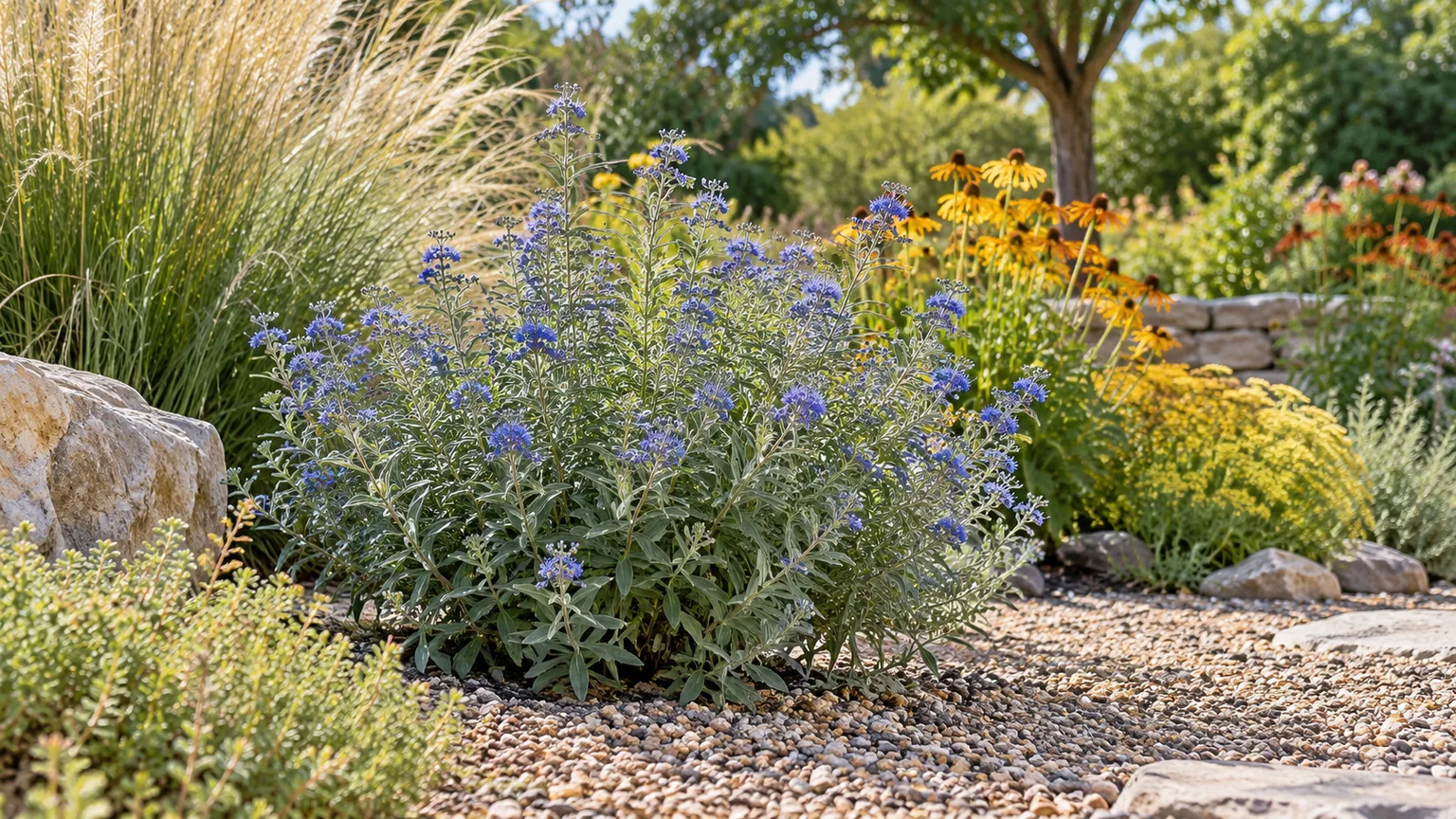
What to do with heavy or winter-wet soil
If your garden has dense clay, do not create a small pocket of loose compost or gravel inside it and assume the problem is solved. A sharply different planting hole can collect water like a basin. Instead, plant on a broad mound or raised bed that lets water move away from the crown, or choose another shrub for that site; in containers, use a pot with open drainage holes and a free-draining potting mix.
Keep mulch a few inches away from the stems. A thin layer can reduce weeds and moderate summer moisture, but a wet mulch collar piled over the crown keeps the area damp and can hide early signs of rot. Caryopteris is drought-tolerant after establishment, yet it is not a plant for a boggy corner or a bed irrigated as often as thirsty annuals.
Plant a nursery shrub at the right depth and season
Planting in spring gives roots time to settle before winter, especially in colder areas; early fall can also work where the soil stays warm and several weeks remain before a hard freeze. Avoid a late fall purchase that has little time to establish in a short-season garden. If you already have one, protect the root zone from alternating freeze and thaw and do not soak the soil in an effort to “help it settle.”
Dig a hole about twice as wide as the root ball and no deeper than its height. Ease the plant out, loosen circling roots if present, and set the crown level with the surrounding soil; then backfill with the native soil, firm gently, and water thoroughly to settle air pockets. Spacing should follow the mature width on the tag: leave room for air and the natural mounded shape instead of forcing several shrubs into a tight hedge before you know how the cultivar grows.
For a row or group, use the expected mature spread as the spacing guide and accept a small gap while plants fill in. Crowding may look finished on planting day but makes pruning and airflow harder later. Keep the plant visible from paths and windows where late-season pollinators are welcome, while allowing enough room that people do not brush through flower clusters in a narrow walkway.
Water by establishment stage, not by calendar
Water deeply at planting, then keep the root ball from drying out while new roots move into surrounding soil. How often that takes depends on rain, temperature, soil texture, and pot size; check the soil near the root zone rather than following a fixed weekly schedule. If the surface is dry but the root ball is still cool and moist, wait; if the root zone has dried and the plant is wilting, water slowly enough to soak the full root area.
Once established, Caryopteris usually needs supplemental water only during a prolonged dry spell. A long, hot stretch in sandy soil may call for a deep soak, while a shrub in clay may need no extra water at all after the same rainfall. Frequent shallow sprinkling keeps roots near the surface and can leave the crown too wet, so water at the base and let excess drain before repeating.
Container-grown plants dry faster than shrubs in the ground, particularly in windy weather. Check the mix with a finger or wooden skewer and water when the upper portion has dried while the deeper root zone is beginning to lose moisture; never leave the pot standing in a saucer of water. If leaves droop in the afternoon but recover by evening and the soil is damp, heat may be the stressor rather than a need for constant irrigation.
Prune bluebeard in spring for sturdy new shoots
Caryopteris flowers on new growth, which is why a renewal cut in late winter or early spring does not remove a spring flower show. In colder climates, wait until the harshest freezes have passed and you can see which stems are alive; in a mild climate, the same window may arrive earlier. The calendar is a cue, but swelling buds and local weather are better guides.
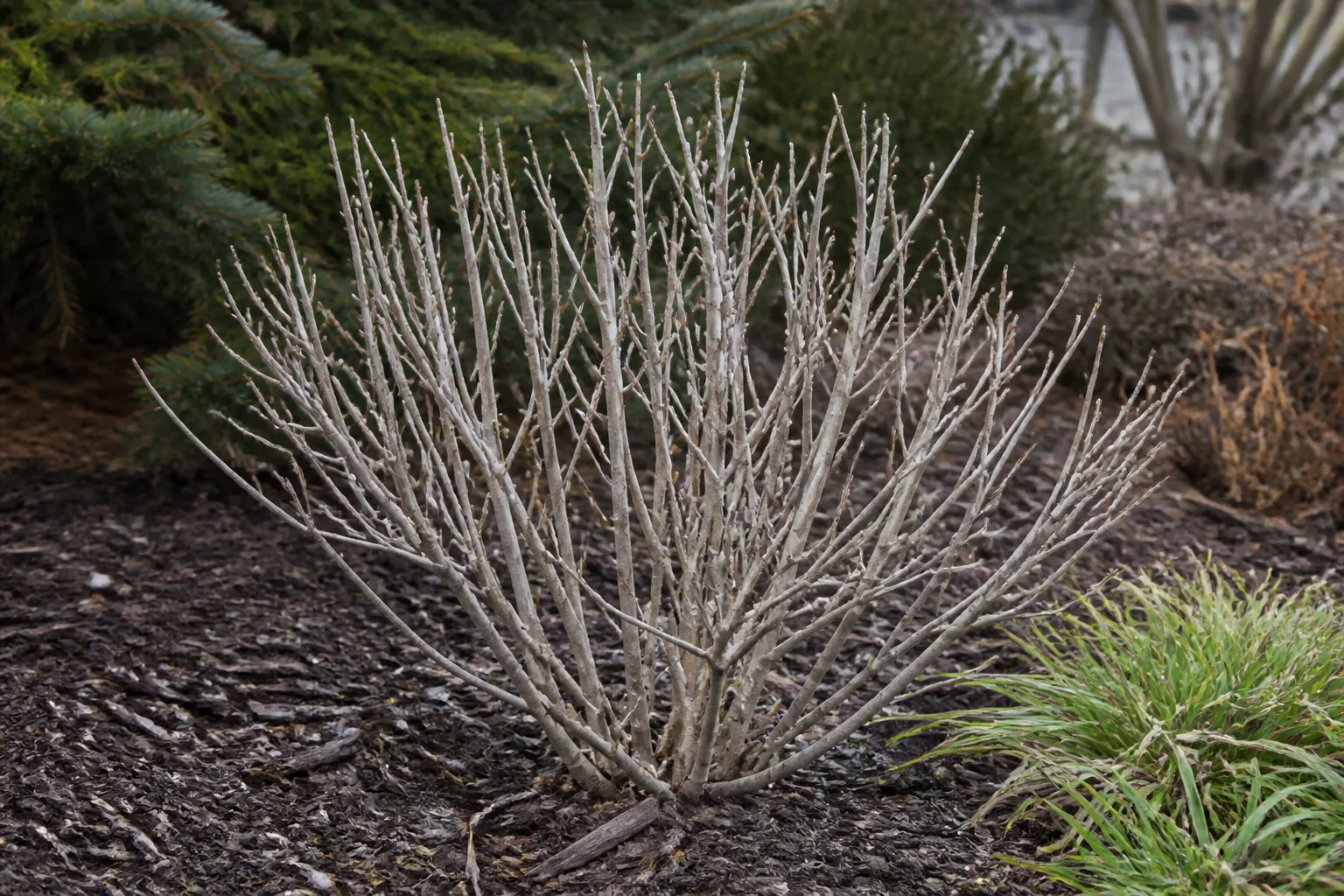
Use clean, sharp bypass pruners to remove dead, broken, or crossing stems first. Then shorten the remaining old stems to a low framework—often roughly 6–12 inches above the ground, or just above healthy buds—rather than leaving a tall, tangled skeleton. If the plant naturally dies back to the crown in your climate, clear dead material without cutting into the crown; new shoots will form the season’s flowering growth. NC State Extension recommends late-winter cutback for form, and Purdue notes that a low framework suits the ‘Blue Mist’ cultivar (NC State Extension; Purdue Arboretum Explorer).
Do not shear repeatedly through the season to keep a tight ball. That clips developing buds and can delay the late-season display, while a single well-timed spring cut encourages fresh stems from a compact base. Deadheading is optional: it can tidy the shrub or limit unwanted seedlings, but it is not required to keep flowers opening; seedheads can remain for fall texture if you like them (Garden Design).
Tell normal winter dieback from crown failure
A bluebeard that looks like a bundle of dead sticks in March is not automatically dead. In colder gardens, stems may die back to ground level even when the crown and roots are alive; wait for spring growth to begin in nearby plants and inspect for new buds before replacing it. Scratch a small area of bark near the base: green tissue can indicate live wood, while dry brown tissue higher up alone does not prove the crown has failed.
A soft, dark, or foul-smelling base in soil that remains saturated is more concerning than brittle upper stems. That pattern points to crown or root rot, a problem associated with poor drainage; cutting the top harder will not fix a wet crown. If the crown is firm and buds appear from low on the plant, remove dead stems and allow it to regrow instead of applying fertilizer to force a response.
Feed lightly and skip routine fertilizer
Bluebeard is not a heavy feeder, and rich soil or frequent nitrogen fertilizer can produce long, leafy stems with fewer flowers. If it is growing steadily in ordinary soil, skip routine feeding; a modest layer of compost at planting or a light topdressing in spring is enough for many gardens. Keep compost out of direct contact with the crown and avoid piling amendments into a narrow hole surrounded by poorly drained clay.
If growth is weak, diagnose the site before buying fertilizer. Check the amount of direct sun, winter wetness, root competition, and whether the shrub is still establishing; these conditions affect flowering more directly than a generic feed. Only correct a confirmed soil deficiency, and follow the product label rather than assuming more nutrients will make the blue flowers appear sooner.
Grow bluebeard in a container with winter in mind
A compact cultivar can work in a large outdoor pot, but a container is less forgiving than a garden bed. Choose a stable pot with several drainage holes, use a free-draining potting mix, and leave enough room for the listed mature spread; a shallow decorative pot can dry too quickly and restrict the root system. Set it in full sun where rainwater can drain away and where the shrub has room for its mounded form.
Water when the root zone begins to dry, not on the same schedule as thirsty patio annuals. In winter, the root ball of a container experiences colder swings than roots in the ground, so select a cultivar suited to your climate and move the pot to a sheltered, unheated spot if the rating or local experience calls for protection. Do not bring a dormant shrub into a heated living room; warm indoor conditions can disrupt dormancy and encourage weak growth.
Refresh or pot up only when roots have filled the container or the mix has broken down and stopped draining well. An annual repot is not a requirement for every specimen. If the plant becomes too large for the space, spring is the most convenient time to prune and assess whether a larger pot or a better garden location is the more practical long-term answer.
Propagate named plants from softwood cuttings
Softwood cuttings taken in late spring or early summer are a straightforward way to multiply a favorite plant. Choose a healthy, nonflowering shoot that is still flexible but not so soft that it collapses; cut a 4–6 inch tip with clean pruners, remove the leaves from the lower portion, and keep a few leaves at the top. The RHS Caryopteris guide and Garden Design both identify softwood cuttings as a propagation option.
Insert the cutting into a small pot of clean, free-draining propagation mix, water it, and cover loosely with a clear bag or propagator to reduce moisture loss without letting leaves sit against wet plastic. Keep it in bright indirect light, warm but out of hot sun, and maintain the mix slightly moist rather than waterlogged. Once the cutting resists a gentle tug and has begun growing, remove the cover gradually and pot it on when roots hold the mix together.
Rooted young plants need time to harden before severe cold, so grow them on in a sheltered place and plant them out in spring in short-season regions. Seed can be an experiment, but named cultivars are usually maintained by vegetative propagation because seedlings may not retain the parent’s flower color or compact habit. If the goal is an identical plant, label each cutting with the cultivar name and do not rely on volunteers beneath the parent shrub.
Troubleshoot weak growth and missing flowers
Bluebeard has relatively few serious pest and disease problems when planted in a sunny, well-drained spot. That makes diagnosis easier: before treating leaves or adding products, check the basic conditions that most often limit it—light, water movement, timing, and whether the plant has had a full season to establish. The NC State Extension profile notes crown rot as a risk in poorly drained soil and describes the shrub as generally resistant to pests and disease.
Few flowers or a floppy shape
Start with sunlight. If nearby shrubs or a growing tree now shade the plant for much of the day, Caryopteris may remain alive but flower less and stretch toward light; selective pruning of the obstruction or transplanting the shrub during a cool season may help. A newly planted specimen can also spend its first season establishing roots, so judge its flower count in context rather than expecting a mature display immediately.
Next, check whether the shrub was pruned at the wrong time or fed heavily. Repeated summer shearing removes developing growth, while fall pruning can expose stems before winter and is unnecessary for a plant renewed in spring. Excess nitrogen may favor foliage over flowers; stop routine feeding, then make the spring cut once and allow the new stems to grow without constant shaping.
Stems die back or the crown fails to return
Separate winter injury from chronic wetness. Dry, brittle stems after a cold winter can be normal, particularly near the cold edge of a cultivar’s range; a mushy crown or progressive stem loss in a damp bed suggests a drainage problem. If the root crown is sound, cut only confirmed dead wood and wait for buds rather than replacing the shrub too early.
For the next plant, select a cultivar with a local track record and move it out of a low pocket where snowmelt or irrigation collects. A raised bed can help, but it cannot compensate for frequent overhead irrigation or a downspout that drains onto the crown. If the ground stays wet through winter, choose a plant adapted to that condition instead of repeatedly trying to rescue Caryopteris there.
Spotted or stippled leaves
A few damaged leaves do not automatically signal a fungal epidemic. Small, round stipples or pale spots can have several causes, so inspect leaf undersides and nearby stems for insects and compare affected leaves with new growth before deciding what you are seeing. If new growth is healthy and the plant keeps flowering, removing a few badly affected leaves or simply monitoring may be all that is needed.
Avoid routine broad-spectrum spraying, especially while flowers are open and pollinators are visiting. If damage becomes substantial, identify the pest first and consult a local extension office for the least disruptive option; any pesticide must be labeled for that site and used exactly as directed. Better spacing and less crowded growth improve inspection and airflow but will not prevent every insect visit.
Use bluebeard for late-season color and pollinators
Caryopteris is useful where you want a low woody mound rather than a tall screen: place it near the front or middle of a sunny border, repeat several plants for a stronger late-season ribbon, or let one punctuate a gravel garden. Pair its blue-violet flowers with late-flowering asters, ornamental grasses, or warm yellow and orange blooms, provided those neighbors share its sun and drainage needs. The RHS recommends sunny, free-draining settings and notes the value of Caryopteris flowers for late-season bees and butterflies.
Think of it as a seasonal contributor rather than an evergreen anchor. The shrub loses its leaves in winter, and the framework may be cut low each spring, so combine it with plants that provide structure earlier in the year if the bed needs year-round form. For more ideas that use late-season foliage and bloom together, see our guide to shrubs for fall color; for pruning decisions, use the broader timing guide to shrubs to prune in January.
Conclusion
Bluebeard is a reliable late-season shrub when its roots stay out of standing water and its stems get enough direct sun. Choose a cultivar for your climate and garden footprint, water regularly while it establishes, and let a mature plant dry slightly between deep soakings instead of keeping the soil constantly wet.
Prune once in spring after the worst cold has passed, cutting to healthy low buds or a compact framework; do not mistake winter-killed stems for a dead crown. If it flowers poorly, check sunlight, drainage, pruning timing, and fertilizer before reaching for a remedy. Those few decisions make Caryopteris a useful, low-fuss source of blue color when the garden is ready for another round of flowers.



