White Egret Orchid Care: A Simple Seasonal Growing Plan
White egret orchid care, explained by season: choose a moist but draining mix, plant tubers at the right depth, and protect them through dormancy each year.
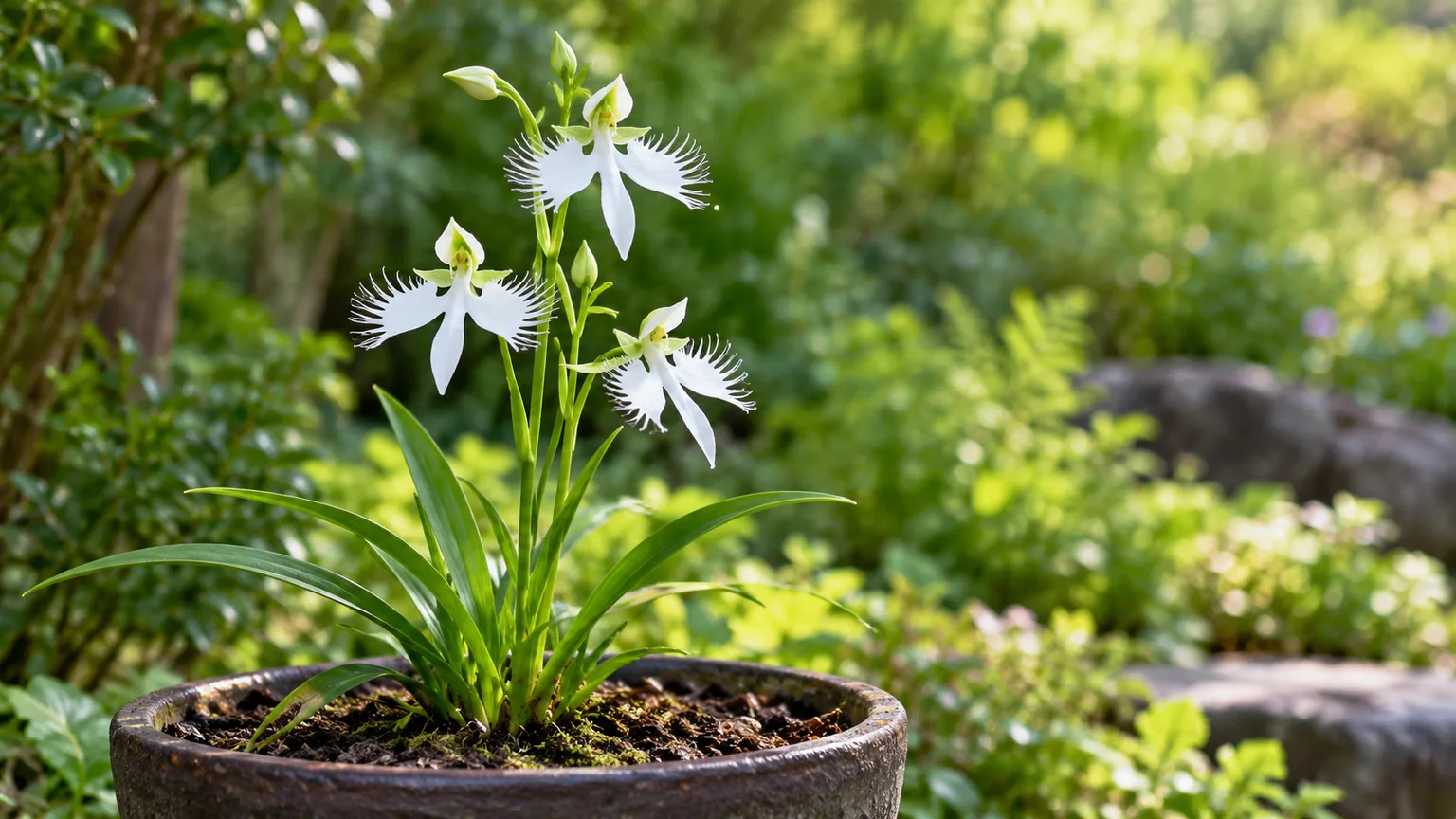
White egret orchid care is easier when you treat the plant as a seasonal terrestrial orchid, not as a miniature moth orchid. It grows from an underground tuber, wants steady moisture while its leaves are active, and then naturally loses its foliage before a comparatively dry rest. Most problems come from missing that handoff: a grower either lets the active plant dry out or continues watering after the leaves have finished for the year.
The plant is sold under the familiar name Habenaria radiata, though Kew’s Plants of the World Online accepts Pecteilis radiata. The care advice below is for this one temperate, tuber-forming species, whose white, fringed flowers often open in late summer. A container gives you the best control over moisture and winter conditions, especially if your garden soil dries quickly, stays saturated, or freezes hard.
Start with the orchid’s unusual growth cycle
This is a terrestrial orchid: it grows in soil rather than clinging to a tree as many tropical orchids do. It is also a tuberous geophyte, meaning the plant stores energy below ground and can disappear above ground for part of the year. Kew records its native range across parts of China, Japan, Korea, and the Russian Far East, and classifies it as a temperate plant. Kew’s species record
The annual cycle matters more than a calendar date. In spring, new leaves emerge slowly from the dormant tuber; during the warm growing months, the plant builds leaves and a flowering stem; after blooming, the foliage yellows and dies back while a replacement tuber develops below the surface. That above-ground disappearance is expected. It is not a signal to dig up a healthy plant or keep watering a pot with no active growth.
The name you may see on a plant label
Search both Pecteilis radiata and Habenaria radiata when comparing care sheets or buying a plant. Kew treats Habenaria radiata as a synonym of Pecteilis radiata, while many growers and nurseries still use the older familiar label; the name difference does not mean the care guide is about a different egret orchid. Kew’s taxonomic record EPPO’s preferred name and synonyms
A useful distinction is between advice for this species and advice for the whole genus Habenaria. The American Orchid Society’s genus culture sheet covers plants from very different climates and habitats, so use it for broader principles such as tuber dormancy and air movement, then favor species-specific instructions for light, moisture, and winter handling. American Orchid Society culture sheet
Choose a container or a suitable garden bed
A container is the most dependable starting point for most gardeners. It lets you choose an airy but moisture-retentive medium, check how quickly the root zone dries, and move the dormant tuber somewhere protected if winter temperatures or rain are severe. Pick a pot with several unobstructed drainage holes and enough depth for the growing plant to form replacement tubers below the original one; avoid a very wide pot filled with unused, persistently wet medium.
Outdoor planting can work where you already have a sunny, cool, consistently moist site with humus-rich, well-drained soil. A pond margin, rain garden, or bog-garden edge may suit the plant, but the crown should not sit underwater and the bed must not turn into cold, airless mud. Its habitat is wet grassland and seepage areas, yet cultivated plants still need oxygen around their roots and a drier dormant period. Gardenia’s species profile Phytesia’s planting guidance
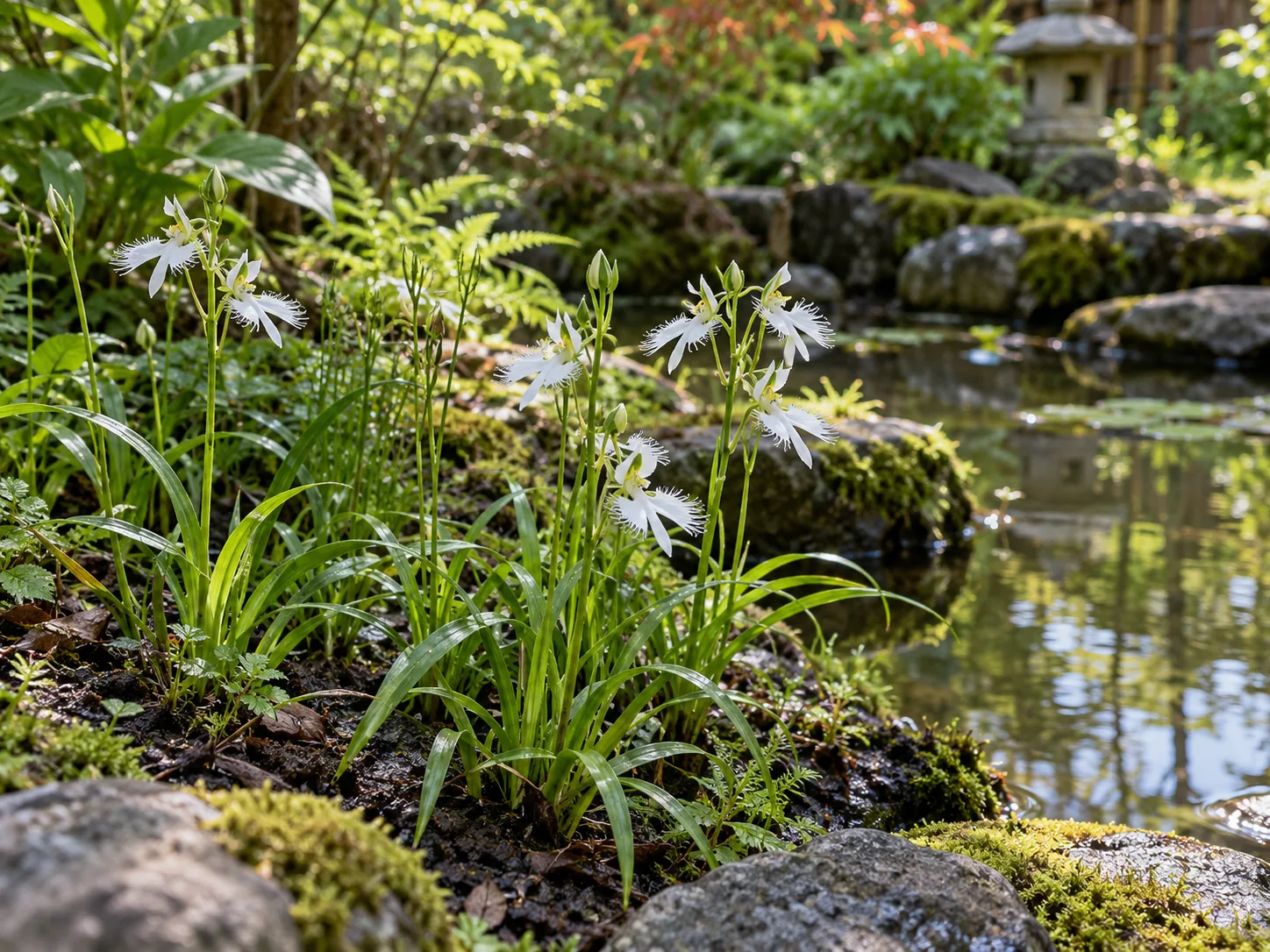
If you are uncertain about your drainage, use a pot set on a raised surface rather than planting into the ground. A bed that looks damp on the surface can still become dry several inches down, while a poorly drained pocket can stay saturated around a tuber long after rain stops. Test the site through a warm spell and after a storm before committing a small, valuable plant to it.
Give it bright light with protection from harsh heat
Give the white egret orchid full sun to partial shade, adjusting exposure to your climate. A cooler garden or bright east-facing window can handle several hours of direct sun; in a hot, exposed summer climate, morning sun with afternoon shade is a safer starting point. Bright light supports sturdier leaves and flowering, but a plant in a small dark pot can overheat even when the surrounding air feels comfortable.
Indoors, place the pot close to a bright east-, west-, or south-facing window, then watch both the leaves and the medium during the first weeks. If the foliage becomes pale, stretched, or floppy while the pot stays wet for days, increase light and airflow gradually. If leaf edges crisp in hot sun and the root zone dries by midday, use a sheer curtain or move it to morning light rather than compensating with repeated emergency watering.
The American Orchid Society notes that Habenaria responds to brighter light with stronger growth, but the genus includes species with different light needs. For this species, nursery and horticulture guidance commonly places it from full sun to part shade, so acclimate gradually instead of transferring a sheltered plant straight into intense afternoon sun. American Orchid Society culture sheet White Flower Farm growing guide
Build a medium that holds moisture but lets air reach roots
Aim for a medium that stays evenly damp during active growth without collapsing into sludge. Species-specific sources describe slightly acidic, humus-rich, well-drained soil; practical mixes for pots combine a moisture-holding base with coarse, open ingredients such as fine orchid bark, perlite, or pumice. A terrestrial-orchid mix is a better starting point than the coarse bark sold for epiphytic orchids, which can dry too quickly around a small tuber.
There is no single recipe that behaves the same in every room. A useful starting blend is roughly two parts fine, peat-free potting medium or sifted coco-based mix to one part perlite, pumice, or fine bark; add a little more moisture-holding material in a dry home and more coarse material in a cool, humid space. This is a practical starting ratio, not a species-tested formula. Water it through before planting and observe how quickly the pot drains and how long the center remains moist.
Avoid compacting the mix hard around the tuber. Press it only enough to remove large air pockets, then water gently so the small tuber does not float or shift. If water runs straight down the pot wall while the center stays dry, the mix may be hydrophobic and needs to be rewetted gradually; if it smells sour or stays slick and saturated, improve drainage or move the plant into fresh medium. White Flower Farm’s soil guidance Phytesia’s substrate options
Plant dormant tubers carefully
Buy firm, dormant tubers from a nursery that can identify the plant and explain whether it was propagated in cultivation. Handle them gently; small tubers can dry, break, or be misplaced easily. If the pointed end is visible, orient it upward and cover it lightly. Species-specific planting advice ranges around 1 centimeter deep, while some genus-wide orchid guidance suggests deeper planting for other Habenaria; follow the seller’s instructions for the exact tuber rather than burying a small tuber deeply by default. Phytesia’s species planting guidance American Orchid Society’s Habenaria article
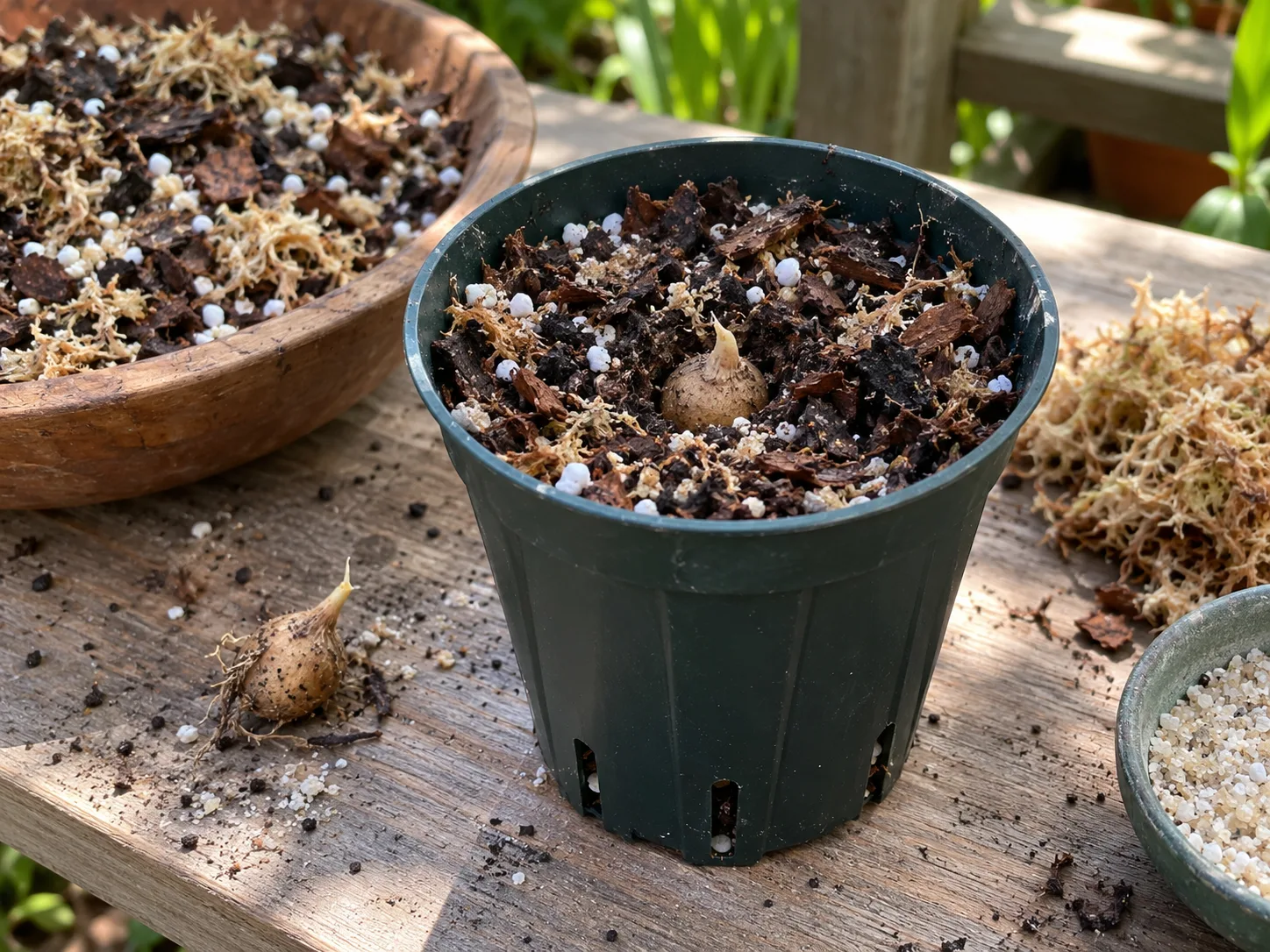
Use a container with drainage and a little extra depth so new tubers can develop below the active growth. If planting more than one, leave several centimeters between them so the clump can expand and you can separate offsets later without tearing them. Water once to settle the medium, let excess drain, and keep the pot only lightly moist or nearly dry until you see growth; a bare dormant tuber does not need the same water as a rooted plant in leaf.
When the plant is already growing, do not lift it just to check the tuber. Roots and the developing replacement tuber are easy to damage, and disturbance during active growth can interrupt flowering or weaken next year’s plant. Wait until the natural dormancy period or the first spring signs of growth to inspect or repot.
Water according to the plant’s growth stage
During active leaf growth, water often enough to keep the medium consistently moist, checking the pot rather than following a fixed weekly schedule. Touch the surface and lift the pot to learn its normal weight after watering; when the top begins to lose its sheen and the pot feels lighter, water thoroughly again. In hot weather or a small clay pot this may be frequent, while a larger plastic pot in a cool room may take longer.
Do not confuse constant moisture with standing water around the crown. Water the medium, not the center of the rosette, and empty a saucer if the pot remains submerged or the mix turns sour. Some experienced growers use a shallow water tray to prevent an actively growing Habenaria from drying, but the white egret orchid’s species-specific guidance also stresses moist, well-drained soil. Start without a permanent reservoir; add one only if you can confirm the medium stays aerated and the plant is not declining.
Water quality can matter in a small pot that receives repeated doses of fertilizer. The American Orchid Society notes that many Habenaria are salt-sensitive and that blackened leaf tips can indicate dissolved salts or an unsuitable medium pH. If the tips darken, first review fertilizer strength and water quality, then check that the medium drains; switching to rainwater or low-mineral water may help where tap water is hard, but do not assume every black tip has the same cause. American Orchid Society culture sheet
As the leaves yellow naturally at the end of the season, reduce watering and then stop once the foliage has died back. Resume only when new growth appears in spring. Watering a dormant pot by the summer schedule is one of the most common ways to rot a tuber that has no active roots to use the moisture.
Manage temperature and winter rest conservatively
The plant’s temperate origin does not mean every potted specimen can safely freeze. Plant profiles list a range of garden hardiness, while genus-level orchid culture guidance cautions that Habenaria tubers are not necessarily frost-hardy and recommends protecting them from freezing. Container walls expose tubers to colder swings than garden soil, so move pots to a sheltered, cool place before a hard freeze unless your supplier has confirmed the plant’s outdoor tolerance in your region. Kew’s species record American Orchid Society culture sheet
Published winter directions also differ: one species-specific grower advises a cold period for warm climates, while the American Orchid Society’s broader genus sheet gives warmer minimum temperatures during dormancy. Those recommendations may reflect different species, grower setups, and climates. Do not put an unknown tuber in a freezer or leave it in a waterlogged outdoor pot to satisfy a generalized “chill” rule; begin with a cool, frost-protected rest and follow the documented regimen for the exact stock you bought. White Flower Farm growing guide American Orchid Society culture sheet
The dormant tuber needs no light, but it should not be baked beside a heater or kept wet in a sealed, warm environment. If it remains in its pot, store it in a cool place where the medium can dry down after the leaves are gone; if the seller recommends lifting tubers, store them according to that grower’s instructions and check occasionally for shriveling or rot. Avoid opening the pot every week. A dormant tuber can look inactive without being dead.
Fertilize lightly while leaves are growing
Feed only while the plant is actively growing. For a newly acquired or small plant, a cautious starting point is a balanced water-soluble fertilizer diluted to about 10 to 20 percent of the label rate once or twice as flower shoots begin to rise; then stop when foliage starts to yellow. This follows species-specific nursery guidance and avoids leaving fertilizer salts in the dormant root zone. White Flower Farm growing guide
The American Orchid Society describes more frequent weak feeding for the broader genus. That may suit vigorous, established plants in bright conditions and fast-draining media, but it is not a reason to feed a newly planted tuber or a plant that is already going dormant. If you choose a weekly dilute schedule, flush the pot occasionally with plain low-mineral water and stop at the first signs of senescence. Never try to force flowers with extra fertilizer.
Follow the seasonal care cycle
Use the plant’s visible stage as your calendar. The same month can mean active growth in one climate and a dormant tuber in another, especially for indoor plants or bulbs shipped on a nursery schedule. This short sequence keeps the key decisions together:
| Plant stage | What you see | Main care |
|---|---|---|
| Spring emergence | A small green point or rosette appears | Increase light; restart modest watering |
| Active growth | Expanding leaves and an upright flower stem | Keep medium moist, airy, and draining |
| Late-season senescence | Flowers fade; leaves begin yellowing | Taper water, then stop after foliage dies |
| Dormancy | No green growth above the medium | Keep tuber cool and mostly dry; do not fertilize |
Spring: wait for growth, then restart water
A slow spring emergence is normal, so resist digging to see whether the tuber is alive. Keep the pot in a bright, protected place and check the medium occasionally; add only enough water to prevent it from becoming bone dry while no shoot is visible. Once a green shoot appears, resume watering gradually and increase it as leaves expand.
If you are repotting, do it as growth restarts, when the tuber’s position is visible and the plant can re-establish roots. Use fresh medium and a clean container, set the tuber at the correct shallow depth, and avoid breaking off a new shoot. A pot that is still wet from winter storage should dry and drain before you begin the active watering routine.
Summer: maintain moisture and airflow
In summer, the orchid is building the leaves and tuber that support its next cycle. Keep moisture steady through heat waves, but check the bottom of the pot as well as the surface; a dry crust above a soggy lower layer is a warning that the mix or pot needs attention. Move the plant out of extreme afternoon heat if the root zone overheats or dries unusually fast.
Air movement helps the foliage dry after rain or watering. Do not mist as a substitute for watering the medium, since wet leaves in still air can encourage spotting without protecting the tuber from drought. Stake a tall flower stem only if it leans or catches wind, and keep the stake away from the tuber zone.
Autumn and winter: let foliage die back
After flowering, the plant may look tired before the leaves fade. Gradually reduce water as the foliage yellows, then stop watering once it has turned brown and died back; do not cut healthy green leaves early, because they still support the tuber. When the foliage is fully dry, remove it gently rather than tugging hard on the underground plant.
Store the dormant pot in a cool, frost-protected place and leave it mostly dry until new growth appears. If the tuber is stored separately, use the method recommended by the nursery and check it only occasionally for shriveling or softness. A firm tuber that is resting is a better sign than forcing early watering because the surface looks empty.
Set realistic expectations for flowering
Expect flowers in late summer, but do not treat a specific month or flower count as a promise. A healthy mature stem may carry several white blooms, and species profiles describe flowering that can last for several weeks, yet newly planted or undersized tubers may produce leaves without flowering in their first season. Gardenia’s species profile
If your plant grows leaves but not flowers, check the season it was planted, how much bright light it received, whether the tuber had time to mature, and whether dormancy was completed. Too little light and a weak or recently divided tuber are plausible causes; too much nitrogen or a growing season shortened by late planting can also leave the plant without the reserves it needs. Keep the care stable for a full cycle before changing several conditions at once.
The flowers are delicate, so choose a position where wind will not whip the stalk and where heavy rain will not batter a small plant. After the display ends, leave the green foliage alone and let it complete its natural decline. Removing spent flowers for neatness is optional; preserving leaves is the part that protects next season’s tuber.
Repot and multiply tubers at the right time
Repot near the end of dormancy or as spring growth begins, not while the plant is actively flowering. Tip the medium out gently and look for firm, newly formed tubers and offsets; discard only material that is clearly soft, blackened, or decayed. If the plant has filled its pot, separate offsets with clean fingers or a sanitized tool and replant each firm tuber immediately.
Do not expect every small offset to bloom right away. It may need a growing season or more to build size, and tiny tubers are more vulnerable to drying than a larger established one. Label the pot with the plant name and the season you planted it so you can distinguish normal dormancy from a failed emergence next spring.
The American Orchid Society recommends spring potting for the genus because new tubers form underground during the growing season. For a home grower, the practical lesson is simple: inspect and divide only during the dormant-to-emerging transition, preserve as many roots and tubers as possible, and avoid turning a healthy clump into many fragile pieces. American Orchid Society culture sheet
Troubleshoot yellowing, black tips, and rot
White egret orchids are not best diagnosed by matching one symptom to one cause. First note when the change began, whether all leaves or only one are affected, how wet the medium is below the surface, and whether the plant is entering its usual dormant period. A plant that yellows evenly after flowering may be following its cycle, while a plant that collapses in midsummer needs a closer look at roots, drainage, heat, and water quality.
Use timing and tissue condition to diagnose change
| Symptom | First question | Sensible next step |
|---|---|---|
| Leaves yellow after flowering in late season | Is the plant otherwise firm and entering dormancy? | Taper water; let foliage finish naturally |
| Leaves yellow during active growth | Is the mix sour, saturated, or bone dry? | Check the root zone and correct moisture/drainage |
| Brown or black tips | Has fertilizer or mineral-rich water accumulated? | Reduce feeding, consider lower-mineral water, and inspect pH/media |
| Soft tuber or foul-smelling mix | Has the pot stayed wet while growth is absent? | Remove rotting material, replace wet compacted medium, and keep the tuber dry while dormant |
| Spotted leaves in still, damp air | Does foliage stay wet for long periods? | Improve air movement and water the medium rather than the leaves |
Yellowing alone does not prove a nutrient deficiency. The American Orchid Society notes that black tips on Habenaria can be associated with dissolved salts or unsuitable medium pH, and its species-wide guidance warns that the genus is sensitive to water quality. Check those conditions before adding fertilizer or iron, since extra salts can make a tip problem worse. American Orchid Society culture sheet
If the foliage turns yellow or collapses while the plant should still be actively growing, inspect the medium and pot before reaching for a spray. A rotten odor, persistently saturated mix, or soft tuber points toward a moisture and oxygen problem; a dry, very light pot points toward a missed watering or excessive heat. Remove decayed tissue with a clean tool and correct the growing conditions, but do not use a pesticide or fungicide unless you have identified the problem and the product label permits that use.
Buy cultivated stock and protect wild populations
Buy from an established orchid nursery that identifies the plant as Pecteilis radiata or Habenaria radiata and can say whether it was propagated in cultivation. Do not dig orchids from wetlands or accept vague claims that a wild-collected tuber is “rescued.” A horticulture reference reports pressure on wild populations from collection and habitat loss, so choosing propagated stock is a practical way to avoid adding demand for plants removed from natural sites. Gardenia’s species profile
If ordering internationally, ask the seller what documents or plant-health requirements apply to your destination before paying. Rules can vary by country and by whether the product is a live plant, dormant tuber, or seed, so a seller’s listing is not a substitute for checking current import requirements. When provenance is unclear, choose a supplier who answers the question rather than assuming a low price means a healthy, nursery-grown plant.
This orchid is most rewarding when its unusual rhythm becomes part of the plan: a moist growing season, a late-summer flowering window, then a dry rest. If you can provide bright light, an open medium, and protection for the dormant tuber, a container-grown plant is often a more manageable choice than trying to copy a wild wetland in an ordinary garden bed.
Conclusion
Grow the white egret orchid in bright light and a slightly acidic, humus-rich medium that stays damp during active growth but drains freely. Plant its tuber shallowly, keep water off the crown, and let the plant—not a calendar—tell you when autumn dormancy has begun. Because sources vary on winter temperatures and depth for different Habenaria, use species-specific nursery directions and protect an unknown tuber from both prolonged saturation and hard freezing.
With that seasonal routine, you can enjoy the intricate white flowers without treating the orchid like a generic indoor plant. Keep the tuber undisturbed while it is growing, reduce water only when the foliage naturally fades, and start again when the next spring shoot appears.



