9 Landscape Trees to Avoid—and Alternative Choices
Landscape trees to avoid can bring invasive seedlings, spreading roots, heavy litter, or utility conflicts. See where each fits and what to plant instead.
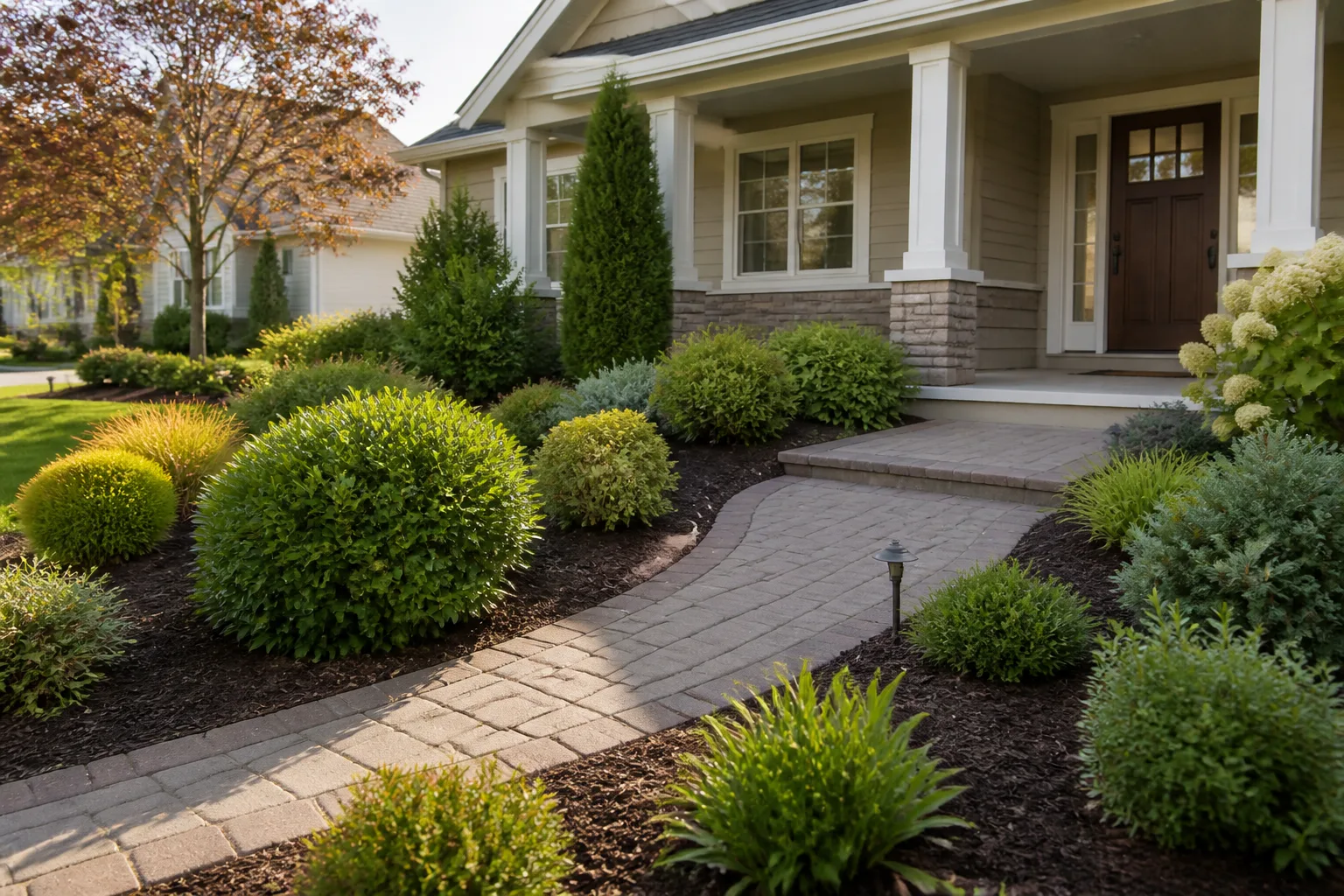
A landscape tree is a long-term decision. The sapling’s nursery tag may show a tidy specimen, but the mature tree can change how much sun reaches a garden, how often you rake, whether seedlings appear in the fence line, and whether the canopy fits the utility corridor. “Avoid” is therefore a shorthand for “pause and check the site, the species, and the cultivar before you commit.”
Some trees on this list are poor choices in many regions because they spread aggressively outside cultivation. Others are useful trees with a narrow best-use case: they may need a large naturalistic setting, tolerate seasonal debris, or be kept away from a garden where sensitive plants grow. The better choice is not always a different species; sometimes it is a named cultivar, a different location, or deciding that the tree’s benefits do not justify the maintenance.
What makes a tree a poor fit for a landscape?
Start by separating four kinds of trade-off. Ecological spread means seedlings or root suckers move into areas where the tree is unwanted. Maintenance load includes fruit, cones, leaves, pods, sticky resin, and pruning that returns year after year. Space mismatch happens when the mature crown, root system, or shade pattern competes with other landscape uses. Regional risk includes pests, disease, or legal restrictions that differ by location.
These are not interchangeable. A messy tree can still be a sound choice for a woodland edge; a tree with suckers may be excellent for restoring a grove but frustrating in a small formal bed; and an invasive species can be a concern because its seeds may move beyond the property boundary. Choose based on the parts of the landscape the tree will influence, not only on how it looks in a photograph.
A five-minute screen before you buy
Ask the nursery for the exact botanical name and cultivar, then look up mature height and spread from a regional extension service, botanical garden, or arboretum. A cultivar name matters: “thornless,” “fruitless,” and “dwarf” describe different traits, and a marketing phrase is not a guarantee that a tree will stay compact or clean in your specific climate.
Before planting, sketch the mature canopy on your site plan and mark gardens, open lawn, neighboring vegetation, overhead lines, buried services, drainage features, and the places where you want sun. Think about the landscape five or ten years after planting, not only the empty space you see today. The Oklahoma State University Extension guide to selecting native landscape trees makes a useful broader point: a tree that looks attractive in a nursery may still be a poor fit for local plant communities and regional conditions.
| Check | What to verify |
|---|---|
| Mature dimensions | Height, canopy width, and the space the roots and shade will occupy |
| Reproduction | Invasive seed, root suckers, or volunteer seedlings beyond the planting area |
| Seasonal debris | Whether flowers, fruit, leaves, cones, or pods land where people walk, garden, or park |
| Site and utilities | Sun, soil moisture, overhead clearance, and buried lines or easements |
| Ongoing care | Pruning, cleanup, pest monitoring, and the time you are willing to spend |
1. Callery pear: the seed escape is bigger than the yard
Callery pear, including Bradford pear, is the clearest “do not add this” example in many parts of the United States. Cultivars were once sold as sterile, but cross-pollination between compatible trees can produce viable fruit; birds then move the seeds away from the original planting. Illinois Extension documents the resulting dense roadside and field-edge thickets, early leaf-out, and competition with native understory plants in its Callery pear invasive-plant guidance. The same page notes the tree’s weak branch structure, but the landscape-wide problem is its ability to seed itself into unmanaged places.
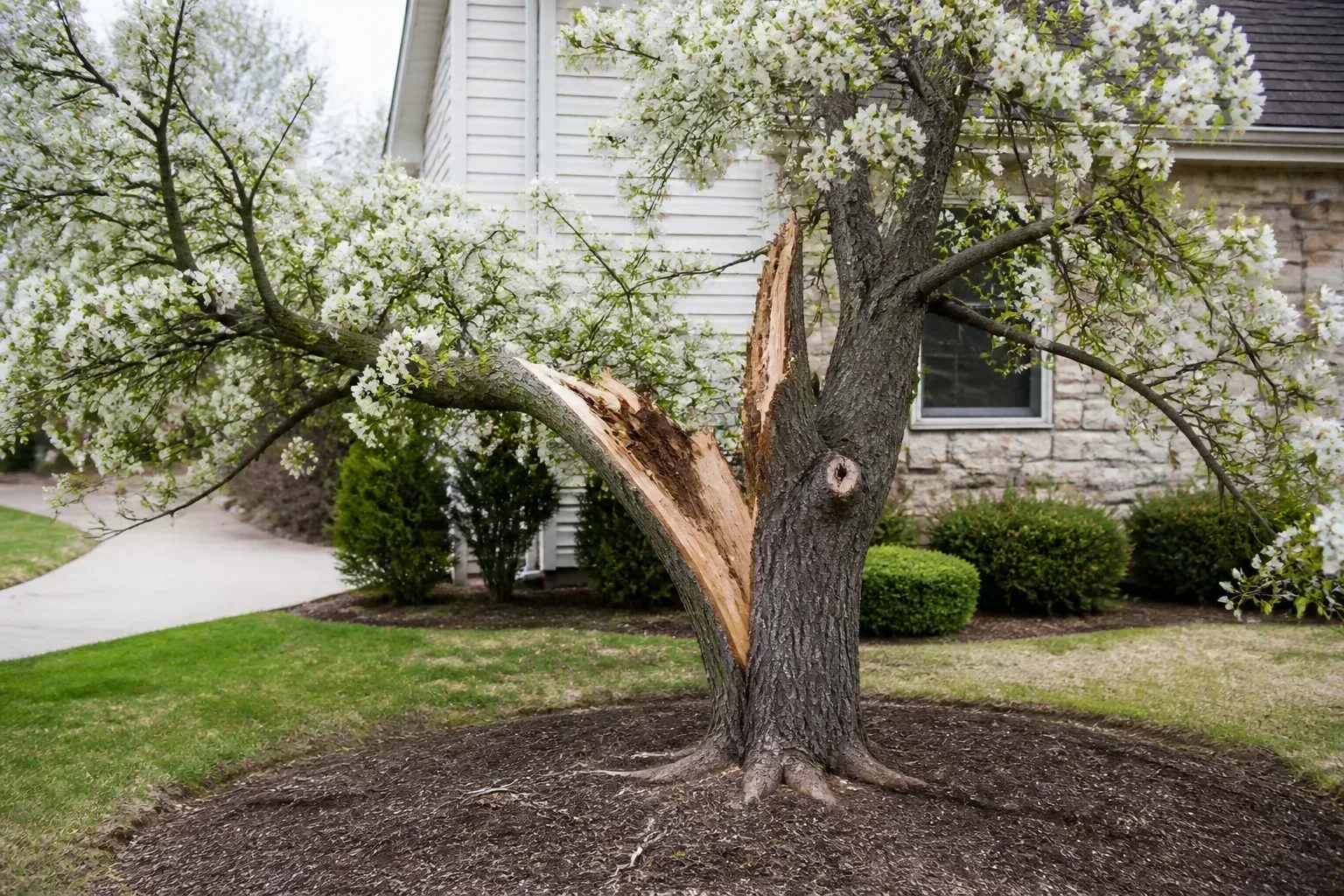
This is not just a question of whether a homeowner likes the flowers or the smell. The species is regulated in some states and listed as invasive in some regions; check current state and local rules before buying, moving, or disposing of it. The Ohio State University Extension overview explains the ecological concern and suggests alternatives including serviceberries, native hawthorns, and crabapples.
For a replacement, match the job the pear was meant to do. Eastern redbud, serviceberry, flowering dogwood, and American plum offer spring flowers in many eastern and central settings, but they are not interchangeable across the continent. Use a native-plant nursery or local extension list to choose a species adapted to your rainfall, soil, winter, and mature-space limits. If an established Callery pear is producing seedlings nearby, removing the source tree is not the only step: keep watching disturbed ground and woodland edges for volunteer saplings.
2. Quaking aspen: a grove-making tree in a small planting
Quaking aspen brings luminous bark and trembling leaves, and its ability to form a grove is part of its natural character. A single planting can send up root suckers that become new stems; in a small ornamental bed, those shoots may appear in lawn, paths, or other planted areas and need recurring management. GardenersPath’s quaking aspen growing guide describes the species’ clonal growth and recommends giving the tree space to spread.
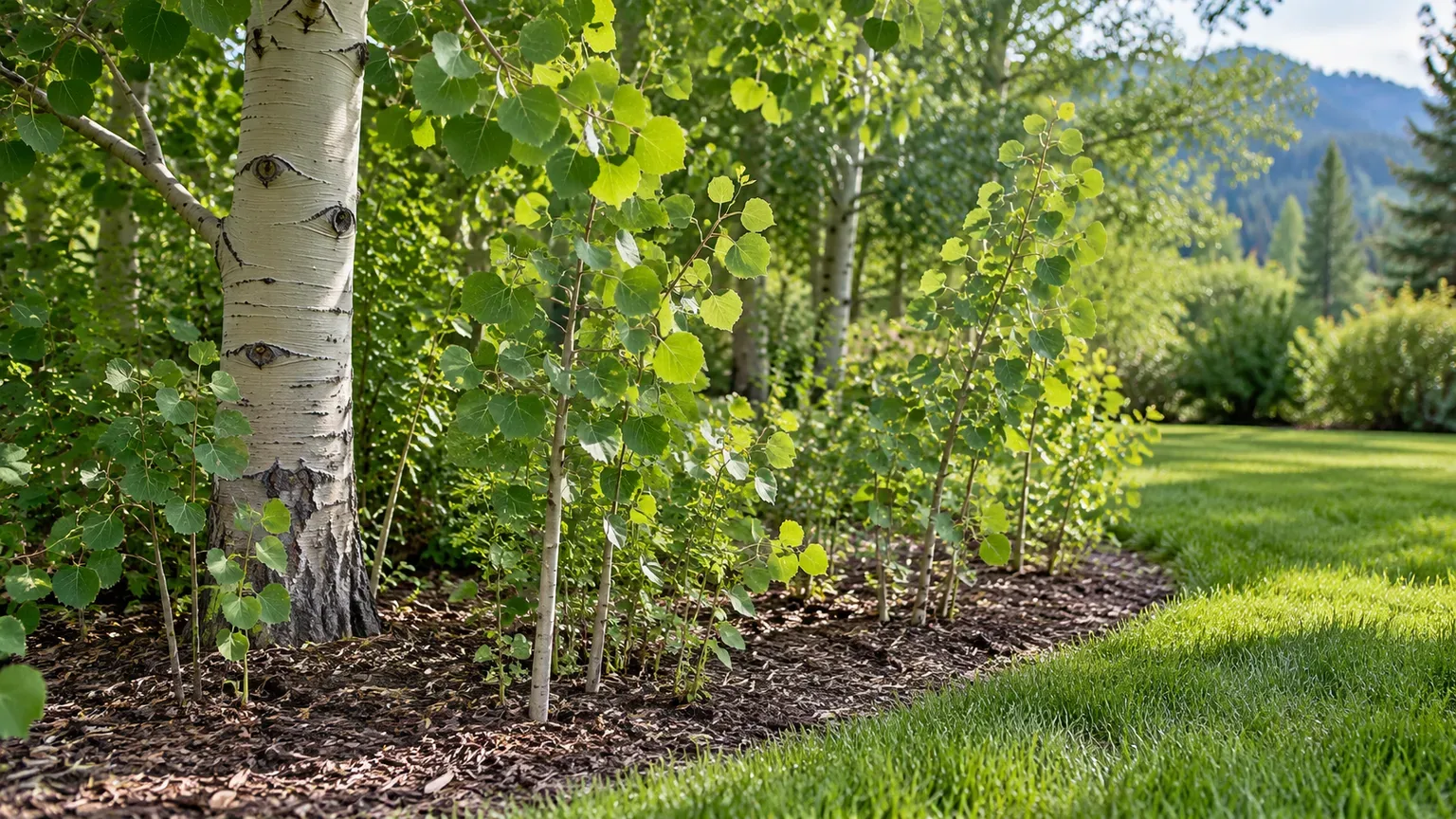
That spread is useful when you want an expanding grove on a spacious, suitable property. It is a poor match when the planting plan depends on a single trunk, a neat lawn border, or nearby beds that cannot accommodate new shoots. Aspen also tends to suit cooler parts of its range better than hot, low-elevation landscapes; check local climate guidance rather than relying on a generic hardiness number.
If the visual goal is a light-barked, smaller-scale accent, consider a locally appropriate birch or serviceberry after checking heat tolerance and mature size. Neither is a drop-in aspen replacement everywhere. The practical test is whether you want one tree or a spreading colony, and whether your landscape can absorb a colony without constant sucker removal.
3. Black walnut: a large tree with a selective garden footprint
Black walnut can be a valuable native shade and nut tree on a large property, but it complicates some mixed plantings. Its roots, leaves, twigs, and nut hulls contain juglone, which can injure certain sensitive plants; the effect is not a universal poison zone, and the extent depends on plant sensitivity and soil conditions. Penn State Extension’s walnut landscaping guide and the Morton Arboretum’s black walnut toxicity profile both explain that many plants tolerate walnut while some are poor choices near its roots.
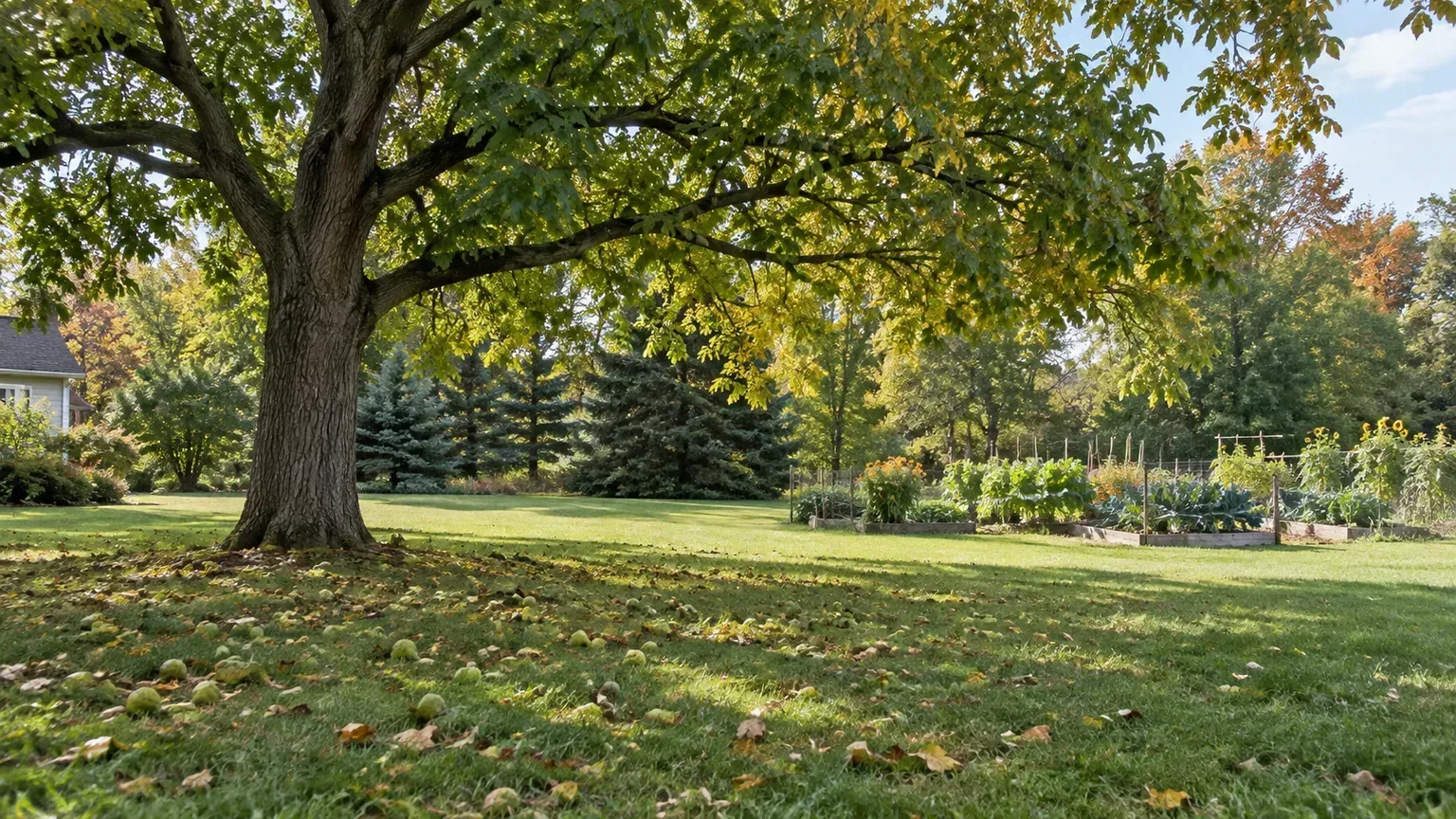
Think through the garden plan before planting. If the site is intended for vegetables, a wide range of ornamental perennials, or a collection of juglone-sensitive plants, a walnut may narrow those choices; the tree also produces nuts and substantial leaf litter. It can be a better fit in a broad lawn, woodland transition, or nut-producing area where the canopy and debris are welcome and the understory is selected with tolerance in mind.
If you want a broad native shade tree but need more flexibility for understory planting, a regionally suitable oak or another native species may work. Penn State lists tolerant possibilities such as redbud, serviceberry, river birch, and many oaks for walnut-adjacent plantings, but the best option still depends on sun, moisture, and local adaptation. If an old walnut already anchors your property, start with a regional tolerance list instead of removing a healthy mature tree simply because a few plants struggle.
4. Female ginkgo: beautiful foliage, unpleasant seed cleanup
Ginkgo is often a strong urban tree: it tolerates difficult growing conditions and offers distinctive golden fall color. The nuisance is specific to female trees, whose fleshy seed coverings become malodorous as they ripen and drop. The North Carolina Extension Gardener Plant Toolbox ginkgo profile distinguishes the sexes and notes why landscape plantings commonly use male cultivars.
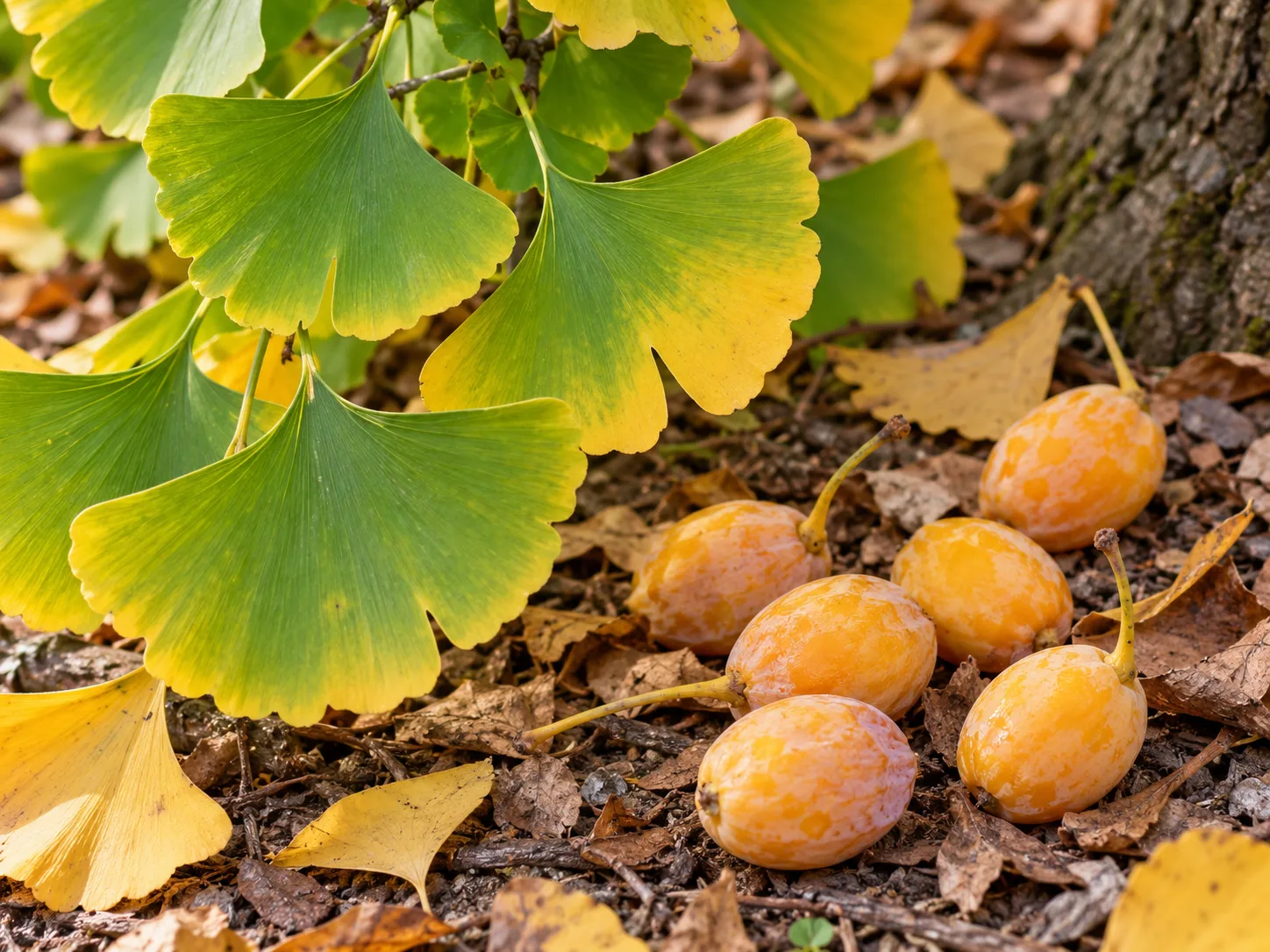
If you want a ginkgo, ask for a named, grafted male cultivar from a nursery that can identify the cultivar on the tag. Do not rely on the tree’s size or its leaves to tell you whether it is male or female; the sexes look alike through most of the year, and a seedling may not reveal its sex until maturity. A male cultivar avoids the female seed mess, though it still drops leaves in autumn and may produce pollen.
If cultivar identity is uncertain or you prefer a different tree, choose a local fall-color species suited to the site. Red maple, sourwood, or black gum are possibilities in some regions, each with its own climate and moisture needs. Ginkgo itself is not a poor tree everywhere; the important distinction is the tree’s sex and the location where fallen seeds would be handled.
5. Sweetgum: the gumball problem and cultivar caveat
American sweetgum earns its place in large landscapes through glossy star-shaped leaves and strong autumn color. Its spherical, spiky fruit capsules—often called gumballs—can persist through winter and fall over an extended period, so they create cleanup rather than one brief leaf-raking event. The North Carolina Extension Gardener Plant Toolbox sweetgum profile documents the fruit and its landscape uses.
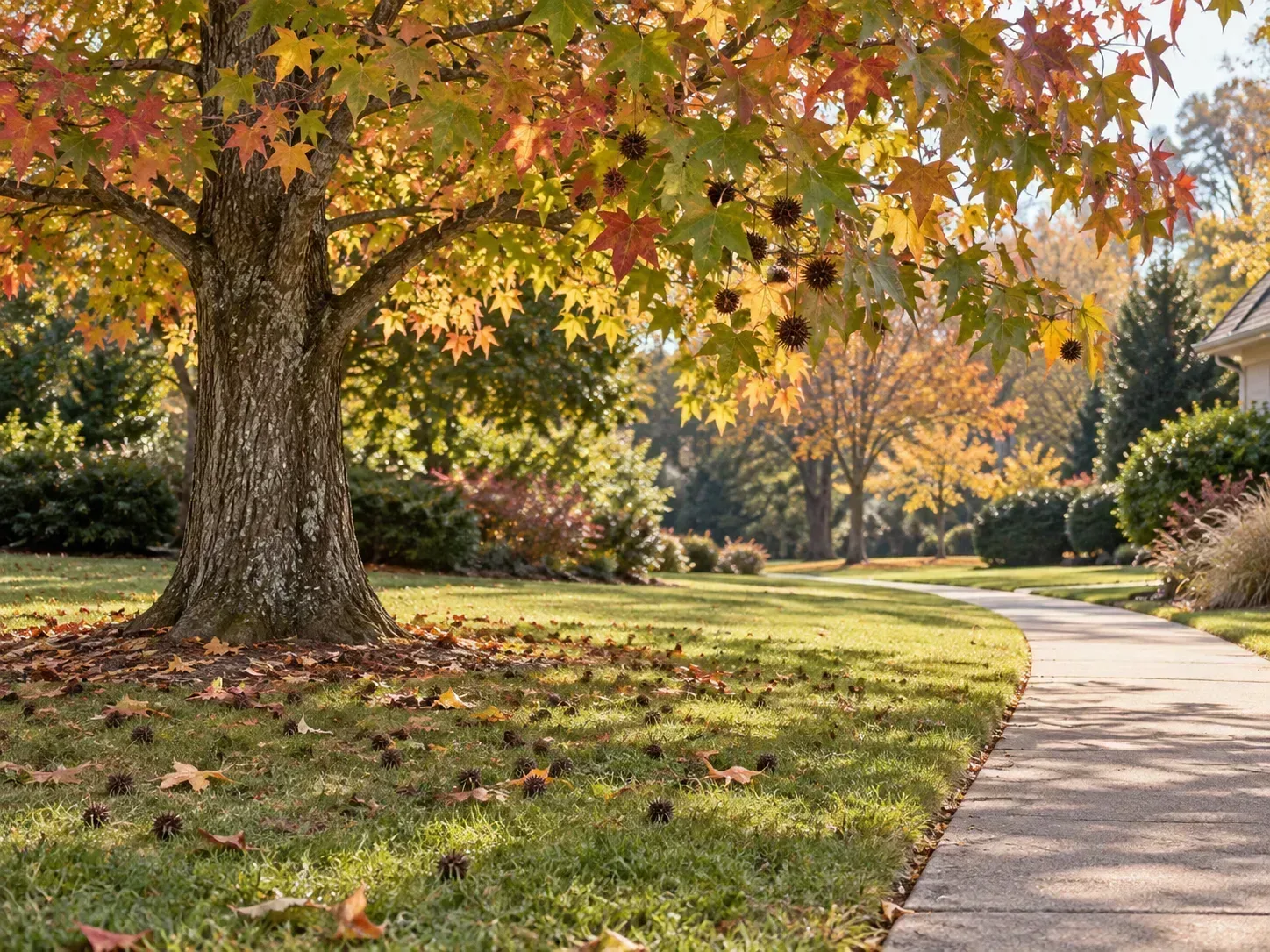
The cultivar ‘Rotundiloba’ is marketed as a no-gumball form, but a cultivar claim needs a little care. North Carolina State describes it as fruitless, while Oregon State University’s landscape plant profile says it is sometimes reported not to bear fruit, though some fruit has been found. Treat it as a way to reduce the usual problem, not as a promise that every specimen will remain completely fruit-free; ask a knowledgeable local nursery what it can confirm.
If you cannot accept any hard fruit drop, choose another tree rather than gambling on a label. Black gum can provide red fall color in suitable eastern sites, while serviceberry offers a smaller crown and edible fruit that birds may share; neither duplicates sweetgum’s size, color timing, or soil tolerance. A large sweetgum can still be a sensible choice on open ground where the fruit is not a nuisance and the root zone has ample room.
6. Honey locust: thornless does not always mean podless
Wild honey locust may have formidable thorns and long seed pods. Landscape cultivars are often selected to reduce those traits, but “thornless” and “fruitless” are different promises. North Carolina State’s honey locust profile explains that many thornless cultivars do not produce pods, while noting that pods can still occur; Purdue Extension’s landscape note describes the appeal of thornless and fruitless forms and the light, filtered shade they provide.
Before buying, check the complete cultivar name, not just a tag that says “honey locust.” Ask whether the selected cultivar is thornless, whether it is expected to set pods in your region, and how large its crown becomes. Even a cleaner cultivar still drops leaves and needs enough room; small leaflets may be easier to handle than large litter, but “easy cleanup” is not the same as no maintenance.
Filtered shade can be useful where grass or sun-loving plants need some light, and a properly selected honey locust can be a good fit in a park-like setting. If you want a native shade tree with a denser canopy, select an oak or another local species for the site instead. The right substitute depends on whether the design goal is dappled shade, wildlife value, privacy, fall color, or simply a tree with fewer pods.
7. Catalpa: bold flowers, oversized leaves, and long pods
Northern catalpa’s flowers and large leaves give it a strong ornamental presence, but the tree also drops substantial foliage and long seed pods. Its wood is brittle, and the bold canopy can shade out a smaller garden below it. The North Carolina Extension Gardener Plant Toolbox profile for northern catalpa describes its large coarse leaves, spreading crown, brittle wood, and seed pods.
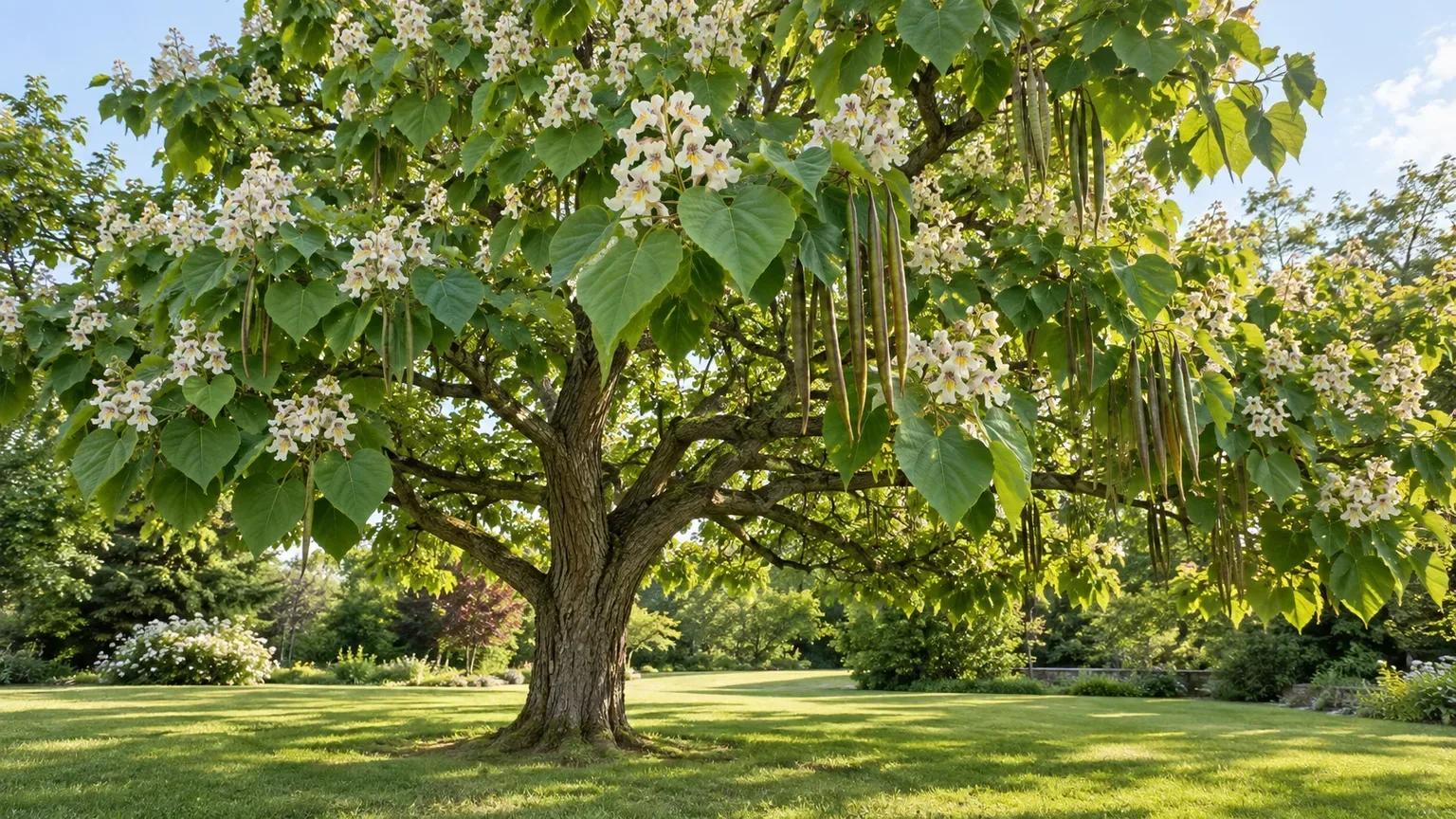
This is not a reason to remove catalpa from every planting plan. It can be a fine shade tree for a spacious, less formal landscape, and its foliage supports native caterpillars that in turn feed wildlife. The trade-off is that the owner should be comfortable with seasonal litter, a broad crown, and possible branch cleanup after severe weather.
For a smaller flowering canopy, look at serviceberry, redbud, or a locally native dogwood, then verify expected size and site conditions in your region. If you particularly value catalpa’s dramatic bloom, give it an open location away from gardens that depend on full sun and accept that its fallen pods and leaves are part of the annual care routine.
8. Eastern white pine: a forest tree that needs forest-scale room
Eastern white pine is a handsome evergreen, but it is not a compact background plant. North Carolina State lists typical mature dimensions around 50 to 80 feet tall and 20 to 40 feet wide, and notes its susceptibility to wind damage and several regionally important pests and diseases in the eastern white pine profile. Cones, needles, and resin from a damaged or wounded branch can also add cleanup to a spot used for seating or parking.
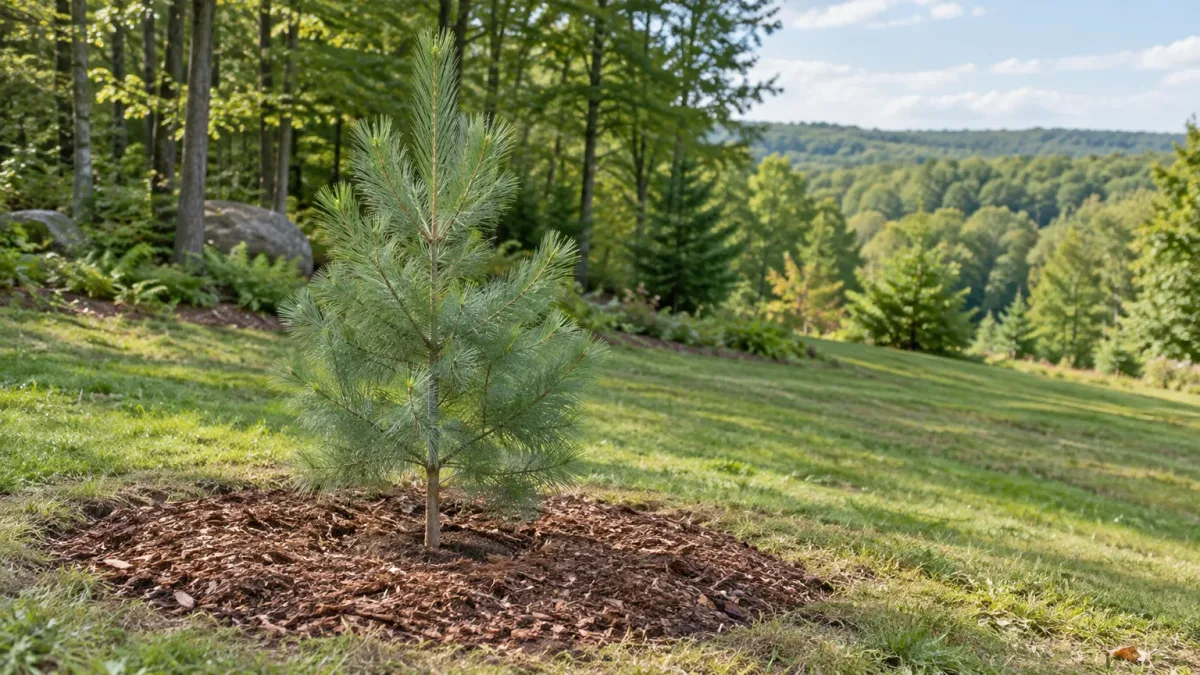
Its size can be an asset on a large property, in a naturalized screen, or in a woodland edge where the canopy has room to develop. It is a poor fit when a small landscape depends on a narrow evergreen column or where routine pruning would be needed to hold the tree below overhead lines. Dwarf and compact cultivars exist, but their mature width, winter hardiness, and suitability for local weather still need to be checked.
For a smaller evergreen screen, compare regionally adapted compact conifers rather than planting a full-size white pine and hoping to prune it into a hedge. A mixed screen can also reduce dependence on one species and its pests. Choose the species by mature height, sunlight, soil moisture, and the amount of seasonal needle or cone litter you are willing to manage.
9. Ash: a long-term choice shaped by regional pest risk
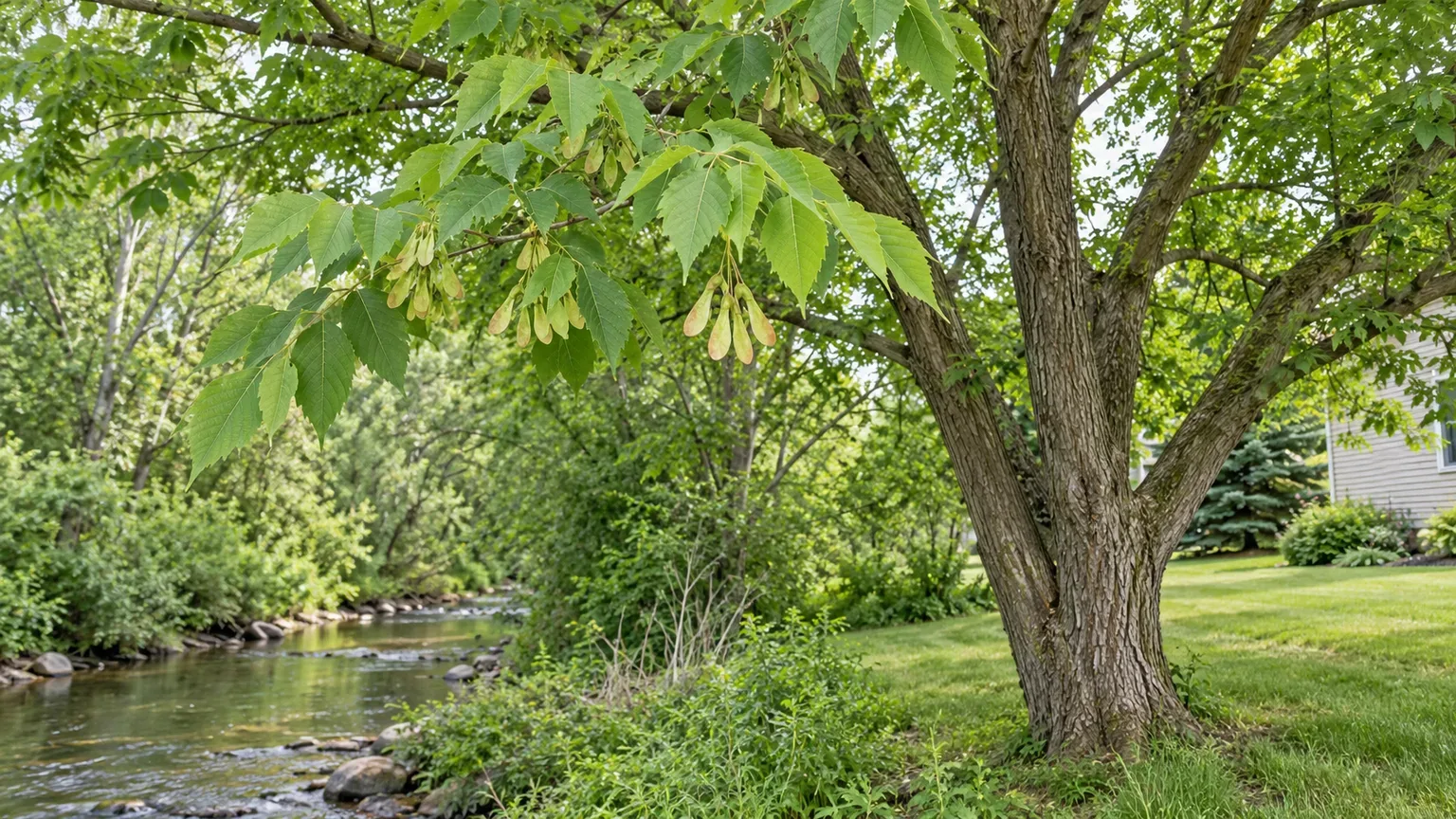
Ash trees can be valuable shade trees, but the emerald ash borer has changed the long-term calculation wherever the insect is established or spreading. A newly planted ash is a multi-decade commitment to a species that may require monitoring, treatment, removal, or replacement depending on local pest status and the tree’s value. The Colorado State Forest Service guidance on treating or replacing ash stresses that the decision depends on whether the pest is nearby, tree condition, costs, and the value of the individual tree.
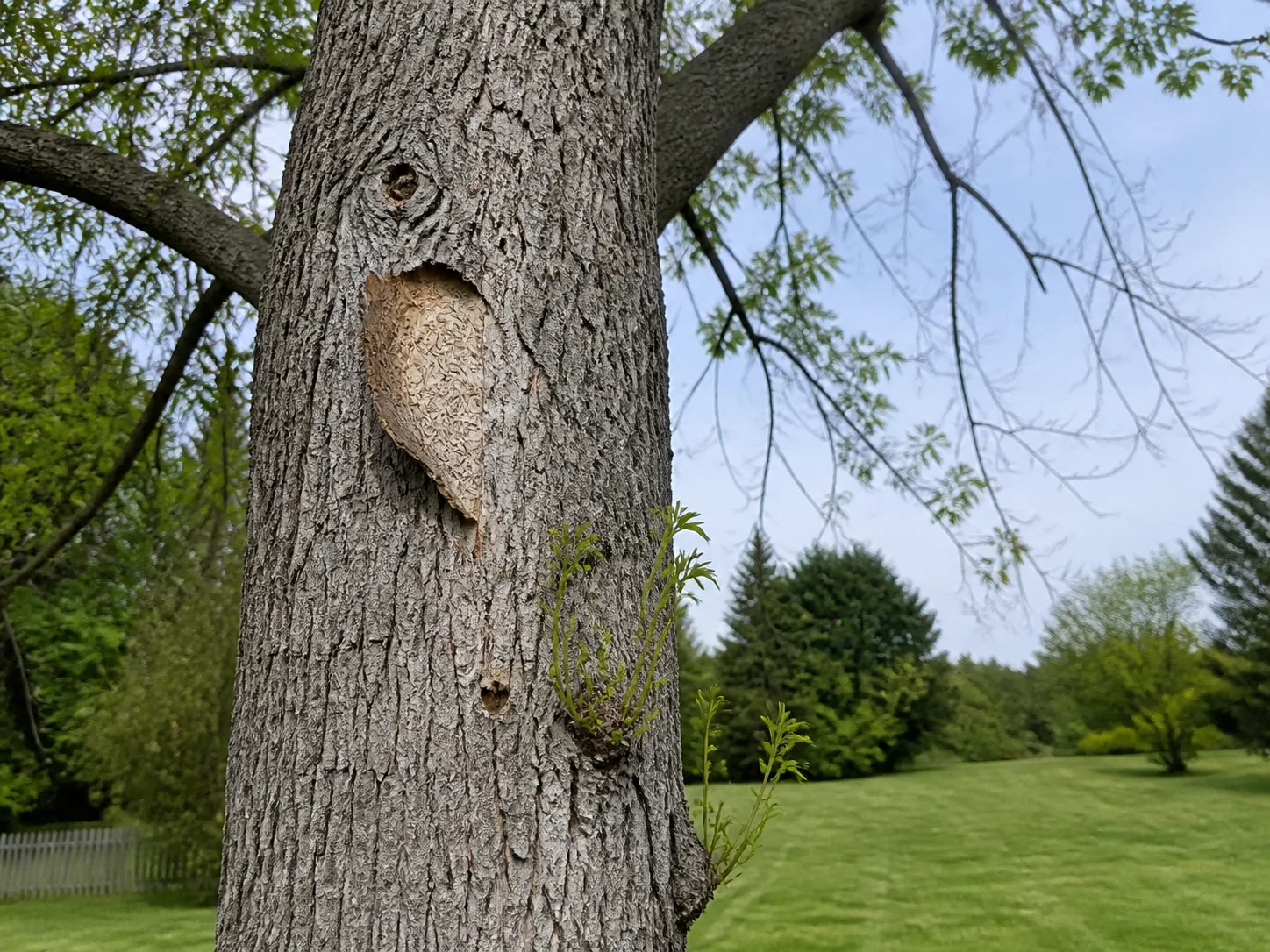
That does not mean every ash tree should be cut down. A healthy, established, high-value tree may merit a different response from a young or poorly placed tree, and treatment decisions should come from current local guidance and a qualified arborist. The practical landscape lesson is to avoid making an entire yard or street dependent on one vulnerable species; diversity gives a planting plan more resilience if one pest arrives.
If you want shade, compare several locally adapted trees that differ in family and pest vulnerability. The right replacement might be an oak, red maple, river birch, or another native tree, but each has its own mature dimensions, moisture preferences, and debris. Ask your extension office or municipal forester which species are performing well in your county now.
How to choose an alternative that fits your goal
First name the function you want the new tree to perform. “I need a tree” is too broad to guide a purchase; “I want spring flowers below overhead lines,” “I need filtered afternoon shade for a perennial bed,” and “I want an evergreen screen that tops out below a window” all point to different candidates. Then shortlist plants that match the function and eliminate any that exceed the site’s mature height or spread.
For spring flowers and a smaller crown
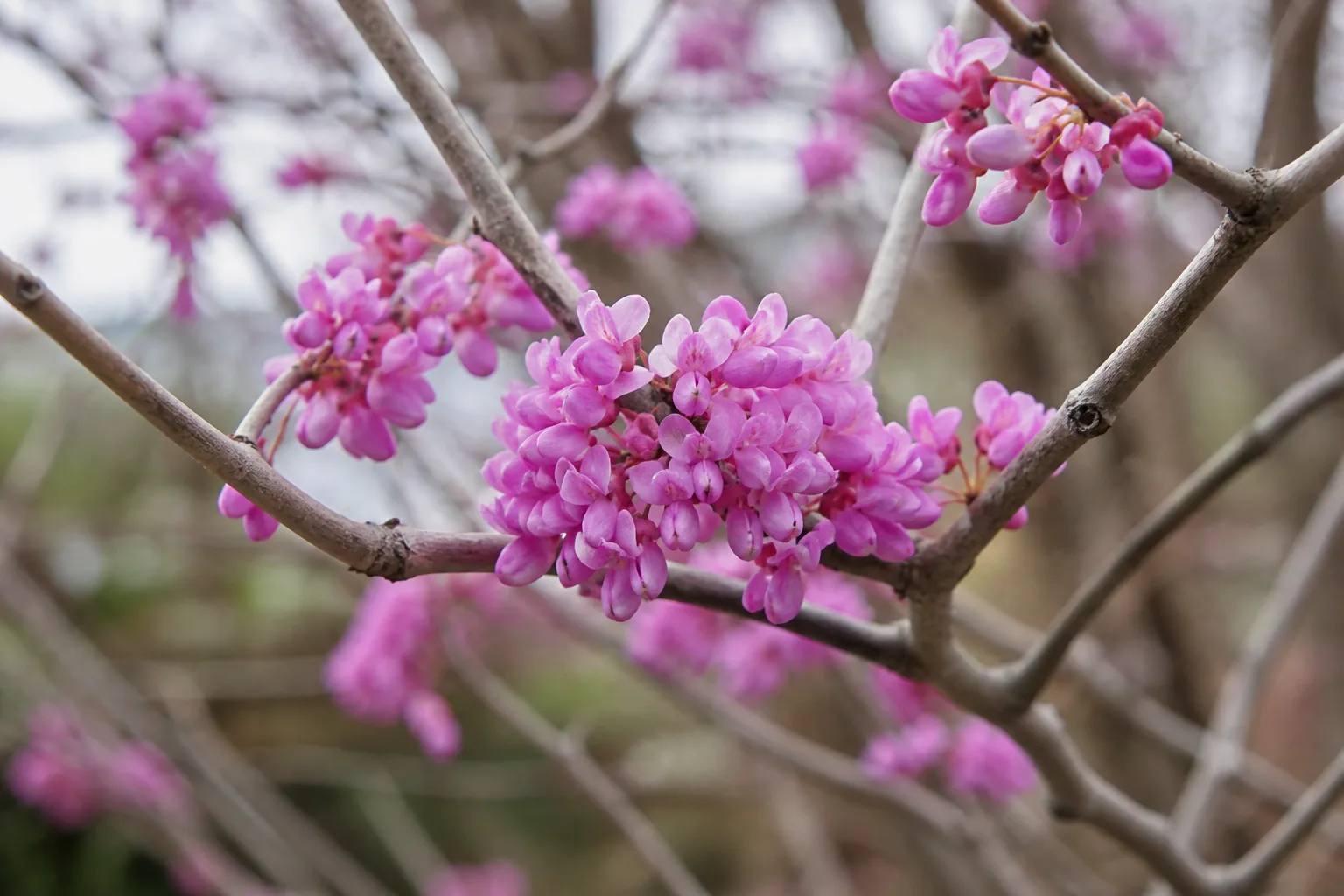
Serviceberry, eastern redbud, flowering dogwood, American plum, native hawthorn, and native crabapples can replace some ornamental pears in parts of North America. They offer different forms, fruit, fall color, and wildlife value, so check local hardiness and whether the species is native to your specific region. The Oklahoma State University Extension tree-selection article specifically discusses redbud and plum as alternatives in Oklahoma; Illinois Extension lists redbud, serviceberry, American plum, and flowering dogwood for replacement of Callery pear in its region.
For filtered shade, fall color, or an evergreen screen
For filtered shade, a verified thornless honey locust cultivar may suit a large enough site; confirm pod production as a separate trait. If the priority is fall color without fruit capsules, compare a male ginkgo or a locally adapted small tree rather than assuming that all fruitless sweetgum claims are absolute. For an evergreen screen, choose from conifers that stay within the planned height and spread, and use a mixed planting if pests or disease are a concern. The Garden Design arborvitae guide shows how much mature size varies among cultivars, from compact forms to trees more than 70 feet tall, so verify the cultivar rather than shopping by the common name alone.
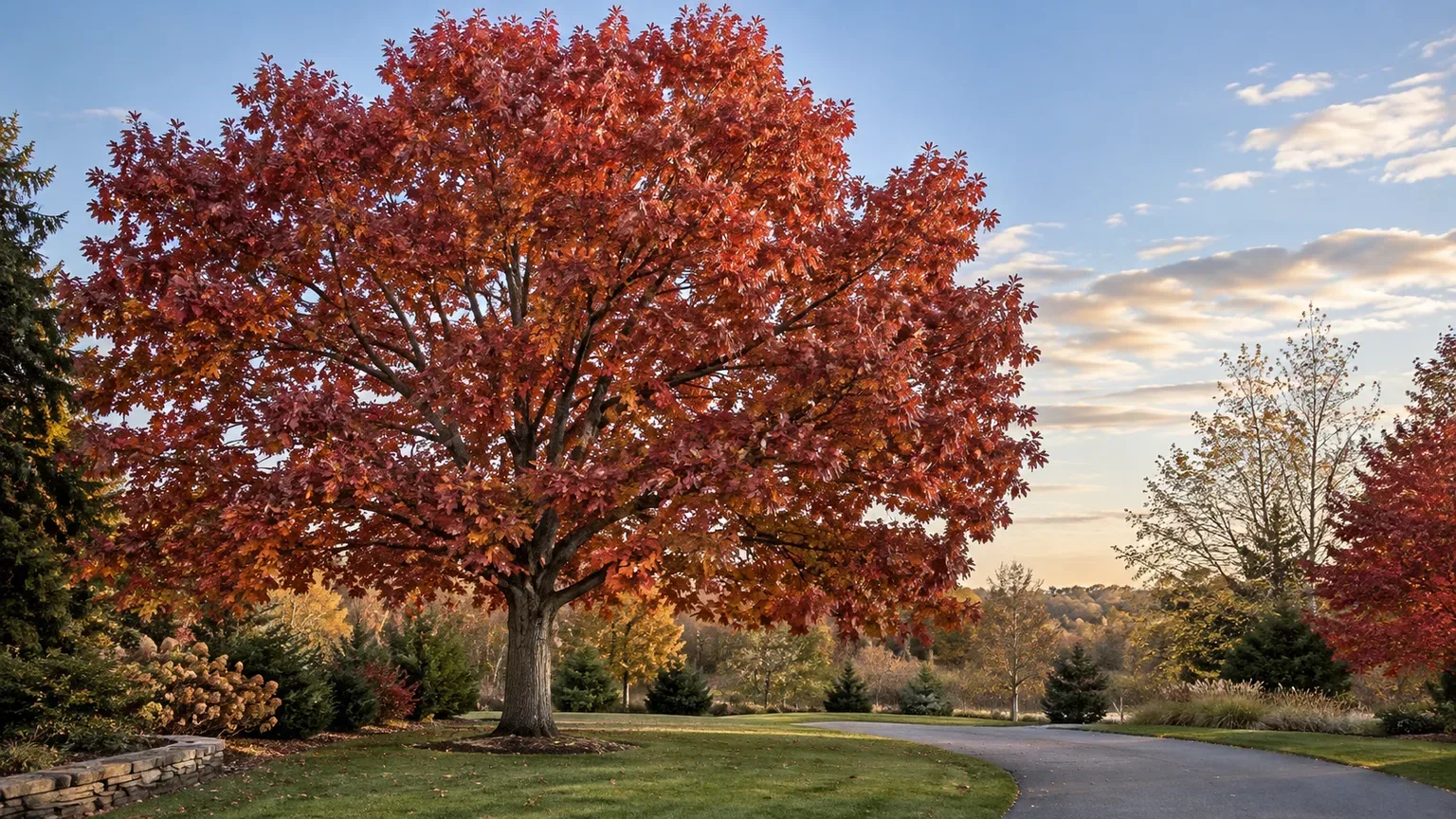
No single replacement is “safe” or low-maintenance everywhere. The conditions in a dry western slope differ from a humid eastern yard, a coastal garden, or a cold northern site. Use the tree’s full botanical name, check regional extension recommendations, and ask a local nursery how specimens perform after they reach maturity rather than relying on a small container plant’s appearance.
Plan around overhead and underground utilities
The mature crown is the part most likely to collide with overhead power lines, so a tree that appears small at planting can trigger years of clearance pruning. Penn State Extension’s guidance on pruning for utility-line clearance explains why utilities use directional pruning and why large trees under conductors are often better replaced with compatible, lower-growing species or planted far enough away to avoid contact.
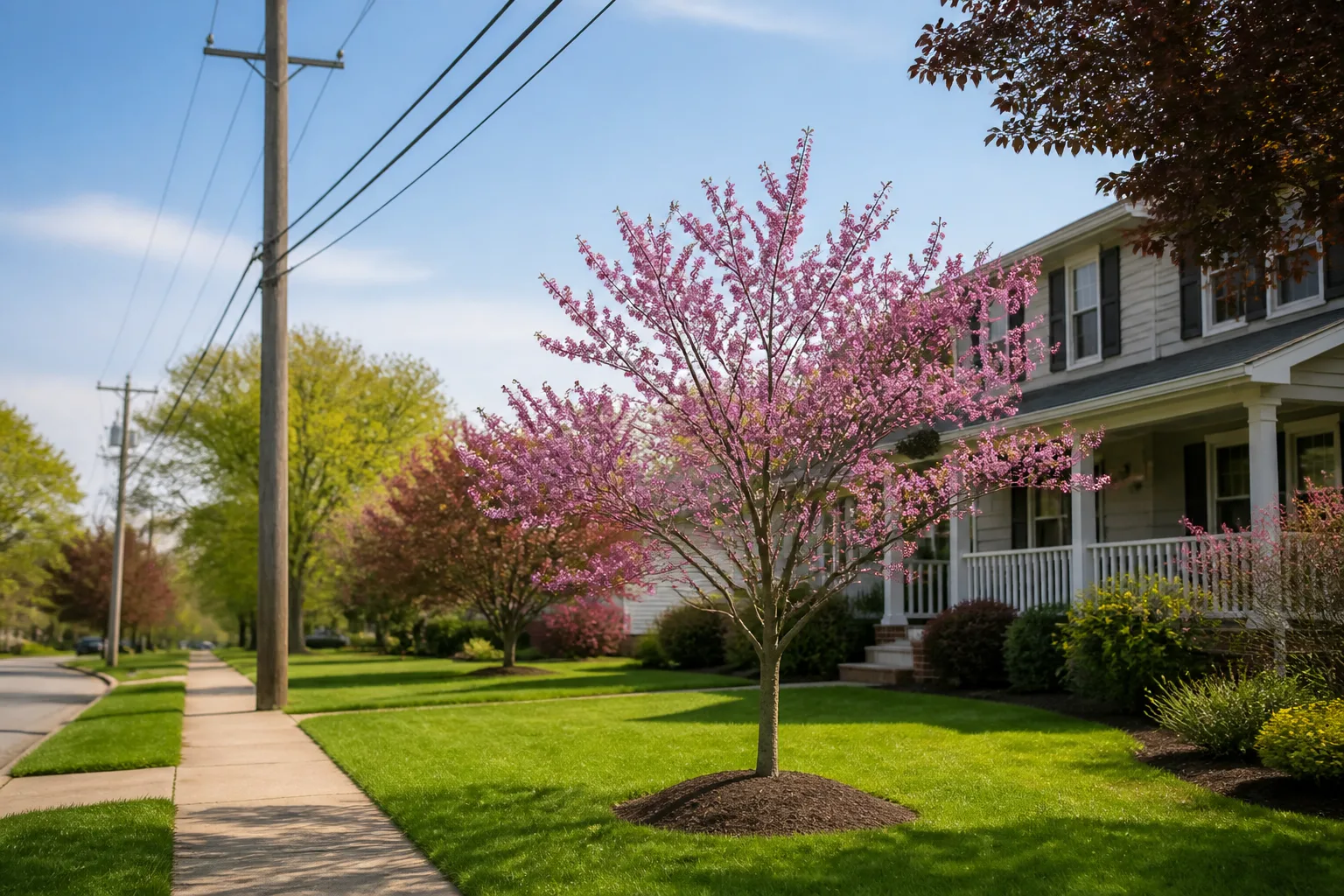
Do not plan around a future topping cut. Topping removes too much canopy, creates large wounds, and can produce weak regrowth; it does not turn a tall species into a permanently small tree. Ask the electric utility or municipal forester for the height class they allow under local conductors, and select a species whose mature canopy naturally fits the available clearance.
Underground services deserve a separate check. Sewer, water, drainage, irrigation, and communication lines may follow easements or take routes that are not obvious from the lawn surface. Locate buried utilities before digging and avoid choosing a tree whose mature roots and water needs conflict with the service corridor. Roots are not drills that bore through sound pipes, but they can exploit existing leaks and occupy the soil around a line; the safest strategy is to know where services are and leave a sensible planting margin.
What to do with a tree that is already established
An established tree is not automatically a removal project. First identify the species and cultivar if possible, then check for local invasive listings, damage, disease, suckers, fruit or seed production, and conflicts with the uses of that part of the landscape. A healthy sweetgum on open ground may be fine; a Callery pear spreading seedlings into natural habitat raises a different concern, while a female ginkgo over a heavily used path may be an avoidable cleanup burden.
If the tree is large, damaged, close to conductors, or dropping branches, keep people away from the work zone and consult the utility or an ISA Certified Arborist. Do not cut large roots, climb to prune, or apply herbicide based on a generic online recipe; removal and treatment rules depend on tree size, location, and local regulations. When replacing a tree, plant for species diversity and leave enough space for the mature canopy so the next selection does not repeat the same problem.
Conclusion
The best way to avoid a disappointing landscape tree is to match its mature behavior to the whole site before buying it. Check whether it spreads by seed or suckers, what it drops, how large its crown becomes, whether its cultivar really avoids the nuisance you care about, and what regional pests or utility rules apply.
Callery pear is a broad ecological concern in many regions; aspen, black walnut, catalpa, sweetgum, ginkgo, honey locust, white pine, and ash each have narrower trade-offs that may be acceptable in the right setting. Choose a replacement by the job you need it to do, verify it with local sources, and plant a tree whose natural mature form fits the landscape rather than one that will need constant correction.