Brown Leaves on African Milk Tree: Dry-Down Checks
Quick answer
Brown leaves on African Milk Tree are the small oval leaves along stem ridges turning tan, crispy, or dropping—not the green column itself. First step: check whether ridge leaves are crispy on a light dry pot or whether brown appears at the soil line on wet mix with a soft stem base.

Brown Leaves on African Milk Tree: Causes, Checks & Fixes
This guide covers brown leaves on African Milk Tree. See also the general Brown Leaves guide, watering, and light pages for this plant.
Brown Leaves on African Milk Tree: Causes, Checks & Fixes
Quick answer
Brown leaves on Euphorbia trigona mean the small leaves tucked into stem ridges are dying—not necessarily the tall column itself. For how whole-leaf browning works in general, see our brown leaves guide. On African milk tree, a firm stem with crispy ridge leaves on a dry pot differs completely from brown at the soil line on soggy mix.
First step: weigh the pot and squeeze the lowest 5 cm of stem. Light pot + crispy ridge leaves = drought. Heavy wet pot + soft stem base = overwatering.
When to use this page vs other African Milk Tree guides
| Pattern | Read next |
|---|---|
| Wrinkled stem, dry pot | Underwatering |
| Soft base, wet soil | Overwatering |
| Brown tips only | Brown tips |
| All leaves dropped, firm column | Not enough light |
| Brown + black at soil line | Root rot |
What brown leaves look like on African Milk Tree
Unlike monstera or pothos, African milk tree photosynthesizes mainly through its thick green stems. Ridge leaves are secondary and not long-lasting—they drop seasonally even on healthy plants. Browning breaks that pattern in distinct ways:
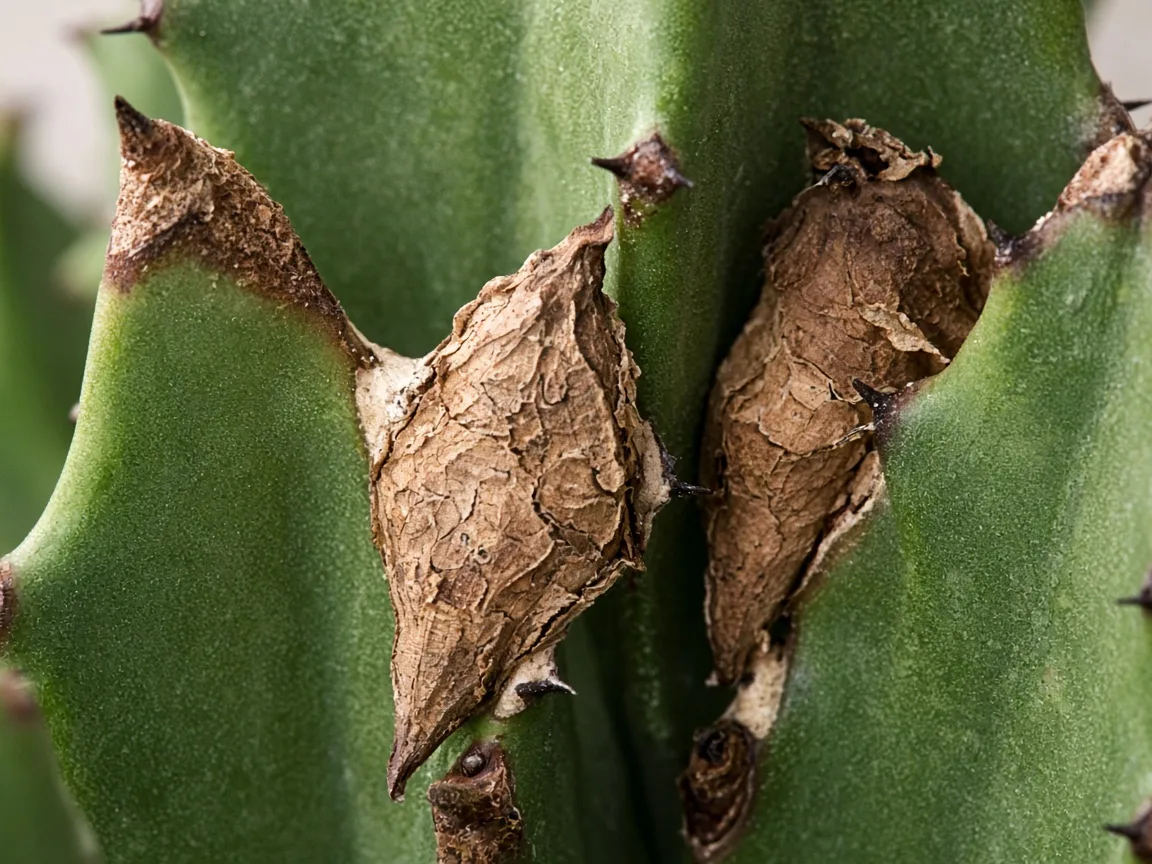
Crispy brown ridge leaves on a firm green column—dead tissue will not re-green; watch for new leaves along upper ridges.
- Crispy tan ridge leaves, light pot, firm stem — Underwatering or seasonal drought; the column may still look plump.
- Brown ridge leaves + slight stem wrinkle — Progressive thirst; see underwatering.
- Brown lowest leaves + soft stem on wet mix — Root stress; leaves drop as rot advances from the base.
- Sudden mass leaf drop in dim winter room — Low-light dormancy-like response; stem should stay hard.
- Bronze speckled ridge leaves with sticky residue — Pest feeding; inspect with a magnifier.
- Brown after cold window exposure — Darkened patches on one stem face with dropped leaves.
A leafless but firm column is common indoors and not automatically fatal—the green stem is still doing the work.
Column vs ridge leaf diagnosis
This plant-only section does not apply to leafy philodendrons or ferns. Euphorbia trigona stores water in its triangular columns and can survive long periods with few ridge leaves:
- Run your hand along the full stem height—color should stay green or red-purple (on ‘Royal Red’), not dull gray-brown.
- Ridge leaf brown is a secondary signal; stem softening at the soil line is primary.
- New tiny leaves along upper ridges mean recovery even if lower leaves are gone.
- If every ridge leaf drops but the column stays firm and bright, check light before watering more.
Always check upper ridges first. Brown on new growth is more urgent than one aging lower leaf fading out.
The pot-weight and stem-base squeeze test
Tall milk trees in heavy ceramic pots hide moisture problems. Before you change anything:
- Lift or tilt the pot when you think it is dry versus two days after watering. Learn your dry weight.
- Probe the top 2–3 inches with a skewer or finger. Surface dust-dry on peat-heavy mix can still mean wet soil below.
- Squeeze the lowest 5 cm of stem above soil with gloves on. Firm = moisture diagnosis can follow leaf texture. Soft or hollow = stop water and see root rot.
- Check drainage holes on top-heavy pots—standing saucer water keeps the base wet while ridge leaves crisp from uneven uptake.
Wear gloves when handling stems—euphorbia latex irritates skin and eyes.
Why African Milk Tree gets brown leaves
Euphorbia trigona evolved in dry tropical forests as a drought-tolerant columnar succulent. Brief dry spells are safer than repeated soaking.
Underwatering. Water when the soil dries through; extended dry spells drop ridge leaves first while stems may still look fine.
Overwatering. Wet roots cannot support succulent stems; lower leaves brown before the stem base softens.
Low light. Bright indirect light indoors supports normal foliage on columns; insufficient sun causes leaf drop and pale sparse ridges.
Seasonal and cold stress. Ridge leaves shed in cooler short days. Temperatures below about 45°F (7°C) damage tropical succulents; cold drafts can darken stem tissue and drop leaves together.
Pests. Scale, aphids, and spider mites affect indoor succulents; they can bronze ridge leaves—check stem ridges with a magnifier.
How to confirm the cause
- Pot weight — Light versus heavy days after your last watering.
- Stem squeeze at base — Soft = rot path; firm = leaf-level stress.
- Light level — Bright window versus dim corner; variegated clones need more.
- New ridge leaves — Present on upper stem = stable; absent for months = escalate.
- Season — Winter leaf drop on firm column with dry mix is often normal.
- Pest signs — Bumps, webbing, or sticky residue along ridges.
First fix for African Milk Tree
Weigh the pot and test stem firmness at the soil line—then either deep soak dry mix or stop watering wet mix.
- Dry + firm — Water until runoff, then wait until top 2–3 inches dry per the watering guide.
- Wet + soft base — Stop water immediately; see overwatering.
- Dim + leafless firm column — Move to brighter light gradually per the light guide.
- Pest bronzing — Isolate and treat per scale insects or spider mites.
Do not remove healthy stem tissue. Do not fertilize leafless stressed plants. Do not mist ridge leaves.
Source note: Euphorbia trigona culture from NC State Extension and overwatering injury from Missouri Botanical Garden.
Recovery timeline
Brown ridge leaf tissue does not re-green. Judge recovery by firm column, stable pot-weight dry-down, and new small leaves along upper ridges. Mild drought stress often stabilizes within one to two watering cycles after a proper soak. New ridge leaves commonly appear within two to six weeks once moisture and light match the season. Stem rot recovery takes longer if base tissue was lost—branches may sprout below cuts in warm bright conditions over one to three months.
Mistakes to avoid
- Watering a soft stem base because ridge leaves look dry
- Soaking a leaf-dropping winter plant because foliage fell—not always thirst
- Removing every ridge leaf before fixing moisture or light
- Misting ridge leaves or keeping stagnant humidity around columns
- Fertilizing to “green up” dead brown tissue
How to prevent brown leaves next time
Match watering to top 2–3 inch dry-down, use gritty soil in a stable heavy pot, give adequate light, and keep above cold drafts. Accept seasonal ridge-leaf drop on a firm column. See the African Milk Tree overview and problems hub for sibling guides.
Related African Milk Tree guides
Conclusion
Brown ridge leaves on African milk tree are moisture and light signals on a stem-driven plant—firm column first, leaves second. Match soak or dry-down to pot weight, not leaf count alone. Dead brown tissue will not recover; watch for new ridge leaves and a hard green stem as your success markers.