Holes in Leaves on African Milk Tree: Pest Checks
Quick answer
Holes in African Milk Tree leaves are chew marks on the small ridge leaves—not fenestrations. First step: look for active caterpillars, slugs, or snails on outdoor plants, and check whether holes are fresh with green edges or old and brown on indoor columns.
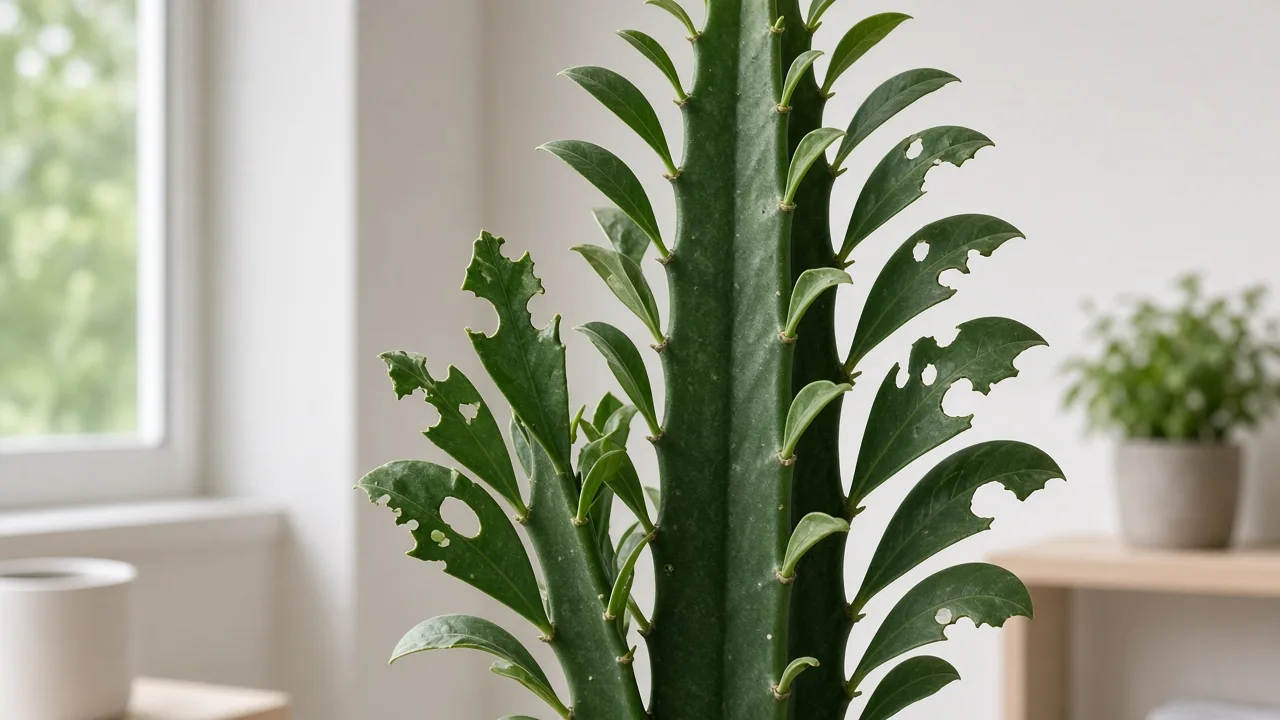
Holes in Leaves on African Milk Tree: Causes, Checks & Fixes
This guide covers holes in leaves on African Milk Tree. See also the general Holes in Leaves guide, watering, and light pages for this plant.
Holes in Leaves on African Milk Tree: Causes, Checks & Fixes
Quick answer
Holes in Euphorbia trigona leaves are chew marks, punctures, or torn sections on small ridge leaves—not natural splits like a monstera fenestration. For how chewing damage works in general, see our holes in leaves guide. On African milk tree, stem wounds matter more than leaf holes—latex-exposing gouges on the triangular column need different care than nibbled ridge foliage.
First step: determine if holes are fresh (green edges, moist) or old (brown, dry), then search stem grooves and the soil surface for caterpillars, slugs, or snails on outdoor plants.
When to use this page vs other African Milk Tree guides
| Pattern | Read next |
|---|---|
| Serpentine tunnels inside leaves | Leaf miners |
| Ragged chew + frass outdoors | Caterpillars |
| Stem gouges oozing latex + softening | Overwatering or root rot |
| Brown spots, not perforations | Black spots |
| Stippling before tissue falls out | Spider mites or mealybugs |
What holes look like on African Milk Tree
Healthy African milk tree shows firm three-sided green or red columns with small teardrop leaves tucked into each ridge. Holes appear on those ridge leaves—not as natural fenestrations through the stem.
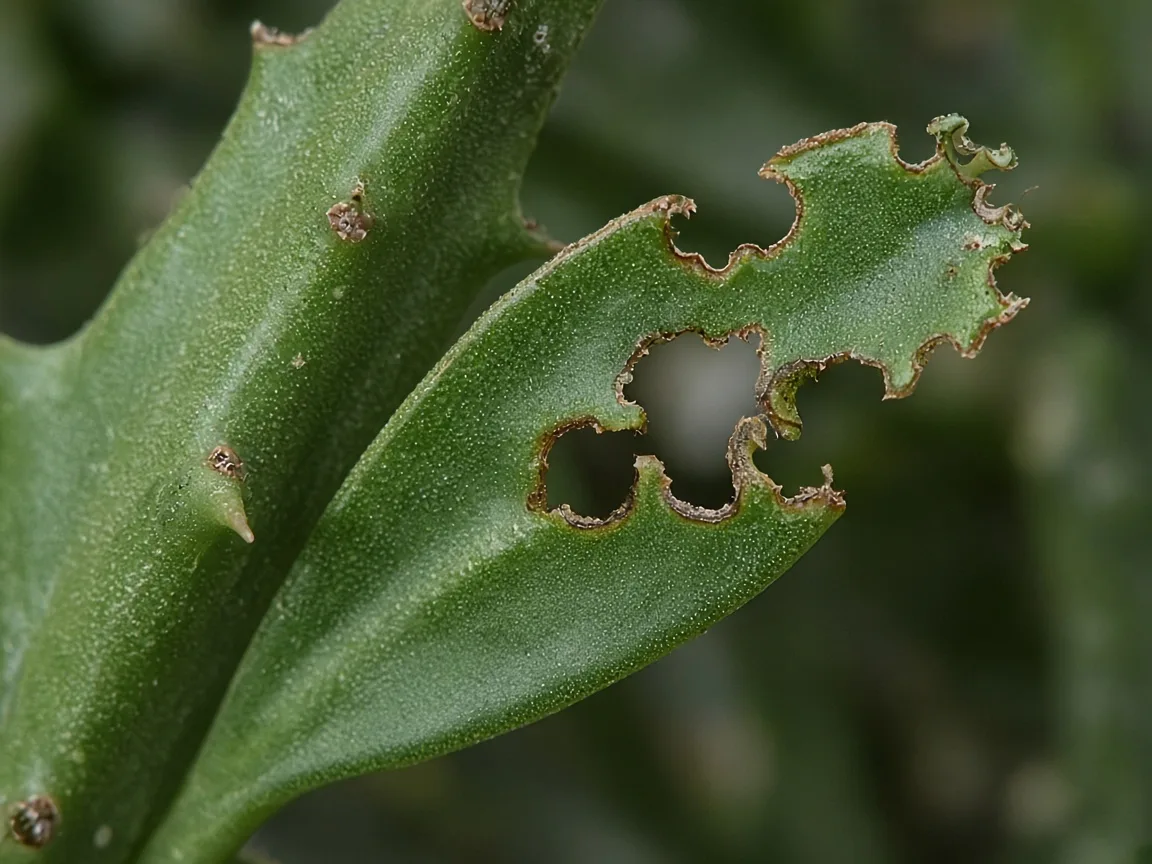
Irregular chew holes on ridge leaves—distinguish leaf perforations from latex-exposing stem gouges on the column.
- Irregular chewed sections on ridge leaves — Common after patio season; often with insect frass on leaves or soil.
- Round or torn holes after moving pots — Mechanical damage from handles, pets, ceiling bumps, or door swings on tall columns.
- Old brown holes with no pests — Healed damage on firm stems; ridge leaves may drop on their own.
- Stem scars where ridge meets flesh — More serious—watch for softening below the wound.
Indoor collections rarely see active chewing unless plants summer outside or share a room with pests from other houseplants.
Ridge leaves vs stem gouges
This distinction is euphorbia-specific and does not apply to broad-leaf ferns or violets.
Euphorbia trigona carries small obovate leaves along stem ridges that are not long-lasting and drop seasonally. A few holed ridge leaves on a hard column are expendable. A scoop taken out of the green stem flesh is different: cut stems release milky latex that irritates skin and eyes and can invite rot if kept wet.
- Hole only in a small ridge leaf — Remove the leaf with gloves if it is mostly gone; dab any latex dry with paper towel.
- Stem flesh scooped or punctured — Let latex dry 48 hours; keep the wound dry—do not mist.
- Softening below a stem hole — Escalate to overwatering and rot protocols the same day.
Wear gloves for every cut. Missouri Botanical Garden notes that contact with milky euphorbia sap can irritate skin and eyes.
Fresh holes vs old holes on triangular columns
Reading edge color saves you from spraying a problem that already finished.
Fresh chew marks show green tissue at the margin, sometimes with moist sap at the leaf base. Check between ridges at dusk—caterpillars and snails hide in stem grooves where the teardrop leaves attach. Outdoor pots sitting on soil invite slugs up the drainage holes overnight.
Old mechanical or healed pest holes turn papery brown with dry edges. The column stays firm when squeezed. Ridge leaves drop seasonally even without pests—do not confuse normal leaf fall with new chewing unless you see fresh green margins.
Indoor-only plants with old brown holes and firm stems almost always mean past bumps, not an active infestation.
Why African Milk Tree gets holes
Outdoor chewing insects. Plants moved to patios in summer can pick up caterpillars or mollusks that rarely reach purely indoor columns. Ragged missing sections with frass point here—see caterpillars.
Mechanical injury on tall columns. African milk tree grows fast into ceiling height. A single brush against a door frame or light fixture can tear ridge leaves or gouge stem faces. Bright light and sparse watering keep columns rigid—rigid columns snap instead of bending.
Finished sap-feeding pest damage. NC State Extension lists mealybugs, aphids, and spider mites on this species. Heavy feeding can weaken small ridge leaves until dead patches fall out, leaving holes. Active colonies show cottony clusters, sticky residue, or stippling—not a single clean tear.
Leaf miners. Serpentine tunnels are uncommon on thick euphorbia ridge leaves indoors. Winding trails belong on leaf miners; irregular outdoor chew belongs on caterpillar checks.
How to confirm the cause
| What you see | Where to look | Likely cause |
|---|---|---|
| Ragged chew + frass | Stem grooves, soil surface | Outdoor caterpillar or snail |
| Clean tear, one ridge leaf | Doorway height, pot handle | Mechanical |
| Brown dry hole, firm stem | No pests found | Old damage |
| Stippling + sticky shine | Ridge leaf axils | Mealybugs or aphids |
| Serpentine tunnel | Inside leaf blade | Leaf miner (rare here) |
| Soft stem below hole | Lowest ribs above soil | Rot—not a leaf pest |
Run a flashlight along each ridge after dark on outdoor plants if chew marks appeared overnight.
First fix for African Milk Tree
Hand-pick caterpillars or snails if you find them active—rinse ridge leaves with plain water, then monitor stems for softening over the next week.
For indoor mechanical holes only—no spray needed if the column stays firm. Stabilize the pot and move it out of traffic paths.
For recurring outdoor chew—elevate the pot on feet away from soil pests and follow caterpillars.
For sap feeders—isolate, wipe visible pests, and treat per the species guide once confirmed. RHS notes mealybug susceptibility on Euphorbia; match treatment to what you actually see.
Do not mist holed foliage. Do not prune healthy stem to “tidy” one nibbled leaf unless latex handling is unavoidable.
Recovery timeline
Cosmetic leaf holes do not heal closed on the same ridge leaf, but new ridge leaves emerge within weeks on firm columns in bright warmth. Stem gouges callus over months if kept dry.
If holes keep appearing on indoor plants with no outdoor time and no pests found, reconsider pet access or repeated bumps—the plant will not outgrow a hallway squeeze zone.
Mistakes to avoid
- Spraying fungicide on perforated ridge leaves without confirming pests
- Misting columns after stem wounds—wet latex zones risk rot
- Ignoring stem softening because “only leaves” look damaged
- Handling cuts bare-handed when euphorbia sap is flowing
- Confusing seasonal ridge leaf drop with fresh chewing
How to prevent holes next time
Match watering to top 2–3 inch dry-down so columns stay firm but not brittle. Weight or stake tall pots before they lean into walkways. Inspect weekly during outdoor summer stays. Quarantine new columns before clustering them with established plants.
Keep pets away—latex is toxic and irritating if chewed. See African Milk Tree overview and the problems hub for sibling guides.
Related African Milk Tree guides
Conclusion
Holes in African milk tree ridge leaves are usually outdoor pests or past mechanical damage—confirm active feeders, protect firm stems from wet wounds, and let new ridge leaves replace cosmetic loss. Stem-first thinking beats leaf-only panic on this columnar euphorbia.