Pale Leaves on African Milk Tree: Light Checks
Quick answer
Pale leaves on African Milk Tree look lime-green, yellowish, or washed-out on ridge foliage—and on 'Royal Red' cultivars, burgundy stems fade toward green. First step: assess direct sun hours on the column; Euphorbia trigona needs bright light for normal color, not a dark hallway.
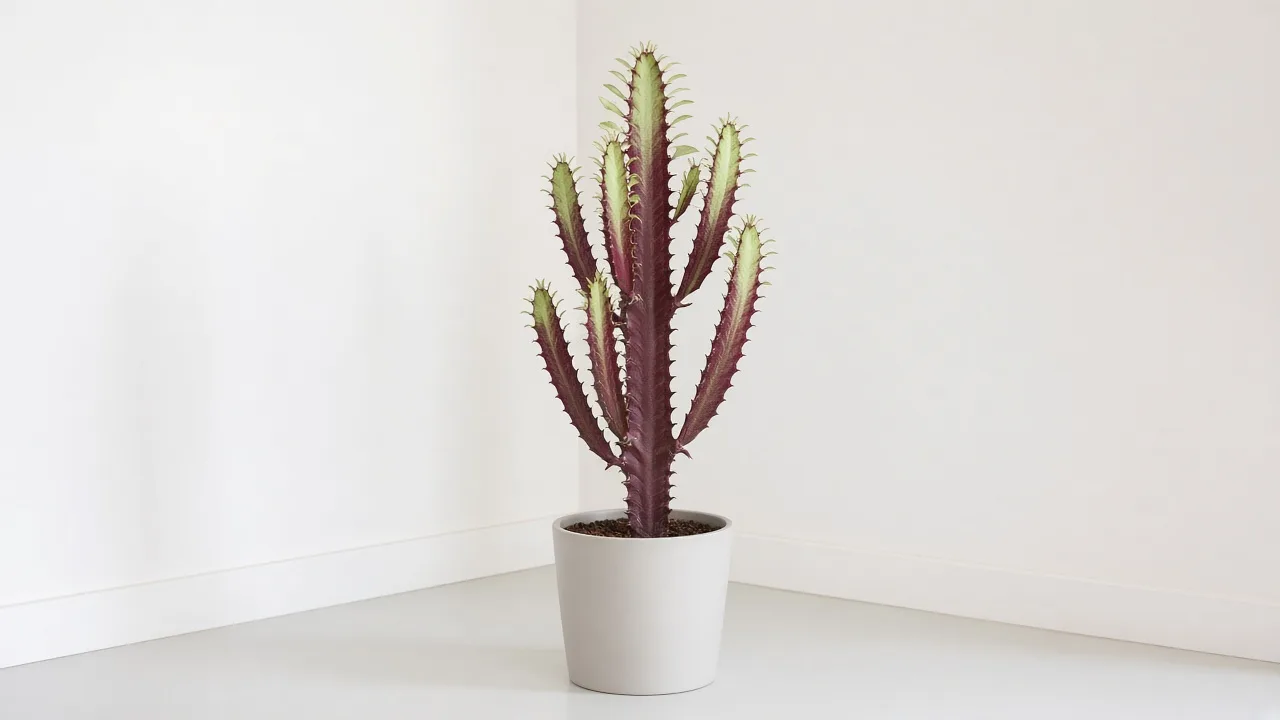
Pale Leaves on African Milk Tree: Causes, Checks & Fixes
This guide covers pale leaves on African Milk Tree. See also the general Pale Leaves guide, watering, and light pages for this plant.
Pale Leaves on African Milk Tree: Causes, Checks & Fixes
Quick answer
Pale leaves on Euphorbia trigona mean ridge leaves or red stem color look washed-out, yellow-green, or reverting toward plain green. See our pale leaves guide for general chlorosis mechanics. On African milk tree—especially ‘Royal Red’—color is a light meter: dim rooms fade pigment before leaves drop.
First step: count hours of bright light on the column, then check whether wet soil and soft stem base accompany yellowing.
When to use this page vs other guides
| Pattern | Read next |
|---|---|
| Long bare column, leaning toward window | Not enough light |
| Yellow on wet mix, soft base | Overwatering |
| Stretched gaps between ridges | Leggy growth |
| Full yellowing with firm stem | Yellow leaves |
| Placement and window choice | Light guide |
What pale leaves look like on African Milk Tree
Unlike broad-leaf houseplants, African milk tree carries tiny teardrop leaves tucked into stem ridges—not a full canopy. Pale color shows up there first, and on colored cultivars the stem itself tells the story:
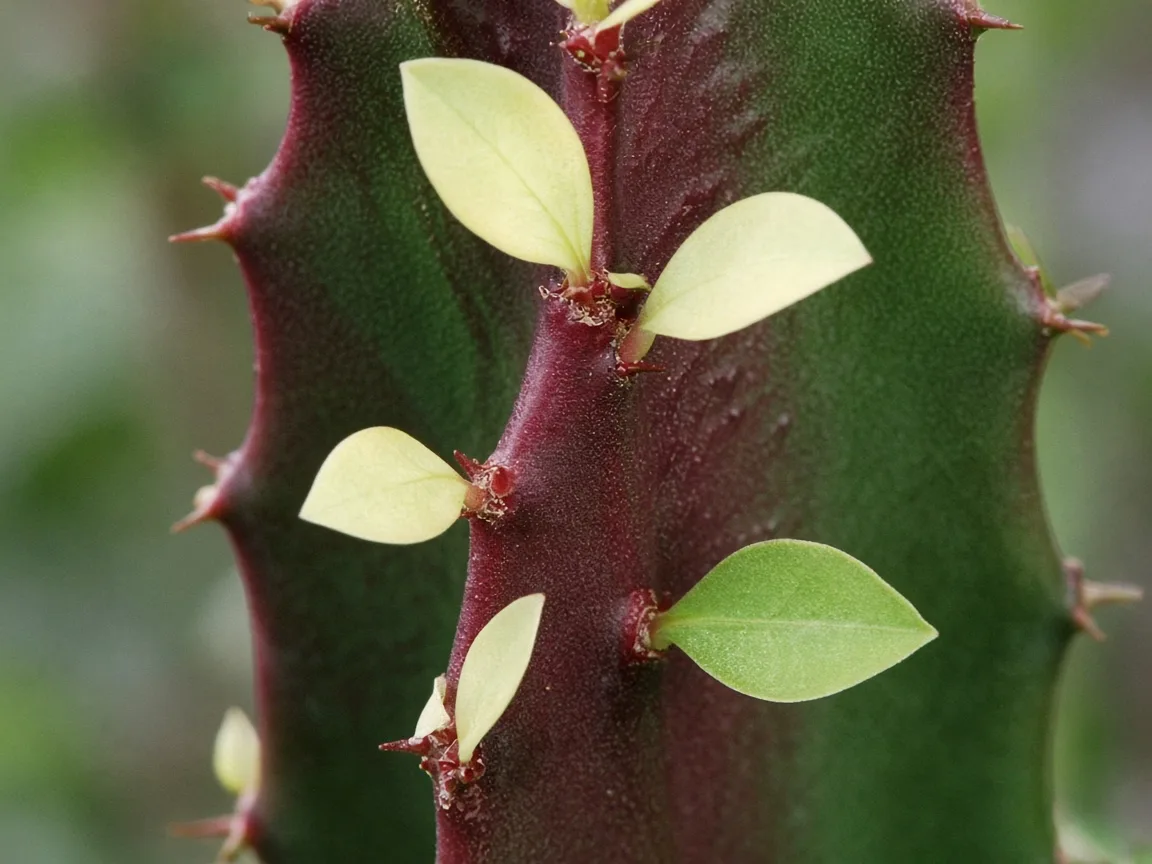
Pale ridge leaves on a red or green column—compare washed-out flush against older, deeper-colored leaves below.
- Lime-green ridge leaves on a green column in a dim office — Low-light chlorosis and early etiolation; the stem may still look healthy.
- ‘Royal Red’ or ‘Rubra’ stems turning mostly green — Insufficient sun for anthocyanin; burgundy color needs strong light to persist on leaves and stem edges.
- Yellow-green ridge leaves plus heavy wet pot — Root stress, not hunger; pale leaves on a soft wet base point to rot, not fertilizer.
- Pale sparse leaves on a stretched column — Combined low light and irregular water; internodes lengthen before ridge leaves fully drop.
- Seasonal paleness in a cool winter room — Slower metabolism and shorter days bring paler, fewer ridge leaves without daily watering needs changing.
The stem should stay firm and plump. Pale ridge leaves on a soft, wet base is a different emergency than pale leaves on a hard column.
Ridge leaves vs stem color: a plant-only check
Euphorbia trigona photosynthesizes through its thick green stems as much as through ridge foliage:
- Stem deep green and firm — Ridge paleness is usually a light signal.
- Stem yellow-green or soft — Check roots and moisture before moving pots.
- Upper ridges pale, lower gone — Common in dim corners; color returns on new upper growth.
- Red margins missing on new flush only — Cultivar light deficit, not soil pH.
This stem-first logic does not apply to leafy philodendrons.
Red clone color fade test
For burgundy ‘Royal Red’ or ‘Rubra’ plants, run this before buying fertilizer or repotting:
- Compare your plant to photos of the same cultivar grown in full sun—indoor specimens often look greener than nursery stock.
- Move incrementally closer to the brightest window over seven to ten days; avoid jumping straight to hot afternoon glass.
- Watch new ridge flush along the top third of the column. Penn State Extension notes that insufficient light produces pale green leaves without attractive red edges—stronger sun should restore margins on fresh growth within two to three weeks.
- If stems stay green after four weeks in improved light, confirm you have a red cultivar and not the plain green E. trigona.
Existing leaves may lighten slightly when light improves, but deep burgundy usually returns on new ridge leaves, not old ones.
Why African Milk Tree gets pale leaves
Insufficient light — The primary indoor cause. Euphorbia trigona prefers bright conditions; dim rooms produce pale, stretched, floppy growth before leaves drop.
Cultivar genetics — Red forms need more sun than plain green columns. Without strong light, burgundy color fades toward ordinary green.
Overwatering stress — Chronic wet soil stresses succulent roots; yellowing ridge leaves on soggy mix often precede stem-base softening. Dim plants use water slowly, making this combination common.
Cool winter slow growth — Seasonal slow growth brings paler, sparser ridge foliage. Winter paleness on a firm column is often normal, not deficiency.
Sudden harsh sun after shade — Bleached ridge leaves are sun scorch, not chlorosis; acclimate gradually per the light guide.
How to confirm the cause
Work through these checks in order:
- Light audit — Does direct sun hit the column for at least a few hours daily, or only ambient room light? A hand-shadow test at the pot location should show a sharp shadow on clear days.
- Cultivar check — Is this ‘Royal Red’, plain green, or variegated? Color loss on red clones almost always means light first.
- Pot weight and stem squeeze — Heavy wet pot plus soft lowest stem = water stress, not light alone.
- Growth direction — Leaning hard toward a window confirms insufficient brightness even if some leaves remain.
- New ridge leaves — Paleness spreading upward on firm stems = ongoing stress; stable upper growth after a light move = recovery starting.
First fix for African Milk Tree
Move the column to the brightest available spot with gradual acclimation—watch for sun scorch if jumping from a dark corner to hot south glass.
That single change addresses most pale-leaf cases on a firm stem. After one to two weeks:
- If wet soil and soft base accompany yellowing — stop watering and follow overwatering steps before adding more light stress.
- If the column is stretching with wide internodes — pair the brighter spot with weekly rotation; see leggy growth if structure already toppled.
- If winter paleness on a firm, dry plant — hold watering longer per the watering guide rather than feeding or repotting.
Do not fertilize pale plants in dim, wet conditions. Nutrient deficiency is rare on ridge leaves when light and dry-down are wrong.
Recovery timeline and mistakes to avoid
Stronger light shows deeper color on new ridge leaves in two to four weeks in warm rooms. Red cultivars may need a full summer of acclimated bright exposure for best burgundy. Do not fertilize before fixing light, repot on day one, or expect old ridge leaves to fully re-darken—recovery shows in new flush and stem firmness. A pale plant in soggy mix needs dry-down, not just a sunnier window.
Related African Milk Tree guides
Conclusion
Pale ridge leaves on African milk tree are usually a light problem—especially on red clones—before fertilizer. Firm stem, brighter sun, and correct dry-down restore color on new growth. Match the fix to whether the column is hard and reaching, or soft on wet soil.