Pale Leaves on Aglaonema Lady Valentine: Light Checks
Quick answer
Pale leaves on Aglaonema Lady Valentine look washed-out color on rose-pink and green variegated blades—usually very low light, root stress on wet mix in dark corners, or nitrogen lack on old lower leaves. First step: assess whether the whole plant is pale in a dim room or only lower leaves on a heavy wet pot.
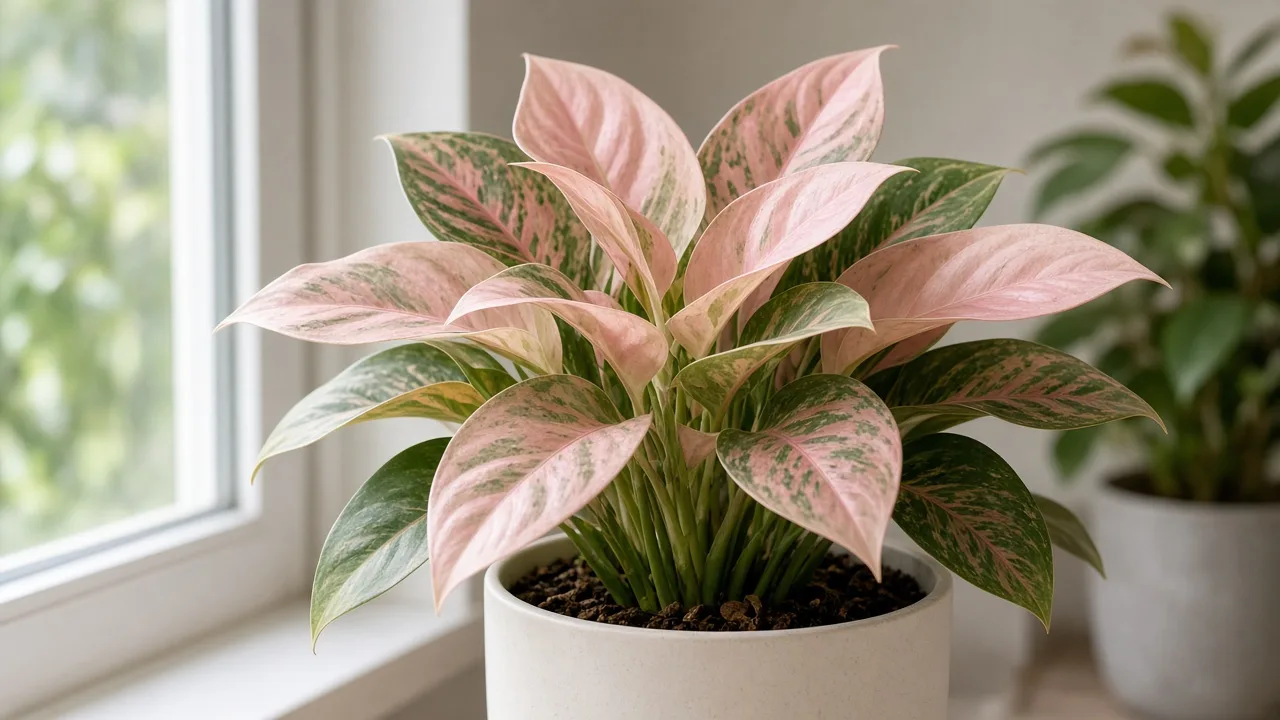
Pale Leaves on Aglaonema Lady Valentine: Causes, Checks & Fixes
This guide covers pale leaves on Aglaonema Lady Valentine. See also the general Pale Leaves guide, watering, and light pages for this plant.
Pale Leaves on Aglaonema Lady Valentine: Causes, Checks & Fixes
Quick answer
Pale leaves on Aglaonema ‘Lady Valentine’ show weak color on rose-pink and green variegated blades—not healthy seasonal change. For general paleness mechanics, see our pale leaves guide. On Lady Valentine, pink anthocyanin fades in deep shade faster than green Maria types—bright filtered light is the first variable to fix, not fertilizer.
First step: compare variegation on the newest leaf to a healthy reference photo, then probe whether the top 2–3 cm of mix is wet or dry on a heavy pot.
When to use this page vs other Lady Valentine guides
| Pattern | Read next |
|---|---|
| Dark corner, wet pot | Overwatering |
| Very dim, stretched stems | Not enough light |
| Old lowers only, firm crown | Nitrogen deficiency |
| Yellow not pale | Yellow leaves |
| Cupped pale tips | Brown tips from fluoride |
What pale leaves look like on Lady Valentine
Lady Valentine’s broad pink-splashed foliage should show strong rose-pink, cherry-red, and green contrast. Paleness is a loss of that color intensity.
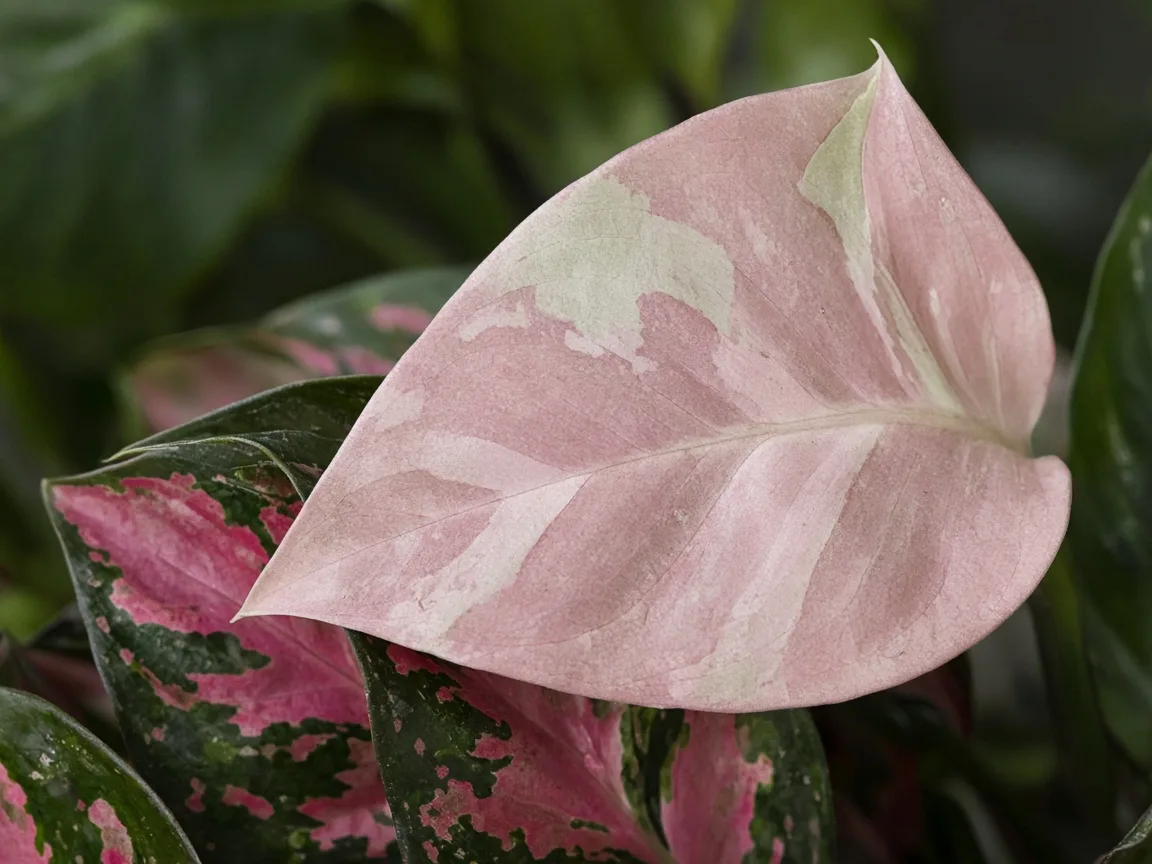
Faded pink on new Lady Valentine growth—compare with deeper anthocyanin on older blades below.
Low-light fade (most common):
- Uniform washed-out color across the whole plant
- Pink splashing dulls toward muddy green
- New leaves emerge smaller and paler than older ones
- Long petioles and sparse crown in a dark hallway or far from windows
- Deep shade fades aglaonema color—Lady Valentine needs more light than green cultivars
Root-stress pale:
- Lower leaves turn yellow-green or pale while tips stay greener
- Heavy wet pot in dim corner—roots cannot support full color
- May accompany soft stems or sour soil smell—see overwatering
Nutrient pale (lower leaves only):
- Oldest lowers pale first; crown and new growth still colored
- Mobile nitrogen moves to new tissue—see nitrogen deficiency
- Only suspect after light and moisture are correct
Pest pale:
- Fine stippling bleaches pink zones—spider mites in dry air
- Sticky residue with pale distorted tips—aphids or scale
Check newest leaves—pale fresh pink growth in a bright spot suggests roots or pests; pale new growth in a dark corner is almost always light.
Why Lady Valentine gets pale leaves
Pink variegation is light-dependent. Lady Valentine’s rose-pink zones contain anthocyanin without full chlorophyll. In deep shade, the plant cannot maintain pink pigment—new leaves revert toward green and look uniformly washed out. This is not the same plant tolerance Maria shows in dim offices.
Wet roots in low light pale lowers first. A heavy pot that never dries in a dark corner starves roots of oxygen. Lower blades lose color and firmness while the crown still pushes pale small leaves—misread as “needs fertilizer” when it needs less water and more light.
Lady Valentine grows slowly—nutrient lack is a late diagnosis. Pale from nitrogen usually hits oldest leaves after months of no feeding in depleted mix. Jumping to fertilizer before fixing light and moisture worsens root stress on wet dim plants.
Mites bleach pink tissue before green. Stippling on pale pink zones looks like color fade until you magnify undersides.
Pink fade test on Lady Valentine
Lady Valentine-specific check:
- Photograph the newest leaf weekly under the same phone exposure.
- Move the pot one meter closer to a bright filtered window for two weeks—if pink sharpens on new flush, light was the limiter.
- If color stays weak on a wet heavy pot—probe top 2–3 cm, hold water, improve light before feeding.
- Compare to Maria in the same room—if Maria holds color and Lady Valentine does not, Lady Valentine needs a brighter spot, not the same placement.
Lookalike symptoms
| What you see | Often confused with | How to tell them apart |
|---|---|---|
| Uniform dull plant in dark spot | Nutrient lack | Whole plant pale, long petioles—move to light |
| Pale lowers only | Low light | Wet pot, yellow-green lowers—roots |
| Stippled pink zones | Fade | Magnify for mites |
| Yellow not pale | Nitrogen | Bright green yellow—see yellow leaves |
| Green reversion on new leaves | Overwatering | Deep shade—no pink on new flush at all |
How to confirm
- Light meter or placement — Bright indirect for most of the day? See light guide.
- New vs old leaves — Whole plant or lowers only?
- Soil moisture — Top 2–3 cm dry-down per watering guide.
- Pests — Stippling on pink zones?
- Progress — Two weeks brighter placement—new pink returning?
First fix for Aglaonema Lady Valentine
Move to the brightest filtered spot available—east window, sheer-filtered south/west, or grow light 12–18 inches above the crown.
If the pot is wet and heavy in dim light—hold water until top 2–3 cm dries; see overwatering.
Light feed only after roots and light are fixed in warm active months—never on soggy pale plants.
Do not fertilize as a first response. Low light reduces chlorophyll production and anthocyanin—more nitrogen does not replace photons.
Mistakes to avoid
- Keeping Lady Valentine in the same dim spot as green Maria
- Fertilizing a wet pale plant in a dark corner
- Misting pale leaves—wet glossy blades invite leaf spot
- Assuming pale means disease without checking light and roots
- Direct sun to “fix” color—scorches pale pink tissue
Recovery timeline
Stronger pink on new leaves in three to five weeks after light improvement. Existing pale blades may partially re-tone if light increases early; often you wait for the next flush.
Root-stress recovery takes longer—four to eight weeks after dry-down and brighter placement.
Prevention
- Keep bright indirect light per light guide.
- Water when top 2–3 cm of mix dries.
- Use filtered water if tips brown on municipal supply.
- Feed lightly only in warm months on healthy roots.
- Inspect pink new growth weekly for stippling.
Related Aglaonema Lady Valentine guides
Conclusion
Pale Lady Valentine leaves are light and root signals on pink variegated foliage—brighten filtered exposure and dry the top 2–3 cm before fertilizing.