Root Rot on Aglaonema Lady Valentine: Pink Crown Checks &
Quick answer
Root rot on Aglaonema Lady Valentine usually starts when peat-heavy mix stays wet too long in a dim corner or oversized pot—roots suffocate while broad pink-blushed leaves droop on moist soil. First step: stop watering, press the crown base for softness, and lift the pot to confirm a heavy, sour-smelling root ball before you unpot.
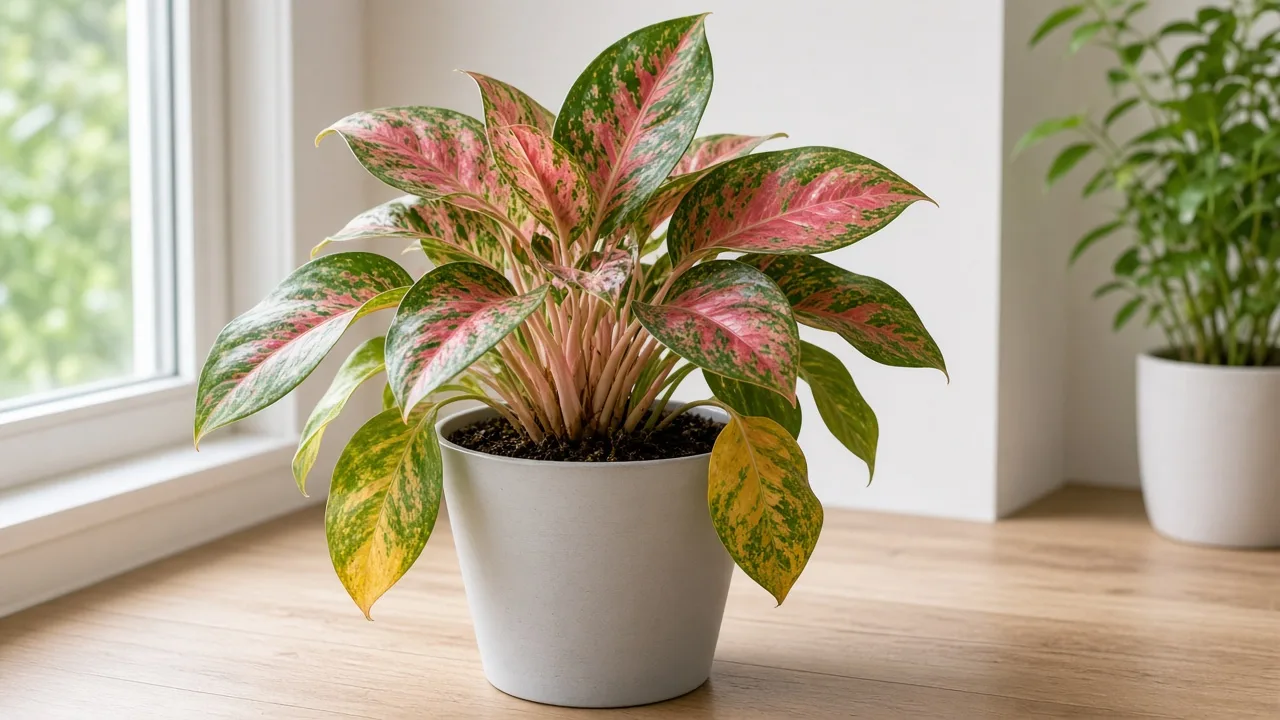
Root Rot on Aglaonema Lady Valentine: Causes, Checks & Fixes
This guide covers root rot on Aglaonema Lady Valentine. See also the general Root Rot guide, watering, and light pages for this plant.
Root Rot on Aglaonema Lady Valentine: Causes, Checks & Fixes
Quick answer
Root rot on Aglaonema commutatum ‘Lady Valentine’ is a rhizome and crown failure in oxygen-poor, chronically wet peat mix—not a mystery disease. Lady Valentine needs bright indirect light to hold rose-pink anthocyanin color, yet many owners treat it like a dim-hallway Chinese evergreen and water on a calendar. In a heavy pot that barely dries, fine roots die and decay spreads into the short-stemmed crown where broad pink-blushed leaves emerge. For how chronic wet soil destroys roots in general, see our root rot symptom hub. On Lady Valentine, the warning pattern is a heavy pot, yellow lower broad leaves on dark damp mix, fading pink on new flush, and a soft or sour-smelling base at the soil line.
First step: stop watering, press the crown base gently for softness, and lift the pot to confirm weight and smell before you unpot. A firm crown with a light dry pot calls for a different guide. A heavy wet pot with a yielding crown means root-zone triage—not another drink.
When to use this page vs other Aglaonema Lady Valentine guides
This page is the root-zone and crown rescue entry when wet soil has already damaged rhizomes.
| Pattern | Read next |
|---|---|
| Mix stays wet but crown still firm, no mushy roots yet | Overwatering |
| Limp pink-blushed leaves without confirmed root damage | Drooping leaves or wilting |
| Light pot, dry upper mix, crisp margins | Underwatering |
| Flies at rim on damp peat, crown still firm | Fungus gnats |
| White fuzz on soil surface | Mold on soil |
| Long-term watering rhythm after recovery | Watering guide |
| Repotting after root pruning | Repotting guide |
What root rot looks like on Aglaonema Lady Valentine
On a healthy Lady Valentine, broad glossy leaves splashed rose-pink, cherry-red, and green sit upright in a slow-growing clump. Short petioles hold each blade close to a firm crown where new pink-blushed growth unfurls. Root rot breaks that compact silhouette from the bottom up.
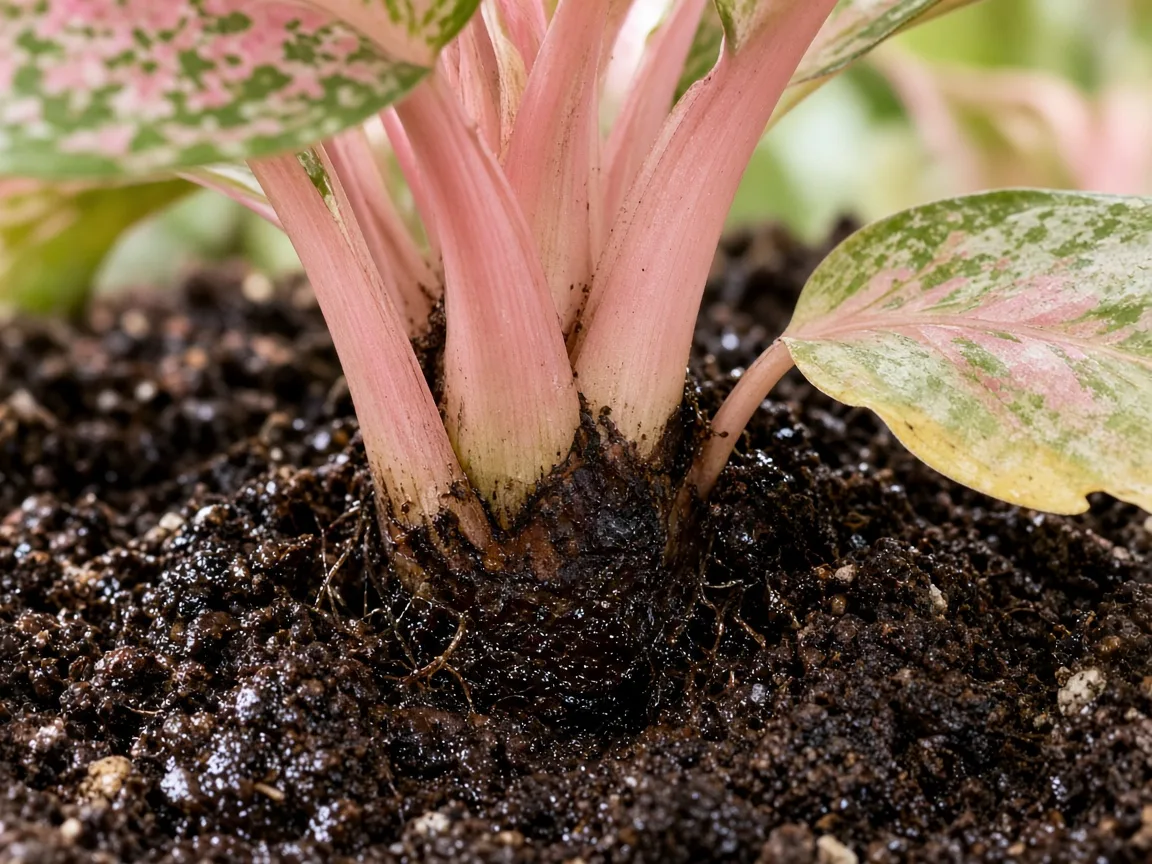
Root rot on Aglaonema Lady Valentine—soft dark tissue at the crown base where broad pink petioles meet wet peat; compare with firm pale rhizome sections on salvageable divisions.
Early signs:
- Lower broad leaves yellow while mix stays dark, cool, and heavy for days
- Rose-pink color dulls to muddy green-pink on stressed blades, especially pale anthocyanin zones
- Petioles feel limp on wet soil—the plant looks thirsty but the pot does not lighten
- Fungus gnats hover at the rim; faint sour smell from drain holes
- Crown base feels slightly soft when pressed, though upper leaves still stand
Advanced signs:
- Crown collapses where multiple broad leaves emerge—black, mushy tissue at the soil line
- Roots pull away as brown or black sludge when you tip the pot
- Several lower pink-blushed leaves yellow together and do not recover after dry-down
- New crown flush fails or opens pale and distorted before hardening
- Whole clump flops on soil that has been wet for weeks in a dim room
Yellow or brown broad leaves alone do not prove rot—see yellow leaves on Lady Valentine for nutrient and age patterns. The combination of wet heavy mix + soft crown + mushy roots confirms it.
The dim-hallway trap for a bright-color cultivar
Lady Valentine is sold as an easy Chinese evergreen, so it often lands in north-facing hallways, bathroom corners, and office cubicles where green cultivars like ‘Maria’ might survive. The cultivar is different: pink anthocyanin zones need brighter indirect light than solid-green aglaonemas to hold color and drive steady transpiration.
In dim light, a peat-heavy nursery pot may stay wet for two weeks after one watering. Root rots can occur with over-watering on Aglaonema while owners who water every Friday because “houseplants need weekly water” keep roots saturated. Pink fades to green, growth slows, and broad leaves lose firmness long before anyone checks the crown.
Signs you are in this trap:
- Mix stays dark and cool while lower leaves yellow and pink color washes out
- Pot weight barely changes between waterings
- Fungus gnats breed at the soil line on persistently moist organic media
- New flush opens small and pale despite a “low-light tolerant” label on the pot tag
Root rot here is not random bad luck—it is calendar watering in a room where Lady Valentine barely dries and cannot use water quickly enough. The fix starts with matching water to how fast this pot dries in this light level, per the Lady Valentine watering guide and light guide.
Why failing pink crown flush often signals rot before lower leaves yellow
Lady Valentine grows slowly, and owners watch mature lower leaves for trouble. Rot often starts at the crown growing points where new rose-pink blades emerge—not on the broad lower canopy that still looks acceptable from across the room.
Watch for these crown-specific clues:
- New leaves open small, pale, or mostly green while older pink-blushed blades still look fine
- The innermost crown tips wilt on soil that feels damp at 2–3 cm depth
- Petiole bases at the soil line turn dark before widespread yellowing spreads up the stem
- One crown in a multi-stem pot fails while neighboring stems still show strong pink color
Because anthocyanin variegation lacks chlorophyll, stressed crown tissue cannot compensate the way solid-green aglaonema leaves might. A weak pink flush on wet mix is often an early vascular failure—not a light issue alone. Cross-check not enough light only after you confirm crown firmness and root health.
Reading the top 2–3 cm dry-down vs a wet crown
Lady Valentine watering on LeafyPixels follows a cultivar-specific rule: water when the top 2–3 cm of mix has dried, then drain fully. That matches Clemson guidance to allow the top 1–2 inches to dry before watering again and matters for rot diagnosis.
Before you assume thirst on a limp Lady Valentine:
- Insert a finger or skewer to 2–3 cm depth. If the lower half of the pot is still wet while the surface feels dry, the plant may be oversaturated overall—especially in a dim room or oversized container.
- Lift the pot. A heavy container after two weeks without watering points to poor drainage or an oversized pot, not drought.
- Press the crown base. Firm tissue with wet mix suggests early rot risk; soft black tissue confirms advanced decay.
A dry surface on a heavy pot is a classic Lady Valentine misread. Roots may already be failing while the top centimeter looks acceptable.
Why rhizomatous crown anatomy matters on Lady Valentine
Aglaonema are rhizomatous evergreens with short stems bearing long-stalked leaves. On Lady Valentine, several broad pink-blushed blades share a tight crown cluster on fleshy rhizome tissue just below the soil line—not a single woody trunk like a Dracaena cane.
Rot on Lady Valentine is diagnosed at three points:
- Fine feeder roots — first to die in oxygen-poor peat; they should feel pale tan and springy
- Rhizome sections — thicker storage tissue between crowns; firm pale sections can survive after trimming
- Crown growing points — where new rose-pink leaves emerge; soft black collapse here stops all new growth
A multi-crown nursery pot may have one rotting division beside a firm neighbor. During salvage, separate crowns and discard only the mushy sections—firm divisions with roots attached can recover independently.
Why Aglaonema Lady Valentine gets root rot
Chronic overwatering in dim or oversized conditions is the leading cause. Root rot usually results from mix that drains too slowly or from overwatering Decaying roots cannot absorb water even when the pot is full, so wilted leaves may appear while soil is too wet—rotting roots cannot take up water Owners see limp pink-blushed leaves and pour more water, which accelerates crown failure.
Heavy peat or coco mix without enough perlite holds water long after the surface looks acceptable. See the Lady Valentine soil guide for drainage targets.
Oversized pots leave a large volume of wet mix that small root balls cannot use quickly—especially dangerous when variegated growth is slow and transpiration stays low in a dim corner.
Cachepots without drainage trap standing water. Empty saucers within 30 minutes after every soak.
Cold wet soil in drafty winter rooms slows root function and extends saturation. Rots may occur if plants are over-watered and cold stress compounds the damage.
Recent repotting into wet mix or burying rhizomes too deep can start rot at the crown before upper leaves show stress.
Lookalike symptoms on Lady Valentine
| Pattern | Pot weight | Crown feel | Roots on inspection | Likely cause |
|---|---|---|---|---|
| Root rot | Heavy, wet | Soft, dark, sour | Brown, mushy, slimy | Oxygen-poor wet peat |
| Overwatering (early) | Heavy, damp | Firm | Mostly pale, maybe few brown tips | Wet mix before rot spreads |
| Underwatering | Light, dry | Firm | Pale, slightly dry | True drought |
| Cold draft flop | Variable | Firm | Healthy | Temperature shock |
| Normal aging | Stable | Firm | Healthy | One lower leaf yellowing |
| Nitrogen stress | Stable | Firm | Healthy | Pale overall, see nitrogen deficiency |
How to confirm root rot
Work through these checks in order:
- Watering history — Has mix stayed wet for a week or more in a dim room or oversized pot?
- Pot weight and smell — Heavy container plus sour odor from drain holes points to anaerobic breakdown.
- Crown firmness — Press the base where petioles meet soil. Mushy black tissue confirms advanced rot.
- Leaf pattern — Lower pink-blushed leaves yellowing together on wet mix, not one isolated aging leaf.
- Root inspection — Gently slide the root ball out. Healthy roots are pale tan; rot mashes, smells, and may slip off the rhizome.
- New growth — Distorted or absent crown flush with pale pink while soil stays wet suggests vascular failure, not a pest.
If the crown is still firm and roots are mostly pale after trimming a few brown tips, you may have caught overwatering before full crown collapse.
First fix for Aglaonema Lady Valentine
Stop watering immediately and press the crown base for softness before you add another drop.
Mild case (firm crown, heavy pot, one or two yellow lower leaves, no sour smell):
- Let the top 2–3 cm of mix dry per the watering guide
- Move the pot into bright indirect light if it sits in deep shade—enough to speed evaporation and hold pink color, not direct sun that scorches pale tissue
- Empty any cachepot standing water
- Re-check crown firmness in three days
Moderate case (softening crown base, several yellow lowers, sour smell, mushy root tips):
- Unpot within 24–48 hours
- Rinse away wet peat and trim mushy roots back to firm pale tissue with clean scissors
- Repot into fresh well-draining mix in a smaller pot—see repotting
- Withhold water for several days until you re-check firmness; then water lightly when the upper mix dries
Severe case (black collapsed crown, roots sludge, no firm rhizome):
- Salvage any firm crown divisions with attached healthy roots
- Discard mushy sections entirely
- If no firm tissue remains, the plant is not saveable
Do not fertilize, mist heavily, or move to direct sun during rescue. Wear gloves when handling cut tissue—Lady Valentine sap can irritate skin and the plant is toxic to pets.
Step-by-step recovery after root pruning
Once you have trimmed rot and repotted:
- Place in stable bright indirect light — matching the light guide. Avoid hot windowsills that dry the recovering root ball unevenly or scorch pink zones.
- Use a modest pot — roots should nearly fill the container; excess wet mix invites repeat rot.
- Water sparingly at first — a light soak when the top 2–3 cm of fresh mix dries, not a flood. Increase only when new firm petioles appear.
- Remove spent lower leaves — yellow or mushy broad blades will not re-green; they drain energy from recovery.
- Scout weekly — crown firmness and clean new rose-pink leaves are your progress markers.
- Hold fertilizer until at least one new crown leaf opens firm with strong pink color—usually several weeks in warm indoor conditions.
Division salvage from multi-crown clumps
Nursery Lady Valentine pots often contain several crowns on one rhizome mat. When only one section rots:
- Unpot and gently tease apart crowns after rinsing away old mix.
- Identify firm divisions with pale roots and intact growing points.
- Cut away connecting mushy rhizome with a sterile blade—never pull rotted tissue through healthy crowns.
- Pot each firm division separately in small containers with airy mix.
- Treat divisions like fresh cuttings: warm room, bright filtered light, cautious first watering.
A single saved crown with two firm pink-blushed leaves can rebuild a full clump over a warm season—Lady Valentine grows slowly, so patience matters more than on green cultivars.
Recovery timeline
| Severity | What to expect |
|---|---|
| Early overwatering, firm crown | Yellow lowers may persist; new rose-pink leaves in 3–5 weeks after dry-down |
| Moderate rot, 30–50% roots trimmed | Crown stabilizes in 1–2 weeks; first clean new leaf in 4–8 weeks |
| Heavy pruning, small division saved | Slow regrowth over 8–14 weeks; several old leaves may be removed |
| Crown collapsed | Usually not recoverable |
Judge success by firm crown tissue and clean new pink-blushed leaves—not by old yellow blades turning green.
What not to do
- Do not water a drooping Lady Valentine on wet soil — that is the most common escalation mistake.
- Do not repot into a larger container after pruning roots; size down to match what remains.
- Do not fertilize stressed plants hoping to push pink color—salts on damaged roots worsen decline.
- Do not leave the plant in standing cachepot water while “letting it dry out.”
- Do not assume one yellow lower leaf means rot — check crown firmness first.
- Do not treat fading pink as a light-only problem when the pot is heavy and the crown feels soft.
How to prevent root rot next time
- Water when the top 2–3 cm of mix dries — not on a fixed weekly schedule.
- Use well-draining peat-perlite mix and a pot with drainage holes only one size up.
- Place Lady Valentine in bright indirect light so the variegated clump transpires predictably—see the overview.
- Empty saucers and cachepots within 30 minutes after watering.
- Match winter watering to slower growth and cooler rooms.
- Scout the crown base monthly wherever evaporation is slow.
- Quarantine new plants before placing them beside existing Lady Valentine pots.
Related Aglaonema Lady Valentine guides
- Overview — cultivar profile and care checkpoint
- Overwatering — use when mix stays wet but crown and roots are still firm
- Watering — long-term top 2–3 cm dry-down rhythm
- Soil — mix and pot-size decisions that prevent repeat saturation
- Repotting — step-by-step workflow after root pruning
- Problems hub — full symptom index for this cultivar
Related tool
Use the Root Rot Risk Checker to narrow causes for root rot on this plant before changing multiple variables at once.