Spider Mites on Aglaonema Lady Valentine: Pink Leaf Checks
Quick answer
Spider mites on Aglaonema Lady Valentine show as fine yellow pinpricks on pale rose-pink tissue plus delicate webbing at petiole bases in the dense upright crown. First step: isolate the pot and rinse every broad leaf underside with lukewarm water before applying horticultural oil every five to seven days for three cycles.
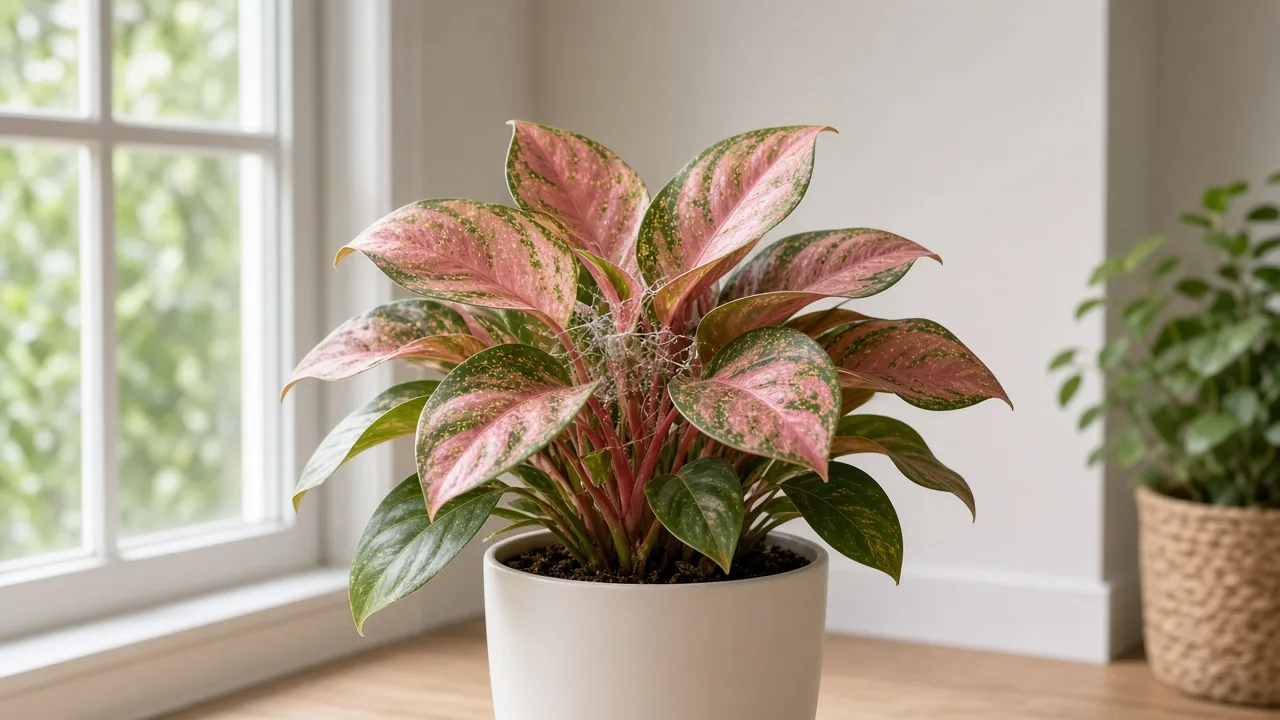
Spider Mites on Aglaonema Lady Valentine: Causes, Checks & Fixes
This guide covers spider mites on Aglaonema Lady Valentine. See also the general Spider Mites guide, watering, and light pages for this plant.
Spider Mites on Aglaonema Lady Valentine: Causes, Checks & Fixes
Quick answer
Spider mites are tiny arachnids that attack the undersides of smooth leaves in the upright Lady Valentine clump, leaving fine yellow stipples that dull rose-pink and cherry-red anthocyanin zones on broad glossy blades before bronzing is obvious, plus delicate webbing at petiole bases where stems meet the crown. Winter heating beside a bright east or south window, a shelf above a radiator, or a variegated aglaonema pushed into dry AC airflow is the classic trigger: warm, dry air below 40% relative humidity stresses this slow-growing pink Chinese evergreen and favors mite outbreaks.
For how spider mites reproduce, why dry air accelerates them, and when water knockdown works in general, see our spider mites pest guide. On Lady Valentine, the practical pattern is stippling across pale pink tissue on broad blades, webbing tucked in the dense crown center, and extra urgency because variegated aglaonemas produce few new pink-flushed leaves at a time—one damaged crown flush can sit visible for months.
First step: move the pot away from neighboring plants, then rinse every broad leaf underside with lukewarm water to knock down active mites before you confirm the pest and schedule oil treatments.
When to use this page vs other Aglaonema Lady Valentine guides
This page is the pest-first entry for stippling and webbing on rose-pink variegated foliage.
| Pattern | Read next |
|---|---|
| White cottony clusters in crown axils | Mealybugs |
| Soft pear-shaped insects on newest crown flush with sticky honeydew | Aphids |
| Silvery scarring on broad blades without webbing | Thrips |
| Papery brown tips only, no pinpricks across pink zones | Low humidity or brown tips |
| Yellow lower leaves on wet mix, soft crown | Overwatering or root rot |
| Cupped or curled blades, no stippling | Curling leaves |
What spider mites look like on Aglaonema Lady Valentine
Spider mites feed on leaf undersides with piercing mouthparts. On Lady Valentine, watch for:
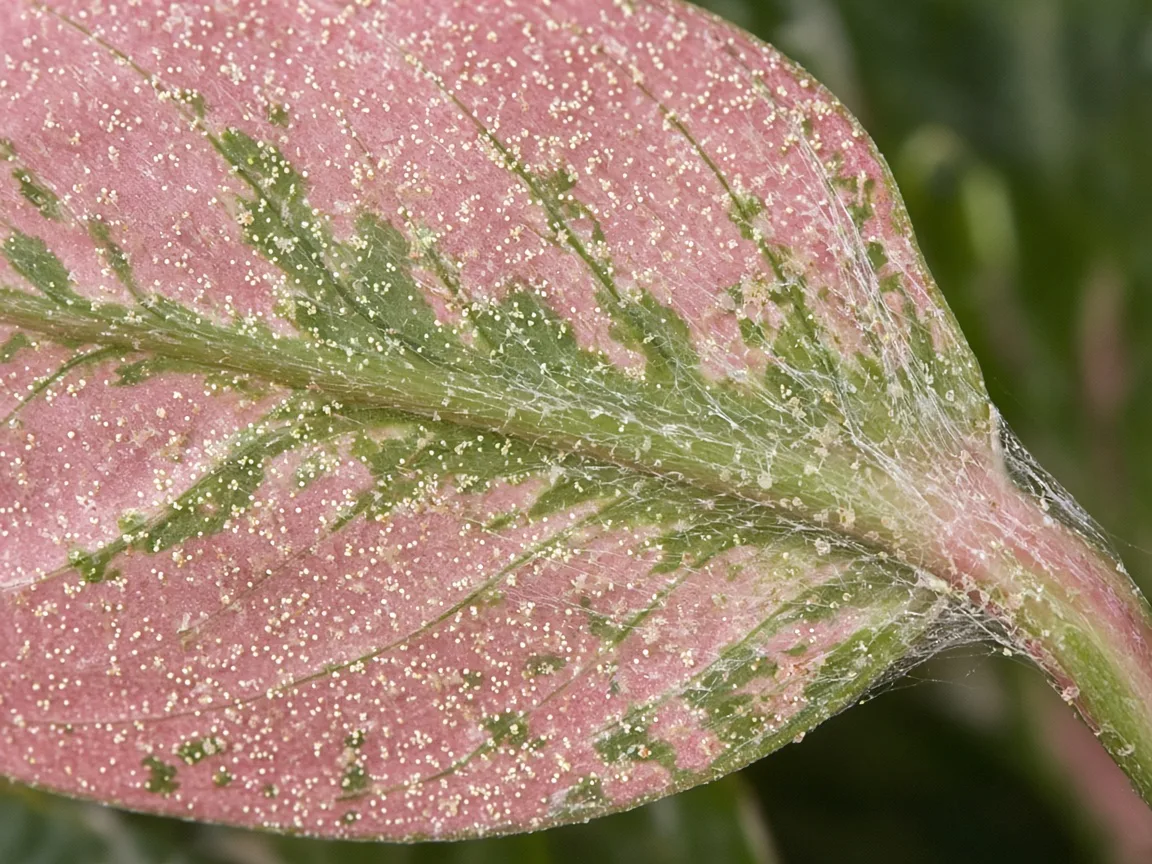
Fine pinprick stippling across pale rose-pink tissue on a broad glossy blade—compare with firm healthy pink color lower on the stem.
- Fine yellow or white pinprick stipples scattered across pale rose-pink and cherry-red zones on broad glossy blades, often most visible where anthocyanin meets green tissue
- Bronze or grayish cast on older pink-blushed leaves where colonies have been feeding for weeks
- Delicate silk webbing at petiole bases and the crown of the dense upright clump—not the fluffy white wax of mealybugs
- Crisp, curled edges on heavily infested shoots; premature yellowing on lower broad leaves in advanced cases
- Slowed new growth when the only emerging pink-flushed blade shows stippling while soil moisture and light look normal
Because Lady Valentine grows slowly and needs brighter indirect light than green Aglaonemas to hold pink color, even light stippling on one new crown leaf can look dramatic against the rose-and-green pattern. Mites hide on undersides and in the tight junction where broad blades overlap in the clump—top-down watering and casual glances miss colonies until webbing appears. Use a flashlight and lift each broad leaf from below; pinprick feeding marks read clearly on pale pink tissue long before the whole blade bronzes.
Why Lady Valentine shows damage differently than green Aglaonemas: The rose-pink zones lack chlorophyll and sit as thin, pale panels on each broad blade. Mites concentrate on undersides where blades overlap in a dense clump. On Silver Bay, broad pale centers act like a high-contrast backdrop; on Lady Valentine, pinprick feeding marks dull rose anthocyanin first—often the exact tissue owners bought the plant for. That visibility helps early detection, but cosmetic scarring on pink flush stays obvious even after mites are gone.
Do not confuse hard-water spots or dust on smooth glossy blades with mite stippling. Mineral residue sits on the surface and wipes off; feeding damage is embedded in the tissue and does not rub away cleanly.
Where mites hide on Lady Valentine’s pink crown and broad leaf axils
This is the inspection map most generic spider-mite guides skip—and it matters on variegated Chinese evergreens.
Lady Valentine forms a compact upright clump of broad glossy leaves splashed rose-pink, cherry-red, and green, often with multiple crowns in one pot. Mites exploit three Lady Valentine-specific harbors:
- Undersides of overlapping broad blades — The pink-and-green pattern faces up; feeding happens underneath where blades stack in the clump. Lift outer mature leaves and look between layers, especially on the pale rose zones.
- Petiole bases at the crown center — Each broad blade meets the stem in a tight junction that holds humidity and shelter. Webbing often starts here before it spans whole leaves.
- The slowest new pink flush — Lady Valentine unfurls one or two broad blades at a time. Mites on that single emerging shoot can stipple the entire visible new pink growth before you notice crown damage.
NC State Extension notes that spider mites are among the main insect problems on Aglaonema. Lady Valentine is not immune because it tolerates average humidity—pots pushed into bright window sills for color often sit in a hotter, drier microclimate than the rest of the room.
Why bright-light Lady Valentine placement creates dry-window mite risk
Variegated Chinese evergreens like Lady Valentine need more light than green cultivars to keep rose-pink color. That honest care requirement pushes many pots onto windowsills, plant stands beside glass, or shelves under grow lights—exactly where winter sun and heating vents create the warm, dry air spider mites prefer.
Winter heating and vent drafts. Central heat drops whole-room humidity while Lady Valentine on a bright east window or shelf beside a radiator sits in a hotter, drier pocket. Clemson HGIC lists mites on Chinese evergreen—both thrive in exactly these dry winter conditions from November through March.
AC and forced-air offices. Lady Valentine is sold as an easy pink accent plant, but constant AC airflow still dries broad leaf surfaces even when the pot is in acceptable indirect light. Chinese evergreen tolerates dry air better than ferns, which can delay owner response until stippling dulls rose-pink tissue across the clump.
Fluoride burn masquerading as pest damage. Lady Valentine is fluoride-sensitive; brown crispy tips from municipal tap water can appear alongside mite stippling in the same dry winter room. Edge-only browning without scattered pinpricks or webbing points to brown tips or low humidity—not mites alone.
Hitchhiking on new plants. Mites enter collections on nursery stock, shared pruning tools, or plants summered outdoors. Most houseplant pests arrive on newly purchased plants or those brought inside after warm weather. Skipping quarantine is the fastest way to find stippling on a Lady Valentine that was clean last month.
Crowded shelf placement. Tight groupings of pothos, philodendron, and other Aglaonema reduce airflow around the clump crown. Mites crawl between touching broad blades and ride air currents in dry rooms.
Plant stress without outright decline. Chronic underwatering, cold drafts below 55°F, or a pot that swings between bone-dry and soggy weakens growth. Stressed plants tend to be more susceptible to pests even when pink-blushed leaves still look mostly fine.
Mites do not live in Aglaonema soil the way fungus gnat larvae do. If you see stippling and webbing only on foliage, repotting is not your first move.
How to confirm spider mites (six-step checklist)
Work through these checks before spraying anything:
- Check placement first. Note whether the pot sits near a heater, sunny window, or AC vent in a dry winter room—mite risk rises in that microclimate.
- Inspect the clump from below. Lift each broad glossy blade and examine undersides plus petiole bases where the upright crown holds humidity and shelter.
- Look for stippling plus webbing together. Either sign alone can mislead; the combination on smooth Lady Valentine foliage is the mite fingerprint.
- Run the paper-tap test. Hold white paper beneath the leaves and strike the foliage sharply—slow-moving specks confirm live mites; dirt and mineral dust do not crawl.
- Use magnification on pale pink zones. A 10x hand lens on rose-pink tissue reveals pinprick damage before bronzing spreads across the broad blade.
- Rule out lookalikes. No cottony wax means not mealybugs; no edge-only browning without stippling points to low humidity—see the brown-tips page.
Confirmed mites warrant treatment. Suspected stippling without moving specks or webbing may be environmental—fix humidity and watering rhythm before stacking pesticides.
Lookalike symptoms on Lady Valentine
| What you see | More likely cause | Why on Lady Valentine |
|---|---|---|
| Papery brown tips on oldest broad blades, no stippling or webbing | Low humidity or brown tips from fluoride | Edge damage without scattered pinpricks across rose-pink zones |
| Fine yellow pinpricks plus silk at petiole bases | Spider mites | Dense clump harborage at stem junctions between broad blades |
| Silvery streaks or black specks on new growth | Thrips | Scraping damage on tender pink flush, not sap stippling with webbing |
| White cottony clusters in crown axils | Mealybugs | Same honeydew risk, different pest—alcohol dab, not rinse alone |
| Yellow lower broad leaves on wet soil | Overwatering or root stress | No insects on crown; soil stays heavy |
| Soft-bodied insects on newest crown flush | Aphids | Cluster on tender crown growth, not underside stippling |
The most common misdiagnosis on Lady Valentine is confusing winter edge crisping or fluoride burn with mite stippling. Dry air and tap water brown margins on firm broad blades without the scattered pinprick pattern mites leave across pale rose tissue.
First fix for Aglaonema Lady Valentine
Isolate the plant and wash mites off with lukewarm water.
Move the pot to a sink, shower, or outdoor shade if weather is mild. Support the upright stems with one hand and rinse leaf undersides and petiole bases with a gentle but firm stream. Spraying a sturdy plant with water removes many pests when you cover all surfaces. Small plants can be inverted briefly with the soil covered in foil. Your goal is zero live mites on the surfaces you can reach.
Aglaonema broad leaves are smooth—not fuzzy like African violet—so rinsing is safe when water drains off and the plant returns to bright indirect light the same day. Pat excess moisture from the crown so water does not sit in the clump for days. Do not follow the rinse immediately with oil or soap the same day unless the label allows it; give the plant overnight to recover.
After the first rinse knocks down populations, apply horticultural oil or insecticidal soap labeled for spider mites. Coat stems, leaf undersides, and petiole bases until solution drips. Repeat every five to seven days for at least three cycles—mite eggs hatch on a staggered schedule and one pass rarely clears a dense Lady Valentine clump.
Bag the pot loosely during indoor spraying if ventilation is poor. Aglaonema is toxic to cats and dogs—keep pets away until sprays dry.
Step-by-step recovery
Once isolation and the first rinse are done, escalate only as needed:
Days 1–21: rinse plus contact sprays
- Re-rinse or wipe individual broad blades with a damp cloth between oil cycles if populations are light.
- If live mites remain after two rinses, apply insecticidal soap or horticultural oil labeled for houseplants. Coat undersides and petiole bases until solution drips. Contact sprays work while wet.
- Repeat every five to seven days for at least three cycles. Eggs and mites tucked at petiole bases survive the first pass.
Ongoing: treat the plant, not the room
- Avoid applying soap or oil in hot direct sun or above 90°F—high temperatures increase phytotoxicity risk on variegated foliage.
- Raise winter humidity toward 40–50% with a pebble tray or small humidifier near the plant—not as a substitute for sprays, but to slow mite reproduction while you treat.
- Prune only heavily bronzed pink-blushed leaves you cannot reach to spray. Sterilize scissors between cuts.
If mites persist after three weekly treatments
- Inspect every nearby plant again. Hidden reservoirs on a shelf neighbor restart the problem.
- Consider predatory mites for enclosed indoor collections. Phytoseiulus persimilis is a commercially available predatory mite that feeds on web-spinning spider mites and is used in interior plantscapes and greenhouses. Release only after spider mites are confirmed—not preventatively—and avoid oil or soap applications for at least one week before introduction so residues do not kill the predators. Neoseiulus californicus tolerates drier indoor air if humidity near Lady Valentine stays below 60%.
- Rotate to a different labeled product per label directions if contact sprays fail.
- Do not repot, fertilize, or prune heavily on day one. Each adds stress while the plant is losing sap.
Recovery timeline for slow-growing Lady Valentine
Stippling should stop spreading within one to two weeks once rinsing and oil cycles begin consistently. Expect four to eight weeks before a clean new broad blade with strong rose-pink color fully hardens—Lady Valentine grows slowly even in good light, so recovery takes longer than on fast vining plants.
Signs recovery is working:
- New broad blades open without stippling across pale pink zones
- No fresh webbing at petiole bases during weekly checks
- Firm existing pink-blushed leaves with no new bronzing spread
- Stippling confined to old tissue while the crown pushes clean growth
Signs the problem is worsening:
- Webbing reaches the only new pink-flushed leaf the clump is producing
- Bronzing spreads to mature blades while soil moisture is normal
- Matching stippling appears on neighboring shelf plants
- New growth stops entirely for more than a month after treatment
Heavily stippled mature pink-blushed leaves will not regain perfect rose color. Let the plant keep them until you have two clean new blades, then trim for appearance.
What not to do
- Spraying pesticides before isolating and rinsing. You spread mites to neighboring pots and miss colonies at petiole bases between broad blades.
- One soap application and done. Contact sprays need repeats because eggs hatch and hidden mites survive the first round.
- Homemade dish soap mixes. Do not mix homemade soap products—they can burn Aglaonema leaves. Use products sold as insecticidal soap.
- Assuming insecticides labeled for insects will kill mites. Mites need miticides, horticultural oils, or insecticidal soaps labeled for mite control.
- Leaving the crown soaked after shower-rinsing. Smooth broad blades tolerate rinsing, but water sitting in the upright clump for days invites fungal issues—let foliage dry before evening.
- Fertilizing to “help” a stressed plant. Hold feed until new growth is clean for a month per the fertilizer guide.
- Returning the plant to the shelf after one clear day. Isolate until you see no new webbing for at least two weeks after the last treatment.
How to prevent spider mites on Aglaonema Lady Valentine
Prevention fits this plant’s slow, color-focused care rhythm:
- Quarantine new plants two weeks before placing them near your Lady Valentine. Inspect broad blade undersides weekly during isolation.
- Wash smooth glossy leaves every two to three weeks during active growth. Routine washing discourages pest infestations and keeps rose-pink tissue bright.
- Check petiole bases every time you water. Lady Valentine’s watering cue—dry top 2–3 cm of mix—makes a reliable weekly inspection schedule. See the watering guide.
- Keep stable bright indirect light and airflow. Move plants off heating vents while still meeting the light needs that hold pink color. Group pots loosely so broad blades do not touch.
- Raise winter RH toward 40–50% when stippling keeps appearing near bright windows—a humidifier beats misting broad leaves in stagnant corners.
- Screen open windows in warm months if plants sit nearby. Mites can drift in from outdoor gardens.
A healthy Lady Valentine with firm new pink-flushed blades and clean undersides is your best defense. When you catch stippling on the only new shoot the clump has, fast isolation and a thorough rinse usually restore the crown without drama.
When to worry
Escalate when webbing covers multiple pink-blushed blades, stippling reaches the crown’s only emerging shoot, or neighboring shelf plants show matching damage—isolate the whole group and treat on the same schedule. Persistent mites after three full oil cycles may need a different labeled product, predatory mite release in an enclosed room, or consultation with your local cooperative extension office for chronic reinfestation.
If more than half the foliage is bronzed with webbing at most petiole bases and new growth has stalled for a month despite consistent treatment, division at repotting from a clean crown section may be more practical than saving a heavily depleted mother clump. Mites will not kill a healthy Chinese evergreen overnight, but unchecked feeding through winter can leave Lady Valentine depleted going into spring.
Conclusion
Spider mites on Aglaonema Lady Valentine are an isolate, rinse undersides, repeat oil every five to seven days problem—not a mystery leaf disease. Stippling across rose-pink tissue plus silk at petiole bases confirms mites; edge crisping without pinpricks points to low humidity or brown tips instead. Lady Valentine’s slow pink-flush turnover means damaged rose tissue stays cosmetic—judge recovery by clean new shoots, not old blemishes. Keep pets away during sprays on this toxic cultivar, and match post-recovery care to the watering guide once the crown is clear.
Related Lady Valentine guides
- Aglaonema Lady Valentine care overview — light, humidity, and watering rhythm for pink Chinese evergreen
- Low humidity — edge crisping without stippling
- Mealybugs — cottony clusters in crown axils
- Brown tips — dry air vs. fluoride burn on broad blades
- Light guide — bright indirect light to hold rose-pink color
- Watering guide — dry-check standard during recovery
Related tool
Use the Pest Identifier Tool to narrow causes for spider mites on this plant before changing multiple variables at once.