Magnesium Deficiency on Aglaonema Red Siam: Causes, Checks
Quick answer
Magnesium deficiency on Aglaonema Red Siam shows as yellow or pale green tissue between dark green veins on the oldest lower broad leaves while the crown may still push normal-looking pink new growth. First step: confirm interveinal chlorosis on mature lower blades—not yellow new tips with green veins at the crown.
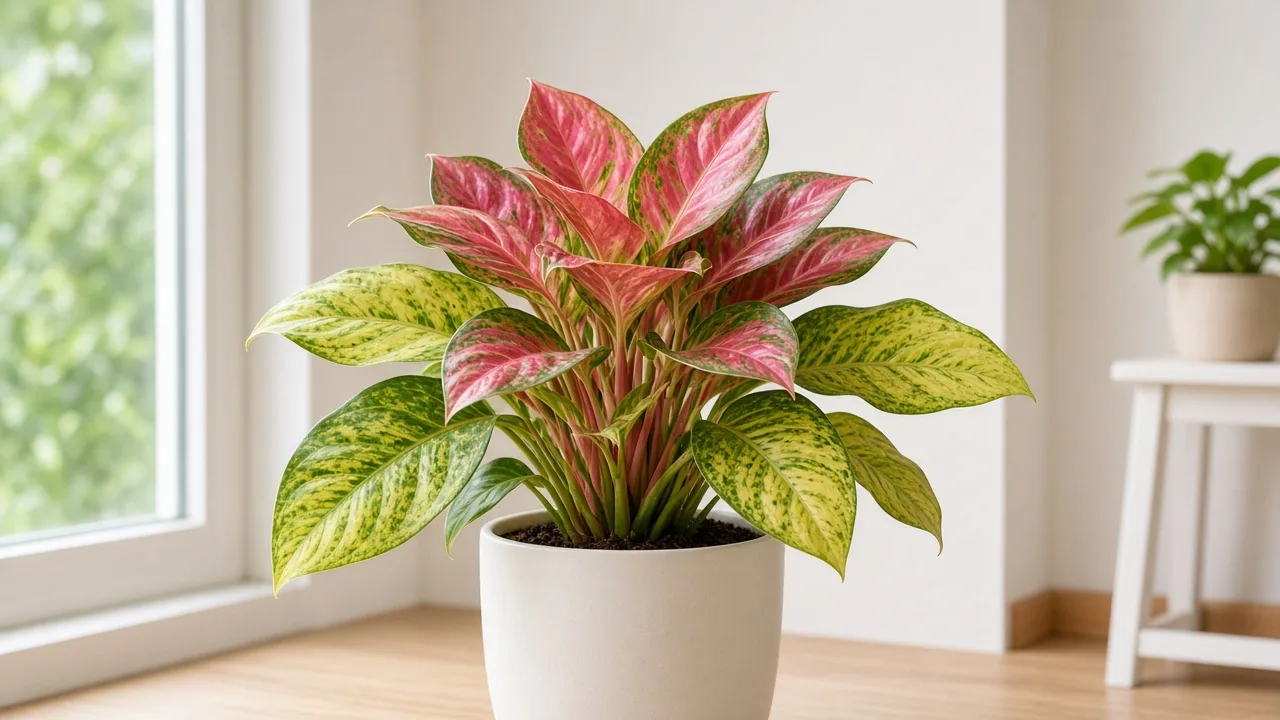
Magnesium Deficiency on Aglaonema Red Siam: Causes, Checks & Fixes
This guide covers magnesium deficiency on Aglaonema Red Siam. See also the general Magnesium Deficiency guide, watering, and light pages for this plant.
Magnesium Deficiency on Aglaonema Red Siam: Causes, Checks & Fixes
Quick answer
Magnesium deficiency on Aglaonema ‘Red Siam’ shows as yellow or pale green tissue between dark green veins on the oldest lower broad leaves while the crown may still push normal-looking pink new growth. Magnesium is highly mobile in plants, so deficiency symptoms appear first on lower leaves as the clump relocates magnesium to younger crown tissue.
See our magnesium deficiency guide and the magnesium deficiency symptom hub. On Red Siam, inspect the lowest mature broad blades on the clump—interveinal yellow bands across the green zones of older leaves are classic magnesium before iron deficiency, which hits new unfurling tips with green veins.
First step: confirm interveinal chlorosis on older lower broad leaves, not on the newest crown blade still opening.
When to use this page vs other Red Siam guides
| Pattern | Read next |
|---|---|
| Yellow between veins on oldest lower broad leaves | Magnesium deficiency (this page) |
| Yellow new blade with green veins at crown tip | Iron deficiency |
| Uniform pale lower old leaves without vein pattern | Nitrogen deficiency |
| Brown scorch at margins on older leaves | Potassium deficiency or Brown tips |
| Cupped or margin-burned newest crown blade | Calcium deficiency |
| Yellow lower leaves on wet mix | Overwatering or Root rot |
| Multiple yellow causes at once | Yellow leaves |
What magnesium deficiency looks like on Aglaonema Red Siam
Red Siam carries broad glossy leaves splashed rose-pink, cherry-red, and green on short upright petioles. Healthy blades hold crisp veining from crown to soil line. Magnesium stress breaks that pattern on mature foliage lower on the clump, not at the active crown blade.
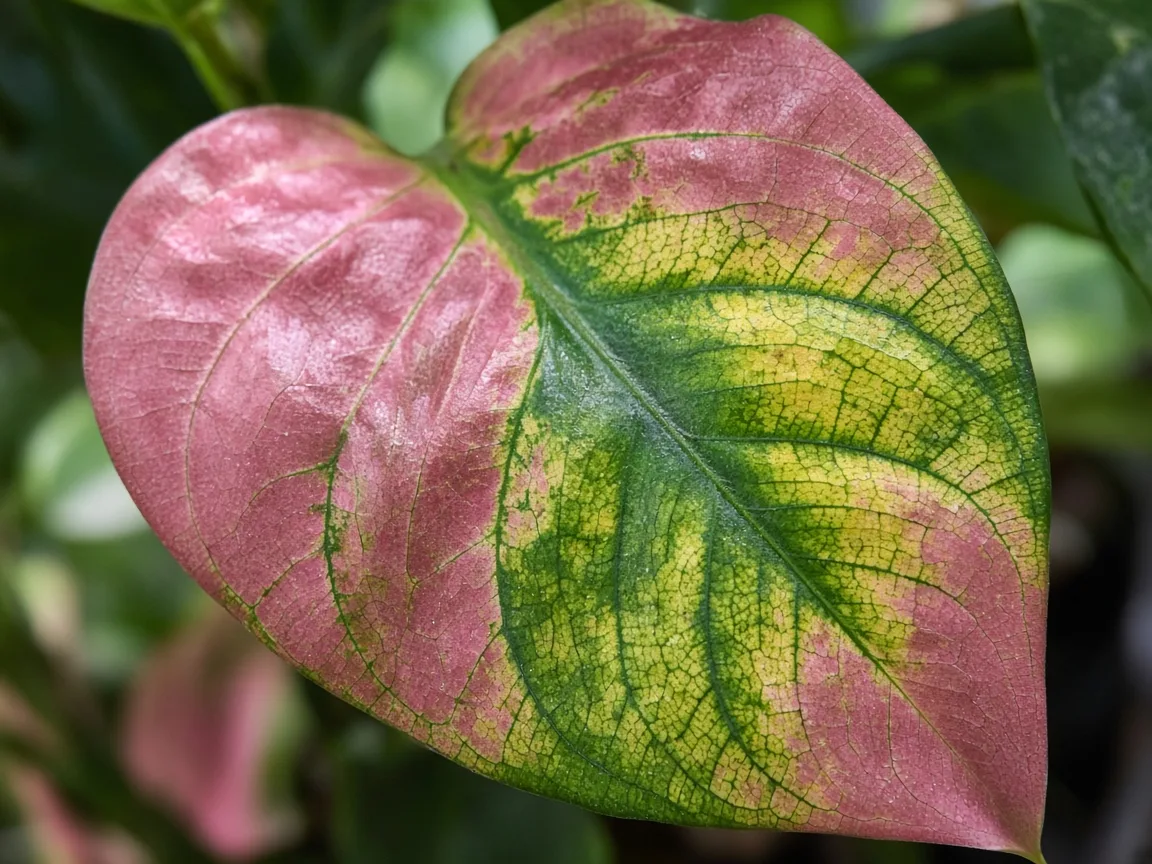
Older broad leaf with dark green veins and yellow-green bands between them in the green zones—newer pink-flushed blades above may still look normal.
Typical signs:
- Yellow or pale green between dark green veins on oldest lower broad leaves, most visible in the green portions of variegated blades
- Veins stay relatively dark green on mature blades—classic interveinal banding across the mid-blade
- New crown blades may look normal in early stages while lower canopy shows chlorosis
- Firm stems and crown unlike mushy overwatered Red Siam on soggy mix in dim light
- Symptoms climb upward over weeks as the plant strips magnesium from old to new tissue
- No cupping or hood-like margin burn on the newest unfurl—that pattern points to calcium deficiency
Not magnesium deficiency:
- Yellow new blades with dark green veins at the softest unfurling crown tip—iron deficiency (iron affects youngest leaves first)
- Uniform pale lower leaves without a strong vein-retention pattern—nitrogen deficiency
- Cupped or necrotic margins on the newest crown blade while older leaves look fine—calcium deficiency
- Brown crispy edges without interveinal mid-blade banding—brown tips or potassium deficiency
- All leaves yellow at once on persistently wet soil—overwatering or root rot
- One bottom leaf yellow while a pink-flushed blade unfurls above—often normal senescence; see yellow leaves
RHS notes interveinal chlorosis from manganese, iron, or magnesium deficiency, with manganese and magnesium symptoms tending to start on older leaves. On a slow variegated aglaonema, that older-leaf banding is easiest to read on the green zones of broad blades closest to the pot rim.
Why Aglaonema Red Siam gets magnesium deficiency
Red Siam is a tissue-cultured Thai hybrid that needs brighter indirect light than green Aglaonemas to hold its rose-pink color—east windows, filtered south light, or a grow light 12–18 inches above the crown. Magnesium sits at the center of the chlorophyll molecule, and when soil reserves run low the clump strips it from older leaf tissue to fund the one or two new pink-flushed blades it pushes per warm season.
Red Siam-specific causes:
- Leached peat-perlite mix — Thorough watering per the Red Siam watering guide drains soluble magnesium through drainage holes. Years in the same pot without complete feed leaves interveinal chlorosis on lower leaves while the crown still looks glossy.
- Nitrogen-heavy fertilizer without micronutrients — Variegated cultivars grow slowly but still push anthocyanin-rich new tissue that draws magnesium; nitrogen-only products let the clump keep expanding blades while magnesium in the root zone depletes.
- Hard tap water and calcium competition — Conditions that lead to magnesium deficiency are often related to fertilizer programs that supply too little Mg, or when Ca and K compete with Mg for uptake. Red Siam is also fluoride-sensitive, so hard water can cause tip burn on pink zones while magnesium depletion shows as interveinal banding on green zones.
- Years without repotting — An upright clump in depleted peat-perlite mix can show lower-leaf banding even when care looks stable on the surface.
- Blocked uptake from wet roots — Chronic saturation in a cachepot in dim light prevents absorption even when magnesium is present; see overwatering before drenches.
- Salt crust without magnesium replacement — White rim buildup from hard water or excess feed can injure roots and block micronutrient uptake. UF/IFAS warns over-fertilization indoors causes soluble salt buildup and leaf margin injury on Aglaonema.
Do not diagnose magnesium deficiency on sour wet soil with soft stems at the base—that is root failure until you confirm mostly white firm roots.
Reading interveinal chlorosis on pink-and-green blades
Magnesium deficiency on Red Siam shows on the oldest broad leaves closest to the pot rim—a pattern that would be nonsense on a snake plant rosette or a dracaena cane crown. The dark green base and rose-pink splashes make interveinal chlorosis most visible in the green zones: green veins with yellow-green tissue between them across the mid-blade, sometimes spreading toward the margins.
That lower-clump locus distinguishes magnesium from iron, which appears on the blade still unfurling at the crown tip. It also differs from calcium, which cups or burns the newest expanding crown blade while older pink-flushed leaves stay normal. Magnesium deficiency initially develops on lower or older foliage and can advance up the clump as symptoms worsen.
Because Red Siam blades are broad and upright, one chlorotic lower leaf is enough to anchor your diagnosis before changing fertilizer, mix, or pot size. Pink zones lack chlorophyll, so yellowing there can look different—focus on the green portions of older blades for the classic vein-retention pattern.
Brighter light, pink new growth, and faster magnesium draw
The diagnostic trap on variegated Red Siam is pushing rose-pink new tissue in brighter light while magnesium silently depletes from the root zone.
Higher light means more chlorophyll turnover: Red Siam needs 150–300 fc to hold anthocyanin pink. That brighter placement increases photosynthetic demand compared with a green ‘Maria’ in a dim office. Each new pink-flushed blade draws magnesium from older tissue below—if the root zone is depleted, lower leaves band between veins while the crown still opens with color.
Leaching in airy mix: Each deep watering when the top 2–3 cm dries flushes soluble magnesium through drainage holes. Seasons of flushing without complete fertilizer—or with nitrogen-only products—leaves interveinal chlorosis on lower leaves while the crown still pushes one slow blade per year.
Slow growth masking the timeline: Variegated aglaonemas grow slowly even in good light, so owners miss that the same depleted mix has been flushing magnesium for multiple growing seasons. UF/IFAS recommends 20-20-20 at 50 ppm nitrogen about once monthly under interior conditions—skipped seasons matter on slow feeders pushing pink tissue.
Crown blade vs lower leaf: magnesium vs iron vs calcium
Red Siam invests the most new tissue at the active crown blade each warm season. Iron demand peaks there; magnesium deficiency does not—it starts below.
When the lowest mature broad leaves show interveinal yellowing but the newest unfurling blade at the crown stays evenly green or opens with normal rose-pink flush, magnesium is the likely mobile-nutrient issue. When new blades emerge yellow with dark green veins while older leaves stay normal, switch to the iron deficiency page.
When the newest crown blade cups inward or browns at the margin while older pink-flushed leaves look fine, that is calcium deficiency—immobile calcium hits expanding tissue first, not mobile magnesium on mature lower blades.
Penn State magnesium deficiency work notes bright yellow interveinal chlorotic lesions on older leaves—on Red Siam those lesions read clearly against the dark green portions of variegated blades.
Lookalike symptoms
| Pattern | Check | Likely cause |
|---|---|---|
| Interveinal yellow on oldest lower broad leaves | Leaf position | Magnesium deficiency (this page) |
| Yellow new blade, green veins at crown | New vs old tissue | Iron deficiency |
| Cupped newest crown blade | Expanding tip | Calcium deficiency |
| Pale lower leaves without vein bands | Uniform wash | Nitrogen deficiency or Pale leaves |
| Brown margins without mid-blade banding | Edge pattern | Brown tips or Potassium deficiency |
| Soft stems, wet soil, mushy base | Root feel | Overwatering |
| Pink fading to all-green on new growth | Light level | Not enough light — color loss, not nutrient banding |
| Speckled upper leaves | Leaf position | Manganese deficiency (rare indoors; upper-leaf pattern per UF/IFAS) |
How to confirm
- Old vs new tissue — Interveinal chlorosis confined to oldest lower broad leaves while the crown blade looks normal strongly suggests magnesium.
- Vein pattern — Dark green veins with yellow between them across the mid-blade green zones, not uniform pale wash.
- Fertilizer history — Complete feed with micronutrients vs nitrogen-only products or years without any feed.
- Mix age — Same peat-perlite pot for three or more seasons without refresh or repotting.
- Root health — Firm crown and white roots vs brown mush from soggy soil in dim light.
- Watering rhythm — Mix staying wet for weeks in low light blocks uptake even when magnesium is in the bottle.
- Symptom climb — As magnesium deficiency progresses, interveinal chlorosis advances up the clump to mid-canopy leaves.
First fix for Aglaonema Red Siam
One measured Epsom salt (magnesium sulfate) drench at 1 tablespoon per gallon of water on already-moist mix—only after confirming interveinal chlorosis on older lower broad leaves (not new crown tips), firm roots, and stable top 2–3 cm dry-down rhythm.
Do not repot, prune, and triple-feed a recently relocated clump the same week. Stabilize watering per the Red Siam watering guide first—water when the top 2–3 cm of mix dries, empty saucer standing water within 30 minutes after each drink.
If you prefer not to use Epsom salt, one quarter-strength dose of complete balanced fertilizer listing magnesium on the label on moist mix is an alternative—pick one route, not both the same week.
Step-by-step recovery
- Rule out iron deficiency by comparing oldest lower broad leaves to the softest crown unfurl—iron hits new tips; magnesium hits old blades.
- Apply one Epsom drench (1 tbsp magnesium sulfate per gallon) or quarter-strength complete feed with magnesium on moist mix.
- Maintain consistent top 2–3 cm dry-down—uptake fails when roots alternate between saturated and desiccated in a heavy pot on a dim shelf.
- Flush white salt crust at the pot rim before resuming feeding if buildup blocks uptake.
- Repot into fresh peat-perlite mix if roots fill the pot and banding persists after one measured correction on healthy roots—see Red Siam repotting.
- Monitor the next one or two crown blades—chlorotic lower leaves rarely re-green; recovery shows on subsequent new growth with crisp pink-green variegation.
- Resume light complete feeding at six- to eight-week intervals through active growth per the fertilizer guide if the next blade responds.
Recovery timeline
Chlorotic bands on old broad leaves rarely return to full green once tissue hardens. The next one or two crown blades after corrected feeding and stable watering usually open with normal rose-pink variegation within six to ten weeks on firm roots—slower than fast-growing pothos because Red Siam pushes new tissue less often even in bright filtered light.
Severe root damage from chronic overwatering in dim corners may delay recovery a full growing season. If interveinal chlorosis keeps climbing to mid-canopy leaves despite one Epsom drench and stable care, inspect roots for rot before repeating drenches or repotting again.
Mistakes to avoid
- Do not treat yellow new crown tips with green veins as magnesium—switch to iron deficiency diagnosis.
- Do not heavy-feed a clump on wet soil in low light—fix drainage before fertilizer.
- Do not stack Epsom drench, full-strength feed, and repotting the same week on a stressed plant.
- Do not expect current chlorotic lower leaves to re-green—judge the next crown blade unfurl.
- Do not confuse cupped newest crown blades with magnesium—see calcium deficiency.
- Do not skip feeding for years then dump full-strength fertilizer on a pale clump—that path burns margins without fixing interveinal banding.
Prevention
- Feed lightly with complete balanced fertilizer including magnesium during active growth per the Red Siam fertilizer guide—UF/IFAS recommends balanced feed at modest ppm under interior conditions.
- Maintain consistent top 2–3 cm dry-down per the watering guide.
- Refresh depleted peat-perlite mix every one to two years when roots crowd the pot.
- Flush salt buildup mid-season if you use hard tap water or feed heavily.
- Inspect lower broad leaves monthly during spring and summer—early interveinal banding is easier to correct than a chlorotic mid-clump.
- Keep the clump in enough filtered light for firm pink variegation—not a dark hallway where every new blade stays tiny and green; see light guide.
Related Aglaonema Red Siam guides
- Aglaonema Red Siam overview
- Red Siam problems hub
- Red Siam fertilizer
- Red Siam watering
- Red Siam soil
- Iron deficiency — new blade yellow with green veins
- Calcium deficiency — cupped newest crown blade
- Nitrogen deficiency — uniform pale lower leaves
Use the Fertilizer Dilution Calculator to work out a safe quarter-strength dose before changing multiple variables at once.
Conclusion
Yellow between dark green veins on the oldest lower Red Siam broad leaves points to magnesium uptake failure on mobile-nutrient tissue—confirm the old-vs-new blade pattern, rule out iron on the crown tip and calcium cupping on the newest blade, stabilize top 2–3 cm dry-down watering and root health, apply one measured Epsom drench or complete feed with magnesium, and judge recovery by the next crown blade unfurl.