Overwatering on Aglaonema Red Siam: Pink-Fade & Wet-Pot
Quick answer
Overwatering on Aglaonema Red Siam shows up as a heavy pot that stays damp for weeks, yellow lower broad leaves, washed-out rose-pink on new growth, and sometimes fungus gnats—not a light dry pot with slightly curled firm leaves. First step: stop watering immediately and lift the pot to confirm the top 2–3 cm of mix is still wet before you add another drink.
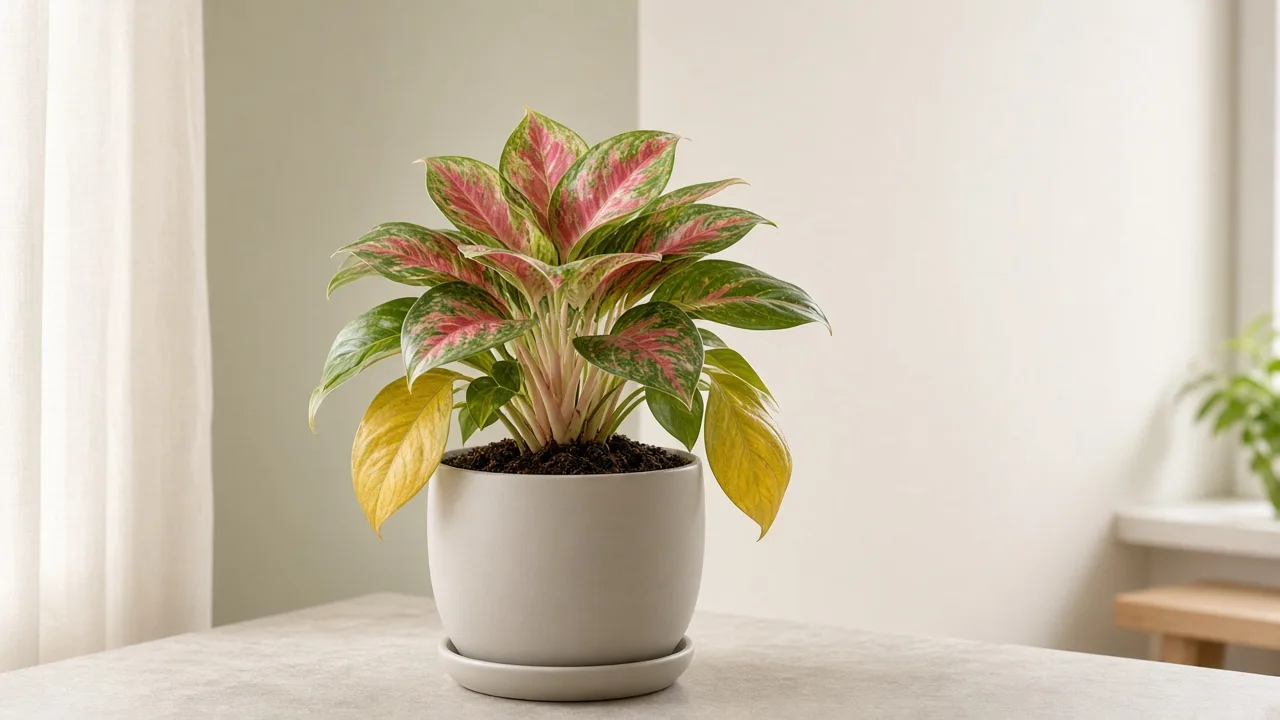
Overwatering on Aglaonema Red Siam: Causes, Checks & Fixes
This guide covers overwatering on Aglaonema Red Siam. See also the general Overwatering guide, watering, and light pages for this plant.
Overwatering on Aglaonema Red Siam: Causes, Checks & Fixes
Quick answer
Overwatering on Aglaonema ‘Red Siam’ is the dim-corner watering trap: a pink-variegated Chinese evergreen that needs brighter filtered light than green cultivars, yet still uses water slowly when parked in a heavy wet pot. Root rots can occur with over-watering when owners keep roots saturated on a calendar schedule. Plants in waterlogged soil die because roots cannot absorb oxygen; damaged roots then fail to move moisture to the broad rose-pink leaves even when the pot feels damp.
For how chronic wet mix damages roots in general, see our overwatering guide. On Red Siam, the pattern is a heavy pot long after watering, yellow lower broad leaves, washed-out pink on new flush, fungus gnats at the soil line, and—most importantly—a soft crown on wet mix—not a light dry pot with slightly curled firm leaves.
First step: stop watering immediately. Lift the pot and push a finger or skewer to the top 2–3 cm depth. If that zone is still damp while lower leaves yellow, do not add water. That single pause lets you read the plant before repotting, fertilizer, or pesticide.
When to use this page vs other Red Siam guides
| Pattern | Read next |
|---|---|
| Light dry pot, crisp margins, no yellow lowers | Underwatering |
| Heavy wet pot + yellow lower leaves (this page) | Stay here; escalate to root rot if crown is mushy |
| Limp broad leaves on wet soil | Drooping leaves or wilting |
| Tiny flies at pot rim on damp peat | Fungus gnats |
| White fuzz on soil surface | Mold on soil |
| Pink fading on firm leaves with normal moisture | Not enough light |
| General yellowing without wet-soil clues | Yellow leaves |
| Long-term dry-down rhythm after recovery | Watering guide |
What overwatering looks like on Aglaonema Red Siam
On a healthy Red Siam, broad glossy leaves splashed rose-pink, cherry-red, and green sit upright in a compact slow-growing clump. Overwatering changes that silhouette from the bottom up—the opposite of thirst, which usually starts at leaf tips on a light pot.
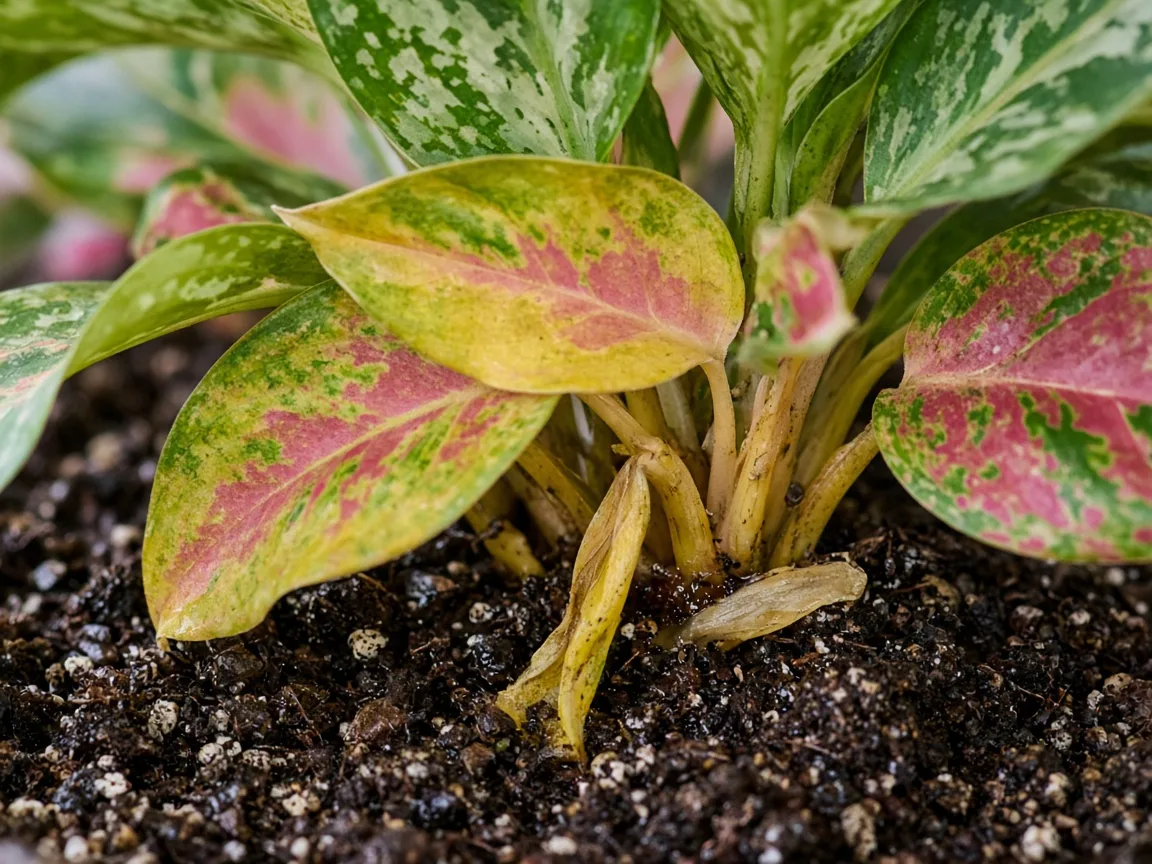
Yellow lower broad leaves on dark damp peat at the Red Siam soil line—cherry-red flush dulls toward gray-green while the crown may still look firm until rot advances.
Early signs:
- Heavy pot days or weeks after the last watering
- Yellow lower broad leaves while newer crown leaves still look greener or pinker
- Washed-out rose-pink on new flush—anthocyanin color dulls toward flat gray-green on stressed foliage
- Dark, cool, damp mix at mid-pot depth even when the surface looks lighter
- Fungus gnats hovering at the pot rim—chronically wet peat is their habitat; see fungus gnats if flies appear before crown damage
- No new leaves emerging with strong cherry-red pattern for weeks while mix stays wet
Advanced signs:
- Soft crown at the soil line where new pink leaves emerge
- Sour or rotten smell from drain holes
- Wilt paradox—limp broad leaves despite wet soil because damaged roots cannot take up water
- Several lower leaves yellowing at once while mix stays saturated
- Black mushy roots on inspection—escalate to root rot the same day
A single aging lower leaf yellowing on otherwise normal moisture is often senescence, not overwatering. Chronic overwatering adds wet mix + progressive lower yellowing + heavy pot weight to that picture.
The pink-fade trap in dim corners
Red Siam is not a deep-shade plant like green ‘Maria’ or ‘Silver Bay’. Its rose-pink and cherry-red zones lack chlorophyll, so the cultivar needs bright indirect light to hold color. Many owners place it in a dim hallway or north-facing corner where two problems stack:
- Pink fades toward green on firm leaves with normal moisture—usually a light issue; see not enough light.
- The same dim spot slows evaporation, so a peat-heavy nursery pot stays wet for weeks after one watering.
The trap is misreading faded pink as thirst. You add water to “bring color back,” but the pot was already heavy. Lower leaves yellow, new pink flush looks pale and soft, and root rot develops quickly when aglaonemas sit in consistently wet soil.
Before you water for color, lift the pot. If it is heavy and a skewer pulls wet material at mid-depth, treat moisture first—even if pink looks dull.
Reading the top 2–3 cm dry-down check
Red Siam watering on LeafyPixels follows a cultivar-specific rule: water when the top 2–3 cm of potting mix has dried, then drain fully. That matches the top 1–2 inches dry before watering again Clemson HGIC recommends for Chinese evergreens—and it matters for overwatering diagnosis.
Before you water a yellowing Red Siam:
- Insert a finger or skewer to the top 2–3 cm. If deeper mix is still wet while the surface feels lighter, the plant may be oversaturated overall—especially in a dim room.
- Lift the pot. Heavy weight plus yellow lower leaves on moist lower mix points to root stress, not thirst.
- Compare to your normal rhythm from the watering guide. If you watered recently but the pot still feels heavy, skip the drink.
Wet overwatering confirms when mid-depth mix is cool and damp, lower leaves yellow, or roots smell sour. Dry thirst confirms when the top 2–3 cm is dry, the pot is light, and broad leaves curl slightly but stay firm.
Pink-flush crown vs lower-leaf diagnosis
This plant-only check does not apply to succulents or ferns. On Red Siam, the crown cluster where new rose-pink leaves emerge is your best survival indicator:
- Firm crown + one yellow lower leaf + normal moisture — Often natural aging; trim the leaf if it bothers you.
- Firm crown + several yellow lowers + heavy wet pot — Root stress beginning; stop water now.
- Soft crown + wet pot — Confirmed overwatering path; inspect roots before rot spreads up the rhizome.
- New leaves with strong cherry-red or rose-pink color — Recovery signal even if lower leaves stay yellow.
Always trust crown firmness over leaf count. Red Siam can look mostly green while the base is already failing in a heavy wet pot.
Why Aglaonema Red Siam gets overwatering
Chinese evergreens store some moisture in stems and rhizomes, but they still need working roots to move water to broad variegated leaves. Root rot usually results from mix that drains too slowly or from overwatering Most chronic overwatering on Red Siam comes from setup and rhythm mistakes, not one accidental soak.
Calendar watering in low light. Red Siam in a dim corner uses water slowly. Watering every Sunday ignores how fast your specific pot dries.
Oversized pots and heavy peat mix. Extra soil volume around a compact rhizome holds moisture for days. Dense nursery peat in a decorative cachepot without drainage stays damp far longer than the well-drained peat-perlite mix this cultivar needs.
Mistaking yellow lower leaves for hunger or thirst. Owners see yellow broad leaves and add water or fertilizer, deepening the cycle. On wet heavy soil, more water is the wrong move.
Standing saucer or cachepot water. Top-heavy Red Siam pots in decorative sleeves trap moisture at the base where rot starts first. Empty runoff within 30 minutes after watering.
Winter rest mismatch. Growth slows in cooler short days while owners keep a summer watering rhythm. A pot that dried in a week in July may stay wet for three weeks in a dim November room.
Poor drainage after repotting. Fresh peat packed too tightly, buried crowns, or a pot without drain holes all keep the pink crown wet. See repotting if you recently transplanted into a heavier mix.
How to confirm the cause
Work through this checklist in order. Two or more wet-soil matches confirm overwatering before you repot.
- Lift the pot — Heavy days or weeks after watering means moisture is trapped.
- Skewer to mid-depth — Wet, cool, or soil-stained means wait; do not water.
- Press the crown base — Soft on wet mix confirms advancing damage; firm on dry mix points elsewhere.
- Inspect lower broad leaves — Yellowing lowest leaves on damp mix, not just one aging leaf.
- Note the room — Dim corner plus recent watering strongly favors overwatering.
- Check for gnats or sour smell — Both support chronic wet mix.
First fix for Aglaonema Red Siam
Stop all watering immediately. Move the pot to bright filtered indirect light with good airflow—do not yank it into harsh direct sun while roots are stressed, because pale pink tissue scorches easily. Empty any standing water in saucers or cachepots.
That single pause lets you read the plant for one to two weeks without stacking variables. If the crown is still firm after the top 2–3 cm of mix dries, you may not need to unpot.
If the crown is soft, black, or smells sour, skip the wait—follow the root rot unpotting steps the same day.
Step-by-step recovery
Mild cases (firm crown, heavy wet pot)
- Stop watering until the top 2–3 cm of mix is fully dry throughout.
- Improve airflow around the pot base; keep temperatures in the 68–80 °F range Chinese evergreens prefer indoors.
- Remove yellow lower leaves only after the crown feels stable—they will not re-green.
- Resume thorough watering per the watering guide once the dry-down test passes at the top 2–3 cm.
- Scout weekly for new leaves with strong rose-pink or cherry-red color.
Moderate cases (softening crown, sour smell starting)
- Unpot gently and inspect rhizomes and roots. Trim black mushy tissue with clean shears.
- Repot into fresh well-drained mix in a pot only one size up with drain holes—see soil and repotting.
- Water lightly once after repotting, then let the upper zone dry before the next soak.
- Hold fertilizer until new growth looks healthy for two warm weeks.
Severe cases (mushy crown, widespread yellowing)
- Follow the full root rot protocol immediately.
- If the crown is lost but firm side shoots remain, division at repotting may salvage a section—UF/IFAS notes division as the main Aglaonema propagation method.
- Discard plants with no firm tissue; do not compost infected mix indoors.
Recovery timeline
Mild overwatering on a firm-crown Red Siam often stabilizes within one to two dry-down cycles—roughly two to four weeks in a dim room, faster in brighter filtered light. Yellow lower leaves already damaged will not turn green again. Judge recovery by:
- Crown firmness at soil line
- Pot weight dropping as mix dries predictably
- New broad leaves emerging with strong cherry-red or rose-pink pattern
- Fungus gnat numbers falling as the surface peat lightens
If yellowing spreads to the crown while mix stays wet, or the crown softens after two weeks dry, escalate to root rot diagnosis rather than waiting longer.
Lookalike symptoms to rule out
| Signal | Overwatering | More likely alternative |
|---|---|---|
| Pot weight | Heavy, cool | Light → underwatering |
| Lower leaves | Yellow on wet mix | Brown crispy tips → brown tips |
| Leaf posture | Limp on wet soil | Limp on dry soil → thirst or drooping leaves |
| Pink color | Dull gray-green on wet pot | Washed out on dry firm leaves → not enough light |
| Soil surface | Dark damp peat + gnats | White fuzz only → mold on soil |
| New growth | Pale soft flush on wet mix | Distortion without wet soil → distorted leaves |
Nutrient deficiency can pale leaves, but on Red Siam in a heavy wet pot, root failure from saturation blocks uptake before any fertilizer bottle helps. Fix moisture first.
Mistakes to avoid
- Watering because broad leaves look limp without checking pot weight—wet-root limpness needs dry-down, not another soak.
- Fertilizing yellow leaves on saturated mix—salts stress roots that are already oxygen-starved.
- Repotting into a much larger pot “to help it recover”—extra wet soil volume worsens the trap.
- Moving straight into direct sun to dry the mix—sun scorch on pale rose-pink tissue adds a second stress.
- Pruning the whole plant before the crown stabilizes—remove only fully yellow lower leaves after firmness returns.
- Ignoring cachepot runoff—standing water keeps rhizomes wet and invites fungus gnats.
How to prevent overwatering next time
Match water to how this pot dries in this room, not a calendar:
- Water when the top 2–3 cm of mix has dried—see the watering guide.
- Use well-drained peat-perlite mix in a pot with drain holes only one size up.
- Empty saucers and cachepots within 30 minutes after every soak.
- Stretch intervals in cool winter rooms and after moving Red Siam deeper into shade.
- Learn your pot’s dry weight by lifting it when you think the top 2–3 cm is dry versus right after watering.
- Scout the soil line weekly—gnats and dark damp peat are early warnings before crown failure.
When to worry
Treat as urgent if:
- The crown feels soft or collapses at the soil line
- Mix smells sour or roots are black and mushy on inspection
- Several lower leaves yellow within a week while soil stays wet
- The plant leans or wilts on saturated mix without recovering after the top 2–3 cm dries
Use the Root Rot Risk Checker to narrow causes before changing multiple variables at once.
Related Aglaonema Red Siam guides
- Overview — placement, pink color needs, and what healthy cherry-red flush looks like
- Watering — top 2–3 cm dry-down rhythm after overwatering stabilizes
- Light — when faded pink is a placement issue, not a moisture issue
- Soil — when heavy peat or oversized pots keep mix wet too long
- Root rot — when soft crown and mushy roots confirm advanced damage
- Yellow leaves — broader yellowing patterns beyond wet-soil overload
- Problems hub — full symptom index for this cultivar