Distorted Leaves on Aglaonema Snow White: Pest & Draft
Quick answer
Distorted leaves on Aglaonema Snow White usually mean thrips scarring rose-white unfurling tissue, mealybugs at the crown, or cold drafts—not a virus. First step: inspect newest leaf undersides with a magnifier before repotting or fertilizing.
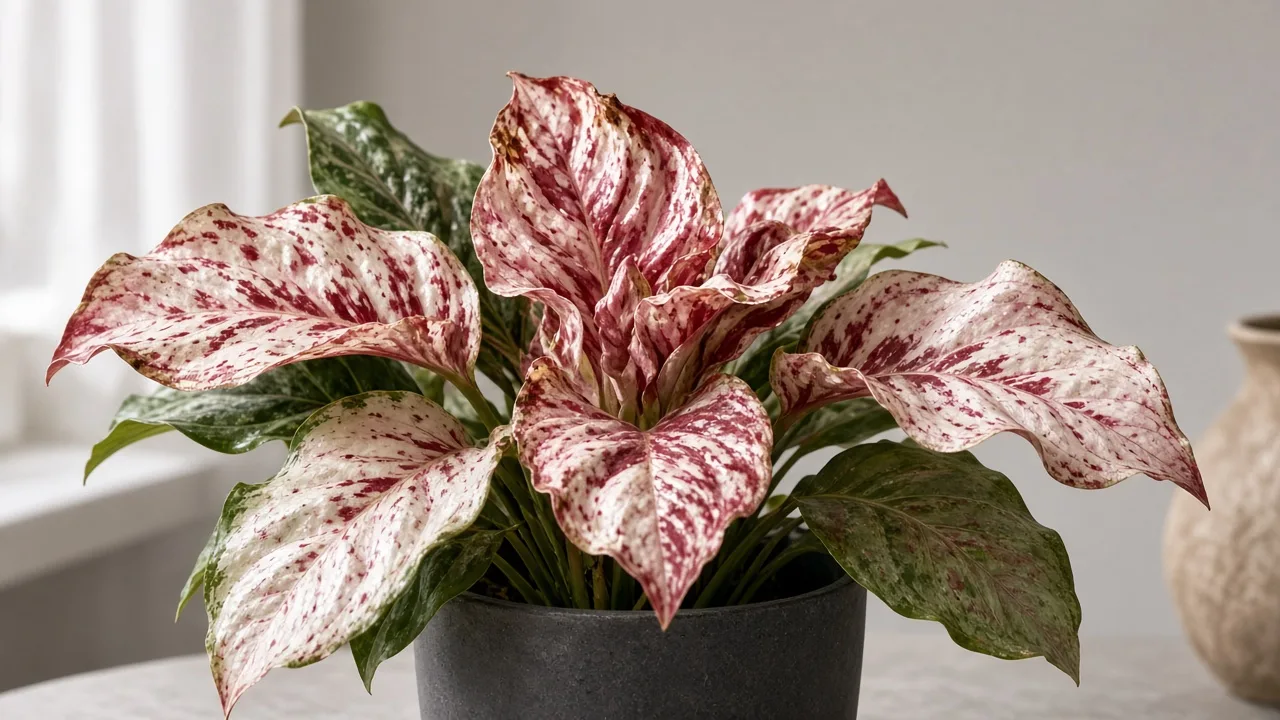
Distorted Leaves on Aglaonema Snow White: Causes, Checks & Fixes
This guide covers distorted leaves on Aglaonema Snow White. See also the general Distorted Leaves guide, watering, and light pages for this plant.
Distorted Leaves on Aglaonema Snow White: Causes, Checks & Fixes
Quick answer
Distorted leaves on your Snow White Chinese evergreen (Aglaonema ‘Snow White’) are rarely a virus indoors. On this high-variegation cultivar with soft rose-white unfurling blades, crinkled or twisted new growth almost always means thrips scarring, mealybugs at the crown, or cold drafts. White sectors scar visibly when thrips feed. See our distorted leaves guide.
First step: magnify the undersides of the newest unfurling leaves. Silvery scars and tiny insects beat repotting guesses.
When to use this page vs other Snow White guides
| What you see | Read next |
|---|---|
| Silvery scars on new leaves | Thrips |
| White cotton in axils | Mealybugs |
| Stipple and webbing | Spider mites |
| Cold window twist | Draft—move off glass |
| Holes in mature leaves | Holes in leaves |
What distorted leaves look like on Snow White
Snow White carries broad glossy leaves splashed rose-white, deep red, and green. Distortion appears on unfurling tissue—white sectors show scars before green.
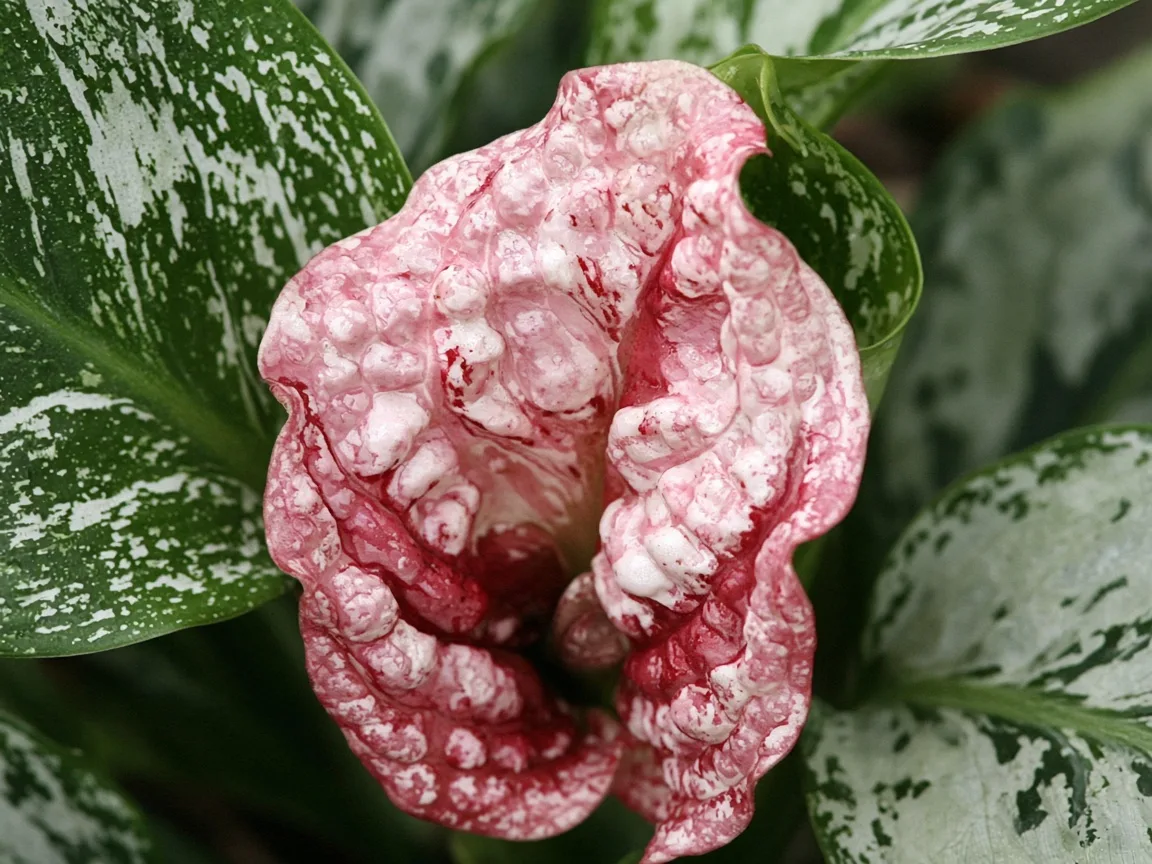
Crinkled rose-white unfurling leaf—thrips scar pale tissue before the blade fully expands.
Thrips scarring (most common):
- Crinkled, puckered, or fan-shaped new leaves that never open flat
- Silvery or bronze scars on rose-white unfurling tissue
- Western flower thrips feed on soft new blades—mature leaves may look normal
- Black frass specks on undersides
- Spreads to collection neighbors
Mealybugs at crown:
- Distorted emerging leaves with white cotton in petiole axils
- Sticky honeydew on new variegated growth
- Crown stunted while older leaves stay flat
Cold draft curl:
- Twisted tips on newest leaves near winter glass or AC vent
- No insect signs after cold night
- Aglaonema is cold-intolerant below about 60°F (15°C)
- Older leaves unaffected
Spider mites in dry air:
- Stippling on new flush with webbing—see spider mites
Check newest crown leaves—distortion with insects = isolate immediately.
Why Snow White gets distorted leaves
Chinese evergreens prefer warm indoor temperatures. Snow White’s soft rose-white new leaves are prime thrips targets—pale tissue shows damage more visibly than on Silver Bay.
Thrips scar rose-white unfurling leaves into crinkled fans. They rasp cells before the blade hardens—permanent distortion.
Cold window glass twists new tips in winter—add sheer curtain; Snow White often sits in bright windows for variegation and catches cold drafts.
Mealybugs in crown density of multi-stem plants—distortion before cotton is obvious.
Herbicide drift is rare on one indoor pot—isolate if neighbors sprayed outdoors.
How to confirm the cause
- New growth only? = thrips, mealybugs, or drafts—not old-leaf nutrients.
- Magnifier on undersides for thrips and frass.
- Cotton in axils? = mealybugs.
- Window proximity + cold night + no pests = draft.
- Neighbor plants distorted? = contagious pest—isolate.
- Tap test over white paper for thrips.
Thrips on white new leaves
Three Snow White-specific details:
Thrips scar rose-white unfurling leaves into crinkled fans—damage shows on white before green.
Cold window glass twists new tips in winter—bright indirect 150–300 fc without glass contact.
Herbicide distortion rare on one pot—rule out pests and drafts first.
First fix for Snow White
Inspect newest undersides for thrips, mites, mealybugs; rinse or isolate if found.
See thrips for silvery scar treatment.
If no pests: move off cold glass and AC vents. Maintain bright indirect light without direct cold glass contact.
Do not repot or fertilize until cause identified.
Step-by-step recovery
- Isolate if thrips or mealybugs confirmed—Snow White’s dense crown spreads pests to shelf neighbors quickly.
- Treat per species guide—thrips need repeated applications across their lifecycle; one spray rarely clears a crinkled flush.
- Move off cold glass and AC vents; maintain bright indirect 150–300 fc so new rose-white tissue hardens without draft curl.
- Rinse newest leaves gently with room-temperature water if frass is visible—avoid misting that leaves blades wet overnight in dim rooms.
- Watch the next two flushes of new growth—flat variegated blades mean success; continued crinkle on rose-white unfurling tissue means active pests or drafts remain.
- Remove only mostly destroyed or pest-harboring leaves—partial green distorted blades still support recovery until clean replacements emerge.
- Do not repot or fertilize during active distortion; fix the cause first, then resume normal watering rhythm when new leaves open flat.
Lookalike symptoms
| Pattern | Check | Likely cause |
|---|---|---|
| Crinkled rose-white new leaves | Thrips underside | Thrips |
| Cotton at crown | Axils | Mealybugs |
| Twist near window | Cold night | Draft |
| Stipple + webbing | Dry air | Spider mites |
| Uniform pale old leaves | Not new only | Pale leaves |
Mistakes to avoid
- Do not repot before pest check.
- Do not assume virus—thrips dominate indoors.
- Do not mist distorted leaves—wet foliage promotes leaf spot.
- Do not place on cold sill for “more light”—use bright indirect away from glass.
Recovery timeline
Scarred tissue does not uncurl—expect flat new leaves within three to five weeks after pest control or draft removal. Two clean flushes confirm resolution.
How to prevent distorted leaves next time
- Quarantine new plants two weeks
- Weekly magnifier check on new rose-white growth
- Away from winter glass and AC vents
- Early thrips treatment
- Even moisture—stressed plants recover slower
How to prevent distorted leaves next time
Inspect newest rose-white unfurling leaves weekly with a flashlight—western flower thrips scar tissue before blades fully expand, and early rinsing stops crinkles from becoming permanent. Quarantine new plants two weeks and check crown axils for mealybugs before shelf placement. Move pots off winter window glass and away from AC vents; cold drafts twist rigid new tips on Snow White faster than on lower shelves in the same room. Avoid broad-spectrum sprays on variegated tissue unless pests are confirmed—soap or oil on sun-stressed white sectors can cause secondary distortion. Keep bright indirect light steady so new growth opens at a normal pace rather than corkscrewing in deep shade.
When to worry
- Distortion on multiple flushes despite treatment
- Crown collapse with wet soil—overwatering
- Mealybugs on entire collection
Related Snow White guides
Conclusion
Distorted Snow White leaves are pest scarring or draft twist on new rose-white growth—inspect unfurling blades before repotting or feeding.