Black Spots on Aglaonema Super White: Disease Checks
Quick answer
Black spots on Aglaonema Super White are dark lesions on broad glossy leaves splashed rosy-white, cherry-red, and green—usually bacterial or fungal leaf spot from wet foliage in stagnant air, or scale honeydew stains. First step: stop overhead watering, dry the leaves, and check whether spots are water-soaked and spreading or dry with raised bumps underneath.
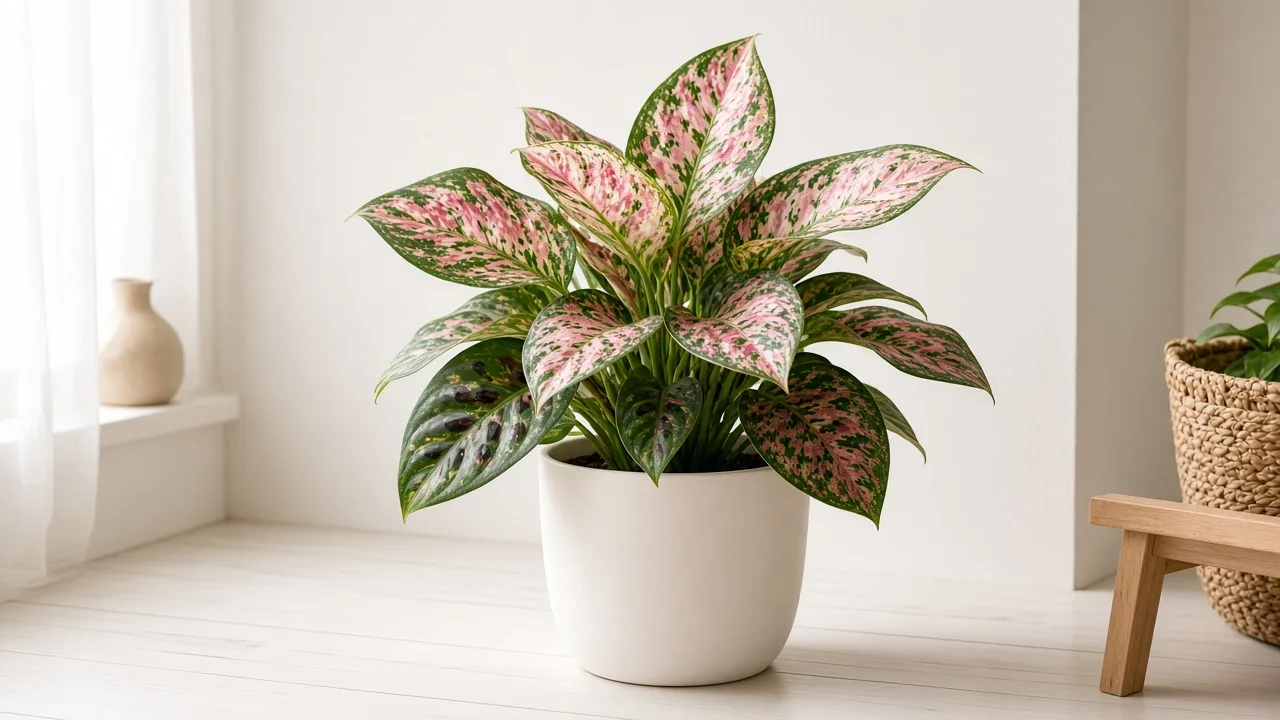
Black Spots on Aglaonema Super White: Causes, Checks & Fixes
This guide covers black spots on Aglaonema Super White. See also the general Black Spots guide, watering, and light pages for this plant.
Black Spots on Aglaonema Super White: Causes, Checks & Fixes
Quick answer
Black spots on Aglaonema ‘Super White’ are dark lesions on broad glossy leaves splashed rosy-white, cherry-red, and green. On this Thai tissue-cultured hybrid, the most common indoor cause is leaf spot fungi or bacteria after foliage stays wet from misting, overhead watering, or stagnant air in a dim room—not a mysterious cultivar disease. See our black spots guide for general symptom science; on Super White, wet pale variegation holds surface water longer than green sectors, so spots often start along veins where pink or white meets green.
First step: stop misting and overhead watering, wipe leaves dry, and check whether spots are water-soaked and spreading or dry with raised bumps underneath.
When to use this page vs other Super White guides
| Pattern | Read next |
|---|---|
| Wet soil, yellow lower leaves | Overwatering |
| Dry bumps along midribs | Scale insects |
| Brown tips only, not spots | Brown tips |
| Mushy crown, sour smell | Root rot |
| Spots with chew holes | Holes in leaves |
This page covers dark spot lesions on foliage. If only leaf margins are crisp, start with brown tips. If the whole leaf is yellowing from the base up, see yellow leaves and overwatering.
What black spots look like on Super White
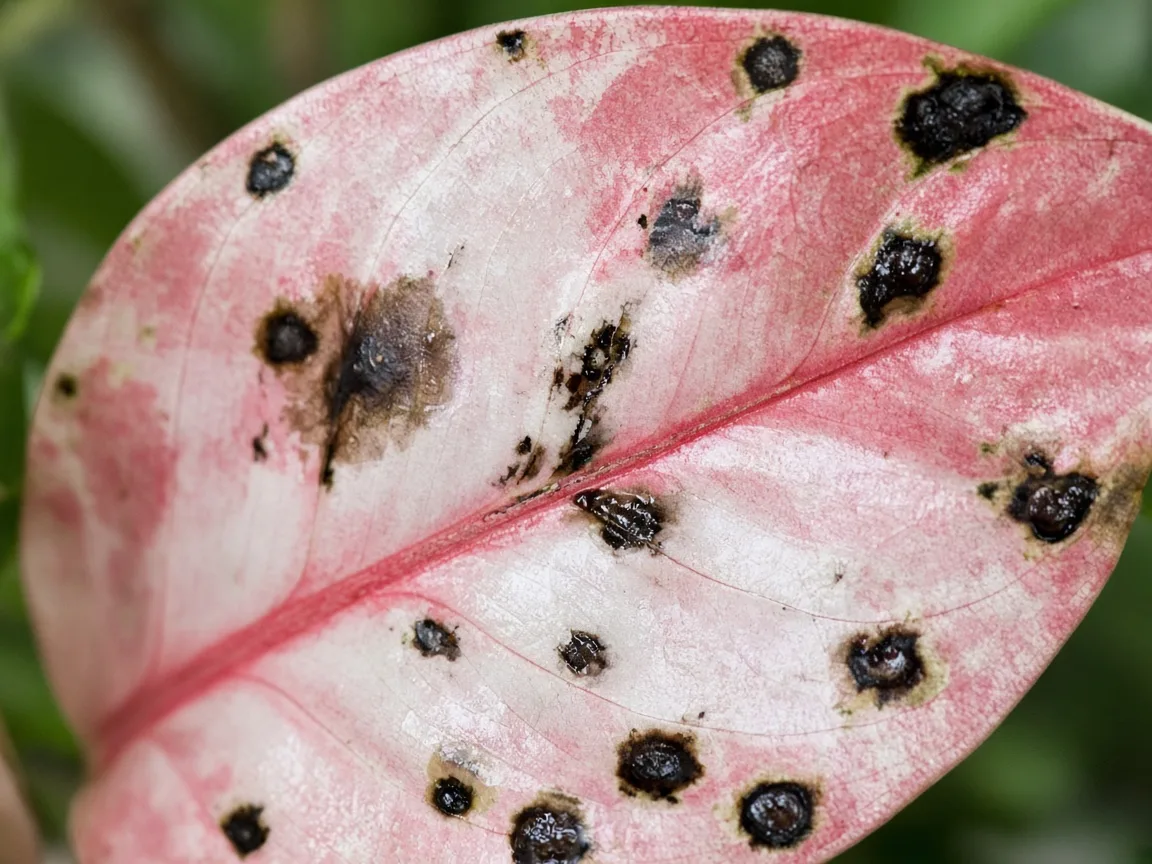
Water-soaked black spots on Super White foliage—compare texture against scale bumps and fluoride burn.
Typical leaf spot on Super White:
- Water-soaked dark brown or black spots that enlarge on lower, older leaves first
- Yellow halos around spots when bacterial leaf spot is active
- Spots concentrated where droplets sat overnight after misting or splash-back from watering
- Newest crown leaves stay clean when the problem is only wet foliage—not crown rot
Scale and pest lookalikes:
- Dry black specks with raised scale bumps along midribs and leaf axils—wipe with alcohol; spots do not spread without the insect
- Sticky residue on leaves or pot rim points to honeydew from scale or aphids, not fungal spot alone
Water-quality and mechanical spots:
- Small dry dots at margins after fluoride or chlorine burn—often progresses from brown tips inward on municipal tap water
- Single dark spot on one leaf after physical damage—monitor only; do not spray fungicide
The rosy-white zones lack chlorophyll, so pale tissue scorches in direct sun and fades in deep shade faster than the green sectors. Spotted tissue does not heal—recovery means clean new leaves emerging from the crown after culture improves.
Why Super White gets black spots indoors
Chinese evergreens are shade-adapted tropical foliage plants that tolerate average household humidity without misting. When growers mist variegated Thai hybrids to “help” pale tissue, water sits on broad blades in low airflow and invites leaf spot diseases that rarely trouble dry-leaf culture.
Super White-specific wet-leaf trap:
- Overhead watering or misting leaves surface water on broad glossy leaves splashed rosy-white, cherry-red, and green.
- Spots start along vein grooves and color boundaries where water drains slowly.
- A heavy pot that dries slowly in dim light keeps lower leaves damp longer—pair spot correction with watering and light review.
Chronic wet mix in low light is a separate problem. If soil stays soggy while spots spread up the plant, read overwatering—crown softness and sour smell mean rot, not cosmetic leaf spot.
How to confirm the cause
Work through these checks in order before buying fungicide:
- Touch the spot — Water-soaked, slightly soft tissue that enlarges over a week suggests active leaf spot. Dry, crusty specks that scrape off with a fingernail suggest scale or dried honeydew.
- Inspect undersides along midribs — Scale insects hide on Aglaonema veins; use a magnifier if spots are pinhead-sized.
- Review watering method — Do you mist, use a shower wand on leaves, or let cachepot saucers hold water? Any yes increases leaf-spot risk.
- Check newest growth — Clean emerging leaves with spotted lowers only points to wet foliage culture, not systemic failure.
- Probe soil at top 2–3 cm — Wet heavy mix in a dim corner means root stress may follow; see overwatering if lowers yellow too.
First fix for Super White
Remove the worst spotted leaves with sterile shears, then switch to soil-only watering when top 2–3 cm of mix dries.
Cut at the petiole base, not through spotted blade tissue—clean cuts reduce secondary infection. Improve airflow by spacing plants and running a fan on low nearby. Never mist aglaonema foliage when spots are present.
If you find scale bumps, isolate the plant and follow scale insects before broad fungicide sprays. Fungicide on pest specks wastes time and stresses variegated tissue.
Step-by-step recovery
After the first fix:
- Week 1 — Water soil only at the base; wipe any splash off leaves. Empty saucers within 30 minutes per watering guide.
- Week 2 — Remove any new heavily spotted lowers. Confirm spots are not spreading onto crown leaves.
- Week 3–4 — Judge by new growth. A clean emerging leaf with firm petioles means culture is working.
- If spots persist on new leaves — Re-check for scale, improve light to bright indirect light (150–300 fc) so mix dries predictably, and confirm the pot has drainage.
Do not fertilize spotted plants until new growth looks healthy for two weeks—feeding stressed roots does not fix leaf spot.
Lookalike symptoms
| What you see | Likely cause | First action |
|---|---|---|
| Water-soaked spots enlarging on lowers | Fungal/bacterial leaf spot from wet leaves | Stop misting; remove worst leaves |
| Dry black specks + raised bumps | Scale insects | Alcohol wipe; isolate |
| Tips brown first, spots at margins | Fluoride burn | Filtered water; not fungicide |
| Yellow lowers + wet mix | Overwatering | Dry-down before leaf-spot spray |
| Irregular holes with frass | Chewing insects | Holes in leaves |
Mistakes to avoid
- Spraying fungicide before confirming spots are not scale or fluoride burn
- Misting to “raise humidity” on a plant that tolerates average indoor air
- Removing every spotted leaf at once on a slow-growing cultivar—keep partially green blades if they still photosynthesize
- Ignoring wet soil while treating foliage—root stress weakens new growth and invites repeat infection
Recovery timeline
Dry-leaf culture typically shows clean new leaves within two to four weeks. Severe outbreaks that required removing several lower leaves may need one full growth flush before the plant looks full again. Super White grows slowly compared with green ‘Maria’ types—judge success by crown health, not speed.
Signs of improvement: Spots stop enlarging; new leaves emerge without lesions; petioles stay firm.
Signs of escalation: Spots on multiple new leaves within a week; mushy crown; sour soil smell—shift to root rot protocol same day.
How to prevent black spots on Super White
- Water soil only when top 2–3 cm of mix dries; direct water at the base, not over blades
- Give bright indirect light (150–300 fc) so the pot dries on a predictable schedule—see light guide
- Use well-draining mix per soil guide; avoid oversized pots that stay wet in corners
- Quarantine new plants two weeks; inspect undersides before shelf placement
- Skip misting entirely—improve humidity with a pebble tray if needed, not wet leaves
Related Aglaonema Super White guides
Conclusion
Black spots on Super White are wet-leaf and airflow problems first on broad glossy leaves splashed rosy-white, cherry-red, and green. Dry the foliage, fix soil-only watering at top 2–3 cm, and let new crown leaves emerge clean—reserve fungicide for confirmed spreading spot after pests and water quality are ruled out.