Distorted Leaves on Aglaonema Super White: Pest & Draft
Quick answer
Distorted leaves on Aglaonema Super White are crinkled or twisted new growth on broad glossy leaves splashed rosy-white, cherry-red, and green—usually thrips scarring, mealybugs at the crown, or cold draft curl on unfurling blades. First step: inspect newest leaf undersides and crown axils for pests.
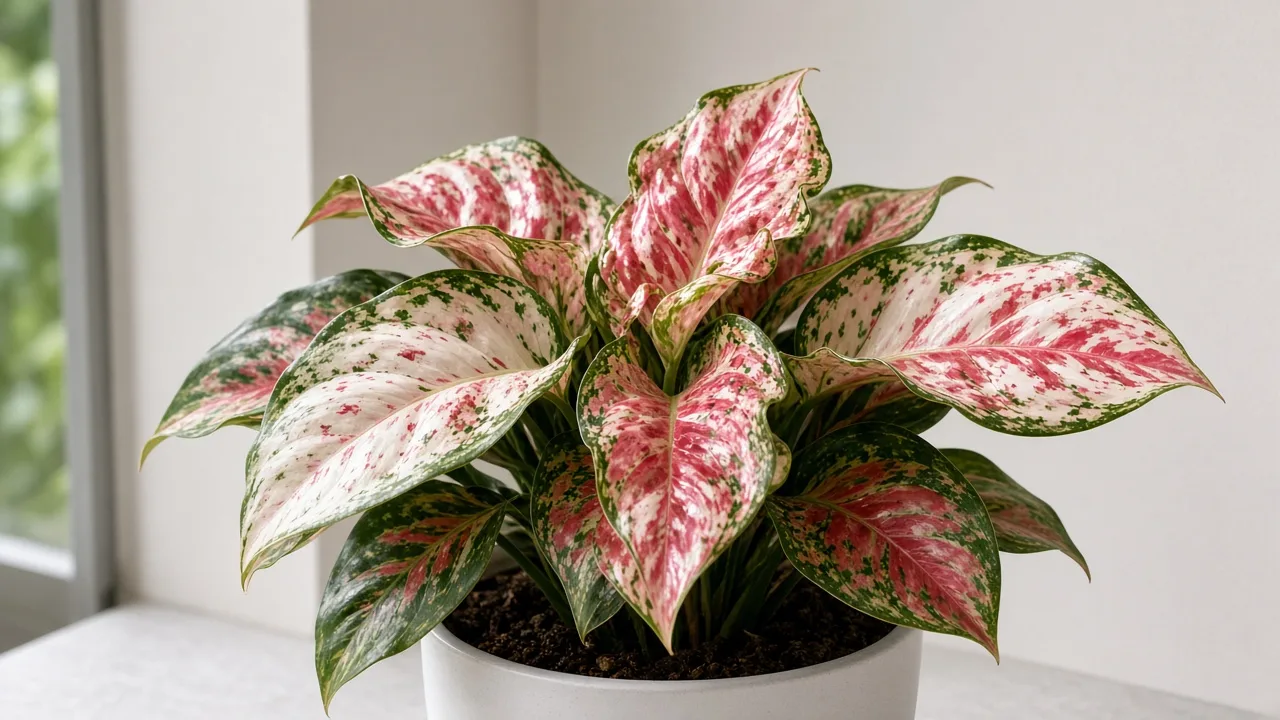
Distorted Leaves on Aglaonema Super White: Causes, Checks & Fixes
This guide covers distorted leaves on Aglaonema Super White. See also the general Distorted Leaves guide, watering, and light pages for this plant.
Distorted Leaves on Aglaonema Super White: Causes, Checks & Fixes
Quick answer
Distorted leaves on Aglaonema ‘Super White’ mean crinkled, puckered, or twisted new growth on broad glossy leaves splashed rosy-white, cherry-red, and green. On this cultivar, distortion almost always hits unfurling crown leaves, not old mature blades—pointing to thrips scarring, mealybugs at the crown, cold draft curl, or spider mite stipple on the new flush. See our distorted leaves guide for general mechanics.
First step: inspect the newest leaf undersides and crown axils for thrips, mealybugs, or mite webbing before repotting or feeding.
When to use this page vs other Super White guides
| Pattern | Read next |
|---|---|
| Silvery scars on new leaves | Thrips |
| White cotton in axils | Mealybugs |
| Stipple + fine webbing | Spider mites |
| Chew holes, not crinkle | Holes in leaves |
| Cold window twist only | Draft stress—move off glass |
What distorted leaves look like on Super White
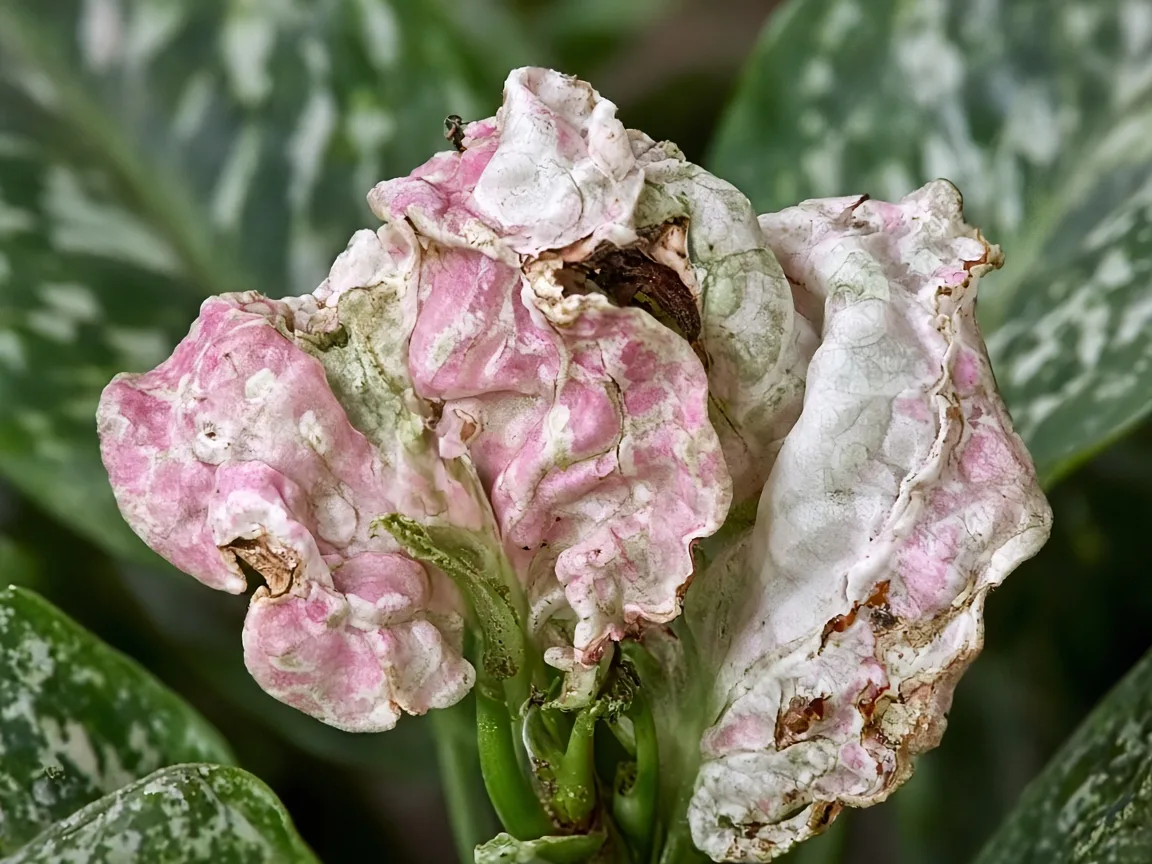
Crinkled new growth on Super White—check crown undersides for thrips or mealybugs before assuming virus.
Thrips scarring (common indoors):
- New leaves emerge crinkled, puckered, or with silvery streaks
- Thrips scar tissue as leaves unfurl—damage is permanent on that leaf
- Shake a distorted leaf over white paper; tiny slender insects or black specks confirm
Mealybugs at crown:
- Distorted emerging leaves with white cottony clusters in petiole axils
- Sticky honeydew on new growth; ants may appear on pot rim
Cold draft curl:
- Twisted tips on rigid new blades near winter window glass or AC vents
- No pests found; distortion on side facing cold source only
- Aglaonema is cold-intolerant below about 13°C (55°F)
Spider mite stipple on new flush:
- Fine pale dots with slight cupping in dry heated air
- Webbing at crown in advanced cases—see spider mites
The rosy-white zones lack chlorophyll, so pale tissue scorches in direct sun and fades in deep shade faster than the green sectors. Scarred unfurling tissue does not flatten—recovery means the next leaves open normally after the cause is removed.
Why Super White gets distorted leaves
Indoor plant pests concentrate on soft new growth where cell walls are thin. Super White pushes new spears slowly from the crown, giving thrips and mealybugs days to scar tissue before the blade fully expands.
Crinkled rosy-white unfurling trap:
- Pale new leaves are easiest for thrips to scar during unfurling.
- Draft curl on long petioles near floor vents twists tips without pests—move pot off cold airflow.
- Mealybugs hide in crown axils where broad petioles meet—check white fluff before assuming virus.
Viral mottle is uncommon indoors on purchased tissue-cultured stock. Confirm pests and drafts first.
How to confirm the cause
- Inspect newest leaves with a magnifier — Thrips are slender and fast; mealybugs are obvious white clusters.
- Paper tap test — Shake distorted leaf over white paper; thrips and mite debris appear as moving specks.
- Check temperature — Leaf side near window glass on winter nights—cold curl vs pest scarring.
- Review neighbors — New plants on the same shelf may share pests.
- Probe top 2–3 cm moisture — Severe root stress can distort growth, but pests on new leaves only are more common—rule out overwatering if whole plant is soft.
First fix for Super White
Inspect newest leaf undersides for thrips, mites, or mealybugs; rinse crown gently in the sink and isolate if you find active pests.
See thrips for silvery scar patterns and repeat treatment. For mealybugs, dab alcohol on cotton clusters per mealybugs.
If no pests are found, move the pot off cold window glass and AC vents—Chinese evergreens need stable warm room temperatures.
Step-by-step recovery
- Day 1 — Identify pest or draft; one targeted fix first.
- Week 1 — Repeat pest treatment per species guide if needed; keep plant isolated.
- Week 2–4 — Watch the next unfurling leaf. Normal expansion means success; repeat distortion means missed pests.
- Prune only heavily destroyed leaves — Partially green distorted blades still photosynthesize.
Do not repot or fertilize on the same day as pesticide application.
Lookalike symptoms
| Pattern | Cause |
|---|---|
| Silvery crinkle on new leaves | Thrips |
| White fluff + twist | Mealybugs |
| One-sided twist near glass | Cold draft |
| Holes + frass | Caterpillars |
| Whole plant soft + wet mix | Overwatering |
Mistakes to avoid
- Assuming virus and discarding the plant before pest inspection
- Broad fungicide sprays on pest-scarred tissue
- Ignoring new plants on the same shelf
- Repotting distorted plants before pest clearance
Recovery timeline
After pest removal or draft correction, the next one to two new leaves should open normally within three to five weeks. Super White grows slowly—allow a full crown flush before judging. Scarred leaves remain crinkled permanently.
Prevention
- Quarantine new plants two weeks; inspect crown weekly
- Keep away from winter window glass and AC vents
- Maintain average humidity; misting is unnecessary and can worsen leaf spot
- Treat thrips early when stippling first appears
Related Aglaonema Super White guides
Conclusion
Distorted Super White leaves are pest scarring or draft twist on new growth—inspect unfurling crown leaves before repotting or feeding. The next clean spear tells you whether treatment worked.