Alocasia Frydek Repotting Guide: When, How, Pot Size
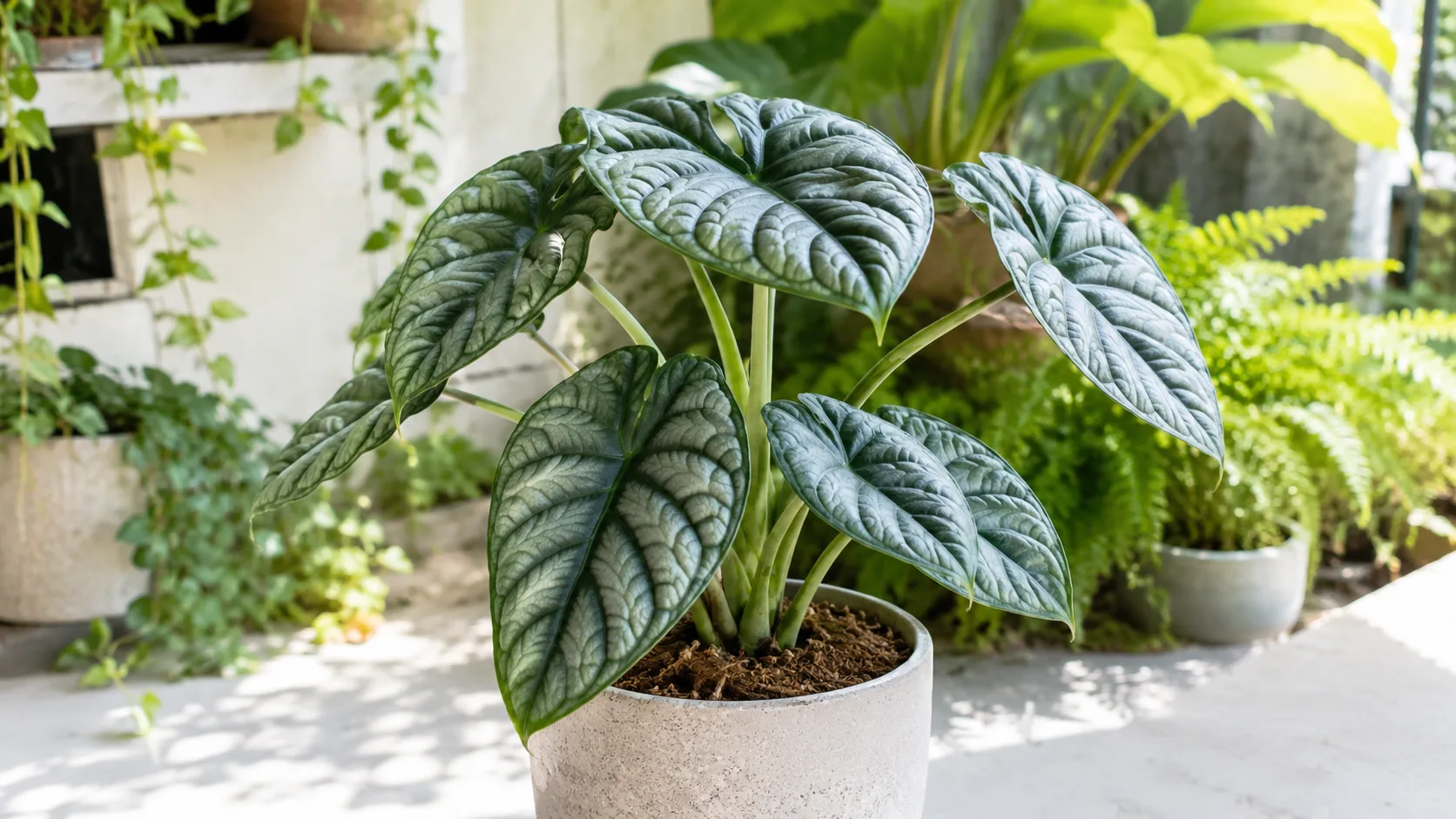
Alocasia Frydek Repotting Guide: When, How, Pot Size, and Recovery
Alocasia Frydek Repotting Guide: When, How, Pot Size, and Recovery
Alocasia Frydek repotting is a corm decision, not a calendar chore. Alocasia micholitziana ‘Frydek’ — the jewel alocasia sold as Green Velvet Alocasia — stores energy in a peanut-sized underground corm while its velvet arrow leaves transpire at a moderate pace. Disturb roots at the wrong time or into an oversized wet pot, and you trade a twenty-minute job for weeks of wilting, yellow leaves, or root rot. Done in spring with one modest pot upgrade and the same chunky aroid mix the plant already likes, repotting resets exhausted substrate and gives you a clean chance to divide offsets.
This guide covers when Frydek actually needs repotting, why it differs from fast trailers like Heartleaf Philodendron, the best season, pot size and material, a numbered step-by-step, corm and offset handling, post-repot recovery, mistakes that trigger transplant shock, and a pet-safety note every Frydek owner should know.
How this guide was reviewed: Recommendations were checked against Kew Plants of the World Online, NC State Extension, the Royal Horticultural Society, Missouri Botanical Garden, UW Extension, and ASPCA references, cross-read with LeafyPixels Alocasia Frydek plant data, and reviewed by the LeafyPixels Review Board — a panel with horticultural editing and botanical reference experience (July 2026).
Why Frydek Repotting Is Different From Generic Alocasia Advice
Frydek is a compact jewel alocasia, not a floor-sized A. macrorrhizos or a trailing vine. Kew Plants of the World Online places A. micholitziana in the Philippines (Luzon), where it grows as a subshrub in wet tropical forest understory — shallow organic litter over mineral soil that drains fast after rain and never stays logged. That habitat explains why repotting into dense peat-heavy mix or a pot two sizes too large fails so predictably indoors.
NC State Extension describes the genus as tuberous perennials preferring a shaded site with slightly acidic, moist, well-drained, humus-rich soil and lists Alocasia micholitziana ‘Frydek’ specifically — narrow velvet dark-green leaves with bright white veins. Frydek’s root mass stays modest relative to leaf size, and the plant tolerates, even prefers, a slightly snug pot compared with fast rhizomatous alocasias. In our observation at 60% humidity, Frydek in terracotta dried to repot-ready moisture about two days faster than in glazed ceramic — a practical difference worth noting when you choose your pot material.
The corm sits at or just below the soil surface. It is the plant’s battery through dormancy and after leaf drop. Teasing apart every root hair or bare-rooting the ball strips fine absorptive tissue the corm must regrow before new leaves unfurl. University of Wisconsin Extension on healthy houseplant roots notes that healthy roots are white or tan and firm — your inspection target at repot time. Damaging those roots without cause is the main avoidable trigger for post-repot collapse on Frydek.
Velvet leaf texture adds a practical wrinkle: keep water on the soil line during and after repot, not on the foliage. Wet velvet leaves in stagnant air invite fungal spotting and do nothing to rehydrate disturbed roots.
Native Luzon forest litter holds moisture briefly then re-aerates. Mimicking that indoors means a chunky, fast-draining aroid mix — not garden soil, not straight multipurpose potting compost. The Missouri Botanical Garden Plant Finder summarizes Alocasia generally as wanting organically rich, moist, well-drained soils — the same tension every good repot mix solves. Pair that with a pot only one size larger and drainage holes that never sit in standing water.
When to Repot Alocasia Frydek
Repot when the root zone or substrate fails, not because a date arrived. Inspect each spring while the plant is pushing new growth; many healthy Frydeks need a full repot every 12 to 24 months, but a settled plant in a 10–15 cm pot with fresh mix behavior can go two full growing seasons.
Signs the root zone actually needs upgrading
Schedule a full repot — not just top-dressing — when two or more of these appear during active growth:
- Roots circling the bottom of the ball or emerging from drainage holes
- Water runs straight through without wetting the root mass, then leaves droop within days anyway
- Mix dries at the surface in under a day while the lower third stays damp for a week — collapsed pore structure
- New leaves unfurl smaller than the previous batch despite good light and watering
- Sour-smelling or salt-crusted mix, chronic fungus gnats, or mold on soil
- Emergency: mushy roots, soft petioles at soil level, or foul odor — repot immediately regardless of season after trimming rot (see root rot guide)
The Royal Horticultural Society Alocasia growing guide flags fast post-watering dry-down as a pot-bound signal — compost that cannot hold moisture because roots replaced substrate.
When you can wait another season
A Frydek with firm corm, steady new leaves at normal size, and mix that accepts water evenly does not need repotting just because spring arrived. Waiting is smart when:
- The plant was repotted within the last ten months and growth is strong
- You are correcting other stressors — recent move, pest treatment, light change — and stacking repot would add repotting stress
- Scraping the top 2–3 cm of mix and replacing it with fresh aroid blend refreshes the upper root zone without a full upgrade
Top-dressing alone is enough when only the surface is salt-crusted but roots are white and water soaks in normally. If dry-down stays extreme after top-dressing, upgrade to a full spring repot.
Best Time of Year to Repot Frydek
Mid-spring through early summer is the safest window — after dormancy breaks and new spears appear. The RHS recommends checking for overcrowded roots and repotting in spring when necessary, using fresh peat-free compost with added grit for drainage. Alocasias also need a cooler, drier winter above 10 °C / 50 °F to rest; repotting into fresh wet mix during that low-metabolism phase raises corm rot risk sharply.
Spring active growth vs emergency winter repot
In a climate-controlled home with grow lights, phenology matters more than the calendar: repot when you see active leaf and root growth, not when the pot looks empty after dormancy. If winter repot is unavoidable — active rot, cracking pot from root pressure, contaminated nursery mix — keep the plant warm (18–26 °C / 65–80 °F), in bright indirect light, water conservatively, skip fertilizer for six weeks, and accept likely leaf drop. Do not discard a dormant-looking pot; a firm corm can push new growth in spring.
Choosing Pot Size, Material, and Drainage
Pot choice controls how long mix stays damp around the corm — often more important than the repot day itself.
Why one size up protects the corm
Move up only 2–5 cm (1–2 inches) in pot diameter. The RHS advises a pot only about 5 cm (2 in) larger each repot to avoid overpotting problems. Extra soil volume holds moisture the small root system cannot use, leaving the corm in anaerobic conditions — the classic post-repot overwatering setup even if you water carefully. Position the rootball so the top sits just below the rim with room to water without overflow. Every pot needs open drainage holes; never let a saucer hold standing water more than ten minutes.
Terracotta, plastic, or glazed ceramic for Frydek
Terracotta breathes and pulls moisture through walls — a useful safety net if you tend to overwater or keep Frydek in a humid bathroom. Plastic holds moisture longer, which suits dry indoor air or growers who underwater. Glazed ceramic behaves like plastic but adds weight for top-heavy leaf fans. Match material to your watering rhythm: terracotta in humid rooms, plastic in dry heated flats. Wear gloves when handling; NC State and the RHS both note irritant sap in Alocasia.
Soil Mix at Repot Time
Do not repot Frydek into straight houseplant compost. Use the same chunky aroid blend from the Alocasia Frydek soil guide: roughly equal parts moisture base (coco coir or peat-free potting mix), aerator (perlite or pumice), and structural chunk (orchid or pine bark), plus a small amount of horticultural charcoal. The RHS suggests peat-free houseplant compost with about one part horticultural grit to three parts compost as a minimum drainage upgrade.
At repot, replace all exhausted mix — not just the sides. Old peat that has collapsed into a fine sponge is why water bypass and corm rot return within months. If your room is very humid or you use plastic pots, lean bark and perlite heavier; if terracotta and dry air crisp leaf edges, add slightly more coir at the next repot. Sterilize tools; fresh dry mix gives a clean start.
Step-by-Step: How to Repot Alocasia Frydek
Plan 30–45 unhurried minutes. Gather new pot, fresh mix, clean scissors, chopstick, tray, gloves, and optional small pots for offsets.
1. Water lightly 12–24 hours before. Moist — not soggy — mix holds the ball together and cuts transplant shock. Do not soak immediately before lifting; wet heavy mix tears more easily.
2. Prepare the new pot. Add bottom mix so the crown will sit about 1 cm below the rim with the corm at or just above the soil surface. Confirm drainage is open.
3. Unpot gently. Tip sideways, support the base, squeeze a flexible nursery pot or run a knife around terracotta — never pull by petioles. Shake off loose old mix only; do not wash every root.
4. Inspect and trim. White, cream, or tan firm roots stay. Cut mushy brown tissue back to clean edges with sterile shears. Lightly dust cuts with cinnamon if available, though some growers note high concentrations may slow root initiation — a light dusting on fresh cuts is the safer approach.
5. Backfill and settle. Center the plant, keep the crown above soil — burying it is a common stem-rot trigger. Work mix between roots with fingers; use a chopstick to close air pockets without compacting.
6. Water through once. Water until drainage runs free, let the pot drain completely, empty the saucer. Discard cache-pot standing water.
Prepare, unpot, and inspect roots without bare-rooting
Bare-rooting strips fine root hairs that absorb water for weeks after repot. Tease only the bottom and outer quarter where roots circle tightly. If rot is extensive, follow the root rot recovery path — rinse only when removing contaminated soil, then repot shallowly into fresh mix.
A healthy Frydek corm feels firm and dense, smells earthy (not sour), and shows cream or pale-tan roots. A stressed corm feels soft or spongy, may have dark patches, and can smell of decay. If the corm is still firm despite leaf loss, the plant will likely recover with care.
Set crown depth and backfill correctly
The corm and stem junction should sit at or slightly above the finished soil line. When in doubt, err high. Frydek recovers from slightly exposed corm tissue more reliably than from buried crowns in wet mix.
Handle offsets and firm corms at repot
Spring repot is the practical window to separate offsets or twist off firm tan corms for propagation. Leave at least half the corms on the parent unless the plant is in decline — they are dormancy reserves. Do not slice into a corm to test viability; that wound invites rot.
Post-Repot Recovery: First Four to Six Weeks
Place the plant in bright indirect light at 18–26 °C (65–80 °F) with humidity at or above 60 %. Avoid direct sun for two weeks. Water when the top 2–3 cm of mix dry — consistent moisture for new root hairs, never soggy crown. Bottom watering for the first two weeks is fine if it keeps velvet leaves dry.
Recovery timeline:
- Week 1–2: One or two oldest leaves may yellow and drop as the corm redirects energy to root regrowth — normal, not failure. Keep humidity high, light bright but indirect. Water only when the top 2–3 cm dry.
- Week 3–4: New spear emergence is the recovery signal. If you see a fresh unfurling leaf at normal size, the repot succeeded. Continue withholding fertilizer.
- Week 5–6: Resume fertilizer at half-strength of a balanced liquid feed only after a new leaf opens fully. If the plant still looks stalled, check for oversized pot, dense mix, or crown buried too deep before feeding.
Skip fertilizer for 4–6 weeks. Fresh roots are salt-sensitive; early feeding shows up as brown tips and stalled spears. Resume at half strength only after a new leaf opens at normal size.
If severe wilting persists past two weeks, check for oversized pot, dense mix, or crown buried too deep before repotting again.
Common Repotting Mistakes on Frydek
Overpotting — mix stays wet for days, yellowing spreads. Downsize or improve airflow; do not water on a calendar.
Winter repot without cause — leafless pot with softening corm. Stop watering, keep warm and bright, wait for spring.
Bare-rooting or aggressive root pruning — whole plant wilts. High humidity, low light, patience; do not repot again.
Crown buried — soft black base. Unpot, cut to clean tissue, repot shallow.
Fertilizing week one — brown tips, no new growth. Flush with plain water, withhold feed six weeks.
Garden soil or heavy peat alone — water pools, rot within days. Full repot into chunky aroid mix immediately.
Ignoring pet safety during repot — discarded leaves or spilled mix accessible to pets. Alocasia Frydek contains insoluble calcium oxalate crystals that are toxic to cats and dogs. Clean up trimmings and spilled mix promptly; store removed leaves out of reach.
Pet Safety and Repotting
Alocasia Frydek is toxic to cats and dogs and also poses a risk to humans if ingested. Every part of the plant — leaves, stems, roots, corm — contains insoluble calcium oxalate crystals that cause immediate oral irritation, drooling, vomiting, and difficulty swallowing if chewed. The ASPCA classifies Alocasia spp. as toxic to both cats and dogs.
During repotting, the risk is highest because you handle roots, trim leaves, and leave spent mix and trimmings within reach. Take these precautions:
- Wear gloves when handling the root ball. NC State Extension notes contact dermatitis risk from alocasia sap, and the RHS recommends gloves for all handling.
- Discard trimmings immediately in a sealed bag or outdoor bin — do not let leaves or roots sit on a counter where a pet can reach them.
- Wipe down the pot and work surface after repotting to remove sap residue.
- Keep the repotted plant out of reach for the first week while it adjusts; pets investigating new soil may chew leaves or dig in fresh mix.
- Contact your veterinarian or ASPCA Animal Poison Control promptly if a pet chews any part of the plant — do not wait for symptoms to worsen.
When to use this page vs other Alocasia Frydek guides
- Alocasia Frydek overview — Whole-plant context before a deliberate repot event.
- Alocasia Frydek soil — Full mix recipes and pH; use alongside this guide at repot time.
- Alocasia Frydek watering — Post-repot moisture rhythm and corm-safe checks.
- Alocasia Frydek propagation — Offset and corm division detail after repot exposure.
- Root rot on Alocasia Frydek — Emergency unpot and trim protocol.
- Transplant shock and repotting stress — When leaves drop despite careful technique.
Related Alocasia Frydek guides
- Alocasia Frydek overview
- Alocasia Frydek watering
- Alocasia Frydek light
- Alocasia Frydek soil
- Alocasia Frydek fertilizer
- Alocasia Frydek propagation
- Root rot on Alocasia Frydek
- Alocasia Frydek problems
Conclusion
Repot Alocasia Frydek with restraint: spring active growth, one pot size up, chunky aroid mix from the soil guide, crown at soil level, and no fertilizer for four to six weeks. The corm — not the calendar — decides timing; firm roots, normal-sized new leaves, and even dry-down mean wait. Disturb roots gently, keep velvet leaves dry, watch for a new spear rather than panicking over one dropped old leaf, and keep trimmings out of pet reach — every part of this plant contains calcium oxalate crystals toxic to cats and dogs. A careful spring repot resets substrate for two more growing seasons and is often the fastest path out of chronic slow growth when mix has broken down.