Drooping Leaves on Alocasia Frydek: Corm & Pot Checks
Quick answer
Drooping leaves on Alocasia Frydek usually mean the underground corm is not delivering water to its tall velvet petioles correctly—most often from oversaturated chunky mix in an oversized pot, but also from a dry root ball, winter dormancy, low humidity below 60%, or cold drafts. First step: lift the pot and check whether the top 2–3 cm of mix has dried before you water again.
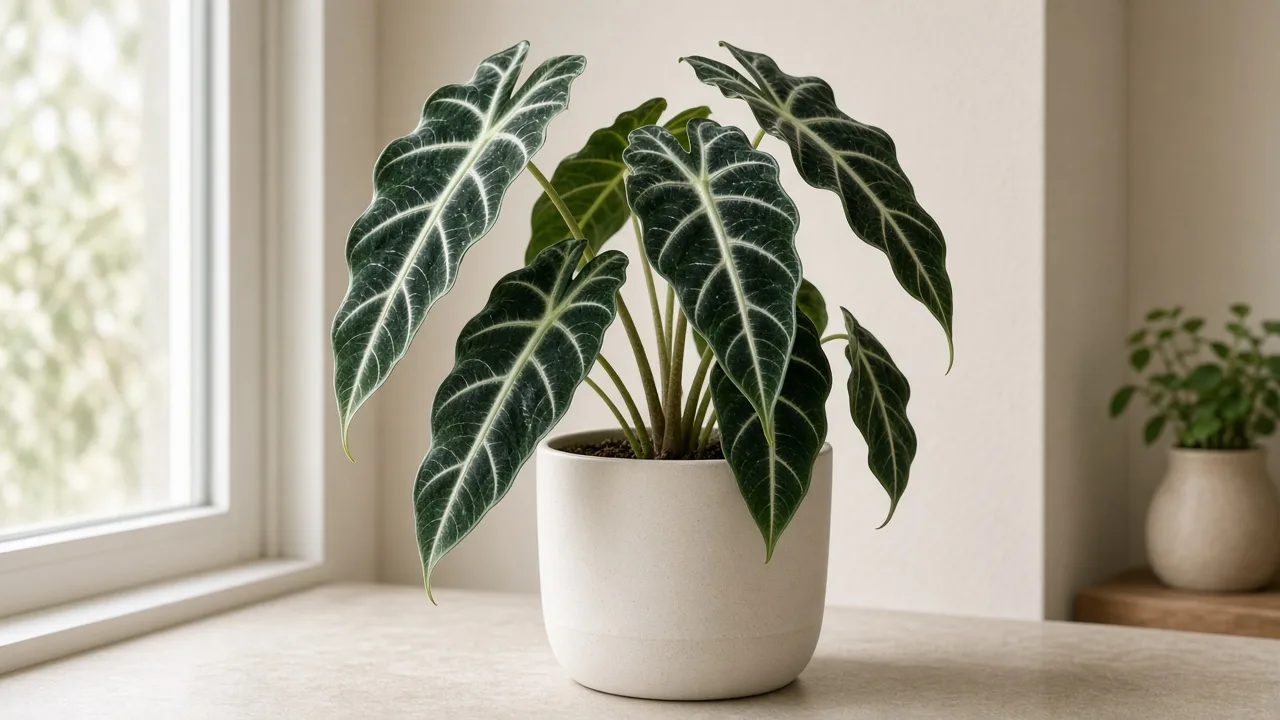
Drooping Leaves on Alocasia Frydek: Causes, Checks & Fixes
This guide covers drooping leaves on Alocasia Frydek. See also the general Drooping Leaves guide, watering, and light pages for this plant.
Drooping Leaves on Alocasia Frydek: Causes, Checks & Fixes
Quick answer
Drooping leaves on Alocasia Frydek mean the large velvet arrow blades have lost turgor and hang from their tall petioles instead of standing at the usual upright angle. That sag almost always traces to the corm and root zone—not because the plant automatically needs more water. For how turgor loss works on houseplants in general, see our drooping leaves hub. On Frydek, lift the pot and check whether the top 2–3 cm of mix has dried before you pour another drink.
First step: lift the pot and push your finger or a chopstick into the upper 2–3 cm of mix. A light, dry pot with limp velvet leaves calls for measured watering. A heavy, wet pot with drooping lower leaves means root stress or rot—stop watering and check corm firmness before you add more water.
When to use this page vs other Frydek guides
- Wilting — overlapping symptom page; use either for limp foliage, but this guide emphasizes bending velvet petioles and sagging arrow blades rather than rapid whole-plant collapse
- Underwatering — use when the top 2–3 cm of mix is dry and the pot feels light
- Overwatering — use when mix stays dark and damp for days
- Root rot — use when the corm is soft, petioles are mushy, or roots smell sour
- Watering guide — use for long-term top-layer dry-down rhythm after drooping stabilizes
What drooping leaves look like on Alocasia Frydek
On a healthy Frydek, dark green velvet arrow leaves with bright white veining sit upright on stiff petioles in a 40–60 cm fan. The plant looks architectural even with only four or five leaves. Drooping changes that silhouette—and the pattern tells you which branch to follow.
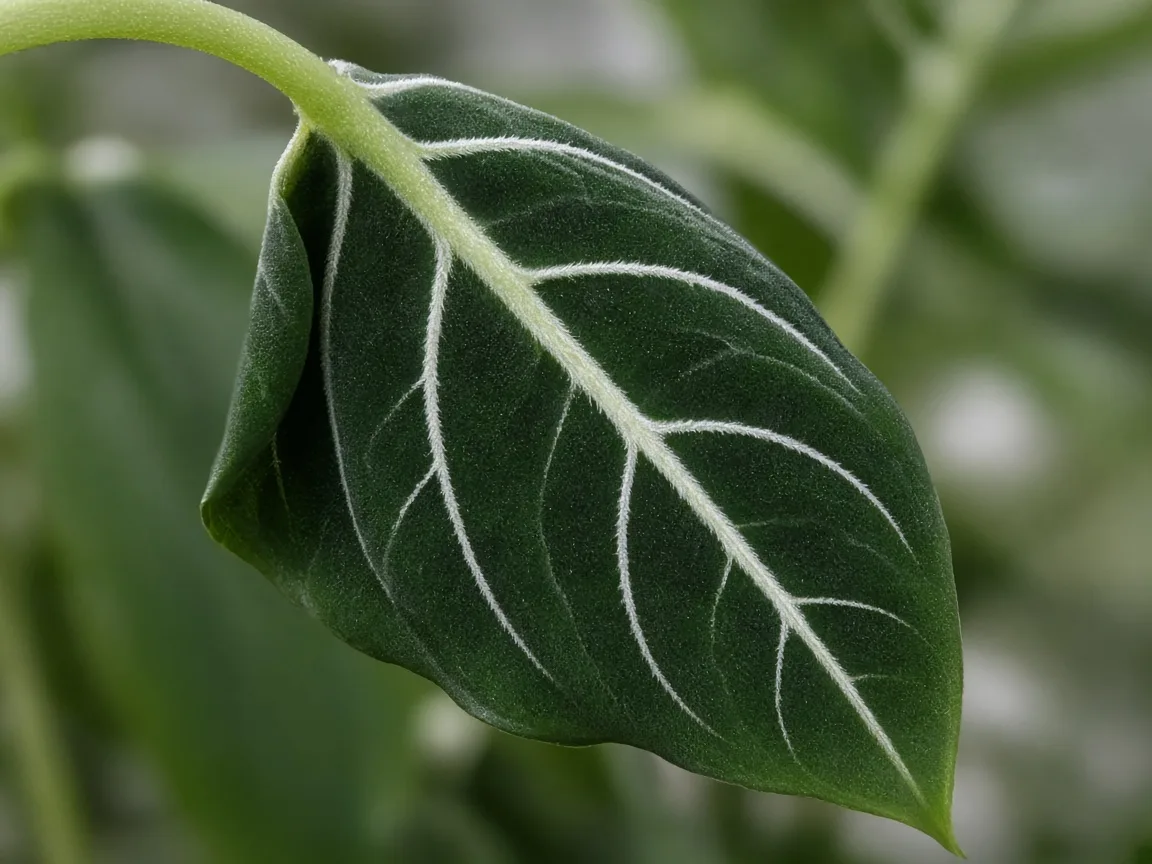
A limp velvet petiole and hanging arrow blade on Alocasia Frydek—wet corm roots in an oversized pot are a more common cause than simple thirst.
Wet-soil droop is the most common misread on this species. Lower velvet leaves hang limp while the mix stays dark, cool, and heavy. Yellowing often starts on bottom leaves first. White veining may dull to flat gray-green as stress builds. You may see fungus gnats near the soil surface or a faint sour smell from drain holes. The corm below the surface may feel soft if rot is advancing.
Dry-soil droop shows slightly curled or limp velvet blades on a lightweight pot. The surface mix is pale and crumbly. Leaves feel thinner but still firm—not mushy. Frydek’s larger leaf surface loses water faster than compact jewel alocasias, so drought stress shows up visibly when a bright cabinet or warm window dries the pot within a few days.
Sudden whole-plant flop within a day or two usually points to cold draft, repot shock, or rapid root failure—not gradual thirst. A cabinet plant drooping after an AC vent blew on it overnight is a classic cold-stress pattern. Droop that appears right after Alocasia Frydek repotting often follows root disturbance rather than a calendar watering mistake.
Gradual droop over weeks on an otherwise moist pot in very dim light can reflect insufficient light weakening petioles. Frydek tolerates slightly lower light than outdoor sun, but prolonged deep shade below about 5,000 lux can produce soft, leaning velvet foliage that looks like droop even when soil moisture is adequate.
Why tall velvet petioles sag differently on Frydek
Frydek is larger and more vigorous than Alocasia Black Velvet when humidity stays above 60%, but that same size works against the plant in dry air or wet soil. Each arrow blade has a broad velvet surface that transpires heavily—so low humidity can make outer leaves droop while the corm and roots are technically fine. That pattern is easy to misread as underwatering.
The fuzzy trichomes that give Frydek its matte finish also trap water droplets. Velvet alocasia leaves should not be misted directly—water sits in the leaf hairs, encourages fungal spotting, and can leave permanent marks. If your drooping plant sits beside a mister, fix humidity with a humidifier instead and cross-check the low humidity guide.
Frydek stores reserve energy in an underground corm. When roots fail in saturated mix, the corm cannot push water up long petioles even though the soil feels wet. Plants in waterlogged soil may die because roots cannot absorb oxygen—and alocasias are especially prone to root rot from overwatering or poorly drained soil.
Dormancy droop vs crisis droop on the corm
Late autumn and winter bring a Frydek-specific pattern that panics new owners: the plant drops leaves until the pot looks empty, and every remaining blade hangs limp before it falls. That can be dormancy, not emergency wilt. Alocasias can go dormant in winter, keeping cooler and drier while the corm rests below the surface.
Dormancy droop develops slowly over weeks in cool, dim conditions. The corm stays firm when you press gently at the soil line. Mix dries slowly because the plant uses little water. Lower leaves yellow and drop one by one; you may end up with bare mix and a living corm. Reduce watering to every 2–4 weeks and stop fertilizer—do not flood an empty-looking pot trying to force growth.
Crisis droop appears faster, often with wet soil, sour smell, or a soft corm. Petioles may feel mushy at the base. Multiple leaves collapse within days while mix stays damp. That is root failure or cold shock—not normal dormancy. See root rot if the corm yields to pressure.
Why Alocasia Frydek gets drooping leaves
Overwatering and root failure (most common serious cause)
Frydek needs moist but well-drained soil in bright indirect light. When mix stays saturated—especially in cool weather, an oversized pot, or a cachepot with standing water—roots suffocate and rot. Damaged roots cannot take up water, so velvet leaves lose turgor despite wet soil. Wilting with moist soil often means rotting roots cannot take up water.
Winter overwatering is particularly dangerous because Frydek uses little water when growth slows. The RHS advises reducing watering to a minimum in winter and keeping temperatures above 15 °C (59 °F). Overwatering in winter is the most common alocasia killer.
Underwatering during active growth
In hot summer growth inside a bright cabinet, Frydek can dry completely within a week. Extended dry spells dehydrate the corm and velvet leaves. Foliage wilts on long petioles. Unlike rot, stems usually stay firm but may look slightly less turgid, and the pot feels very light. This pattern often follows a missed watering, a heat wave, or a very chunky mix that dried faster than expected.
Low humidity in dry homes
Frydek targets 60–80% humidity. Below about 40%, the large velvet leaf surface loses moisture faster than roots can replace it—outer blades droop and edges crisp before the whole plant looks thirsty. Alocasias like humidity and warmth above 16 °C (60 °F). Pair humidity fixes with the light guide so you are not growing soft foliage in a dim corner.
Cold drafts and temperature swings
Frydek is sensitive to repeated cold drafts. Temperatures below about 13 °C (55 °F) for extended periods can trigger dormancy or shock. A night near an AC vent can make every petiole flop by morning even when soil moisture was fine the day before.
Repotting and transplant stress
Root disturbance limits water uptake for one to two weeks even when you watered correctly. Drooping velvet leaves after spring repotting are common until new root hairs form. Frydek rots fast if fresh mix stays soggy—see the soil guide for chunky aroid ratios.
Less common causes
Sap-sucking pests on new growth—spider mites, mealybugs, and aphids—can weaken shoots enough that leaves hang. Check velvet leaf undersides with a magnifying glass; webbing is harder to spot on fuzzy foliage. Sudden move from shade to harsh unacclimated sun can scorch tissue, but edges usually crisp rather than simply limp.
How to confirm the cause
Work through these checks in order so you do not water a rotting corm or repot one that only needs a drink.
- Top-layer moisture — Probe to 2–3 cm depth. Dry upper layer with a light pot confirms underwatering; damp deeper mix with limp leaves suggests root failure.
- Pot weight — Lift the container. Light weight plus droop equals dry. Heavy, cool pot plus droop equals oversaturated mix or dead roots.
- Leaf pattern — Yellowing from the bottom up on wet mix strongly suggests root rot. Even droop across all velvet leaves on dry mix points to drought.
- Corm feel — Press gently at the soil line. Firm corm with drooping outer leaves is more recoverable. Soft, dark, or collapsing corm means rot may have reached the storage organ—see root rot.
- Smell and drainage — Sour odor, water sitting in a cachepot for days, or mix that stays wet a week after watering confirms chronic overwatering habitat.
- Light and placement — Very dim corners with washed-out veining and soft petioles may need brighter filtered light, not more water. Direct sun on velvet leaves can also cause afternoon droop that recovers overnight.
- Recent history — Repotting within the past two weeks, a vacation dry spell, a cold draft, or a switch to a much larger pot narrows the cause quickly.
- Root inspection — If wet droop persists after stopping water for several days, slide the plant from the pot. Healthy alocasia roots are firm and pale; rotted roots are brown, translucent, or slimy.
Quick pattern guide
| What you find | Likely cause | Next move |
|---|---|---|
| Firm corm, dry soil deep, warm season | Underwatering | Deep soak, then resume dry-down schedule |
| Soft base, wet soil, cool or slow growth | Overwatering / rot | Stop water; unpot if base keeps softening |
| Firm corm, droop 3–10 days after repot | Transplant stress | Hold water briefly; keep bright and warm |
| Firm corm, gradual leaf loss below 15 °C | Dormancy | Reduce water; do not force growth |
| Crisp edges plus limp blades, dry air | Low humidity | Humidifier; never mist velvet leaves |
| Sticky tips, pests on new growth | Sap suckers | Treat pests; water only after stem check |
First fix for Alocasia Frydek
Lift the pot and check top 2–3 cm soil moisture before any other action. That single test separates opposite fixes.
If the mix is dry through the upper layer and the pot is light, water thoroughly until a small amount drains from the holes, then empty the saucer or cachepot within 30 minutes. Do not flood a severely dry plant repeatedly in one hour; one good drink, then wait 24 hours and reassess turgor.
If the mix is wet at depth and velvet leaves are drooping, stop watering immediately. Set the pot on folded paper towels to wick excess moisture from the drain holes. Move to slightly brighter filtered light if the plant sits in deep shade—slow evaporation worsens wet soil. Inspect roots and corm if leaves keep declining after the upper layer dries. Full wet-soil protocol is on the overwatering page.
Make one correction, then wait several days before stacking repotting, fertilizing, and heavy pruning together.
Step-by-step recovery by cause
Dry droop path
- Water until a small amount drains; discard all runoff from saucers and cachepots.
- If the plant was severely dry, bottom-water for 20–30 minutes so the root ball re-wets evenly, then drain completely.
- Keep the plant in bright indirect light—not hot direct sun—while roots rehydrate.
- Resume the top 2–3 cm dry-down rhythm only when the upper mix has dried again.
Wet droop / root stress path
- Stop all watering. Wick excess moisture with paper towels under the pot.
- If roots are mushy when you inspect, trim decayed tissue, repot into fresh chunky aroid mix in a pot sized to the remaining roots, and keep the mix barely moist—not wet—while the corm stabilizes.
- See the full overwatering guide if yellow lower leaves persist on wet soil.
Low humidity droop
Run a humidifier to maintain 60–80% humidity near the plant. Do not mist velvet leaves. Grouping plants or a bright bathroom helps if light is adequate. Pair with the low humidity guide if edges crisp alongside limp petioles.
Cold draft damage
Move away from AC vents, entry doors, and cold windowpanes. Keep temperatures in the 18–26 °C (65–80 °F) comfort zone and avoid repotting or fertilizing while leaves recover. Outer velvet leaves may not fully re-firm; watch for new upright growth with crisp white veining from the crown.
Repot shock
Maintain even moisture without saturation. Keep stable bright indirect light. Recovery often takes one to three weeks if the corm stays firm.
Recovery timeline
| Cause | What improvement looks like | Typical timeframe |
|---|---|---|
| Underwatering | Velvet leaves firm within hours; soil stays evenly moist after one proper watering | Same day to 48 hours |
| Mild root stress | Lower droop stops spreading; new crown leaves stay firm | 1–2 weeks after drying and trim |
| Transplant shock | Gradual firming without corm softening | 1–3 weeks under stable care |
| Severe root rot | Little to no new firm growth from crown | Often requires aggressive trim or is not recoverable |
Old drooping velvet leaves may never return to a perfect upright angle even after the plant stabilizes. That is normal—judge progress by new growth with crisp white veining, not by forcing every outer leaf upright.
What not to do
- Watering because velvet leaves look limp when soil is already wet—the classic root-rot accelerator on Frydek.
- Misting velvet foliage instead of fixing root-zone moisture when the real problem is wet soil.
- Moving a wet, drooping plant to a darker corner “to rest”—low light slows evaporation and keeps roots saturated longer.
- Repotting, pruning, and fertilizing on the same day while the plant is still drooping.
- Using dense peat-heavy mix or an oversized decorative cachepot that holds standing water.
- Flooding a dormant, leafless pot in winter trying to force new growth.
- Applying neem oil to velvet leaves when treating pests—use insecticidal soap on a cotton swab instead.
How to prevent drooping leaves on Alocasia Frydek
Water when the top 2–3 cm of mix has dried—not on a fixed weekly schedule. In cool, dim rooms, that interval stretches; in bright, heated cabinets, it shortens. Empty cachepots and saucers within 30 minutes of watering so the corm never sits in stale runoff. Reduce watering 60–70% during dormancy.
Use chunky well-draining aroid mix with perlite and orchid bark in a pot with drainage holes sized to the corm—not an oversized decorative pot that stays wet for days. Maintain 60–80% humidity with a humidifier rather than misting velvet leaves. Give Frydek bright indirect light so leaves can transpire without chronic soggy soil in a dim corner. Review the soil guide if mix stays wet longer than expected.
When to worry
Seek aggressive action—not another routine watering—when:
- The corm feels soft or smells sour.
- Drooping spreads upward quickly while soil stays wet.
- Most roots are brown and mushy on inspection.
- Lower petioles turn mushy and detach in clusters.
If the corm is still firm and you catch root rot early, rescue is realistic. If the center has collapsed, focus on saving firm corm offsets or division rather than saving every original leaf.
Alocasia Frydek care cross-check
Droop rarely appears in isolation. Use this quick cross-check against your normal care:
- Watering rhythm — Calendar watering in a cool room is the most common setup mistake for Frydek droop on wet soil.
- Pot and cachepot — Decorative outer pots without drainage are a frequent cause of chronic wet roots.
- Light — Very dim corners produce soft petioles; see the care overview for placement baseline.
- Humidity — Dry air weakens velvet leaves before edges crisp; never mist foliage directly.
- Temperature — Keep away from cold drafts that wilt tropical foliage overnight.
- Related problems — Persistent wet-soil droop overlaps overwatering and root rot; fast collapse overlaps wilting.
Related Alocasia Frydek guides
- Alocasia Frydek overview — full light, water, humidity, and dormancy baseline for Green Velvet alocasia
- Alocasia Frydek watering — top 2–3 cm dry-down rhythm and pot-weight checks
- Alocasia Frydek light — bright indirect placement without scorching velvet leaves
- Underwatering on Alocasia Frydek — light pot, dry mix, curled firm arrow blades
- Overwatering on Alocasia Frydek — limp leaves on wet soil, gnats, yellow lower leaves
- Root rot on Alocasia Frydek — mushy corm, soft petioles, sour smell
- Wilting on Alocasia Frydek — rapid turgor loss vs. slower droop
- Alocasia Frydek problems — browse all common issues on this species
Conclusion
Drooping leaves on Alocasia Frydek tell you the corm and root zone are out of balance—not that the plant needs an automatic drink. Lift the pot, read whether the top 2–3 cm of mix has dried, and match one fix to one cause. Most droop resolves when watering rhythm, pot size, humidity, and temperature stabilize; the leaves that recover first are the new velvet ones at the crown with crisp white veining, not every older arrow blade that already sagged.
Related tool
Use the Plant Problem Diagnosis Tool to narrow causes for drooping leaves on this plant before changing multiple variables at once.