Underwatering on Alocasia Frydek: Dry Corm & Velvet Leaf
Quick answer
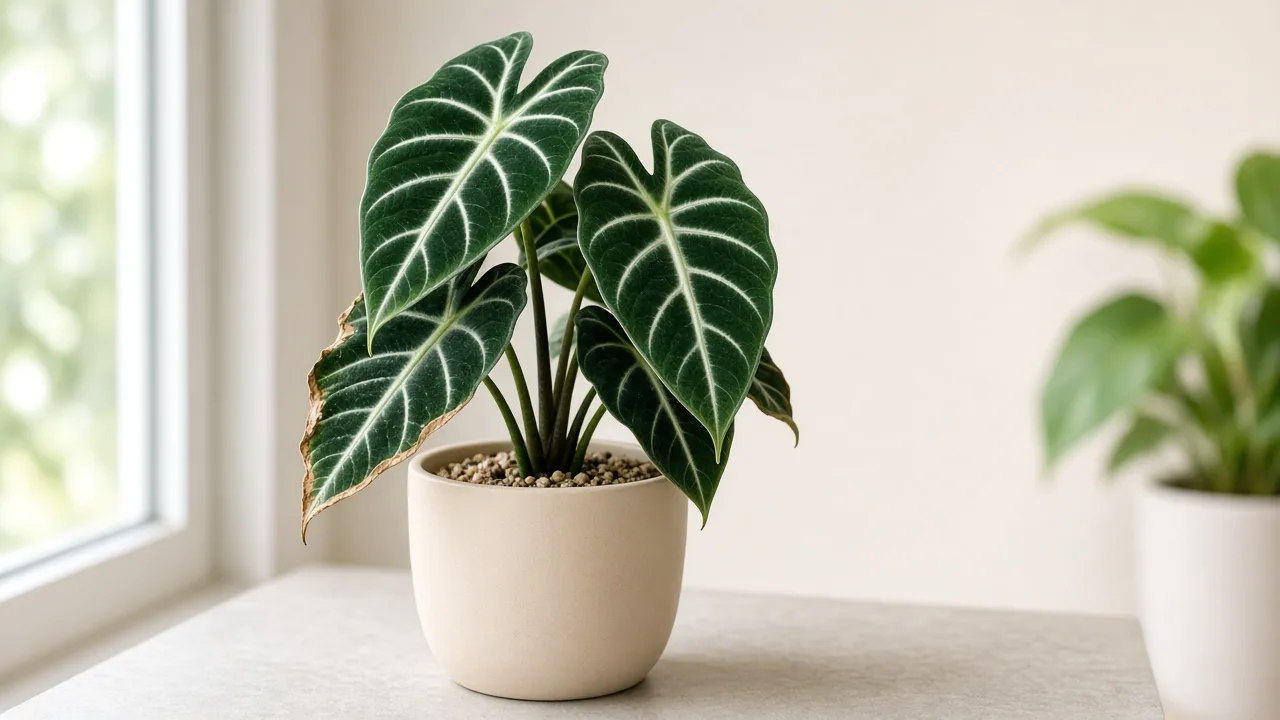
Underwatering on Alocasia Frydek shows up as a very light pot, pale dry mix 2–3 cm down, slightly cupped velvet arrow leaves with crispy brown margins, and slow or stalled new growth—while the corm stays firm. First step: confirm dryness with a finger or chopstick, then water thoroughly until a small amount drains and empty the saucer within 30 minutes.
Underwatering on Alocasia Frydek: Causes, Checks & Fixes
This guide covers underwatering on Alocasia Frydek. See also the general Underwatering guide, watering, and light pages for this plant.
Underwatering on Alocasia Frydek: Causes, Checks & Fixes
Quick answer
Underwatering on Alocasia Frydek means the underground corm and root ball have gone too dry for too long—so the large velvet arrow leaves lose turgor, cup slightly upward, and develop crispy brown margins while the pot feels feather-light. For how chronic dry soil stresses houseplants in general, see our underwatering guide. On Frydek, the decisive check is whether the top 2–3 cm of chunky mix has dried and whether the corm still feels firm.
First step: lift the pot and probe the upper 2–3 cm of mix with your finger or a chopstick. If the pot is light and the probe comes out dusty dry, give one thorough soak until a small amount drains, then empty the saucer or cachepot within 30 minutes. If the mix is wet at depth and leaves still look limp, stop—that pattern points to overwatering or root failure, not thirst.
When to use this page vs other Frydek guides
- Drooping leaves — overlapping limp foliage; use this page when the pot is light and mix is dry
- Curling leaves — upward cupping on dry mix often appears here first
- Brown tips — crispy margins with dry soil, not moist soil plus dry air
- Low humidity — edges crisp on adequately moist mix; humidity fix, not more water
- Overwatering — limp leaves on heavy wet soil, yellow lower leaves, gnats
- Watering guide — long-term top-layer dry-down rhythm after you stabilize thirst
What underwatering looks like on Alocasia Frydek
Healthy Frydek holds dark green velvet arrow leaves with bright white veining upright on stiff petioles. Underwatering changes the silhouette before it kills the plant—and the velvet texture makes the stress easy to spot if you know what to compare.
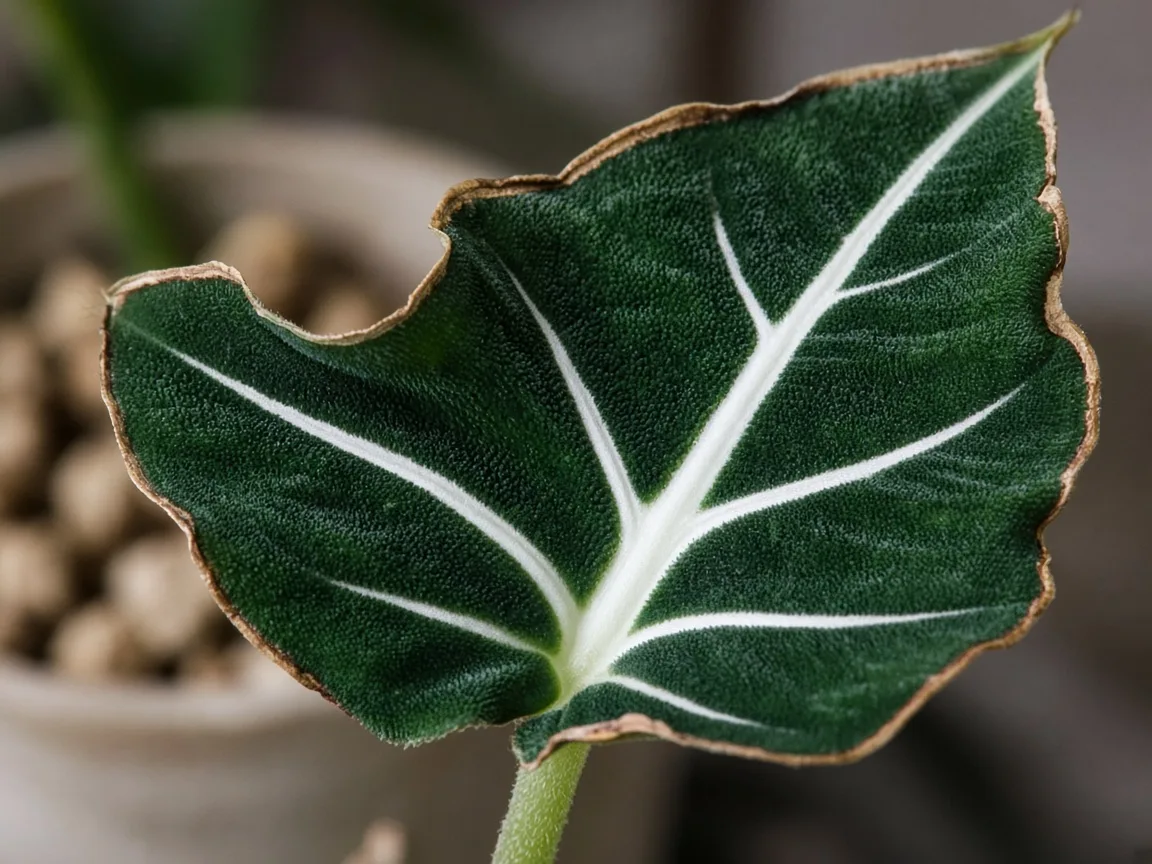
Crispy brown margin and slight upward cup on a velvet Frydek arrow leaf—the mix below was dusty dry several centimetres down while petioles stayed firm.
Light pot, pale dry surface is the headline sign. Lift the container: it feels noticeably lighter than after a recent watering. The top mix looks pale, crumbly, or has pulled slightly away from the pot wall. Push to 2–3 cm depth—the probe comes out clean and dry, not cool and damp.
Velvet leaf cupping and crisp edges follow. Outer arrow blades may curl slightly upward along the midrib—different from the limp hang of wet-soil droop. Margins turn papery brown while white veining dulls to gray-green. Leaves feel thinner but petioles stay firm, not mushy at the base.
Stalled crown growth appears when drought drags on. Frydek can push a new white-veined spear every week or two in active summer growth. Chronic underwatering stops that rhythm: the newest leaf stays small, takes weeks to unfurl, or aborts while older blades crisp.
Dry-soil droop looks like limp velvet foliage on a lightweight pot—often confused with overwatering because owners assume droop always means “add water.” Here the fix is rehydration; on wet soil the fix is the opposite.
Why Frydek dries out faster than you expect
Frydek is larger and more vigorous than compact jewel alocasias like Black Velvet when humidity stays high—but that same leaf area transpires heavily in bright, dry rooms. Low air humidity makes plants transpire quickly and risk wilting if roots cannot keep up. A bright cabinet above 20,000 lux can dry a well-drained pot in five to seven days even when a calendar reminder says “water weekly.”
The chunky aroid mix Frydek needs for corm health also dries faster than dense peat-heavy soil. Perlite and orchid bark drain well—which protects against rot—but they hold less water per volume. That is correct for this species; it just means the soil guide rhythm matters more than copying a moisture-loving fern schedule.
Velvet trichomes complicate diagnosis. The fuzzy leaf surface loses water in dry air, so brown crispy edges can appear from low humidity while soil is still moderately moist. The split: if the top 2–3 cm is dry and the pot is light, you are underwatering (or both dry soil and dry air). If mix is damp and only edges crisp, start with the low humidity guide—never mist velvet leaves directly.
Frydek stores reserves in an underground corm. Mild underwatering stresses foliage first; the corm buffers short drought. Severe or repeated dry cycles deplete that reserve and delay the next leaf—unlike a one-time missed watering that perks up after a single soak.
Dormant corm dryness vs active-growth thirst
Winter adds a Frydek-specific trap: owners afraid of rot underwater a dormant corm, or owners treating summer thirst like winter rest.
Active-growth thirst hits in warm bright months. Water alocasias when the top 5 cm (2 in) of compost has dried from April through October. Frydek’s LeafyPixels baseline is the top 2–3 cm in typical indoor pots—slightly shallower because home containers are smaller than nursery stock. Leaves cup, edges crisp, pot goes light within days.
Dormancy dryness is different. Alocasias slow or stop growth in cooler, drier winter conditions and may drop leaves while the corm rests. You still water—but only enough every 2–4 weeks to keep the corm from desiccating, not on a summer schedule. A bare pot with a firm corm and no new growth in December is often normal dormancy, not emergency drought—unless the corm itself is shriveling.
Do not flood a leafless winter pot trying to force growth. Do not withhold water all summer because you read that alocasias “like to dry out”—they like the surface to dry between drinks, not the entire root ball to turn to dust during active leaf production.
Why Alocasia Frydek gets underwatering
Calendar watering in variable conditions
The most common setup mistake is watering every Sunday regardless of light, heat, or season. Frydek in a warm grow cabinet may need water twice a week in July; the same plant in a cool north room in March may need a sip monthly. Yellowing leaves on Alocasia can occur from overwatering, too little water, or inadequate light—calendar guessing hits the wrong target half the time.
Very chunky or undersized root ball
Fresh repot into extra-coarse bark mix, or a root ball that has not yet filled the pot, dries unevenly. The surface looks fine while the center is parched—or the whole pot flashes dry in three days. After repotting, check weight daily for two weeks until you learn the new dry-down speed.
Vacation and heat spikes
A week away in August with closed blinds and no AC can desiccate a Frydek in a sunny window. Returning to papery leaves and shrunken mix is classic post-vacation underwatering. Pre-travel watering helps only if the plant is not already sitting in saturated soil—wet soil plus no airflow is rot, not insurance.
Fear of overwatering after past rot
Owners who lost a Frydek to root rot sometimes swing to chronic underwatering. Firm corm, dry mix, and crispy velvet leaves are the pattern—not yellow lower leaves on wet soil. The fix is correct dry-down timing, not avoiding water entirely.
Pot too small or root-bound extremes
A severely root-bound plant in a tiny pot can dry in 48 hours during peak growth. RHS notes that compost drying very fast after watering can signal the plant needs repotting. Underwatering here is a pot-size signal as much as a discipline failure.
Low humidity amplifying edge burn
Below about 40% RH, Frydek’s broad velvet blades lose moisture faster than roots replace it—edges crisp even when soil moisture is borderline adequate. Pair humidity fixes with soil checks; see low humidity when mix is moist but margins still burn.
How to confirm the cause
Work through these checks in order so you do not soak a rotting corm or mist a dry one.
- Top-layer moisture — Probe 2–3 cm deep. Dusty dry probe plus light pot confirms underwatering. Cool damp probe at the same depth suggests wet soil—see overwatering.
- Pot weight — Lift the container. Noticeable lightness compared to post-watering weight is a reliable thirst signal on Frydek’s tall petioles.
- Leaf texture — Slightly cupped, crisp-edged, firm-petiole leaves on dry mix equal drought. Limp mushy-base leaves on wet mix equal rot risk.
- Corm feel — Press gently at the soil line. Firm corm with dry foliage is recoverable thirst. Soft or sour-smelling corm is not a simple underwatering fix.
- Growth rhythm — Stalled or stunted new white-veined unfurls during warm active growth point to chronic under-watering or root damage—not dormancy.
- Season and light — Summer bright cabinet versus winter cool room changes expected interval dramatically. Match the light guide to your dry-down speed.
- Humidity cross-check — Moist mix plus only edge crisping without cupping may be air dryness, not root dryness.
Quick pattern guide
| What you find | Likely cause | Next move |
|---|---|---|
| Light pot, dry 2–3 cm down, firm corm, cupped leaves | Underwatering | Thorough soak; resume dry-down schedule |
| Heavy pot, damp mix, yellow lower leaves | Overwatering / rot | Stop water; inspect corm and roots |
| Moist mix, crisp edges only, no cupping | Low humidity | Humidifier; do not mist velvet leaves |
| Firm corm, bare pot, cool winter, slow leaf loss | Dormancy | Reduce water; do not force summer soak |
| Dry mix plus webbing on new growth | Spider mites | Treat pests; rehydrate after stem check |
| Limp leaves, wet soil | Root uptake failure | Not thirst—see overwatering / root rot |
First fix for Alocasia Frydek
Lift the pot and confirm the top 2–3 cm of mix is dry before you water. That single test prevents the opposite disaster of flooding a wet corm.
If dry:
- Water slowly at the soil line until a small amount runs from drainage holes—keep velvet leaves dry.
- Empty saucers and cachepots within 30 minutes so the corm never sits in stale runoff.
- If the root ball has shrunk away from the pot sides, bottom-water 20–30 minutes in a basin, then drain completely so the center re-wets evenly.
- Place in bright indirect light while rehydrating—not hot direct sun on stressed velvet foliage.
- Wait 24 hours and reassess turgor before changing anything else.
Make one correction, then pause. Do not repot, fertilize, and prune the same day while leaves are still stressed.
Step-by-step recovery
Mild dry stress (cupped leaves, light pot)
One thorough top-watering or bottom-watering session usually firms velvet blades within hours to a day. Resume watering when the top 2–3 cm dries again—track pot weight for two weeks to learn your room’s interval.
Moderate drought (crispy margins, stalled unfurl)
Soak as above, then maintain even moisture without saturation for two to three weeks. Trim fully dead brown edges only after new growth looks stable. Hold fertilizer until at least one clean crown leaf unfurls.
Severe desiccation (papery leaves, mix pulled from pot walls)
Bottom-water until the root ball expands, then top-water to flush. If roots are white and firm when you inspect, no repot is needed. If roots are brittle and brown but corm is firm, trim dead roots lightly and repot into fresh chunky mix after rehydration—not into dry mix on a dust-dry ball.
Chronic underwatering during active growth
Increase watering frequency—not volume per session. Frydek prefers moist, well-drained soil, not bone-dry cycles alternating with floods. Align with the watering guide dry-down method.
Recovery timeline
| Severity | What improvement looks like | Typical timeframe |
|---|---|---|
| Mild (one missed watering) | Leaves firm; cupping relaxes | Same day to 48 hours |
| Moderate (crispy edges, stalled growth) | New crown spear starts; no further crisping | 1–3 weeks |
| Severe (shrunken root ball) | Root ball re-expands; firm new leaf unfurls | 3–6 weeks |
| Repeated chronic drought | Weak small leaves; slow recovery | Months if corm stays firm |
Brown crispy margins on existing velvet leaves do not green up again—that tissue is dead. Judge progress by new growth with crisp white veining, not by repairing every older arrow blade.
What not to do
- Pour water because leaves look limp without checking soil—wet-soil limp is rot, not thirst.
- Mist velvet foliage instead of watering dry roots—water droplets in trichomes invite fungal spotting and do not rehydrate the corm.
- Flood repeatedly in one hour—a single good soak beats three shallow splashes that barely wet chunky bark.
- Fertilize a drought-stressed Frydek before soil moisture stabilizes—salts on dry roots burn fine hairs.
- Repot into dry mix on a dust-dry root ball without soaking first—the gap traps air and worsens dry pockets.
- Treat winter dormancy like summer drought—firm corm, cool room, and leaf drop need reduced water, not daily soaking.
- Move a dry plant to harsh direct sun to “help it drink”—velvet leaves scorch easily.
How to prevent underwatering on Alocasia Frydek
Water when the top 2–3 cm of mix has dried—not on a fixed calendar. In active growth that often means every 5–10 days; in winter dormancy every 2–4 weeks with just enough moisture to keep the corm firm. Reduce watering to a minimum in winter while keeping temperatures above about 15 °C (59 °F).
Use chunky well-draining aroid mix in a pot with drainage holes sized to the corm. Maintain 60–80% humidity with a humidifier rather than misting velvet leaves. Give bright indirect light so you are not growing soft foliage in a dim corner that also dries unpredictably. Review the care overview and watering guide when room conditions change seasonally.
When to worry
Escalate beyond routine soaking when:
- The corm feels soft, hollow, or smells sour—suspect rot or cold damage, not thirst alone.
- Leaves stay limp after a proper soak while mix remains wet—root uptake failure.
- Every leaf papery and corm shriveled despite recent water—possible root loss; inspect before the next soak.
- Crispy damage spreads upward quickly on moist soil—unlikely to be underwatering.
A firm corm after severe drought is a good sign. A collapsing center is not.
Alocasia Frydek care cross-check
Underwatering rarely appears without context:
- Light — Bright warm cabinets dry pots faster; dim rooms stretch intervals.
- Pot and cachepot — Decorative outer pots without drainage do not cause underwatering, but they hide how heavy wet soil feels—lift the inner pot.
- Humidity — Dry air crispens edges on moist mix; combine fixes when both signals appear.
- Season — Summer active growth versus winter dormancy changes how much water the corm demands.
- Related problems — Cupping overlaps curling leaves; limp foliage overlaps drooping leaves; wet-soil yellowing overlaps overwatering.
Related Alocasia Frydek guides
- Alocasia Frydek overview — light, humidity, dormancy, and corm baseline
- Alocasia Frydek watering — top 2–3 cm dry-down rhythm and soak technique
- Alocasia Frydek soil — chunky aroid mix that drains fast without starving roots
- Drooping leaves on Alocasia Frydek — limp petioles on wet vs dry mix
- Curling leaves on Alocasia Frydek — upward cup when mix is dusty dry
- Overwatering on Alocasia Frydek — heavy pot, damp mix, yellow lower leaves
- Low humidity on Alocasia Frydek — crisp edges on moist soil
- Alocasia Frydek problems — browse all common issues on this species
Conclusion
Underwatering on Alocasia Frydek is a dry corm and root-ball problem before it is a leaf problem. Lift the pot, read the top 2–3 cm of mix, and give one thorough soak only when dryness is confirmed. Velvet arrow leaves firm up quickly when thirst was the real issue—but crispy old margins stay crispy, and the win is the next white-veined crown leaf, not a perfect outer fan.
Related tool
Use the Plant Watering Calculator to narrow causes for underwatering on this plant before changing multiple variables at once.