Curling Leaves on Alocasia Frydek: Causes, Checks & Fixes
Quick answer
Curling on Alocasia Frydek usually means the corm cannot keep large velvet leaves hydrated—dry soil, dry air below 60% RH, soggy roots, or pests on fuzzy foliage are the usual triggers. First step: probe moisture at 2–3 cm depth and lift the pot before watering, misting, or repotting.
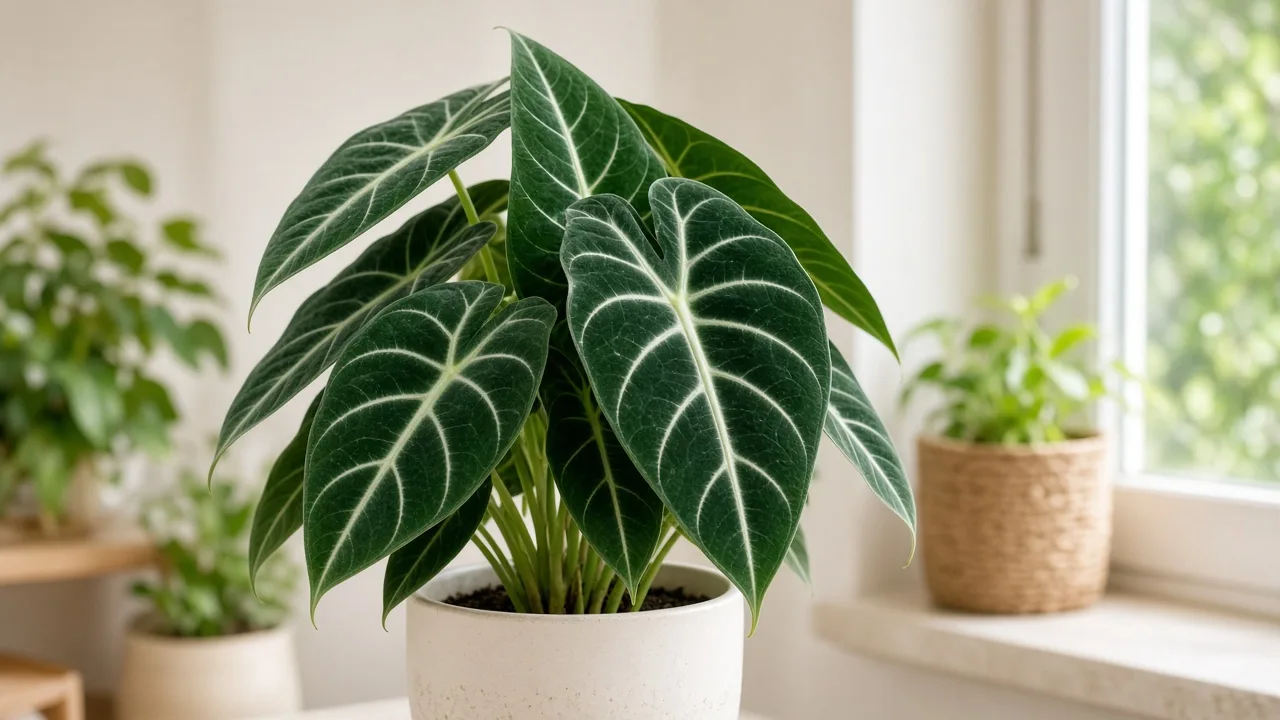
Curling Leaves on Alocasia Frydek: Causes, Checks & Fixes
This guide covers curling leaves on Alocasia Frydek. See also the general Curling Leaves guide, watering, and light pages for this plant.
Curling Leaves on Alocasia Frydek: Causes, Checks & Fixes
Quick answer
Curling leaves on Alocasia Frydek (Alocasia micholitziana ‘Frydek’) are usually a hydration signal on large velvet foliage—not a fertilizer deficiency. The underground corm stores reserves, but each broad arrow-shaped leaf still loses water through its fuzzy surface. When roots cannot replace that loss fast enough, blades cup inward to shrink exposed area.
First step: stick your finger or a chopstick 2–3 cm into the mix and lift the pot. A light, dry pot with upward cupping points to underwatering on Alocasia Frydek. A heavy, damp pot with limp curl and yellow lower leaves means stop watering and check for root rot before you add more moisture.
For how leaf curl works in general, see our curling leaves symptom guide. On Frydek, the pattern usually shows up on the oldest outer leaf first, on spears stuck halfway open, or on the side facing a heater while the corm still feels firm.
What curling leaves look like on Alocasia Frydek
Healthy Frydek leaves are arrow-shaped, matte dark green, and velvet-textured—the soft trichomes catch light and show stark white veins. Stress curling breaks that flat velvet profile in recognizable ways:
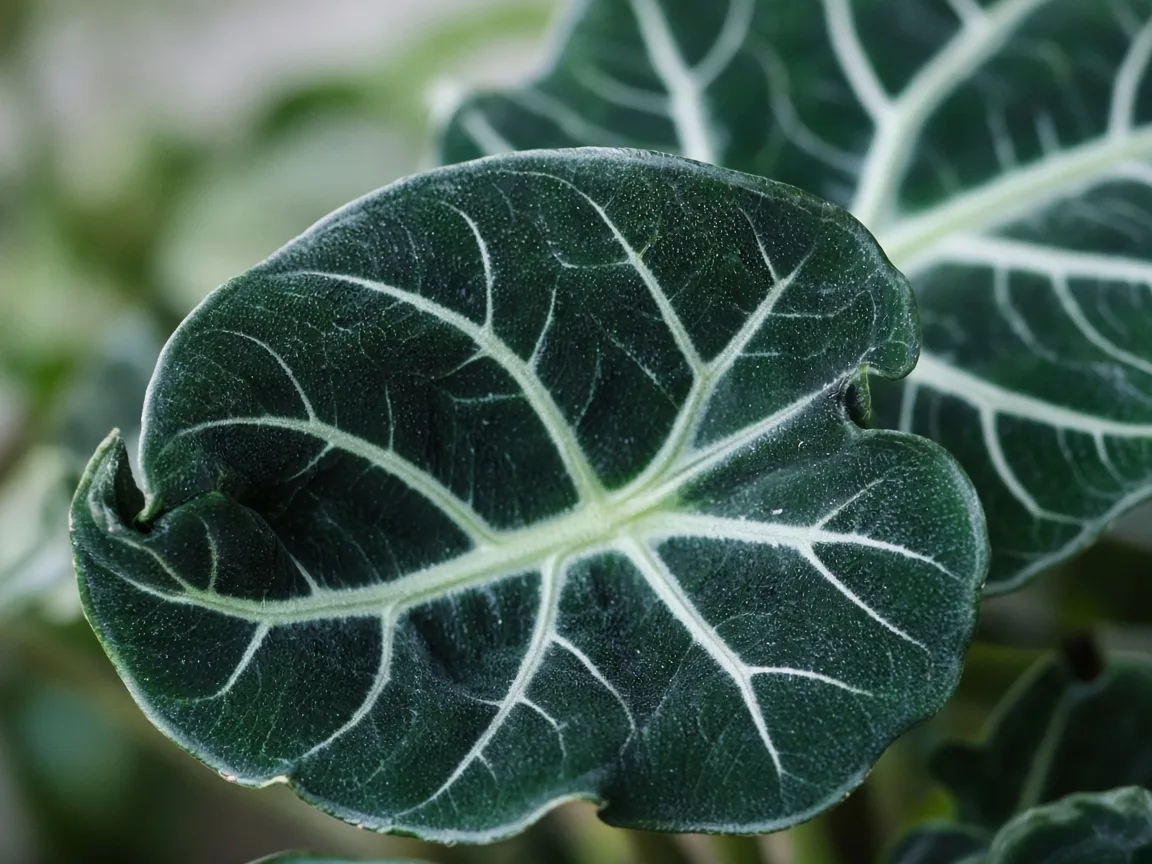
Curling leaf symptoms on Alocasia Frydek—compare cupped velvet tissue with flat leaves on the same plant.
- Inward cupping along the whole blade, sometimes rolling lengthwise like a tube
- Dry, papery margins on leaves that feel thin and light, often on the oldest leaf while newer ones stay flat
- Downward limp curl paired with yellowing lower leaves and mix that stays wet for more than a week
- Spears stuck rolled for longer than two weeks with brown edges at the unfurl point
- One-sided curl on leaves facing a sunny window, heating vent, or AC stream
- Fine stippling or webbing between petioles—harder to spot on dark velvet than on green foliage
Because Frydek can hold four to six leaves in good light and humidity, losing one cupped leaf can look dramatic even when the corm below is still healthy. Check whether the problem is localized to one blade or spreading through every leaf before you repot.
Normal velvet spear unfurling vs stress curl
Every new Frydek leaf starts as a tight dark spear at the crown. Over several days to two weeks, the velvet blade unfurls and the white veining sharpens. That rolled stage is normal growth—not a warning sign.
Stress curl is different:
| Pattern | Likely meaning |
|---|---|
| Spear slowly opens; older leaves stay flat | Normal unfurling |
| Open leaves cup inward all day on multiple blades | Water, humidity, or root stress |
| Curl worsens only on the window-facing side | Heat or direct sun |
| Spear stuck rolled three weeks with brown edges | Dry air, drought, or pest damage on new tissue |
| Every leaf drops while mix is bone dry in winter | Dormancy—not the same as daytime stress curl |
If only the newest spear is rolled while mature leaves lie flat, wait and watch before watering heavily. Chronic daytime cupping on open velvet leaves—especially with crisp margins—points to desiccation, wet roots, or pests, not normal unfurling.
Why misting velvet leaves can deepen curl
The soft trichomes that give Frydek its matte velvet look also trap water droplets on the leaf surface. NC State notes alocasias are prone to leaf spots from overwatering and moisture-related foliage issues. Direct misting leaves beads sitting in the texture, slows evaporation from stomata, and can leave permanent marks on velvet—while doing little to raise room humidity for more than minutes.
When growers see curl and respond with twice-daily misting, they often stack surface wetness on top of an unchanged dry root zone or dry room air. The fix for this plant is a humidifier, glass cabinet, or grouped placement in a bright bathroom—not spritzing the fuzzy blades. See low humidity on Alocasia Frydek when soil moisture looks fine but margins crisp.
Dormancy curl vs environmental curl
Frydek may drop every leaf in late autumn or winter while the underground corm stays alive. The RHS recommends cooler, drier winter conditions so alocasias can go dormant, and Proven Winners warns that overwatering during dormancy is the most common alocasia killer.
During dormancy, outer leaves may yellow, curl, and fall one by one—not because today’s air is too dry, but because the plant is shutting down for the season. Do not interpret dormancy leaf loss as a call to water more. Reduce drinks to every two to four weeks, keep the corm from desiccating, and wait for spring spears. Environmental stress curl, by contrast, hits during active growth when you expect flat new velvet leaves opening every one to two weeks in summer.
Why Alocasia Frydek gets curling leaves
Underwatering and dry corm stress
Frydek needs the top 2–3 cm of mix dry between waterings during growth season, but the corm should not bake for weeks in a hot room. When the pot goes light and mix pulls from the sides, leaves lose turgor and cup inward. Leaves curl when cells lose turgor—the same mechanism as wilting. Frydek’s larger leaf surface area means it shows drought stress faster than compact jewel alocasias when a watering is missed.
Low humidity below the velvet threshold
Frydek targets 60–80% RH—higher than most houseplants. The RHS notes alocasias like medium to high humidity and that dry indoor air increases transpiration faster than roots can replace water. Winter heating without a humidifier often shows up as edge curl before whole-leaf cupping. Pair with brown tips when margins crisp on moist soil.
Overwatering and failing roots
Paradoxically, soggy mix also causes curl. When corm roots suffocate and rot, they stop absorbing water while leaves still transpire. The plant rolls foliage to cut moisture loss—so curl with wet mix and yellow lower leaves points to overwatering or advancing root rot, not thirst. NC State lists root rot and yellowing from overwatering on alocasias kept in poorly drained soil.
Light, heat, and drafts
Frydek wants bright indirect light—enough to hold four to six leaves and push new growth regularly. Direct sun heats velvet tissue and raises transpiration; hot glass or radiator blasts curl the exposed side within hours. Cold drafts below comfortable room temperature slow root activity and water uptake. See not enough light when the plant holds only one or two small pale leaves alongside curl.
Spider mites and thrips on dark velvet
NC State advises monitoring spider mites on alocasias. Mites thrive in dry air and are easy to miss on dark velvet foliage until stippling and fine webbing appear between petioles. Thrips scar expanding spears with silver streaks and black specks—new velvet leaves may stay twisted after environmental fixes. Check spider mites and thrips when curl concentrates on newest growth.
How to confirm the cause
Work through these checks in order:
- Soil moisture at 2–3 cm — Dry and light: underwatering likely. Wet, heavy, or sour: overwatering or root issue. Evenly moist with curl: look at humidity and pests.
- Pot weight — Lift the container. A heavy pot days after watering confirms saturation; a feather-light pot with cupped leaves confirms drought.
- Which leaves curl — Oldest outer leaf only: often localized heat or drought. All mature leaves: systemic water or humidity stress. Twisted new spears only: inspect pests with a hand lens.
- Light placement — Curl on the window side only: excess direct sun. One or two pale small leaves total: too dim, slowing water use.
- Room humidity — Readings below 50% for days support low humidity even when you water on schedule.
- Season — Leaf drop with dry mix and short days: consider dormancy before escalating care.
- Corm firmness — Gently probe near the stem base. Firm corm with curl on open leaves: environmental. Mushy petioles with wet mix: root emergency.
Write down what changed in the last two weeks—new heater, moved window, skipped waterings, or repotting into a larger pot. Frydek responds within days to care swings.
First fix for Alocasia Frydek
Probe the top 2–3 cm of mix and act on that reading before anything else.
- If dry and light: Water until a little drains from the bottom, then empty the saucer. Use room-temperature water and let the mix absorb slowly—dry aroid mix can channel water down the sides without rewetting the corm zone. See the watering guide for soak technique.
- If wet and heavy: Stop watering. Do not mist velvet leaves, repot, or fertilize on impulse. Let the top 2–3 cm begin to dry, then reassess petiole firmness if leaves keep curling while soil stays saturated.
After that single correction, wait 24 hours and check leaf turgor. Mild cup from a missed drink often relaxes once the corm zone is moist again. If moisture was appropriate but leaves stay cupped, move to humidity support next—not a second drowning.
Step-by-step recovery
Once the first soil-moisture fix is in place, support recovery in this order:
- Raise humidity if the room is dry — Run a humidifier until RH holds 60% or higher at leaf height during heating season. Grouping helps slightly; pebble trays alone rarely fix whole-room winter dryness on jewel alocasias.
- Move off hot glass and vent paths — Place the pot where Frydek light stays bright but filtered, with no forced-air stream hitting foliage.
- Hold fertilizer — Skip feeding until at least one new spear opens without marginal burn. Proven Winners recommends reducing water in fall and winter—not stacking fertilizer on stressed roots.
- Scout dark foliage for mites — Wipe undersides with a damp microfiber cloth if stippling appears; confirm pests before spraying oils on textured velvet leaves.
- Confirm mix and pot size — If water runs straight through or the surface stays wet for ten days, check soil and whether the pot is oversized for the root system.
- Repot only when roots fail — Mushy roots, sour smell, or persistent curl with wet soil mean unpot, trim rot, and repot into fresh chunky mix—not a bigger pot for insurance.
Avoid repotting, pruning half the crown, and a new fertilizer schedule in the same week. Frydek recovers best when one variable changes at a time.
Recovery timeline and what improvement looks like
Environmental curl resolves gradually on velvet alocasias:
- 24–48 hours — Leaves feel less papery after correct watering; mild cup may partially relax.
- 1–2 weeks — Brown spread on margins stops; the next spear begins opening without stuck edges.
- 3–6 weeks — One or two new leaves unfurl flat with sharp white veining if light, humidity, and moisture stay steady.
Already cupped or crispy mature leaves may not fully flatten—that is normal on velvet tissue. Success means new growth looks correct and the problem stops spreading to fresh spears.
Signs the situation is worsening:
- Yellow leaves climbing from the base while soil stays wet
- Mushy petioles at the soil line
- New spears emerging twisted with silver streaks despite good humidity
- Curl spreading to every leaf after repeated heavy watering onto soggy mix
Those patterns mean reassess roots and pests rather than keep watering on schedule.
Lookalike symptoms to rule out
| What you see | More likely cause | Quick differentiator |
|---|---|---|
| Tight roll at tip of new spear only | Normal unfurling | Opens flat over days; older leaves fine |
| Inward cup, dry soil, light pot | Underwatering | Mix pulls from sides; perks after soak |
| Cup with moist soil, yellow lower leaves | Overwatering / root rot | Sour smell; mushy corm roots when checked |
| Margin curl, dry room, moist soil | Low humidity | Hygrometer below 55%; winter heating |
| Curl on sun-facing side only | Too much direct light | Warm patch or bleaching on that side |
| Twisted new spears, stippling | Thrips or spider mites | Damage on newest growth; webs or streaks |
| Sequential leaf drop, short days, dry mix | Dormancy | Corm firm; pot may look empty—not emergency curl |
Mistakes to avoid
- Misting velvet foliage instead of fixing soil or humidity — Droplets trap in trichomes and can mark leaves permanently.
- Watering on a calendar without checking depth — Frydek may need water every seven to ten days in summer and every two to four weeks in winter dormancy.
- Increasing direct sun to perk up cupped leaves — Heat deepens curl on matte foliage; bright indirect light is the ceiling.
- Repotting into a much larger pot when leaves curl — Extra soil volume holds moisture the root system cannot use, raising rot risk.
- Fertilizing stressed plants — Burned margins curl further; diagnose water and air first.
- Using neem oil on velvet leaves — Oil residue damages trichomes; use insecticidal soap for pest treatment instead.
- Ignoring pests because curl looks like dryness — Dry winter air invites mites on alocasias; check stems and undersides even after you fix humidity.
- Overwatering an empty-looking pot in winter — Dormancy leaf loss is not a call to saturate the corm.
Alocasia Frydek care cross-check
Curling rarely appears in isolation. While you correct moisture, confirm:
- Light — Bright indirect; no direct sun that heats velvet leaves. See the light guide.
- Water — Top 2–3 cm dry between drinks in growth season; sharp reduction in dormancy. See watering.
- Humidity — Target 60–80% RH with a humidifier, not leaf misting.
- Mix — Chunky, fast-draining aroid blend in a properly sized pot. See soil.
- Temperature — Keep above 15°C (59°F) in growth season per RHS micholitziana guidance; avoid cold windowsills and hot radiators.
Frydek belongs with other humidity-aware jewel alocasias—not with succulents that prefer dry air and infrequent watering.
How to prevent curling leaves next time
- Chopstick or finger-check before every watering — Match drinks to how fast your pot dries in current light, not last month’s schedule.
- Start humidifying when heat turns on — Do not wait for widespread edge crisping on velvet leaves.
- Never mist velvet foliage — Use a humidifier or bright bathroom placement instead.
- Keep the pot appropriately sized — Repot only one size up every one to two years in spring.
- Scout stems weekly in dry seasons — Catch mites before curl and stippling spread on dark leaves.
- Reduce water proactively in autumn — Align with dormancy before leaf drop panics you into overwatering.
Conclusion
Curling leaves on Alocasia Frydek look alarming on such graphic velvet foliage, but the message is usually straightforward: the corm and roots are not keeping up with water loss. Separate normal rolled spears from stress cupping on open leaves, then confirm soil moisture at 2–3 cm before you repot, fertilize, or mist. Fix dry roots or stop watering wet ones, raise RH if the room is desert-dry, and judge success by the next spears opening flat—not by old velvet tissue magically flattening. Steady, boring care beats dramatic rescues on this rot-sensitive jewel alocasia.
When to use this page vs other Alocasia Frydek guides
- Alocasia Frydek watering guide — Use for routine dry-down checks before assuming curling leaves is the main issue.
- Alocasia Frydek problems hub — Browse all common issues on this species.
- Low humidity — Use when margins crisp but soil moisture looks fine.
- Underwatering — Use when the pot is light, mix is dusty dry, and leaves perk after soaking.
- Overwatering or root rot — Use when the pot stays heavy and wet with yellow lower leaves.
- Spider mites — Use when stippling and webbing appear with twisted new growth.
Related Alocasia Frydek guides
- Alocasia Frydek overview
- Alocasia Frydek watering
- Alocasia Frydek light
- Alocasia Frydek soil
- Low humidity on Alocasia Frydek
- Underwatering on Alocasia Frydek
- Overwatering on Alocasia Frydek
- Root rot on Alocasia Frydek
- Brown tips on Alocasia Frydek
- Alocasia Frydek problems
Related tool
Use the Plant Problem Diagnosis Tool to narrow causes for curling leaves on this plant before changing multiple variables at once.