Thrips on Alocasia Frydek: Causes, Checks & Fixes
Quick answer
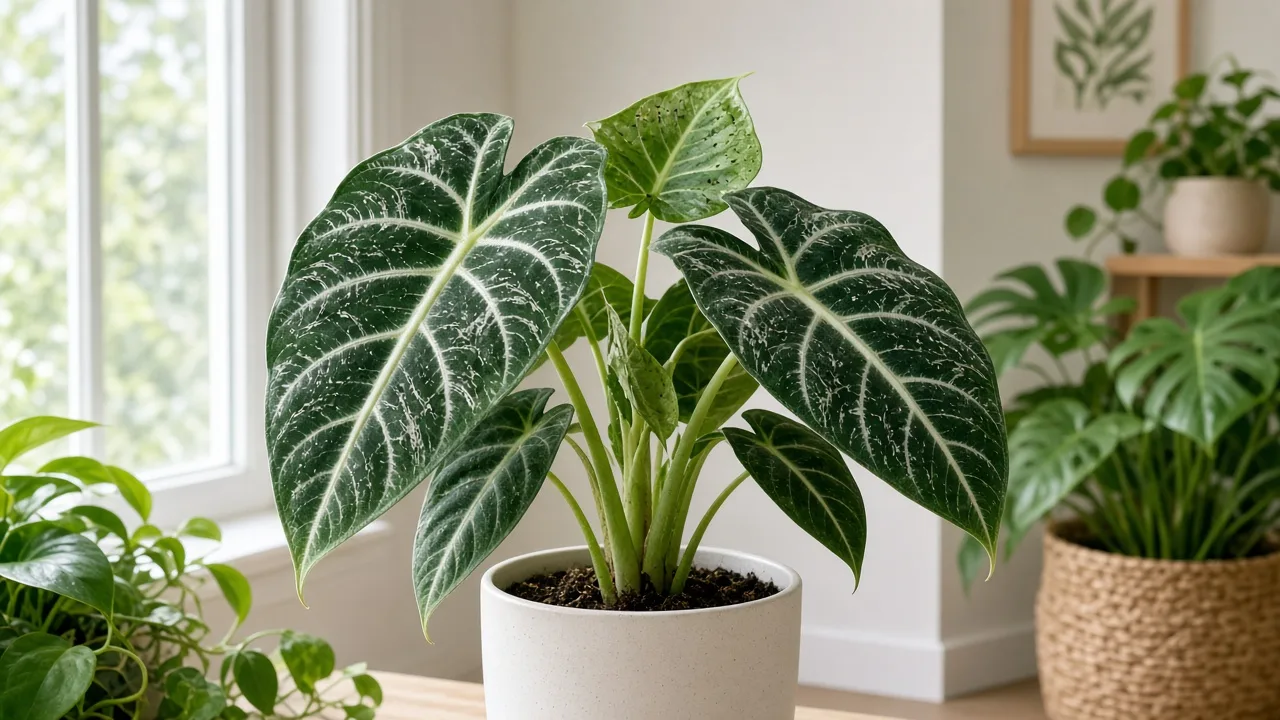
Thrips on Alocasia Frydek rasp soft unfurling velvet tissue at the corm crown, leaving silvery streaks, tiny black frass specks, and permanently scarred new arrow blades with white veins. First step: isolate the plant and shake the softest new leaf over white paper to confirm live thrips before spraying or repotting.
Thrips on Alocasia Frydek: Causes, Checks & Fixes
This guide covers thrips on Alocasia Frydek. See also the general Thrips guide, watering, and light pages for this plant.
Thrips on Alocasia Frydek: Causes, Checks & Fixes
Quick answer
Thrips on Alocasia Frydek (Alocasia micholitziana ‘Frydek’) are tiny slender insects that rasp the epidermis of soft velvet tissue, leaving silvery streaks, tiny black frass specks, and permanently scarred new arrow blades with stark white veins. On a healthy indoor Frydek the underground corm usually stays firm even when one or two crown leaves look stippled—but thrips hide in the tight unfurling spear where dense matte foliage meets, so damage often appears before you spot the insects.
For general thrips biology and control options, see our thrips guide. On Frydek, the diagnostic clue is almost always at the corm crown—silver scarring on the softest unfurling velvet leaf, not random lower foliage alone.
First step: isolate the plant and shake the softest new leaf over white paper to confirm live thrips before you spray, repot, or change watering.
When to use this page vs other Frydek guides
| Pattern | Start here | Or route to… |
|---|---|---|
| Silver streaks, black specks, scarred new tips | This page | Distorted leaves |
| Fine stippling with webbing in dry air | Spider mites | Low humidity |
| Sticky honeydew clusters on petioles | Aphids | Mealybugs |
| Ragged holes with dark frass pellets | Caterpillars | Holes in leaves |
| Serpentine tunnels inside the blade | Leaf miners | — |
| Lengthwise cup on open dry blades | Curling leaves | Underwatering |
What thrips look like on Alocasia Frydek
Frydek carries large dark green velvet arrow leaves with bright white veining on an upright corm crown—often four to six blades indoors, with a new spear every two to three weeks in summer when light and humidity align. Thrips damage reads differently on this matte velvet surface than on glossy houseplants:
Silvery scrape marks — Pale stippling or silvery-white discolouration on the upper leaf surface where cells were emptied. On dark green velvet the streaks look gray against white veins rather than obvious yellow patches.
Black frass specks — Tiny varnish-like black dots of thrips excrement scattered along feeding trails, especially visible when you tilt a blade toward a window.
Scarred unfurling crown leaves — Distorted or curled new growth when thrips feed on developing shoot tips. The velvet spear opens twisted, rippled, or with permanent silver scars locked into the white vein tracks.
Live insects — Adults are less than 1/20 inch long, slender, yellow to dark brown, with fringed wings folded over the back. Most pest thrips feed hidden in buds and shoot tips; on Frydek that means inside the rolled new spear and along burgundy leaf backs where overlapping blades trap still air.
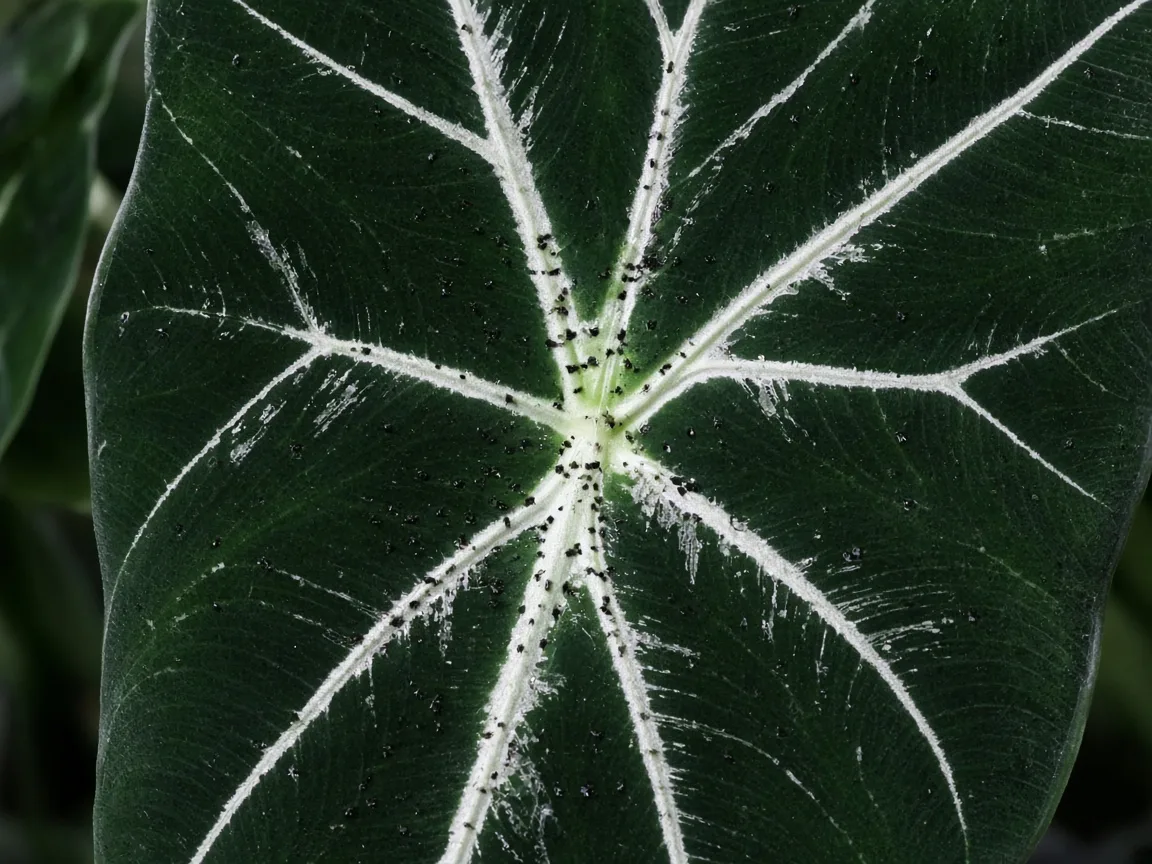
Silvery scrape marks with tiny black frass specks on white vein tracks—typical thrips scarring on Frydek velvet tissue before the leaf fully hardens.
Reading silver scars on matte Frydek velvet (Frydek only)
Frydek foliage is soft matte velvet, not the bullate texture of Dragon Scale or the glossy surface of Polly. That trichome layer changes how thrips damage shows up—and how you inspect for it.
Use the white veins as contrast guides. Pale scrape marks often track along or across the stark white venation on dark green blades. A silvery trail that widens on the newest crown leaf over several days confirms active feeding, not an old water spot sitting on the hair surface.
Backlight burgundy undersides. Hold each suspect arrow leaf between your eye and a bright window. Frass specks and fresh silver stippling show on the burgundy underside before they are obvious on the matte green face—especially on inner crown leaves shaded by outer blades.
Never assume misting washed thrips off. Water droplets sit in velvet trichomes and leave permanent marks without dislodging insects hidden in the rolled spear. Rinse gently with lukewarm water if you treat—then pat dry with a microfiber cloth supporting each blade from underneath.
Crown-flush targeting (Frydek only)
Frydek pushes new leaves from a tight central rosette on a moderate corm. Thrips concentrate on the softest unfurling velvet spear because they prefer developing tissue in shoot tips—and because older outer blades are too leathery to rasp efficiently.
When only the newest crown leaf shows silver scarring while every mature blade below looks clean, you likely caught an early infestation. When consecutive new spears open scarred across two weekly flushes, assume active thrips throughout the crown and isolate immediately. Frydek is more vigorous than compact jewel alocasias and can outgrow light hits once live insects are gone—but each scarred spear is cosmetic damage until you prune it or the plant drops the leaf naturally.
Glass-cabinet spread risk (Frydek only)
Many Frydek growers keep plants in IKEA cabinets, terrariums, or humidifier trays to hold 60–80% humidity for velvet foliage. Warm still air helps leaves—but also lets winged thrips move between pots on shared shelves.
When one Frydek in a cabinet shows silver streaks, inspect every neighboring Alocasia Black Velvet, calathea, or philodendron on the same level before treating only the visibly damaged pot. Improved gap spacing between pots helps you inspect burgundy leaf backs without crowding—enough room for gentle air movement, not a cold draft on tropical foliage.
Why Alocasia Frydek gets thrips
Soft crown tissue is prime feeding territory. Thrips rasp expanding velvet spears at the corm crown while outer blades still look untouched. Herbaceous ornamentals suffer more visible injury from thrips than woody plants—and Frydek’s continuous summer flush supplies fresh tissue every few weeks.
Velvet trichomes hide early infestations. The fuzzy matte surface makes pale stippling harder to see until streaks coalesce along white veins. By the time a room-light glance catches damage, thrips may already be inside the rolled new leaf.
Nursery hitchhikers and open windows. Thrips arrive on new plants, cut flowers, and outdoor summer placements. Western flower thrips and greenhouse thrips both affect glasshouse and houseplants; Frydek grouped in cabinets after an unquarantined nursery purchase is a common indoor entry path.
Stress from wet roots does not cause thrips—but it slows recovery. Overwatered alocasias develop yellow leaves and root issues; a weakened Frydek in soggy chunky aroid mix that has compacted replaces scarred crown leaves more slowly. Check overwatering if petioles feel mushy alongside pest damage.
Excess nitrogen pushes soft growth thrips prefer. Heavy fertilizer during active summer growth produces tender crown tissue—avoid feeding a thrips-infested Frydek until new leaves emerge clean for two weeks.
How to confirm thrips on Frydek
Work through these checks in order:
- Shake test — Hold white paper under a suspect leaf and tap the petiole firmly. Quick jumping specks confirm thrips; slow-moving worms point to caterpillars.
- Frass hunt — Look for tiny black varnish-like dots along silver streaks on the upper surface and burgundy underside.
- Crown first — Inspect the softest unfurling velvet leaf at the center of the rosette with a magnifier or phone flashlight before assuming lower-leaf marks mean an old resolved infestation.
- New vs old damage — Silver scarring that keeps appearing on consecutive new crown leaves is active. One streak on a mature outer blade that never repeats may be finished damage.
- Sticky trap check — Hang a yellow or blue sticky card near the plant for three days. Flying adults support the diagnosis; absence does not rule out larvae hidden in the crown.
- Lookalike screen — Fine webbing between petioles suggests spider mites. Honeydew without silver scarring suggests aphids or scale. Serpentine tunnels inside tissue mean leaf miners—not thrips.
First fix for Alocasia Frydek
Isolate the plant away from cabinet neighbors, then rinse every leaf surface gently with lukewarm water—supporting each velvet blade from underneath—before applying any spray.
| Confirmed pattern | First fix |
|---|---|
| Live thrips on shake test | Isolate; thorough lukewarm rinse of crown and leaf backs; repeat rinse in three to five days |
| Silver scars on newest crown leaf only | Same rinse protocol; scout neighbors in the cabinet |
| Heavy scarring on multiple new spears | Rinse plus insecticidal soap on leaf backs per label; avoid neem on velvet |
| Distorted unfurling spear with confirmed insects | See distorted leaves for cosmetic expectations after pest removal |
Do not repot, fertilize, or prune half the plant on day one unless roots are rotting. Do not mist velvet foliage as pest control—use a humidifier for low humidity needs instead.
Step-by-step recovery
After the first rinse and isolation:
- Re-rinse every three to five days for two weeks—thrips life cycles can complete in about two weeks in warm indoor air.
- Apply insecticidal soap to leaf backs and the crown flush if live thrips persist after two rinse cycles—safer on velvet trichomes than neem oil, which can leave permanent brown residue on Frydek.
- Consider spinosad for persistent infestations per product label—effective on thrips when combined with physical removal.
- Hold isolation until two consecutive new crown leaves unfurl without fresh silver scarring.
- Prune only heavily scarred blades after insects are gone—partially silvered green leaves still photosynthesize until Frydek drops them naturally.
- Scout cabinet neighbors weekly for two months—thrips reinfest from shared shelves faster than from distant room plants.
For a Frydek with every active leaf scarred but a firm corm, trimming damaged foliage and waiting for a clean spring flush may beat repeated chemical cycles—especially if the plant was already entering dormancy.
Recovery timeline
| Phase | Timing | Good sign | Bad sign |
|---|---|---|---|
| After first rinse | Days 1–5 | Fewer thrips on shake test | Jumping specks from multiple crown leaves |
| New growth | Weeks 2–4 | Clean unfurling velvet spears with crisp white veins | Consecutive scarred crown leaves |
| Cosmetic | Ongoing | Old silver streaks stable, no spread | New frass on emerging tissue |
Scarred velvet tissue does not smooth out. Judge recovery by clean new crown leaves, not by old streaked blades. Frydek in bright indirect light with stable watering often pushes a clean new spear within two to four weeks once live thrips are gone—faster than slower jewel alocasias when summer growth is active.
Lookalike symptoms to rule out
Fine stippling with webbing between petioles points to spider mites—especially in dry winter air near heat registers.
Sticky honeydew without silver scrape marks suggests aphids, mealybugs, or scale—sap feeders, not rasping thrips.
Serpentine pale tunnels inside the blade mean leaf miners—bordered internal paths, not surface silver streaks with black specks.
Lengthwise cup on open blades in a light dry pot fits curling leaves from underwatering—not thrips unless silver scarring is confirmed on the crown.
Brown crispy margins without black frass suggest low humidity or brown tips from dry air—not active thrips.
Mistakes to avoid
Do not spray neem oil on Frydek velvet leaves—the oil residue damages trichomes and can cause permanent brown spotting. Insecticidal soap is safer for spot treatments on matte foliage.
Do not assume one rinsing session cleared thrips. Most pest thrips feed hidden in shoot tips where rinse water may not reach—repeat on a schedule.
Do not fertilize a thrips-infested Frydek to “help it recover”—extra nitrogen pushes soft crown growth thrips prefer.
Do not repot on the same day you find thrips unless soil pupae are suspected and the plant is otherwise healthy—moving the pot while crown leaves are soft causes new mechanical damage.
Do not pull stuck velvet spears open by hand to inspect—tearing unfurling tissue causes permanent ripples unrelated to thrips.
Wear gloves when handling damaged Frydek; sap contains calcium oxalate crystals that irritate skin. Keep the plant away from pets—ingestion causes oral irritation and vomiting.
How to prevent thrips next time
- Quarantine new Frydek plants two weeks before placing them in glass cabinets or aroid groupings.
- Scout the crown flush weekly during spring and summer when thrips are most active near open windows.
- Run a humidifier at 60–80% during heating season—see low humidity—without misting velvet foliage directly.
- Hang yellow or blue sticky traps near cabinet shelves to monitor flying adults without routine spraying.
- Avoid excess nitrogen fertilizer during peak summer growth—see fertilizer.
- Inspect after outdoor summer placement—rinse and quarantine patio plants before mixing them back into collections.
- Keep bright indirect light without scorching—stressed plants in dim corners are harder to inspect and slower to replace lost leaves.
When to worry
Escalate when:
- Fresh silver scarring appears on consecutive new crown leaves within two weeks
- Thrips jump onto the shake test from multiple blades despite two rinse cycles
- Neighboring velvet alocasias in the same cabinet show matching damage
- New tips stop unfurling because tissue is heavily scarred or stripped
- The corm feels soft or petioles collapse—check root rot alongside pest treatment
A single old silver streak on one mature outer leaf, with firm petioles and clean new crown growth, is usually not an emergency.
Conclusion
Thrips on Alocasia Frydek scar soft velvet tissue at the corm crown with silvery streaks and black frass specks—often before you see the insects themselves. Isolate, confirm with a shake test, rinse the crown flush on a repeat schedule, and judge recovery by clean new spears—not by old streaked blades. Frydek recovers quickly from light hits when summer growth is active; focus on cabinet quarantine, crown scouting, and avoiding neem on trichome foliage.
Related Alocasia Frydek guides
- Frydek overview — placement, growth habit, and care baseline
- Frydek watering — when wet soil is not the issue
- Frydek light — bright indirect light for steady crown growth
- Frydek soil — chunky aroid mix that dries predictably
- Distorted leaves on Frydek — twist and puckering from thrips scarring
- Spider mites on Frydek — stippling with webbing in dry air
- Holes in leaves on Frydek — chewing vs rasping damage
- Frydek problems hub — all common issues on this species
Related tool
Use the Pest Identifier Tool to narrow causes for thrips on this plant before changing multiple variables at once.