Aphids on Alocasia Frydek: Velvet Leaf Checks & Fixes
Quick answer
Aphids on Alocasia Frydek colonize the softest new velvet arrow leaves and petiole bases—often with sticky honeydew on dark green blades. First step: isolate if needed, then rinse or wipe aphids off new growth and leaf undersides before reaching for sprays—and never use neem oil on velvet leaves.
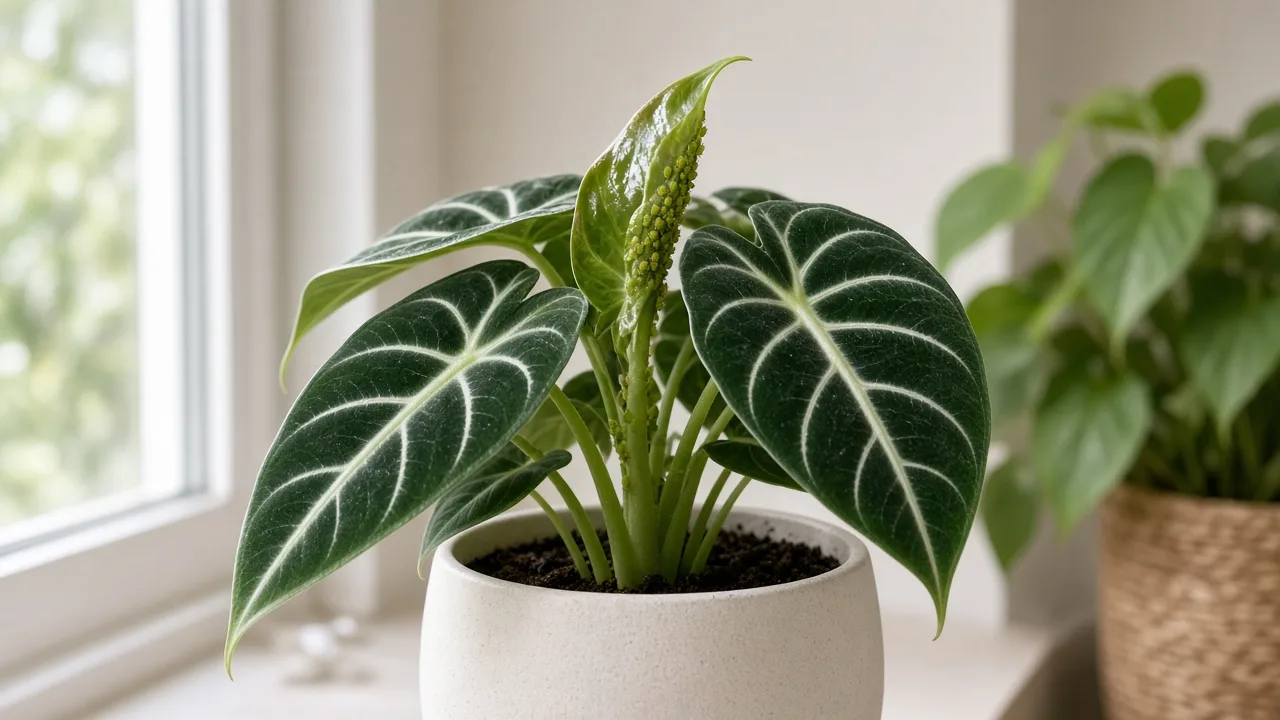
Aphids on Alocasia Frydek: Causes, Checks & Fixes
This guide covers aphids on Alocasia Frydek. See also the general Aphids guide, watering, and light pages for this plant.
Aphids on Alocasia Frydek: Causes, Checks & Fixes
Quick answer
Soft-bodied aphids on Alocasia micholitziana ‘Frydek’ almost always show up on the tenderest new velvet arrow leaves and unfurling petioles—the dark green blades with bright white veins that emerge from the corm. They suck sap, leave sticky honeydew that can feed sooty mold, and can pucker or twist emerging tips before the leaf hardens.
For how aphids reproduce, why ants defend them, and when water knockdown works in general, see our aphids pest guide. On Frydek, the practical pattern is warm-season clusters on new flush, sticky velvet blades in humid cabinets, and extra caution because the fuzzy leaf surface traps rinse water and rules out neem oil.
First step: isolate the plant if other houseplants sit nearby, then rinse or gently wipe aphids off the newest velvet arrow leaves and their undersides under lukewarm running water—then let foliage air-dry in filtered light the same day.
When to use this page vs other Alocasia Frydek guides
This page is the pest-first entry for soft-bodied sap feeders on new velvet growth.
| Pattern | Read next |
|---|---|
| Fine webbing + stippling on velvet undersides | Spider mites |
| White cottony patches in petiole axils | Mealybugs |
| Distorted new leaves without confirmed insects | Distorted leaves |
| Cupped or curled blades, no stickiness | Curling leaves |
| Silvery scarring on arrow blades | Thrips |
| Yellow lower leaves, wet mix, soft petioles | Overwatering or root rot |
| Long bare petioles, tiny leaves | Leggy growth |
What aphids look like on Alocasia Frydek
Aphids are small pear-shaped insects, often less than 1/8 inch long, that feed in dense groups on tender tissue. On Frydek they prefer the tissue that is still expanding:
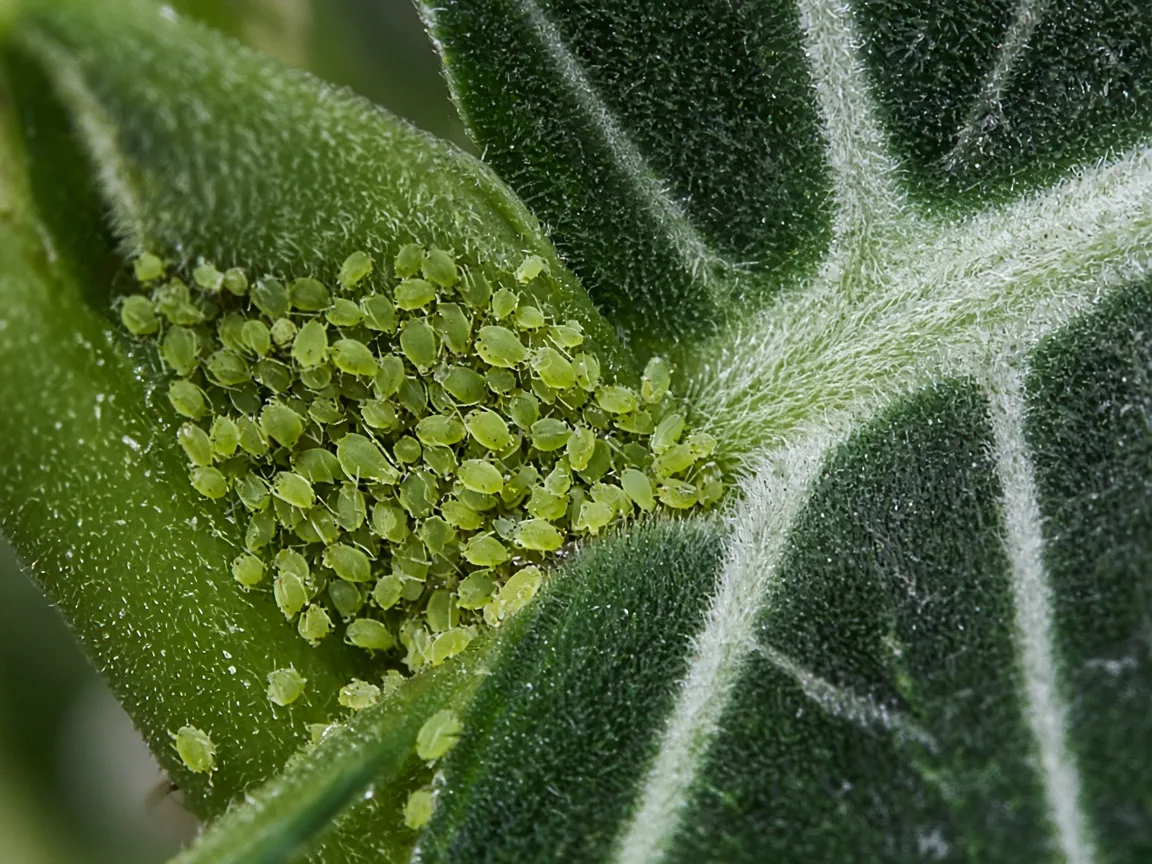
Pear-shaped aphids packed into the axil of an emerging dark green velvet blade—compare with firm mature leaves lower on the plant.
- Clusters on the newest velvet arrow leaves — Soft flush at the crown, often green, yellow, brown, or black depending on species
- Sticky shine on dark green blades — Honeydew collects on young velvet foliage and nearby pot rims
- Puckered or fishhooked emerging tips — Feeding distorts leaves while they are still soft; overlaps with distorted leaves when pests are the cause
- Ant trails on the saucer or shelf — Ants harvest honeydew and protect colonies from lady beetles and lacewings
- Black sooty coating on lower arrow leaves — Fungus growing on dried honeydew, not leaf spot disease
Healthy Frydek leaves are dark green velvet arrow blades with stark white veining. Mature lower leaves can look perfect while the newest flush is infested—do not assume the plant is clean because the outer canopy is firm.
NC State Extension notes that alocasias are prone to spider mites, aphids, and mealybugs and recommends monitoring new growth. Frydek’s velvet surface makes early detection harder than on glossy-leaf alocasias like Polly.
Where aphids hide on Frydek velvet leaves and unfurling petioles
Jewel alocasias like Frydek grow from an underground corm with upright petioles pushing new arrow blades. Aphids follow the slowest, softest tissue—not the firm lower canopy.
Unfurling petiole tips are the highest-value feeding site. New velvet blades emerge rolled or partially folded from the corm. Colonies tuck into the fold and along the petiole base where the arrow attaches. Lift outer mature leaves gently and inspect the innermost tips with a magnifier.
Fuzzy leaf undersides hold most colonies. The velvet trichomes on Frydek make pale green aphids easy to miss from above. Turn each soft new blade and check the midrib groove—this is the same inspection zone where spider mites hide, but aphids form dense clusters instead of webbing.
Petiole axils where overlapping arrows stack trap honeydew and shelter insects from a quick overhead rinse. In a multi-leaf specimen, one new flush can carry a heavy colony while neighboring petioles look clean—inspect every emerging tip, not just the tallest leaf.
New plants from nursery benches often arrive with aphids only on crown flush. Quarantine Frydek for two weeks and magnify new tips before placing it beside other alocasias or in a shared humidity cabinet.
Once several firm velvet leaves have opened, aphids usually move up to the next soft flush. Lower mature blades are less common feeding sites unless the whole plant is stressed and pushing abnormally soft growth in very dim light.
Why velvet Frydek is different from glossy alocasias for aphid treatment
Frydek’s fuzzy leaf surface changes how you treat pests—not just how you spot them.
Neem oil and horticultural oil damage velvet trichomes. Oil residue clogs the hair-covered surface, leaves permanent brown spotting, and can ruin the matte finish Frydek is grown for. Use insecticidal soap or a cotton swab with dilute isopropyl alcohol for spot treatment instead. The RHS alocasia growing guide recommends monitoring for pests on tender new growth—on Frydek, choose soap-based products that rinse clean.
Rinse water sits in trichomes. Never mist foliage to knock down aphids. Direct misting traps droplets in the velvet surface, encourages fungal spotting, and can leave permanent marks—the same reason the watering guide warns against wetting leaves. Rinse under a gentle stream, then air-dry in bright filtered light the same day.
Soft nitrogen-rich shoots attract colonies. Frydek is a moderate feeder; too much nitrogen produces floppy velvet leaves that aphids prefer. If colonies exploded right after feeding, review the fertilizer guide and hold extra nitrogen until insects are gone.
Why Alocasia Frydek gets aphids
Frydek pushes new velvet leaves steadily when humidity stays above 60% and light is bright but filtered—that growth rhythm creates predictable aphid habitat.
Warm indoor crown flush. Aphids reproduce quickly in mild temperatures; adult females can produce many live young per week. Frydek can push a new arrow blade every two weeks in summer inside a cabinet, so tender tissue stays available longer than on slow winter growth.
Soft shoots in dim corners. Very low light produces small, soft, etiolated blades that stay vulnerable. Cross-check the light guide if every new arrow is tiny and sticky—pests and weak growth often overlap.
Humidity cabinets and grouped plants. Frydek often lives in IKEA cabinets or terrariums where pests spread plant to plant quickly. Good airflow and weekly scouting matter more in enclosed setups.
Ant protection. Ants on pot rims or cabinet shelves shield aphids from lady beetles, lacewings, and parasitic wasps. A cabinet plant with ant highways often holds larger crown colonies.
Hitchhikers from new plants and summer outdoors. Aphids commonly enter collections on fresh nursery stock or after a patio season. They are not a sign you failed at watering—but wet, stagnant petiole bases plus pests are a worse combination than either alone.
How to confirm the cause
Work through these checks before you treat:
- Location on the plant — Soft clustered insects on newest velvet arrow leaves suggest aphids. Fine webbing and stippling in dry heat suggest spider mites. White cottony tufts suggest mealybugs.
- Hand-lens inspection — Pear-shaped bodies with long legs and antennae confirm aphids. Bronze or swollen mummy aphids mean parasitic wasps are already working—often a sign you can monitor before spraying.
- Honeydew test — Rub a sticky young blade. Honeydew feels tacky; sooty mold smears black and wipes off. Neither pattern matches yellow leaves from old-leaf senescence alone.
- Ant activity — Ants near the pot point to honeydew producers on growth above. Ant control alone will not cure aphids, but it explains weak biological control.
- Shake test — Tap an infested arrow leaf over white paper. Aphids fall as slow-moving specks. Whiteflies would fly up in a cloud—see whiteflies if that happens.
- Care cross-check — Confirm the top 2–3 cm of chunky aroid mix dries between waterings. Pest damage on a drowning corm needs moisture correction, not spray alone.
If you see only a small colony and parasitic wasp mummies nearby, confirmation may mean monitor rather than spray immediately.
First fix for Alocasia Frydek
Rinse or gently wipe aphids off the newest velvet arrow leaves and their undersides under lukewarm running water—then let foliage air-dry in filtered light the same day.
Hold the pot at a slight angle so runoff does not flood the corm repeatedly. Support each soft new blade from underneath with your fingers and direct water along the fuzzy underside and petiole base where colonies cluster. A sink sprayer or shower nozzle on gentle pressure works; avoid ice-cold water on tropical foliage.
This single step knocks many aphids off sturdy plants, washes fresh honeydew before ants arrive, and preserves predators. Repeat every two to three days while live aphids remain on inspection.
Do not reach for insecticidal soap on day one if colonies are small and lady beetles or lacewing larvae are visible nearby. Do not use neem oil on Frydek velvet leaves—soap or water knockdown is the safer first escalation.
Pet and sap note: Frydek is toxic to cats and dogs. Rinse in a sink away from pets, wear gloves when handling sap, and avoid letting children chew treated leaves.
Step-by-step recovery
After the initial rinse:
- Scout every three to four days through warm indoor growth. Aphids can rebound within a week in heated rooms and humidity cabinets.
- Wipe remaining clusters on isolated petiole tips with a damp paper towel or cotton swab if water missed tight axils.
- Manage ants when trails are heavy. Sticky barriers on pot rims or ant baits placed away from the plant can let predators reach aphids.
- Apply insecticidal soap only if rinses fail twice and colonies persist. Test one arrow leaf first; some plants are sensitive to soaps and oils. Coat aphids thoroughly and avoid drought-stressed or cold-shocked plants.
- Wash sooty mold off lower velvet leaves with a barely damp microfiber cloth once honeydew production stops. Trim blades that stay heavily coated if they no longer contribute to the plant.
- Hold extra fertilizer until aphids are under control. Resume light feeding per the fertilizer guide after new flush comes in clean.
If soap is not enough, a cotton swab dipped in dilute isopropyl alcohol can touch individual aphids on a single petiole tip—avoid soaking the whole crown or dripping into saturated mix.
Prune only heavily infested, fully distorted arrow leaves that block new growth and fail two rinse cycles. See the pruning guide before removing more than one or two blades at a time—Frydek needs mature leaves for photosynthesis during recovery.
Recovery during dormancy
Frydek may drop all leaves in winter while the firm corm stays alive below the mix. If you find aphids on the last few leaves before dormancy, a gentle rinse is still worthwhile—but do not soak the pot or push the plant with fertilizer while growth has stopped.
During bare-corm dormancy, aphids are uncommon indoors unless a neighboring plant still has active colonies. Scout any returning spring flush aggressively; the first velvet arrow blades after dormancy are prime aphid targets.
Recovery timeline
Water knockdown shows results within two to three days on moderate colonies. A full follow-up cycle with scouting may take one to two weeks. Puckered velvet tips from heavy feeding often stay twisted until replaced—expect clean new blades with crisp white veining within two to four weeks once insects stay gone.
Improvement signs: Flat arrow leaves on new flush, no new stickiness, firm petioles, stable corm when gently pressed through the mix surface.
Worsening signs: Sticky residue spreading to multiple petioles, ants on every new tip, mushy petioles with sour-smelling mix, or colonies rebounding after two rinse cycles—escalate to targeted soap treatment or compare with distorted leaves if growth stays warped without insects.
Lookalike symptoms
| What you see | More likely | Quick check |
|---|---|---|
| Dense soft insects on new velvet tips | Aphids | Pear-shaped; honeydew on young blades |
| Fine webbing + stippling on fuzzy undersides | Spider mites | Dry heat; shake test on white paper |
| White cottony tufts in petiole axils | Mealybugs | Waxy coating; not pear-shaped |
| Twisted new leaves, no insects at 10× | Distorted leaves | Bent-tip or etiolation—magnify first |
| Silvery scars on arrow blades | Thrips | Scraping damage; not sap clusters |
| Yellow lower leaves, no stickiness | Yellow leaves | Normal aging or wet roots—check mix |
Mistakes to avoid
Do not use neem oil or horticultural oil on Frydek velvet leaves. Oils damage trichomes and cause permanent brown spotting—use insecticidal soap instead.
Do not mist foliage to control aphids. Water droplets sit in velvet trichomes and encourage fungal marks—the same risk that makes misting a bad humidity strategy for this plant.
Do not soak the pot repeatedly while rinsing petiole tips. Frydek rots fast in wet mix—follow water when top 2–3 cm dries after treatment and empty the saucer within 30 minutes.
Do not spray horticultural oil on a cold-shocked or drought-stressed plant without a test patch. Oils can damage sensitive plants in heat or on drought-stressed tissue.
Do not ignore ants while treating aphids only with water. Ant protection keeps colonies rebounding on new flush.
Do not increase fertilizer during an active infestation. Soft lush velvet shoots feed the next generation.
Do not strip every distorted lower leaf at once. Frydek needs mature blades for photosynthesis—remove only heavily infested tissue.
How to prevent aphids next time
Scout new flush weekly during active growth—before stickiness reaches cabinet glass or neighboring shelves.
Quarantine new alocasias for two weeks and inspect petiole tips before placing them in a shared humidity cabinet.
Preserve beneficial insects when possible. Tolerate small colonies when damage is cosmetic and lady beetles, lacewings, or parasitic wasp mummies are present.
Manage ants on pot rims in windowsill and cabinet setups.
Keep the plant in bright indirect light with airy chunky aroid mix so velvet leaves mature quickly and firm up before aphids build large colonies.
Avoid heavy nitrogen feeds that push soft shoots—follow the seasonal schedule in the fertilizer guide.
When to worry
Small aphid clusters on one new leaf during warm indoor growth are common on vigorous Frydek and rarely threaten a firm corm if you rinse early. Escalate when sticky honeydew coats multiple petioles, ants protect large colonies on every new flush, or velvet arrow leaves fail to unfurl across the whole plant.
Act urgently if petioles soften, lower leaves yellow in waves, and mix stays wet for weeks—switch to root rot diagnosis rather than assuming insects alone are the problem.
Related Alocasia Frydek guides
- Overview — velvet alocasia culture, dormancy, and pet toxicity
- Watering — avoid wet crowns and corm rot during rinse treatments
- Light — firm velvet growth vs soft etiolated tips
- Spider mites — webbing and stippling on fuzzy undersides
- Mealybugs — cottony patches in petiole axils
- Distorted leaves — twist without confirmed insects
- Problems hub — full symptom index
Conclusion
Aphids on Alocasia Frydek are a new-flush and unfurling-petiole problem in most homes—not a mysterious whole-plant collapse. Magnify the center of each emerging arrow blade, rinse or wipe colonies off soft velvet tissue, and keep the corm dry while you treat. Firm petioles and clean new arrow leaves on the next flush are the recovery signal; old puckered blades can stay imperfect without harming the underground corm.
Related tool
Use the Pest Identifier Tool to narrow causes for aphids on this plant before changing multiple variables at once.