Leggy Growth on Alocasia Zebrina: Causes, Checks & Fixes
Quick answer
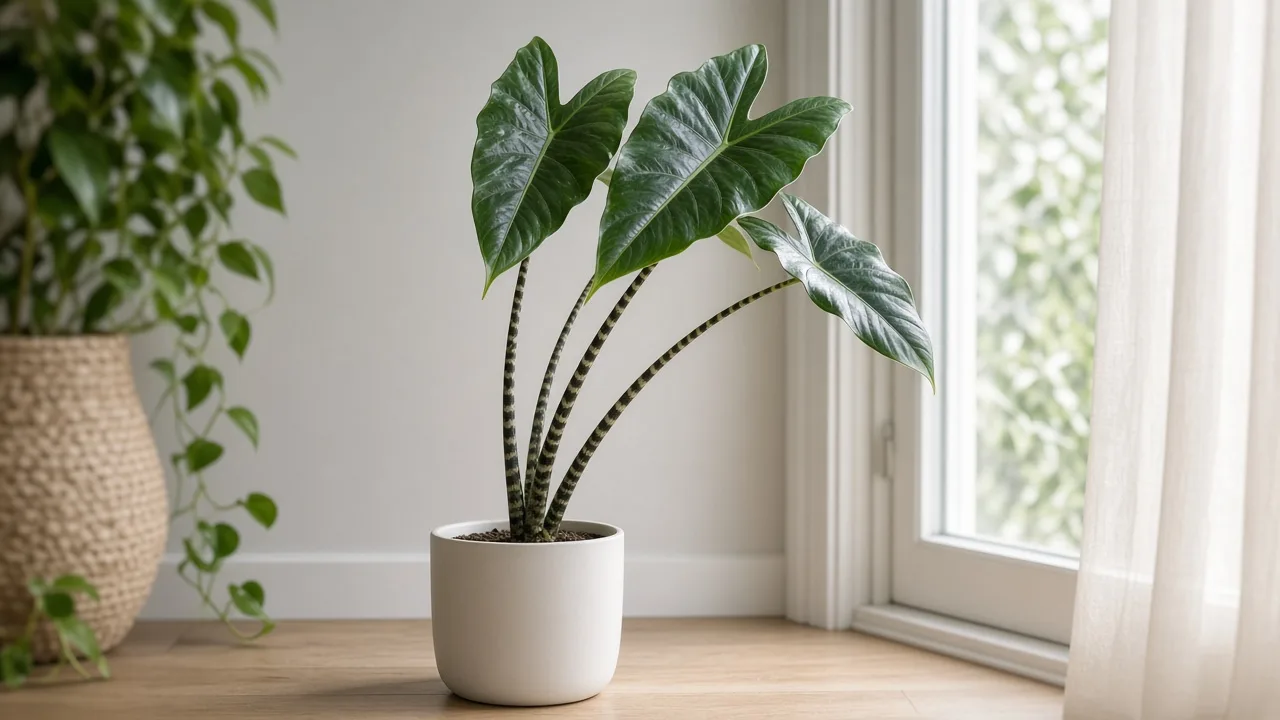
Leggy Alocasia Zebrina shows elongated zebra-striped petioles between small arrow leaves, a lean toward the brightest window, and a sparse crown holding only two or three blades where several upright glossy leaves should sit. First step: move the pot to bright indirect light today, then read the next unfurling leaf for tighter spacing before pruning at the crown.
Leggy Growth on Alocasia Zebrina: Causes, Checks & Fixes
This guide covers leggy growth on Alocasia Zebrina. See also the general Leggy Growth guide, watering, and light pages for this plant.
Leggy Growth on Alocasia Zebrina: Causes, Checks & Fixes
Quick answer
Leggy growth on Alocasia zebrina is etiolation—the plant stretching toward whatever filtered light it can find. Zebrina evolved under bright but indirect Philippine rainforest canopy light, and the RHS alocasia guide notes that while alocasias can survive lower light, growth becomes much slower and plants lean toward the brightest direction unless you rotate them regularly.
For how etiolation works in general, see our leggy growth hub. On Zebrina, the telltales are long zebra-striped petioles between small arrow blades, a one-sided lean toward a single window, faded black-and-white banding on stretched stalks, and a sparse crown holding only two or three leaves where several upright glossy arrow leaves should sit.
First step: move the pot to bright indirect light today—within one to three feet of an east-facing window, or several feet back from south or west glass behind sheer fabric. Do not repot, fertilize, or prune heavily on the same day. Give Zebrina two weeks in the new spot and read the next unfurling arrow leaf for tighter spacing before cutting anything. Window placement detail lives in our light guide.
When to use this page vs other Alocasia Zebrina guides
This page is the stretch-and-structure entry when petioles grow long and bare—not when the pot goes empty in winter or roots fail.
| Pattern | Read next |
|---|---|
| Dim room but stretch not advanced yet | Not enough light |
| Firm corm, just slow in winter or after repot | Slow growth |
| Bare mix, no leaves at all in cool months | Overview dormancy section — often normal |
| Yellow lower leaves on wet mix | Overwatering or root rot |
| Drooping arrow blades, not elongated petioles | Drooping leaves |
| Washed-out pale new leaves without long petioles | Pale leaves |
| Ready to remove stretched petioles after light is fixed | Pruning guide |
| Window placement and seasonal adjustments | Light guide |
What leggy growth looks like on Alocasia Zebrina
Zebrina is an upright Philippine jewel alocasia: glossy arrow-shaped leaves on long zebra-striped petioles, typically 50–120 cm tall indoors with blades 20–35 cm when well placed. Healthy plants carry several firm arrow leaves at once—not a tall wand with foliage only at the tip. Leggy etiolation changes that silhouette gradually:
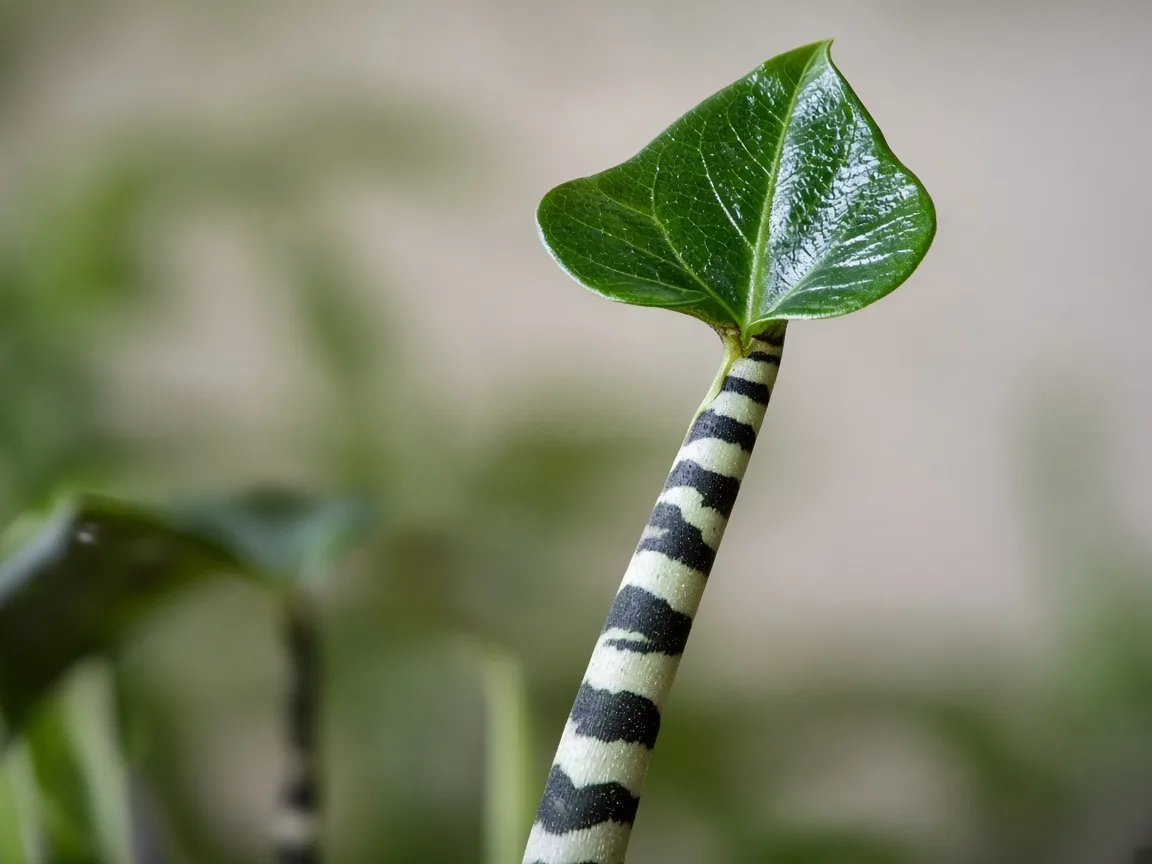
Long bare zebra-striped petiole between small arrow blades—compare the wide gap on stretched growth with tighter spacing on the firmer leaf below.
Typical signs on this species:
- Elongated zebra-striped petioles between small arrow blades — Gaps between leaves widen; the plant looks taller but thinner than when you bought it
- Lean toward one light source — New petioles and unfolding leaves orient toward the brightest window; the pot may angle with the stretch
- Smaller new blades with duller zebra banding — The signature black-and-white stem stripes fade when the plant cannot invest fully in glossy arrow tissue without adequate light
- Sparse crown — Only two or three leaves at a time where a healthy Zebrina should carry a fuller upright fan
- Lower leaves yellowing slowly — Easy to misread as overwatering when low light slowed water use and the mix stayed wet in a dark corner
Leggy growth rarely causes crispy brown patches by itself. Pale, floppy leaves with sour-smelling wet soil point to root stress first—see root rot on Zebrina. Brown papery zones on arrow tissue after a sudden window move mean too much direct sun, not successful relighting.
Zebrina-specific: zebra stem stretch vs. humidity stress
Zebrina’s iconic black-and-white striped petioles make etiolation easy to miss early. Owners often blame low humidity when the real limiter is photons—crisp brown edges from dry air usually show on leaf margins, while etiolation shows as structural stretch (long stalks, small blades, lean). Never mist arrow foliage to “fix” stretch; water droplets on glossy leaves can leave permanent marks. Raise humidity with a humidifier instead.
Zebrina-specific: striped petioles as your light scoreboard
The fastest way to know whether Zebrina is getting enough light is not a meter reading—it is the contrast between the black-and-white zebra banding and the glossy dark green arrow blade. When light is correct, those stripes look sharp and the petioles stay relatively short and firm. When light is too low, the banding washes out, petioles stretch, and new leaves arrive smaller than the previous one. A plant that is “taller” but less full is a classic low-light signal on this species. Full foot-candle targets and grow-light distance live on the Zebrina light guide.
Why Alocasia Zebrina gets leggy
Low light beyond rainforest understory tolerance
Alocasias evolved under tropical forest canopy—bright days overall, but filtered, not direct, sun on the leaves. The RHS explains that alocasias developed extra-large foliage to catch maximum sunlight coming through the tree canopy overhead. Indoors, usable light drops fast with every foot you move away from glass.
Zebrina adds a species-specific wrinkle: those tall upright arrow leaves and striped petioles cost energy to produce. Without adequate light, the plant stretches stalks to reach photons and shrinks new blades to afford the structure—a survival trade-off, not healthy form. Zebrina is faster than compact jewel types like Alocasia Black Velvet, but it still etiolates in dim corners faster than owners expect because each glossy arrow leaf is expensive to build.
Common triggers:
- Decor-first placement on hall tables, interior shelves, or bathroom corners without real window light
- Winter static position while daylight hours shrink and intensity falls
- Dirty glass, sheers, tint, or tall neighbors shading the pot on a crowded sill
- Ceiling room LEDs mistaken for grow light—human lighting does not replace plant-usable spectrum or duration
- Cabinet or terrarium moved away from grow lights after summer rearrangement
Seasonal daylight drop
A spot that kept Zebrina compact in June may etiolate by January on the same shelf. Short days plus weak window angles push many alocasias toward slower growth or dormancy; stretch in a warm room during active months still means too dim for this species, not a normal winter rest. Do not confuse winter leaf drop (possible dormancy with a firm corm) with summer etiolation in a dim but warm room.
Over-fertilization in shade
Extra nitrogen in insufficient light can push weak, soft stretch—long petioles with pale, thin blades—without the firm glossy texture of healthy Zebrina foliage. Structure needs photons first; fertilizer cannot replace them. Hold feed until light is corrected and new leaves look normal for two to three weeks—see the fertilizer guide for seasonal timing.
Lookalikes to rule out
| What you see | Often confused with | How to tell apart |
|---|---|---|
| Long petioles, small leaves, lean toward window | Normal slow growth | Slow pace keeps similar stalk-to-blade ratio; no strong lean—see slow growth |
| Long stalks in dim room | Not enough light (overlap) | Same cause; this page adds pruning and reshape steps—see not enough light |
| Yellow lower leaves, wet soil, no lean | Overwatering alone | Wet mix in dark placement—fix light and watering together |
| Pale stippled leaves, fine webbing | Leggy stretch | Mites on undersides—see spider mites |
| Gradual leaf drop, firm corm, cool winter room | Etiolation | Possible dormancy; stretch in warm months means still too dim |
How to confirm the cause
Work through these checks before buying grow gear or cutting stalks:
- Shadow test at midday — Hold white paper where leaf tips sit. A sharp, dark shadow means enough brightness for most foliage plants; a faint or absent shadow means Zebrina is likely starved.
- Stalk-to-blade ratio — Measure or eyeball the last two new leaves against an older summer leaf. Longer stalks plus smaller blades confirm etiolation.
- Lean direction — Petioles pointing toward one light source confirm active light-seeking.
- Zebra banding check — Dull, faded stripes on new petioles while older summer stalks still show sharp black-and-white contrast strongly supports low light.
- Distance to glass — More than 6 feet (1.8 m) from the only window in a room is usually too dim for an Alocasia.
- Soil dry-down — Top 2–3 cm wet for a week or more without dormancy suggests low light slowed transpiration—pair a light increase with a watering audit.
- Rule out root stall — Sour-smelling wet soil, crown softness, or yellowing spread regardless of lean needs root inspection before you call it leggy growth alone.
Stalk-to-blade decision table
| Pattern | Lean | Soil | Urgency | First action |
|---|---|---|---|---|
| Long stalks, smaller new blades, lean to window | Yes | Normal dry-down | Routine | Move to bright indirect light; wait for next leaf before pruning |
| Long stalks, pale soft blades, recent heavy feed | No | Normal | Moderate | Stop fertilizer; improve light |
| Long stalks plus yellowing spread, sour wet mix | Any | Wet 7+ days | High | Inspect roots—see root rot before relighting alone |
| Similar stalk ratio, no lean, slow but steady new leaves | No | Normal | Low | Likely slow growth, not etiolation |
| Stretch in warm months, then all leaves drop in cool dim room | Maybe | Dry | Watch | Possible dormancy; keep corm warm and barely moist |
Confirmation test: Move to the brightest indirect location you can offer (see first fix). If the next leaf emerges on a shorter stalk with a larger blade and sharper zebra banding, leggy growth from low light was the main problem. No change after four weeks in a genuinely brighter spot suggests roots, cold drafts, or pests deserve inspection.
First fix for Alocasia Zebrina
Move the pot to bright indirect light today—not tomorrow.
Window placement, grow-light distance, and acclimation steps live on the Zebrina light guide and not enough light page—use those for foot-by-foot targets. The leggy-growth priority is relocate first, then read the next leaf before reshaping.
Increase light gradually over 7–10 days if the plant lived in very deep shade. Etiolated plants should be acclimated to brighter light slowly to avoid bleached or brown papery patches on arrow zones.
If no window qualifies, add a full-spectrum LED grow light (typically 20–40 watts) 12–18 inches (30–45 cm) above the foliage for 12–14 hours daily on a timer. North-facing rooms that drop below the medium-light floor in winter almost always need supplemental light to prevent repeat stretch.
Do not fertilize, repot, or drench soil as part of this first step. Brighter light increases photosynthesis; recheck the top 2–3 cm of mix before the next drink per the watering guide.
When to prune at the basal crown
Pruning is a second step, not day one:
- Wait for one new compact leaf—proof the environment works.
- Remove the worst stretched petioles at the base where each stalk meets the crown or soil line. Zebrina produces one leaf per petiole; there is no mid-stem node to cut above like a pothos or philodendron.
- Use clean, sterilized shears and wear gloves—the sap can irritate skin. Full technique: Zebrina pruning guide.
- Rotate the pot a quarter turn weekly after relighting so the crown grows evenly instead of leaning again.
Old stretched internodes will not compress. A bushy fan returns through new leaves on shorter stalks—judge recovery on new growth instead.
Recovery timeline
Expect visible direction change within 10–14 days—less aggressive lean, possible new spear from the crown. Shorter petioles and larger blades show on the next one to two leaves, not on foliage already expanded in shade. Reshaping a badly etiolated Zebrina through selective basal pruning can take one full growing season, especially if you wait for replacement leaves before cutting.
Signs you are on track:
- New petioles noticeably shorter than the previous two leaves
- Larger blade with sharper zebra banding on firm striped stalks
- Soil drying on a predictable schedule again
- Firm, upright new growth from the center
Signs the problem is worsening or misdiagnosed:
- Continued stretch with bleached patches (too much direct sun—pull back)
- Yellowing spread with sour-smelling wet soil (root issue—unpot and inspect before adding more light)
- No new leaves after six weeks in a verified brighter spot (check roots, cold drafts, mites)
- All leaves drop over several weeks in a cool, dim room (possible dormancy—keep corm warm and barely moist)
What not to do
- Placing Zebrina in direct south glass to “fix” legginess quickly—strong sunlight can scorch the foliage before it re-compacts.
- Pruning all stretched leaves on day one before a brighter spot proves itself—you can leave the plant with no photosynthetic surface.
- Pinching mid-stem like a vine—Zebrina has no nodes on petioles; cuts belong at the basal crown only.
- Misting arrow leaves to raise humidity—water sits on glossy surfaces and can cause permanent spotting.
- Watering on the old calendar after a big light upgrade—roots wake up; wet mix in brighter light still rots the corm.
- Over-fertilizing for growth in a dim corner—extra nitrogen pushes weak stretch; light comes first.
- Assuming stretched stalks will shrink when light improves—they will not; only new leaves reshape the plant.
- Repeated pruning in the same dim decorative spot—stretch will return until light or location changes.
How to prevent leggy growth next time
Match placement to how Zebrina actually grows, not where the pot photographs well. Keep bright indirect light as the default, rotate weekly, and wipe dust off arrow leaves gently with a damp microfiber cloth monthly so light reaches chlorophyll—never use leaf shine products.
Before autumn, reassess every windowsill—moving a foot closer or adding a small LED prevents the slow stretch cycle many owners accept as “normal slow growth.” When you increase light, relearn how fast the pot dries until the top 2–3 cm dry-down feels predictable again.
If stretch keeps returning in the same decorative spot, the honest fix is relocating the plant or upgrading light—not repeated pruning alone. Pruning reshapes the fan after light is fixed; it cannot substitute for photons.
Related Alocasia Zebrina guides
- Not enough light — window placement, shadow tests, and wet-soil overlap in dim rooms
- Light requirements — foot-candle targets, grow lights, and safe acclimation
- Pruning — when and how to remove yellow or leggy petioles safely
- Root rot — when sour-smelling wet soil persists after a light increase
- Slow growth — normal aroid pace vs. a true stall
- Overview — baseline care for Alocasia Zebrina
When to escalate beyond relighting
Leggy growth alone is a slow-burning problem if the crown stays firm—but certain combinations need action the same week, not after another month of waiting:
- Yellowing spreads while soil stays waterlogged and smells sour — Reduce watering immediately and inspect roots. Light correction alone will not fix advanced root stress; see root rot for numbered recovery steps.
- No compact new leaf after six weeks in a confirmed brighter spot during summer — Re-measure light at the canopy on the light guide. If placement is adequate, unpot and check for root crowding or soft brown roots before assuming the plant needs more fertilizer or humidity.
- Crown feels soft or collapses — Treat as root emergency, not an etiolation timing issue.
- Stretch is resolved but no new spears appear for months with compact petioles — Open the slow growth guide for humidity, temperature, and dormancy factors separate from etiolation.
Prune leggy tissue only after at least one compact new leaf confirms the brighter placement is working. Adjust watering downward whenever wet soil and yellowing overlap with dim placement—both fixes run in parallel, not one after the other.