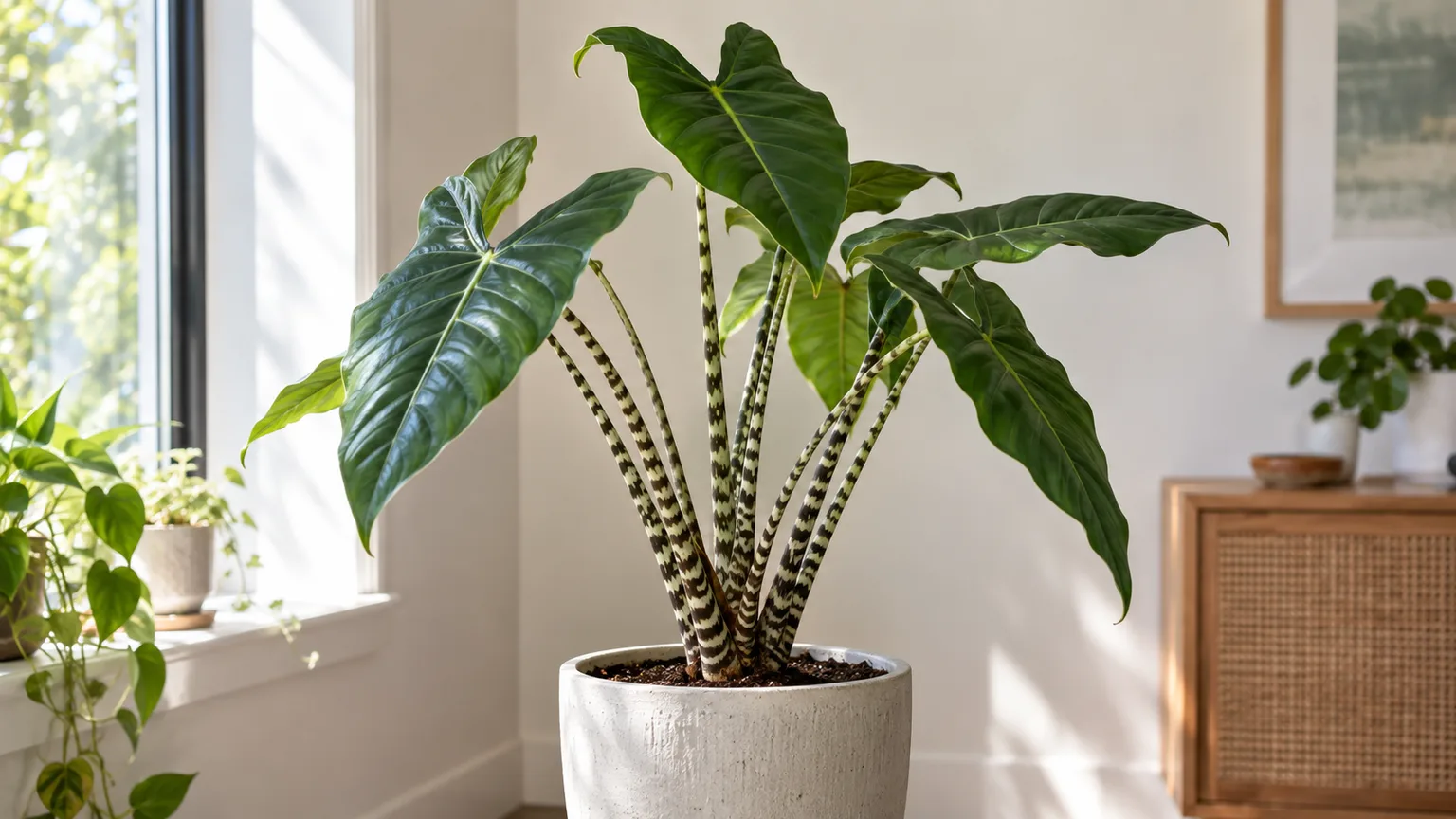
Alocasia Zebrina (Araceae) contains calcium oxalate crystals that are dangerous to rabbits. The House Rabbit Society lists oxalic acid plants as unsafe-ingestion can cause oral pain, reduced appetite, and GI stasis.
Is Alocasia Zebrina safe for rabbits?
Toxic(mild)
Alocasia Zebrina (Araceae) contains calcium oxalate crystals that are dangerous to rabbits. The House Rabbit Society lists oxalic acid plants as unsafe-ingestion can cause oral pain, reduced appetite, and GI stasis.
Possible symptoms: vomiting, drooling, oral irritation, reduced appetite, GI stasis risk
Disclaimer: This page is for general information only and is not veterinary advice. If your rabbits ate Alocasia Zebrina, contact your veterinarian or animal poison control immediately.
Alocasia Zebrina (Araceae) contains calcium oxalate crystals that are dangerous to rabbits. The House Rabbit Society lists oxalic acid plants as unsafe-ingestion can cause oral pain, reduced appetite, and GI stasis.
What should I do if my rabbits ate Alocasia Zebrina?
Remove any remaining plant material, note how much was eaten, and contact your veterinarian or animal poison control immediately. Watch for: vomiting, drooling, oral irritation, reduced appetite, GI stasis risk.
What are safer plant alternatives for rabbits?
Browse our verified list of plants safe for rabbits at /best-plants/plants-safe-for-rabbits/. Popular picks include spider plant, Boston fern, and areca palm for cat and dog households.
Written by Sai AnanthLead content writer at LeafyPixels. B.Pharmacy graduate from Andhra University with a background in pharmacognosy, turned indoor gardening writer after a long-time plant hobby became a research-led resource for home growers.View Sai Ananth's profile · Reviewed by LeafyPixels Review Board · Updated July 5, 2026
This Alocasia Zebrina plant profile was researched and written by Sai AnanthLead content writer at LeafyPixels. B.Pharmacy graduate from Andhra University with a background in pharmacognosy, turned indoor gardening writer after a long-time plant hobby became a research-led resource for home growers.View Sai Ananth's profile. Care facts, watering ranges, light needs, and pet-safety notes for Alocasia Zebrina are checked against multiple independent references before publication.
We prioritize sources that hold up under scrutiny:
University cooperative extension bulletins and fact sheets (Penn State, Clemson, UMD, NC State, and similar programs)
Botanical garden and horticultural society publications
Peer-reviewed plant science and veterinary toxicology references where pet safety matters (including ASPCA Animal Poison Control)
Established reference works on indoor plant culture
The LeafyPixels editorial team then reviews the draft for clarity, step-by-step usefulness, and fit with real apartment and home conditions-not ideal greenhouse setups. When guidance changes materially, we update the page and note the revision date.
What this guide covered
Recommendations were checked against Kew POWO, RHS, NC State Extension, ASPCA, and the RHS Alocasia growing guide using Crawl4AI-saved sources. Dormancy and corm-care notes are based on practical indoor-growing observation where formal extension sources describe general Alocasia biology rather than this specific species.