Alocasia Zebrina Slow Growth: Dormancy or a Problem?
Quick answer
First, put a firm, pest-free Alocasia Zebrina in the brightest indirect light available in a consistently warm room. Then monitor the newest spear instead of feeding or immediately repotting. A moving spear or one old leaf retiring as another opens is growth; a soft crown, sour wet mix, collapsing roots, or a mushy storage organ calls for inspection now.
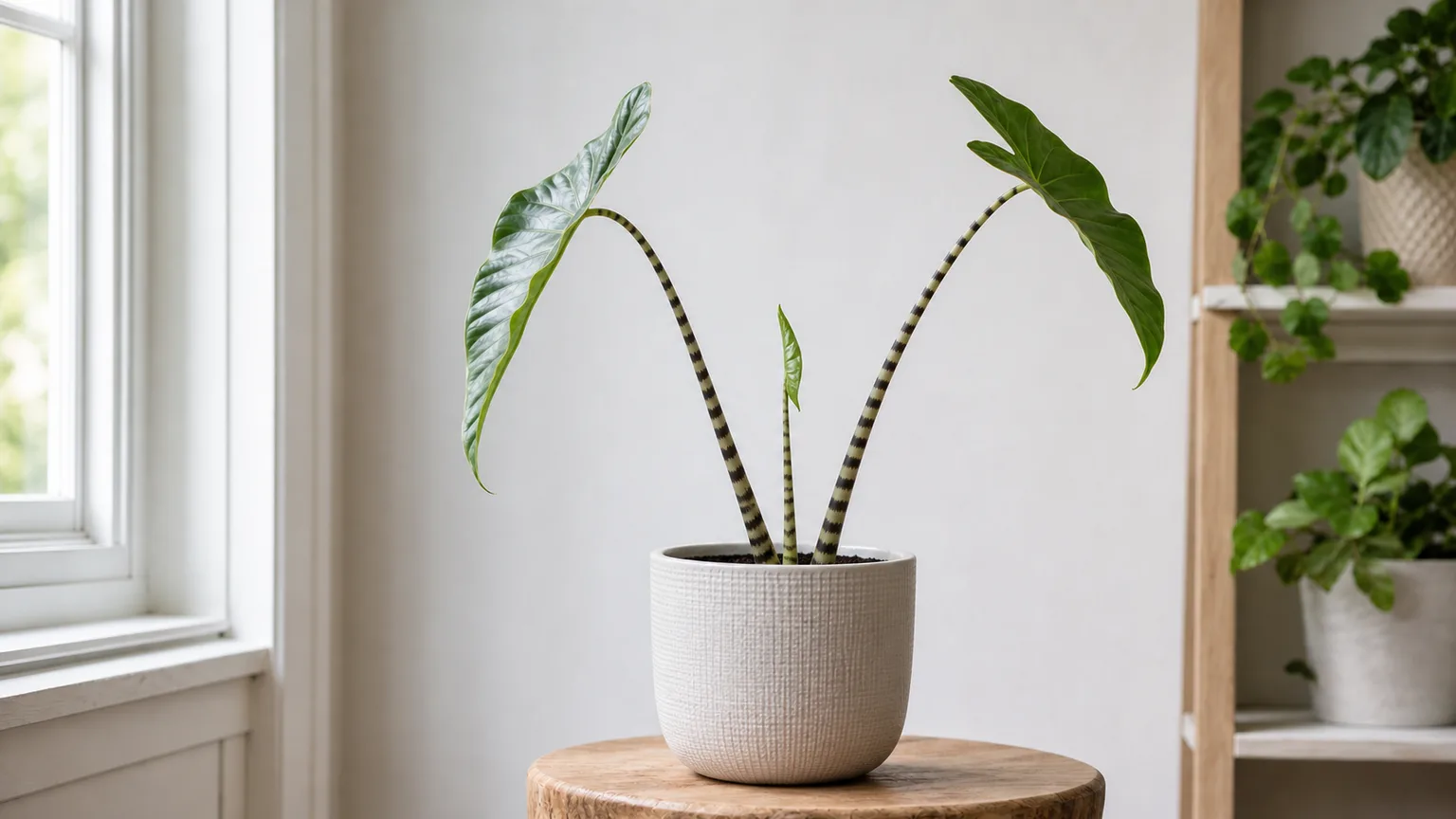
Slow Growth on Alocasia Zebrina: Dormancy or a Real Problem?
This guide covers slow growth on Alocasia Zebrina. See also the general Slow Growth guide, watering, and light pages for this plant.
Slow Growth on Alocasia Zebrina: Dormancy or a Real Problem?
Quick answer: monitor or inspect now?
First, put a firm, pest-free Alocasia Zebrina in the brightest indirect light available in a consistently warm room. Make that one change before feeding or repotting. The RHS Alocasia guide notes that alocasias grow more slowly in low light, prefer bright indirect light, and need warmth above 16°C (60°F) during the growing season.
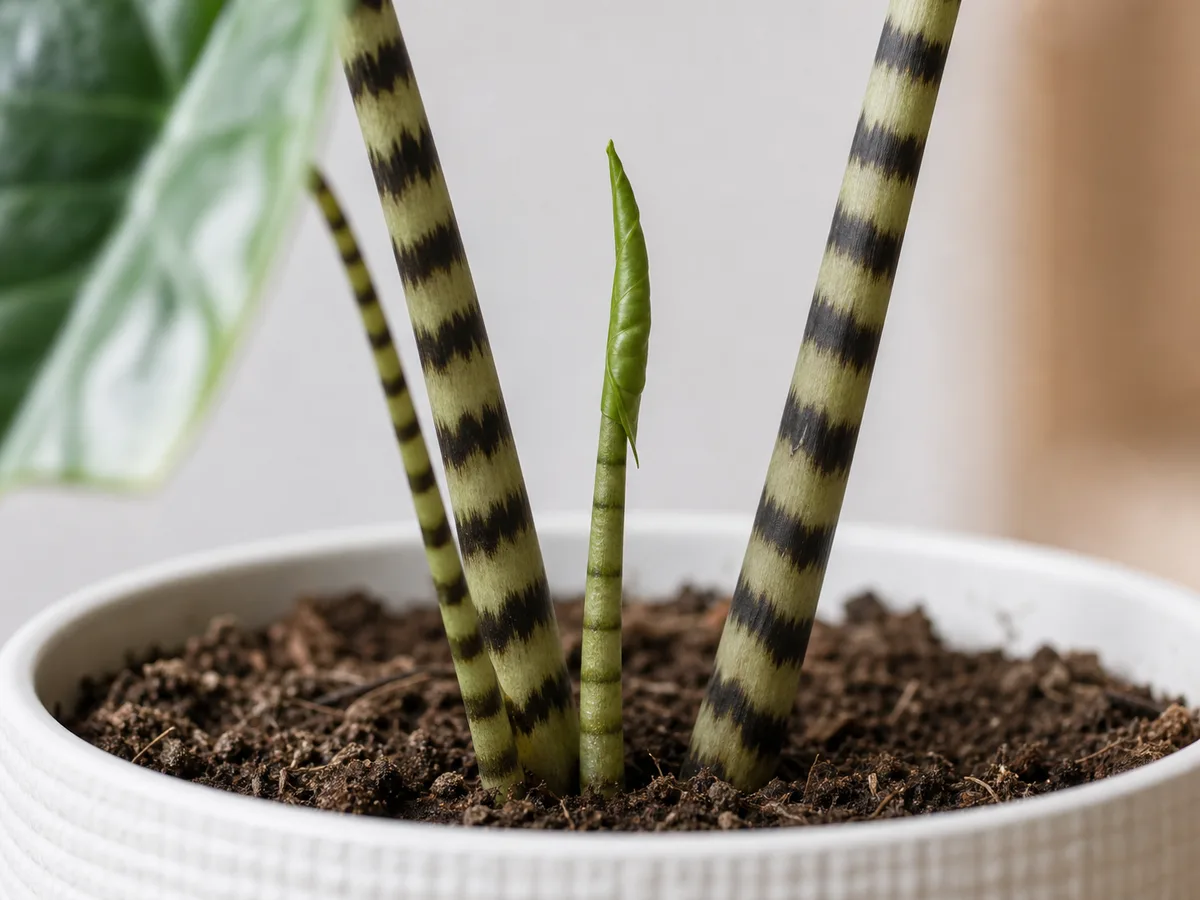
Illustrative generated diagnostic image, not a time-series or documented growth trial. Photograph your plant from the same angle to confirm whether its spear is moving.
Next, watch the crown rather than counting leaves. A spear that lengthens or begins to loosen is active growth, even if an older leaf retires at the same time. Inspect the roots and underground storage tissue now only if the pot stays wet unusually long, smells sour, or the crown and striped petiole bases are soft. The broader slow-growth guide explains general houseplant causes; this page focuses on the spear, petiole, and storage-organ evidence that matters on Zebrina.
Three checks before changing care
This sequence is a LeafyPixels editorial synthesis of the cited cultivation and root-health guidance. It is designed to minimize unnecessary disturbance: observe visible growth first, read the plant’s structure second, and use pot behavior to decide whether below-soil inspection is justified.
1. Is the new spear moving?
Photograph the crown and newest spear from the same angle. Check again after seven days, then once more after another seven days. This two-week comparison is an editorial monitoring checkpoint, not a biological deadline; season, light, temperature, plant maturity, and recent stress all change the pace.
Look for a taller spear, a looser seam, or the tip shifting away from the crown. Any of those changes means the plant is building a leaf. A motionless spear during a cool, short-day period can still be a seasonal pause. A motionless spear through warm, bright conditions moves the diagnosis toward roots, pests, or a limiting pot.
2. Are the striped petioles and crown firm?
Alocasia Zebrina’s banded petioles make the soil-line inspection unusually useful. Firm petioles attached to a stable crown support monitoring. A lower leaf can yellow while a new leaf emerges; the RHS Zebrina profile describes older-leaf drop as normal replacement.
Pressing hard can bruise healthy tissue, so use sight and a gentle touch. A petiole base that is translucent, folding, or soft where it enters the mix is not normal slow growth. Pair that sign with pot odor and root condition before deciding whether decay is present.
3. Is the pot drying in its normal pattern?
Lift the pot at the same point after watering and note how its weight changes. In active growth, a functioning root system in an appropriately sized, airy pot should use water predictably. A pot that remains heavy far longer than it used to may contain dense mix, excess container volume, or too few functioning roots; a root ball that dries almost immediately may be tightly packed or channeling water around the edges.
Do not turn either pattern into a fixed watering calendar. Use the Alocasia Zebrina watering guide to match watering to root-zone dryness and season.
Dormancy, leaf cycling, or decline?
| Evidence | Most likely interpretation | What to do |
|---|---|---|
| Spear moves; one oldest leaf yellows; petioles stay firm | Normal leaf replacement | Keep care stable and monitor |
| Little movement in a cool, short-day period; crown and storage tissue stay firm | Seasonal dormancy or slowdown | Reduce watering demand and wait |
| Long, leaning petioles or repeatedly smaller blades; roots smell normal | Light is limiting the next leaves | Correct position using the light guide |
| Pot dries extremely fast; pale firm roots densely circle the container | Root restriction | Plan a modest spring repot |
| Pot stays wet; sour odor; soft petiole bases, roots, or storage tissue | Root or storage-organ decline | Inspect once and follow the root-rot guide |
| Fine stippling, webbing, or cottony clusters around the spear and petiole junctions | Pest pressure | Diagnose the pest before treating |
No single leaf-count rule separates dormancy from decline. The useful distinction is stability versus deterioration: firm tissue and normal odor support observation; progressive softness, collapse, or foul odor support intervention.
What normal Zebrina leaf replacement looks like
Zebrina carries large blades individually on long striped petioles rather than building a dense vine or rosette. The visible leaf count can remain unchanged while the plant is actively replacing tissue: a new rolled spear rises as the oldest outer leaf lowers and yellows. That pattern is different from several petioles weakening together without new crown movement.
Keep a green older leaf while the new blade develops. It will not become larger again, but removing it early does not make the spear open faster. When the leaf is fully yellow or physically damaged, the Zebrina pruning guide explains where to make a clean cut without injuring the crown.
The spear is also a better progress marker than the current blade size. One smaller leaf after a move or root disturbance records past conditions. Repeated smaller leaves, increasing petiole stretch, and no stronger follow-up spear are more useful evidence of an unresolved constraint.
Why warm-season stagnation deserves a closer look
Kew records Alocasia zebrina as a Philippine species of the wet tropical biome. That background makes a prolonged cold, dim position a plausible brake on active indoor growth. It does not mean a struggling plant needs constant moisture: warmth and light determine how much water the canopy and roots can use.
After the first position correction, rule out remaining constraints in this order:
- Cold exposure: Check the temperature beside the pot overnight, not only the room thermostat. Cold glass, drafts, and air-conditioning can make the crown cooler than the rest of the room.
- Root-zone behavior: Note whether the mix starts drying or remains heavy. Missouri Botanical Garden pairs bright indirect light and warmth with moist, well-drained soil, not continuous saturation.
- Root space: Consider restriction only when pale, firm roots densely occupy the pot or water races through channels. Do not assume every slow Zebrina needs a larger container.
- Pests: Inspect the underside of each blade, the rolled spear, and the striped petiole junctions. Those sheltered sites can hide mites or mealybugs before the whole canopy looks affected.
Change one main constraint and keep notes. Simultaneously moving, repotting, feeding, and treating for an unconfirmed pest removes the evidence you need to tell what helped.
Understanding the corm, rhizome, and storage-tissue terms
Plant references do not always use the same everyday word for an Alocasia’s underground structure. NC State describes the genus as tuberous herbaceous perennials, while the RHS Zebrina profile uses “rhizomatous.” Growers often say “corm.” For a home inspection, the label matters less than the practical distinction: viable storage tissue feels solid; spreading soft, hollow, brown, or foul-smelling tissue signals damage.
That storage tissue explains why an apparently empty pot can still be alive. During dormancy, visible growth may stop and foliage may be lost while the underground structure remains firm. The RHS advises cooler, drier winter conditions and warns that excessive water during dormancy can rot roots.
Do not dig repeatedly to look for a bud. If the pot smells normal, the soil is not staying saturated, and the crown or storage tissue is firm, continued observation is safer than serial unpotting.
When to inspect roots and storage tissue
Unpot once when at least one meaningful warning sign accompanies the stall:
- the mix smells sour or stale;
- the pot remains wet much longer than its established pattern;
- several petiole bases soften or collapse;
- the crown is loose rather than firmly anchored; or
- discoloration and softness spread through exposed storage tissue.
Healthy roots are firm rather than collapsing, and densely packed roots can still be viable. Wisconsin Horticulture identifies stunting, wet-soil wilt, and soft brown roots as root-rot evidence. If you find that pattern, use the dedicated recovery page rather than returning the plant to the same wet mix.
If the roots are pale and firm but crowded, repot only slightly larger during active growth. The Zebrina soil guide covers an aerated mix that balances moisture retention with drainage around the storage structure.
What not to do while growth is paused
Do not fertilize a dormant or root-damaged Zebrina into growth. The RHS feeding guidance limits feeding to the growing season and directs growers to follow the product label. Resume the Zebrina fertilizer routine only after sustained spear movement confirms active growth and the roots are healthy.
Do not keep adding water because no leaf has appeared. A smaller or leafless canopy uses water more slowly, so the old interval can become excessive. Do not repeatedly unpot a stable dormant plant, and do not remove a green older leaf merely because a spear is present.
What recovery looks like
Recovery shows at the crown before it changes the plant’s overall appearance. A firm stalled spear may begin lengthening; the next spear may be stronger than the current leaf; and the pot may return to a predictable dry-down pattern. Existing small leaves will not enlarge into a new shape, and an already damaged spear may never open normally.
Use bounded checkpoints rather than promises:
- At the next weekly check: look for any spear movement and confirm that softness is not spreading.
- At the second weekly check: if conditions are warm and bright but nothing has moved, recheck pot behavior and pest hiding places.
- Inspect immediately at any point: if odor, softness, or collapse appears.
- Continue seasonal monitoring: if the plant is stable but dormant; there is no universal date by which it must restart.
A plant rebuilding damaged roots may stabilize before it produces a large leaf. A fully soft, foul-smelling storage structure has little viable tissue left; if no firm portion remains, recovery is unlikely.
Prevent another unexplained pause
Take one crown photograph each month and record whether the newest spear moved, whether one old leaf retired, and how the pot dried after watering. This small record makes normal replacement visible and exposes a genuine multi-week stall without forcing a universal leaf-production schedule.
Keep the plant in a stable warm, bright-indirect position, adjust watering to seasonal use, and inspect the spear and petiole junctions during routine care. Repot because healthy roots have filled the container or the mix has physically failed—not simply because a leaf was slow.
Related Alocasia Zebrina guides
Use the Alocasia Zebrina overview when the whole setup needs review. If more than one symptom is present and the table above does not isolate the cause, the Alocasia Zebrina problems hub routes you by visible evidence. This slow-growth page remains the right reference when the main question is whether a quiet crown is cycling, dormant, environmentally limited, or declining below the soil.