Holes in Leaves on Aluminum Plant: Causes, Checks & Fixes
Quick answer
Holes in aluminum plant (Pilea cadierei) leaves are missing tissue on soft silver-banded blades—not natural fenestration. Indoors, mechanical snags on opposite leaf pairs, pet chewing, mealybug axil collapse, and post-spot necrosis are more common than mystery disease. First step: inspect the hole edge and the leaf-pair axil with a flashlight before spraying anything.
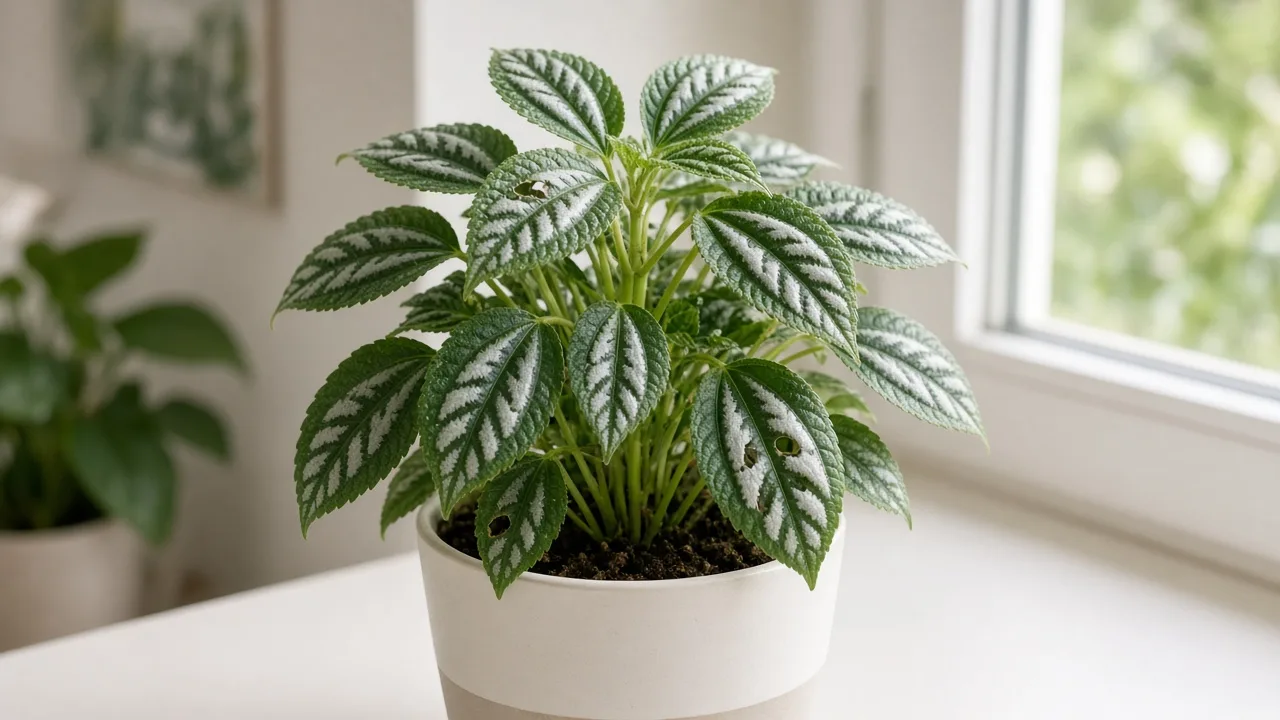
Holes in Leaves on Aluminum Plant: Causes, Checks & Fixes
This guide covers holes in leaves on Aluminum Plant. See also the general Holes in Leaves guide, watering, and light pages for this plant.
Holes in Leaves on Aluminum Plant: Causes, Checks & Fixes
Quick answer
Holes in aluminum plant (Pilea cadierei, also sold as watermelon pilea) mean tissue is missing from the plant’s soft, silver-banded opposite leaves—not natural splits like a Monstera. Every gap is damage, disease aftermath, chewing, or collapse after sucking pests.
For how chewing pests and mechanical tears work across houseplants, see our holes in leaves guide. On aluminum plant, the fastest clue is the hole edge plus the opposite-pair axil: green moist margins point to recent tearing or active feeding; brown dry rims with a dark ring often mean old leaf-spot tissue fell out; white cottony fluff tucked where two leaves meet points to mealybugs.
First step: hold the stem steady and inspect the hole edge and the axil between the opposite leaf pair with a flashlight—before you spray, repot, or prune.
When to use this page vs other Aluminum Plant guides
| Pattern | Start here | Or route to… |
|---|---|---|
| Open hole, green moist edge | This page | Caterpillars if larva found |
| Brown dry hole where a spot was | Black spots | This page for cosmetic aftermath |
| Serpentine trail inside blade | Leaf miners | This page if hole is full-thickness |
| Clean tear on one opposite leaf | This page (mechanical) | — |
| Ragged chew + frass after patio time | Caterpillars | This page for first ID |
| Silver scarring, distorted new pairs | Thrips | — |
| Sticky residue, clusters on tips | Aphids | — |
What holes look like on aluminum plant
Pilea cadierei carries opposite, elliptic leaves with four rows of raised silver patches on short upright stems. Holes interrupt that metallic banding pattern and are easy to spot on the glossy green blade.
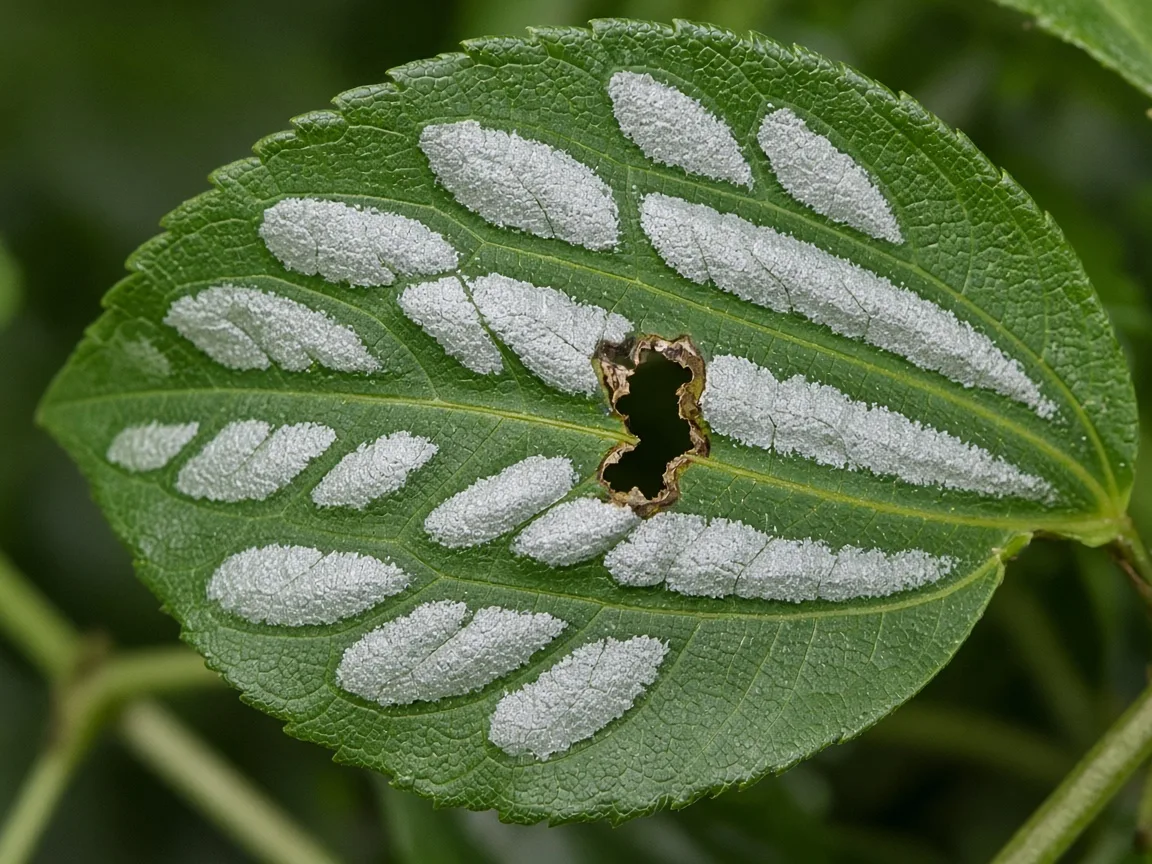
Irregular hole through silver-banded aluminum plant leaf—compare edge color and axil condition with firm green tissue on the same stem.
Mechanical tears:
- Clean splits or notches on one leaf of an opposite pair, often mid-blade or at the serrate margin
- No frass, no slime, no insects visible on undersides
- Common when a bushy pot brushes a shelf lip, window crank, or nursery tag
- Edge may brown later but the tear pattern matches a snag, not random chewing
Post-spot necrosis holes:
- Irregular gap surrounded by dry brown or tan rim where a water-soaked spot died and dropped out
- Often on lower opposite pairs that stayed wet longest after overhead watering or misting
- May follow tan patches described in our black spots guide
- NC State notes powdery mildew can occur in high humidity with poor air circulation on aluminum plant—wet foliage in stagnant corners raises disease pressure
Caterpillar and slug chewing:
- Ragged holes and notched margins; green or brown larvae tucked along the midrib underside after patio summer
- Dark pellets (frass) on leaves or soil surface
- Damage can hit multiple opposite pairs within days if the chewer is still present
Mealybug and aphid collapse:
- Small sunken spots that open into holes as tissue weakens
- White cottony clusters in the pocket where opposite leaves meet the stem—mealybugs hide in soft axils on bushy pileas
- Sticky honeydew on nearby leaves or pot rim
- NC State lists mealybugs, scale, aphids, and spider mites as common aluminum plant insect problems
Pet chewing:
- Irregular bite marks along soft leaf edges at pet height
- Aluminum plant is non-toxic to cats and dogs per ASPCA—curious pets may chew without poisoning risk, but blades still tear
- RHS notes houseplant leaves can be bruised by passing pets and people
Leaf miner trails (lookalike):
- Thin brown tunnels inside the blade without a full-thickness hole—route to leaf miners when trails run under the surface
What aluminum plant holes are not:
- Natural fenestration—mature Pilea cadierei never develops decorative holes
- Overwatering alone—wet roots cause yellow lower pairs and soft stems, not clean round holes through firm blades
- Normal aging—oldest bottom opposite pairs may yellow and drop whole, they rarely develop random perforations mid-blade
Reading silver-patch damage around holes
Aluminum plant is easier to diagnose than plain green houseplants because the four raised silver bands track stress before tissue fails. On healthy blades, silver patches look crisp and slightly metallic. Around holes:
- Hole through a silver band with dull, flat surrounding patches often follows dry air, underwatering, or root stress—the plant was not moving water normally before tissue tore or collapsed.
- Hole with bleached silver and tan margins on the window side points to direct light scorch before necrosis opens a gap—move back from glass per our light guide.
- Bright silver on new opposite pairs while only lower blades have holes suggests aging, localized snag damage, or draft injury—not whole-plant collapse.
This silver-band read is specific to watermelon pilea’s variegation. A plain pothos does not give you the same early warning around a perforation.
Opposite-pair snag pattern (aluminum plant only)
Pilea cadierei grows opposite leaf pairs on soft herbaceous stems that owners pinch to keep bushy. In crowded shelf rows, the outer leaf of one pair often hooks a shelf lip when someone slides a book or moves the pot. The tear is usually:
- One clean line on a single blade of the pair, leaving its opposite neighbor intact
- Mid-blade or at a serrate tooth, not random holes across the whole clump
- No pest signs on the undamaged sister leaf in the same pair
NC State describes serrate-margined, elliptic leaves on upright clumping stems—those soft margins tear more easily than thick succulent blades. Reposition the pot before you treat for insects.
Why aluminum plant gets holes in leaves
Mechanical snags on soft opposite foliage
Bushy aluminum plants in tight spaces catch outer leaves on shelf edges, tags, and door swings. Because stems are soft and leaves are thin relative to the silver patches, a single snag can punch a clean hole without any pest involvement.
Mealybugs and aphids in leaf axils
Sucking pests weaken localized tissue until it collapses into a hole. Mealybugs favor the protected pockets where opposite leaves meet the stem—the same axils called out in our mealybugs guide. Aphids cluster on tender new opposite pairs at stem tips. Both are listed by NC State as common aluminum plant pests.
Wet-foliage leaf spot aftermath
Aluminum plant wants high humidity and bright indirect light, but wet leaf surfaces in stagnant air encourage fungal problems. Missouri Botanical Garden recommends humidified rooms or wet pebble trays for this species—humidity at the roots and air around the plant, not chronic water sitting on blades. Lower opposite pairs that stay wet after splash watering can develop spots that necrose and fall out, leaving holes with brown rims.
Outdoor chewing insects
Pilea cadierei evolved in shaded, humid forest understory in Vietnam and southern China. Patio summer brings caterpillars and slugs that rarely trouble purely indoor plants. Chewing insects leave ragged voids and frass—see caterpillars for follow-up.
Pet chewing on non-toxic foliage
Because aluminum plant is pet safe, cats and dogs may sample soft leaves without acute toxicity—but bite marks still leave holes that will not close.
How to confirm the cause
Work through this order—each step narrows treatment without stacking fixes:
- Edge color — Green moist = recent; brown dry with dark rim = old spot scar.
- Opposite-pair check — One torn leaf, sister leaf clean → mechanical snag.
- Axil inspection — Spread the pair gently and flashlight the stem joint for white mealybug fluff or aphid clusters.
- Underside at night — Midrib check for caterpillars; slime on pot rim for slugs after patio time.
- Timing — Did holes appear after repotting shuffle, patio season, or new pet access?
- Neighbor leaves — One isolated hole on one blade favors mechanical. Several opposite pairs in a week favors pests, pets, or spreading spot.
| What you see | Axil / underside check | Likely cause |
|---|---|---|
| Clean tear, one leaf of a pair | Clean axils | Mechanical |
| Ragged chew + frass | Larva or slug visible | Caterpillars |
| White cotton in stem joint | Sticky residue | Mealybugs |
| Clusters on new tips | Soft green insects | Aphids |
| Brown dry rim, spot history | No insects | Post-spot necrosis → black spots |
| Irregular edge bites, no insects | Tooth marks at pet height | Pet chewing |
| Trail inside blade, no full hole | — | Leaf miners |
RHS guidance on leaf damage stresses matching hole pattern to cause before spraying—aluminum plant’s opposite-pair and silver-band clues make that especially reliable indoors.
First fix for aluminum plant—inspect the hole edge and opposite-pair axil
Before you soak, repot, or spray, hold the stem and classify the hole.
Mechanical damage only: no pesticide needed. Reposition the pot away from snag points. Optional trim if the leaf is mostly split and hangs into soil. Pinch above a healthy node if lower stems go bare.
Active chewing pests: isolate the plant, hand-pick visible caterpillars, inspect all opposite pairs and soil surface, and keep the pilea indoors. Follow caterpillars if frass returns within a week.
Mealybugs or aphids confirmed: isolate, dab visible mealybugs with alcohol on a cotton swab at the axils first—one targeted pass before any broad spray. Then open the relevant pest guide (mealybugs or aphids) for repeat intervals. University of Minnesota Extension recommends confirming active pests before applying pesticides indoors.
Post-spot brown dry holes: stop wetting foliage; remove worst spotted blades with clean scissors; improve air movement and match watering to how fast the pot dries. Route active spreading lesions to black spots.
Pet chewing: move the pot to a pet-inaccessible shelf. Holes will not close; watch for new bite marks over 48 hours.
Do not apply fungicide for old dry cosmetic holes—treat active spot on surrounding green tissue instead.
Step-by-step recovery
- Classify the hole using edge color, opposite-pair pattern, and axil checks.
- Mechanical only: reposition; optional trim; give outer leaves clearance.
- Chewing pests: isolate, hand-pick, rinse leaf undersides gently outdoors, keep inside.
- Mealybugs / aphids: isolate, swab axils, follow species pest guide on repeat schedule.
- Spot culture fix: dry foliage habit, remove infected lower pairs, brighten filtered light slightly if mix stays wet too long.
- Monitor two to four weeks—new opposite pairs at stem tips should emerge with clean silver banding.
Recovery timeline
Holes are permanent on that blade—herbaceous leaf tissue does not regenerate a sealed patch. Success means no new holes on emerging opposite pairs.
- Mechanical: stable immediately once the snag is removed; trim optional after edges dry.
- Pests: expect 2–4 weeks of monitoring after treatment; frass or new chew marks mean the population is not controlled.
- Post-spot holes: 2–4 weeks after you stop wetting foliage and remove worst spotted tissue.
- Pet chewing: stops when access ends; existing bite marks remain visible.
Judge recovery by firm new opposite leaf pairs with bright silver patches, not by old perforated blades re-greening.
What not to do
- Do not fungicide old dry cosmetic holes—treat active spot on green tissue instead.
- Do not mist blades “for humidity” on spotted or holed leaves—use pebble trays or humidifiers per low humidity guidance.
- Do not overwater because leaves look damaged—check hole type and overwatering signs first.
- Do not spray pesticides before confirming pests—clean tears need repositioning, not chemicals.
- Do not ignore ragged holes after patio season—chewers work through multiple opposite pairs within days.
- Do not stack repotting, heavy pruning, and pesticide on the same day—make one correction and read the plant’s response.
How to prevent holes on aluminum plant
- Clearance: Keep soft opposite leaves away from shelf edges, tags, and swinging doors.
- Dry foliage: Water soil directly; wipe splash off lower pairs that rest on the pot rim.
- Axil checks monthly: Flashlight stem joints for mealybugs before tissue collapses.
- Spot early: Route wet expanding lesions to black spots before centers fall out.
- Quarantine patio returns two weeks; inspect crown and undersides.
- Pet placement: Elevate pots even though the plant is pet safe—chewing still destroys silver banding.
- Stable culture: Match watering to how fast the pot dries in your light level—Missouri Botanical Garden recommends reducing watering from fall to late winter.
Related aluminum plant problems
- Caterpillars — ragged outdoor chewing with frass
- Leaf miners — internal tunnels vs open holes
- Mealybugs — white fluff in opposite-pair axils
- Thrips and aphids — ragged new growth
- Black spots — wet-leaf spot before holes form
- Distorted leaves — unfurl damage without full holes
- Spider mites — stippling before tissue collapses
Related Aluminum Plant guides
- Aluminum Plant overview
- Aluminum Plant watering
- Aluminum Plant light
- Aluminum Plant soil
- Aluminum Plant problems
Conclusion
Holes in aluminum plant leaves are usually snags on opposite pairs, axil pests, spot aftermath, or occasional chewers—not a mystery disease. Read the hole edge and stem joint first, reposition away from shelf traps, keep foliage dry while maintaining humidity at the pot, and treat active mealybugs or black spots before they open more gaps. Watch for clean new opposite pairs with crisp silver banding over the next month—that is your proof the fix worked.