Curling Leaves on Anacharis / Elodea: Causes, Checks & Fixes
Quick answer
Curling leaves on Anacharis / Elodea usually roll individual strap leaves inward or at the margins while the whorl stays roughly symmetrical—not cupped or twisted at the stem tip. First step: confirm whether the curled tissue is fully submerged or drying above the waterline, then check tank temperature and nitrate before dosing.
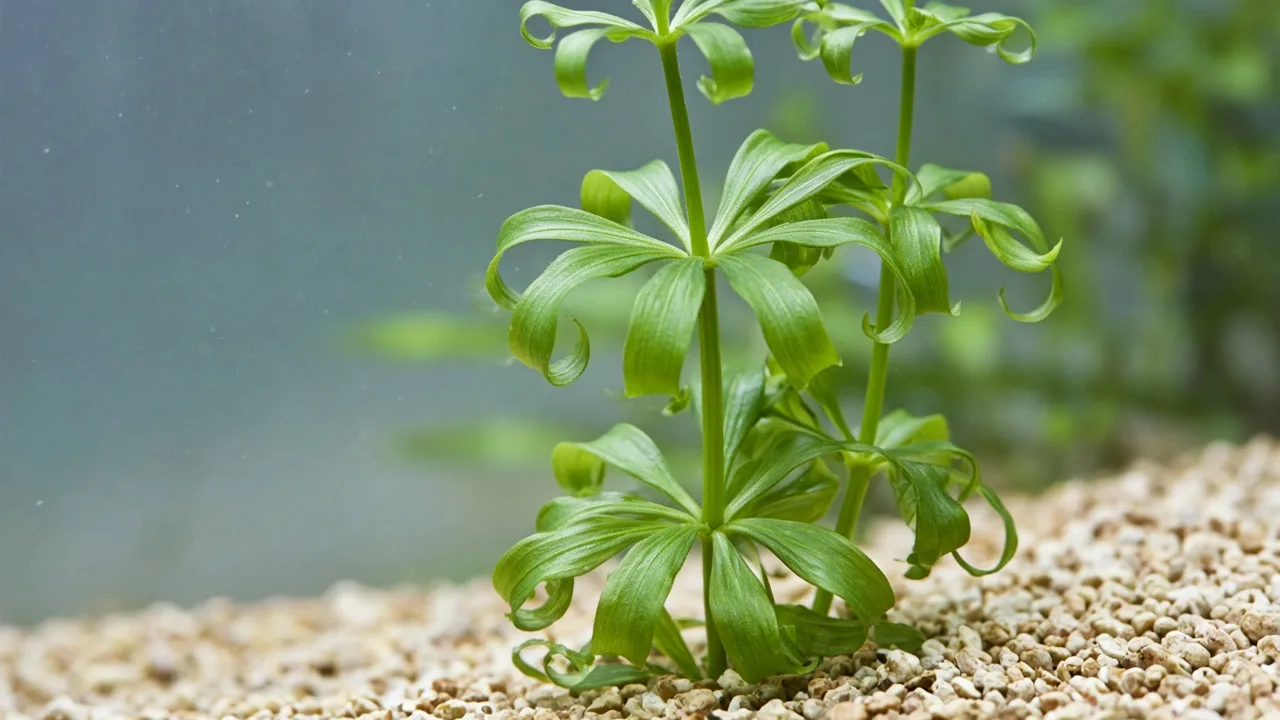
Curling Leaves on Anacharis / Elodea: Causes, Checks & Fixes
This guide covers curling leaves on Anacharis / Elodea. See also the general Curling Leaves guide, watering, and light pages for this plant.
Curling Leaves on Anacharis / Elodea: Causes, Checks & Fixes
Quick answer
Curling leaves on Anacharis (Egeria densa) show as individual strap leaves rolling inward or curling at the margins while the whorl ring stays roughly symmetrical—not a cupped or twisted apex like distorted leaves. On this fast column-feeding stem plant, curl almost always traces to emersed tissue drying above the waterline, warm tank water, potassium shortage on older whorls, or parameter shock after a tank move—not houseplant soil moisture or humidity trays.
For how leaf curl works as a protective response in general, see our curling leaves guide. On Anacharis, split the problem by location first: curled tissue above the rim is air-drying; curled submerged whorls with firm stems point to heat, potassium, or water-quality stress.
First step: confirm whether curled leaves are fully submerged or exposed to air, then check water temperature and nitrate. Make one targeted correction and wait seven days before stacking fertilizer, replanting, and chemical treatments.
This guide covers submerged aquarium, turtle tub, and pond-edge culture only. For cupped or twisted new whorls at stem tips, see distorted leaves. For pale new tips with green veins, see iron deficiency. For mushy translucent melt, see transparent leaves. For baseline culture, see the Anacharis overview and watering guide.
When to use this page vs other Anacharis guides
| Pattern | Read next |
|---|---|
| Individual leaves roll inward/outward; whorl stays even | Curling leaves (this page) |
| Whole newest whorl cupped, crinkled, or twisted | Distorted leaves |
| Pale new tips with dark green veins, flat leaf shape | Iron deficiency |
| Yellow oldest whorls first, green tips | Nitrogen deficiency |
| Pinholes or scorched margins on older leaves | Potassium deficiency |
| Curl only on stems above the waterline | Low humidity / emersed drying |
| Brittle curl after water level drop | Underwatering |
| Many stems limp within days after purchase | Transplant shock |
| Inward roll plus mush after warm spike | Heat stress |
What curling leaves look like on Anacharis
Healthy Anacharis whorls carry three to six bright green strap-shaped leaves in a flat ring around a firm submerged stem. Curling changes leaf shape within the whorl without warping the whole apex:
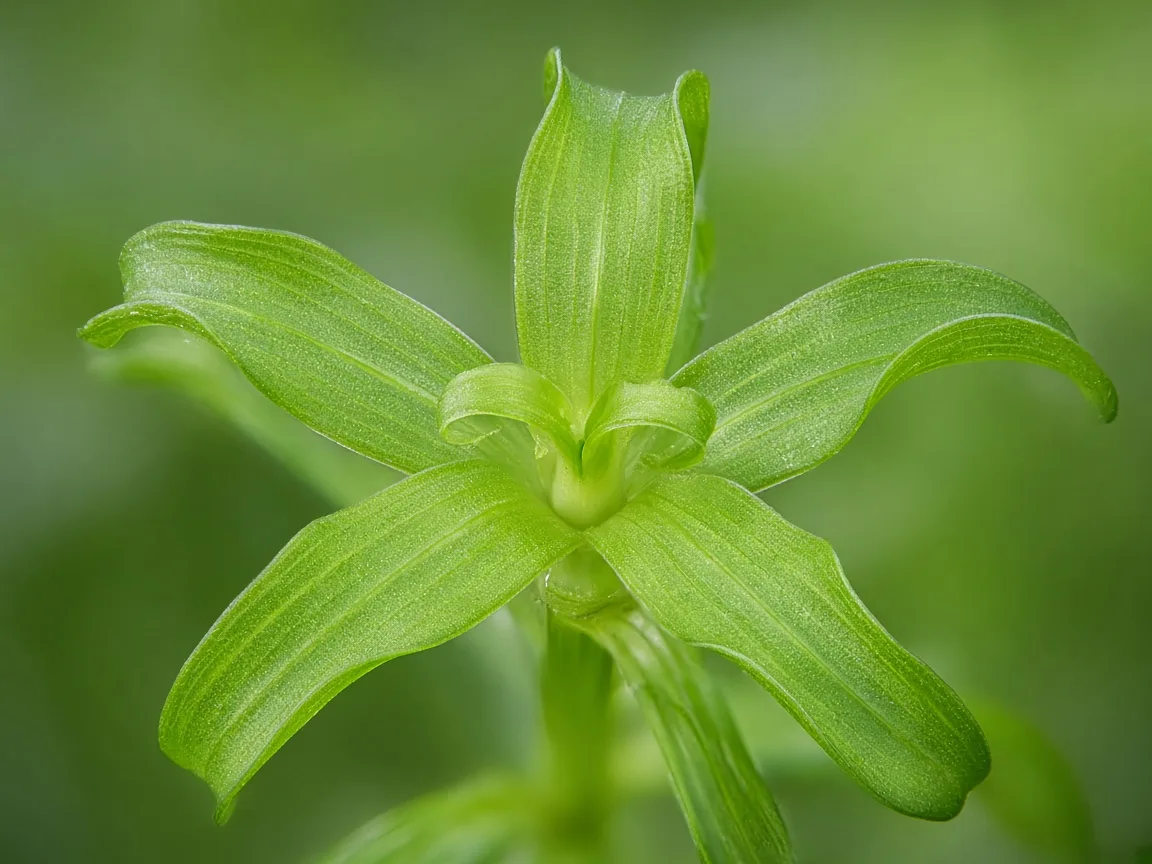
Inward-rolled margins on individual Anacharis strap leaves—compare with flat green whorls lower on the same submerged stem.
- Inward roll along leaf margins on otherwise green submerged whorls—often heat or potassium-related
- Outward or irregular curl on emersed tips above the waterline—drying tissue, not underwater plague
- Older lower whorls curling at edges while new tips stay flat and green—classic potassium shortage pattern on mobile nutrients
- Uniform curl on many stems three to seven days after purchase with firm upper nodes—acclimation on emersed-grown bundles; see transplant shock
- Crispy curled leaves on stems stranded during maintenance—water-level drop in turtle tanks; see underwatering
Compare newest submerged tip growth first. Flat green tips mean recovery is underway even when lower whorls still curl. Translucent mush with foul odor is melt—not cosmetic curl.
Submerged curl vs emersed curl on column-feeding stems
Anacharis absorbs water and minerals through submerged leaf surfaces—not roots in potting mix. That makes location on the stem your fastest diagnostic split:
| Location | Typical curl pattern | Stem feel | First move |
|---|---|---|---|
| Above waterline | Outward curl, crisp margins, brown tips | Firm to brittle emersed tissue | Re-submerge; trim dried sections—low humidity |
| Fully submerged, older whorls | Marginal inward roll, occasional pinholes | Firm green stem | Test nitrate; review potassium—fertilizer guide |
| Fully submerged, many stems | Inward roll after warm change | Firm | Check temperature—heat stress |
| Submerged tips cupped or twisted | Whole whorl warped | Firm | Test GH—not this page—distorted leaves |
| Submerged, translucent | Limply curled then mushy | Softening | Water quality or chemicals—water stress |
Nursery bundles grown emersed commonly show curl on tissue that was above the rubber band at purchase. Submerge only firm green stems and wait seven to fourteen days before assuming a nutrient deficiency.
Why Anacharis gets curling leaves
Emersed tissue drying above the waterline
Propagation tubs, pond margins, turtle basking areas, and stems left floating during bag acclimation expose strap leaves to air. Without constant contact with water, emersed tissue loses turgor and curls within hours—often with brown crispy edges. Submerged whorls on the same stem may look fine. This is not an underwater nutrient crash.
Heat stress in warm aquariums and turtle tubs
Anacharis prefers roughly 18–28 °C (64–82 °F) in community culture. Water above the upper band—or a rapid jump after a warm partial change—stresses fast-growing stems. Leaves roll inward along margins as a stress response while tissue stays green and firm, unlike the translucent liquefaction from chemical damage. Summer turtle tubs and unheated garage tanks spike most often.
Potassium shortage on older submerged whorls
Potassium is mobile inside plant tissue—the plant pulls it from older leaves to fund new growth when dissolved potassium runs low. On Anacharis, that often shows as marginal curl, yellowing edges, or small holes on lower whorls while submerged tips stay green. Heavily planted shrimp-only tanks, large weekly water changes, and fast Anacharis growth without comprehensive fertilizer are common triggers. Seachem guidance recommends maintaining roughly 5–10 mg/L potassium in planted aquariums; pinholes and older-leaf necrosis often accompany chronic shortage.
Water-level drops and stranded stems
Turtle tank maintenance, evaporation in open tubs, and shipping exposure leave stems partially air-dried. Curled brittle tissue on the exposed section is mechanical desiccation—re-submerge immediately in dechlorinated water and discard sections that snap rather than bend.
Acclimation curl after tank moves
Store Anacharis is often grown emersed or in cool water. Lower whorls may curl or yellow when first submerged while upper nodes stay firm. Uniform curl on many stems within the first week with safe ammonia often means transplant shock—trim melt, float tops, and wait before heavy dosing.
Symptom lookalike comparison
| What you see | Likely cause | Whorl shape | Tip color | First move |
|---|---|---|---|---|
| Marginal roll on oldest submerged whorls | Potassium shortage | Symmetrical ring | Green flat tips | Test nitrate; dose comprehensive liquid with potassium |
| Inward roll on many submerged stems after heat spike | Heat stress | Symmetrical | Green | Cool gradually; trim only soft tissue |
| Curl only above waterline | Emersed drying | N/A above water | Brown crispy | Re-submerge; see low humidity |
| Whole apex whorl cupped or twisted | Calcium / CO₂ imbalance | Warped ring | Variable | Test GH—distorted leaves |
| Pale new tips, flat shape | Iron shortage | Symmetrical | Pale/chartreuse | Iron deficiency |
| Translucent curl then mush | Ammonia / meds | Collapsing | Bleached | Test ammonia; water change |
Progressive mush climbing into firm tissue within days is urgent parameter or chemical exposure—not slow marginal curl on older leaves.
How to confirm the cause
Work in this order:
- Submerged vs emersed - Mark the waterline on a suspect stem. Curl above the surface is drying; curl below is tank stress.
- Whorl symmetry - Even ring of rolled strap leaves = curling (this page). Bent or cupped whole apex = distorted leaves.
- Water temperature - Thermometer at mid-tank depth; compare to your species’ preferred band and recent change history.
- Newest submerged tip - Flat green tips with only lower marginal curl point to potassium or self-shading, not apex failure.
- Nitrate and general tank tests - Zero to low nitrate with bottom-up edge curl supports potassium/macros; ammonia above zero is emergency per standard aquarium practice.
- Purchase timeline - New bundle within two weeks? Acclimation before deficiency dosing.
- Tank type - Turtle tub with frequent water-level swings? Check underwatering before fertilizer.
UF/IFAS describes Egeria densa as a rooted submersed perennial with whorled lance-shaped leaves—keep every check inside aquarium culture, not houseplant soil schedules.
First fix for Anacharis
First action: identify whether curled tissue is submerged or emersed, then correct that single variable.
- If curl is above the waterline: Re-submerge firm stems in clean dechlorinated water. Trim brittle dried sections. Do not dose fertilizer into the tank on day one.
- If curl is submerged and temperature reads high: Perform a partial change with matched-temperature dechlorinated water, increase gentle surface agitation, and remove only softened tissue. Wait seven days before replanting dense bunches.
- If submerged older whorls show marginal roll with firm green tips: Test nitrate. If macros are low in a planted tank, start half-strength comprehensive liquid aquarium fertilizer per the Anacharis fertilizer guide—not terrestrial houseplant feed.
Do not stack repotting, heavy pruning, copper medication, and full-strength fertilizer on the same day. Anacharis recovers fastest when one variable shifts and new submerged tips stay flat.
Recovery timeline
Mild heat-related roll often stabilizes within three to seven days once temperature holds steady and softened tissue is trimmed. Potassium-related marginal curl on older whorls may take one to two weeks of balanced dosing before new lower growth looks flat—existing curled margins rarely perfect themselves.
Emersed-dried curl does not uncurl; judge success by new submerged whorls opening flat at cut ends. Acclimation curl on fresh store bundles commonly resolves within seven to fourteen days if ammonia stays safe and melt is siphoned during water changes.
Mistakes to avoid
- Treating emersed curl with submerged fertilizer while stems still protrude above the rim
- Confusing symmetrical leaf roll with apex whorl warp—calcium and CO₂ issues need the distorted-leaves workflow
- Dumping full-strength fertilizer into a turtle tank on municipal tap without testing—algae and melt risk without fixing curl
- Warm partial changes that spike temperature and roll every stem at once
- Leaving rubber bands and melted lower whorls in the tank to foul water and mimic widespread curl
How to prevent curling next time
Keep display stems fully submerged or floating wet—trim emersed tips in turtle setups unless you are deliberately propagating above water. Test GH and nitrate monthly in shrimp-only and heavily planted tanks. Match light intensity to fertilizer supply. Acclimate new bundles through float-and-trim for the first week. In summer turtle tubs, maintain stable water level and shade open tubs that overheat.