Leaf Miners on Anubias: Causes, Checks & Fixes
Quick answer
Leaf miners on Anubias tunnel inside emersed leaves and flower stalks above the waterline—not healthy submerged blades on the rhizome. First step: move the rhizome to a quarantine tub, trim every mined emersed section, bag the trimmings, and return only firm submerged tissue below the surface.
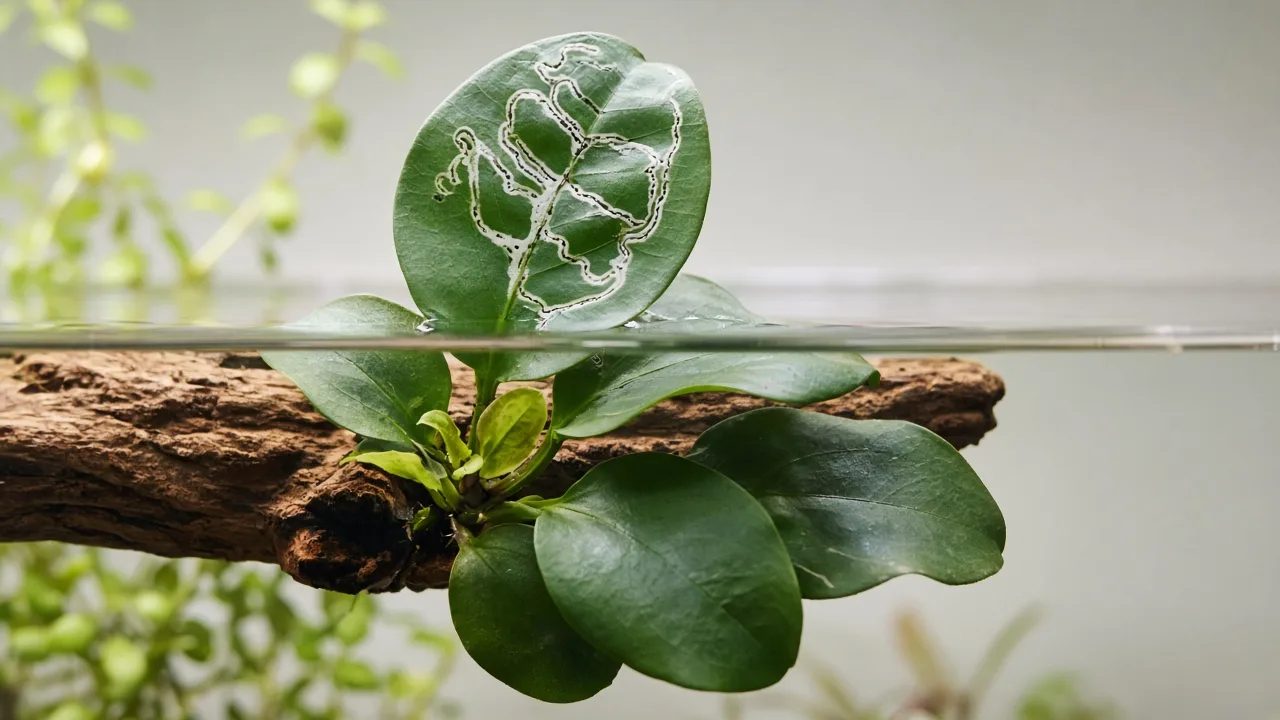
Leaf Miners on Anubias: Causes, Checks & Fixes
This guide covers leaf miners on Anubias. See also the general Leaf Miners guide, watering, and light pages for this plant.
Leaf Miners on Anubias: Causes, Checks & Fixes
Quick answer
Pale winding trails inside leaves sticking out of the water? On Anubias (Anubias barteri and cultivars like Anubias nana), leaf miners almost always attack emersed leaves and flower stalks above the waterline—propagation tubs, open-top turtle tanks, paludariums, or rhizomes left with emergent tips during acclimation. Look for bordered pale serpentine tunnels visible when you backlight a thick emergent blade, often with a dark frass line down the center. Submerged blades on the same rhizome typically stay clean.
First step: move the rhizome to a quarantine tub, trim every mined emersed section, bag the trimmings, and return only firm submerged tissue below the surface. Do not dose terrestrial pesticides into aquarium water.
For how leaf miner larvae tunnel inside foliage and why contact sprays underperform, see our leaf miners guide. On Anubias, the practical pattern is emersed-tip mines above the waterline, clean submerged blades below, and extra caution because insecticides must never enter fish or turtle water—treat emersed tissue off-tank only.
This guide covers submerged aquarium, turtle tub, paludarium, and pond-edge culture—not houseplant pots. For soft-bodied clusters on emergent stalks instead of internal tunnels, see aphids on Anubias. For ragged chew holes with pellet frass, see caterpillars on Anubias. For mushy translucent submerged melt—not insects—see yellow leaves on Anubias.
When to use this page vs other Anubias guides
| Pattern | Read next |
|---|---|
| Bordered pale tunnel inside emergent leaf; dark frass line | This page |
| Pear-shaped soft insects + honeydew on flower stalks | Aphids on Anubias |
| Ragged through-holes with pellet frass | Caterpillars on Anubias |
| Holes without frass; turtle at stems after feeding time | Holes in leaves (grazing) |
| White cottony wax in rhizome crevices | Mealybugs on Anubias |
| Translucent mush on submerged old emersed leaves | Yellow leaves (melt) |
| Flies from emersed propagation pots | Fungus gnats |
What leaf miners look like on emersed Anubias
On emersed Anubias barteri tips, flower stalks, and paludarium crowns, expect:
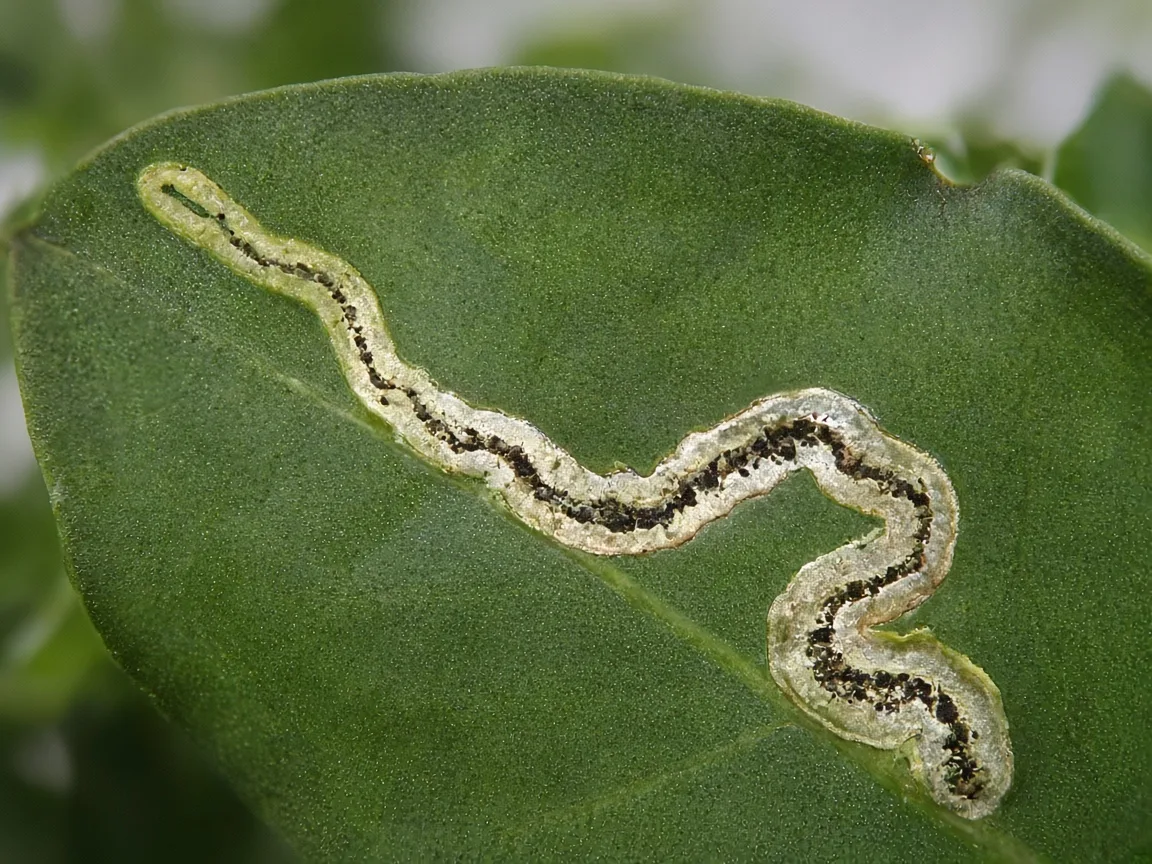
Pale bordered tunnel with a dark frass line inside a thick emergent Anubias blade—backlight the leaf to confirm the mine stays enclosed between both surfaces.
- Serpentine pale tunnels winding inside emergent leaves—not open ragged holes through both surfaces
- Dark frass line running through the pale trail as the larva feeds between leaf surfaces
- White stippling on nearby emergent leaves from adult females puncturing tissue to feed on sap before laying eggs
- Expanding mines that lengthen over several days on the softest new emersed growth at the rhizome crown
- A minute yellow maggot visible inside an active mine if you gently tear the widest part of a thick emergent leaf at the trail edge
- Brown seedlike pupae on propagation tub rims, bench surfaces, or damp soil near open-top tubs after larvae exit mined leaves
Compare newest emergent tip growth to submerged blades on the same rhizome: leaf miners stay above water; clean submerged sections confirm the plant can recover once infested emersed tissue is removed.
Does not match leaf miners:
- Soft pear-shaped insect clusters at emergent tips—aphids, not internal tunnels
- Ragged through-holes with pellet frass on emergent leaves—caterpillars, not enclosed trails
- Translucent, mushy submerged blades with foul tank odor—melt or water stress, not insects
- Mechanical scrape marks without an internal bordered mine—turtle grazing; see holes in leaves
Unlike aphids on Anubias, leaf miners do not leave sticky honeydew. Unlike caterpillars, there is no pellet frass on leaf surfaces—only frass packed inside the tunnel.
Why Anubias gets leaf miners
Leaf miners are far less common in fully submerged aquarium culture than on emersed nursery stock. On Anubias, when you see internal trails, suspect a recent introduction on emergent tissue rather than chronic pressure on submerged blades.
Anubias is grown emersed in humid greenhouses before it reaches your tank—leaves and flower stalks develop above water, exactly where terrestrial leaf miner flies lay eggs. Pests hitchhike on nursery stock and persist when emergent growth stays accessible in open-top setups.
Realistic entry paths for leaf miners on Anubias:
- Emersed nursery shipments — Eggs or tiny larvae on emergent leaf undersides before you attach the rhizome to driftwood
- Open-top turtle tanks and paludariums — Emergent leaves breaking the water surface create leaf miner habitat in warm, humid air
- Propagation benches — Anubias divisions growing emersed beside tomatoes, peppers, or chrysanthemums on the same shelf
- Outdoor pond margins — Seasonal tubs where rhizomes creep above the waterline in summer
- Wabi-Kusa and riparium dry zones — Emersed crowns deliberately kept above the water column for display
Anubias is a slow rhizome epiphyte tied to rock or driftwood—not a fast stem plant in soil. Leaf miner problems center on emergent tissue and introduction routes, not buried rhizomes or aquarium substrate chemistry.
Why closed submerged-only setups rarely host leaf miners: If every blade stays underwater and no emergent tips break the surface, terrestrial larvae have nowhere to feed. The far more common damage pattern in turtle tanks is herbivore grazing on soft new growth—see holes in leaves before treating for insects.
Backlight test on thick emergent Anubias blades
Anubias leaves above the waterline are thick and leathery compared with stem-plant whorls. That thickness makes mines harder to spot at a glance—but it also means a true leaf miner trail is unmistakable once you backlight the blade.
Hold a phone flashlight behind the emergent leaf in a dark room. A leaf miner mine shows as a bordered pale path with intact green tissue on both sides and often a dark frass line down the center. Caterpillar damage punches through both surfaces—you see open air through the hole, not an enclosed tunnel. Old empty mines look like dry brown scribbles that no longer expand; active mines lengthen over several days.
This ten-second check prevents dosing aquarium water when the plant only has mechanical scrape damage, empty old mines, or caterpillar chew instead of live larvae inside the leaf.
Waterline split: emersed mines vs. submerged clean blades
Anubias barteri grows from a horizontal rhizome with thick petioles and leathery blades. Leaf miner flies lay eggs in emersed leaf tissue exposed to air—the same habitat where aphids colonize flower stalks. Fully submerged blades in a closed aquarium do not offer the soft new epidermal layers where larvae mine between leaf surfaces.
When you diagnose, always compare emergent tips to underwater blades on the same rhizome:
| Location | Typical pattern |
|---|---|
| Emergent crown, flower stalk, paludarium dry zone | Pale serpentine tunnels; white adult punctures; expanding mines |
| Submerged blades below waterline | Firm, dark green, no internal trails |
| Rhizome on driftwood | Clean if not buried; inspect crown crevices for pupae |
Mines above water plus firm green submerged blades mean trim emersed tissue and quarantine—not a watering emergency or light crisis.
How to confirm leaf miners on Anubias
Work through these checks in order:
- Locate the damage — Emergent tips, flower stalks, and paludarium crowns first—not submerged blades unless mines are clearly visible there too.
- Backlight one suspect leaf — Confirm a bordered internal tunnel with optional frass line; note whether the trail expanded since yesterday.
- Check adult punctures — Small white feeding spots on nearby emergent blades suggest active flies, not old empty mines.
- Split the same rhizome — Submerged tissue should stay clean; if underwater blades also show internal trails, the infestation is more advanced and emersed regrowth may need heavier trimming.
- Rule out lookalikes — No honeydew (aphids), no pellet frass on surfaces (caterpillars), no mushy submerged melt (yellow leaves).
- Review introduction timing — New emersed nursery stock, open windows near propagation benches, or outdoor pond transfers within the past two weeks strengthen the diagnosis.
If tunnels are brown, dry, and static for weeks with no new white punctures, you may be looking at old mines from a past cycle—not an active outbreak requiring spray.
The first fix to try
Move the rhizome to a quarantine tub and trim every mined emersed leaf or flower stalk section at the petiole base. Bag trimmings in sealed waste—not compost near propagation benches. Return only firm submerged rhizome and clean blades below the waterline to the display tank.
This single action removes larvae trapped inside leaf tissue—the only place they feed—and stops egg-laying sites on emergent crowns. Do not pour insecticidal soap, neem, or systemic products into occupied aquarium or turtle water.
Why trim beats spray first on Anubias:
- Larvae feed between leaf surfaces where contact sprays cannot reach
- Insecticides are not very effective for leafminer control even on terrestrial houseplants
- Anubias grows slowly—one trimmed emergent tip costs less than poisoning fish, shrimp, or filter bacteria
After trimming, hold the rhizome in clean dechlorinated water 10–14 days and scout emergent regrowth daily. If new mines appear, repeat trimming before considering off-tank treatment.
Step-by-step recovery
Once the first trim is done, work through recovery in this order:
- Quarantine tub setup — Bare tub or small container with dechlorinated water; rhizome attached to a rock or floating so emergent tips are easy to inspect. Match temperature to the display tank per our watering guide.
- Remove all mined emersed tissue — Cut at the petiole base; do not leave partial blades with active trails.
- Bag and discard trimmings — Seal waste; larvae can pupate on bench surfaces or in damp propagation media.
- Inspect submerged portion — Firm rhizome, no foul smell, no buried crown. If the rhizome was planted too deep, expose it per Anubias soil culture before returning to the tank.
- Monitor emergent regrowth — Mark one new leaf with a dot of aquarium-safe marker or photograph daily to confirm mines are not expanding.
- Return clean submerged tissue — After two weeks with no new active mines on emergent tips, reattach the rhizome to driftwood in the display tank. Keep emergent growth trimmed or submerged if your setup allows.
- Off-tank spray only if needed — If mines persist after two trim cycles, treat emersed leaves only while the rhizome is entirely out of occupied aquarium water. Rinse thoroughly in dechlorinated water before reintroducing submerged portions. Never treat inside turtle, shrimp, or fish tanks.
Avoid stacking a repot, heavy pruning, and pesticide on the same day—Anubias recovers slowly and needs one variable change at a time.
Recovery timeline
Anubias is a slow rhizome epiphyte. Expect realistic timing like this:
| Milestone | Typical window |
|---|---|
| Active mining stops after trim | Immediate if all infested emersed tissue removed |
| Next clean unfurling leaf from crown | 2–4 weeks on a healthy rhizome |
| Old mined blade still visible | Months—thick leaves do not green out again |
| Confidence outbreak is over | 2–3 weeks with no expanding mines or new white punctures |
Judge success by new emergent growth and submerged blade firmness, not by old mined tissue turning perfect again. One marked leaf staying clean for two weeks beats assuming recovery because submerged blades still look fine.
Lookalike symptoms on Anubias
| Sign | Leaf miners | Caterpillars | Aphids | Turtle grazing |
|---|---|---|---|---|
| Damage type | Internal bordered tunnel | Open ragged chew | None—external sap feeding | Through-hole or marginal scrape |
| Frass | Dark line inside leaf | Pellets on leaf or rim | Honeydew, not frass | None |
| Insect visible | Yellow maggot inside mine | Segmented larva on stalk | Pear-shaped clusters | None (turtle present) |
| Submerged blades | Usually clean | Usually clean | Possible on emergent stalks | Common on soft new growth |
If you are unsure, backlight the thickest emergent leaf first—the internal tunnel is the clearest leaf miner signature on Anubias.
Mistakes to avoid
- Dosing pesticides into aquarium water — Harms fish, shrimp, turtles, and nitrifying bacteria; does not reach larvae inside emersed leaf tissue anyway.
- Treating submerged melt as leaf miners — Translucent mushy underwater blades point to yellow leaves or water stress, not flies.
- Spraying once and stopping — Leaf miner life cycles can complete in about two weeks in warm weather; scout emergent crowns weekly until mines stop expanding.
- Broad-spectrum insecticides in propagation areas — Kills parasitic wasps that often control leafminers and can trigger secondary outbreaks.
- Leaving emergent tips untrimmed “because submerged leaves look fine” — Flies continue laying eggs on accessible emersed tissue above the waterline.
- Composting mined trimmings near the bench — Pupae can survive in damp debris and reinfest emersed propagation pots.
How to prevent leaf miners next time
Prevention on Anubias is mostly about emersed access and quarantine, not fertilizer tweaks:
- Quarantine new rhizomes 10–14 days in a separate tub before attaching to display hardscape—same protocol as fungus gnats prevention on propagation benches.
- Submerge emergent tips when possible in closed aquariums so flies cannot reach soft new crown leaves.
- Trim flower stalks and emergent blades before introducing rhizomes to open-top turtle tanks unless you want emergent display growth.
- Isolate propagation benches from leaf-miner-heavy garden crops—tomatoes, peppers, chrysanthemums, and many ornamentals share Liriomyza leafminer hosts.
- Scout emergent crowns weekly in warm months; catch white adult punctures before mines lengthen across several leaves.
- Keep bench surfaces clean — Promptly discard plant debris where larvae pupate after exiting mines.
Healthy submerged culture per our Anubias overview and steady light help the rhizome replace trimmed emergent tissue—but prevention still hinges on keeping flies off emersed crowns.
When to worry
Escalate if:
- Mines appear on submerged blades below the waterline—not typical; trim heavily and inspect whether emersed regrowth is fully submerged yet.
- Every emergent leaf on the rhizome is mined and new trails keep expanding after two full trim cycles.
- White punctures spread to neighboring bench plants — Treat the whole propagation area, not one rhizome.
- Rhizome softens or smells foul at the crown — That is rot or melt, not leaf miners alone; see root rot and yellow leaves.
Leaf miners rarely kill established Anubias rhizomes when submerged tissue stays firm—you are managing unsightly emersed damage and stopping spread, not rescuing a dying plant.
Conclusion
Leaf miners on Anubias look alarming on emergent crown foliage but rarely threaten a firm submerged rhizome. The larvae live inside emersed tissue where underwater contact sprays cannot reach, so your best tools are early trimming, bagging removed leaves, and quarantine while submerged blades stay clean below the waterline. Save off-tank treatment for persistent outbreaks—and never dose pesticides into aquarium water.
Related Anubias guides
| Topic | Where to read next |
|---|---|
| Rhizome culture, emersed growth, species traits | Anubias care overview |
| Water changes, quarantine tubs, temperature | Anubias watering |
| Pear-shaped insects on emergent stalks | Aphids on Anubias |
| Ragged chew with pellet frass | Caterpillars on Anubias |
| Turtle bite patterns without internal tunnels | Holes in leaves on Anubias |
| Melt vs pest damage on submerged leaves | Yellow leaves on Anubias |
| Flies from emersed propagation pots | Fungus gnats on Anubias |