Pale Leaves on Anubias: Causes, Checks & Fixes
Quick answer
Pale leaves on Anubias look washed-out light green or yellow-green instead of the deep, leathery green this epiphyte is known for—usually from too little light at the rhizome tip, iron or nitrogen stress, or post-purchase melt. First step: note whether pallor hits the newest leaf, the oldest blades, or the whole rhizome, squeeze the stem for firmness, and confirm aquarium light reaches the growing tip before dosing.
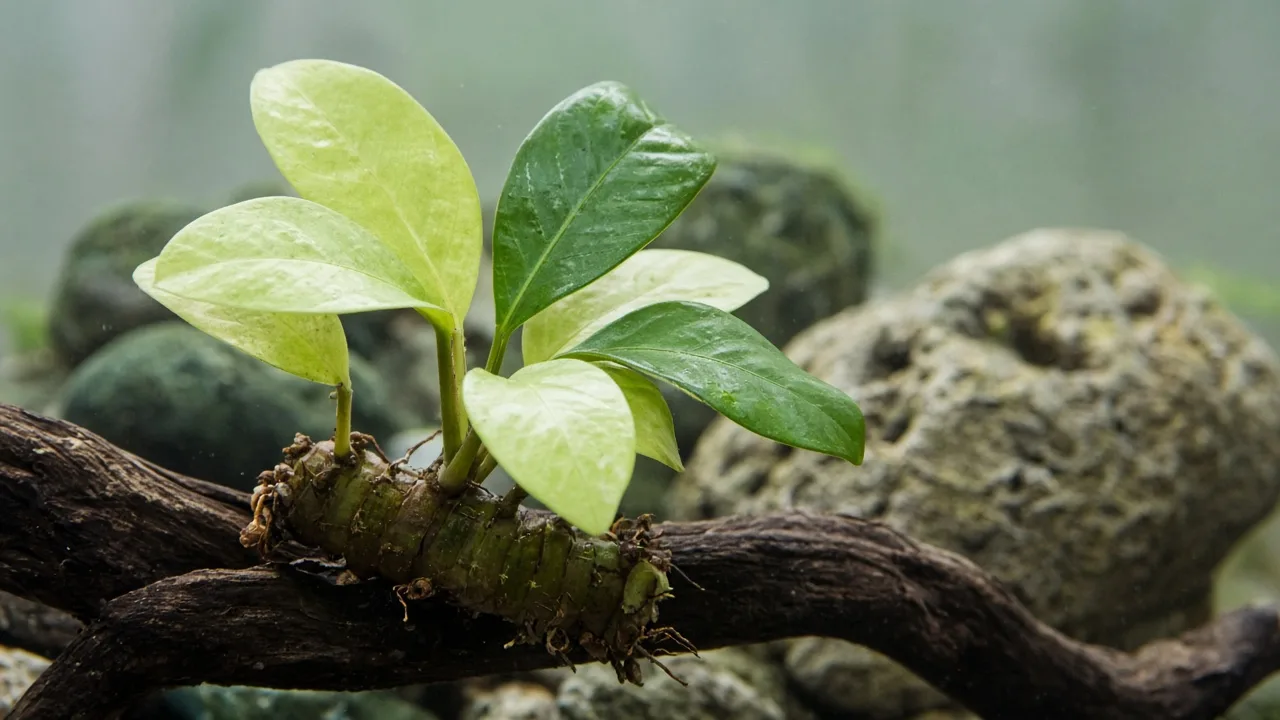
Pale Leaves on Anubias: Causes, Checks & Fixes
This guide covers pale leaves on Anubias. See also the general Pale Leaves guide, watering, and light pages for this plant.
Pale Leaves on Anubias: Causes, Checks & Fixes
Quick answer
Pale leaves on Anubias (Anubias barteri and cultivars such as nana and petite) look washed-out light green or yellow-green instead of the deep, leathery green healthy rhizomes carry. For general chlorosis mechanics, see our pale leaves guide. On Anubias, pallor usually means photosynthesis is falling behind at the rhizome tip while the horizontal stem may still feel firm—not yet the mushy yellow stage of rot.
First step: decide whether the newest leaf, the oldest blades, or the whole rhizome look pale, then squeeze the stem and check whether aquarium light actually reaches the growing tip. Small pale new leaves in a shaded bottom corner → reposition mid-height on hardscape before fertilizer. Pale new growth with dark green veins in a lit zone → suspect iron after light is confirmed. Uniform bleach on leaves under a bright lamp → reduce intensity or raise the mount into shade.
Make one correction at a time and watch the next leaf from the rhizome tip for proof. Old pale tissue rarely re-greens; a darker, normal-sized new leaf within two to four weeks means you fixed the right problem.
When to use this page vs other Anubias guides
| Pattern | Read next |
|---|---|
| Washed-out light green across several leaves, firm rhizome | Pale leaves (this page) |
| Fully yellow or translucent blades detaching at soggy stalks | Yellow leaves or root rot |
| No new leaves for months in a shaded corner | Not enough light |
| Bright yellow new leaves with dark veins only | Iron deficiency |
| Oldest leaves fading uniformly, nitrates near zero | Nitrogen deficiency |
| Pinholes with brown rims on older blades | Potassium deficiency |
| Green or hair algae film on otherwise short leaves | Too much light—see slow growth and light guide |
What pale leaves look like on Anubias
Healthy Anubias forms a creeping horizontal rhizome with thick, dark green, leathery leaves spaced along the stem. Pale stress breaks that color before full yellowing or melt sets in.
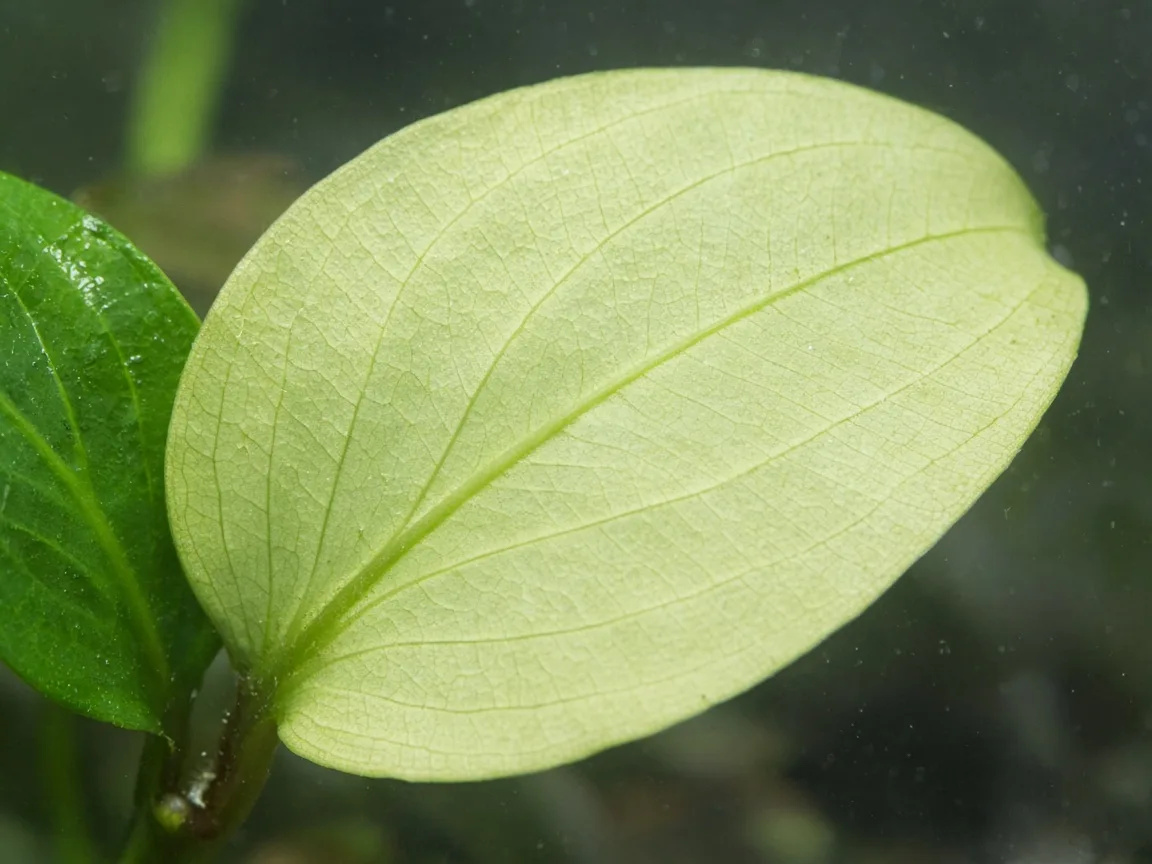
Pale wash on Anubias leaf tissue—the deep green tone fades to light green or yellow-green while the blade may still feel firm and leathery.
Typical pale-leaf signs:
- Uniform washed-out light green or yellow-green across one or more leaves—not isolated spots at first
- Loss of the characteristic deep green depth—blades read flat and pastel instead of glossy forest green
- Smaller or thinner new leaves at the rhizome tip compared with older submersed foliage
- Contrast within the same tank—Anubias under the fixture stays dark while a shaded clone on the bottom washes out
- Firm rhizome and leathery leaf texture—pale from chlorosis, not yet the translucent mush of rot
Not pale leaves:
- One soft yellow lowest leaf with goo at the stalk base — root rot or advanced melt
- Fully yellow papery outer leaves dropping slowly with firm center — normal turnover; see yellow leaves
- Bleached white or tan patches on leaves directly under a high-PAR lamp only — light burn, not dim-room chlorosis
- Green veins with yellow tissue between on the newest unfurl only — iron deficiency
- Green, brown, or hair algae coating a dark green blade — algae on slow leaves, not nutrient pallor alone
Because Anubias renews leaves slowly—roughly one new leaf every two to three weeks in good conditions—a pale blade can sit for months before it drops. That pacing is normal on this genus.
Reading Anubias blade color when the wash hits the rhizome tip
Anubias leaves are thick, waxy, and slow-growing—unlike thin stem-plant foliage that fades quickly. Owners often miss early pallor because the plant still looks “green enough” from across the tank.
Dim-rhizome washout dulls the whole blade to light green or yellow-green while tissue stays firm and leathery. The rhizome tip may produce smaller new leaves but no bud for weeks if PAR never reaches the growing point. Veins do not show the interveinal pattern of iron deficiency; the whole blade fades evenly. This pattern is plant-specific to epiphytes mounted in shaded hardscape pockets—a potted pothos in the same room would stretch differently.
Iron chlorosis on new submersed leaves shows pale yellow-green blades with dark green veins on the newest leaf only, while older submersed foliage stays relatively dark. Aquarium Co-Op describes this as classic iron deficiency on aquatic plants. On Anubias, it appears at the rhizome growing tip in a zone that already receives decent light—different from uniform shade washout.
Light bleach fades the upper surface of blades to pale green or tan while the underside may stay darker. This follows a sudden move under a high-output LED, long photoperiods with algae film, or placement directly beneath an unshaded lamp. The fix is less direct intensity, not more fertilizer.
Why Anubias gets pale leaves
Native to stream margins in West and Central Africa, Anubias evolved as a shade-tolerant rhizome plant on rock and wood—not open sun and not perpetual shadow. Pallor in home tanks usually traces to light geometry at the rhizome, water-column nutrients, or acclimation—not soil moisture.
Insufficient light at the growing tip (most common)
Anubias is marketed as low-light, but low light is not zero light. In turtle tanks, deep aquaria with weak hood LEDs, corners under floating plants, or rhizomes tied in the lowest third of a tall tank, the growing tip may sit below usable brightness for months. Light intensity drops sharply with depth and dirty glass; a rhizome on the gravel line can receive a fraction of the PAR at the surface.
Because Anubias feeds primarily through the water column and rhizome, not heavy root tabs, pale leaves persist even when trace nutrients are present if photons never reach chlorophyll at the tip. Cross-check placement in our not enough light on Anubias guide before assuming starvation.
Iron and nitrogen deficiency
In a well-lit zone, pale new leaves with dark veins often signal iron deficiency—see iron deficiency on Anubias. Older leaves turning pale or translucent from the tips inward while nitrates read near zero fit nitrogen starvation on a mature low-tech tank—see nitrogen deficiency on Anubias.
Anubias is a slow grower; Tropica notes that leaves survive for years, giving algae time to establish on sluggish tissue. Nutrient stress and weak photosynthesis often stack—fix light first, then test water before stacking supplements.
Emersed-to-submersed acclimation
Store Anubias is often grown emersed and sold for fully submersed tanks. Older nursery leaves may fade to pale green or yellow-green and thin over four to eight weeks while the rhizome builds smaller aquatic leaves. Melt does not always appear on slow Anubias, but post-purchase pallor on firm rhizomes is still a leading explanation—distinct from chronic shade because new submersed buds eventually appear without fertilizer changes.
Too much light (bleaching)
Anubias in direct intense aquarium light can bleach pale while algae coats the slow leaf surface. Tropica lists that Anubias thrives in shady places where faster plants would fail—that tolerance cuts both ways. A rhizome glued directly under a blinding LED often looks washed out before it grows useful new tissue.
Buried rhizome and early rot
Burying the horizontal rhizome in gravel creates anaerobic stress; leaves pale as stalks weaken, sometimes before full yellow rot appears. Any soft or jelly-like rhizome overrides pale-leaf patience—route to root rot on Anubias.
How to confirm the cause
Work through these checks before buying hardware or doubling fertilizer.
Rhizome firmness check
Gently lift the plant from hardscape if needed. Press the rhizome along its length:
- Firm and green → light, nutrients, melt, or aging are more likely than active rot
- Soft, jelly-like, brown, black, or foul-smelling → rot; stop pale-leaf troubleshooting and trim to healthy tissue
Which leaves are pale
| Pattern | Likely cause |
|---|---|
| Newest leaf small and washed-out, rhizome in shaded pit | Low light at growing tip |
| Newest leaf pale with dark veins, good aquarium light | Iron deficiency |
| Oldest leaves pale or translucent, nitrates near zero | Nitrogen starvation |
| Uniform bleach under bright lamp, algae on blades | Too much light |
| Nursery leaves fading after purchase, firm rhizome | Emersed acclimation |
| Stalks weakening, rhizome softening | Rhizome rot |
Tank history checklist
Note:
- Rhizome placement — growing tip under wood, floaters, or substrate shadow?
- Days since purchase — under eight weeks favors melt if the rhizome is firm
- Photoperiod hours — six to eight hours steady vs. random room light only
- Nitrate and iron readings — test before assuming deficiency in a dark tank
- Recent light upgrade — bleach often follows intensity jumps, not gradual fade
- Last partial water change — mulm and film steal usable light at the rhizome
Confirmed fixable pallor: firm rhizome, no rot smell, pattern matches light or nutrient checks, and darker new leaf or bud within two to four weeks after one targeted correction.
First fix for Anubias
Identify which leaves are pale, squeeze the rhizome for firmness, and confirm aquarium light reaches the growing tip—then reposition or trim before dosing.
If the newest leaves are small and washed-out and the rhizome sits in a shaded bottom corner, reattach mid-height on rock or driftwood where the fixture still illuminates the tip. Set or confirm a six- to eight-hour photoperiod on a timer. Do not bury the rhizome deeper to stabilize a pale plant.
If the rhizome is firm and pallor hit nursery leaves within eight weeks of purchase, trim spent blades at the petiole base and hold steady on regular partial water changes—melt often resolves without extra inputs.
Only after light and placement are confirmed should you test nitrates and consider aquarium liquid fertilizer at label rates for persistent pale new growth in a lit zone—see our Anubias fertilizer guide.
Step-by-step recovery
After the first placement-or-trim fix, continue in this order:
- Expose the rhizome — horizontal stem above substrate; only thin roots may trail into gravel per our Anubias soil guide.
- Clean the light path — wipe glass, trim floaters blocking the rhizome tip, remove algae film from slow leaves.
- Stabilize water — partial water change if organics built up; keep ammonia and nitrite at zero in cycling tanks.
- Wait two to four weeks — realistic first response window for this slow species after a care correction.
- Test and dose only if needed — if new leaves emerge still pale in a confirmed lit zone, test nitrates; add iron only when the dark-vein pattern matches deficiency—not for uniform shade washout.
- Treat rot if texture changes — any softening rhizome overrides pale-leaf patience; trim and reattach immediately.
Hold CO₂, copper algae treatments, and major light upgrades until the rhizome is firm and you know whether new submersed growth is darkening.
Recovery timeline
Two to four weeks after usable light reaches the rhizome tip, watch for a new leaf bud with deeper green color—that is the primary success marker.
Four to eight weeks is normal for post-purchase melt to finish on slow Anubias. Older pale leaves drop; they do not re-darken.
Old blades never repair once fully washed out. Judge recovery by the color and size of the next leaf from the growing tip, not by saving every existing frond.
Worsening signs during the wait: rhizome softening, spreading discoloration along the stem, foul odor, or every leaf paling within days while chemistry tests fail—escalate to rot or water-quality emergency.
Lookalike symptoms
Not enough light — Months of zero growth, gradual fade on shaded sections, firm rhizome; fix placement before fertilizer (dedicated guide).
Yellow leaves — Further along color loss, sometimes translucent or detaching; see yellow leaves on Anubias when yellow dominates over pale green.
Iron deficiency — Pale new leaves with dark veins in a lit zone; not uniform washout on every blade.
Nitrogen deficiency — Older leaves pale or translucent from tips inward with low nitrates.
Rhizome rot — Mushy stem, goo at stalk bases, foul smell; often from buried rhizome.
Normal slow growth — One new leaf every two to three weeks with steady if unexciting color; see slow growth on Anubias when patience is appropriate.
What not to do
Do not check soil moisture or dry pots—submerged Anubias does not use that care model.
Do not bury the rhizome to stop pale leaves from drooping—that invites rot.
Do not dose heavy liquid fertilizer in a dark tank to “wake up” Anubias—nutrients feed algae on slow leaves before photosynthesis catches up.
Do not blast high-intensity lighting to fix months of shade—bleaching and algae arrive before useful new growth.
Do not assume every pale leaf needs iron—confirm light at the rhizome tip and nitrate readings first.
Do not stack fertilizer, CO₂, and brighter lights on day one—fix rhizome exposure and water stability, then adjust one variable at a time.
How to prevent pale leaves
- Mount mid-height on rock or driftwood so the rhizome tip sits in the middle light field, not the substrate shadow
- Run aquarium lights six to eight hours on a timer with glass cleaned monthly
- Perform regular partial water changes to keep organics and extreme parameters in check
- Quarantine new plants under moderate light during the melt window so emersed leaves transition without burial mistakes
- Dose fertilizer conservatively in low-tech tanks after light is confirmed—see Anubias fertilizer
- Trim spent pale leaves at the rhizome so detritus does not collect on slow foliage
Stable clean water, an exposed rhizome, and predictable light at the growing tip prevent most repeat pale-leaf scares.
When to worry
Escalate beyond watchful waiting when:
- The rhizome turns soft, smells rotten, or shows spreading jelly-like discoloration
- Ammonia or nitrite stays above zero while leaves pale rapidly in a new tank
- Every leaf washes out within weeks despite firm rhizome, good light, and tested nutrients—reinspect for hidden buried sections
- No darker new leaf after six to eight weeks post-correction with confirmed good placement—cross-check for rot, chronic cold water, or starvation
For a firm rhizome with pale nursery leaves in the first two months, trimming and stable care is enough urgency—Anubias overview recovers slowly but reliably when the stem stays healthy.
Conclusion
Pale leaves on Anubias are usually a light-placement, acclimation, or correctable nutrient signal—not a reason to treat this aquatic epiphyte like a dry houseplant. Read which leaves faded, squeeze the rhizome, confirm photons at the growing tip, and judge success by the next leaf’s color, not by re-greening old tissue. Link Anubias light, fertilizer, and sibling problem guides to this slow rhizome’s real biology, and washed-out foliage becomes a manageable diagnosis instead of a panic dose of everything in the cabinet.