Holes in Leaves on Asparagus Fern: Causes, Checks & Fixes
Quick answer
Holes in asparagus fern cladodes mean something removed or tore tissue—mechanical snags on hanging baskets, caterpillar chewing, leaf miners, or thrips scars—not a natural leaf pattern. First step: look at the hole edge, then inspect inner overlapping cladode sprays and the crown for frass or larvae before you change watering or spray.
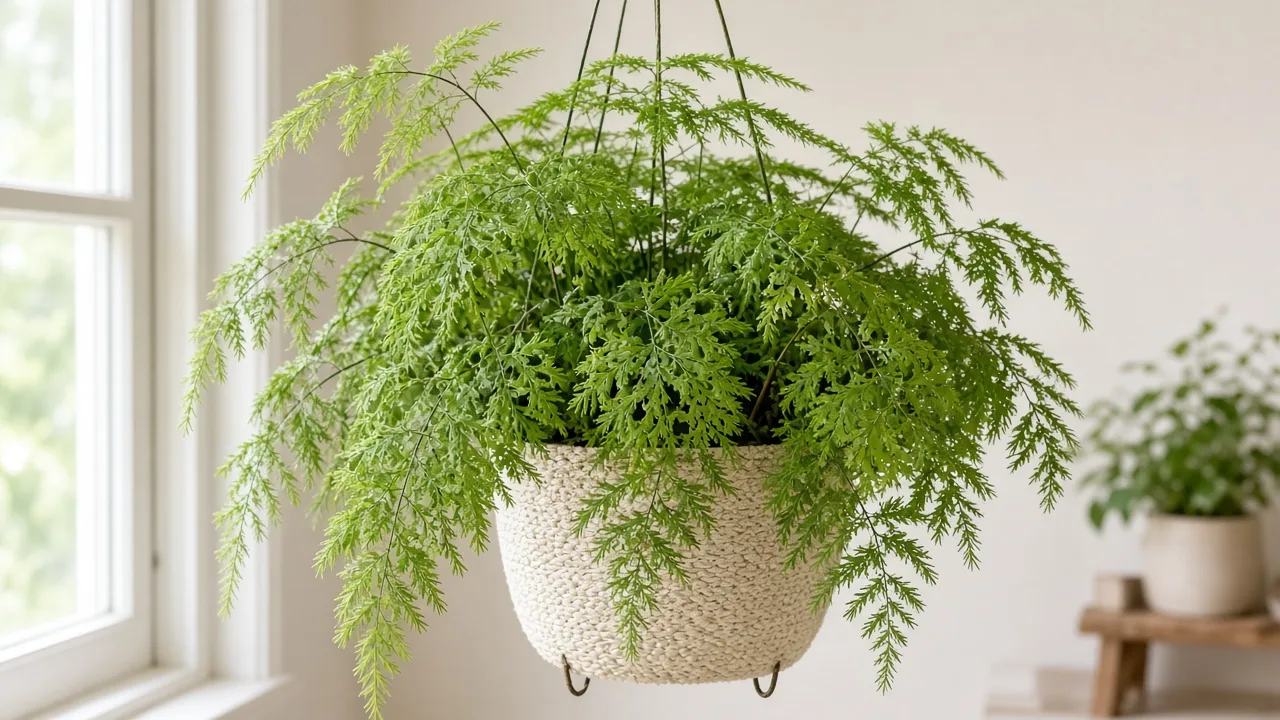
Holes in Leaves on Asparagus Fern: Causes, Checks & Fixes
This guide covers holes in leaves on Asparagus Fern. See also the general Holes in Leaves guide, watering, and light pages for this plant.
Holes in Leaves on Asparagus Fern: Causes, Checks & Fixes
Quick answer
Holes in asparagus fern (Asparagus setaceus) cladodes mean something removed or tore tissue—hanging-basket snags, spiny stem catches, caterpillar chewing, leaf miners, or thrips rasping—not a natural perforation pattern. Unlike fenestrated monsteras, asparagus fern keeps intact flat cladode sprays along wiry arching stems. Any open hole through a cladode is damage.
For how chewing pests and mechanical tears work in general, see our holes in leaves guide. On asparagus fern, the diagnostic clue is usually in the inner layers of overlapping arching sprays—where basket chains snag soft cladodes, caterpillars leave ragged chew with pellet frass, and leaf miners leave bordered trails inside flat needles.
First step: look at the hole edge, then inspect inner overlapping cladode sprays and the tuberous crown under bright light. A clean straight tear needs a different fix than ragged chew with frass on the pot rim below a hanging basket.
When to use this page vs other Asparagus Fern guides
| Pattern | Start here | Or route to… |
|---|---|---|
| Clean straight tear, no frass, no spread | This page | Caterpillars if ragged chew appears later |
| Ragged holes with dark pellet frass | Caterpillars | This page only for mixed mechanical + chew |
| Pale winding tunnel inside cladode | Leaf miners | This page if holes are full-thickness without trails |
| Silvery scrape marks, black specks, no through-holes | Thrips | — |
| Fine stippling and webbing between needles | Spider mites | — |
| Papery brown tips without open holes | Brown tips or low humidity | — |
| Yellow from wet base, sour mix, mushy tubers | Overwatering or root rot | Firm stems with holed cladodes only |
What holes in leaves look like on Asparagus Fern
Asparagus fern foliage is made of flat triangular cladode sprays—needle-like branches, not true leaves—on wiry arching stems. Dense hanging-basket growth hides damage until you part the inner layers. When you see a hole, sort it by pattern:
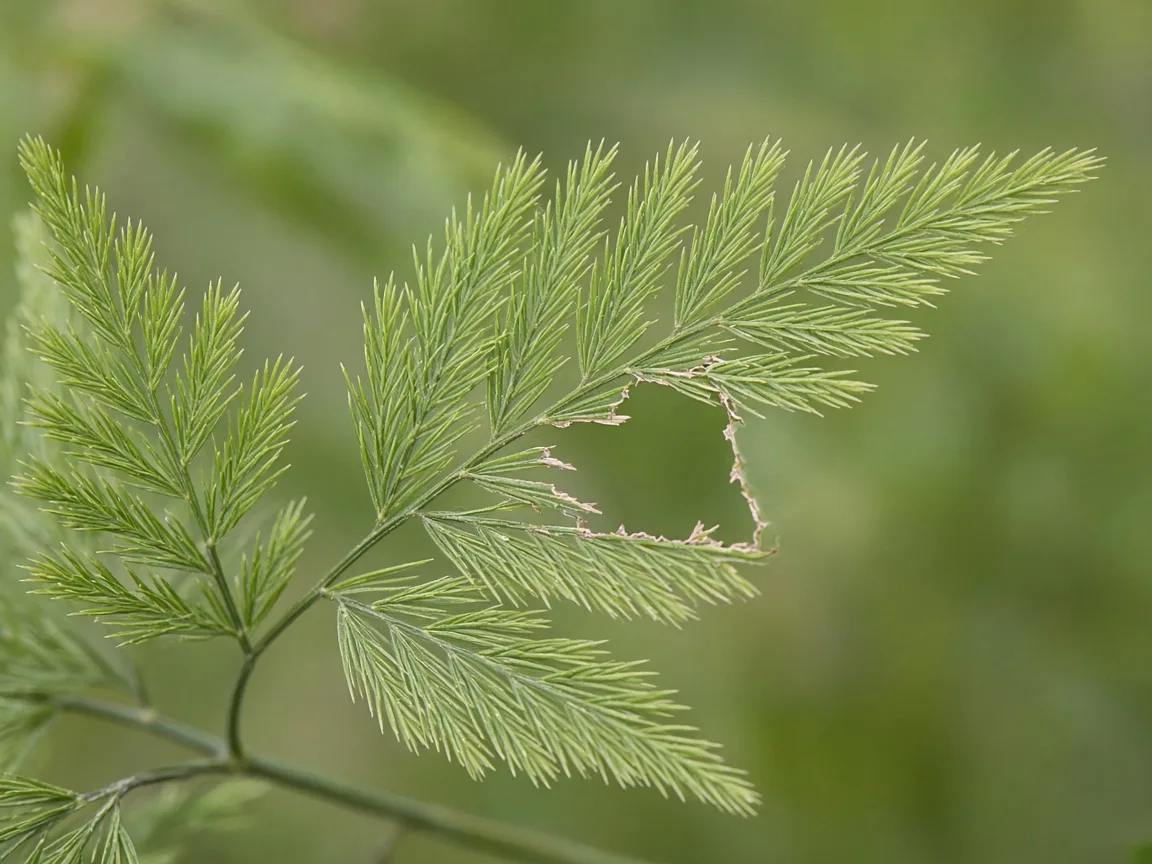
Clean straight tear through a flat cladode spray—compare with an intact neighbor spray on the same wiry stem and check for frass below the basket.
Mechanical snags and basket damage — Clean linear splits or one-time holes on outer cladodes that brush door frames, shelf lips, basket chains, or neighboring pots. Damage stays on the same spray after you reposition the pot; no frass, no internal trails, no spread to new spears unless the snag repeats daily.
Caterpillar chewing — Irregular ragged holes and notched margins on soft cladode sprays, often with dark pellet-like frass on foliage, pot rims, or the floor below a hanging basket. See caterpillars on asparagus fern.
Leaf miner trails — Winding pale tunnels inside the flat cladode with only a small exit hole—not a large ragged chew through the spray. Hold the cladode to light to see a bordered trail. See leaf miners.
Thrips rasping — Silvery streaks, scarred bud tips, and black varnish-like specks; full-thickness holes are less common than stippling on new crown spears. See thrips.
Spiny stem catches — Sharp spines along wiry stems can punch through overlapping soft cladodes when you rotate or hang the basket. Often a clean tear at the spine contact point on one inner spray.
Old needle drop vs true holes — Yellowing outer cladodes that dry and snap can look like holes from a distance, but the tissue browns uniformly first without a clean through-cut. Route persistent yellowing to yellow leaves or underwatering when the crown is dry.
Reading hole edges on flat cladodes (Asparagus Fern only)
The feathery texture of asparagus fern cladodes can hide small frass pellets until you brush the spray or hold it over white paper. Ragged, irregular margins with torn needle segments point to chewing insects. A clean straight break through the flat cladode with no surrounding discoloration usually means the spray caught on a basket hook, door frame, or spiny stem—not a pathogen. If the hole edge is bordered by a pale internal trail visible when backlit, suspect leaf miners inside the tissue, not surface mechanical damage.
Hanging-basket snag pattern (Asparagus Fern only)
Asparagus fern is a popular hanging-basket houseplant with arching sprays that overlap in layers. When you swing a basket to water or move it for light, outer and inner cladodes brush chains, ceiling hooks, and shelf edges. The damage signature is a clean tear on accessible sprays along the snag path, often on one side of the basket, with no frass and no new holes after you add clearance. This pattern is unlike caterpillars, which leave ragged chew with pellets on soft tissue anywhere in the crown, and unlike spider mites, which cause fine stippling without through-holes.
Crown spears vs outer arching sprays (Asparagus Fern only)
New growth emerges as tender spears from the tuberous crown at the soil line. Mechanical snags usually hit mature arching sprays on the basket perimeter. Caterpillars and leaf miners often concentrate on soft expanding crown spears and inner sheltered layers where a quick top-down glance never reaches. If holes appear only on outer sprays at chain height, suspect physical contact before you spray for pests.
Why Asparagus Fern gets holes in leaves
Mechanical damage is the most common cause of clean through-holes on indoor asparagus fern. Dense overlapping sprays in hanging baskets snag on hooks, door frames, and shelf lips when the pot moves. Spiny wiry stems can pierce neighboring cladodes during rotation or repotting.
Chewing pests create ragged holes with frass. Caterpillars are less common indoors than sap-sucking pests but arrive on patio baskets, nursery stock, and open windows. On asparagus fern they hide in inner cladode layers—route to caterpillars when you find pellets or larvae.
Outdoor summer placement brings eggs indoors. Patio baskets grouped near other plants share hitchhiking larvae where natural predators are absent. Damage often appears weeks after a plant returns to a windowsill.
Leaf miners tunnel inside flat cladodes. Larvae feed between cladode surfaces before exiting—uncommon indoors but possible after outdoor summer time. Trails show clearly when you backlight the flat spray.
Thrips rasp rather than chew full holes. Silvery scars on new spears usually mean thrips, not large irregular perforations.
Asparagus fern does not develop natural fenestrations. If someone suggests holes are normal for this species, that advice applies to different plants—not Asparagus setaceus.
How to confirm the cause
Work through these checks in order:
- Edge test — Ragged irregular margin with chew marks → insects (caterpillars). Clean linear tear → mechanical snag. Serpentine trail visible when backlit → leaf miners.
- Frass or larvae — Dark pellets on leaves or below the basket → caterpillars. Neither → consider mechanical tears or old dried needle snap.
- Inner layers first — Part overlapping arching sprays and inspect sheltered cladodes. Active feeding usually hits soft tissue in inner pockets before outer perimeter sprays.
- Snag path — Trace whether damaged sprays align with a basket chain, door frame, or shelf edge you brush weekly.
- Night patrol — If chew is suspected, check stem joints and soil line with a flashlight after dark. Caterpillars feed when room lights are low.
- Timeline — New holes on different sprays weekly signal active feeding. One unchanged clean tear for a month suggests past snag.
- Crown press — Firm tuberous crown with holes only on cladodes point to physical or chewing damage. Soft mushy tissue at the base on damp mix means rot—see root rot before you spray.
- Frass shake test — Hold a damaged spray over white paper and tap lightly; green or black pellets rolling off strongly suggest caterpillars, not mechanical tears.
First fix for Asparagus Fern
Photograph the holed cladode, examine the hole edge, then inspect every inner spray layer and crown spear before you spray or change watering.
| Confirmed pattern | First fix |
|---|---|
| Clean tear along basket chain or shelf path | Reposition the basket with clearance; trim the snagged cladode if it catches daily—no pesticide |
| Ragged chew with frass or visible larva | Isolate and hand-pick larvae; see caterpillars |
| Serpentine trail inside cladode | Pinch off and bag affected sprays; see leaf miners |
| Silvery scrape without through-holes | See thrips—not a mechanical fix |
| Spiny stem punched inner spray | Rotate stems gently with gloves; route arching branches away from spine contact points |
Do not change watering or fertilize a holed asparagus fern before you know whether insects are active. Extra nitrogen pushes soft crown spears that chewers prefer. Do not soak the crown to “help recovery”—follow the watering guide dry-down check instead.
Isolate infested plants away from other patio-return baskets immediately when you confirm live feeders with frass.
Step-by-step recovery
After the first targeted fix:
- Re-inspect every three to five days for two weeks—one missed caterpillar can open new holes on the next crown spear flush.
- Add basket clearance — Move hooks, shorten chains, or shift shelf placement so arching sprays no longer brush daily traffic paths.
- Hold isolation until no new damage appears on emerging spears.
- Prune only when necessary — Remove sprays more than half destroyed after pests are gone. Partial holes on green cladodes still photosynthesize and feed the tuberous crown.
- Scout after outdoor time — Rinse and quarantine patio baskets before mixing them back into your collection.
- Keep bright indirect light per the light guide so new spears emerge predictably—then any fresh ragged chew stands out against clean growth.
Recovery timeline
| Phase | Timing | Good sign | Bad sign |
|---|---|---|---|
| After first fix | Days 1–5 | No new holes on crown spears | Fresh chew marks on new sprays |
| New growth | Weeks 2–4 | Clean needles on firm wiry stems | Frass returns daily or trails spread |
| Cosmetic | Ongoing | Old holed sprays stable | Inner layers stripped despite repositioning |
Holed cladode tissue does not fill in. Judge recovery by clean new spears at the crown, not by perfect older sprays on every arching branch. Asparagus fern in bright indirect light with stable moist but not soggy watering often outgrows light mechanical damage within two to four weeks once the snag is removed.
Lookalike symptoms to rule out
Yellow lower cladodes without holes point to overwatering, underwatering, or not enough light—not chewing.
Papery brown tips without open holes suggest brown tips or low humidity—not mechanical tears through the spray.
Sticky honeydew without ragged holes suggests aphids, mealybugs, or whiteflies—sap feeders, not chewers.
Fine stippling and webbing suggest spider mites in dry rooms—not large irregular holes.
Curling without holes routes to curling leaves or drought stress—not this page.
Mistakes to avoid
Do not spray insecticide before confirming live pests—mechanical tears and one-time basket snags do not need chemical treatment.
Do not assume one holed cladode means the problem is solved. Follow every inner spray layer and check for frass below hanging baskets.
Do not confuse caterpillar chew with clean mechanical tears. Ragged margins with pellets mean caterpillars—not repositioning alone.
Do not keep the basket where sprays brush a door you open daily. Clearance fixes most mechanical cases faster than pruning alone.
Wear gloves when handling damaged sprays. Asparagus setaceus is toxic to cats and dogs, and sap can irritate skin.
How to prevent holes next time
- Hang with clearance from door frames, shelf lips, and neighboring pots that arching sprays brush daily.
- Quarantine new asparagus fern two to three weeks before placing it beside an established hanging basket.
- Scout inner cladode layers during each watering check in warm months when moths are active.
- Rinse patio baskets before winter bring-in; inspect sheltered inner sprays on long arching stems.
- Rotate baskets gently with gloves to avoid spiny stem punches through overlapping cladodes.
- Keep bright indirect light and well-draining soil per the soil guide so healthy new spears make fresh damage obvious.
- Screen windows that stay open at night near plant shelves.
When to worry
Escalate when:
- Fresh ragged chew with frass spreads across multiple fronds within a week
- Leaf-miner trails appear on several new crown spears
- Holes keep opening on the same snag path despite repositioning—look for a hidden caterpillar in inner layers
- Frass accumulates below the basket while stems stay firm
A single old clean tear on one outer cladode, with firm wiry stems and clean new crown growth elsewhere, is usually not an emergency. Reassess for overwatering only if the crown softens and smells sour rather than showing isolated mechanical tears.
Pet safety: Berries and foliage are toxic to cats and dogs. Keep pruned debris out of reach and contact your veterinarian if ingestion is suspected.
Conclusion
Holes in asparagus fern cladodes always mean damage—mechanical snags, caterpillar chewing, mining, thrips scars, or spiny stem catches—not a natural leaf pattern. Read the hole edge, inspect inner overlapping sprays and crown spears, and match the pattern before you spray or repot. Asparagus fern recovers quickly from light mechanical hits once clearance is fixed; ragged chew with frass needs the caterpillar route instead.
Related Asparagus Fern guides
- Asparagus fern overview — placement, growth habit, and care baseline
- Asparagus fern watering — moist-but-not-soggy rhythm when holes are not the issue
- Asparagus fern light — bright indirect light without weak growth
- Asparagus fern soil — well-draining mix that protects tuberous roots
- Caterpillars on asparagus fern — ragged holes with frass
- Leaf miners on asparagus fern — internal trails and exit holes
- Thrips on asparagus fern — silvery scrape without full holes
- Asparagus fern problems — browse all common issues
Related tool
Use the Plant Problem Diagnosis Tool to narrow causes for holes in leaves on this plant before changing multiple variables at once.