Holes in Leaves on Bird of Paradise: Causes, Checks & Fixes
Quick answer
Holes in Bird of Paradise paddle leaves usually mean caterpillar chew, thrips rasping, leaf-miner exit holes, dry-air unfurl tears, or mechanical snags on the outer fan—not underwatering alone. First step: hold the highest soft paddle to a window to separate open chew from internal tunnels, then inspect the rhizome crown and leaf sheaths at dusk.
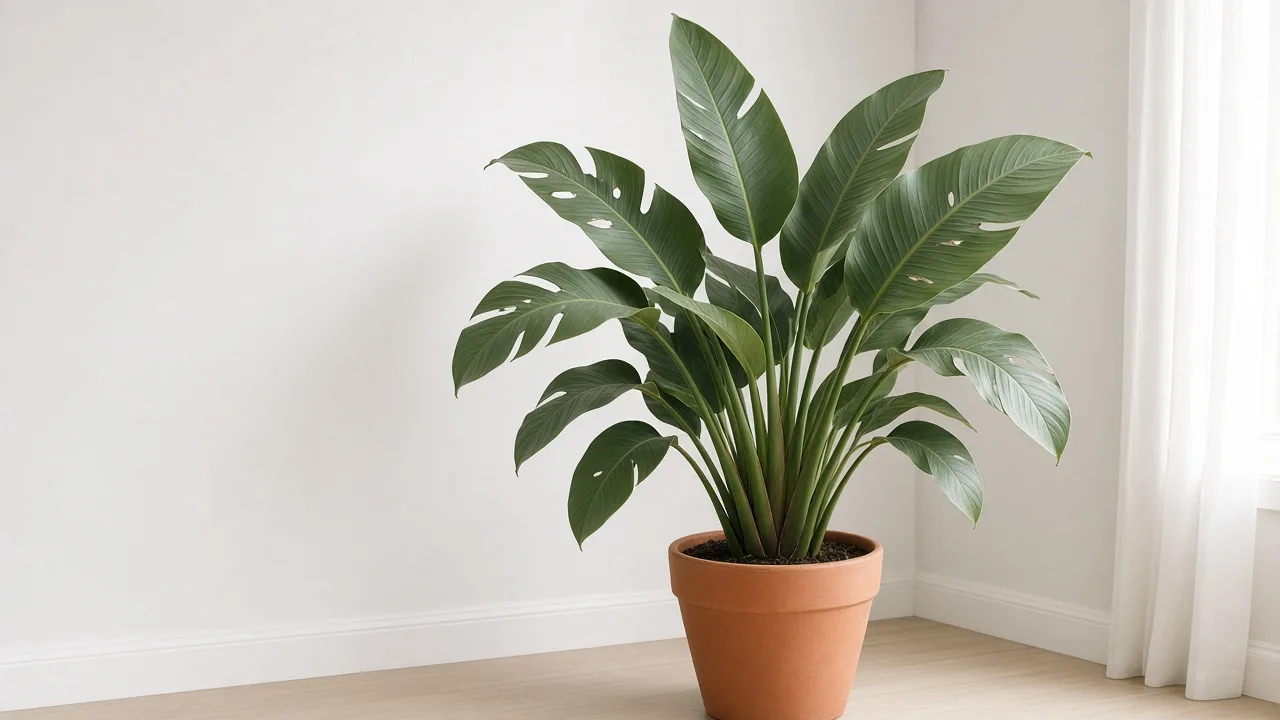
Holes in Leaves on Bird of Paradise: Causes, Checks & Fixes
This guide covers holes in leaves on Bird of Paradise. See also the general Holes in Leaves guide, watering, and light pages for this plant.
Holes in Leaves on Bird of Paradise: Causes, Checks & Fixes
Quick answer
Holes in Bird of Paradise (Strelitzia reginae) mean something removed or tore paddle tissue—caterpillars, thrips, leaf miners, dry-air unfurl tears, ceiling-fan or doorway snags, or outdoor hitchhikers after patio summer—not a normal leaf pattern. Large gray-green leaves arise from underground rhizomes in a fan-shaped clump; unlike split-leaf monsteras, bird of paradise does not develop decorative fenestrations indoors. Any open hole is damage.
For how chewing pests and mechanical tears work in general, see our holes in leaves guide. On this clumping Strelitzia, the decisive clue is usually the tallest soft paddle and the sheathed new leaf emerging from the fan—chewers and unfurl tears show there first while lower, stiffer blades may look untouched.
First step: backlight the highest damaged paddle and decide whether you see open chew, internal tunnels, or a tear through a still-unfurling blade—then inspect leaf sheaths and the rhizome crown at dusk.
Indoor bird of paradise more often struggles with scale, mealybugs, and spider mites than with chronic hole damage, so new holes usually trace to recent outdoor time, nursery stock, open windows, fan paths, or low humidity during unfurl—not months of silent indoor feeding alone.
When to use this page vs other Bird of Paradise guides
| Pattern | Read next |
|---|---|
| Ragged chew + pellet frass + larvae | Caterpillars |
| Serpentine tunnels inside blade, tiny exit hole | Leaf miners |
| Silvery streaks, black specks, stippling before holes | Thrips |
| Sticky honeydew, wax at rhizome crown | Mealybugs or scale insects |
| Fine webbing and stippling on undersides | Spider mites |
| Round yellow-brown spots with halos, not chew | Black spots |
| One clean tear after moving pot or brushing a wall | This page (mechanical section) |
| Soft rhizome, sour soil, wilt without frass | Overwatering or root rot |
What holes look like on Bird of Paradise
Healthy bird of paradise carries long gray-green paddle leaves with a central midrib groove, arranged in a fan from a tight rhizome clump—often 12 to 24 inches long indoors on a mature plant. Hole problems break that look in predictable ways if you sort by pattern.
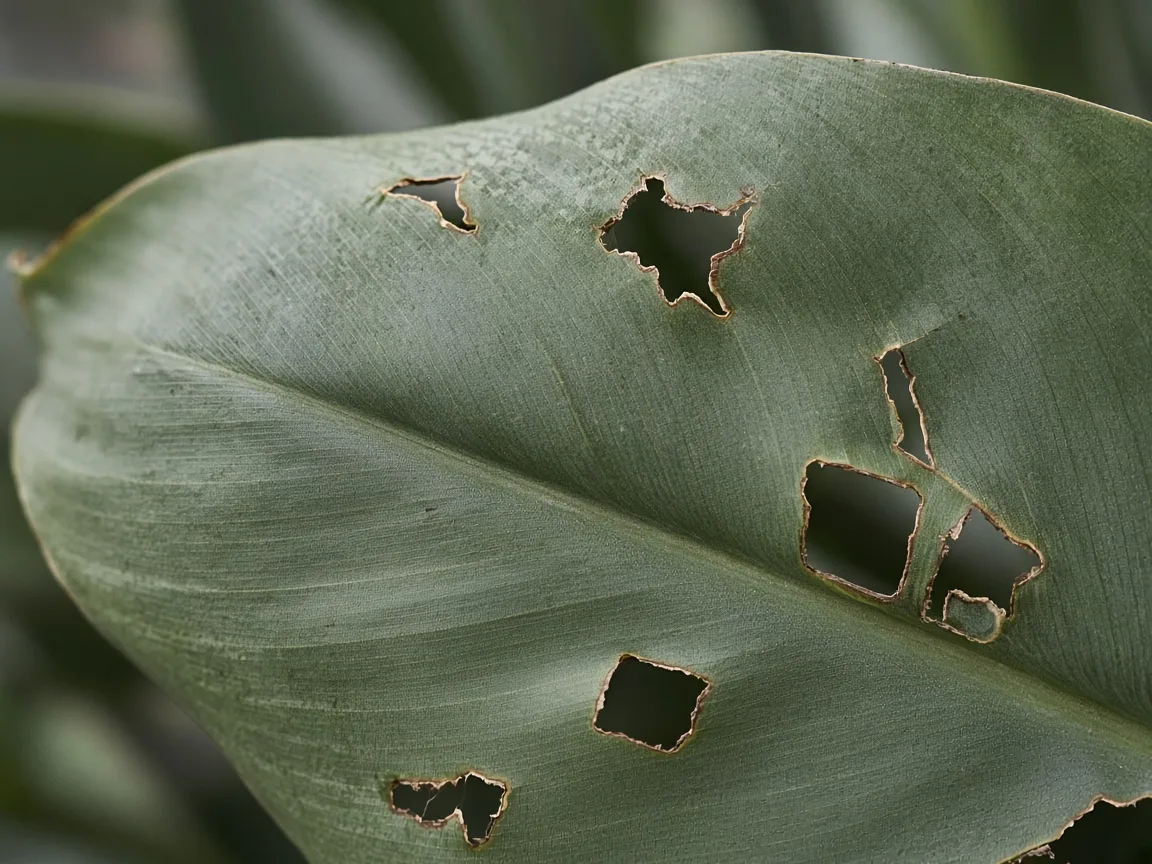
Irregular ragged holes through a Strelitzia paddle—compare torn margins with an intact neighbor blade in the same fan before you spray.
| Cause | Hole pattern on paddles | Extra signs | First fix on Bird of Paradise |
|---|---|---|---|
| Caterpillars | Large irregular holes and notched edges | Pellet frass in the fan; larvae at dusk | Hand-pick in sheaths—see caterpillars |
| Thrips | Pale rasped patches that tear into small holes | Silvery scars, black specks; no frass pellets | Rinse undersides; route to thrips |
| Leaf miners | Pinhole exits; tunnels inside when backlit | Serpentine trails between surfaces | Leaf miners guide |
| Unfurl tears (dry air) | Linear tear or hole through newest still-soft paddle | Crispy margins; low humidity in winter | Raise humidity; mist sheaths only in warm months per houseplant humidity habits |
| Mechanical snag | One-time clean tear on outer paddle | No spread, no frass; caught on fan, door, or tag | Relieve clearance; no pesticide |
| Slugs/snails (outdoor pots) | Irregular edge tears | Slime on pot rim at night | Handpick after dark on patio plants |
Backlight test on Strelitzia paddles (Bird of Paradise only)
Strelitzia reginae paddles are thick and gray-green with a obvious midrib channel—enough tissue to backlight in one minute:
- Open holes with torn edges visible from upper and lower surfaces mean caterpillars, thrips, mechanical damage, or slugs—stay on this page or open caterpillars.
- Pale winding trails with intact outer skin and only a small exit puncture mean leaf miners—surface sprays will not reach larvae inside tissue.
- A single linear split through the center of the newest paddle while older fan leaves stay hole-free often points to dry-air unfurl damage, not insects—especially in heated rooms below the 50–60% humidity comfort zone.
This backlight step is faster on bird of paradise than on narrow grass-like herbs because paddles are wide enough to hold to a window or phone flashlight.
Fan-clump sheaths vs rhizome crown (Bird of Paradise only)
Bird of paradise grows from a clumping rhizome, not a single woody trunk. New paddles emerge rolled inside leaf sheaths at the center of the fan. Chew and unfurl tears concentrate on those sheathed shoots and the tallest soft paddles, while mealybugs and scale often cluster at the crown and rhizome line with wax or honeydew but without ragged holes through mature paddles.
- Tip-of-fan holes with frass → foliage chewer in sheaths—inspect at night.
- Sticky base, clean paddles → sap feeders at crown—route to mealybugs or scale, not caterpillar spray on every blade.
- Whole fan limp droop without frass or new holes → watering, light, or root rot—not a leaf-hole diagnosis.
Match height in the fan before you drench the rhizome for a tip problem.
Outer-paddle clearance and ceiling fans (Bird of Paradise only)
Indoor bird of paradise is often placed in bright statement corners where outer paddles extend into traffic. The largest lower blades brush door frames, gallery walls, and ceiling fans because the plant is wider than it is tall on many cultivars. Mechanical holes appear where:
- A stiff outer paddle catches a fan blade or doorway after you rotate the pot
- Overlapping paddles tear when you squeeze the clump past furniture during a move
- A plant tag or support stake pierces one blade while the rest of the fan stays clean
Mechanical damage does not spread to the next emerging sheath over a week. If new holes keep opening on the tallest soft leaf without you touching the plant, return to pest inspection—not fan adjustment alone.
Patio summer hitchhikers on banana-like paddles (Bird of Paradise only)
Bird of paradise is frequently moved outdoors in warm weather for extra light—right when moths, slugs, and leaf miners are active. Large banana-like paddles offer a broad feeding surface, and pests hitchhike indoors on outdoor plants where natural enemies are absent.
- Holes that start one to two weeks after patio return strongly suggest caterpillars or miners, not chronic indoor stress.
- Edge tears with slime on pots that sat on damp patios point to slugs—rare on strictly indoor plants.
- Acclimate light gradually when moving in and out; hole damage from chew is separate from sun scorch on paddles but both can appear the same summer.
Quarantine the clump from other houseplants until you confirm the hole pattern.
Why Bird of Paradise gets holes in leaves
Soft paddle flushes in bright, humid growth. When light and watering support active growth, bird of paradise pushes new paddles from sheathed shoots. Chewers and thrips target that soft tissue—one warm week can hole every emerging blade while older fans look fine.
Outdoor and nursery hitchhikers. Pests arrive on nursery stock and patio plants and keep feeding indoors—common after summer placement or open windows at night.
Caterpillars on expanding paddles. Caterpillars are uncommon on houseplants relative to sap feeders, but when they appear on Strelitzia they chew through paddle tissue and leave pellet frass in the fan—see caterpillars on Bird of Paradise.
Dry-air unfurl tears. Winter rooms with low humidity can cause new paddles to stick inside sheaths and tear as they open—similar to other large-leaf tropicals, but the damage sits on the central fan shoot, not random old blades.
Training and placement. Wide clumps tear easily when crowded. That cause is instant and local—no frass line in the sheath.
How to confirm the cause
Work through these checks in order:
- Backlight one damaged paddle — Open hole vs internal tunnel (leaf miners) vs unfurl tear on the newest leaf only.
- Tallest soft paddles and sheaths first — Inspect where new leaves emerge from the fan center.
- Frass vs slime vs specks — Pellets suggest caterpillars; slime at night suggests slugs on outdoor pots; silvery scars suggest thrips.
- Night pass — Inspect at night with a flashlight when chew marks are fresh but no larva showed in daylight.
- History — Note patio time, new purchases, ceiling-fan paths, and recent repot or move.
- Crown cross-check — Wax, scale, or honeydew at the rhizome without paddle chew points to mealybugs or aphids, not foliage holes.
- Spread test — Mark one holed paddle with a string; if new holes appear on higher growth within five days, active feeding continues.
First fix for Bird of Paradise
Classify the hole pattern on the tallest damaged paddle before any spray or fertilizer. Write down one label: caterpillar chew, internal tunnels, unfurl tear, mechanical tear, or unclear.
If you labeled caterpillar chew (ragged holes plus frass), your next action is hand-pick larvae from leaf sheaths at dusk—full steps live on caterpillars on Bird of Paradise. If you labeled internal tunnels, switch to leaf miners. If you labeled mechanical tear on a single outer paddle with no spread, increase clearance from fans and walls and watch the next sheath only.
Do not fertilize, repot, and spray on the same day while the cause is still unknown.
Step-by-step recovery by cause
Caterpillar chew (ragged holes + frass)
Follow caterpillars on Bird of Paradise: isolate, hand-pick in sheaths, then Bt only if new holes continue. Bird of paradise is toxic to cats and dogs if ingested—wear gloves when handling damaged tissue and keep pets away from frass and trimmings.
Thrips rasping that opens small holes
Rinse paddle undersides with plain water and route to thrips on Bird of Paradise if silvery scars and black specks accompany tears. Thrips rarely leave pellet frass like caterpillars.
Leaf miner trails
Remove the worst mined paddles with clean shears to reduce adult emergence. Do not spray the leaf surface expecting it to reach larvae inside—follow the leaf miners guide.
Unfurl tears in dry air
Raise humidity toward 50–60% while the next sheath opens; follow low humidity and light guides so new paddles harden evenly. Occasional misting in warm months matches houseplant bird of paradise care, but a humidifier beats sporadic mist for winter unfurl.
Mechanical fan or doorway tears
Rotate the pot so outer paddles clear traffic paths, pad sharp stakes, and remove only the torn blade if it blocks the fan. No pesticide is needed when spread stops.
Slugs on outdoor balcony pots
Handpick after dark, dry the pot rim, and reduce debris under the clump. Strictly indoor plants rarely need this path unless pots sat on damp patios.
Recovery timeline
Judge progress by clean new sheaths and frass-free soft paddles, not by old holey blades lower in the fan.
- Within one week: Correct identification should stop new holes on the marked paddle if you removed larvae or fixed clearance
- Two to four weeks: Expect replacement paddles from the fan center when watering and light stay steady
- Chewed mature paddles: Permanent cosmetic holes—trim only after the clump pushes enough clean tissue above the damage; see pruning for how to remove blades without weakening the rhizome
Whole-clump wilt with soft rhizome and sour mix is not a holes-in-leaves recovery path—inspect root rot first.
Lookalike symptoms
| What you see | Likely cause | Page |
|---|---|---|
| Internal tunnels when backlit | Leaf miners | Leaf miners |
| Pellet frass + larvae | Caterpillars | Caterpillars |
| Round yellow-brown spots with halos | Leaf spot | Black spots |
| Crispy brown tips, no holes | Dry air or salt | Brown tips or low humidity |
| Rolled or split paddles without chew | Humidity or mechanical split | Curling leaves |
Mistakes to avoid
- Spraying the rhizome crown for tip holes — NC State guidance emphasizes mealybugs, scale, and mites on bird of paradise; tip chew needs sheath inspection
- Treating leaf miners like chewers — Open-hole sprays do not reach larvae inside tunnels
- Fertilizing first — Nutrients do not close holes; confirm pests or mechanical cause—see fertilizer only after new growth stays clean
- Confusing leaf spot with chew — Leaf spot may cause yellow or brown spots on paddles, not ragged perforations—see black spots
- Ignoring one mechanical tear — A single snag is harmless; spreading tip damage is not
How to prevent holes next time
- Quarantine new clumps two to three weeks before mixing them with established bird of paradise
- Scout emerging sheaths weekly during fast growth under bright light
- Route outer paddles away from ceiling fans and door swing paths
- Acclimate patio moves gradually and inspect sheaths before plants rejoin indoor collections
- Keep even moisture in well-draining mix per soil and watering guides—stressed clumps replace chewed paddles slowly
- Raise winter humidity when new fans unfurl so paddles do not tear inside sheaths
Related Bird of Paradise guides
Use this page when you see open holes or notches through gray-green paddles and need to separate chew, miners, unfurl tears, and snags before treatment. Open caterpillars when frass and larvae confirm chewers; leaf miners for internal tunnels; thrips for silvery rasping; black spots for round necrotic lesions. For culture that keeps clumps resilient, start with the Bird of Paradise overview and problems hub.
Related tool
Use the Plant Problem Diagnosis Tool to narrow causes for holes in leaves on this plant before changing multiple variables at once.