Black Spots on Bird of Paradise: Causes, Checks & Fixes
Quick answer
Black spots on Bird of Paradise (Strelitzia reginae) are usually fungal leaf spot after oversized paddle leaves stay wet, sooty mold on honeydew from scale, or dry necrosis on the lowest paddles—not one generic disease. First step: stop misting and overhead watering, remove the worst spotted paddles with clean shears, and improve airflow before any spray.
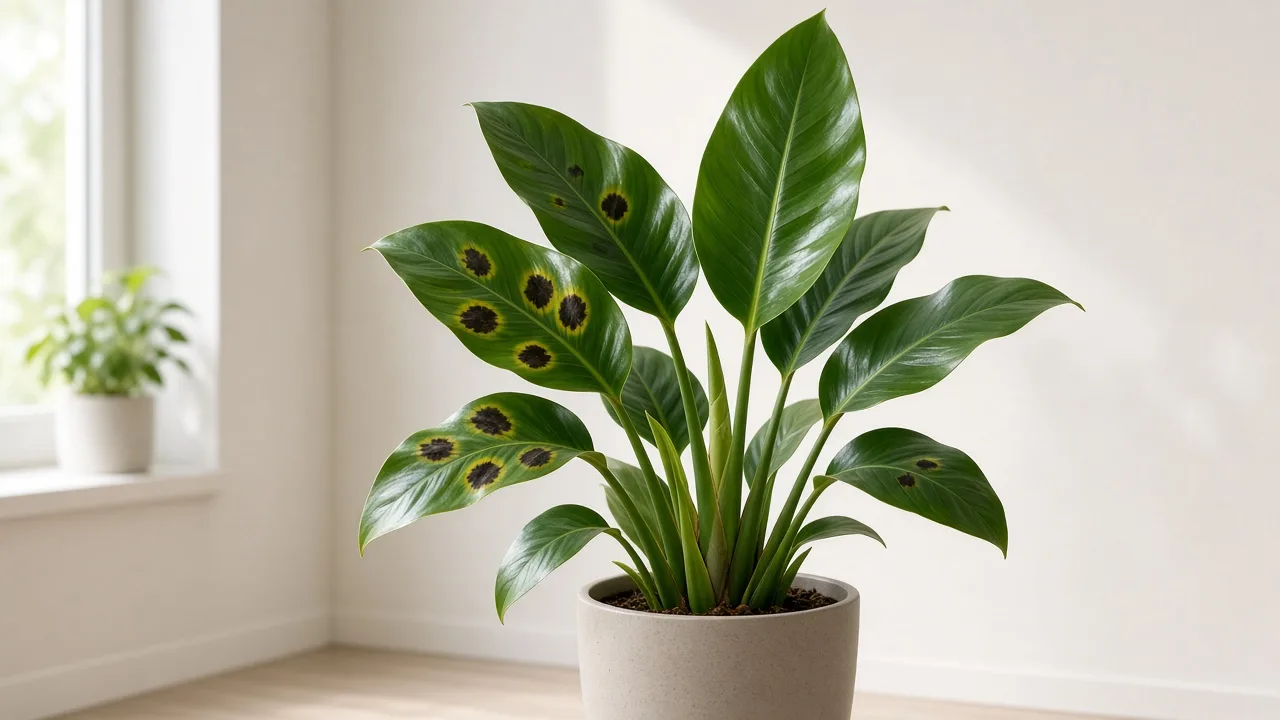
Black Spots on Bird of Paradise: Causes, Checks & Fixes
This guide covers black spots on Bird of Paradise. See also the general Black Spots guide, watering, and light pages for this plant.
Black Spots on Bird of Paradise: Causes, Checks & Fixes
Quick answer
Black spots on Bird of Paradise (Strelitzia reginae) are localized tissue death on large glossy paddle leaves (thick petioles, upright clump from an underground rhizome). On this sun-loving tropical, the pattern usually splits four ways: dry to slightly wet circles with yellow halos on several paddles point to fungal leaf spot after foliage stays damp, black smear that wipes off follows honeydew from scale insects or mealybugs, fixed dry black patches on the lowest paddle only often trace normal aging or healed mechanical damage, and soft black tissue at the soil line on heavy wet mix routes to overwatering or root rot—not superficial spotting alone. For general spot-disease mechanics, see our black spots guide. On Strelitzia, shower rinses and mist bead on waxy paddle blades, drip onto lower leaves, and dry slowly in a tight corner while the rhizome clump still looks upright for weeks.
First step: stop misting and overhead watering, then cut off the most heavily spotted paddles at the rhizome with clean shears. Pull the pot a few inches from walls so air can move around the leaf stack. Water the soil only when the top 5 cm is dry—do not stack fungicide, repot, and heavy prune on the same day.
Species baseline: Bird of Paradise overview and the full problems hub.
When to use this page vs other Bird of Paradise guides
| Your question | Best page |
|---|---|
| Discrete black or dark brown spots on paddle blades | This page |
| Wide yellowing on lower paddles on a heavy wet pot | Overwatering |
| Mushy rhizome, sour smell, collapse on wet mix | Root rot |
| Brown edges or tips without round lesions | Brown tips or brown leaves |
| Uniform yellow paddles, not spotty necrosis | Yellow leaves |
| Silver stippling and webbing | Spider mites |
| Black coating that wipes off | Scale insects |
| Chewing holes, not necrotic circles | Holes in leaves |
What black spots look like on Bird of Paradise
Healthy Strelitzia carries large oblong paddle leaves on stiff green petioles emerging from a rhizome clump—not a single woody trunk. Black spotting breaks that look in recognizable ways:
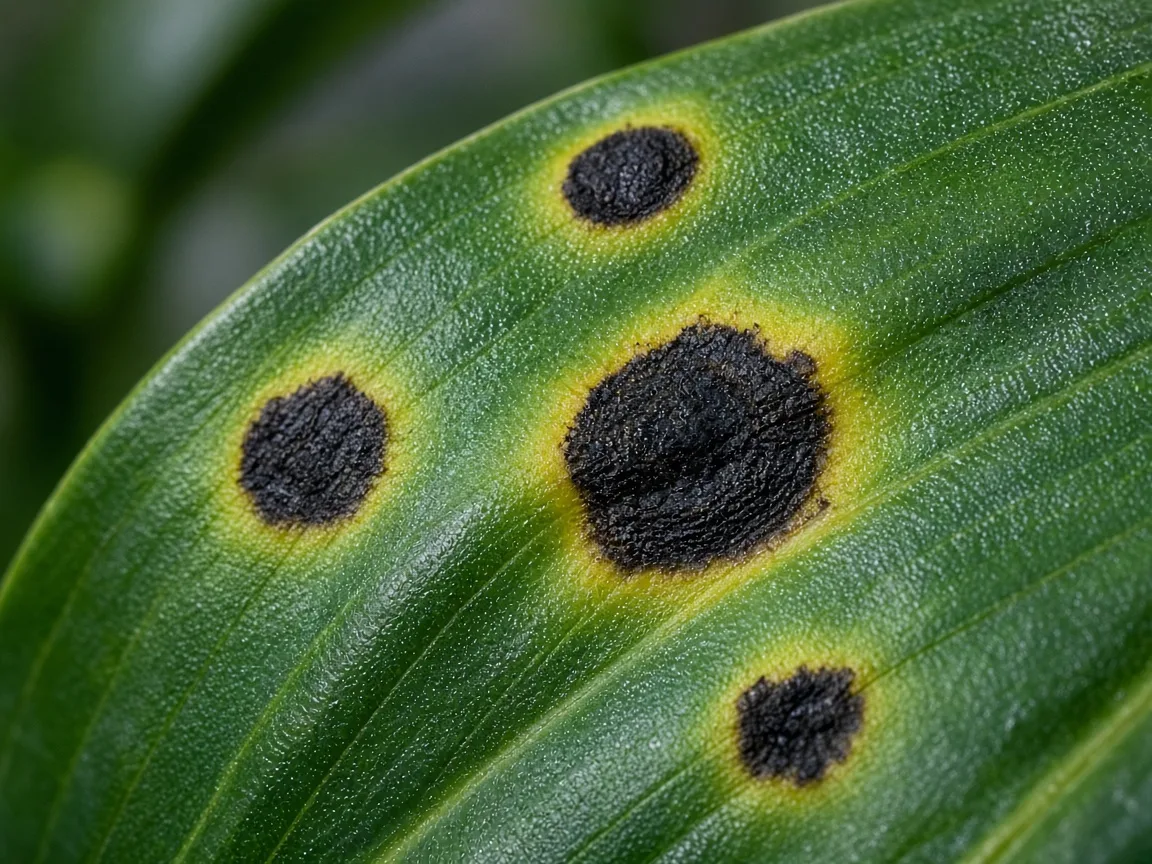
Fungal leaf spot on Strelitzia often shows dark centers with yellow halos on thick glossy paddles—compare with healthy tissue on the same plant.
- Small dark brown to black circles with yellow halos — Often start water-soaked, then crisp at center. NC State notes leaf spot may cause yellow or brown spots on Strelitzia leaves; indoors those lesions often read darker as tissue dies.
- Irregular black patches merging along lower paddle edges — Common when upper paddles drip onto lower ones and nights stay humid in a bathroom or crowded corner.
- Black smear that wipes off with a damp cloth — Sooty mold on honeydew from scale, aphids, or whiteflies hiding at petiole bases and leaf undersides.
- Dry black mark with no halo, no spread for months — Bumping a thick petiole, cold draft on one paddle, or a torn split-leaf edge that browned and healed.
- Black soft tissue at rhizome or petiole base on wet mix — Crown or root failure. Inspect roots the same day; see root rot.
Spots on new paddles unfurling from the clump center are more urgent than one old mark on the lowest leaf.
Splash zone on oversized paddle leaves
Strelitzia paddles are broad, waxy, and slow to dry compared with narrow houseplant leaves. That changes where spots start:
Upper leaves irrigate lower ones. When you shower-rinse, mist for humidity, or splash while watering, water runs down thick petioles and pools on lower paddle surfaces—exactly where fungal leaf spot spores germinate on wet tissue.
Split or torn paddle tips brown to black. Wind damage, moving the pot, or pet contact can nick the stiff blade edge. The necrosis stays dry and fixed along the tear line—not a spreading yellow-halo circle.
Lower paddles age out first. A single lowest paddle with dry black tips while the center pushes clean new growth is often senescence, not epidemic leaf spot. Compare with pale leaves if the whole clump looks washed out.
Reading spots on paddle blades vs petiole bases
Diagnosis on Strelitzia depends on where the black tissue sits:
Blade-level spots — Round or angular lesions on the glossy paddle surface. Fungal leaf spot and bacterial specks both start here. RHS describes dark spots with yellow margins as likely fungal leaf spot on houseplants, while pale or straw-coloured splash marks may trace cold water—not the same as expanding black halos.
Petiole and rhizome zone — Scale insects and mealybugs lodge where petioles meet the rhizome crown. Honeydew drips onto lower paddles and grows sooty mold that looks like leaf spots from across the room until you wipe it.
Whole-paddle collapse on wet mix — A paddle that turns yellow-brown to black and hangs limp while the pot stays heavy often tracks overwatering or advancing rot—not scattered surface spots on firm paddles.
Summer patio move: wind shred plus wet nights
Many growers move Strelitzia outdoors for summer into bright sheltered light. Two patio patterns mimic “black spot disease”:
Shredded paddle margins — Strong wind can damage large leaves; torn edges dry to dark brown or black along the damage line. Spots do not gain yellow halos or multiply up the clump unless a secondary fungus colonizes the wound.
Dew and overhead irrigation outdoors — Night moisture on paddles that never dried before you brought the plant back indoors can trigger the same leaf-spot flush you see from shower misting. Dry foliage for several days after any move before judging whether fungicide is needed.
Why Bird of Paradise gets black spots
Fungal or bacterial leaf spot
The most common infectious pattern indoors: small dark spots with yellow halos on paddle blades, often on lower leaves first, spreading when foliage stays wet. Fungal pathogens spread by splashing water—mist, shower rinses, and tight grouping are usual triggers. NC State lists leaf spot among Strelitzia problems even though the plant is often pest-free when culture is correct.
Scale, mealybugs, and sooty mold
Extension guidance for Strelitzia is to monitor for mealybugs, scale, and spider mites. Sap feeders on thick petioles produce honeydew; sooty mold grows as a black film you can wipe off. Treat the pest population, not only the mold—or black “spots” return within days.
Overwatering and weak tissue
Strelitzia tolerates drought better than overwatering but still needs regular drinks in bright light. Chronic saturation weakens roots; overwatering stresses roots and can precede leaf necrosis. Discrete spots on firm paddles with appropriate dry-down are unlikely to be rot—but merging black patches on yellow lower paddles on a sour wet pot need root inspection, not foliar fungicide alone. Pair with fungus gnats or mold on soil when the surface never dries.
Cold water and aerosol damage
RHS notes pale or straw-coloured spots from cold water splashes or aerosols—on Strelitzia those marks can darken as tissue dies, especially on new paddles unfurling in winter. Let tap water sit to room temperature and skip leaf-shine sprays on stressed plants.
Thrips and mechanical lookalikes
Thrips scar young paddle tissue as silvery patches that later brown; severe scarring can look black in aggregate. Distorted leaves from pests or edema are a different entry point than round fungal halos.
How to confirm the cause
- Halo and texture test — Yellow ring plus dry center on multiple paddles after wet foliage → leaf spot culture fix. Greasy soft margin on wet plant → bacterial or advanced rot route.
- Wipe test — Damp cloth on the spot. Smear that lifts → sooty mold; search petiole bases for scale.
- Underside inspection — Scale bumps, mealy cotton, mite stippling, or thrips on newest paddle.
- Moisture at 5 cm — Finger or skewer near pot edge. Heavy pot plus yellow lower paddles on damp mix → overwatering cross-check.
- Spread speed — New halos on center paddles within a week → escalate sanitation and isolation. One stable lowest-leaf mark for months → cosmetic trim only.
- Airflow audit — Plant pressed against a wall, showered weekly, or misted nightly → environmental trigger confirmed before chemicals.
First fix for Bird of Paradise
Stop wetting paddle surfaces: no mist, no overhead shower rinse, no foliar sprays until new growth stays clean.
Remove the two or three most heavily spotted paddles at the rhizome with sharp, alcohol-wiped shears. Move the pot so fronds are not crushed against furniture. Water soil only when the top 5 cm is dry per the watering guide, and empty saucers within 30 minutes.
If the wipe test shows sooty mold, treat scale or other pests on petioles before any fungicide. If mix smells sour or petiole bases soften, inspect the rhizome—do not assume leaf spot alone.
Step-by-step recovery
- Sanitation — Bag and discard removed paddles; do not compost infected tissue indoors.
- Dry foliage habit — Soil-level watering only; use a well-drained mix and bright light so the pot dries on schedule.
- Airflow — Rotate the pot weekly; keep 15–30 cm clearance from walls and other plants while spots are active.
- Pest clearance — If honeydew is present, complete pest treatment before judging fungicide need.
- Optional fungicide — If halos keep forming on new paddles after two weeks of dry culture, use a houseplant-labeled fungicide per label directions on a test leaf first. Fungicides protect new tissue; they do not erase old black necrosis.
- Trim for appearance — Once spread stops, cut remaining spotted paddles at the rhizome for aesthetics. Wear gloves—Strelitzia sap can irritate skin and the plant is toxic to pets.
Recovery timeline
Isolated fungal leaf spot on a firm rhizome often stabilizes within two to three weeks after foliage stays dry and worst paddles are removed. Old black centers do not turn green—judge success by clean new paddle unfurling from the clump center and no fresh halos on those leaves.
If spots accelerate on new growth despite dry culture, or rhizome tissue softens on wet mix, expect four to eight weeks of root-zone correction per root rot protocols—or division salvage from firm offsets only.
What not to do
- Do not mist “for humidity” while halos are spreading—ventilation reduces fungal diseases more reliably than wetting Strelitzia paddles.
- Do not fertilize stressed plants hoping spots fade—feed only after new paddles look healthy for two weeks per the fertilizer guide.
- Do not repot on day one unless roots are mushy or mix is failing—repotting plus pruning plus spray stacks stress on a large rhizome.
- Do not burn paddles with midday sun through glass on a weakened plant—bright indirect to gentle direct per the light guide, not a sudden south-window move.
How to prevent black spots next time
Match watering to top 5 cm dry-down, use airy soil, and keep the clump in enough light that the pot dries between drinks. Skip routine leaf wetting; raise humidity with a humidifier or pebble tray under the pot, not paddle mist.
Quarantine new Strelitzia before grouping with collections. Sanitize shears between plants when trimming spotted tissue. In summer outdoors, choose a sheltered bright spot and inspect paddles when you bring the plant back inside.
When to worry
Act within days when:
- New center paddles open already spotted for two flushes
- More than one-third of paddles show merging lesions in a humid week
- Rhizome or petiole bases soften on saturated mix
- Whole clump wilts on wet soil despite dry-looking spots—see wilting
A single dry black mark on the lowest paddle with firm rhizome and clean new growth is low urgency—trim and monitor.
Related Bird of Paradise guides
- Bird of Paradise overview — species baseline and care hub
- Bird of Paradise problems — full symptom index
- Watering — 5 cm dry-down that prevents weak tissue
- Light — brightness that supports healthy paddle growth
- Soil — drainage mix for rhizome health
- Overwatering — when wet mix drives lower-leaf failure
- Root rot — rhizome rescue when spots pair with collapse
- Scale insects — honeydew and sooty mold source
Related tool
Use the Black Spots on Leaves Checker to narrow causes for black spots on this plant before changing multiple variables at once.