Bitter Gourd Pruning Guide: Trellis Training, Tip Pinches &
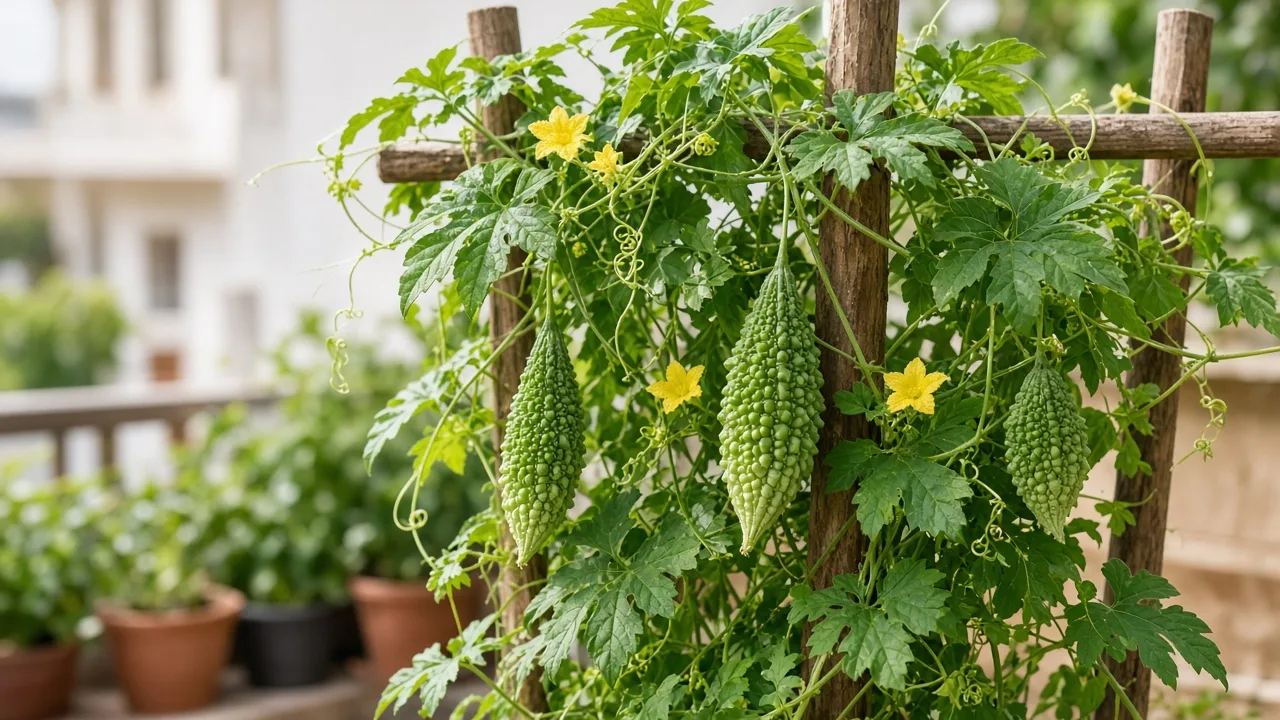
Bitter Gourd Pruning Guide: Trellis Training, Tip Pinches & Harvest Cuts
Bitter Gourd Pruning Guide: Trellis Training, Tip Pinches & Harvest Cuts
First, cut off only dead, yellow, or clearly diseased leaves—and any split, orange, or rotting fruit—with clean scissors or bypass pruners. Work from the bottom of the vine upward, bagging overripe karela instead of leaving it on the vine or compost pile where pets might reach it. Do not pinch the main growing tip or shorten healthy laterals until that cleanup is finished and the stem is tied to its trellis.
Bitter gourd (Momordica charantia—karela, bitter melon, ampalaya) is a fast annual cucurbit vine, not a perennial you reshape year after year. NC State Extension describes a tendril-bearing climber that can extend 12 to 20 feet in one warm season when grown like cucumbers on rich, well-drained soil. Home “pruning” is really vine training plus sanitation and harvest: you guide stems up a support, open the canopy for air and pollinators, pinch shoots that sprawl on wet soil, and pick young warty fruit before it ripens to orange. For sowing windows, pot size, and whole-plant habits, start with the Bitter gourd overview.
Quick answer
After removing failing leaves and fruit, tie the main stem to a sturdy trellis so young karela hang rather than rest on saturated monsoon soil. UF/IFAS HS1271 states that a trellis support system is necessary for high yield and quality bitter melon production, with field systems commonly about 6 feet (1.8 m) high. When the leader reaches the top wire, pinch or cut the tip just above a leaf node on a dry morning to slow upward sprinting and encourage lateral shoots along the trellis face. Pick immature fruit while still firm and green—that ongoing harvest redirects energy better than random leaf stripping. Pruning cannot fix shade, drought during bloom, or failed pollination; stabilise bitter gourd light and watering before expecting a thinned vine to refill with fruit.
What pruning does for bitter gourd
Unlike woody houseplants, bitter gourd does not need rejuvenation on old wood—the entire plant finishes in one warm season. Growers usually combine four jobs:
Sanitation removes yellow leaves, mildewed foliage, and rotting or overripe fruit before pests and fungi spread. Training directs the main stem vertically once tendrils appear after roughly four to six true leaves (UF/IFAS HS1271). Canopy thinning opens dense tangles so air moves and bees can reach yellow blooms. Harvest cuts take young karela at the fruit stalk, which is often the most important “prune” of the week.
NC State Extension notes vines do best when trained on a trellis rather than left to sprawl, keeping warty fruit off damp ground and making inspection easier. Unmanaged sprawls shade their own lobed leaves and leave fruit where rot and fruit flies multiply—exactly the situation trellis training and light thinning aim to prevent.
Sanitation vs training vs harvest cuts
| Goal | What you cut | Where | Season |
|---|---|---|---|
| Disease or rot cleanup | Yellow, mildewed, or torn leaves; mushy or split fruit | Leaf petiole base; fruit stem | Anytime you spot damage |
| Trellis establishment | None at first—tie, do not chop | Soft ties on main stem | When tendrils are active (after ~4–6 true leaves) |
| Lateral encouragement | Growing tip of main stem after it tops trellis | Just above a leaf node | Warm, dry morning during active growth |
| Kitchen harvest | Young tender karela | Fruit stalk, leave vine intact | Every few days once fruit sizes up |
| End of season | Spent vines (optional) | Whole plant at soil line | After final harvest |
When to prune or train bitter gourd
Best window for tip pinches and thinning
Schedule structural pinches when nights stay warm and the vine is actively pushing new tendrils—typically summer and monsoon plantings on Indian plains once soil is above about 60°F (15°C) for germination and growth (UF/IFAS HS1271). NC State Extension groups culture with heat-loving cucumbers; pruning judgments follow that same active-growth window, not cool shoulder seasons.
Work in the cooler part of the day on a dry morning so cut surfaces dry quickly. Avoid heavy thinning when soil is waterlogged after heavy rain, when plants are wilting from midday heat, or within a few days of repotting a young seedling—stacked stresses slow flowering on cucurbits.
What you can remove anytime
Fully yellow leaves, powdery mildew patches, and fruit that is clearly cracked, water-soaked, or turning yellow-orange can be removed whenever you see them. NC State Extension lists ripe fruits, fruit coats, and seeds as toxic if eaten in quantity; overripe gourds on the vine also signal the plant to slow new production, so cut them off promptly and keep them away from children and pets.
If only a few leaves look pale while the rest of the vine is deep green, check moisture before blaming age; chronic underwatering shows up as flower drop on the watering guide.
What to check before you cut
Spend a minute on the whole plant:
- Trellis attachment — Is the main stem tied every 30–45 cm without crushing the vine? A loose plant snaps in wind before you ever need a pinch.
- Node spacing — Long gaps between leaves on a pale vine often mean weak light; improve sun exposure before tipping a stretched leader.
- Flower mix — Plenty of male yellow blooms but no swelling ovaries on females points to pollination, not pruning. UF/IFAS HS1271 notes separate male and female flowers and recommends hand pollination in the morning when insects are scarce; the female carries a baby fruit between bloom and stem.
- Fruit stage — Kitchen karela should stay firm and green; Chinese types are often longer (roughly 8–12 inches), Indian types shorter and darker green (UF/IFAS HS1271).
- Soil moisture — Bitter gourd wants rich, organic, well-drained soil with even moisture (NC State Extension); drought during flowering drops buds even on a perfectly trained vine.
The first cut to make
After sanitation, your first intentional training step is usually not a cut—it is securing the lowest 60 cm of main stem to the trellis with soft ties, letting tendrils grab mesh where they can. Once the leader is stable and roughly at or above the top bar, pinch or snip the terminal growing tip just above a healthy node on a dry morning. That single tip removal redirects energy into side shoots along the trellis face, where most kitchen karela forms.
Wait five to seven days before a second thinning pass. You want to see new lateral buds breaking, not a shocked vine sitting bare in heat.
How to prune and train bitter gourd step by step
- Sanitize tools — Wipe bypass pruners with 70% isopropyl alcohol before you start and between plants if mildew is present.
- Remove failing tissue — Cut yellow leaves at the petiole base. Cut off rotting or overripe fruit; bag diseased material on small terraces.
- Tie the leader — Loop soft twine or clips every two nodes up the trellis; avoid crushing the hollow stem.
- Redirect sprawlers — Lift ground-running shoots onto the mesh and tie lightly; snip only if they cannot be trained and are shading the base.
- Pinch the top — When the main stem reaches the trellis height, remove the terminal bud just above a leaf node.
- Thin crowded laterals (optional) — On very dense plants, shorten one or two weak side shoots that tangle in the center; leave shoots carrying female flowers and young fruit.
- Harvest on schedule — Cut young fruit at the stalk every few days once production starts—often around 50 days after seeding in comparable warm climates (UF/IFAS HS1271).
How much you can safely remove
Treat heavy pruning like a stress event. In one session, aim to take no more than about one-third of the leafy vine length on a single plant, focusing on overcrowded ground runners, failing leaves, and overripe fruit—not every healthy leaf in the canopy. Bitter gourd needs foliage to feed developing fruit; stripping the middle of the vine during peak bloom often reduces set more than it improves yield.
If the vine is sparse, yellowing overall, or setting few fruit, fix light, soil fertility, and pollination before aggressive cutting.
Where to cut
- Leaves — Snip the petiole where it meets the stem, not halfway through the blade.
- Terminal tips — Cut just above a node where a leaf and tendril attach; that is where new shoots emerge on cucurbits.
- Side shoots — Shorten weak laterals back to a node; avoid leaving ragged stubs.
- Fruit — Harvest with a clean cut at the fruit stalk, leaving the main vine intact.
- Shoot tips for greens — NC State Extension notes leafy shoot tips are used as salad greens in some cuisines; if you pinch a few tender tips for the kitchen, take only small amounts so the vine keeps climbing.
What not to cut
Do not remove all male flowers during early bloom—males often dominate at first, and that pattern is normal (UF/IFAS HS1271). Do not strip the lowest leaves while the vine is drought-stressed; roots still need shade on hot terraces. Avoid cutting female flowers or young fruit unless they are clearly damaged.
Do not confuse immature green karela (the culinary stage) with ripe orange fruit you should discard for safety (NC State Extension). Never compost large piles of overripe fruit where pets forage.
Pruning for airflow and cleaner fruit
On monsoon terraces, the main win from training is vertical airflow—fruit hanging on a trellis dries faster than fruit sitting on wet soil. Remove only the lowest one or two crowded leaves near the pot rim if they touch damp mix and show mildew; you do not need a bare “trunk” like a greenhouse cucumber.
If powdery mildew appears on upper leaves, remove the worst infected leaves first, sanitize tools, then improve spacing on the next tie pass rather than shearing the entire canopy in one day.
Overripe fruit and toxic ripe gourds
Pruning and harvest overlap when fruit passes the kitchen stage. UF/IFAS HS1271 describes mature fruit turning orange with red seed arils and opening to drop seed. NC State Extension warns that ripe fruits, coats, and seeds are poisonous to humans if eaten in quantity. Cut these off the vine, bag them, and keep them away from pets—treating them as toxic waste, not compost near animal access.
Removing overripe fruit also encourages the vine to keep producing young green karela, similar to regular harvest cuts.
Aftercare after pruning
Water at the soil line so the root zone stays evenly moist after foliage loss—see bitter gourd watering for the finger-depth check. Hold off on heavy fertilizer for several days after a hard thin; let new shoots appear first. Re-tie stems within a week as tendrils pull the vine toward light.
If you removed substantial leaf area, give afternoon relief on scorching terraces only when leaves still crisp despite moist soil—shade cloth is a last resort, not a substitute for fixing light stress.
Recovery timeline and signs pruning worked
In warm weather with even moisture, new tendrils and side shoots often appear within one to two weeks after a moderate tip pinch or lateral trim. Recovery slows in cool snaps, drought, or root stress. Positive signs include fresh lobed leaves, new yellow male blooms, and swelling ovaries on females after pollination.
Warning signs you cut too hard or timed poorly include wilting at midday that does not recover overnight, no new tendrils for more than ten days, and widespread flower drop after a heavy strip. Pause cutting, stabilise water, and hand-pollinate if bees are scarce (UF/IFAS HS1271).
Mistakes to avoid
- Pinching the main tip before the vine is tied and established
- Removing most male flowers during early bloom
- Letting overripe orange fruit hang on the vine
- Stripping leaves to “let sun in” while roots are dry—flower drop follows drought, not shade alone
- Composting fruit-fly-infested gourds next to clean plants
- Using dull blades that crush hollow cucurbit stems
- Expecting an exhausted autumn vine to behave like a new sowing—start propagation seed for the next warm window instead of heavy rejuvenation cuts
When not to prune
Skip tip pinches and lateral thinning when seedlings are still rooting in, soil is saturated after heavy rain, or the plant is recovering from transplant wilt. Remove only diseased tissue in those moments.
Also delay cosmetic thinning if you are within a week of a major heat spike and cannot irrigate—cucurbit vines shed flowers under combined heat and water stress. Finish the season by cutting the whole plant at the base once you have harvested or saved seed; there is no perennial framework to maintain through winter.
Related Bitter Gourd guides
- Bitter gourd overview — sowing windows, karela harvest timing, and trellis planning
- Bitter gourd light — full sun needs for flower and fruit set
- Bitter gourd watering — even moisture during bloom
- Bitter gourd soil — drainage and fertility that support recovery
- Bitter gourd fertilizer — feeding after establishment, not as a prune reflex
- Bitter gourd propagation — succession sowing when vines decline
- Bitter gourd repotting — final pot and trellis before major training cuts