Bitter Gourd Soil Guide — Mix, pH & Drainage
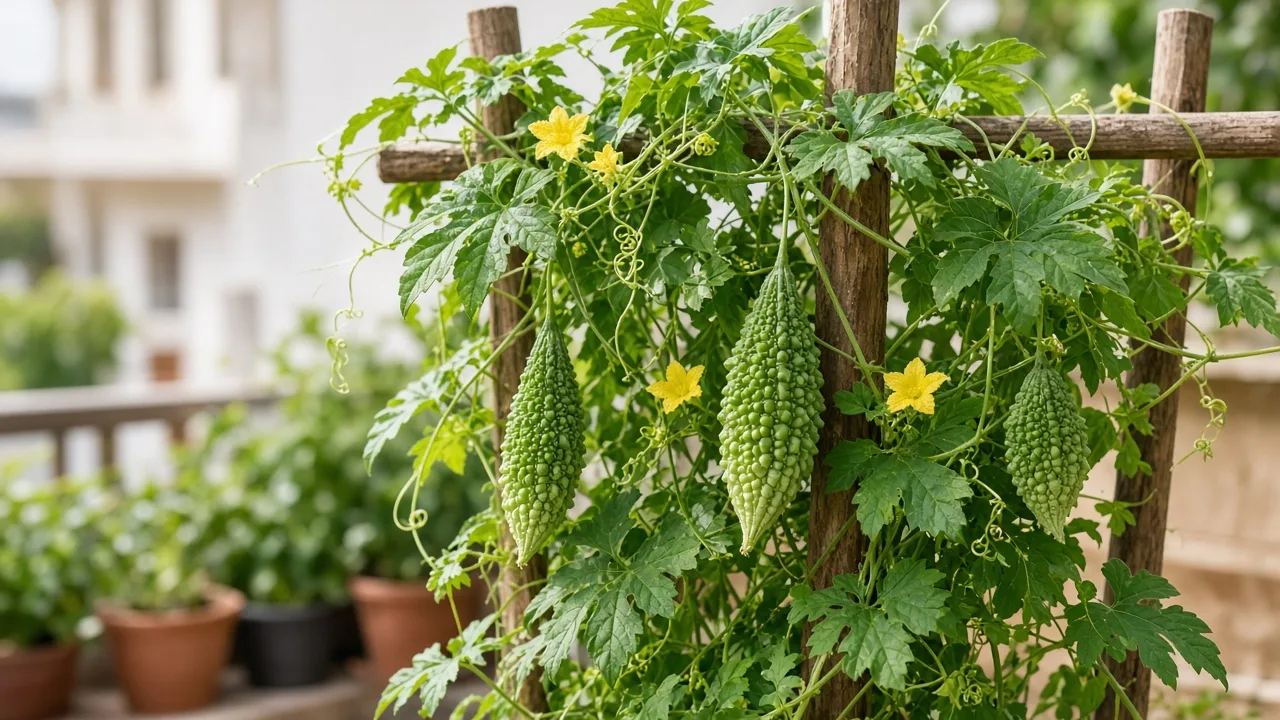
Bitter Gourd Soil Guide — Mix, pH & Drainage
Bitter Gourd Soil Guide — Mix, pH & Drainage
Bitter gourd (Momordica charantia) is a heat-loving cucurbit vine, not a forgiving windowsill herb. Karela wants fertile, well-aerated soil that drains freely, steady moisture in the root zone, and enough organic matter to fuel a long season of male and female flowers and young fruit. Get the texture wrong—especially in a small grow bag or water-holding monsoon mix—and you will see yellow lower leaves, wilting in wet soil, or flower drop long before you blame pests or pollination.
This page covers mixes, pH, bed prep, containers, and warning signs. For how often to irrigate once the mix is right, use the Bitter Gourd watering guide. For trellis timing, light, and harvest length, start with the Bitter Gourd overview.
What bitter gourd roots need from soil
NC State Extension describes bitter gourd as best grown in rich, organic, well-drained soil in full sun, generally like cucumbers, with benefit from trellis support. Cultural notes list high organic matter texture with good drainage and moist conditions—not waterlogged. That combination is the spine of every recommendation here: compost improves fertility and water-holding in sandy mixes, while perlite, coarse sand, raised planting zones, or open pot holes prevent saturation in heavy clay or cocopeat-heavy bags.
Fast cucurbit vines and warm roots
Treat karela as a warm-season annual. Seeds and transplants stall in cold, clammy mix on a shaded floor, while the same cultivar thrives in a sunny terrace bed once nights stay mild. Growing guidance for bitter gourd recommends sowing or transplanting only when soil temperatures consistently reach at least 70°F (21°C). Soil preparation and sowing timing belong together—you are choosing a root environment for roughly 55–80 days of active growth, not just picking a bag label.
Drainage before bag labels
A “vegetable potting mix” that stays spongy for days after one watering is worse for bitter melon than average garden loam on a raised mound with open drainage. Bitter gourd cultivation notes stress that proper drainage is essential, because water stagnation leads to root rot and fungal problems. Drainage is non-negotiable in pots, grow bags, and low-lying beds during kharif rains.
Ideal texture, organic matter, and pH for Momordica charantia
Target well-drained sandy loam to loam with mature organic matter worked through the planting zone—not a thin enriched pocket in unchanged clay. Agritell’s bitter gourd profile cites sandy loam to loam soils rich in organic matter as ideal for commercial and home plots. Organic bitter gourd guidance for Karnataka also lists sandy soils, sandy loam, and medium black soils with good organic content as workable when drainage is managed.
You are aiming for crumb structure that holds moisture in the middle of the root ball yet releases excess water within minutes of a deep irrigation.
Practical pH window for karela
A practical home-garden band is pH 6.0–7.0, matching LeafyPixels hub data for karela. Agritell recommends a slightly wider 6.0–7.5 range; NC State lists neutral soil roughly 6.0–8.0 for this species. Do not chase a decimal on paper while ignoring structure—compacted, waterlogged soil at “ideal” pH still produces weak vines and poor fruit set.
If you grow other cucurbits in the same bed with chronic nutrient oddities, a soil test is worthwhile. For most terrace growers, fixing drainage and compost quality matters more than lime or sulphur guesses.
Loamy beds versus heavy terrace clay
Bitter gourd tolerates a range of native soils when drainage is improved, but heavy clay that puddles after monsoon rain is a poor direct-sow bed without elevation. Mound soil 10–15 cm, add mature compost through the full planting row—not only in seed pits—and ensure water exits the bed laterally. Pure sand dries too fast on a hot railing; pure clay suffocates roots. Loam with compost is the middle path.
Preparing garden beds before sowing
Clear weeds and old cucurbit debris, then spread well-rotted compost or farmyard manure across the bed rather than concentrating fertility only where two or three seeds will sit. RHS cucumber guidance—a close cucurbit cousin—recommends digging in two bucketfuls of garden compost or well-rotted manure per planting site, ideally a few weeks before sowing so the soil settles. The same principle applies to karela mounds: organic matter improves fertility and water-holding without replacing the need for air spaces.
Compost and farmyard manure in Indian plots
Field guides often cite 20–25 tonnes of well-decomposed FYM per hectare during land preparation for bitter gourd—a scale home growers translate as a generous compost layer through the bed, not a single handful in each pit. Use mature compost that smells earthy, not ammonia-like. Fresh manure or unfinished kitchen waste can heat, slump, and stay wet against stems. Basal organic matter supports early vine growth; seasonal nitrogen and potassium timing lives in the Bitter Gourd fertilizer guide once roots, light, and moisture are stable.
Raised beds and ridges for monsoon drainage
In regions with intense monsoon rain, the critical question is where water exits. Agritell notes that raised beds or ridges and furrows help where rainfall is heavy. A raised bed without a lower outlet becomes a tank. Raise the karela root zone above surrounding paths, keep masonry beds from sealing the base, and clear channels before storms. After heavy rain, pause irrigation and probe below the surface; calendar watering misleads when the mix is already saturated.
Container soil for terrace and balcony growers
Dense garden soil alone is a poor choice for pots and grow bags. It compacts, sheds water down the sides, and may carry pathogens. Use a peat-free multipurpose or vegetable potting mix designed for containers, or blend your own. Terrace guides commonly specify grow bags about 35–45 cm across and roughly 40 cm deep with a well-draining mix of red soil, cocopeat, and vermicompost—a practical Indian baseline when perlite is scarce.
Seedy.farm’s bitter gourd guide suggests containers of at least 5 gallons (about 19–20 L), ideally larger (10+ gallons / 35–40+ L) for a full trellis season, with multiple drainage holes non-negotiable. LeafyPixels hub data points to 19–26 L (5–7 gallon) pots or larger for a full vine on support—scale up if the cultivar is long-fruited or the terrace is windy.
Why garden soil alone fails in pots
Without enough pore space, roots cannot breathe between waterings. The mix may look dry on top while the centre stays saturated, or water may run down the gap between root ball and bag wall while the core stays dry. Both patterns stress karela quickly in heat and trigger flower or young fruit drop.
Grow-bag sizing and drainage holes
Verify multiple open holes in the base and elevate the bag so discharged water leaves the saucer. After watering or rain, empty saucers rather than letting the root ball sit in runoff—especially during extended cloudy, humid spells when transpiration is low. For moving seedlings into final bags, see the Bitter Gourd repotting guide and Bitter Gourd propagation guide for warm-soil sowing windows.
A karela-friendly DIY blend
A workable starting blend aligned with LeafyPixels hub data is about 50% quality potting mix or screened loam, 30% mature compost, and 20% perlite or coarse sand for aeration. Moisten components before mixing; the finished medium should hold together briefly when squeezed, then fall apart when touched. Pre-moisten the blend and confirm water exits the base without pooling before you sow.
Work organic amendments into the mix before planting rather than top-dressing only after vines run. You can compare proportions with the Soil Mix Calculator using bitter gourd pre-selected.
Adjusting cocopeat-heavy mixes in humid weather
Cocopeat retains water well—useful on a hot railing—but during humid monsoon weather the same blend may stay wet too long. Add extra perlite, coarse sand, or bark chips, and reduce saucer use. Bark- or perlite-rich mixes may need more frequent checks in dry zaid heat; match behavior to the Bitter Gourd watering guide finger-test method (upper 2–3 cm drying).
Trellis training changes how fast soil dries
Install a trellis before or at planting so you are not compressing wet soil by pushing stakes in late season. Supported vines keep warty fruit off damp ground and improve airflow through lobed leaves, but elevated foliage transpires more in sun and wind than sprawled plants on mulch. A light, fast-draining container mix on a sunny railing may need daily checks, while a moisture-retentive bed with mulch slows drying at ground level. Training and leaf hygiene are covered in the Bitter Gourd pruning guide; placement that matches your mix’s drying rate is in the Bitter Gourd light guide.
Wrong soil: warning signs to act on
Yellowing lower leaves with persistently wet soil often point to poor aeration or chronic overwatering, not nitrogen deficiency alone. Wilting with soggy mix is a red flag—roots may already be damaged. White or green mold on the surface after repeated top watering suggests the mix stays wet too long. Slow emergence or stunted seedlings on a crusted, compacted bed may need tilth work on the next sowing, not deeper seed burial.
Flower or young fruit drop ties to drought stress, poor pollination, and heat as well as soil, but a root zone that swings from dust-dry to waterlogged makes every other problem worse. Stabilise texture and drainage before chasing exotic amendments or extra feed.
When to use this page vs other Bitter Gourd guides
Use this soil guide to choose bed versus container mix, interpret pH and organic matter, and fix drainage before sowing or transplanting. Use the Bitter Gourd watering guide for when and how much to irrigate, the Bitter Gourd fertilizer guide for nitrogen and potassium timing after roots are healthy, and the Bitter Gourd light guide for full sun versus heat stress on terraces.
For seed scarification, direct sowing, and transplant timing, use Bitter Gourd propagation. Soil cannot replace warm nights; if vines stall in cold, wet ground despite a perfect mix, the next action is on the calendar and the Bitter Gourd overview, not another compost layer alone.
Related Bitter Gourd guides
The Bitter Gourd overview ties together trellis support, container sizing, harvest timing, and how Momordica charantia differs from other gourds. The Bitter Gourd watering guide translates your mix’s drainage into a daily check routine, while the Bitter Gourd fertilizer guide covers feeding once moisture and light are stable.
Container growers can follow Bitter Gourd repotting for moving seedlings into final bags, and Bitter Gourd propagation for warm-soil sowing windows. Training and side-shoot management on trellises are covered in the Bitter Gourd pruning guide.
Conclusion
Good bitter gourd soil is fertile, moisture-retentive, and genuinely well drained—in ground, in raised beds, and especially in trellis grow bags on Indian terraces. Aim for high organic matter in a crumbly sandy loam or container blend, keep pH roughly 6.0–7.0 unless a soil test says otherwise, and size pots so a fast vine does not bake dry between waterings.
Before you sow or transplant, run one simple test: water the empty bag or a soaked bed slice and watch whether surplus water leaves within a reasonable time. If it does not, fix outlets, raise the root zone, or lighten the mix—then plant karela into conditions that can stay moist without drowning.