Bitter Gourd Propagation: Sow Karela Step by Step
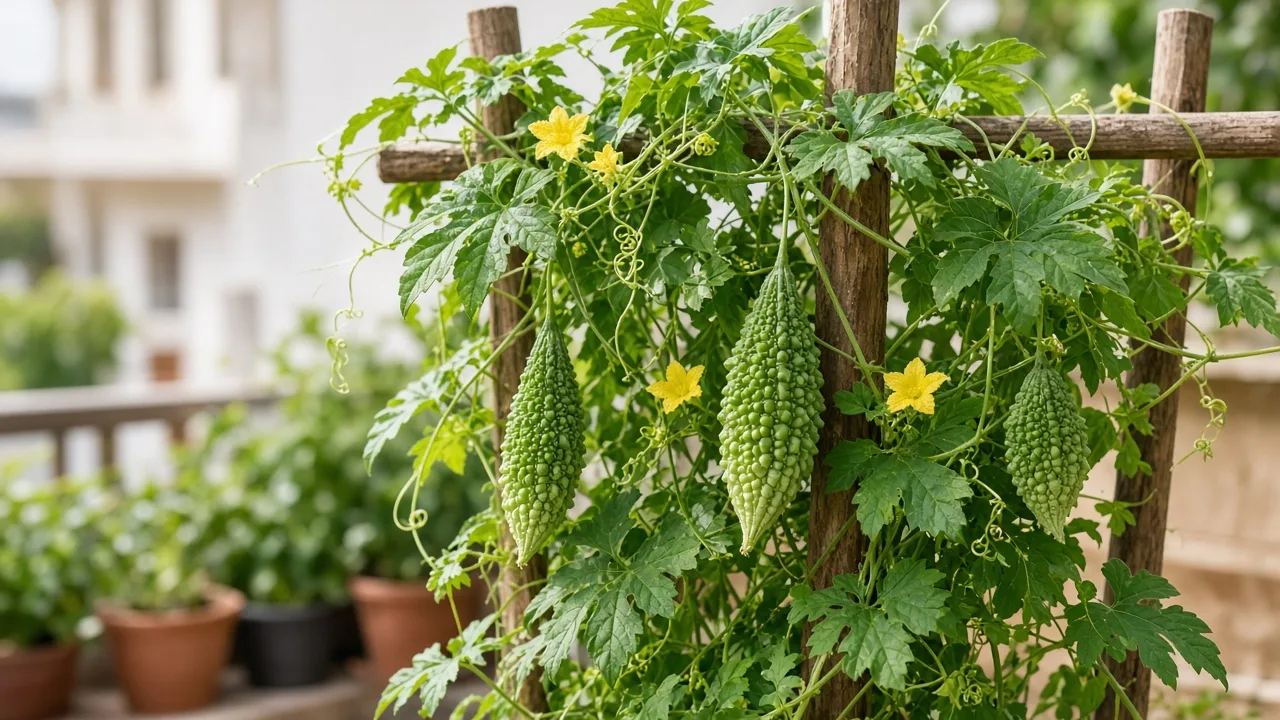
Bitter Gourd Propagation: Sow Karela Step by Step
Bitter Gourd Propagation: Sow Karela Step by Step
Bitter gourd propagation for Momordica charantia—the climbing karela, bitter melon, or ampalaya vine—means starting from seed. This frost-tender annual cucurbit does not offer a reliable home path from stem cuttings the way some perennial climbers do; every warm season begins with viable seed, warm soil, and a trellis plan in place before tendrils lengthen. NC State Extension lists seed as the recommended propagation strategy and describes a vigorous tendril-bearing vine that can reach roughly 12–20 feet (3.6–6 m) in one growing season when heat and moisture align.
If you are searching for how to “propagate bitter gourd” hoping to root a kitchen scrap or vine tip, redirect that effort into sowing. The bitter gourd overview summarizes growth habit and harvest stage; this page walks from seed selection through first flowers on a terrace or kitchen garden.
How bitter gourd reproduces in the garden
Bitter gourd completes its life in one warm season: germinate, climb, flower, set immature fruit, and finish. There is no woody crown to divide and no standard garden practice of rooting vine segments for fruiting plants.
Why home growers use seed, not cuttings
NC State Extension notes that bitter gourd is grown like cucumbers—heat-loving, trellised, and multiplied from seed. Laboratory micro-propagation exists for breeding lines, but backyard growers should treat packet seed or carefully saved seed as the only dependable route. Stem cuttings rarely produce vigorous, fruiting vines in real balcony conditions, so any cutting experiment is a bonus, not your main plan.
When to sow bitter gourd in India and warm climates
Bitter gourd is a warm-season crop. Seeds idle in cold, waterlogged mix; steady warmth and even moisture drive emergence once nights stay mild.
On most Indian plains, sow or transplant after the coolest nights have passed and soil stays warm—often late winter through spring for a main crop. Many growers sow again after heavy monsoon rain eases if they can manage humidity and leaf diseases on a supported vine. Hill stations and coastal microclimates shift those windows; local night temperatures matter more than a single national calendar date. Harvest to Table advises sowing outdoors or setting transplants only two to three weeks after frost danger and when soil has warmed to at least 60–65°F (15–18°C)—use that as a climate analogue for “soil is warm,” not as an India-specific schedule.
Soil temperature checks before sowing
Hold off until mix or bed soil at sowing depth feels warm and stays roughly 21°C (70°F) or higher for the most reliable germination. Harvest to Table adds that low or high temperatures and soil that is too dry or too wet can slow germination. Press a finger into container mix in the morning; if it feels cool and clammy for days on end, wait or warm the pot in full sun before sowing. Cold snaps after sowing stall emergence and invite rot in cucurbit seedlings.
Pick seed and cultivar type first
Propagation success starts with fresh, labeled seed and realistic expectations about hybrids and fruit type.
Hybrids and home-saved seed
Hybrids bred for uniform fruit or disease tolerance will not “come true” from seed you save; buy new packet seed each season unless you deliberately grow an open-pollinated line and accept variation. Epic Gardening notes that Indian bitter melon types tend toward darker, bumpier fruit, while Chinese types are often smoother and more tender—match the packet to your cooking style and trellis space. If you save seed from your own vines, select fruits from healthy, productive plants only, and never reuse seed from plants that produced abnormal or overripe fruit you did not intend to breed from.
Pre-sprouting and soaking the seed coat
Bitter gourd seed has a relatively hard coat. Many growers soak seed 12–24 hours in room-temperature water, then sow promptly after draining—optional when soil is already warm and kept evenly moist, but helpful on cool terraces at the edge of the season.
Epic Gardening describes keeping seed evenly moist for two to four days in soil or between damp paper towels until the coat splits and a white radicle appears, then moving sprouted seed into mix. Do not leave seed submerged for days or let pre-sprouts dry out on a windowsill; plant as soon as the root is visible. Avoid aggressive scarification that damages the embryo unless you have spare seed to test.
Direct sowing in beds and large pots
When frost is past and soil is warm, direct sowing is the simplest propagation path for karela on a sunny terrace or raised bed.
Depth, spacing, and keeping mix moist
Harvest to Table recommends sowing about ½ inch (1.25 cm) deep, placing two seeds per hole, and spacing holes roughly 12 inches (30 cm) apart, then thinning to the strongest seedling. Expect cotyledons in about 8–10 days when temperature and moisture are right. Work compost into the top layer as in the bitter gourd soil guide, install a trellis at sowing time, and water at the base so foliage stays drier. On a balcony, one well-supported vine per large container—often 19–26 L (5–7 gallons) or more—usually beats crowding several plants in one tub.
Indoor starts for early terraces
When you need a head start or controlled germination on a windy terrace, raise seedlings indoors, then move them once—gently—to final pots or beds.
NC State Extension suggests starting seed indoors in peat pots that decompose in the soil about four weeks before the last spring frost date, then planting seedlings outside when tomatoes are typically set out. Sow one seed per cell or small pot, 1–2 cm deep, in a heated propagator near 21°C (70°F) or on a warm bright sill under a vented cover until emergence. Provide bright light immediately after cotyledons open; weak, leggy stems rarely recover into productive vines. Harden seedlings over 7–10 days before full sun outdoors, as detailed for heat stress in the bitter gourd light guide.
Transplanting with minimal root disturbance
Cucurbits—including bitter gourd—punish rough root handling. Plant at the same depth as in the module, water in, and shade for a few days on hot terraces.
Use biodegradable pots or disturb roots as little as possible; never let plants become severely root-bound in tiny cells before the first move. If transplants wilt repeatedly despite moist mix, direct-sow the next batch in a warmed large container instead. Final container moves and root checks are covered in the bitter gourd repotting guide.
Germination failures and damping-off
Think of propagation in two phases: emergence (seed to seedling) and establishment (seedling to climbing vine).
Seeds that never sprout often sat in cold soil or dried out on the surface—re-sow in warm mix rather than waiting a month. Cotyledons that collapse at the soil line in cool, wet trays point to damping-off; NC State Extension on damping-off describes stems pinching and seedlings toppling when pathogens attack overwatered, poorly ventilated starts. Improve airflow, ease off watering slightly, and use clean mix for the next sowing. Match ongoing moisture to the bitter gourd watering guide once true leaves expand.
First flowers after propagation succeeds
Separate male and female yellow flowers appear on the same vine; males often open first—a normal cucurbit pattern, not a failed crop.
Harvest to Table notes vines commonly flower about 5–6 weeks after planting, with female blooms following roughly a week later; female flowers show a small swelling (ovary) at the base. On quiet balconies, transfer pollen from freshly open male flowers to open females in the morning. Avoid heavy nitrogen that pushes leaves over flowers; see the bitter gourd fertilizer guide. Many cultivars produce usable immature fruit roughly 55–80 days from sowing in warm weather—packet days-to-harvest still beats any universal calendar.
Saving seed—and handling ripe fruit safely
To save seed for next season, leave selected fruits on the vine until they mature past kitchen harvest, then collect, wash, and dry seed thoroughly before storage in a cool, dry jar. Harvest to Table notes mature fruits split and release seed and that saved seed can remain viable for two to three years when stored well.
NC State Extension warns that mature fruit and seeds are toxic and should not be eaten; ripe gourds can cause serious symptoms if ingested in quantity. Treat overripe fruit and scarlet-coated seed as hazardous waste on pet-accessible terraces—remove split fruit promptly and wash hands after handling seed pulp. Immature green karela is the culinary stage; propagation and seed-saving work happens around—not instead of—that food-safety line.
When to use this page vs other Bitter Gourd guides
Use this propagation page when you are choosing seed, soaking or pre-sprouting, direct sowing or raising seedlings, or troubleshooting germination and transplant shock. For daily moisture on running vines, open bitter gourd watering. For mix recipes and drainage, see bitter gourd soil. For sun hours and heat stress, see bitter gourd light. For moving seedlings into final tubs, see bitter gourd repotting. For side shoots and airflow after vines run, see bitter gourd pruning.
Related Bitter Gourd guides
The overview hub summarizes trellis training, container size, and harvest timing for Momordica charantia. Fertilizer covers feeding after propagation succeeds. Together, these pages support a full season from first sowing to the last young green fruit.
Conclusion
Bitter gourd propagation is straightforward when you respect its biology: warm seed, seed-only multiplication, one gentle transplant if any, and a trellis ready at sowing time. Sow karela when soil stays warm, keep the germination zone evenly moist—not sodden—and treat failed trays as a signal to re-sow with better heat and airflow rather than waiting on dead seed. Once vines climb, shift attention to even moisture, pollination, and harvesting immature fruit while keeping ripe, seed-filled gourds away from pets and children.