Calathea Warscewiczii Soil Mix & Drainage Guide
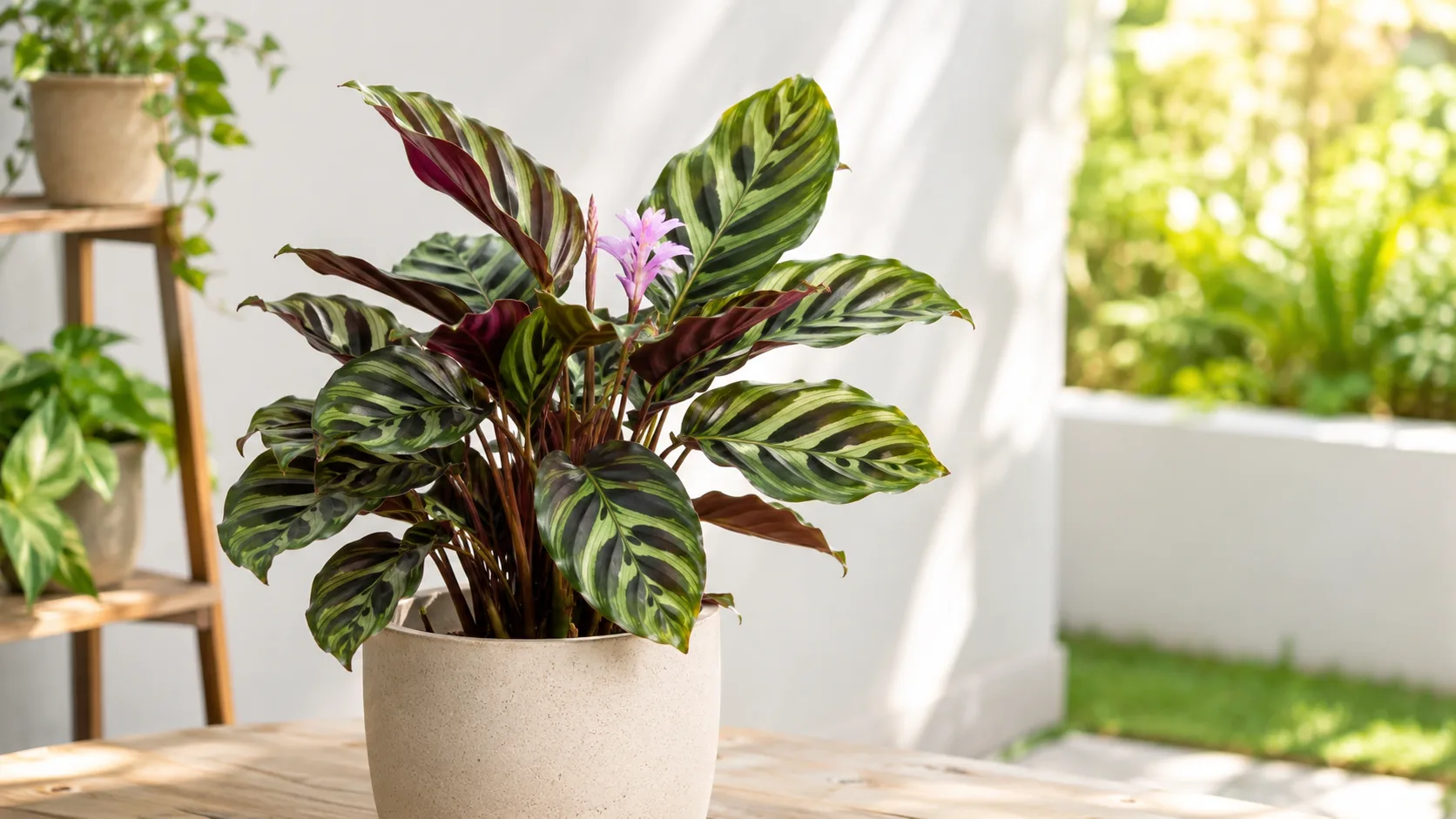
Calathea Warscewiczii Soil Mix & Drainage Guide
Calathea Warscewiczii Soil Mix & Drainage Guide
Calathea Warscewiczii — jungle velvet, Goeppertia warszewiczii — is not failing because you forgot to care. It is often failing because the root zone cannot hold steady moisture and oxygen at the same time. Large velvety blades make every soil mistake visible early: edge curl, dull color, and crisp margins that look like a humidity problem but trace back to dense mix, salt buildup, or a pot that stays wet too long. This guide covers the mix Warscewiczii actually needs indoors — not generic “tropical soil” advice — plus how to test drainage, pair soil with filtered-water watering, and know when to refresh the medium before foliage damage becomes chronic.
The Short Answer: What Soil Calathea Warscewiczii Needs
Use a light, airy, moisture-retentive peat- or coco-coir-based mix amended with perlite and fine orchid bark — roughly 2 parts base, 1 part perlite, and 1 part bark by volume. NC State Extension recommends a moist, well-drained potting mix designed for African violets or a peat-based blend for close Goeppertia relatives, with good drainage and consistent moisture rather than wet stagnation. The RHS advises free-draining, moisture-retentive peat-free compost for calatheas — either a houseplant mix or multi-purpose compost with about ten percent potting grit. Target pH 6.0–7.5, keep the pot in a container with drainage holes, and water with filtered or rainwater when possible so minerals do not crust on the fuzzy leaf surface. If the top inch dries in a few days but the pot still feels heavy after two weeks, the mix or pot size — not your calendar — is the problem.
Why Jungle Velvet Roots Are Pickier Than They Look
Warscewiczii shares the Marantaceae prayer-plant root habit: fine rhizomatous roots that want even moisture without saturation. What separates this species from smoother calatheas is the velvet leaf surface — it holds ambient moisture, shows humidity stress as edge curl faster, and displays mineral deposits from hard tap water as permanent surface marks. You can have technically correct watering and still see decline if the mix compacts, concentrates salts, or dries unevenly so the center of the root ball stays wet while the top looks dry.
Velvety Leaves, Minerals, and What Shows Up First
On smooth-leaved calatheas, brown tips often arrive late. On jungle velvet, white or pale crust on new blades, dull velvety texture, and rolling margins can appear while roots are only mildly stressed. That is why Warscewiczii soil must flush cleanly with each watering and stay open enough for oxygen. A dense, peat-heavy block that repels water lets salts accumulate at the root interface — exactly where filtered or rainwater matters most. If you see edge damage on every new leaf while humidity reads 50 percent or higher, inspect the mix weight and drainage before buying another humidifier.
Rainforest Floor Biology in a Small Pot
In native tropical understory habitats, calatheas root into loose organic debris that drains quickly after rain but never desiccates completely. Missouri Botanical Garden culture notes for related Goeppertia species describe uniformly moist, well-drained, peaty potting mixtures in bright shade with high humidity. Indoor pots cannot replicate a forest floor, but they can mimic the dual requirement: moisture plus air. Pure cactus mix fails by drying too fast; unamended bagged potting soil fails by staying wet too long. Warscewiczii needs the middle path.
Four Jobs Your Warscewiczii Mix Must Perform
Every ingredient should earn its place against four equal jobs. The mix must anchor a top-heavy velvet leaf canopy without compacting. It must retain moderate moisture between waterings so roots never swing from desert to swamp. It must drain excess water in seconds through the drainage hole after a thorough soak. And it must maintain air pockets around fine roots for months, not collapse into mud after one growing season. When any job fails, foliage signals first — yellowing, curl, stalled new spears — even though the crisis started underground days earlier. Treat leaf marks as root-zone diagnostics, not cosmetic annoyances.
Core Ingredients for Calathea Warscewiczii Soil
Think in functions, not brand names. Base material holds water. Perlite or pumice creates permanent pore space. Bark adds chunk structure that slows compaction. Optional worm castings supply gentle organic nutrients without turning the mix heavy.
Peat Moss or Coconut Coir as the Base
Sphagnum peat moss is the classic calathea base: lightweight, evenly moisture-retentive, and familiar to fine roots. Coconut coir is the common peat alternative — more sustainable for many growers, rewets reliably, and starts nearer neutral pH. Either can make up 40–50 percent of a DIY blend. Pre-moisten dry peat or coir before mixing; dry peat can repel the first watering and mimic underwatering while the root ball center stays dry. For Warscewiczii in dry heated rooms, lean slightly toward coir or peat on the higher end of that range so large leaves do not desiccate between checks.
Perlite, Pumice, and Fine Orchid Bark
Perlite or pumice should be 20–30 percent of the mix — non-negotiable unless you buy a pre-made tropical blend already loaded with aeration. These materials create permanent air channels so roots breathe between waterings. Fine orchid bark or pine bark fines at 10–20 percent mimics forest litter and resists breakdown longer than peat alone. Clemson HGIC lists a Cornell Foliage Plant Mix — half sphagnum peat, quarter perlite, quarter vermiculite — as suitable for Maranta and other foliage plants in the same family. That recipe is a proven starting point for Warscewiczii, with bark substituted for some vermiculite if your home runs humid and pots dry slowly.
Best DIY Soil Mix Recipes for Warscewiczii
Mix by volume with a scoop, not by weight. Blend in a clean tub, pre-moisten, and run the drainage test below before potting a prized plant.
Standard Recipe for Most Indoor Homes
- 2 parts peat moss or coconut coir
- 1 part perlite or pumice
- 1 part fine orchid bark
- Small handful of worm castings per quart of mix (optional)
This 50/25/25 ratio matches what extension references converge on for Goeppertia and calathea culture: moist but never swampy. The finished blend should feel springy when damp — not sticky mud, not gritty dust. Pair it with a pot only 2.5–5 cm (1–2 inches) wider than the root ball when repotting, as detailed in the Warscewiczii repotting guide.
Tweaks for Dry Air, Humid Rooms, and Root Recovery
In dry homes where large velvet leaves transpire fast, bump the base to 55 percent coir or peat and keep perlite near 25 percent. In humid rooms or plastic pots that dry slowly, drop the base to 40 percent and push perlite plus bark toward 30 percent each. Recovering from root rot? Use a rescue blend of 2 parts perlite, 1 part bark, 1 part coir with no heavy compost until new white root tips appear and the plant holds turgor for two weeks. Do not fertilize into a rescue mix — let roots heal first.
Store-Bought Mixes That Actually Work
Not on its own: regular all-purpose potting soil is usually too dense for Warscewiczii in indoor containers. Lighten it 1:1:1 with perlite and orchid bark, then drainage-test before use. African violet mix, tropical houseplant mix, or aroid blend bags are better shortcuts — NC State specifically mentions African violet or peat-based mix for Goeppertia — but inspect the texture. If the bag looks dark, fine, and perlite-sparse, add 30–40 percent extra perlite or bark. Cactus mix alone dries too fast for velvet calathea leaves; blend 1 part cactus mix to 2 parts coir plus extra perlite until the texture opens up. Never use garden soil indoors — it compacts, carries pathogens, and behaves unpredictably in pots.
Soil pH, Salt Buildup, and Filtered Water
Warscewiczii grows best in slightly acidic to neutral soil, roughly pH 6.0–7.5. Most quality peat- or coir-based mixes already fall in range, so hobbyist pH testing is optional unless the plant declines despite good light and watering. What matters daily is salt management. Velvet foliage shows fluoride, chlorine, and fertilizer salt damage as edge burn and surface crust while roots concentrate minerals in a dense, slow-draining mix. If white deposits appear on soil or leaf surfaces, flush the pot with filtered or rainwater until runoff runs clear, or refresh the mix at repotting rather than feeding harder. Soil and water quality are one system for Warscewiczii — separating them leads to repeated brown tip confusion.
How to Test Drainage Before You Pot
Fill a nursery pot with moistened blend, water thoroughly, and time runoff through the drainage hole. A good Warscewiczii mix drains in roughly 3 to 8 seconds after a full soak. Water pooling on the surface more than ten seconds means add perlite or bark and retest. Drainage under two seconds with a gritty feel may dry too fast — increase coir or peat slightly. Squeeze a damp handful: it should hold briefly then crumble. A sticky clump means insufficient aeration; a mix that will not hold together means too much perlite unless you water very frequently. After potting, lift the container after watering when fully drained — learn the full weight versus ready-to-water weight so you are not fooled by a dry-looking top over wet roots.
Choosing the Right Pot for Warscewiczii
Drainage holes are non-negotiable. No mix compensates for a sealed bottom. Choose a pot only one size up when repotting — oversized containers hold unused wet soil that suffocates rhizomes while outer mix stays soggy and inner root ball dries unevenly. Terracotta speeds drying for heavy waterers; plastic retains moisture for dry homes. Match pot material to your mix and habits, not aesthetics alone. Cachepots are fine only when the inner nursery pot drains freely and you empty the saucer after every watering.
When to Refresh or Repot the Mix
Refresh soil every 1–2 years or when roots circle drainage holes, the mix dries in under three days because the root mass fills the pot, the medium smells sour, or water runs down pot sides while the center stays dry. Spring and early summer are the safest windows — see the full repotting guide for step-by-step rhizome handling. Avoid repotting a stressed plant on day one after purchase unless the mix is clearly failing or pests are present. Compacted, hydrophobic old medium is a legitimate emergency: fresh airy mix often fixes a Warscewiczii that seemed chronically thirsty or overwatered when the real issue was uneven moisture distribution.
Common Soil Mistakes on Calathea Warscewiczii
The most repeated error is dense potting soil in a large decorative pot with slow drying — velvet leaves curl and yellow while roots suffocate. Gravel at the pot bottom does not improve drainage; it reduces root space and raises the wet zone. Oversized pots after a panic repot keep outer soil wet for weeks. Self-watering reservoirs paired with heavy mix fail quickly on Warscewiczii unless the medium is very airy and roots are already healthy. Repotting, fertilizing, and moving all on the same weekend stacks stress variables you cannot diagnose. Watch for hydrophobic old mix that repels water — top-dressing will not fix it; repot into pre-moistened fresh blend. If every new leaf shows edge damage despite 60 percent humidity, suspect salt and mix density before assuming the plant is inherently impossible.
Conclusion
The best soil for Calathea Warscewiczii is a balanced, peat- or coir-based mix with generous perlite and fine bark — adjusted for your home humidity and pot material — that stays evenly moist without staying swampy. Standard bagged soil and pure cactus mix both miss the mark without amendment, but either can work if you prioritize drainage, test the blend, and pair it with filtered water so velvet leaves stay clean. Run the timed drainage check, keep pots snug with holes, refresh tired mix every year or two, and treat edge curl on new growth as a root-zone signal. Get the soil right and watering, humidity, and fertilizer become far easier to calibrate for jungle velvet.
When to use this page vs other Calathea Warscewiczii guides
- Calathea Warscewiczii overview — Start here for whole-plant context, toxicity, and difficulty before deep-diving soil.
- Calathea Warscewiczii watering — Use when the mix is correct but moisture rhythm or water quality still needs tuning.
- Root rot on Calathea Warscewiczii — Escalate when soil changes alone are not enough and roots are mushy or smell sour.
- Brown tips on Calathea Warscewiczii — Escalate when edge damage persists after mix refresh and filtered water.