Calathea Warscewiczii Watering: Schedule, Soil Checks &
Calathea Warscewiczii Watering: Schedule, Soil Checks & Mistakes
Calathea Warscewiczii Watering: Schedule, Soil Checks & Mistakes
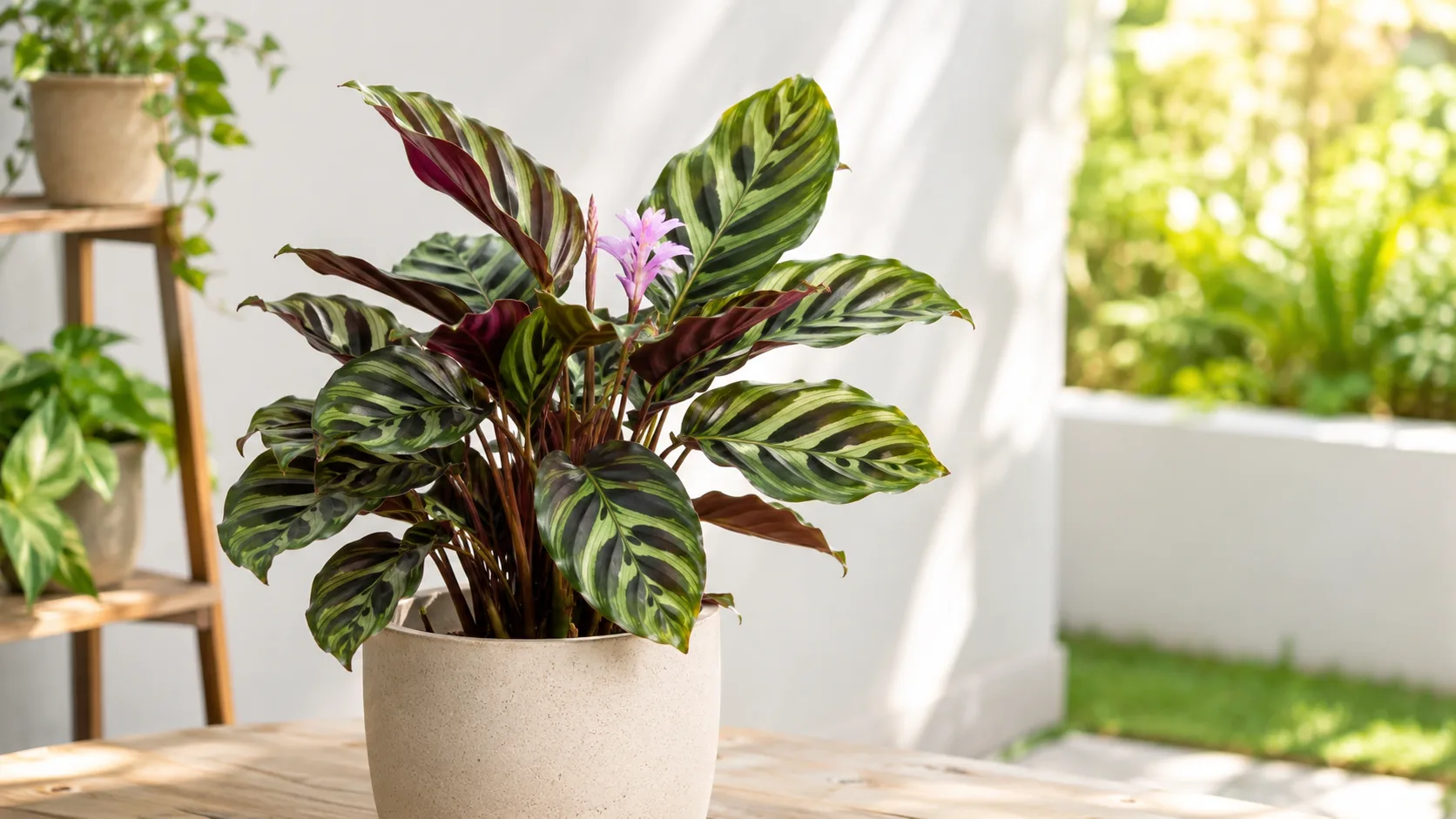
Calathea Warscewiczii — jungle velvet, Goeppertia warszewiczii — is not a small-patterned desk calathea. Mature plants carry large, soft, velvety leaves on long stems, and that leaf mass changes how fast the pot dries, how dramatically the plant protests drought, and how visibly water chemistry scars the foliage. NC State Extension describes the species as a Central American rainforest perennial that needs bright indirect light, a moist but well-drained peat-based mix, and watering with distilled or rainwater because fluoride in tap water browns leaf edges and tips. Get the root zone steady and the water clean, and Warscewiczii stops feeling like a guessing game.
This guide covers how often to check the pot, the top 2 cm dry test that fits this plant’s grower data, which water to use on velvet prayer-plant leaves, seasonal adjustments, and how to tell overwatering on Calathea Warscewiczii from underwatering on Calathea Warscewiczii when both look like curl and crisp edges.
Why Calathea Warscewiczii Watering Feels Harder Than It Looks
Warscewiczii earns a fussy reputation because the leaves send loud signals that do not always match the soil. A jungle velvet calathea may curl from thirst, from roots sitting in wet mix, from air below 60% humidity, from a cold draft, or from mineral buildup — and all of those can look similar on velvety blades. The natural response is to add water when leaves roll, which is exactly wrong if the pot is already heavy and damp.
The plant’s biology raises the stakes. Native to warm, humid forests of Costa Rica and Nicaragua, Warscewiczii evolved with filtered understory light and soil that stays lightly moist but drains after rain. Indoors it lives in a small pot with a moisture-retentive mix, transpiring through large leaf surface area and a fuzzy, matte leaf coating that shows edge damage faster than smooth-leaved relatives like orbifolia. NC State Extension notes that low humidity and fluoride from tap water brown edges, while lack of water and low humidity curl leaves — so you often need two checks, soil and air, not one.
What Velvety Prayer Plant Roots Need From the Mix
Prayer plants in the Marantaceae family depend on fine, shallow roots that need both moisture and oxygen. Warscewiczii is not a succulent; it will not tolerate the root ball shrinking away from the pot wall repeatedly. It is also not a bog plant; roots that sit in stagnant water lose fine absorbing tissue and invite root rot on Calathea Warscewiczii.
NC State Extension recommends a moist, well-drained, peat-based potting mix with perlite and vermiculite to prevent wet, soggy soil. That matches what you want at watering time: even moisture in the root zone with a brief dry-down at the surface before the next drink. The classic failure mode is wilting or curling leaves while soil stays wet — damaged roots cannot move water upward even though you keep pouring. Judge the newest unfolded leaves and root-zone moisture before reacting to every brown mark on an older blade. Full mix guidance lives in the Calathea Warscewiczii soil guide.
How Often to Water Calathea Warscewiczii
There is no honest universal answer in days. For many indoor Warscewiczii plants, a useful starting frame is every 5 to 7 days during active warm growth and every 7 to 10 days in cooler, lower-light months — but only when the soil check says the plant is ready. Treat those ranges as reminders to inspect the pot, not permission to water on autopilot.
The reliable rule for this species: water when the top 2 cm (about three-quarters of an inch) of mix has begun to dry and the pot feels noticeably lighter than it did right after the last thorough watering. That shallow dry-down is slightly tighter than the 2.5 cm rule some generic calathea guides use, and it fits a plant whose large leaves can pull water quickly in bright, warm rooms while still rotting easily if the center stays soggy.
Warscewiczii prefers missing a watering by a day over sitting in wet soil for a week. One dry episode is usually recoverable; chronic sogginess quietly kills fine roots.
Growing Season vs. Dormant Season Timing
In spring and summer, longer days and warmer rooms increase transpiration through those broad velvety leaves. A Warscewiczii in bright indirect light may need checks every 4 to 6 days in a modest pot during a heat wave. In fall and winter, growth slows, light drops, and the same mix can stay wet twice as long even though the foliage still looks dramatic.
The Royal Horticultural Society advises keeping compost evenly moist during the growing season, then in autumn and winter allowing the surface to dry before rewetting while never letting compost dry out completely. For Warscewiczii in a dim, cool room from December through February, 10 to 14 days between thorough waterings is common. The mistake is keeping a summer calendar through winter — the mix stays wet, roots suffocate, and yellow lower leaves follow.
The Finger Test, Skewer Method, and Pot Weight
The finger test remains the best everyday tool because it reads the actual mix, not leaf drama. Press into the soil to about 2 cm depth near the pot edge. If the mix feels cool and damp, wait. If it feels just beginning to dry at that depth, water thoroughly. If it is hard, dusty, and pulling from the pot wall, the plant has gone too dry and needs one careful full soak with full drainage — not nervous daily splashes.
Combine the finger test with a wooden skewer in larger pots: insert near the wall, wait a minute, pull it out. Damp residue means moisture remains deeper down. A clean dry stick supports watering. Moisture meters can help as a second opinion in chunky mixes, but salts and perlite gaps cause false readings — if the meter says dry but the pot feels heavy and the skewer is damp, trust the pot.
Why the Top 2 cm Rule Works for Warscewiczii
Warscewiczii is often sold in peat- or coco-based blends that hold water in the center after the surface looks dry — or stay damp below while the top crusts. The top 2 cm target catches the moment the root zone is ready for another drink without letting the whole ball go desert-dry. The pot weight test confirms it: lift the pot after a thorough watering when the saucer is empty; learn the full weight. When weight drops clearly and the top 2 cm pass the dry test, water. This prevents the common error of watering because the surface looks dry while the root zone is still saturated — especially dangerous after repotting into a large container.
Best Water for Jungle Velvet Calathea
The best water for Calathea Warscewiczii is clean, room-temperature water low in fluoride, chlorine, and heavy minerals. NC State Extension states plainly that distilled or rainwater is best because tap water contains fluoride that causes brown edges and tips. The RHS notes that all houseplants prefer rainwater; mains tap water contains lime and chlorine, though calatheas tolerate tap water left to stand 24 hours so free chlorine can evaporate.
Rainwater, reverse-osmosis water, distilled water, or dehumidifier condensate are safer long-term if your tap is hard or uses chloramine, which standing does not remove. Avoid softened water — sodium accumulates in small pots. Never apply cold tap water to a plant on a warm windowsill; let water reach room temperature first.
Why Velvet Leaves Show Mineral Damage Before Smooth Calatheas
Brown tips on Warscewiczii are not always a frequency problem. The velvety, fuzzy leaf surface holds and displays mineral deposits and fluoride damage more visibly than glossy calathea leaves. Two Warscewiczii plants on the same schedule can look different if one gets filtered water and the other gets hard tap — the leaves tell the chemistry story on new growth within weeks.
If soil checks are correct but new leaves keep opening with crisp margins, switch water before changing the calendar again. Flush the pot occasionally with plain water until it runs freely from the drainage hole to leach salts, especially if you follow the Calathea Warscewiczii fertilizer guide during active growth. Low humidity also browns edges; Warscewiczii targets 60 to 75% RH, and velvety leaves crisp faster than smooth calatheas in dry heated air — so pair good water with a humidifier or pebble tray, not misting alone.
Top Watering vs. Bottom Watering for Calathea Warscewiczii
Both methods work when the goal is even root-zone moisture and full drainage afterward. Neither fixes a pot without holes, a heavy soggy mix, or a schedule that ignores soil dryness.
Top watering — slow pour onto the soil until excess runs from the drainage hole — is the default. It flushes salts, shows when the ball is saturated, and keeps water off velvety foliage. Wet leaves in bright or cool conditions can spot or invite fungal issues; NC State Extension lists leaf spot from wetting leaves while watering as a common problem.
Bottom watering — setting the pot in a tray until the top 2 cm feels moist — wicks water evenly and keeps the surface drier. The RHS suggests watering from the base to reduce fungus gnats breeding in constantly wet surface soil. Soak, then remove and drain fully. Choose bottom watering if gnats plague your Warscewiczii or the center of the root ball stays dry while edges flood. Choose top watering when you need to flush salts or re-wet hydrophobic mix. Never leave the pot standing in water after either method.
Signs You Are Overwatering Calathea Warscewiczii
Overwatering is the more dangerous indoor failure mode for Warscewiczii — especially in winter, in dim rooms, in oversized pots, or when a cachepot traps runoff. Watch for yellowing lower leaves spreading upward, soft stems at the soil line, soil that stays wet more than 7 to 10 days, musty smell, fungus gnats, and curling or drooping despite wet mix. New leaves may emerge small, fail to unfurl cleanly, or show dark-edged damage on the velvet surface.
Overwatering often follows good intentions: slight leaf curl interpreted as thirst, a weekly schedule kept through November while growth slowed, or a decorative pot with no drainage becoming a reservoir. Each scenario starves roots of oxygen. NC State Extension links overwatering to root rot on this species.
How to Recover a Soggy Warscewiczii
Stop watering immediately and empty saucers and cachepots. Move the plant to stable bright indirect light with better airflow. Do not fertilize. Let the mix dry to the appropriate level before the next thorough watering — this can take a week or more in a saturated pot.
If decline continues — more yellow leaves, base softness, sour smell — unpot and inspect roots. Trim mushy brown tissue, repot into fresh airy mix in a pot only slightly larger than the root ball, and water once lightly. Old yellow leaves will not green up; success is firm new growth from the center. Do not swing to chronic drought afterward.
Signs You Are Underwatering Calathea Warscewiczii
Underwatering shows as daytime leaf curl or roll, drooping petioles, crispy brown edges, a light dry pot, and mix pulling from the pot wall. Warscewiczii may fold leaves more tightly and show less dramatic nightly prayer movement. NC State Extension lists leaf curl from lack of water and low humidity together — check both.
The distinguishing step is soil and weight. Dusty dry top 2 cm, light pot, dry skewer: water thoroughly once and drain fully. Wet heavy soil with curl: think roots or humidity, not thirst. When rehydrating, avoid tiny daily sips that wet only the surface; if water runs down the sides of a dry ball, bottom water 30 to 45 minutes or top water in slow stages. See wilting on Calathea Warscewiczii and drooping leaves on Calathea Warscewiczii if symptoms persist after moisture is corrected.
Seasonal Watering: Spring, Summer, and Winter
Indoor Warscewiczii still feels seasons through day length and light intensity. Spring and summer increase water use — check every 4 to 7 days, water when the top 2 cm begin to dry. Fall and winter slow transpiration; extend checks to 7 to 14 days and let the surface dry more between drinks while the root ball never goes bone-dry.
Adjust after environment changes, not calendar dates alone. Moving closer to a window in March increases uptake; moving away from a heating vent in October slows drying. Repotting in spring temporarily changes dry-down until roots explore fresh mix.
Winter Oedema and Wet Soil in Low Light
Oedema — patchy water-soaked areas on leaves — happens when roots absorb water faster than cool, dim conditions let the plant transpire. The RHS lists oedema on calatheas as most likely in winter when compost is too wet. It is not a pest; it is a physiology mismatch. Prevent it by watering less in winter, keeping the brightest indirect light available, and ensuring the surface dries before the next drink. Old corky patches do not heal; new leaves tell you if balance is restored.
How Light, Humidity, Pot Size, and Soil Change Frequency
Light is the largest driver after season. Warscewiczii in medium to bright indirect light may need water every 5 to 7 days in summer; the same plant in low light may need half as often because it is essentially resting. More light means check more often; less light means extend the dry-down window.
Humidity near 60 to 75% reduces edge burn on velvet leaves but does not replace soil checks. Dry heated air can crisp margins even when roots are moist — raise humidity before adding more water.
Pot size matters acutely on a plant that can reach 3 to 4 feet tall and wide over time. Large plastic pots stay wet longer; terracotta breathes and dries faster. An oversized pot with unused wet soil around a small root ball is an overwatering trap common after nursery repotting.
Soil composition from the soil guide — peat or coco with perlite, pH 6.0 to 7.5 — should drain fast enough that the pot is not heavy beyond 10 days in normal indoor conditions. Persistent wetness means fix mix or pot before blaming the plant.
| Factor | Effect on Warscewiczii watering |
|---|---|
| Brighter light / warm room | Faster dry-down; check more often |
| Dim light / cool room | Slower dry-down; water less |
| High humidity (60–75%) | Less edge crisping; soil checks still required |
| Large or plastic pot | Holds moisture longer |
| Terracotta or small pot | Dries faster |
| Chunky perlite-rich mix | Faster drainage; more frequent checks |
| Heavy peat, poor drainage | Stays wet; higher rot risk |
Watering a New Calathea Warscewiczii in the First Month
New Warscewiczii is stressed from transport and your home’s air. The first month should be observational — do not repot on day one unless mix is failing or pests are obvious, per the overview guide. Learn how fast this pot dries in your room. Water when the top 2 cm begin to dry with the best water you can provide. Avoid fertilizer until new growth is stable.
If the pot stays wet beyond 10 days, improve light slightly or airflow before watering again. Fix one variable at a time; stacking repot, move, and water-source changes makes failures impossible to diagnose.
Common Calathea Warscewiczii Watering Mistakes
Watering on a fixed calendar without soil checks tops the list. Using cold or softened tap water on velvet leaves causes shock and visible tip burn. Leaving pots in standing water suffocates roots — empty saucers every time. Watering because leaves curl without checking soil causes overwatering when curl means humidity or rot. Ignoring winter slowdown keeps summer frequency on a resting plant. Overpotting after purchase surrounds small roots with wet unused soil. Misting instead of humidifying raises humidity for minutes, not the 60–75% Warscewiczii needs. Wetting fuzzy foliage when top-watering invites spots. Changing water, pot, soil, and location simultaneously hides which fix worked.
Conclusion
Calathea Warscewiczii watering comes down to one repeatable habit: check the top 2 cm of soil and the weight of the pot, then water thoroughly with room-temperature filtered or rainwater only when the root zone is ready — and always let the pot drain. Spring and summer usually mean checks every 5 to 7 days; fall and winter often stretch to 7 to 14 days in cooler rooms.
Read the root zone, not just the velvet leaves. A light pot with a just-dry top 2 cm means water. A heavy wet pot with yellowing lower leaves means wait, improve drainage, and inspect if decline continues. Brown tips on new growth point to water quality or humidity as often as frequency. Winter wet soil in low light invites oedema and rot — slow down when the plant slows down. Steady moisture, clean water, and good drainage make jungle velvet predictable; the prayer-plant leaves will still fold at night and fuss about dry air, but the watering side is the part you control.
When to use this page vs other Calathea Warscewiczii guides
- Calathea Warscewiczii overview — Whole-plant context, buying checks, and first-month settling before deep-diving watering.
- Calathea Warscewiczii light — Placement and brightness; light drives how fast this pot dries.
- Calathea Warscewiczii soil — Mix and drainage when water stays too long or too short.
- Overwatering on Calathea Warscewiczii — Yellow leaves and wet soil despite cutting back water.
- Root rot on Calathea Warscewiczii — Sour smell, mushy roots, or decline after chronic sogginess.
Related Calathea Warscewiczii guides
- Calathea Warscewiczii overview
- Calathea Warscewiczii light
- Calathea Warscewiczii soil
- Calathea Warscewiczii fertilizer
- Calathea Warscewiczii repotting
- Calathea Warscewiczii propagation
- Overwatering on Calathea Warscewiczii
- Underwatering on Calathea Warscewiczii
- Root rot on Calathea Warscewiczii
- Wilting on Calathea Warscewiczii
- Drooping leaves on Calathea Warscewiczii
- Mold on soil on Calathea Warscewiczii